


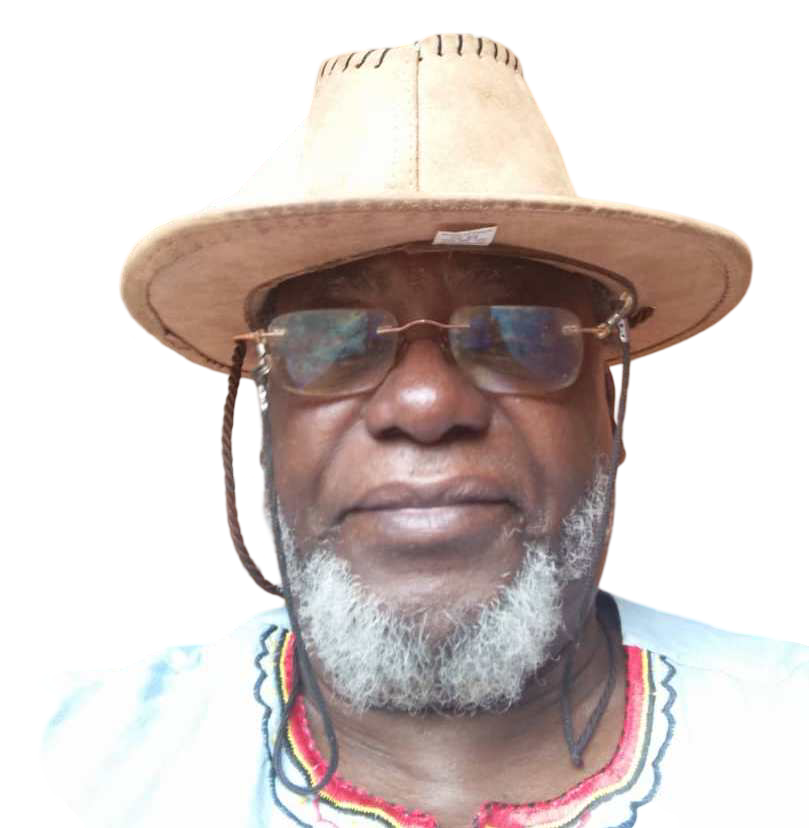
By Oweyegha-Afunaduula
As a public intellectual of more than 30 years who was also exposed to so many Nile challenges, problems and issues as the first Ugandan, and first East African, to lead the regional non-governmental organisation for 12 countries in the Nile Basin called Nile Basin Discourse, there is nothing of public interest that I cannot address with an independent and critical mind.
If I don’t, there aren’t many public intellectuals that can because the space for public intellectuals in Uganda has been invaded by nincompoops and ignoramuses of the status quo; most public intellectuals have been forced to withdraw, and their space is now burdened by fear and silence.
I have persistently and consistently tried to keep public intellectualism alive and kicking from my retirement home at Nawaka in Luuka, but it has not been easy because of a combination of ill-health, poverty and lack of necessary facilities.
However, when you are a public intellectual in retirement, you are not easily noticed by those who would be willing to support your work of clarifying and articulating issues for the public. You go it alone. It is best if you are fearless, courageous and ready to sacrifice a bit of your quality time to educate the public and its leaders.
In this article, I want to address the issue of the quality of elections in Africa with particular reference to Uganda. I have chosen Uganda because since President Tibuhaburwa Museveni offered himself for electoral elections after dallying with the idea of a one-party state for 10 years since capturing the instruments of power through the barrel of the gun in 1986, the quality of elections in the country has been plummeting.
This has been largely because of the choice of the regime in power to use the army and police to disadvantage the Opposition in the name of peace and security. Perhaps the emergence of Kyagulanyi Ssentamu, alias Bobi Wine, as a new political force in a country where the incumbent president has been able to create his own opposition at public expense has overstretched the regime in power, causing it to apply high-handed military and police methods to contain him. Unfortunately, this has instead thrown into question the seriousness, meaningfulness and effectiveness of the democratisation process in Uganda.
First, what is meant by “quality” and the phrase “quality of elections”? ‘Quality’ means many things in one: standard, grade, class, calibre or value. So when applied to elections, it may mean the standard, grade, class, calibre or value of the elections. If the standard, grade, class, calibre or value of the elections is high, then this quality is high.
This implies that we can actually measure the quality of the elections. We can do so by targeting particular stages of the electoral process and the factor affecting the quality of the elections.
When the colonial rulers of Africa started to leave the continent, they seem to have resolved together that power should be sought through multiparty elections. However, in most African countries, both multipartism and the electoral processes have been abused by incumbent politicians who want to overstay in power until death makes them part with the topmost public offices.
In Uganda, the British colonial rulers conducted the first multi-party elections in March 1961, which brought the Democratic Party’s Benedicto Kiwanuka into power as the first Chief Minister of Uganda. However, he was not really given the instruments of power until they were about to conduct another general election in April 1962.
Those elections brought Uganda People’s Congress’s Apollo Milton Obote into power, but he had to strike a political alliance with the Kabaka Yekka party to secure a majority over the Democratic Party to qualify as the first Prime Minister of Uganda.
He had to wait until 1962 to get the instruments of power from the British Colonial government, although the Queen of England, Elizabeth, continued to be the Head of State until 9th October 1963, when Sir Edward Muteesa II of the Kingdom of Buganda became the first President of Uganda and Sir William Wilberforce Kadhumbula Gabula Nadiope, of the Territory of Busoga, became the first Vice-President of Uganda.
Uganda did not hold elections until 1980, after the overthrow of Idi Amin, the Life President of Uganda. Those elections, organised by the Uganda National Liberation Front (UNLF), returned Apollo Milton Obote as President of Uganda but were, among others, dismissed as rigged by the current President of Uganda, Tibuhaburwa Museveni.
Eventually President Tibuhaburwa Museveni captured the instruments of power in 1986 after a five-year guerilla war in the Luwero Triangle of Uganda. He ruled without interference from political parties until 1986 after claiming that there was a gentleman’s agreement between the political parties and him not to interfere with his NRM/A for 4 years, after which he would organise multiparty elections.
He never did. However, he has been consistent in organising what appears to be multiparty elections every five years since 1996, not to usher in change in leadership and governance but to ensure power retention and legitimacy for his one-man rule, particularly towards the outside world.
The next elections are slated for January 25, 2026. No one expects him to lose the presidential elections and hand over to his greatest challenger of all time, Kyagulanyi Ssentamu, alias Bobi Wine.
In 2024, virtually all the incumbent rulers in Africa reclaimed their posts through low-quality elections. Ugandans are preparing themselves for their 2026 presidential, parliamentary and council elections, but most of the factors that influenced the quality of elections last year in most countries are already exerting their influence, along with others specific to Uganda, on the electoral process.
We can mention many factors that potentially or actually interact to consistently lower the quality of the electoral process and promise to influence the quality of the coming elections of Uganda on 15 January 2026 negatively.
* Presidential Partisanship and Incumbency
*Presidentialism
* Greed and selfishness for power
* Corruption
* Pro-status quo stance of the Uganda Electoral Commission
* Fear and Silence
* Intellectual death on university campuses and in society
* Participation of refugees.
* Political manipulation of the Opposition through buying their consciences
* Buying consciences of religious leaders
* Lack of respect for the law
* Poor planning of electoral activities
* Harassment, torture, and imprisonment of Opposition members
* The threat of the UPDF Act and the Military Court towards civilian voters and candidates
* Impartial judiciary
* Poor or lack of electoral and civic education
* Overfinancing of the Electoral Process
* Suspect professionalism of those managing elections
* Biometric voting weaknesses capitalised upon to favour some candidates
* Inadequate equipment and materials
* Suspect tallying and publishing of the results.
* Slow and poor management of electoral disputes
* Overmilitarisation of peace and security concerns
* Lack of public debates during the electoral process
*Interference in the electoral process by Resident District Commissioners
* Inclusion of 16- and 16-year-old children in the NRM membership record and in its crowds.
* Manipulation of the voters register
* Attitude of entitlement of the Luwero Triangle combatants
* Manipulation of the national budget to avail money for political buying
* Apartheid-like treatment of candidates by the National Electoral Commission
* Personalisation of the electoral process through RDCs and security organs
* Using polls to lie about the popularity of the ruling party as a strategy of rigging before the elections
I have no time and space to explicate each of these factors, or the relationship between them, in influencing the quality of elections in Uganda. However, it is true that voters’ confidence and trust of the electoral process and its managers continue to plummet meteorically.
This is dangerous since the old and the elderly are gradually leaving the sociopolitical stage to the young people with very mixed attitudes on how to preserve a culture of democracy. Many take the words of President Tibuhaburwa Museveni in 1996, in Seeta Mukono, that a mere piece of paper cannot remove him from power, and that he is like a cotter pin of a bicycle, which goes in by knocking and comes out by knocking, to mean that he is irremovable and indispensable.
They have not developed the proper political attitudes that are necessary for building a democratic culture towards the 22nd century. They see the old and elderly in politics as greedy, selfish and dishonest people using elections to hoodwink the citizens and the world that they are committed to democracy and democratic principles when, in fact, they are the number one enemy of meaningful democratisation of Uganda.
Continentally, falling confidence in the electoral process has become universal. The Institute for Security Studies, in its article “Five Worrying Signs of Africa’s Poor Election Quality” of 7th May 2024, stated that the number of citizens lacking confidence in the national electoral commissions rose from 41% to 55% between 2011/13 and 2021/2023.
Maram Mahdi (2024) said that when leaders exploit loopholes in the electoral process to extend their tenures, they undermine the bedrock of democracy and the rule of law. In the past they have undertaken constitutional manipulations to ensure their hold onto power is uninterrupted.
In Uganda, assurances to Ugandans by the combatants of Luwero that the Uganda Constitution would stand the test of time were soon replaced by alterations of certain articles to ensure that President Tibuhaburwa Museveni rules like a modern-day monarch and without threat of removal by the voters.
The article which provided for two terms and another which limited a president to 75 years were all removed by the Parliament of Uganda, which acts like the legislative arm of the ruling party – NRM. Besides, the incumbent does not step aside from the presidential post but continues to do everything a president does, including appointments, while he also campaigns for re-election.
He can use his power as Commander-in-Chief to harass and decelerate the progress of his challengers, while for him he continues unmolested by the security organs. In the end the result of the elections is those he desires to stick to power. It does not matter whether or not his regime has honoured its promises to the people. No one should challenge his power through the ballot, which he said is a mere piece of paper. This way he consistently and persistently frustrates the citizens who have for decades yearned and craved for change.
In conclusion, Uganda’s elections are not about democracy or people’s hope for change but about President Tibuhaburwa Museveni’s long-term thinking, belief and conviction that no one else should rule Uganda while he lives. To him power is a supreme gain that must be protected at all costs. This is one reason why Uganda’s elections can never be expected to make any gains in quality.
They are about President Tibuhaburwa Museveni’s gains in sovereignty for him and a small group with exogenous roots at the expense of Uganda’ sovereignty. Thus Uganda’s poor quality of elections will persist so long as President Tibuhaburwa Museveni continues to be central to them.
They are and will continue to be what they are – poor – to meet the desires of the President at the expense of Ugandans. After January 15, 2026, he will pursue his gains in power more vigorously and do unimaginable things to firm his patronage chain and those other relationships that have helped him to exclude others from power and resources for the benefit of a few. These are theories that need to be tested by research.
For God and My Country.
Prof. Oweyegha-Afunaduula
Center for Critical Thinking and Alternative Analysis