


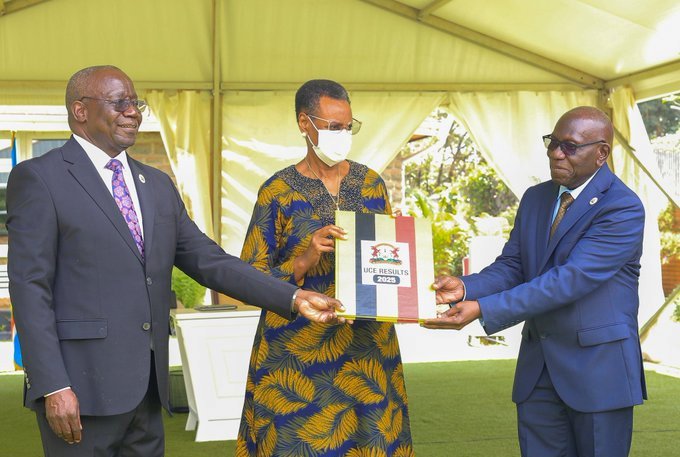
As the Uganda National Examinations Board (UNEB) released the 2025 Uganda Certificate of Education (UCE) results, the headline figure was encouraging: 99.69 percent of candidates qualified for the certificate.
But beyond the impressive pass rate lies a deeper story—one that places Uganda’s Competency-Based Curriculum (CBC) under renewed scrutiny.
The 2025 cohort, the second to be assessed under the CBC framework, posted improved overall performance compared to 2024. More than 428,000 learners qualified for certification, while the proportion of those failing to meet minimum requirements dropped sharply from 1.9 percent last year to just 0.31 percent.
Yet UNEB’s detailed report reveals that while learners are performing better statistically, critical gaps remain in the very competencies the curriculum was designed to cultivate.
The Thinking Skills Test
The CBC model shifts emphasis from memorisation to application of knowledge in real-life situations. Grades are awarded across five achievement levels—A (Exceptional), B (Outstanding), C (Satisfactory), D (Basic), and E (Elementary)—based on both Continuous Assessment (20 percent) and final examination scores (80 percent).
Although most candidates attained Grade C (Satisfactory), examiners highlighted a recurring weakness in practical science subjects.
In Physics, Chemistry, and Biology practical papers, candidates were expected to interpret given scenarios, formulate hypotheses, conduct investigations, and draw conclusions linked to real-life contexts. While there were improvements compared to 2024, many learners still struggled to connect experimental results to everyday applications.
The report notes that some candidates failed to meaningfully interpret scenarios or demonstrate creative problem-solving—skills that form the backbone of the CBC approach.
For educators, this signals a transitional challenge: shifting classroom culture from content coverage to competency development.
Science Gains, But With Caveats
Performance in the sciences improved markedly. The percentage of learners scoring below the basic level declined significantly in Mathematics, Physics, Chemistry, and Biology.
However, UNEB also recorded 63 cases of examination malpractice, mostly in Mathematics and science practical papers. In several instances, there was evidence that candidates were supplied with experimental results by teachers to copy—undermining the authenticity of competency-based assessment.
The Board noted that the design of scenario-based questions makes malpractice more difficult, but warned that teacher interference threatens the integrity of the new curriculum.
Gender and Subject Dynamics
Female candidates outperformed males in English Language and Christian Religious Education, particularly at higher achievement levels. In Mathematics and the sciences, performance was largely comparable, with only slight differences at the top grades.
The results suggest narrowing gender gaps in traditionally male-dominated science subjects—an encouraging sign for STEM participation in Uganda’s education system.
Inclusion Expands Access
The 2025 examination cycle also highlighted inclusivity gains. A total of 708 Special Needs Education (SNE) candidates were registered, receiving tailored accommodations including Braille scripts, enlarged print, sign language interpreters, and extra time. Of these, 98.2 percent qualified for the UCE certificate.
Meanwhile, all candidates who sat the examinations from Uganda Government Upper Prison School, Luzira, and Mbarara Main Prison Inmates’ Secondary School qualified—underscoring education’s rehabilitative potential.
Candidate Perception: Fair but Demanding
A post-exam survey of more than 36,000 candidates across 118 districts revealed that 66.4 percent considered the examinations fair, while 28.8 percent found them difficult. Only 4.7 percent described them as easy.
Notably, 96.3 percent said the questions were within the syllabus, suggesting alignment between curriculum design and assessment.
The modal grade—C (Satisfactory)—corresponds closely with this feedback, indicating that the examination largely met its intended competency thresholds.
The Bigger Picture
The 2025 UCE results reflect a system in transition. On the surface, qualification rates are rising and absenteeism is declining. Beneath the numbers, however, lies a more complex narrative about pedagogical reform, teacher preparedness, and the challenge of cultivating higher-order thinking skills in a rapidly expanding secondary education system.
For UNEB and the Ministry of Education, the message is both affirming and cautionary: while the CBC framework is gaining traction, its success will ultimately depend on how effectively classrooms across the country embrace inquiry-based learning and real-world application.
The statistics show progress. The next test may well be whether Uganda’s learners can translate satisfactory grades into transformative skills beyond the examination room.