


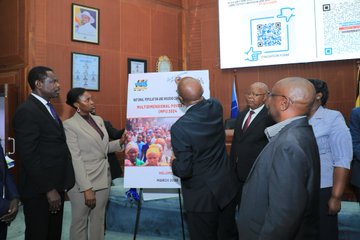
The Uganda Bureau of Statistics (UBOS) has released the Multidimensional Poverty Index (MPI) Census Monograph 2024 – Volume 5, offering a stark and comprehensive picture of poverty in Uganda that goes far beyond income.
The report, disseminated on March 26, 2026, at Statistics House in Kampala, reveals that 27 out of every 100 Ugandans (27%) are multidimensionally poor, experiencing overlapping deprivations in critical aspects of life such as health, education, and living standards.
Poverty Beyond Money
Delivering the keynote, UBOS Executive Director Chris Mukiza emphasized the need to rethink how poverty is defined and addressed.
“Poverty is not only monetary – it is also about losing a child to unclean water, lacking representation, and lacking access to basic freedoms,” Mukiza said.
He noted that the MPI monograph is derived from the 2024 National Population and Housing Census and is part of a broader series of thematic reports aimed at deepening understanding of Uganda’s development landscape.
According to Mukiza, the findings will be critical in tracking progress towards Sustainable Development Goal 1, which seeks to eliminate poverty in all its forms, urging policymakers to use the data to design more targeted and responsive interventions.
Stark Regional Inequalities
While the national MPI stands at 27%, the report highlights deep regional disparities.
The Karamoja sub-region remains the hardest hit, with an MPI of 56%, meaning more than half of its population is deprived across multiple dimensions. It is followed by West Nile at 39.0% and Sebei at 33.5%.
At the district level, Kaabong District records the highest MPI at 0.639, while Kampala remains the least deprived at 0.088, with just 8.8% of residents classified as multidimensionally poor.
The findings reinforce Uganda’s enduring urban-rural divide, with poverty more pronounced in rural areas (31.5%) compared to urban areas (27.0%), reflecting disparities in access to essential services and economic opportunities.
Who Is Most Affected?
The MPI analysis also sheds light on the social dimensions of poverty.
Female-headed households are more affected than male-headed ones, highlighting persistent gender inequalities in access to resources and opportunities.
Age is another key factor. Child-headed households face the highest levels of deprivation at 36%, underscoring the vulnerability of households without stable adult support.
These patterns point to the need for targeted interventions that address not just where poverty exists, but who is most affected and why.
Data as a Development Tool
Speaking on behalf of the UBOS Board Chair, Irene Birungi Mugisha described reliable statistics as a “strategic national asset” essential for improving livelihoods.
She noted that Uganda’s long-standing commitment to poverty eradication—from the Poverty Eradication Action Plan of the 1990s to the current National Development Plans—has increasingly relied on quality data to guide investments in infrastructure, agriculture, and social programmes.
Initiatives such as NAADS, Operation Wealth Creation, and the Parish Development Model, she said, can benefit significantly from MPI insights to better target beneficiaries and measure impact.
A Call for Smarter Policy and Partnerships
Development partners and policymakers welcomed the MPI as a transformative tool for evidence-based planning.
Thangavel Palanivel of the United Nations Development Programme said the index helps identify who is being left behind and guides more equitable resource allocation.
Similarly, John Ilukol from the World Bank noted that the MPI provides a more comprehensive understanding of poverty, beyond traditional income measures, and will inform programme design and targeting.
Lawmakers, including Geoffrey Ekanya and Faith Nakut, pointed to persistent regional inequalities and called for more effective, targeted interventions, particularly in chronically deprived areas like Karamoja.
From Statistics to Impact
Minister of State for Planning Amos Lugoloobi stressed that while Uganda has made progress in data collection, the real challenge lies in utilising the data effectively.
He noted that the MPI provides deeper insights into persistent challenges such as inadequate sanitation and unequal access to services, and called for collective action across government, private sector, and academia.
Lugoloobi reaffirmed government’s commitment to infrastructure development, including roads, electricity, industrial parks, and railways, as a foundation for inclusive growth and job creation.
A Turning Point in Poverty Measurement
The MPI Monograph 2024 – Volume 5 represents a significant shift in how Uganda understands and measures poverty.
By capturing multiple, overlapping deprivations, it moves the conversation beyond income to the real conditions shaping people’s lives, from access to clean water and education to healthcare and dignity.
As Uganda pushes forward with its development agenda, the report offers a clear message: ending poverty will require more than economic growth, it will demand targeted, data-driven solutions that address its many dimensions.