


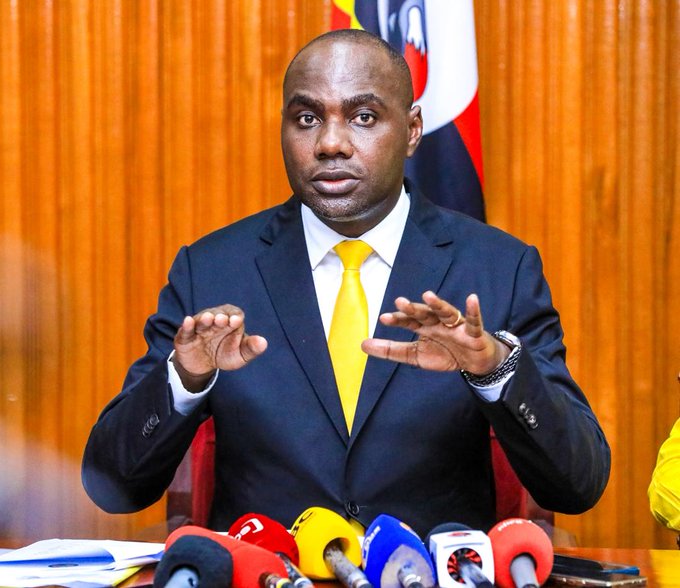
The National Resistance Movement (NRM) Parliamentary Caucus has endorsed the Government’s 2026/27 budget priorities, which include a UGX200 per litre fuel price increase, enhanced salaries for arts and primary school teachers, and funding for major infrastructure and development projects.
Minister of State for Finance, Henry Musasizi, revealed that the Uganda Revenue Authority (URA) is expected to collect UGX44.5 billion in taxes to fund the UGX84.209 trillion budget for the upcoming financial year. The total resource envelope represents an increase of UGX11.6 trillion from FY 2025/26, which stood at UGX72.76 trillion.
“The draft budget estimates, which we shall present to Parliament next Wednesday, contain a total resource envelope of UGX84.209 trillion, out of which UGX44.5 billion is expected from tax revenue,” Musasizi said, warning that Ugandans should expect higher fuel prices as part of the fiscal measures.
At a press briefing following the NRM Caucus meeting, Hamson Obua, Government Chief Whip, said the caucus discussed budget priorities covering peace and security, roads, electricity, railway projects, AFCON 2027 preparations, scientific innovation, restocking of Teso, Lango, and Acholi regions, as well as salary enhancement for primary school teachers, secondary school arts teachers, and security personnel.
On teacher salary enhancements, Musasizi confirmed that the increase will be implemented in a phased manner, costing taxpayers UGX2.5 trillion over four years. “This financial year we have provided 25%. We will continue 25% each year until salaries are harmonized with other science teachers. For primary school teachers, we have already provided UGX550 billion of the total UGX2.5 trillion,” he said.
The Minister further revealed that other public servants, including Chief Administrative Officers, UPDF officers, and assistant commissioners, will also benefit from salary enhancements. “Chief Administrative Officers in districts are now earning UGX12 million, up from UGX1.8 million previously. We will continue enhancing salaries in phases until all levels are aligned,” Musasizi added.
The 2026/27 budget aims to balance resource mobilization with strategic investments in infrastructure, security, education, and social services, signaling a year of significant public sector reforms and economic adjustments.