


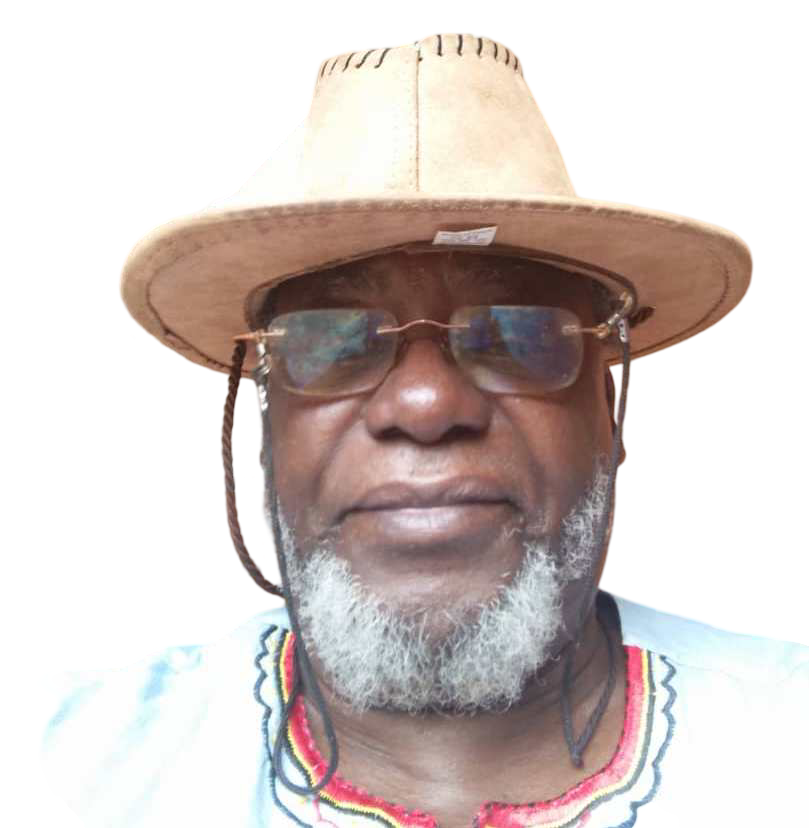
By Oweyegha-Afunaduula
Because of rising poverty and the corruption of the minds of both the leaders and the led in Uganda, from the bottom to the top of society, sycophancy has become integral to the Ugandan way of life..
Sycophancy is the excessive flattery of those in power. It undermines democratisation by stifling dissent, entrenching authoritarianism, and distorting decision-making. The flattered enjoy it and are not happy if there is no one to flatter them. The flatterers are not happy if there is no one to flatter because, by flattering, they gain favors and money, and many become extremely rich by developing the art and science of flattering. An ingredient of the mind of a flatterer is suspended critical thinking and critical reasoning. He or she can even lick the feet of the flattered, show deceptive loyalty, and hide his or her true colors of greed and selfishness.
Many Ugandans have been able to build mansions, acquire materials and wealth, pay fees for their children in the best schools, and seek health attention in the best hospitals in the world by perfecting the art and science of flattering.. The aim is to convince their victims that they are loyal and can defend them and their choices in case there are others contradicting them.
One common characteristic of flatterers is that they are very good at lying. They position themselves as angels before the eyes of their victims – the flattered. Normally, they have no ideas because they carry thick heads that cannot think or reason critically.
Usually, when their victims fall out of the glory of God or the love of the people, the flatterers flee as quickly as they can, and as soon as possible. They waste no time in capturing other victims. They are, therefore, consumers that rarely contribute to production, development, transformation and progress of the country. However, they are good at chorusing what their victim prefers to put across to the people without changing anything so that they do not lose the favours that they get from him or her.
Flatterers are time waters and a burden to the country. They may be educated or not educated. They may come from rich or powerful families or from poor or powerless families. They do not care whether the people are losing or suffering so long as their flattery brings them dividends.
One thing is true. In Uganda’s political landscape, sycophancy can be a pragmatic choice for survival or advancement. However, this perpetuates a system where loyalty trumps merit and accountability. Some people think it is part of Uganda’s Big Man Culture or Bigmanity. Bigmanity is a response to a situation where governor’s avoid forma structures or institution and they become the beginning and end of everything. Typically big men yield a great deal of social power in the absence of formal structures or where institutions are weakened in pursuit of loyalty rather than merit or competency (e g., Oweyegha-Afunaduula, 2023). Therefore, they value being circled by or in control of a patronal chain or network of sycophant. Merit and accountability are roadblocks to their pursuit of power, glory, money, wealth and domination of people.
My interest in this article is to reveal to my readers how exactly flatterers (sycophants) are and have been undermining the democratisation process in Uganda. 63 years after the country obtained its political independence from Great Britain on 9th October 1962 Uganda is not anywhere near achieving the status of “democratic country”. Therefore, democracy has been and continues to be more talked about than realised. It is a myth rather than a reality in Uganda, whatever the rulers and their sycophants want their victims – the people – and the world to believe. Virtually every civic Space and sphere of human endeavour in the country has been captured by the military. The military has also captured the three arms of government – Executive, Legislature and Judiciary, with the rulers happy with just giving them veneers of civility to secure international approval so that their primary aim of sticking to power as long as possible is not interfered with. It is deceptive democratisation or subversion of democracy-building. It is, therefore, de-democratisation – democratisation in the reverse!
Democratisation is “the structural government transition from an authoritarian government to a more democratic political regime, including substantive political changes ,moving in a democratic direction.
In Uganda all District Resident Commissioners (RDCs) and Resident City Commissioners (RCCs) and their deputies are institutionalised sycophants attached directly to the Office of President. By nature of their offices they are more inclined to the President although they are civil servants maintained by the taxpayers. Almost by design they work to disable opposition to the President. They gave been seen working with personalised security organs to restrict the political activities, movements and actions of Opposition political actors. In other words, they are essential elements in the de-democeatisation of Uganda in the interest of perennial power retention by the President of Uganda.
Sycophancy undermines democratisation in multiple ways:
(i) Stifling dissent:
Sycophancy creates a culture where questioning government actions is seen as “unpatriotic” or risky. For instance, Members of Parliament (MPs) who toe the party line often get rewarded, while dissenters face backlash. We have seen this happen in the Parliament of Uganda with both the Speaker and Deputy Speaker who are members of the National Resistance Movement (NRM) Caucus participating in the backlash. For example, in the case of the rebel NRM MPs – Muhammed Nsereko, Barnabas Tinkansimiire, Wilfred Nuwagaba, John Babtiste Nambeshe and Theodore Sekikubo and Okot Ogong, they were backlashed by the President and the Speaker, who was then Rebecca Kadaga. They acquired the label “rebel MPs” when they refused to act sycophantically in Parliament, unlike the other NRM MPs who preferred groupthink or bandwagon approach changing the constitutional provision, which power wanted, to expunge presidential age limit from the Uganda Constitution 1995. Sekikubo characterised the expungement treasonable and deception to hoodwink boba fide MPs that amending the Constitution is a national cause (Parliament Watch, 2021).
The question arise: If the dissent of MPs can be stifled for a bad or unpopular cause, why can it not happen in the general population in general and in the case of Opposition?
(ii) Entrenching Authoritarianism
Sycophants amplify leaders’ tendencies to centralise power, citing “strong leadership” or “stability”. President Tibuhaburwa Museveni’s long rule exemplifies this, with constitutional amendments removing term limits and age restrictions so that he rules like a life President just like Idi Amin did. We see the NRM becoming more and more personalised and members unable to challenge the choices of its Chairman and sole presidential candidate since 1996. The personalisation of NRM is transfered by its leader to the national stage where as President, Tibuhaburwa Museveni personalises power (see Oweyegha-Afunaduula, 2025).
Under such political reality, nothing works without the hand and head of the President (Oweyegha-Afunaduula, 2025). As in most African countries, authoritarianism engender dysfunction, which the rulers adopt as a governance tool (e.g Oweyegha-Afunaduula, 2025). Indeed in Uganda democracy has become an illusion with Uganda’s authoritarian resurgence (Faila Binti Kankwala and Mwanza Ade, 2025).
It is a sad reality when Sycophancy is embedded in the structure and function of an Electoral Commission as is the case in Uganda. The electoral process ei be driven both authoritatively and sycophantically. It is this truism that was behind my recent decision to write the article titled “The Emergence of Electoral Athoritarianism in Uganda: 1996 to Present (Oweyegha-Afunaduula, 2025). Indeed we have been recently treated to electoral authoritarianism in Uganda when the President of Uganda desired and unconstitutionally enforced the use of biometric voting and the Electoral Commission sycophantically adopted it without recourse to the Constitution of Uganda 2025, Which does not provide for biometric voting. We were also treated to military intervention when the Chief of Defense Forces, Muhoozi Kainerugaba, and other Generals ordered Ugandans to go home after voting in the 2026 elections in contravene of the Uganda Constitution, which provides that voters should stay 20 metres away after voting.
(iii) Distorting Decision-Making
Decisions prioritise pleasing the top over public interest. Example includeprojects aligned with President Tibuhaburwa Museveni’s interests of power and power retention (e.g., infrastructure even in the Democratic Republic of Congo’s Eastern region, and poverty intensification and extensification through schemes such as Operation Wealth Creation, Myooga and Parish Development Model. Even the recent decisions of the Chairman of the Uganda Electoral Comnission reflect decisions made outside the Commission. The authoritaria decision to deploy heavily on Bobi+Wine’s Campaign trail prior to the 2926 elections rendered the Electoral Commission a paper tiger as it was no longer in charge of the security of the presidential candidate, and actually did nothing to restore public trust that the electoral process was not under military control.
(iv) Impact on Institutions
Institutions like the judiciary and Parliament have been weakened by sycophantic officials who prioritise loyalty over independence. This is also true of the Electoral Commission chaired by Justice Byabakama, which is no longer capable of sustaining public trust that it will be fully in charge of the 2026 elections. The Chairman continues to act sycophantically and be a factor in the institutional and military capture of both the Electoral Commission and the electoral process. All his recent decision do not spur public trust. Few believe he is working in the public interest of democracy
(v) Effects on Opposition and Civil Society
The ruling party’s sycophantic culture contrasts with opposition struggles to be heard, reinforcing power imbalance in the country. We have seen this during the current politicking and electioneering towards the 2025 elections. The NRM leadership has allowed its Chairman to personalise and militarise it. Just like it was linked to the National Resistance Army (NRM )it has built strong ties with the Uganda Peoples Defense Forces (UPDF). The 10 UPDF Members of Parliament manifest as if they NRM representatives. Virtually all UPDF officers campaign for NRM’s Supremo, Tibuhaburwa Museveni, and NRM candidates. The Chief of Defense Forces has deployed heavily on Bobi Wine’s Campaign trail, displaying that the army is favour of the incumbent. The choice UPDF leadership to ally itself with NRM and is determined to ensure no alternative leadership emerges in the 21st Century. This way, it is continuing to militarise politics and to weaken civil society. Already so many civil society organisations have been banned in Uganda. Besides, authoritarianism has ensured there is no adequate civil education for the voting population. Fear and silence are the rule rather than the exception ub Uganda.
Way Forward for Uganda
It is because of sycophancy that hereditary politics has taken root in the country, anti-people laws have been enacted by Parliament, anti-people judicial processes have become common, freedom, democracy and justice are more talked about than officially pursued by the government, and public money is wasted on the loyalists at the expense of the public interest. To strengthen Uganda’s democracy, addressing sycophancy requires promoting accountability, institutional reforms, and a cultural shift towards critical engagement of Ugandans In the leadership, governance and development of the country. So far so bad. It is as if the long-term choice of the governors of Uganda is apartheid-like leadership and governance of Uganda, in which the Indigenous Ugandans and their communities are subject to people with exogenous roots. However, all this ei not be possible unless presidentialism is detonated (e.g., Oweyegha-Afunaduula, 2022). When all power is constitutionally placed in one person – the President – which the Uganda Constitution, 1995 does, authoritarianism and sycophancy are good ves fellows. That is why President Tibuhaburwa Museveni can tell Ugandans, “If you want to test my powers, do it you will see”. So it is either revisiting the Constitutional powers of the President to redistribute them accordingly or innovate a new pro-people Constitution, which does not encourage authoritarianism and Sycophancy if Ugandans want demicracy in their country.
Sycophancy’s grip on Uganda’s politics threatens democratisation. Breaking this cycle demands awareness, checks on power, spaces for critical voices and de-militarisation civic spaces. Bigmanity is internally violent. Ugandans must resolve to combat sycophancy and bigmanity. Otherwise the country will never enjoy freedom, justice and democracy.