


By Oweyegha-Afunaduula
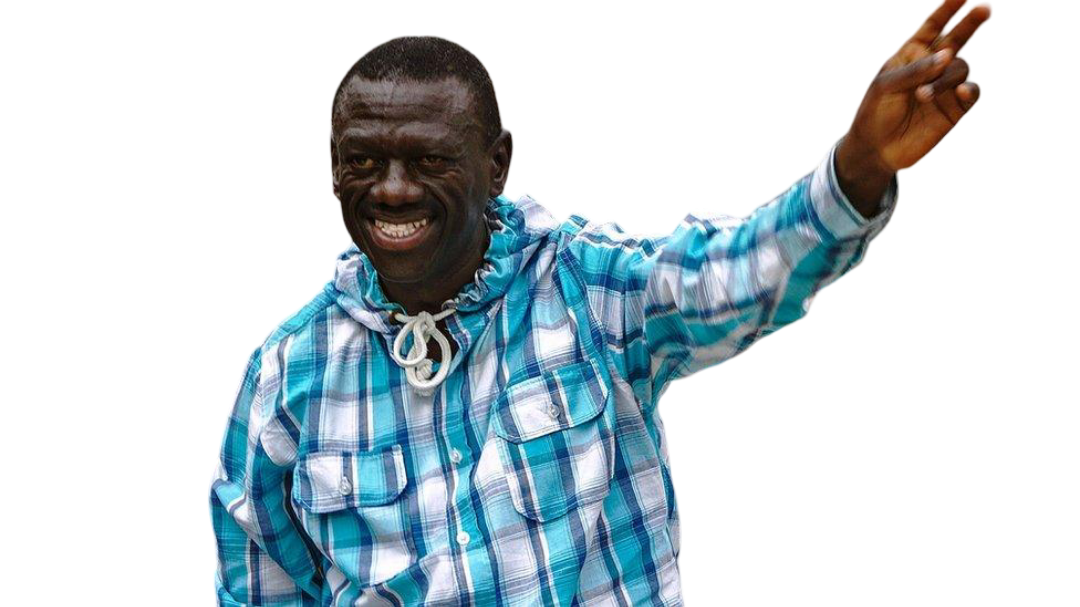
In Uganda’s complex political landscape, Dr Kiiza Besigye stands as a figure of relentless defiance, his life etched with the “wrinkles of struggle” against a government that has increasingly tightened its grip on power. From medical doctor to opposition leader, Besigye’s journey reflects not just personal courage but the deeper systemic challenges that have shaped Uganda’s pursuit of democracy.
In this article I want to write about Dr Kizza Besigye’s life of selfless struggle by borrowing the phrase “Wrinkles of Struggle”. Wrinkles are signs of wisdom from the many, many years of life struggle. Each line on the face hides a struggle, a sacrifice, a love carried to the end. They are not lines of weakness but a silent commitment to a family, cause or nation. They represent worthwhile ups and downs. Persistence is the heat that smoothes out the wrinkles of our struggles.
The Early Struggles: A Man of Principle
Besigye’s path was once intertwined with Yoweri Tibuhaburwa Museveni’s, joining the National Resistance Army (NRA) in the 1980s ostensibly to fight against dictatorship. But disillusionment soon followed. By the early 2000s, Besigye had emerged as a vocal critic of the NRM regime, ultimately forming the Forum for Democratic Change (FDC) and running for president multiple times. Each election became a battleground, marked by arrests, alleged torture, and a state machinery determined to silence him.
The Wrinkles of Repression
(i) State-Sponsored Challenges
Besigye’s story is punctuated by brutality – his 2001 arrest, the 2006 “treason” charges, and years of house arrest. The Public Order Management Act has been wielded to restrict his rallies, while torture allegations drew international scrutiny but little change. A year ago he was kidnapped from a Nairobi hotel by Ugandan security forces, ostensibly for possession of arms and planning to overthrow President Museveni’s government.
Since then, his life’s trajectory has been characterised by a ritualistic travail initially between Luziira Maximum Prison and the Military Court, and then until now between Luziira and the civilian court, which seems to be in a hurry to declare whether or not Kizza Besigye is guilty of the treasonous charges clamped on him by the state.
However, the man is unyielding. The body may be giving in, but his spirit has refused to let him. He is not in a hurry to betray his principles. He is as committed to his struggle for the freedom and justice of Ugandans and democracy in the country as when he was in the bushes of Luwero and since his missive of 1999, which set the stage for opposition or resistance to Tibuhaburwa Museveni’s determined hold onto power and excesses.
(ii) Political Isolation
A media blackout, harassment, imprisonment and a constant shadow of surveillance underscore the cost of Kizza Besigye’s unbroken dissent. He remains focused on his struggle for democracy, freedom and justice beyond the gun legacy of the Luwero Triangle.
Resilience and Mobilisation
Kizza Besigye’s struggle has rippled outward. He helped galvanise the opposition, inspiring a new wave of activists like Kyagulanyi Ssentamu, alias Bobi Wine, whose People Power movement blended music and protest. Digital campaigns now amplify Bobi Wine’s message of a new Uganda, united with One People and free from domination and exploitation by a few greedy and selfish people, as younger Ugandans question a future overshadowed by fear and silence.
Kizza Besigye’s battles have taught us that speaking out is a duty, responsibility and obligation even when it’s dangerous,” says a young activist. In practice, Kizza Besigye is an extremely courageous, combative democracy, freedom and justice crusader.
Legacy and Reflections
Besigye’s fight exposes Uganda’s democratic faultlines – a regime allergic to accountability. His persistence sparks hope but also raises questions: Can the Opposition sustain its momentum? Will the youth translate anger into lasting change?
The wrinkles of struggle are etched, but the fight for Uganda’s democracy remains unwritten. Will it heal or deepen?
The Global Echoes
Internationally, Besigye’s plight drew attention from rights groups like Human Rights Watch, though donor responses often walled themselves behind “partnership” rhetoric. Solidarity campaigns flared, but tangible shifts in Uganda’s governance stayed elusive.
Solutions and a Clarion Call
Ugandans must amplify their voices, pushing for inclusive politics and accountability. The struggle isn’t just Besigye’s. It is everyone’s. Break the fear; join the rewrite.
For God and My Country.
Prof. Oweyegha-Afunaduula is a conservation biologist and member of the Center for Critical Thinking and Alternative Analysis.