


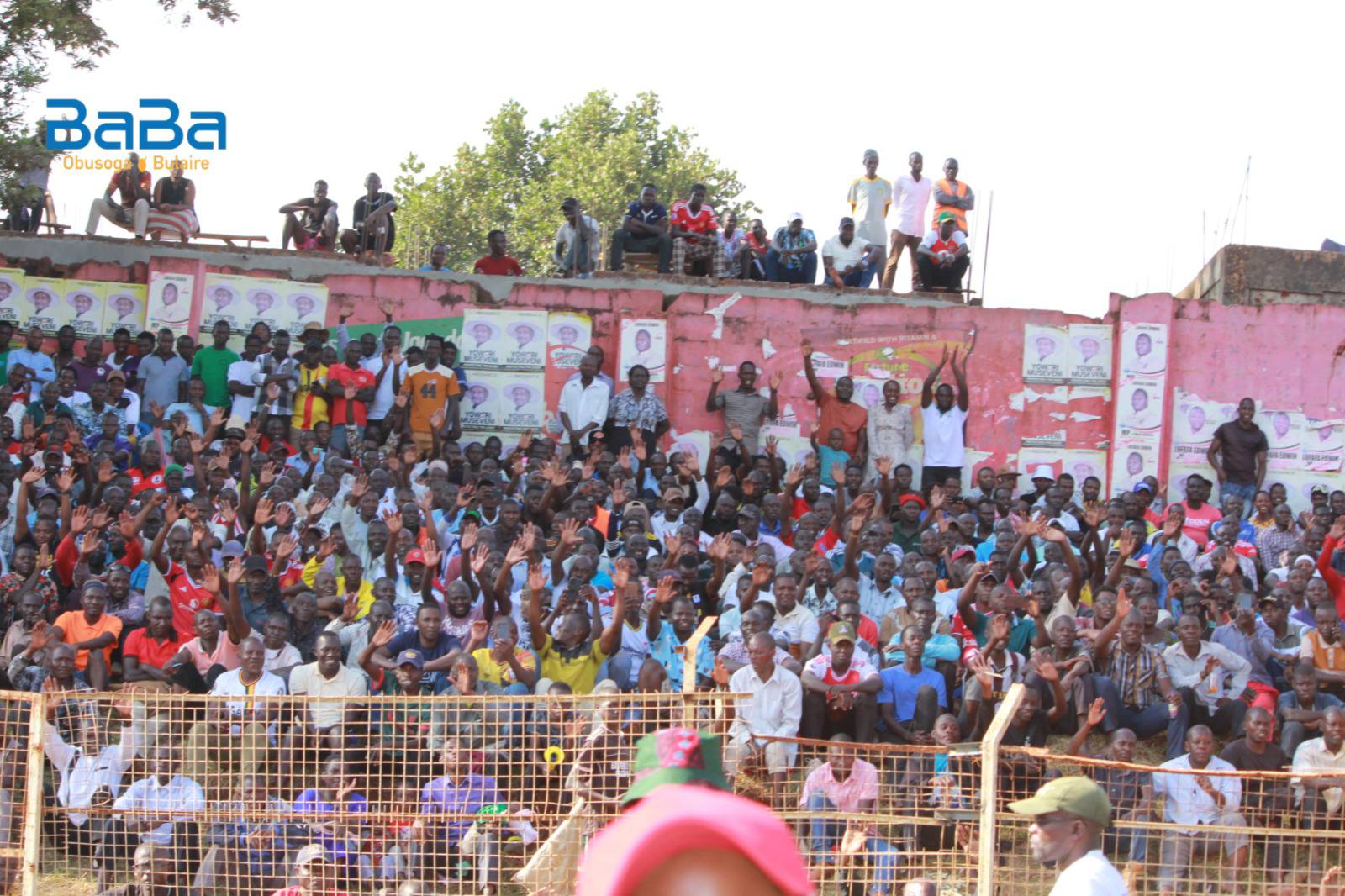
The 8th edition of the MTN Busoga Masaza Cup climaxed on Saturday, 6th December 2025, at Kyabazinga Stadium, Bugembe, where Kigulu edged Luuka 1–0 to lift their third Masaza Cup title in history.
As the dust settles on another competitive season of Busoga’s flagship football tournament, the 2025 edition registered notable positives while also exposing areas that still require urgent attention.
THE SCORES
Improved Player Discipline
Player discipline stood out as one of the tournament’s biggest successes. Across 44 matches, only two red cards were recorded — a remarkable improvement that reflected better player conduct and officiating. This progress played a key role in maintaining the tournament’s competitive integrity.
Respect for Fixtures
With the exception of Budiope, who failed to turn up for their final group match against Bugweri, teams largely respected the fixture calendar.
Out of 44 scheduled matches, 43 were played, a positive indicator of team commitment and improved tournament coordination.
Strong Fan Support
Fans turned up in large numbers, especially during the group stages, rallying behind their teams across different chiefdoms and playgrounds.
Even midweek fixtures attracted impressive crowds, underlining the deep-rooted passion and unity football continues to inspire across the Busoga region.
Improved Player Security
Player security showed signs of improvement, with inner perimeter fencing introduced at several venues. Although mostly temporary and breached in a few isolated cases, this move marked a step forward in protecting players and match officials.
Increased Prize Money
The tournament registered growth financially, with the winner’s prize money increasing from UGX 12 million in 2024 to UGX 13 million in 2025. This increase reflects steady progress since the tournament’s inception in 2016 and remains a strong motivation for participating teams.
Return of Individual Awards
The 2025 edition reinstated key individual awards, including Top Scorer, Most Valuable Player, Best Goalkeeper, and Best Coach. While some awards were still missing, the return of these honours added value and recognition to individual excellence.
THE MISSES
Fixture Disorganisation
The Technical Organising Committee (TOC) continued to struggle with fixture consistency, often adjusting match dates at short notice. Poor communication — sometimes just one or two days before matches — affected player focus and fan turnout. Notably, matches played without abrupt adjustments attracted significantly larger crowds.
Low Turnout for the Final
Despite free entry, Kyabazinga Stadium did not reach full capacity for the final. Attendance was noticeably lower compared to group-stage matches at venues such as Kisiki College, Mafubira Primary School, Namayingo C/U Primary School, Busalaam Primary School, Wembley Stadium Mayuge, and Irundu C.O.U Primary School.
Possible reasons included political tensions, fixture uncertainty, and limited media promotion.
Limited Media Coverage
Media attention remained low, largely due to insufficient access to timely information such as results, fixtures, standings, and statistics. Establishing a dedicated tournament media committee could significantly improve visibility and coverage.
Overuse of Neutral Venues
While neutral grounds promote fairness, repeatedly hosting knockout matches in Jinja and Butembe limited regional engagement. Rotating knockout fixtures across different chiefdoms could boost attendance and local excitement.
Absence of Pre- and Post-Match Press Conferences
The lack of structured pre-match and post-match press conferences deprived the tournament of momentum and media engagement. Such platforms would not only enhance visibility but also attract sponsors through guaranteed media exposure.
Poor Statistics Management
Inconsistent statistical records led to disputes, particularly around top scorers. A centralized statistics management system aligned with team departments is urgently needed.
Questionable Award Selection
Some award decisions raised debate. For instance, coaches who achieved historic milestones but fell short of the title were overlooked, raising concerns about over-rewarding trophy success at the expense of effort, growth, and context.
Poor Time Management
Approximately 80% of matches failed to kick off at the scheduled time, highlighting weak enforcement of tournament regulations.
Fan Indiscipline
While player discipline improved, fan indiscipline remained a major concern. Incidents involving stone-throwing and attacks on referees, players, and officials were reported in Bunhole Bunhanhuba, Busiki, and other venues. Such behavior threatens the tournament’s safety and image.
Lack of a Permanent Tournament Office
The absence of a permanent Masaza Cup office affected coordination, communication, and petition handling. Teams and fans struggled to access officials, leading to frustration and loss of confidence in tournament administration.
Limited Final-Day Entertainment
While football is the main attraction, the final lacked structured entertainment. Featuring regional and national musicians during opening or final ceremonies could enhance spectacle, boost attendance, and attract sponsors.
THE WAY FORWARD
If organisational gaps are addressed — particularly in fixtures, media engagement, fan discipline, and administration — the MTN Busoga Masaza Cup has the potential to grow into one of Uganda’s most attractive regional football competitions.