


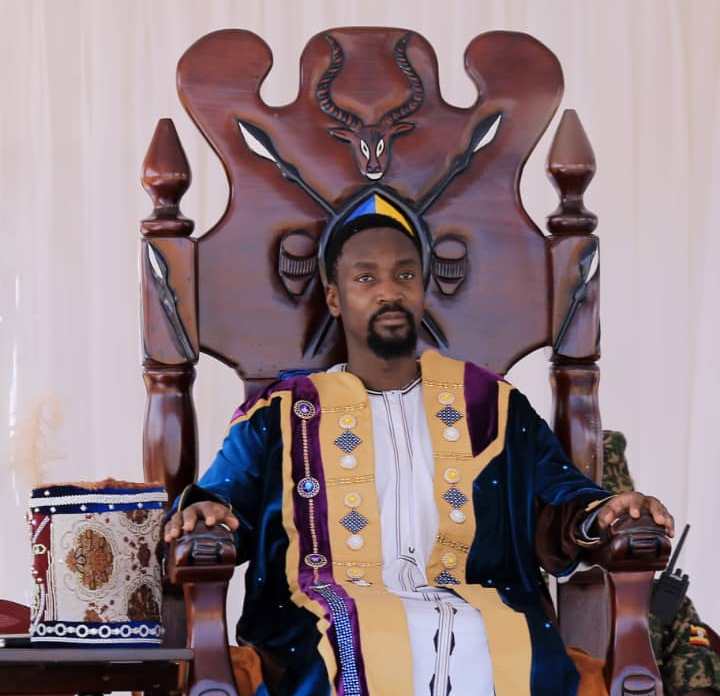
By Oweyegha-Afunaduula
This article is a vital piece of scholarship – a compelling synthesis of history, political economy, and moral clarity. It not only documents the systematic disempowerment of Busoga but also serves as a powerful call to intellectual and social action. I am certain it will resonate deeply and contribute significantly to the discourse.
Busoga Before Imposed Monarchies
Long before the imposition of external monarchies, the Basoga were a people of the land, organized around clan systems. Theirs was a society of shifting cultivators and hunters, governed by lineage heads and local councils.
This indigenous governance structure was fluid, democratic, and deeply connected to their environment. The concept of a centralized monarchy was alien. This changed with the arrival of the Igaga Clan from Bunyoro, emissaries of an expanding Chwezi influence.
Prince Byaruhanga Ndahura, a figure from Bunyoro, established the first royal chiefdoms: Bugabula, Bugweri, Bukooli, Busiki, Luuka, and Buzaaya. He established his seat of power at Nnenda Hill in Kigulu but strategically deprived Kigulu itself of chiefdom status, arguing that “there cannot be two bulls in a kraal.”
This act centralized his authority. Thus, the very institution that would come to define Busoga’s political structure for centuries was an implantation from outside, linking Busoga’s destiny to the politics of the wider interlacustrine region and, mytho-historically, to lineages stretching to the Ethiopian Highlands.
The Consolidation of Monarchism Pre-Britain
In the centuries before British colonization, this implanted monarchical system took root and evolved. The Kyabazingaship, though inspired by external models, became a Busoga institution, with its own internal dynamics and rivalries among the various chiefdoms (Obwakabaka).
The many other chiefdoms that later constituted Busoga were largely creations of the British colonial administration. This period saw the crystallization of a distinct Busoga polity, though one inherently shaped first by its initial Bunyoro design and later by colonial manipulation.
Subjugation under British Colonialism
British colonialists did not create Busoga from scratch but perfected its administrative subjugation. They utilized the existing monarchical structure, initially employing the title “President” for the ruler before reverting to “Kyabazinga.” This was a strategic move to create a compliant native authority.
The colonial project was violently expedited by the militarist Semei Kakungulu, who, acting as a British agent, used force to “pacify” and reorganize Busoga into a manageable colonial unit. The Kyabazinga’s government became, first and foremost, an instrument of colonial extraction.
Integration into the Colonial Bureaucracy
The British formalized this control by fully integrating Busoga’s governance into the Uganda Protectorate structure. The once-autonomous chiefs were transformed into salaried civil servants of the colonial state.
Their primary duties shifted from serving their people to serving the colonial economy: they were the enforcers who collected oppressive taxes, mandated the cultivation of cash crops like cotton and coffee in every household, and sat on councils that merely rubber-stamped and legitimized policies dictated by the colonial officers. This bureaucratic co-option severed the organic accountability between rulers and the ruled, embedding a culture of service to the central power.
Development and Exploitation
Despite its subservient role, the Kyabazinga’s government under British rule did channel some development. It played a part in promoting the very commercial agriculture it was forced to enforce, establishing schools like the iconic Busoga College Mwiri and Iganga High School, and fostering a modern Busoga culture. This created a paradoxical period where infrastructural and educational growth occurred within a framework of political servitude and economic exploitation.
The Post-Colonial Zenith and Its Foundations
After independence, the momentum continued under visionary local leadership. The Kyabazinga’s government, still a political entity, actively invested in infrastructure, health, and education. Here, the contribution of leaders like Daudi Mutekanga was pivotal.
As a driving force behind the development of roads, schools, and community institutions, Mutekanga exemplified the practical, self-reliant leadership that translated political autonomy into tangible progress. The government’s bursary schemes were legendary—enabling the children of farmers and even guaranteeing free education for four children of every clergy family.
This visionary investment yielded a golden generation: Uganda’s first engineers, doctors, lawyers, architects, and professors were disproportionately Basoga. Busoga was not just participating in Uganda’s modernity; it was leading it.
The Engine of Prosperity: Agriculture and Cooperatives
This intellectual ascent was built on an economic powerhouse. Busoga’s fertile soils fueled a booming cooperative movement around coffee and cotton. Farmers were wealthy, organized, and empowered. The cooperatives were more than economic units; they were institutions of community capital and self-reliance, funding not just households but the very educational excellence that defined the region.
The Great Unraveling: From 1966 Through Conflict
The decline began with President Obote’s 1966 abolition of kingdoms and the aggressive centralization of power and services, stripping Busoga of its autonomous governance and crippling its homegrown development apparatus. The Idi Amin regime compounded the disaster by militarizing the administration, appointing military officers as chiefs and governing through coercion.
The cooperative system was attacked, and the cash crop sector decayed. Notably, during this period, Busoga’s coffee was massively smuggled to Kenya as Kase (ground coffee), fueling Nairobi’s boom and creating wealthy Mafutamingi traders while impoverishing the farmer.
The impoverishment was systematically completed during the 1981-86 guerrilla war. The NRA’s tactics targeted the very foundations of Busoga’s prosperity: cooperatives were destroyed, railways and industries dismantled, and health and educational institutions wrecked.
This was not collateral damage but the initiation of a long-term strategy of disempowerment. The promised “build” phase after the destruction has, for 40 years, failed to materialize for the majority of Basoga, who have been left in a prolonged state of economic and social depression.
The Final Strip: The 1995 Constitution and Cultural Erasure
The 1995 Constitution delivered the coup de grâce. It politically castrated the Kyabazingaship, reducing it to a “cultural institution” stripped of all decision-making power, which was transferred to the centre. The cruel irony is profound: the Kyabazinga was made a salaried civil servant, exactly as the colonial chiefs had been. This “cultural leader” is now institutionally powerless to halt the very cultural erosion engineered by the state—rampant land grabbing, the imposition of foreign monocultures like oil palm and sugarcane, and the deliberate dilution of indigenous identity and belonging.
Wealth in the Midst of Poverty: The Mineral Curse
Today, Busoga sits on immense wealth—gold, uranium, rare earth minerals. Yet, this bounty has become a curse. The community has no control over the exploitation, no share in the marketing, and gains nothing from the proceeds. The resources are extracted, leaving behind environmental degradation and deepened poverty, while wealth is siphoned to centres of power.
Reclaiming the Future
The conclusion is inescapable: The future of Busoga is not in the hands of the Basoga. It is held by a small, constitutionally entrenched group—the Banyarwanda—who control the security and mineral wealth of the state. Busoga’s history, from the Igaga clan to the present, is a chronicle of externally imposed structures used for extraction.
Reclaiming the future requires a fundamental reclamation of agency—political, economic, and cultural. It demands a critical interrogation of the centralized governance model and a courageous revival of the cooperative, self-determining spirit that once made Busoga a beacon of progress. The alternative is the continued erosion of being, until Busoga is but a memory on the map of its exploiters.