


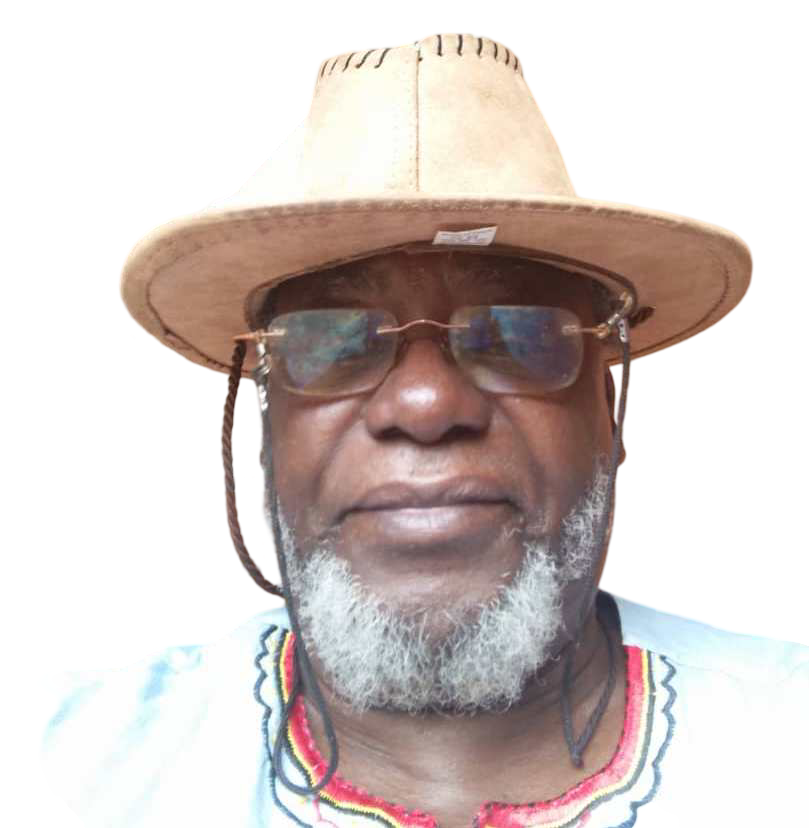
By Oweyegha-Afunaduula
With Ugandans set to return to the polls, the nation finds itself trapped in a familiar ritual—one not of democratic renewal, but of managed authoritarian endurance. The 2026 general elections unfold not as a contest of ideas, but as a coronation process for a regime that has systematically fused state, military, and family into an unassailable fortress of power. As opposition parties and civil society raise urgent, credible concerns over last-minute legal changes, a restricted voters’ register, and the ominous silence on election-related violence, the Electoral Commission’s assurances ring hollow against a decades-long pattern of subversion. These are not mere administrative glitches; they are the deliberate tools of what analysts term an “electoral dictatorship”.
This article argues that democracy in Uganda has not simply been weakened under the National Resistance Movement (NRM); it has been structurally and irrevocably nullified. The regime has been replaced by a hybrid system built on three pillars: a militarized political sphere, a subverted electoral architecture, and a project of monarchical succession. Together, these pillars ensure that the ballot box is a theater, not a mechanism for change, making genuine democratic governance impossible for as long as this system persists.
Historical Roots of Making Democratic Resurrection Impossible
Uganda’s democratic regression has its roots in the NRM’s ascent to power in 1986. The movement’s initial promise of restoring democracy and stability gradually gave way to authoritarian entrenchment. Key milestones include the abolition of term limits in 2005, allowing President Museveni to extend his rule, and the 2009 Anti-Counterfeit Act, which has been used to suppress opposition voices. The regime’s manipulation of electoral processes, exemplified by the 2011, 2016, and 2021 elections, has further eroded democratic institutions.
Deep State-Mafia Framework
The Deep State-Mafia Framework has enabled the NRM to maintain power through a complex web of patronage, corruption, and coercion. In the economic sphere, this is evident in the allocation of lucrative contracts and resources to loyalists. A prime example is General Salim Saleh Akandwanaho, Museveni’s brother, who has built a mini-state in Gulu, Northern Uganda, from which he dispenses patronage and exercises significant influence.
Saleh’s Gulu mini-state is a symbol of the regime’s corruption and cronyism. He has constructed a state-of-the-art palace, rumored to be more luxurious than President Museveni’s State House in Entebbe. This opulent complex serves as a hub for Saleh’s business and political interests, solidifying his position as a key powerbroker in the regime.
Through his Gulu operation, Saleh has cultivated a network of loyalists and clients, whom he rewards with contracts, jobs, and other benefits. This patronage machine has helped maintain the regime’s grip on power in the region, while also enriching Saleh and his associates.
Operation Wealth Creation, Myooga, and Parish Development initiatives have been criticized for generating poverty and dependence, thereby “oiling” the patronage machine. These programs often prioritize short-term gains for loyalists over long-term development, perpetuating a cycle of corruption and underdevelopment.
In the political sphere, the Deep State-Mafia Framework has facilitated the suppression of opposition voices and the manipulation of electoral processes. The Legislature and Judiciary have been compromised, with key positions filled by loyalists, ensuring that the regime faces little to no accountability.
The Pillar of Militarized Politics
The militarization of politics is a critical component of Uganda’s authoritarian system. The UPDF has been deployed to quell dissent, intimidate opposition, and maintain the regime’s grip on power. The promotion of Muhoozi Kainerugaba to Chief of Defence Forces in 2024 exemplifies the fusion of military and political power, cementing the regime’s control.
The Pillar of Subverted Electoral Architecture
The electoral process in Uganda is designed to favor the ruling party. Key concerns include:
– Disqualification of already qualified opposition candidates
– An opaque and inaccessible voters’ register
– Last-minute legal changes, such as the introduction of new election technology without adequate public scrutiny
– Weaponization of security during the electoral process
The Pillar of Monarchical Succession: The “Muhoozi Project”
The promotion of Muhoozi Kainerugaba to the apex of military power is the definitive act that seals Uganda’s democratic fate. The “Muhoozi Project” is an open political enterprise, with Muhoozi aggressively courting a political following and declaring his presidential ambitions for 2026.
Conclusion and Forward Path
The evidence leads to an inescapable conclusion: Uganda under the continued rule of the NRM and the Museveni dynasty is institutionally, constitutionally, and practically incapable of hosting a democratic transition. Elections are reduced to expensive rituals that provide a veneer of legitimacy for a system sustained by coercion, patronage, and hereditary planning.
The struggle must be to challenge the legitimacy of an anti-democratic system itself—a system that has enthroned a political monarchy at the expense of popular sovereignty. Recognizing this truth is the first, and most necessary, step toward envisioning a future beyond it.
For God and My Country