CHARLOTTE, NC – [Date of Publication] – LendingTree (NASDAQ:TREE) announced Friday a strategic financial move, securing a new $475 million credit facility aimed at optimizing its capital structure, reducing interest expenses, and enhancing financial flexibility. The news was met positively by investors, with shares climbing 1.19% in pre-market trading to $63.90.
The new facility is composed of a $400 million Term Loan B and a $75 million revolving credit facility, both structured with five-year maturities. The Term Loan B carries an interest rate of SOFR (Secured Overnight Financing Rate) plus 450 basis points (bps), while the revolving credit facility will bear interest at SOFR plus 350 bps.
Proceeds from this significant financing are primarily earmarked for refinancing existing debt and for general corporate purposes, offering LendingTree greater operational latitude.
This new financing package replaces the company’s existing Term Loan B, which was set to mature in 2028, and also supersedes a separate loan agreement with Apollo. The restructuring is expected to yield substantial benefits for the online lending marketplace.
“The new facility will reduce our interest expense, eliminate several restrictive covenants from prior agreements, and reward shareholders with a lower cost of capital that is reflective of our improved growth trajectory,” stated Jason Bengel, Chief Financial Officer of LendingTree. His comments underscore the company’s confidence in its financial health and future prospects.
LendingTree operates as an online marketplace connecting consumers with a broad array of financial products. Its platform allows users to compare options for various needs, from personal loans — including those tailored for bad credit or emergency situations — to payday loans, and even specialized financial products like business loans and SBA loans for entrepreneurs. By streamlining its debt structure, LendingTree is positioning itself to better serve its expansive customer base and capitalize on market opportunities in the diverse lending landscape it facilitates.
WASHINGTON — Shares of major semiconductor companies fell sharply on Wednesday following reports that the Trump administration is considering taking equity stakes in chipmakers in exchange for federal funding awarded under the CHIPS and Science Act.
The market sell-off was triggered by concerns over a potential shift in policy that would see the U.S. government become a direct shareholder in key technology firms. Intel Corp. took the biggest hit, with its shares plunging 7 percent. Other major players also felt the impact, as Micron Technology shares fell by 4 percent and global leader Taiwan Semiconductor Manufacturing Co. (TSMC) saw its stock slide 1.8 percent. Industry giants Nvidia and AMD also registered declines of 0.14 percent and 0.8 percent, respectively.
The market reaction followed a Reuters report on August 20, citing a White House official and another anonymous source, which detailed a plan being developed by Commerce Secretary Howard Lutnick. The plan would involve the U.S. government receiving equity in Intel and other major recipients of CHIPS Act grants. Micron, TSMC, and Samsung are among the companies that have received or are slated to receive billions in such funding.
While the White House and Department of Commerce did not immediately respond to requests for comment, Secretary Lutnick confirmed the administration’s intention for Intel on Tuesday. He stated that President Donald Trump believes the United States should “get the benefit of the bargain” from its investments.
“We should get an equity stake for our money, so we’ll deliver the money which was already committed under the Biden administration,” Lutnick told CNBC. “We’ll get equity in return for it, get a good return for the American taxpayer rather than just giving grants down.”
Lutnick clarified that any federal investment would not result in the government obtaining a voting stake or governance rights over Intel’s operations.
The CHIPS and Science Act, signed into law by President Joe Biden, was designed to boost domestic semiconductor manufacturing with billions of dollars in federal grants. Intel was a primary beneficiary, awarded nearly $11 billion, with TSMC receiving $6.6 billion and Micron $6.1 billion.
During a press briefing on August 19, White House Press Secretary Karoline Leavitt confirmed that the Department of Commerce is actively “ironing out the details” to secure a 10 percent government stake in Intel. “The president wants to put America’s needs first, both from a national security and economic perspective, and it’s a creative idea that has never been done before,” Leavitt said. She did not confirm if similar equity requests would be made to other chipmakers.
Treasury Secretary Scott Bessent, also speaking to CNBC, framed the move as a matter of national security. He explained that the equity would come from converting existing grants and potentially adding investment to help stabilize Intel and expand chip production within the United States.
“The single point of failure for the global economy is that 99 percent of the advanced chips in the world are made in Taiwan,” Bessent stressed, adding that the government’s goal is not to “take a stake and then try to tap up business.”
TSMC declined to comment on the matter, while Intel and Micron did not immediately respond to requests for comment.
Washington D.C. — Shares of major semiconductor companies fell sharply on Wednesday, August 20, following reports that the Trump administration is considering taking equity stakes in some chipmakers in exchange for federal funding provided under the CHIPS and Science Act.
Intel shares experienced the most significant hit, dropping by 7 percent, while Micron shares fell by 4 percent. Taiwan Semiconductor Manufacturing Co. (TSMC), a key global player, saw its shares slide by 1.8 percent. Other industry giants, Nvidia and AMD, also registered declines, down by 0.14 percent and 0.8 percent respectively.
The market reaction comes after Reuters reported on August 20, citing a White House official and another anonymous source, that Commerce Secretary Howard Lutnick has been working on a plan for the U.S. government to receive equity stakes in Intel and other major recipients of CHIPS Act grants. Micron, TSMC, and Samsung are among the companies that have received or are slated to receive such funding, though the precise size of any potential government stakes remains undetermined.
While the White House and Department of Commerce did not respond to requests for comment from The Epoch Times regarding the report, Secretary Lutnick confirmed the administration’s intention for Intel on Tuesday. He indicated that President Donald Trump believes the United States should “get the benefit of the bargain” rather than simply issuing grants.
“We should get an equity stake for our money, so we’ll deliver the money which was already committed under the Biden administration,” Lutnick told CNBC. “We’ll get equity in return for it, get a good return for the American taxpayer instead of just giving grants away.”
Lutnick clarified that any federal investment would not result in the government obtaining a voting stake or governance rights over Intel’s operations. He did not disclose the proposed total stake in Intel.
The CHIPS Act, signed into law by President Joe Biden, was designed to boost domestic semiconductor production through billions of dollars in federal grants. Intel notably received nearly $11 billion in CHIPS Act grants, with TSMC awarded $6.6 billion and Micron $6.1 billion.
White House press secretary Karoline Leavitt confirmed during an August 19 press briefing that the Department of Commerce is actively “ironing out the details” to secure a 10 percent government stake in Intel. “The president wants to put America’s needs first, both from a national security and economic perspective, and it’s a creative idea that has never been done before,” Leavitt stated, though she did not confirm if similar requests would be extended to other chipmakers.
Treasury Secretary Scott Bessent, also speaking to CNBC on Tuesday, emphasized that the government’s aim is not to “take a stake and then try to drum up business.” He explained that the equity would come through converting existing grants and potentially increasing investment in Intel to help stabilize the company and expand chip production within the United States. Bessent highlighted the national security imperative behind the move, noting that “the single point of failure for the global economy is that 99 percent of the advanced chips in the world are made in Taiwan.”
TSMC declined to comment on the matter, while Intel and Micron did not immediately respond to requests for comment.
The much-anticipated second round of the Busoga Masaza Cup is set to commence on Saturday, September 6th, 2025, with the final expected to be played in late October.
Speaking to the Busoga Times, the tournament’s spokesperson David Mwesigwa revealed that the opening fixtures will mirror those of the first round, with only the home-and-away status reversed.
“Fixtures are yet to be officially released, but the first games remain unchanged. The difference is that the teams that were home in the first round will now travel, while those who played away will host,” said Mwesigwa.
Busoga masaza cup spokes person David Mwesigwa.
The technical organizing committee, chaired by Isa Magoola Kakaire, convened at the Kyabazinga headquarters in Bugembe, Jinja District. The meeting, attended by representatives of all 14 competing chiefdom teams, reviewed the first round and discussed preparations for the upcoming stage.
Player Eligibility & Registration
Mwesigwa emphasized that all teams were asked to confirm their home grounds and player lists. He clarified that players who featured in the first round but have since signed for FUFA Big League clubs will not be eligible to play in the Masaza Cup. Such teams have been given an allowance to recruit and register new players.
He particularly noted Iganga United’s role as a supplier of talent, with many of their players now tied to FUFA competitions and therefore ineligible for the tournament.
Discipline on and off the Pitch
The committee praised the fair play exhibited in the first round, pointing out that no red cards were issued throughout. However, isolated cases of indiscipline—especially from fans—were highlighted.
Fans invading the pitch in a Busoga masaza cup game
One major incident occurred on 26th August at Namayingo P/S, where fans invaded the pitch during Bukooli Namayingo’s clash with Butembe, injuring goalkeeper Kalabuki Sadic. Similarly, on 2nd August at Kisiki College, Namutumba, Busiki fans stormed the field and attacked Butembe’s Kibilige Obadiah Martin, who required urgent medical attention. Another ugly scene unfolded on 20th July in Bugade Primary School, when referees were attacked after Bunhole Bunhanumba’s loss to Bugweri.
While no players were red-carded, officials were not spared. Kigulu FC official Kilega Arafat was issued a stern warning after attacking a member of the organizing committee during a game against Butembe. Meanwhile, Busiki’s fans and management were handed a last warning, with the risk of losing their hosting rights if similar incidents reoccur.
The National Unity Platform (NUP), Uganda’s leading opposition political party, is actively expanding its rural footprint, demonstrating a concerted effort to broaden its support base beyond urban centers as the nation gears up for the next general elections.
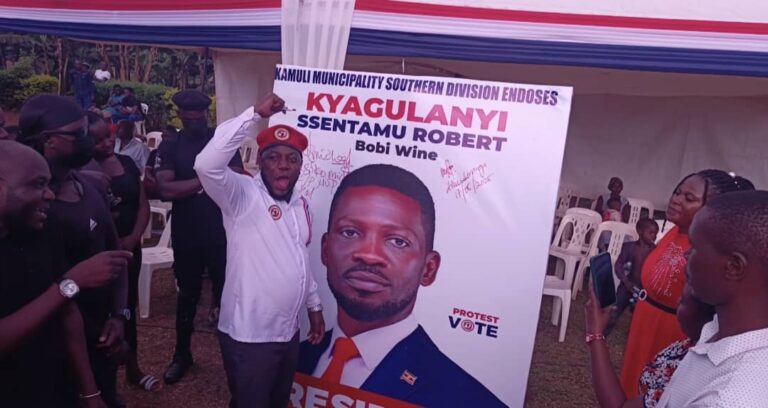
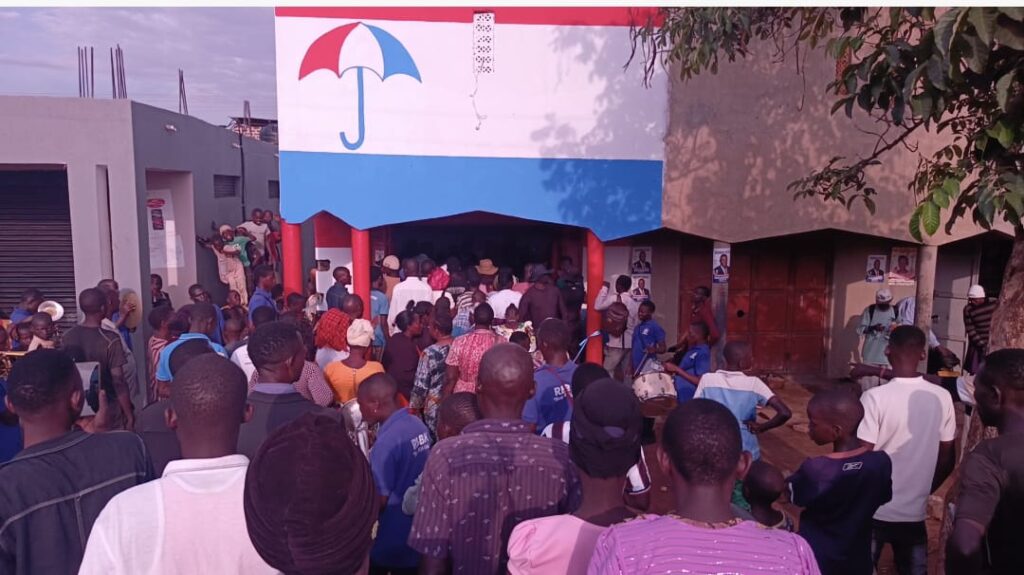
The latest manifestation of this strategic growth is the public opening of a new NUP office in Kamuli Municipality, Kamuli district, a move aimed at bolstering grassroots mobilization and increasing the party’s visibility upcountry.
The grand opening event, held at the Budhumbula Palace Trading Center Southern Division in Kamuli Municipality, saw enthusiastic party supporters, often referred to as “footsoldiers,” converge to celebrate the milestone.
A key moment during the gathering was the resounding endorsement of NUP President Robert Kyagulanyi Ssentamu, popularly known as Bobi Wine, as their preferred presidential candidate for the upcoming polls.
The establishment of the new office was sponsored by Silver Segonga, an aspiring Member of Parliament for Kamuli Municipality. Segonga articulated that the office would serve as a “strategic” hub for the opposition, offering crucial “visibility” to the party’s activities in the region.
He emphasized its inclusive nature, stating, “I have offered it to serve everyone in opposition, not only NUP, because we are an Umbrella.”
The new NUP office will serve as a “strategic” hub for the opposition, offering crucial “visibility” to the party’s activities in the region.
Segonga further highlighted the prevailing socio-economic conditions as a fertile ground for opposition growth.
“When a person complains of lack of medicine in health units, bad road network, corruption, and manipulation brought to the fore during NRM Primaries, that one becomes opposition in thoughts, so let us go get them on board by default,” he charged, suggesting that widespread dissatisfaction with service delivery under the ruling National Resistance Movement (NRM) could convert many into de facto opposition supporters.
He also called for tolerance and a spirit of sacrifice among opposition members to achieve victory.
Proscovia Naikoba Kanakutanda, a NUP member aspiring to unseat the long-serving Rebecca Alitwala Kadaga as Kamuli District Woman MP, delivered a stirring keynote address.
She cautioned against passive loyalty and diversionary tactics, urging the opposition to maintain sharp focus. Naikoba stressed the critical nature of the next Parliament, describing it as a “transition” period that will be “highest, turbulent, and requires legislators of steel, energy, and tested.”
She directly challenged the NRM, stating, “The NRM is the master of robbery, corruption, hypocrisy, intrigue, and many other vices. We need to aggressively mobilize, put on running gears, above all, utilize every space and opportunity maximally to clear the way and bring to end the NRM rule.”
Naikoba also pointed to the disappointments arising from the recent NRM primaries as a prime opportunity for NUP to recruit disgruntled members into its fold.
Meanwhile, Ruth Birungi, a dedicated NUP footsoldier from Kamuli, issued a stern warning against “masqueraders” and “party tourists.” She specifically called out figures like Gen. Moses Bigirwa, cautioning, “Gen. Moses Bigirwa should stay in his lane and stop putting humps on our political journey,” referencing past defections and perceived opportunism.
Michael Kasiko, the NUP Chairperson for Kamuli district, lauded Segonga’s commitment and generosity in providing the office space. He noted its vital role in offsetting budgetary constraints and significantly boosting the party’s presence.
“It is unfortunate some of our top leaders have taken this office opening for granted, forgetting its big impact and visibility it is giving to NUP because whoever enters and exits Kamuli conspicuously sees NUP Office unlike when we were hidden,” Kasiko voiced, underscoring the strategic importance of the new highly visible location.
The opening of the Kamuli office marks a significant step in NUP’s strategy to solidify its presence across Uganda, signaling its readiness to challenge the incumbent party on a broader national scale ahead of the pivotal elections.
D.R. Horton, the largest homebuilder in the U.S., has reported a sharp decline in the housing market, with buyers quickly leaving the sector. This drop comes as the economy already faces challenges from higher interest rates and inflation, further affecting the nation’s financial situation.
The decline is clear in D.R. Horton’s Q4 results. Buyers canceled almost a third of their deals, a jump from 19% last year. Additionally, new orders have fallen by 15% compared to the previous year. In total, the value of the 13,572 homes sold this year has dropped by 10%.
D.R. Horton has had to abandon land deals that no longer meet their standards, resulting in a $34 million write-off for deposits and related expenses. The company is also providing more incentives to sellers to close transactions.
Mortgage rates have greatly impacted the housing market’s decline. The Federal Reserve has raised rates sharply to fight inflation. The average 30-year fixed-rate mortgage now has an interest rate of about 7%, more than double what it was a year ago. This increase has led to a drop in mortgage demand, which is now at a 22-year low.
Homebuilders like D.R. Horton and PulteGroup have reported order cancellations and missed earnings and revenue targets due to the higher mortgage rates, inflation, and economic uncertainty.
The housing market’s decline could affect other industries and the overall economy. Home improvement stores, for example, such as The Home Depot, may experience slower sales as new and existing home sales fall. However, it may take another quarter or two for these effects to be fully seen.
While housing prices will still rise, the pace will be slower due to decreased demand. Despite higher interest rates, average home buyers seeking a place to live may still find buying a home beneficial. They can secure an interest rate before it rises further and refinance when rates drop again. Ultimately, whether to buy a home depends on each person’s financial situation.
WASHINGTON, D.C. – April 9, 2025 – A stark contrast has emerged between the escalating costs of online searches for urgent financial solutions and the U.S. Small Business Administration’s (SBA) concurrent push for financial literacy among small businesses. New data reveals exorbitant prices for keywords related to loans and debt relief, signaling a widespread, immediate demand for financial assistance across various sectors.
The alarming figures come from recent data on Cost-Per-Click (CPC) rates for online advertisements, which have seen a sharp increase. Terms reflecting acute financial needs command premium prices, with “irs tax debt relief program” topping the list at an astonishing $320.00 per click. Other expensive terms underscore complex financial situations:
IRS Tax Debt Relief Program: $320.00 VA Loan Multi Family: $190.00 Tax Credit for College Students: $135.00 VA Loan After Chapter 7: $130.00 How to Get Preapproved for a VA Home Loan: $125.00 Structured Settlement Loan: $105.00 National Guard VA Home Loan: $95.00 Cost to Refinance Home Loan: $95.00
Additional high CPC terms related to VA home loans, FHA loan maximums, and the impact of refinancing on credit scores ranged between $85 and $90. The prevalence of VA loan-related searches, in particular, points to a strong market for services catering to veterans and military families navigating unique financial circumstances or recovering from past challenges.
This significant demand for reactive financial intervention coincides with the SBA’s observance of Financial Literacy Month in April. The agency is actively encouraging American entrepreneurs to proactively enhance their financial acumen through readily available, often free, resources.
“Financial Literacy Month is a perfect time to brush up on the basics of keeping business finances in order,” states the SBA. The agency emphasizes that fundamental principles such as budgeting, saving, borrowing, investing, and bookkeeping are critical pillars for sustainable business success.
To support entrepreneurs in strengthening their financial knowledge, the SBA highlights several valuable resources:
Small Business Development Centers (SBDC): Partnering with nearly 1,000 SBDCs nationwide, the SBA offers personalized advice and technical assistance, including crucial guidance on accessing capital and managing finances. SCORE Business Mentors: As the largest network of volunteer business mentors in the nation, SCORE provides free, tailored one-on-one advice on financing and other vital topics for entrepreneurs. SBA Business Guide: A comprehensive, free guide crafted by the SBA to assist businesses at every stage, covering essential topics such such as balance sheets, cost-benefit analyses, and various accounting methods. MySBA Learning: This free, self-paced online learning platform empowers small business owners to master financial topics through structured “Journeys” and “Excursions.” An example is “Journey 4: Your Business Financial Strategy,” which develops skills in utilizing financial data and projections. Local Financial Literacy Events: The SBA encourages engaging with local district offices and resource partners to sign up for events that delve into basic financial terms, cash flow management, and more.
The substantial disparity between the high cost of seeking immediate, often crisis-driven, financial aid online and the proactive, no-cost educational support offered by the SBA underscores a vital message: robust financial literacy can mitigate the need for such costly interventions. By leveraging these accessible tools, small business owners can cultivate stronger financial health, potentially reducing reliance on expensive external solutions and fostering long-term stability and growth.
Since assuming leadership in 1996, President Yoweri Kaguta Museveni’s National Resistance Movement (NRM) government has systematically unrolled a series of ambitious development manifestos, charting a comprehensive course for Uganda’s transformation.
Spanning over three decades, from its foundational promises in 1996 to its strategic outlook for 2031, these programs represent an evolving blueprint aimed at steering the nation from post-conflict recovery to widespread prosperity.
The NRM’s development journey officially commenced in 1996, with its inaugural manifesto focusing on the formidable task of stabilizing a nation grappling with the legacies of past regimes.
The initial priority was to restore public confidence in governance and lay the groundwork for a secure and unified Uganda. This period saw critical efforts to address immediate challenges, setting the stage for subsequent growth.
Following this foundational phase, the government embarked on a program centered on consolidating the achievements made during its nascent years. This included a vigorous drive to strengthen national institutions, enhance vital infrastructure across the country, and further entrench the peace and unity that had begun to take root.
A subsequent strategic initiative introduced a long-term vision encapsulated by a diversified approach to achieve “Prosperity for All.” This ambitious program underscored inclusive economic growth, particularly focusing on rural transformation, and expanding opportunities for all citizens, irrespective of their geographical location or socio-economic status. It marked a significant shift towards broad-based development.
The ensuing five-year period saw a pivotal shift towards enhancing service delivery and creating robust employment opportunities, with a special emphasis on empowering Uganda’s burgeoning youth population.
This involved comprehensive reforms across education, health, and public administration, complemented by robust promotion of entrepreneurship and vocational training to equip the workforce.
Further cementing its vision, the government committed to modernizing Uganda through continued inclusive development and job creation, ensuring that every citizen could genuinely benefit from national progress.
Key focus areas during this phase included accelerating industrialization, advancing Information and Communication Technology (ICT) development, boosting agricultural value addition, and implementing critical social protection measures.
Crucially, underpinning all these efforts was a resolute program for strengthening national security. By ensuring peace and stability across the nation, the NRM aimed to create a conducive environment for sustainable development, attracting both domestic and foreign investment confidence. This security foundation was deemed paramount for any lasting socio-economic advancement.
Looking ahead, the NRM government’s strategic theme for the upcoming 2026–2031 period is squarely focused on protecting and building upon all the significant gains achieved over the previous decades.
This forward-looking agenda prioritizes safeguarding the hard-won peace, enhancing sustained economic growth, promoting good governance, and ensuring that all Ugandans can comprehensively enjoy the dividends of stability and development.
The continuity and adaptive nature of the NRM’s manifestos underscore a long-term commitment to national development. As Uganda looks towards 2031, the government’s enduring promise remains rooted in building on past successes, ensuring a secure, prosperous, and inclusive future for all its citizens.
Mr. Waiswa Michael Baluye is the coordinator ONC in Buyende district
The Uganda Cranes will face defending champions Senegal in a highly anticipated quarterfinal clash of the African Nations Championship (CHAN) 2024 this Saturday, August 23rd, at the Mandela National Stadium, Namboole. Kickoff is set for 5:00 PM.
Uganda heads into the knockout stages with confidence, having already defeated Senegal twice in recent competitive encounters. Just weeks ago, during the CECAFA pre-CHAN Tournament in Tanzania, the Cranes edged Senegal 2-1, with goals from Arnold Odongo and Patrick Jonah Kakande — both of whom remain key figures in the current squad.
History also favours the Cranes. At CHAN 2022 in Algeria, Uganda stunned the eventual champions with a narrow 1-0 victory courtesy of Vipers captain Milton Karisa, who, though sidelined this year due to injury, remains remembered for his decisive strike.
Several familiar faces will once again take to the pitch against the Lions of Teranga. Goalkeeper Joel Mutakubwa, midfielder Karim Watambala, and defender Hillary Mukundane — although suspended for this encounter after accumulating two yellow cards — were all part of the memorable 2022 triumph.
Senegal, however, will be determined to prove why they are reigning champions, having advanced from Group D with 5 points, finishing second to Sudan on goal difference.
Meanwhile, the full quarterfinal lineup promises mouthwatering encounters across the region:
Friday, 22nd August
Tanzania vs Morocco – Benjamin Mkapa Stadium, Dar es Salaam (17:00)
Kenya vs Madagascar – Moi International Stadium, Mombasa (20:00)
Saturday, 23rd August
Uganda vs Senegal – Mandela National Stadium, Kampala (17:00)
Sudan vs Algeria – Amaan Stadium, Zanzibar (20:00)
Should Uganda overcome Senegal, they will face the winner between Kenya and Madagascar in the semifinals.With history, momentum, and home support on their side, the Cranes are aiming to write another glorious chapter and edge closer to a first-ever CHAN title.
It is a common occurrence to hear that school administrators didn’t register learners to sit the Uganda National Examinations Board (UNEB) despite parents meeting and providing all the financial obligations and requirements.
This unfortunate illegal act by schools has killed or stalled the future of many learners who are either forced to drop out of school or repeat a class. This illegality by uncouth school administrators heap a financial burden on parents who have to foot the bills necessary for a learner in a candidate class.
To avert this, the Uganda National Examinations Board has announced a mandatory period for the display of 2025 candidates’ registers, urging parents, candidates, and school authorities to thoroughly verify registration details. This critical exercise is set to run from August 10th to October 10th, 2025.
According to a press statement issued by UNEB, the registers must be displayed at all examination centres (schools) where candidates are registered, as well as at district headquarters. The primary objective of this initiative is to ensure the accuracy of candidates’ biodata and the registration status of the learners.
The examination body said this prevents the unfortunate scenarios where students discover they are unregistered at the start of examination periods. UNEB emphasized that it is the collective responsibility of Heads of Centres, candidates, and parents to meticulously review the registers for accuracy.
The review, UNEB said, should capture the Index/Personal Number of the learner, Spelling and Order of Names of the candidate including the sequence of the candidate’s full name, the Date of Birth of the learner in the order of Day, Month, Year, the learners Gender, the Photograph, the Subjects and Papers being studied by the learner.
The Uganda National Examinations Board has advised parents whose children have been studying in schools without UNEB centre status to establish where their learners were registered and confirm their official registration.
“Should a student, with proof of registration fee payment, be found unregistered, parents must immediately contact the school. If no resolution is found at the school level, they are urged to report directly to UNEB for remedial action,” UNEB said in a statement.
SMS Verification Option
Unlike in the past, when parents couldn’t verify if their children had been registered and relied on information provided by the school, now, they can do it through their phone – like they do when checking the results of their children when UNEB releases them.
“For added convenience, UNEB has introduced an SMS option to ascertain registration status. Users can type Reg. [space] Full Index No. and send it to 6600 using their mobile telephone handsets. This requires knowing the candidate’s full index number,” UNEB explained.
Dan Odongo, the Executive Director of UNEB, commended candidates, parents, Heads of Centres, teachers, and District/City/Municipal Inspectors of Schools for their successful participation in the registration process. He reiterated the importance of using the display period to ensure data accuracy, stating, “Let us now use the registers to ensure that the data submitted is accurate.”
Websites store cookies to enhance functionality and personalise your experience. You can manage your preferences, but blocking some cookies may impact site performance and services.
Essential cookies enable basic functions and are necessary for the proper function of the website.
Name
Description
Duration
Cookie Preferences
This cookie is used to store the user's cookie consent preferences.