Wednesday, January 21, 2026
Home Blog

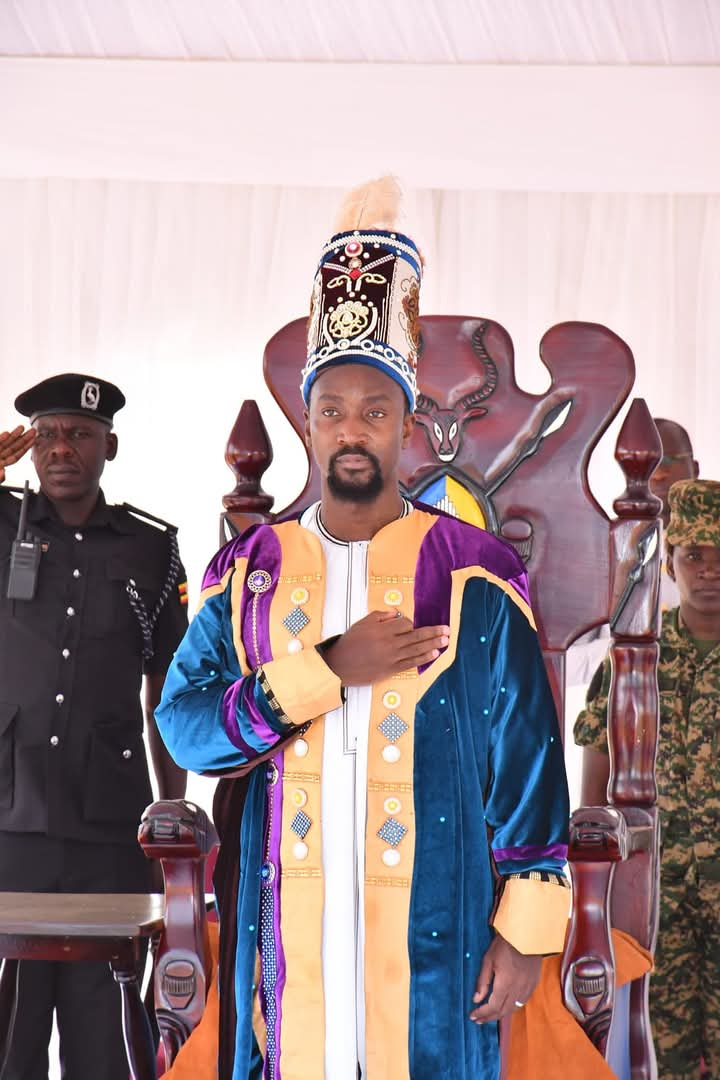
REASSURANCE: Kyabazinga Nadiope IV is in charge of Busoga Kingdom – Muvawala assures Basoga

0

The Katuukiro of Busoga Kingdom, Owekitibwa Joseph Muvawala, has in a lengthy and elaborative statement ‘assured Abasoga and the rest of Ugandans that His Majesty William Wilberforce Kadhumbula Nadiope IV is in charge and control of the Kingdom executing his duties as enshrined in the relevant legal regimes and Kisoga culture and norms.’

For close to two months, there has been rising concerns about the whereabouts of the Kyabazinga since his last public appearances in January. Matters were made worse when the First Deputy Prime Minister of Uganda, and Woman MP for Kamuli district, Rebecca Alitwala Kadaga, during a radio talksho with KBS Radio in Kamuli, announced that unscrupulous people had hijacked Obwakyabazinga.

In response, Muvawala said, “The Obwakyabazinga Bwa Busoga is under no control by any other forces apart from the authority and leadership of His Majesty Isebantu Kyabazinga,” adding “The Kyabazinga informs all of us that nobody is bigger than Busoga and our cosmopolitan nature and unity in diversity as Obwakyabazinga is our strength.”

NEW CHAPTER: Madondo joins Richards bay in South Africa

0

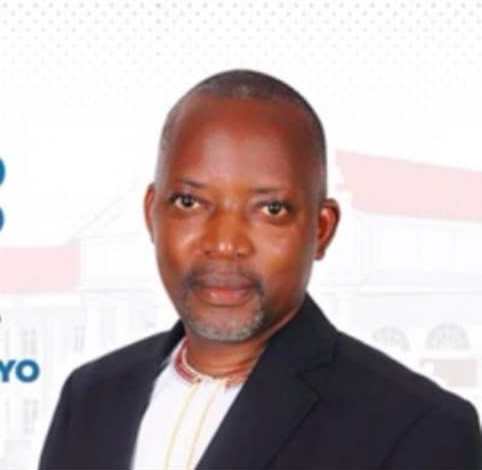
Ugandan striker Joel Madondo has completed a move to South Africa’s Premiership side Richards Bay FC, signing a deal that will keep him at the club until January 2028.


The transfer brings an early end to Madondo’s stint with Eswatini champions Nsingizini Hotspurs, whom he joined in July 2025 on a two-year contract. Nsingizini confirmed the switch, stating that Richards Bay met all contractual obligations and agreed personal terms with the player, while also praising the South African club’s professionalism.


Madondo earned the move after an impressive trial with the Natal Rich Boys, convincing the technical team to secure his services.


A Musoga forward, Madondo brings vast experience from across the continent, having featured for Wydad Casablanca in Morocco, Gaddafi FC, BUL FC, Busoga United, Army FC, and Diamond Trust Bank FC in Tanzania. He is also a 2019 CECAFA Senior Challenge Cup winner and has earned four caps with the Uganda Cranes.


At Richards Bay, Madondo will link up with fellow Ugandan international goalkeeper Salim Jamal Magoola, now in his fourth season at the club. His arrival makes him the third Ugandan player in the South African Premiership this season, alongside Mamelodi Sundowns veteran Denis Onyango.

A DREAM FULFILLED: Magogo says Uganda hosting 2027 AFCON tournament tops all his football achievements – and they are quite remarkably many

0

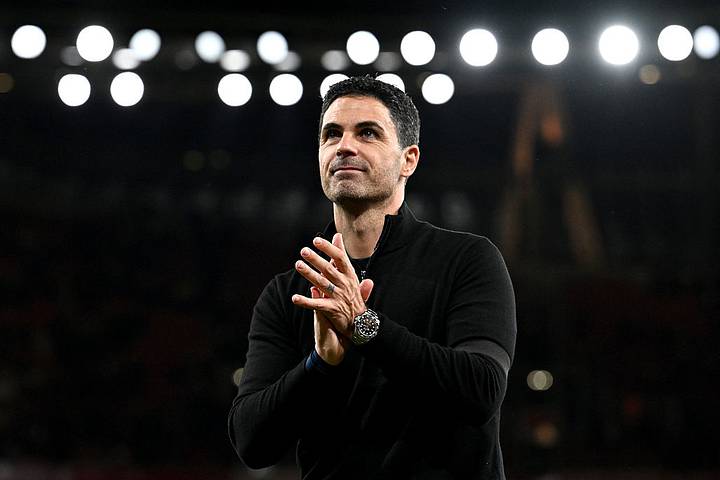
In the early hours of 19 January 2026, in the cold stillness of Rabat, where the TotalEnergies CAF AFCON Morocco 2025 was climaxing with a gruesome final between Senegal and hosts Morocco, sleep refused to come to Magogo Moses Hassim. As dawn edged closer, the President of the Federation of Uganda Football Associations (FUFA) lay awake, quietly absorbing a moment years had been building toward.

For a man whose tenure has been defined by historic firsts, it was not the long list of achievements that stirred him most. It was the realization that the Africa Cup of Nations (AFCON) would be hosted in Uganda within his lifetime. Uganda won the rights to host the continent’s premier tournament alongside neighbors Kenya and Tanzania under the Pamoja bid in 2023. That night in Rabat, the CAF flag for the 2027 TotalEnergies Africa Cup of Nations was ceremonially handed over to the Pamoja host nations of Kenya, Uganda and Tanzania.

Magogo’s leadership at FUFA has reshaped Ugandan football in ways once thought improbable. Under his stewardship, the Uganda Cranes returned to AFCON after a 40-year absence, qualifying four times in just ten years, while the Crested Cranes made their return to the Africa Women Cup of Nations after 22 years.

Beyond the pitch, Magogo pushed structural reforms that redefined the federation’s capacity. FUFA constructed a federation-owned stadium capable of hosting CAF Category 4 international matches, and launched a satellite television channel and FM radio station—a bold move that ensured the Uganda Premier League remained visible when commercial broadcasters were unwilling to invest.

Ugandan national teams qualified for continental competitions more than 20 times during his tenure. The U20 team reached two continental finals, while the U17 national team delivered stellar performances at Uganda’s first-ever FIFA World Cup, marking a generational breakthrough for youth football.

Magogo also positioned Uganda as a continental host, overseeing the successful staging of the country’s first CAF tournament—CHAN. At the policy level, his influence extended into Parliament, where he personally legislated for direct government funding of national teams and sponsored the Private Member’s Bill that became the National Sports Act of 2023, a landmark in Uganda’s sports governance framework.

Infrastructure became another defining pillar of his legacy. Government, spurred by sustained advocacy, renovated and constructed international-standard stadiums at Namboole, Hoima, and Aki Bua, alongside more than 12 training facilities nationwide. FUFA itself donated 24 acres of land toward the Hoima Stadium project, underscoring institutional commitment beyond rhetoric.

The CAF flag for the 2027 TotalEnergies Africa Cup of Nations was ceremonially handed over to the Pamoja host nations of Kenya, Uganda and Tanzania.

On the human side of the game, Magogo introduced medical insurance for players and referees in the top men’s and women’s leagues—a first in Ugandan football—and stabilized FUFA’s governance structures, bringing an end to long-standing internal conflicts that had stalled development for years.

Yet for all these accomplishments, it was the AFCON dream that lingered deepest in his reflections that January morning.

Hosting Africa’s premier football tournament represents more than sport. It is validation of long-term planning, institutional reform, and belief in Uganda’s place on the continental stage. For Magogo, it is a moment that transcends administration—a legacy milestone for a nation and a region.

REBECCA ALITWALA MUBEZI: The youth lioness with a heart for the forgotten lives in Kamuli

0

On the sun-warmed paths of Kamuli District, where opportunity is often scarce and vulnerability common, Rebecca Alitwala Mubezi has quietly built a movement anchored in compassion, courage, and purpose. Born and raised in this eastern Ugandan community, Mubezi is not just a changemaker, she is living proof that service, when driven by passion, can transform lives far beyond one’s immediate reach.

As the founder of Becky’s Child Foundation, Mubezi has dedicated her young life to standing in the gap for children and women society often overlooks. Her journey into advocacy was inspired and shaped by the example of Rt. Hon. Rebecca Alitwala Kadaga, former Speaker of Parliament of Uganda, and current Woman Member of Parliament for Kamulit district and the First Deputy Prime Minister of Uganda and the Minister for East African Community Affairs, whose mentorship reinforced Mubezi’s belief that leadership must begin with service to the most vulnerable.

Rebecca Alitwala Mubeezi receives the Busoga Beauty Queen Crown from then Speaker of Parliament Rebecca Kadaga

What started as small, community-driven acts of support has grown into an organisation that has touched the lives of over 500 vulnerable children. Through education sponsorship, healthcare access, mentorship, and psychosocial support, Becky’s Child Foundation has restored hope to families facing poverty, neglect, and systemic disadvantage. For many children, the foundation is not just a lifeline, it is a second chance.

Mubezi’s work places particular emphasis on girl-child education and women’s empowerment. In communities where early marriage, school dropouts, and limited opportunities remain pressing challenges, she equips young girls with confidence, skills, and mentorship to dream beyond circumstance and reclaim control over their futures.

Mubezi is not just a changemaker, she is living proof that service, when driven by passion, can transform lives far beyond one’s immediate reach.

Her advocacy extends beyond classrooms. Mubezi has emerged as a strong voice in the fight against kidney disease, championing preventive healthcare through community sensitisation and health camps. Her commitment to public health has earned praise from local authorities, including Kamuli District Health Officer for Maternal and Child Health, Moses Lyagoba, who describes her as “a health gem offering an olive branch amidst the disease burden.”

“She has partnered with us to improve access, availability, and affordability of healthcare services,” Lyagoba notes. “Her preventive approach has significantly stimulated health uptake and contributed to disease reduction.”

Mubezi’s work places particular emphasis on girl-child education and women’s empowerment.

Recognition of Mubezi’s impact has steadily followed. The Kamuli Media Association named her Youth Lioness, honouring her unwavering dedication to mentoring and protecting vulnerable young people while promoting positive parenting values and community cohesion.

Journalist Sam Caleb Opio describes her as a voice for the forgotten. “Through Becky’s Child Foundation, Rebecca has given vulnerable children an ear, a helping hand, and a smile of hope,” he says. In acknowledgment of her tireless work, the association will award her The Lioness Crown on Women’s Day, celebrating her contributions to the rights and wellbeing of children, youth, and marginalized communities.

For social commentator Charles Galimaka, Mubezi’s story is a powerful lesson in redefining impact. “We often think change must come from foreign donors,” he reflects. “But Becky has shown that with small local resources, collaboration, and a large heart, one can create real transformation. Like the biblical miracle of feeding thousands with little bread and fish, her work is driven by passion, sacrifice, and self-belief.”

Mubezi has emerged as a strong voice championing preventive healthcare through community sensitisation and health camps.

Yet beyond awards and accolades, Mubezi remains grounded in her mission. She measures success not in recognition, but in school attendance registers, healed patients, and renewed smiles. Her leadership is quiet but firm—rooted in listening, empathy, and community trust.

As Uganda’s young generation searches for role models who reflect purpose over privilege, Rebecca Alitwala Mubezi stands tall. Her story reminds us that meaningful change does not begin with abundance, but with resolve. In Kamuli and beyond, the Youth Lioness continues to roar—not in noise, but in impact—lighting the path toward a more just, compassionate future.

DIAL AND BANK: How dfcu’s 240# USSD platform is making everyday banking accessible on any phone.

0

As digital finance continues to evolve, access remains uneven. While smartphone apps dominate conversations around modern banking, many Ugandans still rely on basic mobile phones and have limited or inconsistent internet access.

To bridge this gap, dfcu Bank has enhanced its *240# USSD platform, enabling customers to bank easily from any phone, anywhere in the country—without data or airtime.

We spoke to Isaac Bigirwa, Head of Cards & Payments at dfcu Bank, about why USSD banking still matters, what’s new on the platform, and how it’s changing everyday banking for individuals and small businesses.

Many banks are focusing on mobile apps. Why is dfcu still investing heavily in USSD banking?

Not every Ugandan owns a smartphone or has reliable access to the internet, and at dfcu we strongly believe that banking should be inclusive. The *240# USSD service works on any phone, anywhere in the country, without requiring data or airtime.

It allows farmers, traders, teachers, and small business owners to access essential banking services conveniently, regardless of where they live or the type of phone they use.

For readers who may be unfamiliar with it, what exactly is *240#?

*240# is dfcu Bank’s USSD mobile banking service. Customers simply dial *240# on their phone and follow the on-screen prompts. There’s no need to download an app, connect to the internet, or have airtime.

Using *240#, customers can check their balances, send money, pay bills, buy airtime, manage their cards, and even access loans—all from a basic mobile phone.

How does this work in real, everyday life?

A typical customer can dial *240# to check their balance, send money to a family member or supplier, pay electricity or school fees, buy airtime, or move money from mobile money into their dfcu account.

All of this can be done in just a few minutes, without visiting a branch or ATM, which saves both time and transport costs.

dfcu recently upgraded the *240# platform. What’s new?

The upgraded *240# is faster, simpler, and more reliable. We’ve reduced the number of steps in the menu to make it easier to navigate, even for first-time users.

New and enhanced features include self-onboarding using an account number and NIN, self PIN reset, zero-rated access that doesn’t require airtime, and multiple language options including Luganda, Runyakitara, Luo, Lugbara, and English.

Customers can also transfer funds from wallets to bank accounts, send money to other banks, manage their cards by checking balances or blocking them, make cardless withdrawals at agent points, and create or cancel standing instructions, including cross-currency transfers.

In effect, *240# is now a complete banking solution accessible on any phone.

How easy is it for someone to get started?

It’s very straightforward. A customer dials *240#, selects their preferred language, accepts the terms and conditions, enters their account details, and creates a simple five-digit PIN.

Within minutes, they are fully set up and ready to start banking.

Why were zero airtime access and local language options a priority?

Zero airtime access removes a major barrier by allowing customers to bank even when they don’t have airtime on their phone. Local language options help users clearly understand the menus and transact with confidence.

Together, these features make banking simpler, more inclusive, and more accessible for everyone.

Security is always a concern with digital banking. How safe is *240#?

Security is a top priority at dfcu Bank. Every transaction on *240# is protected by a personal PIN, and the platform is supported by strong security systems that monitor and prevent fraud.

Customers can also take control by managing their cards directly on *240#, including blocking a card immediately if necessary.

How does *240# support small businesses and agents?

Small businesses can access affordable digital financing such as the SME Mobiloan of up to UGX 5 million and the Mostock loan of up to UGX 50 million for stockists.

Beyond financing, SMEs can pay bills and taxes, make local transfers, and purchase MTN or Airtel agent float through *240#. This helps business owners save time, improve cash flow, and keep their operations running smoothly

If customers need help, where can they turn?

Support is always available. Customers can reach dfcu through the 24/7 call centre, WhatsApp, email, social media platforms, or by visiting any of dfcu’s 56 branches across the country.

Finally, what message would you like to share with Ugandans about *240#?

I encourage all Ugandans to open a dfcu account and experience convenient everyday banking through *240#. Individuals can send money, pay bills, and manage daily transactions easily, while small businesses can access digital loans and purchase agent float.

All of this is available on any phone, without the limitation of data or airtime.

TOP, TOP, TOP ANALYSIS: The architecture of electoral authoritarianism and how elections are stolen in Uganda

0

By Oweyegha-Afunaduula

This article argues that electoral manipulation in Uganda is not a series of ad hoc irregularities but a predictable outcome of a political system deliberately architected since 1986. The process began with the constitutional dismantling of alternative power centres and the creation of a hyper-presidency, followed by the systematic “bantustanisation” of the political landscape.

The paper categorises the mechanisms of electoral theft into four phases: pre-election structural manipulation, campaign-period violence and intimidation, voting-day fraud, and post-vote judicial and institutional sanction.

 Using Uganda as a primary case study, the analysis demonstrates how incumbent regimes embed electoral advantage into the state’s very fabric, making democracy a managed exercise in regime renewal rather than a contest for power. The impending 2026 elections serve as a prospective case to test this established model.

The Contradiction of Liberation

In January 2026, Ugandans will once again go to the polls in a ritual that has come to define the nation’s politics: a high-stakes electoral contest whose outcome is widely anticipated, not because of its competitiveness, but due to the pervasive understanding of its predetermined nature. The incumbent, President Yoweri Kaguta Museveni, who has held power for nearly four decades, will seek yet another term. This paper posits that his expected victory will not be a product of genuine popular acclaim alone but the inevitable result of a comprehensive, state-managed system of electoral authoritarianism.

This system finds its roots in a foundational contradiction. The National Resistance Movement (NRM) government came to power in 1986 following a protracted guerrilla war, justified in part by the need to restore “electoral democracy” after the disputed 1980 polls.

However, upon assuming power, the movement exhibited a deep-seated distrust of unfettered electoral politics. Having been rejected at the ballot box in 1980 under the banner of the Uganda Patriotic Movement (UPM) and led by cadres who often hailed from exogenous communities outside the constitutionally recognised indigenous groups, the NRM elite prioritised consolidation over competition.

The ensuing decades have seen the construction of a political edifice where elections are held regularly but are systematically engineered to perpetuate the incumbent’s rule. This paper traces the historical genesis of this system, taxonomises its operational mechanisms, and applies this framework to forecast the dynamics of the 2026 elections. It concludes that without a fundamental reconfiguration of the constitutional and institutional order, Ugandan elections will remain instruments of power preservation rather than expressions of popular sovereignty.

Historical Genesis: From Bush War to Constitutional Consolidation of Power

The critical juncture in establishing Uganda’s current electoral architecture was the constitution-making process (1989-1995). President Museveni initially advocated for a “no-party” or “Movement” system, arguing that political parties—blamed for Uganda’s sectarian violence—should remain in abeyance. A gentleman’s agreement was cited to justify this political monopoly.

A Constitutional Commission, chaired by Justice Benjamin Odoki, was tasked with collecting public views. Its findings, however, presented a problem for the new regime. As noted by former commissioner Sam Njuba, a significant majority (reportedly 65%) of Ugandans submitted a preference for a federal system (federo), particularly the powerful kingdom of Buganda. This vision deviated sharply from the NRM’s desire for a centralised, unimpeded executive authority.

The regime’s response was decisive. According to insider accounts, a secretive committee of “eight wise men” was appointed to redraft the commission’s report, systematically excising provisions that threatened centralised control. The resultant 1995 Constitution, promulgated by a Constituent Assembly operating under the NRM’s shadow, became the legal bedrock for perpetual incumbency. Its key features include:

*The Imperial Presidency: It invested overwhelming executive, appointive, and even legislative powers in the office of the President, creating what scholars term a “hyper-presidency”.

*The Neutralisation of Traditional Authority: Article 246 reduced the once-powerful kingdoms and the Busoga chiefdom to mere “cultural institutions”, stripping them of political and administrative power and eliminating potential rival poles of influence.

*Demographic Re-engineering: The controversial insertion of “Banyarwanda” as an indigenous group, a move seen by critics as expanding the regime’s political base, underscored the constitution’s role as a tool for political engineering rather than a reflection of an organic social contract.

This constitutional coup de grâce established the rules of the game: all subsequent electoral contests would be played on a field heavily tilted in favour of the incumbent. The return to multiparty politics in 2005 did not level this field; it merely forced the opposition to compete within a system fundamentally designed for their defeat.

A Taxonomy of Electoral Manipulation in Uganda

The stealing of elections in Uganda is a holistic process, encompassing actions long before and well after polling day. We categorise these mechanisms into four interrelated phases.

A. Pre-Election Structural and Legal Manipulation

This is the most profound layer, determining the playing field itself.

*The Partisan Electoral Commission: The President exclusively appoints the Electoral Commission (EC), ensuring its leadership and staff are NRM cadres. This compromises every subsequent action, from voter registration to final result declaration.

*A Captive Judiciary: The President’s stated policy of appointing “NRM cadres” to the bench to “fight corruption” has, in effect, politicised the judiciary. Judges ruling against the state in sensitive political cases face career marginalisation, ensuring the legal system sanctions electoral theft.

*Candidate Disqualification: The EC and courts routinely use technicalities to disqualify viable opposition candidates, as seen with the blocking of several hopefuls from the 2021 presidential race.

*Gerrymandering and “Bantustanisation”: The continuous creation of new districts (from 33 in 1986 to over 136 today) fragments opposition strongholds, dilutes ethnic cohesion, and creates new constituencies where state patronage can determine outcomes. It is a political strategy disguised as administrative decentralisation.

*Voter Register Manipulation: The perennial issues of ghost voters, the inclusion of minors, and the delayed or opaque release of registers to opposition parties undermine the integrity of the voter roll from the outset.

B. Campaign Period Manipulation: The Militarisation of Politics

The campaign period transforms from a contest of ideas into a demonstration of raw state power and institutional bias.

*The Security Apparatus as a Political Tool: The Uganda People’s Defence Forces (UPDF) and the increasingly militarised Uganda Police Force (UPF) cease to be neutral arbiters. Their central role, as you noted, is to “cause fear to the electorate and to militarise the campaign trails of Opposition candidates.” Opposition rallies are routinely blocked, dispersed with tear gas and live ammunition, or subjected to obstructive and legally ambiguous last-minute “cancellations” by the police.

*Deployment of Intelligence and Administrators: As you highlighted, Resident District Commissioners (RDCs), Internal Security Organisation (ISO) officers, and other local state agents become active political operatives. In areas perceived as opposition strongholds, they harass candidates, intimidate supporters, and create a climate of apprehension that suppresses mobilisation.

*Asymmetric Access to Resources: The state treasury, public media (like UBC), and government logistical assets (vehicles, venues) become extensions of the NRM campaign. The opposition operates with severe financial and logistical constraints, while the incumbent’s campaign is bankrolled by state resources, blurring the line between government and party.

*Information Warfare: This includes biased state media coverage, state-sponsored propaganda, and the strategic use of internet shutdowns or social media throttling—as seen in the 2016 and 2021 elections—to disrupt opposition communication, mobilise their base, and obscure reports of irregularities.

Voting Day Fraud: The Execution of Theft

On polling day, the theoretical opportunity for a free choice is systematically undermined by a range of overt and clandestine actions.

*Ballot Paper Manipulation: This includes vote stuffing in NRM strongholds, pre-ticking ballot papers before distribution, and the establishment of illegal voting stations in security installations or NRM-linked offices where results are fabricated.

*Biometric Voter Machine (BVM) Manipulation: The irregular and opaque introduction of BVMs, without adequate testing or public trust, created new avenues for failure. Machines can “technically fail” in opposition areas, causing long delays and disenfranchisement, while their central servers remain under the exclusive control of the partisan EC.

*Voter Suppression and Confusion: Tactics include deliberately sending voters to wrong polling stations, late opening of polling stations in opposition areas, and the presence of intimidating security personnel at stations. The EC’s last-minute changes to polling station locations add to deliberate confusion.

*Compromised Electoral Officials: As you vividly described, presiding officers and polling assistants engage in miscounting votes (e.g., “throwing opposition votes under their legs”) and illegally altering Declaration of Results (DR) forms. The integrity of the individual citizen’s act of voting is violated at the point of counting.

Post-Voting Manipulation: The Sanction of Theft

The theft is finalised and legitimised after the polls close.

*The “Tally Center Coup”: At the National Tally Centre, the process lacks transparency. Legally required DR forms from polling stations are often disregarded in favour of handwritten, unaudited “summary” sheets brought by EC officials or security agents. This allows for the wholesale changing of results from entire constituencies.

*Ballot Box Interference: The physical exchange of ballot boxes between polling stations and during transit to tally centres remains a persistent risk, especially where security forces escorting the boxes are complicit.

*Judicial Sanction: The judiciary, already compromised, completes the cycle. Election petitions face overwhelming procedural hurdles, the standard of proof is set impossibly high, and key evidence is often dismissed on technicalities. The judiciary’s role becomes one of providing legal finality to a politically determined outcome, as observed in the dismissal of the 2021 presidential election petition. Judges who show independence are sidelined or forced out.

Illustrative Case Studies: The Evolution of a System

*1996 and 2001: Establishing the Template. The first multiparty elections under the 1995 Constitution were held under a de facto “Movement” system, with the opposition legally barred from campaigning as parties. State resources and security forces were fully deployed for the incumbent. The 2001 election saw an escalation, with the main opponent, Dr Kizza Besigye, facing severe intimidation and arbitrary arrest on treason charges after contesting the results.

*2011 and 2016: Refining the Machinery. The return to multipartyism saw the tactics become more sophisticated. The 2011 election was preceded by the “Walk-to-Work” protests and brutal crackdowns, setting a tone of intimidation. The 2016 election was marked by the controversial first use of BVMs, a heavily biased EC, and a state of near-total information blackout on polling day due to an enforced social media shutdown.

*2021: The Apex of Militarised Control. The 2021 election represents the most overt fusion of military and electoral power. The campaign was characterised by unprecedented violence, including the November 2020 massacre in Luweero and the militarised siege of opposition candidate Robert Kyagulanyi’s (Bobi Wine) campaigns. On election day, the internet was completely shut down. The outcome was a foregone conclusion, and the subsequent legal challenge was summarily dismissed by the Supreme Court. The EC’s conduct and the security forces’ role demonstrated the full maturation of the system you have described.

The 2026 Elections: A Forecast Based on Past Patterns

· Structural: The same EC is in place; the judiciary remains unchanged.

· Pre-Election: Intimidation of civil society, potential fresh disqualification threats to candidates, ongoing “bantustanisation” through new administrative units.

· Campaign Period: Expect heightened militarisation of campaigns, especially in the Buganda region and other opposition strongholds.

· Voting Day: Likely repeat of internet interference, BVM “glitches”, and intimidation.

The 2026 Elections: A Forecast Based on Past Patterns

As Uganda approaches the January 15, 2026, general elections, the patterns established over four decades provide a reliable template for forecasting. The mechanisms of electoral authoritarianism are not dormant but are being actively primed within their pre-existing structural channels. An examination of the current pre-electoral environment reveals the system in its preparatory phase.

Pre-Election Structural & Legal Manipulation in Motion:

  The foundational architecture remains intact. The Electoral Commission, chaired by Justice Simon Byabakama, retains public scepticism due to its performance in 2021 and its unchanged composition as a presidential appointee. The judiciary has seen no transformative renewal. Furthermore, the process of “bantustanisation” continues apace. The creation of new cities (e.g., Jinja, Arua, and Gulu) and the ongoing debate over the creation of more districts (like the proposed Terego District) serve to redraw political boundaries, diluting opposition cohesion and creating new arenas for patronage. Voter register audits by opposition parties will likely again reveal anomalies—ghost voters, transfers, and registrations of minors—that the EC will dismiss or address opaquely.

Campaign Period: Prepping the Militarised Landscape:

  The campaign period is anticipated to be the most militarised and violent yet. The state’s response to the 2020/2021 election protests, which saw over 150 people killed by security forces, established a new threshold for repression. Opposition candidates, particularly those from the National Unity Platform (NUP) and the Forum for Democratic Change (FDC), can expect a replay of the 2021 tactics: obstructive permit denials for rallies, violent dispersal of gatherings, and targeted arrests of candidates and agents on charges ranging from incitement to treason. The role of RDCs, ISO, and the newly vigilant Crime Preventers-style structures will be critical in applying localised pressure.

Voting Day: Scripted Irregularities:

The technical and procedural flaws will follow a known script. Internet shutdowns or severe throttling are highly probable, framed as a “national security” measure to prevent the spread of “false information”. The Biometric Voter Verification (BVM) system will remain a point of vulnerability; “technical failures” are likely to be disproportionately reported in opposition strongholds, leading to long queues and effective disenfranchisement. The presence of plain-clothed security personnel in and around polling stations will heighten the climate of fear. Furthermore, the confusion of voter locations—a perennial issue—may be exacerbated by last-minute EC directives.

Post-Voting: The Inevitable Sanction:

  The post-election phase is the most predictable. Any outcome contrary to the incumbent’s victory will be impossible under the current architecture. The National Tally Centre will again operate as a black box. Legally mandated DR forms will be contested, with the EC relying on its own aggregated figures. Should the opposition mount a legal challenge, the judiciary, bound by its own precedents from the 2001, 2006, 2016, and 2021 petitions, will almost certainly affirm the EC’s declared results, citing the high burden of proof and the “sanctity” of the electoral process as administered.

In essence, the 2026 elections are not a pending contest but a ritual of renewal for a system designed for self-preservation. The outcome is predetermined not by a secret plot but by the open, operational logic of the political architecture built since 1995.

Conclusion

Uganda’s case study demonstrates that the most profound form of electoral theft occurs not on polling day, but in the years and decades prior, through the constitutional and institutional capture of the state itself. Elections become expensive, violent ceremonies that authenticate a pre-ordained political order rather than instruments of democratic choice.

The return to multiparty politics in 2005 did not democratise Uganda; it merely forced the authoritarian system to adapt, donning the cloak of pluralism while retaining its monolithic core. The opposition is permitted to exist, but not to win; to participate, but not to alter the fundamental distribution of power. This is the essence of electoral authoritarianism.

For God and My Country

Prof. Oweyegha-Afunaduula is a conservation biologist and the Center for Critical Thinking and Alternative Analysis. 

IGNORE OPPOSITION: Speaker Among, former Vice President Kazibwe, and EALA MP Kadogo rally Busoga to reclaim NRM support ahead of general elections

0

Speaker of Parliament Anita Among, former Vice President Dr. Speciosa Kazibwe, and East African Legislative Assembly (EALA) Member of Parliament Veronica Babirye Kadogo have called on Busoga residents to rediscover their historical support for the National Resistance Movement (NRM) and turn out in large numbers to protect the region’s gains in the forthcoming elections scheduled for 15 January 2026.

Addressing mobilisation rallies for NRM flag bearers at a rally in Buyende district on Monday, Among urged voters to embrace politics based on ideology and service delivery rather than identity and division, warning that divisive politics undermine development and social harmony.

“We should focus on ideology and service delivery, not identity, personal issues, or hate speech. Let us stop living in the past, grow out of illusions, and embrace leadership that prioritises development,” Among said.

She challenged Busoga to aim beyond an ordinary victory and instead deliver what she described as an “excellence performance” for President Yoweri Museveni and NRM candidates, with Budiope positioning itself as a leading district in the region based on the President’s vote share.

“We are not here just to mobilise a win. We want a win with distinction, a top-level performance that gives us a strong basis to bargain for the best for the people of Budiope,” she said.

Among dismissed opposition pledges as populist and misleading, urging voters to assess leadership based on tangible development outcomes.

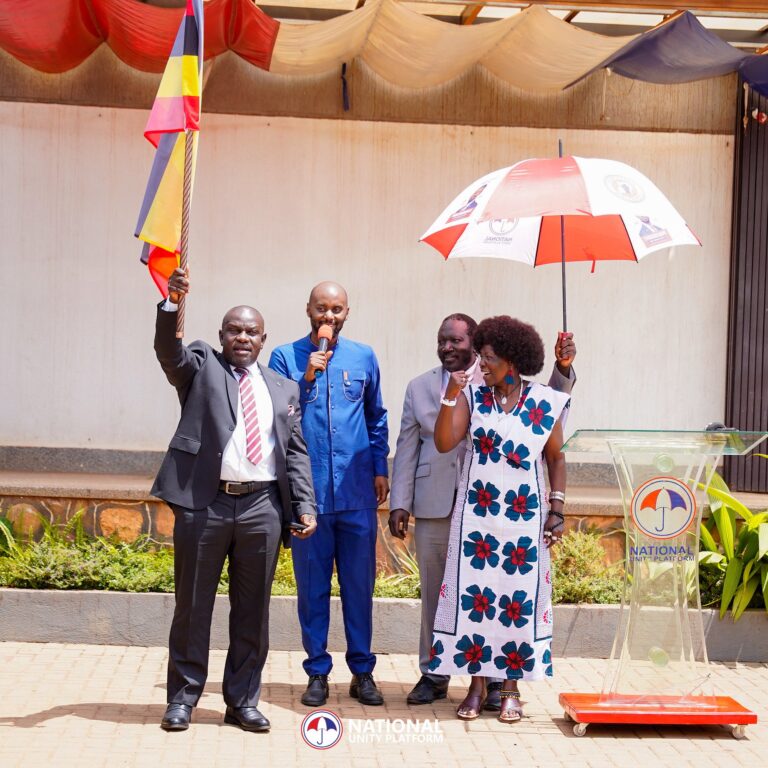
“The Umbrella people are saying that in their first 100 days they will scrap the Parish Development Model. Do you really not need it? We are instead going to increase it and even create a wealth fund for those who do not qualify under PDM. Ignore empty propaganda and stick with Mzee and his team,” she told supporters.

She pledged continued support to Budiope, describing herself as a daughter-in-law committed to safeguarding the region’s gains, and outlined priorities for the next term including the establishment of a district hospital, expansion of piped water, operationalisation of the Bukungu ferry, rural electrification, and improved road networks.

“Vote leaders who understand you and will speak for you. If you love Uganda, speak well of it and protect development programmes such as tractors and markets for every sub-county and the Shs1 billion fund for the fishing community,” Among urged.

Former Vice President Dr. Speciosa Kazibwe called on Busoga leaders and communities to unite, overcome internal divisions, and reclaim the region’s traditional status as an NRM stronghold.

“President Museveni has repeatedly pointed out that internal fights and divisions are what keep Busoga lagging behind and trap our people in poverty. I will personally engage my sisters and leaders to harmonise and refocus on service delivery,” Kazibwe said.

EALA MP and former Buyende Woman MP Veronica Babirye Kadogo emphasised the importance of unity and collective effort, saying Busoga’s leaders should complement rather than compete against one another.

“We can serve our people in different capacities and positions. What matters is supporting one another and harnessing our shared potential for the common good of Budiope,” Kadogo said.

The leaders concluded by urging voters to turn out peacefully and in large numbers to support NRM candidates and consolidate development gains in Busoga.

BUDIOPE EAST: Returning Officer confirms Magogo unopposed; Speaker Anita Among offers congratulations

0

Buyende District Election Registrar and Returning Officer, George William Eriau, has clarified that there will be no voting for the directly elected Member of Parliament for Budiope East constituency after the incumbent and National Resistance Movement (NRM) flag bearer, Moses Hashim Magogo, was declared unopposed.

In a media address to voters in Buyende District after receiving election materials on Monday, Eriau said the parliamentary race was concluded following a High Court decision that upheld the Electoral Commission’s action to disqualify Daniel Mulirire from the contest.

“The High Court reaffirmed the decision taken by the Electoral Commission to disqualify candidate Daniel Mulirire. This leaves the incumbent, Moses Hashim Magogo of NRM, as the sole candidate.

As a result, there will be no election for the directly elected Member of Parliament for Budiope East constituency, except for the Presidential and Woman Member of Parliament positions,” Eriau said.

He called for calm among voters and urged them to turn up peacefully to exercise their constitutional right to vote for other elective positions, assuring the public of a credible electoral process.

The disqualification of all other contenders and the subsequent declaration of Magogo as unopposed has drawn mixed reactions across the constituency.

Some voters said the outcome was expected, particularly after Magogo’s closest rival, Godfrey Dhamuzungu, withdrew from the race citing the death of his father and pressure from family members.

Other aspirants, including Stephen Bangalana, Rabin Peere, and Resty Nsiro, were also disqualified following various petitions.

While some members of the public allege that candidates were induced to exit the race, others claim that certain aspirants were initially introduced to split opposition votes and later withdrew through petitions after Dhamuzungu pulled out.

Speaking during the Buyende District NRM flag bearer vote mobilisation exercise on Monday, Speaker of Parliament Anita Among congratulated Magogo, saying his unopposed victory was not surprising given his performance and service to the people.

“This is not a surprise. He has delivered for his people, though some sections wanted to make it difficult for him. Now this gives him a challenge to cover the entire district in his role as NRM District Chairperson,” Among said.

She added that the overwhelming support for Magogo as NRM District Chairperson sent a strong signal of confidence from party members in Buyende.

“Thank you for your prayers. When I came out unopposed, I told you he would also be unopposed. With the double blessings of twins, everything now comes in doubles,” Among remarked amid cheers.

Some district civil servants also welcomed the development, saying Magogo’s cooperative working relationship with technocrats and his support for government programmes would enhance Buyende District’s access to national resources.

However, opposition-leaning groups such as Team Tweyambe Beene cautioned Magogo against complacency, warning that they would regroup and closely monitor his performance.

“We are aware of the circumstances under which he became unopposed. We will restrategise and hold him accountable. He should not assume that economic power is permanent,” the group said in a statement.

One of Mulirire’s supporters, Tomasi Ngole, criticised the Electoral Commission, arguing that the nomination and subsequent disqualification of candidates by the same body undermines democratic principles and fuels voter apathy.

“The candidates should have been allowed to win or lose at the ballot. Aborting the process only weakens public trust,” Ngole said.

In response, Magogo said his commitment to serve the people of Budiope East remains unwavering.

“My passion to serve the people of Budiope is unconditional, like a mother’s love. No amount of pressure, intimidation, or propaganda will divert me from my vision, mission, and commitment,” he said.

GUNS AT THE BALLOT: Museveni’s threats, military deployment and the fear of violence characterise the political atmosphere ahead of next week’s general elections

0

With just days remaining before Ugandans head to the polls to elect their next president and Members of Parliament, the atmosphere across the country, especially in Kampala and other major urban centres, is thick with tension.

Streets once bustling with everyday commerce now echo with the heavy footsteps of armed military personnel and police officers deployed in unprecedented numbers.

Armoured vehicles and gun-toting soldiers stand guard, patrolling major streets, alleys and intersections.  To the casual observer, particularly first-time visitors, the scene evokes the image of a nation bracing for war, not preparing for a democratic election.

This level of militarisation has become a hallmark of Uganda’s election cycles under President Yoweri Museveni, who is seeking another term in office.

In power since 1986, Museveni continues to project an image of strength and control, even as opposition figures and civil society groups raise alarm over the increasingly authoritarian tone of the campaign season.

“No Cause for Alarm”, Says Military—But Citizens Are Frightened

Colonel Chris Magezi, Acting Defence Forces Spokesperson, took to social media this week in an attempt to calm public nerves.

“There is no cause for alarm,” Col. Magezi stated. “However, we do not take threats of violence during the election period by some political actors and their supporters lightly.”

He emphasised that the military’s presence was purely precautionary and aimed at ensuring “the safety and security of all citizens and protection of public and private property.”

“Cases of criminality or threats to public order will be dealt with promptly and in compliance with the laws of Uganda,” Magezi added.

The Inspector General of Police, Abbas Byakagaba, echoed these sentiments during a meeting with religious leaders and political party representatives at the Inter-Religious Council offices in Mengo.

“Our role is to create an environment that allows the Electoral Commission to carry out its duties,” Byakagaba said. “Beyond electioneering activities, we continue to uphold law and order. If anyone threatens individuals, that’s no longer politics—it’s criminality. And we will act.”

Museveni’s Ultimatum: “Whoever Tries to Destabilise Uganda Will Regret It”

President Museveni issued a stark warning to his political opponents, particularly to long-time rival and leader of the National Unity Platform (NUP), Bobi Wine, who is again challenging him for the presidency.

“You should all go out and vote,” Museveni declared. “No one will destabilise Uganda. Whoever tries will regret it.”

“Museveni Isn’t Leaving Power—Don’t Even Think It” 

Adding fuel to the fire, Special Presidential Assistant Yiga Kisakyamukama made headlines with a blistering public statement in an interview with the Daily Monitor.

“Vote and go home,” Kisakyamukama said. “Don’t even think on a single day that the Electoral Commission chairman, Justice Simon Byabakama, will announce Bobi Wine as the winner of the January 15 presidential polls. Never think that President Museveni will leave this power by voting. Don’t waste our time.”

TARGETED IMPOVERISHMENT: The systematic disempowerment of Busoga and how to reclaim the future of Basoga 

0

By Oweyegha-Afunaduula

This article is a vital piece of scholarship – a compelling synthesis of history, political economy, and moral clarity. It not only documents the systematic disempowerment of Busoga but also serves as a powerful call to intellectual and social action. I am certain it will resonate deeply and contribute significantly to the discourse.

Busoga Before Imposed Monarchies

Long before the imposition of external monarchies, the Basoga were a people of the land, organized around clan systems. Theirs was a society of shifting cultivators and hunters, governed by lineage heads and local councils.

This indigenous governance structure was fluid, democratic, and deeply connected to their environment. The concept of a centralized monarchy was alien. This changed with the arrival of the Igaga Clan from Bunyoro, emissaries of an expanding Chwezi influence.

Prince Byaruhanga Ndahura, a figure from Bunyoro, established the first royal chiefdoms: Bugabula, Bugweri, Bukooli, Busiki, Luuka, and Buzaaya. He established his seat of power at Nnenda Hill in Kigulu but strategically deprived Kigulu itself of chiefdom status, arguing that “there cannot be two bulls in a kraal.”

This act centralized his authority. Thus, the very institution that would come to define Busoga’s political structure for centuries was an implantation from outside, linking Busoga’s destiny to the politics of the wider interlacustrine region and, mytho-historically, to lineages stretching to the Ethiopian Highlands.

The Consolidation of Monarchism Pre-Britain

In the centuries before British colonization, this implanted monarchical system took root and evolved. The Kyabazingaship, though inspired by external models, became a Busoga institution, with its own internal dynamics and rivalries among the various chiefdoms (Obwakabaka).

The many other chiefdoms that later constituted Busoga were largely creations of the British colonial administration. This period saw the crystallization of a distinct Busoga polity, though one inherently shaped first by its initial Bunyoro design and later by colonial manipulation.

Subjugation under British Colonialism

British colonialists did not create Busoga from scratch but perfected its administrative subjugation. They utilized the existing monarchical structure, initially employing the title “President” for the ruler before reverting to “Kyabazinga.” This was a strategic move to create a compliant native authority.

The colonial project was violently expedited by the militarist Semei Kakungulu, who, acting as a British agent, used force to “pacify” and reorganize Busoga into a manageable colonial unit. The Kyabazinga’s government became, first and foremost, an instrument of colonial extraction.

Integration into the Colonial Bureaucracy

The British formalized this control by fully integrating Busoga’s governance into the Uganda Protectorate structure. The once-autonomous chiefs were transformed into salaried civil servants of the colonial state.

Their primary duties shifted from serving their people to serving the colonial economy: they were the enforcers who collected oppressive taxes, mandated the cultivation of cash crops like cotton and coffee in every household, and sat on councils that merely rubber-stamped and legitimized policies dictated by the colonial officers. This bureaucratic co-option severed the organic accountability between rulers and the ruled, embedding a culture of service to the central power.

Development and Exploitation

Despite its subservient role, the Kyabazinga’s government under British rule did channel some development. It played a part in promoting the very commercial agriculture it was forced to enforce, establishing schools like the iconic Busoga College Mwiri and Iganga High School, and fostering a modern Busoga culture. This created a paradoxical period where infrastructural and educational growth occurred within a framework of political servitude and economic exploitation.

The Post-Colonial Zenith and Its Foundations

After independence, the momentum continued under visionary local leadership. The Kyabazinga’s government, still a political entity, actively invested in infrastructure, health, and education. Here, the contribution of leaders like Daudi Mutekanga was pivotal.

As a driving force behind the development of roads, schools, and community institutions, Mutekanga exemplified the practical, self-reliant leadership that translated political autonomy into tangible progress. The government’s bursary schemes were legendary—enabling the children of farmers and even guaranteeing free education for four children of every clergy family.

This visionary investment yielded a golden generation: Uganda’s first engineers, doctors, lawyers, architects, and professors were disproportionately Basoga. Busoga was not just participating in Uganda’s modernity; it was leading it.

 The Engine of Prosperity: Agriculture and Cooperatives

This intellectual ascent was built on an economic powerhouse. Busoga’s fertile soils fueled a booming cooperative movement around coffee and cotton. Farmers were wealthy, organized, and empowered. The cooperatives were more than economic units; they were institutions of community capital and self-reliance, funding not just households but the very educational excellence that defined the region.

The Great Unraveling: From 1966 Through Conflict

The decline began with President Obote’s 1966 abolition of kingdoms and the aggressive centralization of power and services, stripping Busoga of its autonomous governance and crippling its homegrown development apparatus. The Idi Amin regime compounded the disaster by militarizing the administration, appointing military officers as chiefs and governing through coercion.

The cooperative system was attacked, and the cash crop sector decayed. Notably, during this period, Busoga’s coffee was massively smuggled to Kenya as Kase (ground coffee), fueling Nairobi’s boom and creating wealthy Mafutamingi traders while impoverishing the farmer.

The impoverishment was systematically completed during the 1981-86 guerrilla war. The NRA’s tactics targeted the very foundations of Busoga’s prosperity: cooperatives were destroyed, railways and industries dismantled, and health and educational institutions wrecked.

This was not collateral damage but the initiation of a long-term strategy of disempowerment. The promised “build” phase after the destruction has, for 40 years, failed to materialize for the majority of Basoga, who have been left in a prolonged state of economic and social depression.

The Final Strip: The 1995 Constitution and Cultural Erasure

The 1995 Constitution delivered the coup de grâce. It politically castrated the Kyabazingaship, reducing it to a “cultural institution” stripped of all decision-making power, which was transferred to the centre. The cruel irony is profound: the Kyabazinga was made a salaried civil servant, exactly as the colonial chiefs had been. This “cultural leader” is now institutionally powerless to halt the very cultural erosion engineered by the state—rampant land grabbing, the imposition of foreign monocultures like oil palm and sugarcane, and the deliberate dilution of indigenous identity and belonging.

Wealth in the Midst of Poverty: The Mineral Curse

Today, Busoga sits on immense wealth—gold, uranium, rare earth minerals. Yet, this bounty has become a curse. The community has no control over the exploitation, no share in the marketing, and gains nothing from the proceeds. The resources are extracted, leaving behind environmental degradation and deepened poverty, while wealth is siphoned to centres of power.

Reclaiming the Future

The conclusion is inescapable: The future of Busoga is not in the hands of the Basoga. It is held by a small, constitutionally entrenched group—the Banyarwanda—who control the security and mineral wealth of the state. Busoga’s history, from the Igaga clan to the present, is a chronicle of externally imposed structures used for extraction.

Reclaiming the future requires a fundamental reclamation of agency—political, economic, and cultural. It demands a critical interrogation of the centralized governance model and a courageous revival of the cooperative, self-determining spirit that once made Busoga a beacon of progress. The alternative is the continued erosion of being, until Busoga is but a memory on the map of its exploiters.

RIVALRIES IN BUSOGA: How Namuganza missed a Busoga NRM leaders’ meeting in Iganga that she organized and Kadaga’s invite that never was

0

Deep-seated divisions within the National Resistance Movement (NRM) leadership in Busoga were laid bare on Saturday during a mobilisation meeting at Iganga Girls’ Secondary School, where thousands of party leaders from across the sub-region gathered ahead of the 2026 general elections.

The meeting was presided over by NRM Chairperson and presidential flag bearer, President Yoweri Kaguta Museveni, who used the occasion to openly criticise infighting among party leaders and supporters in Busoga.

Without mincing words, the President warned that persistent divisions were undermining service delivery and slowing the region’s socio-economic transformation. He urged party leaders to embrace humility, unity and discipline, saying leadership without these values breeds conflict and ultimately harms ordinary Ugandans, especially the poor.

“So please, I ask you to be humble as leaders. If I were not humble, I would not have managed Uganda,” Museveni told the gathering, drawing applause from party cadres and local leaders.

He stressed that unity among political leaders is not a luxury but a prerequisite for development, noting that internal cohesion enables leaders to focus on shared goals rather than personal or factional interests.

President Museveni contrasted Busoga’s internal wrangles with other regions where similar NRM mobilisation meetings have been held and found greater unity among leaders. He cited Bukedi, Lango, Bugisu, West Nile and Acholi, saying leaders there had demonstrated a shared commitment to regional development despite political differences.

The President revealed that the Busoga meeting itself had been convened in Iganga at the request of the State Minister for Lands, Housing and Urban Development, Hon. Persis Namuganza, but was later affected by the very divisions it sought to resolve.

“You must cure this problem because it is Namuganza who asked me to bring this meeting here,” Museveni said.
“When I rang her, she told me we must do it here. I agreed because we don’t have time to hold such meetings everywhere,” he added, expressing disappointment that some prominent NRM leaders from Busoga failed to attend.

He narrated how he personally intervened to resolve confusion surrounding invitations, particularly involving the First Deputy Prime Minister and Minister for East African Community Affairs, Rt. Hon. Rebecca Kadaga.

“I spoke to my young sister Kadaga to ask where she was, and she told me she was not invited,” Museveni said.
“I then rang the Rt. Hon. Speaker of Parliament to ask why Kadaga was not invited. She told me all flag bearers were invited.”

The President said he later called Kadaga again to clarify the matter, but she questioned how the invitation had been communicated.
“She asked, ‘How was I invited? Through the radio or what?’ When I reached here, I asked how you invited Kadaga,” he added.

NRM Chairperson for Iganga District, Hajji Abubakar Walubi, later explained that invitations had been issued through Resident District Commissioners (RDCs), District Internal Security Officers (DISOs), and party structures down to parish and village levels.

Walubi said he had also confirmed with Kamuli District NRM Chairperson Mathew Bazanya that all district chairpersons were informed and that many had attended.

The meeting formed part of a broader NRM strategy to re-energise grassroots structures ahead of the 2026 general elections, as the ruling party moves to consolidate support and seek a renewed mandate for another five-year term.