


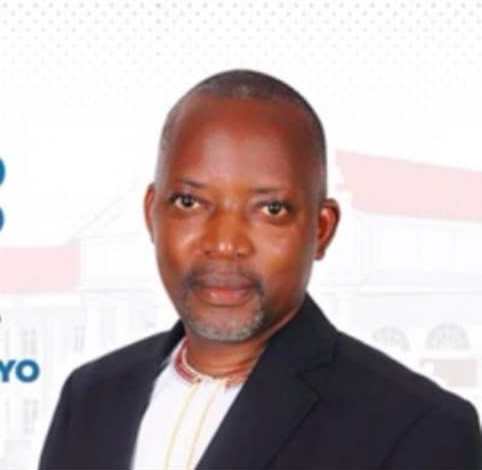
Former Member of Parliament for Makindye East, Ssimbwa John, has written to Yoweri Kaguta Museveni, the President of Ugana, urging him to push the Judiciary to operationalize a long-standing anti-corruption law that mandates confiscation of property acquired through corruption, arguing that the move would make graft “a risky venture” and strengthen Uganda’s fight against public sector theft.
In a detailed letter dated May 18, 2026, addressed to the President at State House Entebbe, Ssimbwa, who was the mover of the private member’s bill that amended the Anti-Corruption Act in 2015, called for urgent implementation of Section 67A of the Anti-Corruption (Amendment) Act 2015.
The former legislator argues that although the law was enacted more than a decade ago, successive Chief Justices have failed to formulate the operational rules necessary to enforce confiscation and recovery orders against convicted corrupt officials.
At the heart of Ssimbwa’s appeal is a proposal aimed at changing the psychology of corruption in Uganda: ensuring that convicted officials not only serve prison sentences but also lose the wealth accumulated through corrupt dealings.
According to the former MP, many public officials continue to engage in corruption because they believe they can retain their stolen wealth even after conviction.
“We as the framers of this law believe that mandatory disposal of the property of the convicted person would make corruption ‘a risky venture’ as many people would start fearing to lose property and remain empty after serving their sentences,” Ssimbwa wrote.
He argued that Uganda’s anti-corruption campaign would become more effective if convicted individuals were stripped of houses, bank accounts, businesses and other assets linked to corruption.
The proposal comes at a time when the government has intensified public accountability campaigns following several high-profile corruption investigations involving senior public officials and parliamentary expenditure controversies.
Ssimbwa praised Museveni for what he described as a renewed political commitment to accountability, saying the President’s recent stance against corruption had revived public confidence in the ruling National Resistance Movement government.
“The people have from the onset started believing that this is the real ‘kisanja no sleep and kisanja no corruption,’” he noted, referencing the President’s anti-corruption slogan.
The former legislator also linked the proposed operationalization of Section 67A to ongoing frustrations over low recovery of stolen public funds despite convictions secured by anti-graft agencies.
Under the Anti-Corruption (Amendment) Act 2015, courts can issue confiscation and recovery orders against persons convicted of corruption offences. However, Ssimbwa says implementation has stalled because the Judiciary has never developed procedural rules governing trustees, receivers and management of confiscated assets.
He revealed that Parliament deliberately delegated the formulation of these rules to the Chief Justice to allow flexibility as circumstances evolve over time.
However, he accused successive judicial leaders of failing to fulfill that mandate. “Their omission to put in place these rules has negatively affected the recovery rate and has also affected the general war against corruption,” he stated.
The letter indicates that current acting Chief Justice Flavian Zeija has recently shown willingness to address the matter by forwarding Ssimbwa’s concerns to the Judiciary Law Reform Committee chaired by the Principal Judge.
Still, the former MP believes presidential intervention is necessary to accelerate the process. “We believe Sir that it is only you whose voice can cause the formulation of these rules,” he wrote to Museveni.
Beyond domestic asset recovery, Ssimbwa highlighted provisions in Sections 67B and 67C of the law that allow Uganda to enter reciprocal agreements with foreign governments for cross-border recovery of stolen assets.
He argued that the provisions could help authorities trace and confiscate wealth hidden abroad by corrupt officials. “This law gives us comfort that its long arm can be utilized to ensure that Uganda confiscates and recovers whatever the culprits would have hidden away in distant parts of the world,” he stated.
The letter also revisits the controversial Karamoja iron sheets scandal that implicated several ministers and public officials. Ssimbwa claimed prosecutors relied on weaker legal provisions during earlier prosecutions, allowing some suspects to evade tougher penalties.
He specifically referenced Section 21A of the amended law, which criminalizes “dealing with suspect property,” saying it could be used to prosecute accomplices, intermediaries and individuals accused of helping conceal illicit wealth.
The former MP cited the conviction of Agnes Nandutu under the same provision as evidence that the law can effectively target networks surrounding corrupt officials.
He further suggested the provision could be used against individuals allegedly linked to former Speaker of Parliament Anita Among in ongoing corruption-related investigations.
In addition, Ssimbwa urged government investigators to aggressively pursue restraint orders to freeze assets and bank accounts of suspects during investigations.
According to him, restricting suspects from accessing or transferring wealth under investigation would significantly deter corruption.
“I believe that the fight against corruption will only be won if corruption is made a risky venture to those who want to engage into it,” he wrote.
The renewed debate over asset confiscation reflects growing pressure on Uganda’s institutions to demonstrate stronger enforcement against corruption amid public concern over misuse of public resources.
While Uganda has enacted several anti-corruption laws over the years and established specialized agencies including the Inspectorate of Government and the Anti-Corruption Court, critics have frequently argued that weak enforcement, delayed prosecutions and limited asset recovery have undermined deterrence.
If implemented, the operationalization of Section 67A could mark a major shift in Uganda’s anti-corruption strategy by expanding focus beyond criminal punishment to economic dismantling of corruption networks.
Legal experts say such measures are increasingly being adopted globally under asset recovery frameworks aimed at ensuring that corruption does not financially benefit perpetrators even after serving jail terms.
Whether the Judiciary moves swiftly to formulate the long-awaited rules may now depend on the level of political and institutional pressure generated by Ssimbwa’s appeal to the President.