


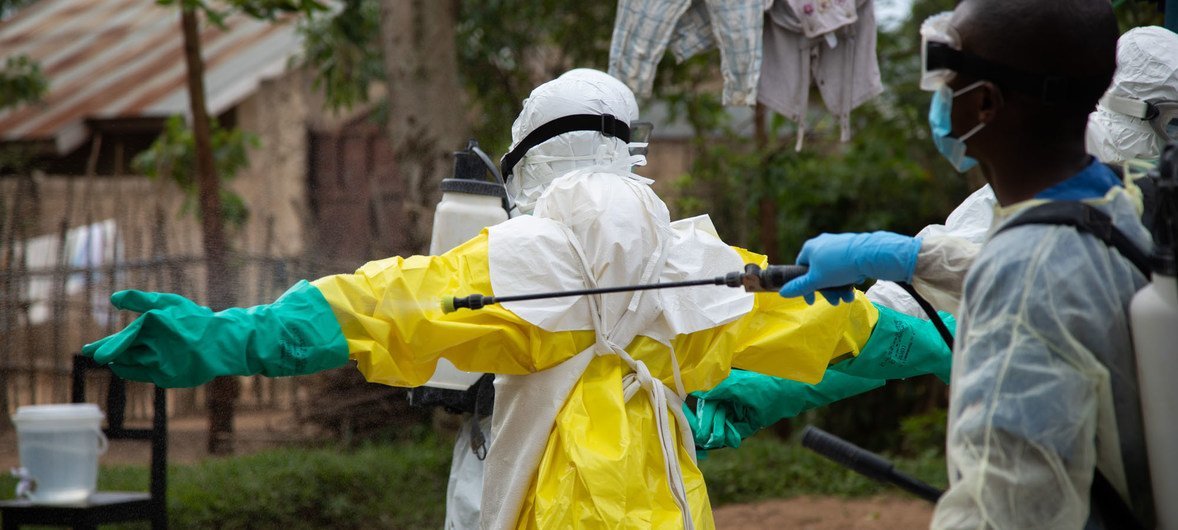
As Uganda heightens its Ebola preparedness measures, attention is increasingly turning to border communities that health authorities describe as the country’s first line of defence against a possible outbreak.
From Arua in northern Uganda to Kisoro in the southwest, surveillance teams, health workers, and laboratory personnel are working around the clock to strengthen monitoring systems in districts considered most vulnerable to cross-border disease transmission.
Health officials say the western border corridor has emerged as a critical focus area because of the heavy movement of traders, refugees, truck drivers, and families crossing between Uganda and neighbouring countries on a daily basis.
Prof. Charles Olaro revealed that the Ministry of Health has already identified the entire western stretch as high-risk following a comprehensive risk assessment.
“We have conducted a risk assessment and established that the western border from Arua to Kisoro is highly risky. We have deployed surveillance teams across all districts along that stretch, as well as a laboratory in Kasese,” Prof. Olaro said.
The establishment of a laboratory in Kasese is expected to significantly improve Uganda’s ability to test and confirm suspected Ebola cases quickly without relying entirely on laboratories in Kampala. Health experts say faster diagnosis is critical in reducing delays that can allow infections to spread.
Border screening teams are now conducting routine monitoring at entry points, while local health facilities are being equipped to identify symptoms early and isolate suspected cases immediately.
Public health experts say border communities often carry the greatest burden during outbreaks because they are exposed to large volumes of human movement and sometimes lack sufficient healthcare infrastructure.
However, Uganda’s Ministry of Health believes lessons from previous outbreaks have transformed the country’s readiness.
According to the Permanent Secretary at the Ministry of Health, Diana Atwine, Uganda’s disease surveillance system has evolved into a rapid response network capable of identifying outbreaks anywhere in the country within a day.
“With the capacity we have built, we are able to detect any outbreak anywhere in the country within 24 hours. We are also able to test for any disease,” Dr. Atwine said.
She noted that Uganda’s previous encounters with Ebola helped authorities build stronger emergency systems, improve coordination, and train health workers in outbreak response.
“The country has experience from previous outbreaks, which we have always managed to contain and address in the shortest time possible. This time as well, we are confident that we shall overcome it,” she added.
Beyond government agencies, humanitarian organizations are also playing a major role in public sensitization and preparedness efforts.
The Uganda Red Cross Society has intensified community awareness campaigns urging people to report suspected Ebola cases immediately and cooperate with health teams conducting screening and contact tracing.
The organization says public cooperation remains essential because fear, misinformation, and delayed reporting can worsen outbreaks.
Communities have been advised to avoid direct contact with suspected Ebola patients, maintain proper hygiene through regular handwashing, and avoid handling bodies of suspected victims.
Health authorities continue to emphasize that Ebola symptoms can initially resemble common illnesses, making public awareness especially important. Symptoms include fever, severe headache, vomiting, diarrhoea, cough, chest pain, rash, red eyes, and unexplained bleeding.
Experts warn that while border surveillance is important, community vigilance across the entire country remains necessary because infectious diseases can spread rapidly through transport networks and urban centres if not detected early.
For many communities living along Uganda’s borders, the heightened surveillance has become both a reassurance and a reminder of the importance of preparedness in an increasingly interconnected region.
As health workers intensify monitoring efforts, authorities say Uganda’s strongest defence against Ebola will depend not only on laboratories and medical teams, but also on informed and cooperative communities willing to act quickly when danger signs emerge.