Tuesday, March 17, 2026
Home Blog Page 51

MALARIA VACCINATION: Health ministry seeks religious leaders intervention to influence public acceptance

0

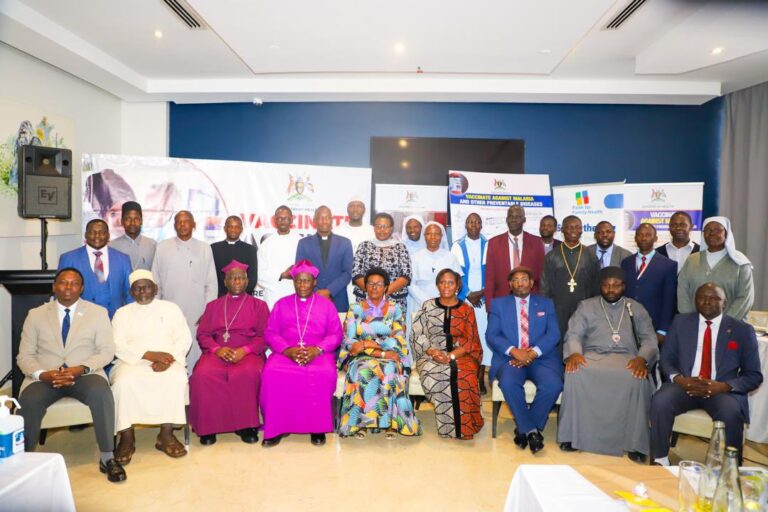
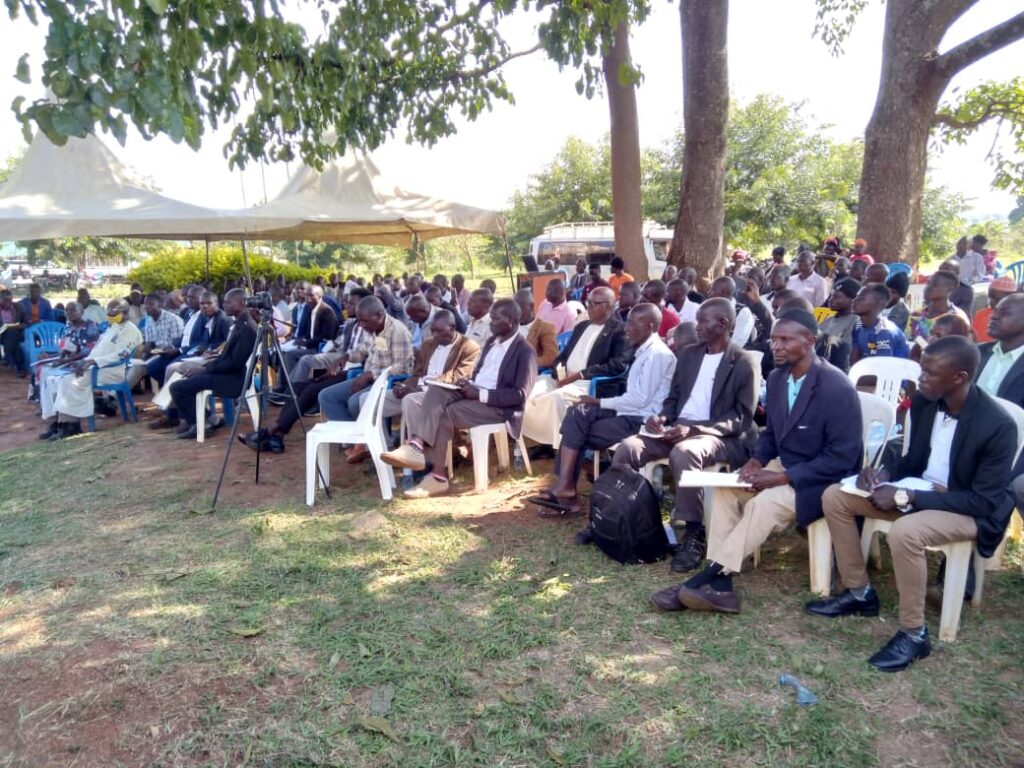
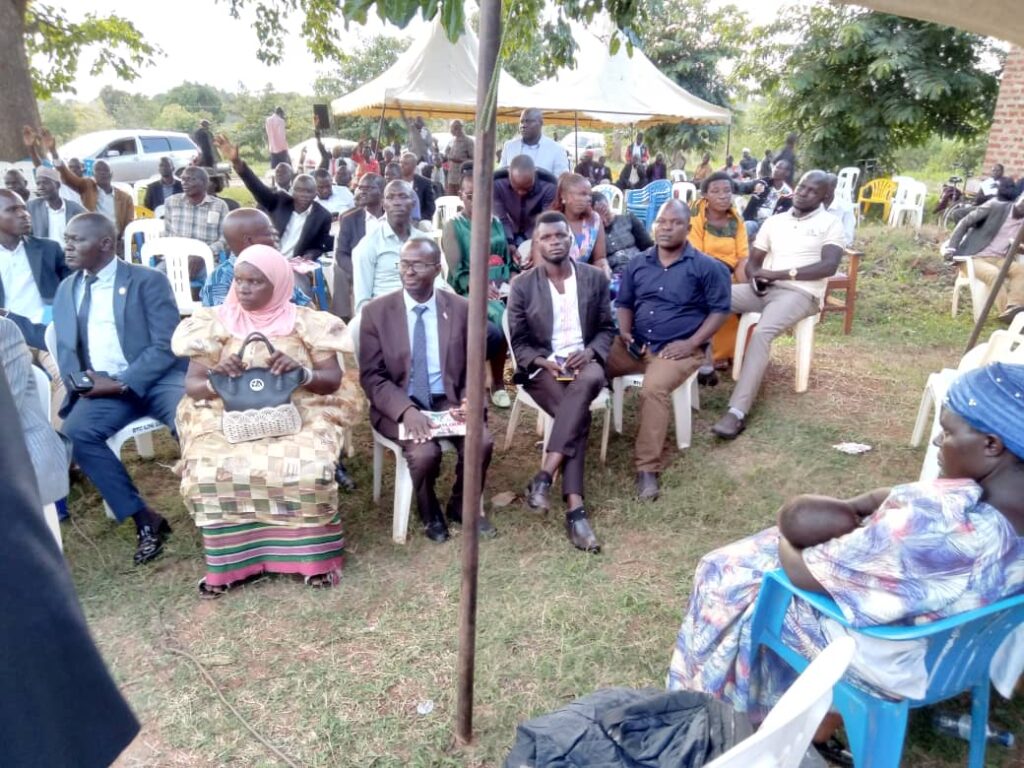
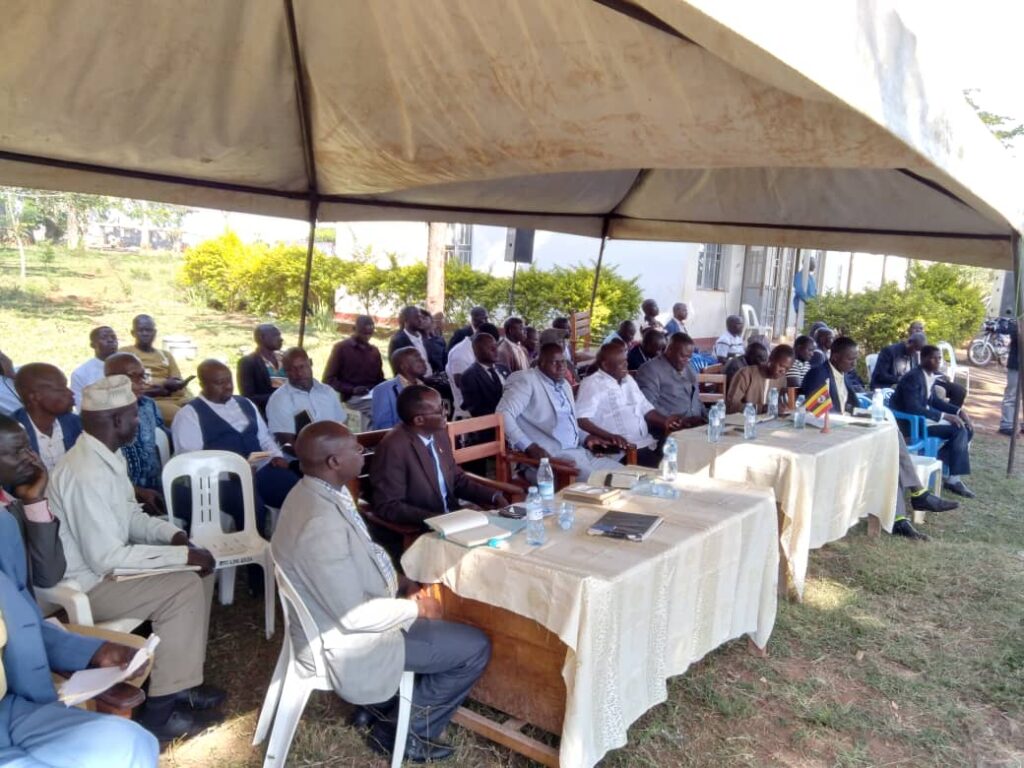
Margaret Muhanga, the Minister for State for Health in charge of Primary Health Care has urged religious leaders to dispel myths and encourage families to bring their children for immunization.

You hold a unique and powerful position in shaping public perception, the minister told a meeting in Kampala on Wednesday where the ministry meet religious leaders to engage them on the upcoming introduction of malaria vaccine into the routine immunization schedule.

The religious leaders were oriented on the Malaria vaccine and pledged their support and commitment to sensitize their respective communities.Deputy Mufti, Uganda Muslim Supreme Council, Sheikh Ali Waiswa said.

“This meeting is not just about discussing vaccines—it is about empowering you, our respected religious leaders, with the knowledge and tools necessary to spread the message of health, prevention, and protection.

By equipping you with the right information, we can ensure that you have the confidence to engage with your congregations and tackle any misconceptions, thereby encouraging the uptake of the malaria vaccine and routine immunizations for all children.”

In addition to tackling Malaria the leading cause of illness and death, Ag. Director General Health Services, Olaro Charles, asked the religious leaders to encourage Ugandans to test for Sickle Cell Disease (SCD) before getting married.

“16% of under 5 child mortality is due to SCD. 25,000 children are born annually with SCD and 80% die before their 5th birthday,” he said.

In partnership with Faith for Family Health Initiative, the Ministry of Health is engaged religious leaders from 14 regions of Uganda to orient them on the introduction of the Malaria vaccine into the routine immunization schedule.

“Malaria has been here for a long time, it has ceased being a health issue but now a family issue. Religious leaders interface with the communities daily and when well empowered with information, they can support us in eliminating Malaria,” Richard Kabanda said.

The ministry’s Permanent Secretary, Diana Atwine, appreciated the religious leaders and Faith for Family Health Initiative for participating in this engagement and their support to end Malaria in Uganda.

She said “The body is the temple of God and if it is not well [healthy], it cannot fulfill the purpose it was created for.”Adding, “Vaccines work, helps and alleviates the disease burden. Most diseases have been eradicated because of vaccination”

RULED BY GUNS & BULLETS: Military politics, democratic deception and democratic disguise in Uganda

0

By Oweyegha-Afunaduula

On 11 February 2022, The Daily Monitor published my article “Disappearance of Police in Uganda Police: The Dangers” in which the first sentence reads: “In Uganda, the militarisation of politics and the police are parallel processes that have been pursued by President Museveni simultaneously and consciously. However, it is correct to say that almost everything in Uganda has been militarised by President Tibuhaburwa Museveni to enhance his personalist power and rule: the Executive, elections, legislations, justice and society, to name but a few.Therefore, despite President Museveni’s commitment to periodic elections since 1996, politics in Uganda is not civic but military politics. The periodic elections are designed to create the impression that there is democracy in Uganda even if politics is military. The truth is that this is as much a military as a political lie. What we have in Uganda is democratic deception and democratic disguise. We no longer have civilian superiority over the military, let alone civilian superiority over the democratisation process in Uganda. The democratisation process has been distorted by the militarisation of politics.

In my article titled “Military Populists Versus Generational Populists in Democratic Backsliding in Uganda published in Busoga Times of 25 March 2025, I hinted that military politics in Uganda is tinted with the military populism President Tibuhaburwa Museveni, which is currently greatly contradicted by the generational populism of Kyagulanyi Ssentamu aka Bobi wine, and that both are responsible for democratic backsliding in Uganda.

In another article titled “State Terrorism in Uganda Before, During and After Council, Presidential and Parliamentary Elections” published by Ultimate News of 25 March 2025, intimated that military politics in Uganda is intertwined with rising state terrorism, particularly before, during and after council, presidential and parliamentary elections.

In this article “Military Politics, democratic deception and democratic disguise in Uganda, I want to submit that both democratic deception and democratic disguise are integral aspects of military politics. The unity of the three are responsible for creating the politico-military environment in which state terrorism and many other vices are flourishing in Uganda, including overborrowing, diminishing social development and rising commitment of scarce resources to politics, militarism, administration and presidentialism are also flourishing. The “politico-military environment” encompasses the political and military factors that shape security, defense, and international relations, including areas like arms control, defense reforms, and conflict prevention. Central to the politico-military environment of Uganda is the President of Uganda, Tibuhaburwa Museveni, in whom the Uganda Constitution 1995 invests all power and authority, thereby planting the mustard seed for presidentialism in the country.

In my article “The Perils of Presidentialism in Uganda”, I intimated that presidentialism in Uganda involves the president using the power and authority invested in him by the constitution to intrude into and do anything under the Sun, including using the security organs to erode the freedoms, justice, human rights and democracy to enhance his influence in the politico-military environment of Uganda. This is the reason why Law Professor Oloka Onyango (New Vision, 2017) called for the taming of President Tibuhaburwa Museveni’s powers, adding “The Phenomenon of presidentialism must be dealt with and examined”. He decried the overconcentration of power in the hands of the President as the phenomenon of presidentialism and argued that it partly has its roots in the colonial history of the country. However, during the making of the Uganda Constitution 1995 it was the National Resistance Movement/Army that claimed they had liberated Uganda.

Democratic deception and democratic disguise in governance reflect the characters of those at the epitome of governance. If they are prone to lying to or deceiving the public or to disguising their true personalities. They reflect truth evasion, and lack of respect for the public in service greed and selfishness of those in power. Lies and deception in governance can be regarded as incompatible with a more modest account of democracy as a system of public equality among political equals (Bellamy, 2019). Frequently, at least in Uganda, Lies, deception and disinformation are employed to create inequality between President Tibuhaburwa Museveni and alternative leaders in order to preserve his perennial rule and manipulate the politico-military environment for hereditary political succession. This way, democracy is broken by lies, deception and disinformation (Chadwick, 2022).There is no doubt that democratic deception and democratic disguise of the military politics of President Tibuhaburwa Museveni’s national Resistance Movement regime are jointly inhibiting democratic transition from military democracy to civic democracy. It is also responsible for the fact that the national budget of Uganda, heavily dependent on borrowing, with no concern for future generations of Ugandans, is disoriented to build roads in the DRC, and provide electricity in Southern Sudan without seeking the approval of Ugandans.

Eric Kashambuzi (2010) observed that the ruling party (NRM) regime is a military dictatorship, and therefore, however many elections it organises, it remains so. Indeed, the regime government is dominated by military me and women. Even Parliament has 10 military men as Members of Parliament. Before, during and after elections the population is sustained with high levels of fear through the use of guns, Mambas and teargas. Therefore, the country is dominated by democratic deception and democratic disguise. Indeed, democratic deception and democratic disguise are elements of the shrinking democratic space and democratic backsliding in Uganda under President Tibuhaburwa Museveni’s perennial militarised rule. One could say the real roadblock to Uganda’s transition to democratic rule is President Tibuhaburwa Museveni. This then is his legacy: Shrinking the democratic space in Uganda, driven by his lack of political flexibility, contentious politics over reliance on state terrorism to stay in power hiding behind elections. He regards alternative leaders as criminals. Thus, his politico-military stance is not that of building democracy but perennial occupation of the political space, exclusion of alternative leaders from it, conquest, occupation and domination.

For God and My Country

Further Reading

Adam Scharpf (2020). Dangerous Alliances: Populists and the Military. G!GA Focus on Latin America, Number 1 2020 https://www.giga-hamburg.de/en/publications/giga-focus/dangerous-alliances-populists-and-the-military Visited on 26 March 2025 at 12:35 pm EATBellamy, Richard, Lies, Deception and Democracy (December 17, 2019). BIBLIOTECA DELLA LIBERTÀ, Anno LIV, n. 225-226, maggio-dicembre 2019, DOI 10.23827/BDL_2019_3_2, Available at SSRN: https://ssrn.com/abstract=3505464 or http://dx.doi.org/10.2139/ssrn.3505464Chadwick, Andrew (2022). Breaking Democracy: Lies, Deception and Disinformation. Gresham College, 5 May 2022Col. Okei Rukogota (2024). Tarehe Sita: Deception by Uganda’s Prophets of Ruin. Sunday Monitor, February 25 2024. https://www.monitor.co.ug/uganda/oped/commentary/tarehe-sita-deception-by-uganda-s-prophets-of-ruin-4536250 Visited on 26 March 2025 at 11:36 am EAT.Daily Monitor (2018). Is Democratic Space Shrinking in Uganda? Article Based on a paper “Shrinking Democratic Space in Uganda? A Crisis of Consensus, Contentious Politics and the War on Terror” delivered by Dr. Moses Khisa at Makerere University on 7th June 2018.Hakkı Taş (2024). Marching to the populist drum? The Military’s Role in Populist Governance. European Consortium for Political Research (ECPR): THE LOOP, 26 March 2024. https://theloop.ecpr.eu/marching-to-the-populist-drum-the-militarys-role-in-populist-governance/ Visited on 26 March 2025 at 12:27 pm EAT. John, M. Schuessler (2015). 1. Explaining Democratic Deception. In Book “Deceipt on the Road to War: Presidents, Politics and American Democracy. Ithaca: New York: Cornell University Press, 2015: p 8-26.Kashambuzi, Eric (2010). Uganda is a military dictatorship disguised as a democracy. Eric Kashambuzi, Eric May 29 2010 https://kashambuzi.com/uganda-is-a-military-dictatorship-disguised-as-democracy/ Visited on 26 March 2025 at 15:03 pm EAT.Linda Njoroge (2025). Oweyegha-Afunaduula – State Terrorism in Uganda Before, During and After Council, Presidential and Parliamentary Elections. Ultimate News, March 25 2025. https://ultimatenews.co.ug/2025/03/oweyegha-afunaduula-state-terrorism-in-uganda-before-during-and-after-council-presidential-and-parliamentary-elections/ Visited on 26 March 2025 at 12:15 pm EAT.New Vision (2017). Tame Museveni’s Powers, says Professor Oloka. New Vision, June 2 2017.Oweyegha-Afunaduula (2022). Disappearance of Police in Uganda Police: The Dangers. Daily Monitor, February 11 2022. https://www.monitor.co.ug/uganda/news/insight/disappearance-of-police-in-uganda-police-the-dangers-3713354 Visited on 26 March 2025 at 11:53 am EAT.Oweyegha-Afunaduula (2022). The Perils of Presidentialism in Uganda. The Daily Monitor, 5 March 2022. https://www.monitor.co.ug/uganda/oped/commentary/perils-of-presidentialism-in-uganda-3737584 Visited on 26 March 2025 at 13:09 pm EAT.Richard Bellamy (2019). Lies, Deception and Democracy. BIBLIOTECA DELLA LIBERTÀ, Anno LIV, n. 225-226, SSRN, December 17 2019 https://papers.ssrn.com/sol3/papers.cfm?abstract_id=3505464 Visited on 26 2025 at 14:15 pm EAT

CALCULATIVE: Cranes’ 1-0 victory over Guinea boosts World Cup hopes

0

By Musa Kikuuno, Busoga Times

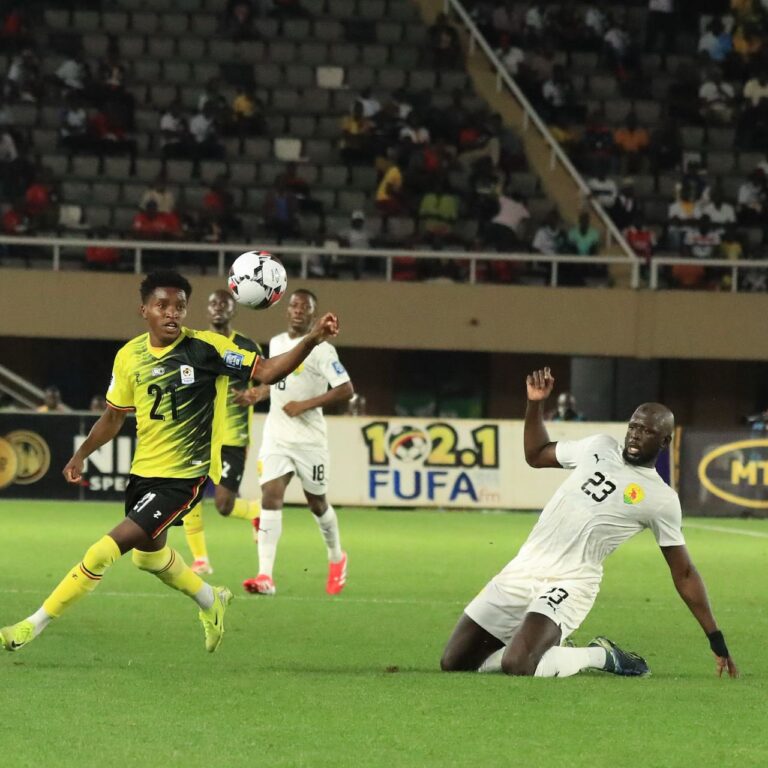
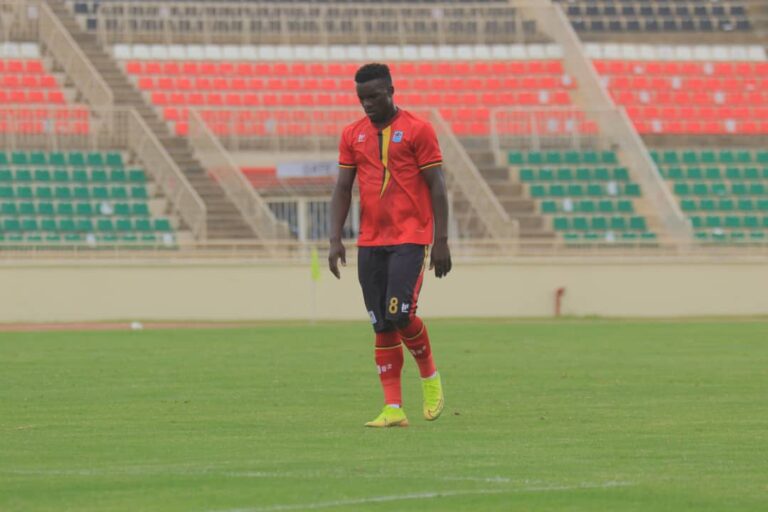
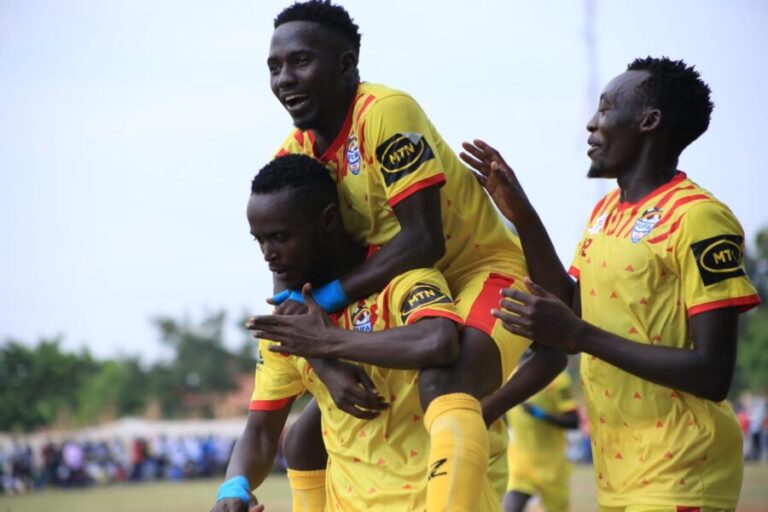
The Uganda Cranes are still in the hunt for a spot in the 2026 FIFA World Cup after a crucial 1-0 win over Guinea in their latest Group G qualifier at Mandela National Stadium, Namboole on Tuesday night.

Allan Okello was the star of the show, scoring the only goal of the match in the 36th minute with a stunning free-kick that sailed past Guinea’s goalkeeper, Soumaila Sylla. The Cranes dominated possession throughout the game and created several scoring opportunities, but clinical finishing was a challenge for forward Shaban Muhammed, who missed a number of chances that could have sealed a more comfortable victory.

Despite the missed opportunities, the victory places Uganda in a promising position in the group. With 9 points, the Cranes are tied with Botswana, who also have 9 points, but Uganda has a goal difference of just 2 less. The group’s leader, Algeria, remains firmly in control with 15 points, while Mozambique sits in second place with 12 points. Guinea is in fifth place with 7 points, and Somalia, yet to win a match, is at the bottom of the table with just 1 point.

Looking ahead, Uganda still has a chance to secure qualification, and with four more games remaining, their hopes remain high. The top team in the group will qualify directly for the World Cup, while the second-place finisher has a shot at reaching the next round. The best four second-placed teams from all groups will compete for a chance to claim an intercontinental playoff spot and keep their World Cup dreams alive.

For the Cranes, their next fixtures are pivotal. Uganda will play Mozambique and Somalia in September 2025, both games to be held at Mandela National Stadium in Kampala. These two home matches provide a golden opportunity for the Cranes to collect six points and reach a total of 15 points, which would give them a strong chance of progressing.

In October 2025, Uganda will travel away to face Botswana, followed by an away trip to Algeria. While these are challenging fixtures, Uganda can still hope to collect points from these encounters, with the possibility of securing at least five points from these two away games.

In my opinion, “Uganda has already bagged 9 points, and if we win both of our home games, we’ll have 15 points, which will put us in a solid position for qualification but It’s important to remember that all teams in the group still have a maximum of 12 points left to play for, so there’s everything to play for, and Uganda has a strong chance if they continue to improve their performances.”

So far, the Cranes have won three and lost three of their six matches, with no draws. Their consistency at home and potential to perform well away means the dream of qualification is still alive, and fans across the nation will be hoping to see their team make history and secure a place in the 2026 World Cup.

As the qualifiers enter their final stages, the Uganda Cranes must continue their strong push and make every game count. Fans can look forward to an exciting final stretch of games, and for now, there is still hope, as the Cranes continue their journey to the World Cup in the USA, Canada, and Mexico.

The road to qualification is tough, but with determination, teamwork, and support from the nation, the Uganda Cranes can still make their mark on the world’s biggest football stage.

FINALLY: Parliament sets date for swearing in Nalukoola as Kawempe North MP

0

The Speaker of Parliament Anita Annet Among has set a date for the swearing in of Kawempe North MP-elect Elias Nalukoola

“I have received official communication from the electoral commission along with a copy of the gazetted results. I will proceed to swear in the Member of Parliament-elect for Kawempe North in my chambers tomorrow at 12:00 noon. I would like to congratulate Erias Nalukoola Luyimbazi on his victory,” Among said Tuesday afternoon.

Nalukoola was hotly voted as MP for Kawempe North in a by-election marred by state orchestrated violence against Nalukoola and his supporters belonging to his party, the National Unity Platform (NUP).

The ruling party, the National Resistance Movement (NRM) and their chairman, President Yoweri Museveni, disputed the results that gave Nalukoola victory citing electoral malpractice.

Defeated Faridah Nambi, the NRM candidate a logged petition in court seeking a vote recount but today (Tuesday 25th March) withdrew the petition following the gazatting of Nalukoola as the dully elected and winner of the by-election by the electoral commission.

MUSEVENI VS BOBI WINE: Military populism versus generational populism in democratic backsliding in Uganda

0

By Oweyegha-Afunaduula

Although populism has become a focus of scholarly interest in the last decade, there has been much less research on how militaries worldwide have reacted to the rise of populist leaders (Yilmaz and Saleem, 2021).  

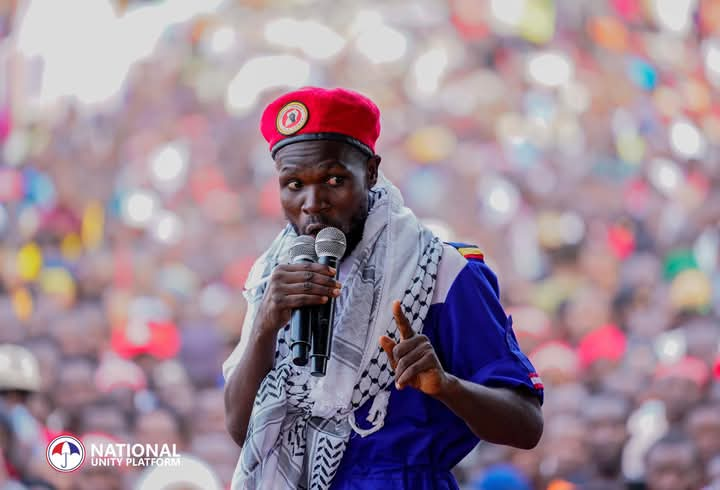
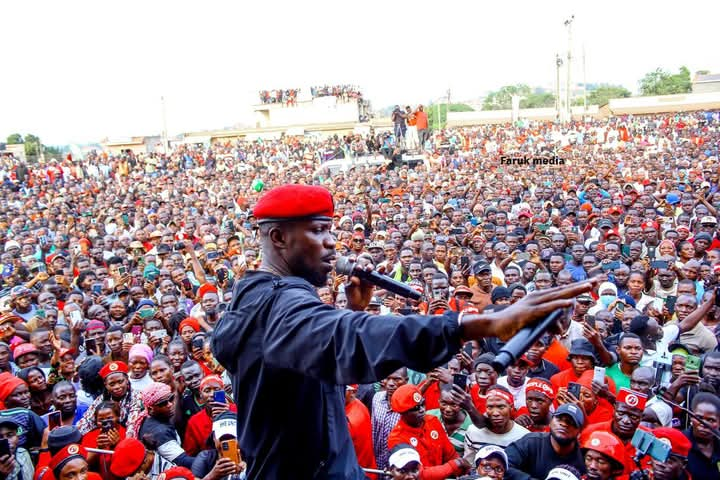
In this article I want to look at the interaction between military populism and generational populism in Uganda, taking President Tibuhaburwa Museveni as the military populist and Kyagulanyi Ssentamu Bobi Wine as the Generational populist.

I will show that military populism and generational populism was played out in the recently concluded Bye-election in North Kawempe Constituency.

Populism encourages the centralisation of power as it exalts one person and extols one leader. Dissent and diversity are downplayed or ignored. The military, as an institution, is based on strict hierarchy, and the criminalization of dissent within is closer to populist politics than constitutional politics.

The anti-intellectualism and xenophobic rhetoric of populists are often also closer to the military’s thinking. The military – save for the most senior ranks – can also be anti-elite.

Military officers, especially in lower ranks, may identify more with ordinary people than the ruling elite. Populists and the military may also agree on the importance of “getting the job done” instead of following legal or constitutional processes, which may cause delays (Yilmaz and Saleem, 2021). 

There is growing belief that military populism is the primary threat to democracy in Africa. Military populism is becoming the new norm in Africa in general (Usman, 2024) and Uganda in particular. Increasing involvement of the military in the politics of several African countries is driven by the approval of ordinary masses who perceive them as saviours from corrupt, incapable, and incompetent civilian alternatives.

The more successful coups there are in Africa, the more likely future coups become (Usman, 2024). Hakki Taş has written that military populist centralisation of power occurs when the military capture power, fosters control over the armed forces, and exacts a lot of impact on civilian oversight, depressing political literacy and political development of its civilian victims.

In Uganda military has been the norm since 1986 with the gun at its centre and President Tibuhaburwa Museveni as the perennial populist military ruler.  Initially the military populist government preferred decentralisation of of power and authority, which gained a lot of public support.

However, with the passage of time, the populist government recentralised power and authority in its perennial populist ruler. This meant that the many local districts it created would have no power and authority over how the taxes they collected were allocated and by how much.

They have to send the tax collections to the centre, which had the power and authority over the money and how to spend it. As we have seen, over time, social services have been devalued and more most of the money is being spent on central administration, politics, the military, the President, the State House, regional wars and controlling the movements and actions of civilians and political parties.

Military populist leaders in Uganda spend a lot of time, energy and money building individual loyalty. They do not hesitate to pay their loyalists excessively highly compared to non-loyalists of similar qualifications and experience. Sometimes the loyalists need not have the required qualifications and experience.

The Public Service Commission and other statutory bodies need not be primarily involved in their appointment.Hakki Taş points out that populist military rulers are particularly after building community loyalty and ideological loyalty. This tends to sway their minds away from developing and transforming the countries they lead to building personalist power.

In Uganda, community loyalty and ideological loyalty are being built through ideas such sa saccos and programmes such as Bonna Baggagawale, Myooga, Operation Wealth Creation and Parish Development Model and also the so-called National Ideological School at Kyankwanzi.

Unfortunately, these are prone with corruption and are impoverishing communities since they target individuals, not whole communities. However, they are the ones the populist military ruler routinely uses to access the impoverished communities at the expense of other alternative leaders who are excluded militarily from the population.

Apparently, as Hakki Taş has pointed out populist leaders can embody both militarist and anti-militarist traits. Besides, increasing support for populist leaders grants them the capacity to either suppress, negotiate with, or deploy armed forces as needed. 

In Uganda, this frequently happens during elections during which the populist leader seeks to show the absolute majority of Ugandans support him. He wants to perennially prove that all councils and the Parliament of Uganda are solidly his as loosing the support base to Opposition would undermine his populist stance.

Unfortunately, the military populist leader is undermining democracy instead. Enhancing his military populism and personalist power ins enhancing democratic backsliding in Uganda.Let me now turn to the generational populism of Kyagulanyi Sssentamu aka Bobi Wine, which has been written about by Luke Melchiorre (2023) in his article “Generational Populism and the Political Rise of Robert Kyagulanyi aka Bobi Wine in Uganda”.

The article analyses the political rise of the Ugandan opposition leader, Robert Kyagulanyi, aka Bobi Wine, arguing that he has a deployed a novel type of generational populism – a mobilising political discourse, which frames the struggle between ‘the people’ and ‘the elite’ in generational terms, defining the former in relation to their status as youth, and in antagonistic opposition to an elite, which is depicted as defending a gerontocratic political order.

At a theoretical level, the article broadens political science’s conception of populism, by introducing a new subtype of the political phenomenon, which demonstrates the importance of intergenerational dynamics in the construction of the discursive categories of ‘the people’ and ‘the elite’.

While it argues that Kyagulanyi’s success demonstrates the potential of populism in African countries to electorally challenge incumbent regimes, by helping to build political coalitions across ethno-regional lines, incorporating previously excluded social groups into the political process, it concludes by stressing that Kyagulanyi’s political project has failed to offer any real ideological alternative to the neoliberal orthodoxy that has characterised President Tibuhaburwa Museveni’s Uganda over the last four decades.

Apparently, soon after the 2021 presidential and parliamentary elections, President Tibuhaburwa Museveni dismissed Kyagulanyi as “being backed by foreigners and “homosexuals” and as a populist without an agenda (Luke Melchiorre, 2021).

However, soon after President Trump, it became clear that Uganda had been receiving billions of dollars through the World Bank and USAID to fund Homosexuality related activities with the knowledge of President Tibuhaburwa Museveni’s government.

President Tibuhaburwa Museveni’s military Populism and Kyagulanyi’s Generational populism are set to clash again during the 2026 Presidential, Parliamentary and Council elections. A preamble of what is likely to happen in 2026 elections was played out on 13th March 2025 in the North Kawempe Parliamentary By-election.

It took the Independent Electoral Commission 11 days to confirm National Unity Platform’s Elias Luyimbazi Nalukoola’s victory against National Resistance Movement’s Faridah Nambi. The Uganda Gazette Notice gives Nalukoola 175 more votes than the 17, 764 he originally got and Faridah Nambi’s original 8,593 rises to 9058. Nalukoola said his victory was against brutality.

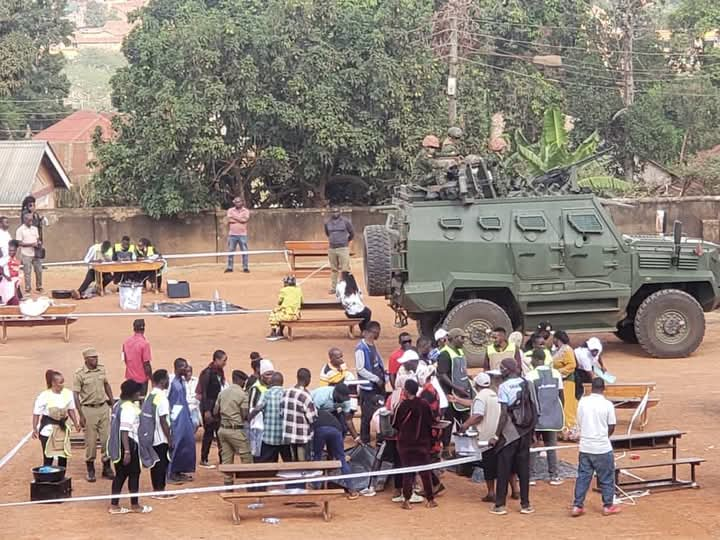
Indeed, the by-election was highly militarised by the Uganda Police, Uganda Peoples Defense Forces and the Joint Anti-Terrorism Task Force (JATT). It was as if the Bye-Election was a mater of Life and Death. There was a lot of violence against journalists. President Tibuhaburwa claimed NRM voted were stolen by NUP despite heavy deployment.

He claimed those who committed violence were NUP members and threatened that NR< would go to court. However, many NRM members, including Ofwono Opondo, the government spokesman concurred that Nalukoola won the contest despite State violence.  Ofwono Opondo describe the NRM’s performance as “an exercise in futility” and accused the party of losing touch with the “broad base of ordinary supporters, voters and common sense.

He added, “One wonders why the party mounted this by-election – for a seat lasting only seven months before the general election – into a high-stakes, do-or-die affair.”One thing is true. Neither Military Populism nor Generational Populism add much value to democratic development.

Democratic development refers to the process of strengthening and expanding democratic institutions, practices and values within a society, aiming to achieve a more just, equitable, and participatory form of governance. Throughout President Tibuhaburwa Museveni’s Military Populism democratic institutions have been eroded, political pluralism has been weakened and country cannot boast that it has built democratic practices and values and that there is meaningful participation by the people in the leadership and governance of the country.

Military populism amidst neoliberalism is confusing democratisation in Uganda. It is a challenge to liberal democracy (Galston, 2018). It is unlikely that either military populists or generational populists are influencing the development of democratic attitudes at the citizen level (Zaslove and Meijers, 2023).

In Uganda many who support the military populist are driven by either goods, jobs or money they receive from him, not hope for democracy with him at the helm. However, those who support the generational populist are heard saying, among other things, that they want democracy, freedom, justice and equity and tjat they are tired of brutality, abuse of human rights and exclusion of their lot from the opportunity to lead and govern their country towards meaningful independence, sovereignty and citizenship.

Lastly while the military populists are committed to the politics of interests, the generational populists are committed to the politics of identity and belonging.

For God and My Country

Further Reading

Abubaker Usman (2024). Military Populism is the Primary Threat to Democracy in Africa, LSE, February 14 2024. https://blogs.lse.ac.uk/africaatlse/2024/02/14/military-populism-is-the-primary-threat-to-democracy-in-africa/ Visited on several security operatives, including 25 March 2025 at 10:56 am EATFranlin Draku (2025). Kawempe North By-Election: EC Finally Confirms Nalukoola’s Victory. Daily Monitor, March 24 2025, https://www.monitor.co.ug/uganda/news/national/kawempe-north-by-election-ec-finally-confirms-nalukoola-s-victory-4977476 Visited on 25 March 2025,George Asiimwe (2025). Opondo Rebukes NRM Over Kawempe Election Debacle: Stop Violence, Deliver Public Services.  ChimpReports, March 23, 2025. https://chimpreports.com/opondo-rebukes-nrm-over-kawempe-election-debacle-stop-violence-deliver-public-services/ Visited on 25 March 2025 at 13:13 pm EAT.Hakkı Taş (?). Marching to the Populist Drum? The Militaries role in populist governance. THE LOOP, https://theloop.ecpr.eu/marching-to-the-populist-drum-the-militarys-role-in-populist-governance/ Visited on 25 March 2025 at 11:11 am EAT.Ihsan Yilmaz and Raja M. Ali Saleem (2021). Military and Populism: An Introduction. European Center for Populism Studies, April 26 2021. https://www.populismstudies.org/military-and-populism-an-introduction/ Visited on 25 March 2025 at 10:36 am EAT. Luke Melchiorre (2021). The Generational Populism of Bobi Wine. ROAPE, February 12 2021, https://roape.net/2021/02/12/the-generational-populism-of-bobi-wine/ Visited on 25 March 2025 at 12:12 pm EAT.Luke Melchiorre (2023). Generational Populism and the Political Rise of Robert Kyagulanyi aka Bobi Wine in Uganda. Review of African Political Economy Volume 50, 2023 – Issue 176: Pages 212-233 | Published online: 22 Aug 2023.William A. Galston (2018). The Populist challenge to Liberal democracy. Brookings, April 17 2018 https://www.brookings.edu/articles/the-populist-challenge-to-liberal-democracy/ Visited on 25 March 2025 at 13:37 pm EAT.Zaslove, A. and Meijers, M. (2023). Populist Democrats? Unpacking the Relationship Between Populist and Democratic Attitudes at the Citizen Level. Political Studies, 72(3), 1133-1159. https://doi.org/10.1177/00323217231173800 (Original work published 2024)

Khalid Aucho doubtful for Uganda Cranes clash against Guinea

0

By Musa Kikuuno, Busoga Times

Uganda Cranes captain Khalid Aucho may miss the crucial World Cup qualifier match against Guinea due to an injury. The match is set to take place on Tuesday, March 25, 2025, at Mandela National Stadium in Kampala.

During a pre-match interview on Monday at the same venue, Aucho revealed that he was still awaiting a final medical assessment before determining whether he would be fit to play.

“I am waiting for the doctors’ confirmation if I will be able to play tomorrow or not. But still, the boys are available to represent the team perfectly, and they know exactly what to do on the pitch to get a win against Guinea,” Aucho stated.

Despite the uncertainty surrounding their captain, Uganda Cranes head coach Joseph Paul Put expressed confidence in his squad’s preparation, saying the team had shown great determination and skill in training ahead of the crucial fixture.

Aucho also called on Ugandan football fans to turn up in large numbers and support their team, emphasizing that home support could play a key role in securing a positive result.

Meanwhile, FUFA Executive Committee member Isa Magoola Kakaira, who also serves as the chairman of the International Match Organizing Committee, advised fans to avoid bringing motorbikes and private vehicles to the stadium unless they have designated parking stickers. He recommended that fans use public transport or park at a distance from the stadium to ease congestion.

Ahead of the match, Kampala Metropolitan Police spokesperson SSP Patrick Onyango issued a stern warning to politicians against making political statements inside the stadium. He emphasized that authorities would not allow banners or any political materials in the venue, saying security personnel would enforce this directive strictly.

The Uganda Cranes head into this match eager to bounce back after a disappointing 3-2 defeat to Mozambique in Cairo last week. Uganda, currently in fifth place in Group G, will be looking for a much-needed three points against Guinea to boost their chances of qualifying for the 2026 FIFA World Cup.

Group G is currently led by Algeria with 12 points, followed by Mozambique with 12 points, Guinea with 7 points, Botswana with 6 points, Uganda also with 6 points, and Somalia in sixth place with 1 point. The group winner will automatically qualify for the 2026 FIFA World Cup, while the second-placed team will have an opportunity to compete in a playoff for a chance at qualification.

The Cranes will be hoping to make home advantage count as they seek to revive their World Cup dreams.

REALITIES OF LIFE: Challenges of becoming non-academic outside the university

0

By Oweyegha-Afunaduula

Academic is the Opposite of real. The academic world is different from the real world. The real world is where you find everybody except the academics. However, once one has left the academic world, one should know that one is no longer an academic. One must struggle to fit in the real world where one’s peers are absent. One’s communication must change so that one does not appear strange.

It is not easy when one has been communicating only to one’s peers. Don’t ask me why many former academics are never heard of again when they have left academia. If you asked me, I would tell you that they never prepared themselves for the real world. 

Even then many former academics can no longer communicate or interact with their peers they left behind at a university campus. 

Sometimes academics are forced to leave the academia and enter the real world once they reach 60 or 70. 

Others decide to leave the academia on their own accord. However, without preparing themselves well for the real world, they find it extremely difficult to survive away from the academia. 

It is not uncommon for many to suffer loneliness. Having stayed away from their relatives for even as long as 40 years, they are strangers to their relatives and in the rural areas where they grew up. They are likely to find many of their relatives too young to relate with. Those who were agemates when they left their rural areas may already be dead or do not feel comfortable interacting with the new previously academic individuals.

The universities do not emphasize sociality. So, academics end up being asocial when they get out of the gates of the universities for ever. There is even no counselling for the outgoing academics to prepare them emotionally and psychologically for the strange real world.

Having been too close to books and laboratories while in their universities, they are poor family men or women. This means they have been poor family men or women, living as strangers under one roof with the members of their family. Because members of their families may not know them very well, they may live exclusive from them in the real world. This complicates their lives outside the universities.

Besides, many academics do not marry, or have their families breaking down even before they permanently leave the university campuses. 

It is extremely difficult to start life alone outside university after so many years in the enclosure called the Ivory Tower. No wonder a good number get mentally deranged and succumb to psychological problems. Unfortunately, former academics in the real world are hardly studied by sociologists and psychologists to establish their mental status. 

In Uganda, where studies show 14 million mentally deranged people out of a population of 49 million exist, many of these might be academics. Some former academics may be seen taking a lot of alcohol and illicit drugs, hopefully to conceal reality from themselves. In the process they damage their mental faculties and end up mentally deranged.

One other problem that may confront the former academics in the real world is that some leave the university when they have not built houses in their rural areas, or even in the urban or peri-urban areas, to retire in. Because they have no houses in their rural areas, they frequently decide to stay in the urban areas or peri-urban areas where they have to rent rooms, apartments or houses. This is often not sustainable. They have to pay for electricity and water, and perhaps maintain house helpers. This can be challenging with no regular income. Their retirement benefits may dwindle before they build domiciles.  No wonder many die early or become mentally deranged.

 Universities, through their retirement schemes, should have in place arrangements to remain in constant touch with their former knowledge workers. For some, they may offer part-time roles within their precincts, or where they have branches in the periphery; and use some of them to act as their emissaries to the populations where they stay or to market and popularize their programmes.

Even the government should have a programme to integrate or reintegrate the former academics in society once they have left their universities. It is good to have educated people living among the population. They may help the citizens to understand and appreciate government programmes or projects. 

It is shameful and wastage to see many academics, who have done a good job nationally educating citizens, streaming off to foreign countries to work there as knowledge workers during their post retirement period because they cannot fit in the real world. The human brain tends to be very productive after a person strikes 60. While the body is degenerating meteorically, the brain is growing supersonically and forming new synaptic connections.  Unfortunately, in poor countries such as Uganda, authorities tend to take people at that age and beyond as useless. Yet many national leaders are that age bracket.

Yes, becoming a successful NON-ACADEMIC outside the University is tough, but is not impossible. Family members can help. The universities can help. Government can help. Society can help. But the former academics must struggle to fit in the real world even before they leave their university campuses.

MILESTONE ACHIEVED: Bakenye rise in strength and unity to write new historic chapter

0

By G.W. Wabwire

A new dawn has arrived for the Bakenye community as they take a bold step toward reclaiming their rightful place in Uganda’s fishing industry.

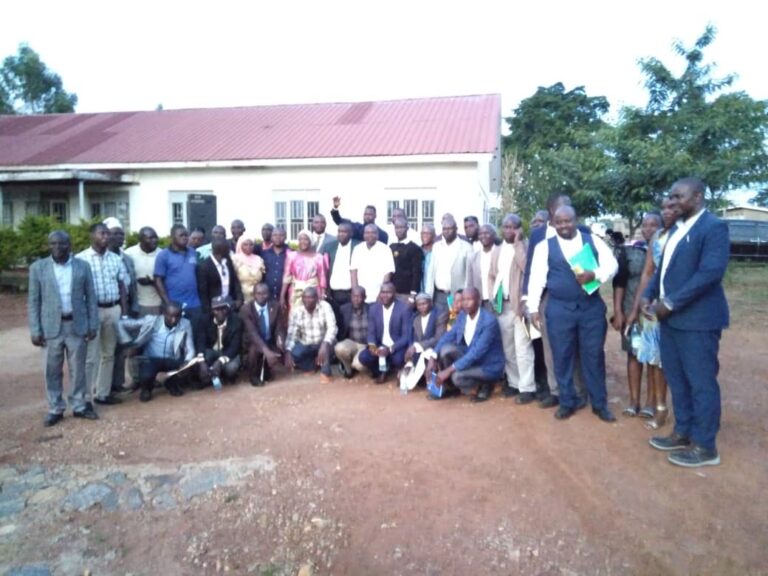
On the 22nd of March 2025, history was made in Buyende as the Bakenye successfully elected a 50-member committee entrusted with the noble task of following up on the presidential pledge to empower the Bakenye in leading sustainable fishing across Uganda’s lakes.

The election of this enthusiastic and dedicated committee marks a turning point in the community’s journey towards empowerment and self-determination.

A United Front for a Common Cause

The formation of this subcommittee is not just a step forward in policy advocacy; it is a testament to the unity and resilience of the Bakenye people. For the first time in a long while, the community stands together with one voice, stronger than ever.

The National Committee for the Formation of the Bakenye Cultural Leadership has once again demonstrated its commitment to uniting the Bakenye in diversity, fostering a spirit of togetherness, and amplifying their influence on matters that affect their livelihoods.

The election of Mr. Kato David Sinini as the chairman of this subcommittee is a strategic move, ensuring that leadership is entrusted to individuals of integrity, dedication, and unwavering commitment to the cause.

A Heartfelt Appreciation to the Pillars of Success

This milestone would not have been possible without the selfless efforts of several key individuals and institutions. A special appreciation goes to Mr. Babikanya Joseph, whose relentless sacrifices have consistently propelled the Bakenye cause forward.

Milly Babalanda’s financial support was instrumental in making this meeting a success, while Hon. Kanaku Michael provided invaluable guidance and unwavering support. The role played by regional coordinators Mr. Balikowa Gerald and Mr. Kimbowa Patrick in mobilization and organization cannot go unnoticed.

The BIDA fraternity’s active participation and willingness to be part of this transformative journey further solidify the unity of the Bakenye. The community also extends its gratitude to all members who contributed financially and physically, ensuring the meeting’s success.

The unwavering support from the leadership of Buyende district has been pivotal, and special thanks go to the RDC of Buyende for generously offering part of her radio airtime to mobilize the Bakenye for this historic event.

A Future Full of Promise

With this committee in place, the Bakenye now stand at the threshold of a new era, one marked by collective progress, resilience, and advocacy for their rightful stake in Uganda’s fishing industry.

Come May 2025, the Bakenye, through this subcommittee, will be ready to meet the President and competently engage in discussions on sustainable fishing practices that will secure their livelihoods and contribute to the nation’s economy.

This moment is a call to action for every Bakenye! Let us move forward with renewed determination, knowing that our unity is our strength and that together, we can achieve greatness. The future belongs to the united, and the Bakenye have proven that they are stronger than ever!

Congratulations to the Bakenye community on this groundbreaking achievement. Long live the Bakenye spirit of unity, resilience, and progress.

PROVINCE FOOTBALL: Bunyoro joins Busoga, Kigezi in Group C after defeating Rwenzori in FUFA Drum

0

By Musa Kikuuno

As the FUFA Drum 2024-2025 tournament heats up, Busoga Province has now learned their third opponent in Group C, with Bunyoro Province securing their place after eliminating Rwenzori Province in a dramatic 4-2 aggregate win on Sunday.

The victory propels Bunyoro into what promises to be an exciting group stage, joining Busoga and Kigezi in one of the most competitive groups of this year’s tournament.

Bunyoro Province Triumphs Over Rwenzori
The clash between Bunyoro and Rwenzori had fans on the edge of their seats, with both teams battling fiercely for a spot in the group stages.

However, it was Henry Gama’s Bunyoro side that emerged victorious, sealing a 4-2 aggregate win to advance. The result marks a major milestone for Bunyoro, who have now firmly established themselves in this prestigious tournament.

Their addition to Group C sets up an intriguing competition, with Busoga, Kigezi, and Bunyoro all bringing strong squads and eager to compete for the top spot.

The FUFA Drum: A Legacy of Regional Football Excellence
This year’s tournament marks the fifth edition of the FUFA Drum since its inception in 2018, and it has grown into one of Uganda’s most exciting regional football competitions.

Over the years, the FUFA Drum has crowned a number of deserving champions, with Buganda taking the first title in 2018, followed by Acholi in 2019, West Nile in 2022, and Lango in the previous edition.

Lango, the defending champions, clinched the 2023 title after a hard-fought victory over Busoga in the final at MTN Omondi Stadium in Lugogo.

Kampala Province Joins Group D
In other developments, Simon Dungu’s Kampala Province secured their spot in Group D after defeating Bukedi, joining Teso and Tooro in the same group.

Kampala’s qualification marks another significant step for the province, and they are set to bring an exciting brand of football to Group D.

Group Stage Composition Set for Intense Battles
With the group stages now set, the competition promises to be as fierce as ever.

In addition to Group C, which now includes Busoga, Kigezi, and Bunyoro, Group A has Bugisu (who advanced at the expense of Karamoja) joining West Nile and Acholi.

Group B sees Sebei, who overcame Ankole to secure their place, paired with Lango and Buganda.

The composition of these groups guarantees thrilling encounters across the board, with each province vying for supremacy in this prestigious tournament. Busoga Province, who narrowly missed out on the title last year, are determined to go all the way this time.

Busoga’s Strong Prospects
For Busoga, the road to redemption is clear. After being edged out by Lango in a dramatic final in 2023, this year’s edition provides the perfect opportunity for the team to regroup and refocus.

The squad’s talent and determination are expected to fuel their journey in the competition, as they look to secure a long-awaited FUFA Drum victory.

With Group C now complete, Busoga’s matches against Kigezi and Bunyoro will be pivotal in determining their path forward.

HERITAGE: Why Uganda must take cultural development seriously

0

By Oweyegha-Afunaduula

Humanity has been made to think and believe that the only development that matters in any country is economic development. But this is not true. What matters holistic development.

Holistic development encompasses the growth, development and well-being of a person in all areas, including physical, emotional, political, social, intellectual, ethical, moral, mental, ecological, environmental, cultural and spiritual aspects, rather than focusing solely on one area. In other words, meaningful and effective development is multidimensional

It means a country such as Uganda must have people who are adequately developed physically, emotionally, socially, intellectually, ethically, morally, mentally, ecologically, environmentally, culturally and spiritually in a balanced and interconnected manner. If this is not so then we cannot meaningfully talk of development as taking place. When we do so we are just joking and deceiving ourselves.  We deceive ourselves even more when we reduce all development to economic development, which we have done for almost 40 years.

When we talk of holistic development of a country, we mean fostering comprehensive progress across all aspects or dimensions of life, including social, economic, cultural, political, ecological, and environmental dimensions, aiming for a balanced and sustainable future. Unfortunately, our education system, which traditionally emphasises economic aspects and separation of knowledge and practice makes this impossible. Other types of development in the other dimensions are accidental.

In this article I will not spend, time, energy and space elaborating what each type of development means or entails. I will go straight to the subject matter of my article: cultural development.

UNESCO defines culture as “the set of distinctive spiritual, material, intellectual and emotional features of society or a social group, that encompasses, not only art and literature but lifestyles, ways of living together, value systems, traditions and beliefs” (UNESCO, 2001).

Cultureencompasses the shared beliefs, values, customs, behaviours, and ways of life of a group of people, shaping their understanding of the world and how they interact with it. Cultural dynamics, which occur on a particular biocultural landscape and involve people and communities of historically, socially, biologically, ecologically and environmentally known identity and belonging. As I wrote before, local culture provides a sense of identity and belonging especially for the rural people and communities.

Culture is not something that belongs purely to the past; it is an integral and inalienable part of what we are today and will become tomorrow. Individuals and institutions consistently create and recreate culture (MacDonald, 1991). Culture opens new social, ecological and environmental horizons to the community or country to which individuals belong. The people’s well-being overall should improve with the passage of time.

Cultural development relates to culture and has been defined as “the enabling or enhancing of cultural activities within a community to make its members more cultured and aware thereby improving their quality of life (National Development Fund, 2023).

Therefore, when we pay attention to cultural development, we are conscious that it fosters a richer, more inclusive society, boosts all round development and creative industries, and promotes understanding and respect between different indigenous groups of people, ultimately leading to a more sustainable and harmonious world. By paying attention to, and incorporating unique cultural values, traditions, and related factors, more efficient and effective development efforts can be achieved.

It seems the immediate post-independence Uganda, under the political leadership of Apollo Milton Obote, was more conscious of the value of cultural development than is the case today. The independence government created a Ministry of Culture and Community Development, initially politically headed by Constantine Baranga Katiti, who was to ensure that cultural development and community development were integrated to make development culturally meaningful.

Idi Amin retained the Ministry of Culture and Community Development and under it innovated the famous Heart Beat of Africa, which marketed the different cultures of Uganda worldwide in an integrated manner as an aspect of tourism development. He saw the value of culture in development and sought to promote it as cultural development. However, Tibuhaburwa Museveni abolished the Ministry of Culture and Community Development and systematically devalued its role in development. Although by policy his government valued conservation, the various biocultural landscapes of Uganda became degraded, especially by environmentally and ecologically empty development and invasive nomadic pastoralists, who only saw grass for their cattle and not the cultural value of the biocultural landscapes.

It is absolutely important that if development is to be of value to Uganda’s diverse biodiversity, biocultural landscape and indigenous groups this century and beyond, cultural development is rediscovered and re-emphasised. Culture enriches our lives in countless ways and helps build inclusive, innovative and resilient communities. However, although the Uganda Constitution 1995 created what it called cultural institutions, it disempowered the cultural groups politically, and dispossessed them of their biocultural landscapes (below and underground), which it placed squarely in the hands of the President of Uganda. The President can do anything he wants to the biocultural landscapes, including politically permitting foreigners to penetrate the landscapes to impose their cultural practices or developments. The so-called cultural institutions are helpless in the face of penetration by foreign cultures.

According to UNESCO protecting and safeguarding the cultural and natural heritage and supporting creativity and dynamic cultural sectors are fundamental to addressing the challenges of our time, from climate change to poverty, inequality, the digital divide and ever more complex emergencies and conflicts. UNESCO is convinced that no development can be sustainable without a strong culture component. Indeed, only a human-centred approach to development based on mutual respect and open dialogue among cultures can lead to lasting peace.

If Uganda takes Cultural Development seriously, then it can also take other types of development seriously instead of reducing all development to economic development, which is the reason we remain trapped in a vicious circle of underdevelopment, poverty and environmental destruction, decay and collapse.

For God and My Country.

Further Reading

Christoph von Fürer-Haimendorf (1955). Culture History and Cultural Development.Yearbook of Anthropology(1955), pp. 149-168 (20 pages). Published By: The University of Chicago Press.

Derek R. Peterson (2021). Government Work in Idi Amin’s Uganda. Published online by Cambridge University Press:  31 August 2021https://www.cambridge.org/core/journals/africa/article/government-work-in-idi-amins-uganda/E50AE1D0990CE0E8657A78DFE0C4CE43 Visited on 23 March 2025 at 11:29 am EAT

George F. MacDonald (1991). What is Culture?The Journal of Museum EducationVol. 16, No. 1, Current Issues in Museum Learning (Winter, 1991), pp. 9-12 (4 pages): Published By: Taylor & Francis, Ltd.

National Development Fund (2023). What is Cultural Development. LINKEDIN, August 15 2023 https://www.linkedin.com/pulse/what-cultural-development-ndf/ Visited on 23 March 2025 at 12:20 pm EAT.

Uganda Constitution 1995.