



By Joel Musiba
Busoga is endowed with some of Uganda’s most fertile soils, abundant water resources, and favourable climatic conditions for agriculture. The region receives between 1,200 and 1,500 millimetres of rainfall annually and is bordered by Lake Victoria, Lake Kyoga, and the River Nile.
These conditions should make Busoga one of Uganda’s leading food-producing regions. Yet, according to the IPC Acute Food Insecurity Analysis 2023, seven of Uganda’s fifteen most food-insecure districts are found in Busoga, with nearly 29 percent of households experiencing crisis-level hunger every year.
This raises a troubling question: Why does a region blessed with fertile land continue to struggle with food insecurity?
The answer lies not in the availability of natural resources but in a combination of economic, structural, and policy challenges that have steadily undermined household food security.
Busoga’s Agricultural Advantages
Busoga possesses several natural and economic advantages that should support agricultural prosperity.
Fertile Soils
The region is blessed with fertile ferralsols and vertisols, particularly in districts such as Iganga, Luuka, and Kamuli. These soils can support multiple seasons of maize, beans, sweet potatoes, and other food crops with minimal external inputs.
Abundant Water Resources
Busoga is surrounded by Lake Victoria, Lake Kyoga, and the River Nile, offering immense potential for irrigation and year-round agricultural production. However, despite these water resources, only 0.4 percent of the region’s arable land is under irrigation.
Cash Crop Production
The region is home to one of Uganda’s largest sugarcane belts, stretching across districts such as Mayuge, Bugiri, and areas surrounding Kakira. Robusta coffee is also grown in Kamuli and Buyende, although its commercial potential remains largely underutilised.
A Large Agricultural Population
Busoga has an estimated population of 4.2 million people, with approximately 75 percent depending on agriculture for their livelihoods. However, many young people increasingly prefer casual labour in urban centres rather than engaging in farming.
The Reality Behind the Fertile Landscape
Despite these advantages, Busoga continues to face serious food security challenges.
Child Stunting
An estimated 31 percent of children under five years in Busoga are stunted, compared to the national average of 29 percent. This reflects persistent nutritional deficiencies in a region that should be producing sufficient food.
Food Poverty
Districts such as Namutumba, Bugweri, and Kaliro recorded hunger levels of up to 40 percent in 2023, with many households surviving on only one meal a day despite living in agriculturally productive areas.
Market Dependence
Despite being engaged in farming, many families are forced to purchase food for six to eight months of the year after selling their harvests at low prices. Due to poverty, many households sell their produce immediately after harvest to pay school fees, medical expenses, and other basic needs. Within months, they are forced to buy food at much higher prices, leaving them vulnerable to hunger and financial hardship.
District-Level Hunger Snapshot
Namutumba
Namutumba records hunger levels ranging between 34 and 42 percent. The situation is driven by increasing land fragmentation and the expansion of sugarcane cultivation. Household food production has declined as arable land is increasingly devoted to sugarcane. Consequently, many families survive on one meal a day between January and March after selling most of their food harvests in December.
Bugweri
Bugweri records hunger levels ranging between 32 and 40 percent. The district lacks adequate storage facilities such as warehouses and granaries. As a result, an estimated 45 percent of maize is lost to termites and other pests after harvest. The increasing shift to tobacco and sugarcane cultivation has further reduced food crop production.
Kaliro
Hunger levels range between 35 and 38 percent. Poor road infrastructure, particularly around the Lumbuye wetlands, limits access to markets during rainy seasons. The transportation challenges contribute to significant post-harvest losses.
Mayuge
Mayuge records some of the highest hunger levels, ranging from 30 to 60 percent. Large portions of arable land have been converted to sugarcane plantations. Since sugarcane takes over a year to mature, many households struggle to meet food needs between harvest cycles and increasingly depend on food purchases.
Iganga
Hunger levels range between 29 and 30 percent. The district is affected by counterfeit seeds, resulting in poor yields and reduced household food production. Urban poverty further compounds food insecurity.
Kamuli
Kamuli records hunger levels between 28 and 33 percent. Many households have allocated significant portions of land to coffee production, leaving limited space for food crops. The coffee twig borer infestation of 2022 further reduced household incomes and food security.
Buyende
Hunger levels range between 27 and 31 percent. Although the district has extensive access to water bodies, many fishing communities lack modern fishing equipment and inputs. High transport costs from island communities further reduce incomes and increase food insecurity.
Bugiri
Bugiri records hunger levels of between 26 and 28 percent. Cross-border maize trade often encourages farmers to sell their produce early at low prices, reducing household food reserves later in the year.
Why Fertile Busoga Goes Hungry
The Sugarcane Trap
The expansion of sugarcane remains one of the biggest threats to food security in Busoga. More than 120,000 hectares of land are estimated to be under sugarcane cultivation. In many areas, food crops have been displaced by commercial cane growing.
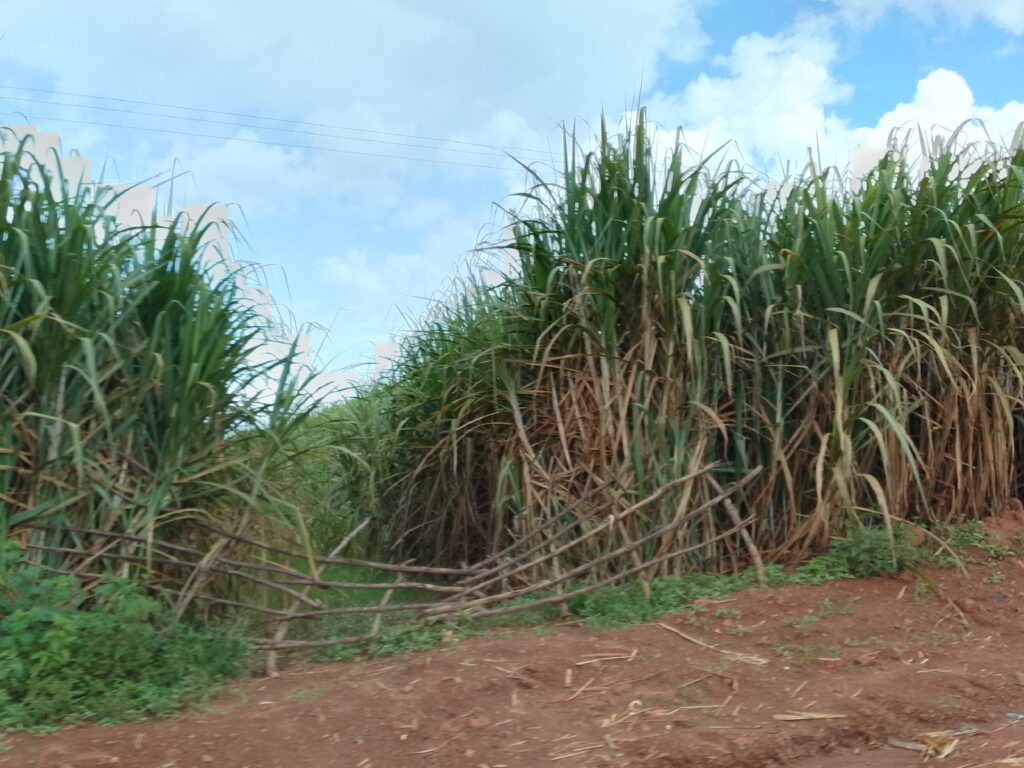
While sugarcane provides income, many outgrowers earn relatively little when payments are spread over the 18-month production cycle. Ironically, many sugarcane-growing households must buy food from other regions despite owning productive land.
Low Productivity on Food Plots
Land fragmentation caused by rapid population growth has reduced average farm sizes. Many households now operate plots too small to generate meaningful food surpluses.
Low fertilizer use, limited mechanisation, and inadequate extension services further constrain productivity. The prevalence of counterfeit seeds in districts such as Iganga and Bugiri has also contributed to poor yields.
Post-Harvest Losses and Weak Markets
Poor storage facilities result in substantial post-harvest losses. Between 35 and 45 percent of maize is reportedly lost to weevils, termites, and aflatoxin contamination.
Farmers are also vulnerable to seasonal price fluctuations. Maize often sells for as little as UGX 500 per kilogram during harvest periods, yet households later buy processed food products at significantly higher prices.
Climate and Economic Shocks
Unpredictable rainfall patterns, pest infestations, and the lingering economic effects of COVID-19 have further weakened household resilience. Without irrigation systems and adequate extension support, many farmers remain highly vulnerable to climate shocks.
The Human Cost
The consequences of food insecurity are visible across the region.
In Namutumba, some families resort to consuming wild foods during peak hunger periods. In Kaliro, school dropout rates increase during hunger months as children struggle to attend classes on empty stomachs.
At Jinja Regional Referral Hospital, many children continue to be treated for severe acute malnutrition, particularly from districts such as Bugweri, Namutumba, and Mayuge.
Signs of Hope
Despite the challenges, several initiatives offer hope for the future.
Irrigation projects such as the expanded Doho Rice Scheme and solar-powered irrigation pilots in Bugiri are improving agricultural productivity.
Model farmers in Kamuli who practice diversified farming by combining coffee, bananas, and beans are reporting improved incomes and food security.
Meanwhile, agro-processing initiatives and government programmes such as the Parish Development Model (PDM) and Emyooga are helping households diversify income sources and reduce dependence on single cash crops.
Five Actions to Restore Food Security in Busoga
First, government should regulate sugarcane expansion and protect land designated for food production.
Second, irrigation infrastructure should be expanded along the Nile and Mpologoma river basins to support year-round farming.
Third, agricultural extension services and access to quality inputs must be strengthened to improve productivity.
Fourth, certified warehouses and grain storage facilities should be established across the region to reduce post-harvest losses.
Finally, school feeding programmes should prioritise locally sourced food products, creating reliable markets for farmers while improving child nutrition.
Conclusion
Busoga’s hunger crisis is not a result of poor soils, inadequate rainfall, or lack of agricultural potential. It is the consequence of policy choices, land-use patterns, weak market systems, post-harvest losses, and limited investment in food production.
The region possesses all the ingredients necessary to become one of Uganda’s leading food baskets. What is needed now is deliberate action to prioritise food security alongside commercial agriculture.
If the right interventions are implemented, Busoga can once again feed itself and contribute significantly to Uganda’s national food security.
The time to act is now. Hunger should not define a region blessed with some of the most fertile land in the country.
The author is a lawyer, political analyst, and spokesperson for the Busoga Engagement Forum for Transformation.



Well written.