


The military shutdown of Nation Media Group (NMG) Uganda has thrust press freedom back into the national spotlight, raising fresh questions about the relationship between the state, the military and independent media in Uganda as the country heads towards another election cycle.
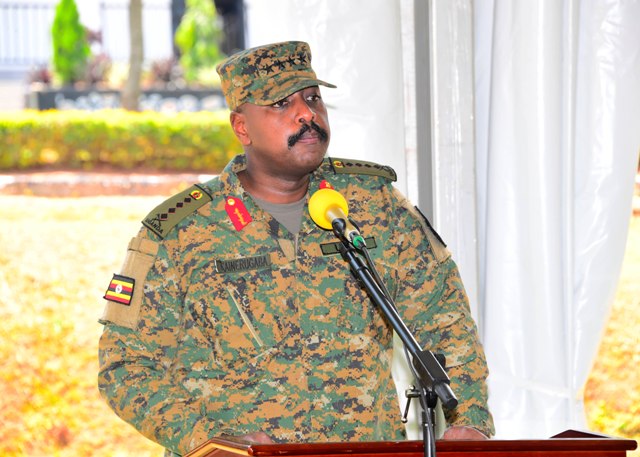
What began as a series of posts on social media by Chief of Defence Forces (CDF) Gen. Muhoozi Kainerugaba quickly evolved into one of the most dramatic actions against a major media organisation in recent years, disrupting operations at Daily Monitor, NTV Uganda and several sister media outlets.
Security personnel deployed to Nation Media Group facilities in Kampala in the early hours of Sunday, effectively bringing newsroom and broadcast operations to a halt.
The operation affected Daily Monitor, NTV Uganda, Spark TV, KFM, Dembe FM and other NMG-affiliated platforms, temporarily silencing one of Uganda’s largest private media groups.
Military deployment follows Muhoozi’s posts
Hours after the deployment and siege, Gen. Muhoozi announced on X that he had ordered the closure of Daily Monitor and NTV Uganda.
“I have the power in Uganda to shut down ANY media house I want to. I have had this power since 2017. This power was given to me by my great father President Yoweri Museveni. NTV and Daily Monitor are learning about it today,” he posted.
He had earlier tweeted saying that he did not believe in a free press in Uganda, arguing that the media should instead be guided by what he described as “cadres of the revolution.”
“NTV and Monitor are being shut down from today. Both NTV and Monitor will not re-open without my permission. From now on ALL media in Uganda will follow the rules,” he wrote.
Shortly afterwards, armed soldiers surrounded Nation Media Group’s headquarters in Namuwongo while another contingent deployed to the Serena Hotel broadcast centre, from where NTV Uganda and Spark TV transmit their programming.
Witnesses said television broadcasts were interrupted shortly after midnight as soldiers entered the facility and assumed control of access points.
Daily Monitor later confirmed that security personnel had ordered the closure of its operations alongside those of its sister media outlets.
Legal questions emerge
By Sunday afternoon, no official statement had been issued by the Uganda People’s Defence Forces (UPDF), the Ministry of ICT and National Guidance, the Uganda Media Centre or any other government institution explaining the legal basis for the operation.
The absence of an official directive immediately prompted legal questions over the authority under which the shutdown had been executed.
Uganda’s Constitution guarantees freedom of expression and media freedom while also providing for regulation under laws enacted by Parliament. Legal experts are therefore likely to examine whether due process was followed and whether any regulatory agency was involved before the military intervention.
The silence from government institutions has also fuelled speculation about whether the operation was based on a formal state directive or solely followed the public statements issued by the Chief of Defence Forces.
Press freedom concerns return
The shutdown has reignited concerns among journalists, civil society organisations and media rights advocates over the operating environment for independent journalism in Uganda.
For years, Uganda has experienced periodic confrontations between state agencies and media organisations, particularly during politically sensitive periods.
Newsrooms have previously faced temporary closures, equipment seizures, suspension of journalists’ accreditation and restrictions on coverage of opposition activities.
Sunday’s operation, however, represents one of the most significant military interventions targeting a mainstream media organisation in recent memory.
Critics argue that the deployment of armed soldiers to media premises risks creating a chilling effect on journalism by encouraging self-censorship and limiting the public’s access to independent information.
Supporters of stronger state oversight over the media have previously argued that national security and responsible journalism sometimes require firm regulatory action, although no official explanation had been provided in relation to Sunday’s events.
Timing raises political significance
The shutdown comes at a politically sensitive moment as Uganda gradually enters preparations for the next general elections.
Historically, relations between security agencies and sections of the independent media have become increasingly strained during election periods when political coverage intensifies.
The closure is therefore expected to become a major political issue, both domestically and internationally, with renewed scrutiny likely from regional and global organisations that monitor freedom of expression and democratic governance.
What happens next?
Whether Nation Media Group resumes operations quickly or pursues legal remedies remains unclear.
The company may seek clarification from government authorities or challenge the legality of the closure through Uganda’s courts should the shutdown persist.
Equally uncertain is whether the government will issue a formal explanation outlining the legal framework for the military deployment or whether Parliament and media stakeholders will demand accountability over the incident.
For now, journalists remain locked out of some of Uganda’s most influential newsrooms, while millions of viewers, listeners and readers await answers about when normal programming and publication will resume.
Beyond the immediate disruption, Sunday’s events have once again placed Uganda’s media landscape at the centre of a broader national conversation about constitutional freedoms, state authority and the role of an independent press in a democratic society.