


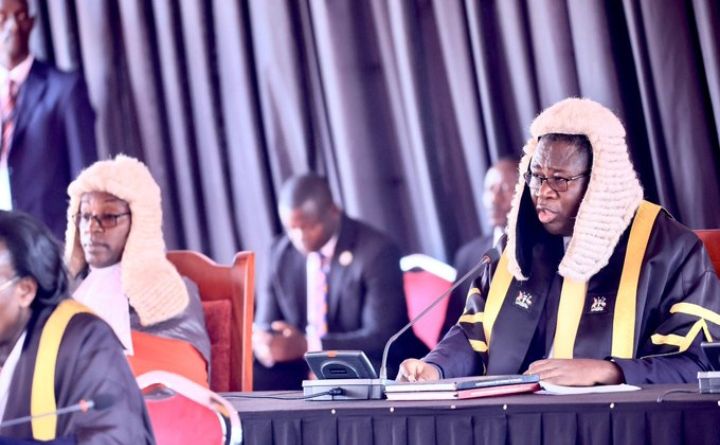
Oboth wins speakership race With landslide victory, promises integrity and research-based debate
Jacob Markson Oboth Oboth has been elected Speaker of Parliament after securing a commanding 441 votes in a tightly watched Speakership race.
Oboth overwhelmingly defeated Paul Mwiru, who polled 60 votes, while Norbert Mao received 15 votes. Three votes were declared spoilt.
The victory positions Oboth at the helm of Uganda’s legislative arm at a time when Parliament faces growing public pressure over accountability, corruption and service delivery.
In his acceptance speech, the new Speaker pledged to restore public trust in Parliament through integrity, discipline and evidence-based legislative work.
“We are aware of what the country has been going through. I pledge a corruption-free Parliament,” Oboth told lawmakers shortly after his election.
He said Parliament under his leadership would adopt a zero-tolerance approach to corruption and focus on protecting the interests of ordinary Ugandans.
“The Speaker’s Chair is not a throne; it is a servant’s post,” he said.
Oboth also signaled a shift toward research-driven debate in Parliament, criticizing what he described as hearsay and political grandstanding in legislative discussions.
“Our debates must be grounded in hard facts, data and sound research,” he said, adding that Members of Parliament must exercise oversight fairly and objectively.
He further pledged to ensure that Parliament becomes more responsive to citizens through people-centred legislation and result-oriented budgeting.
According to Oboth, the national budget process should focus on service delivery and measurable impact rather than technical manipulation of public finances.
“Budgeting will no longer be an exercise in financial engineering and distortion. It will be a service-orientated, results-driven endeavour to deliver services to our people,” he stated.
The new Speaker also moved swiftly to begin the process of constituting parliamentary leadership by calling for nominations for the position of Deputy Speaker in accordance with Parliament’s Rules of Procedure.
Political analysts say Oboth’s overwhelming victory demonstrates broad support within Parliament and places high expectations on his leadership, particularly in strengthening accountability and improving the institution’s public image.
His election comes amid increasing calls for Parliament to play a stronger oversight role and address public concerns about corruption, governance and efficient use of public resources.