


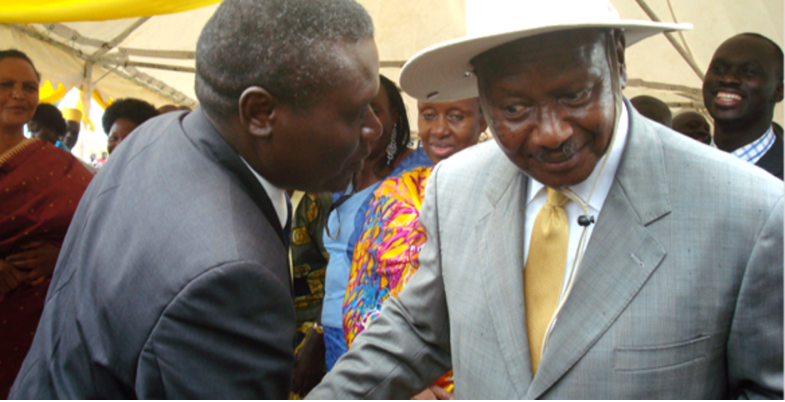
The decision by Norbert Mao to seek support from Yoweri Kaguta Museveni and the ruling National Resistance Movement for the position of Speaker of the 12th Parliament has triggered fresh debate over the future direction of opposition politics in Uganda.
Mao, who heads the Democratic Party, formally wrote to President Museveni requesting that his candidature be considered by the NRM Central Executive Committee and later by the ruling party’s Parliamentary Caucus, arguing that the cooperation agreement between DP and NRM justifies such consideration.
The letter, which Mao later shared publicly on X following intense public speculation, has drawn attention not only because of the powerful office he seeks, but also because it underscores the increasingly blurred lines between Uganda’s ruling establishment and sections of the traditional opposition.
In the letter, Mao appealed to what he called the “Spirit of 1986,” referencing the early years of the National Resistance Movement government when members of different political backgrounds reportedly worked together in rebuilding the country after years of instability.
He argued that the current political moment offers an opportunity to rethink Uganda’s confrontational political culture and replace it with broader cooperation arrangements capable of delivering national stability and progress.
“A dynamic cooperation can evolve into an alliance, a coalition and eventually a merger,” Mao stated in his public explanation of the letter.
The remarks have already generated political tension within opposition circles, where critics accuse Mao of steadily moving the Democratic Party closer to the ruling party at the expense of its historical identity as one of Uganda’s oldest opposition formations.
Since entering into a formal cooperation agreement with the NRM government, Mao has defended his strategy as practical engagement designed to secure political influence and policy impact rather than remaining permanently isolated from state power.
His supporters argue that Uganda’s political system requires negotiation and compromise, particularly in a Parliament numerically dominated by the ruling party.
But critics view the Speaker bid as further evidence that opposition parties risk losing independence when they become too closely aligned with the government.
Some analysts believe Mao’s approach reflects a broader shift in Uganda’s politics, where ideological boundaries are becoming less rigid and political survival increasingly depends on strategic alliances rather than strict party loyalty.
The Speakership contest itself is expected to become a major political battleground within the ruling party. Although the NRM commands the majority needed to determine the outcome, internal caucus competitions often expose deeper rivalries based on region, patronage networks, seniority, and succession calculations.
By openly requesting consideration from the NRM caucus, Mao appears to be positioning himself not as an outsider challenging the system, but as a consensus-building candidate capable of working across political divides.
In his statement, Mao emphasized that the ultimate decision on the Speakership would rest with Members of Parliament, particularly the NRM caucus, which holds the numerical advantage in the House.
He said his request was guided by President Museveni’s earlier remarks in Kyankwanzi that the parliamentary majority would determine the next Speaker.
Political observers say the move could also test how far the NRM is willing to extend its cooperation with allied opposition figures.
If Mao were to receive serious backing from sections of the ruling establishment, it could signal a broader attempt to formalize coalition-style politics ahead of future political transitions.
At the same time, the development may deepen divisions among opposition supporters who remain skeptical of engagement with the ruling party and prefer a more confrontational approach to governance and accountability.
For the Democratic Party, Mao’s bid may become a defining moment in its ongoing transformation from a traditional opposition movement into what some members increasingly describe as a bridge-building political force.
Whether that strategy strengthens the party’s relevance or weakens its independence is likely to remain at the center of Uganda’s political debate in the months ahead.