


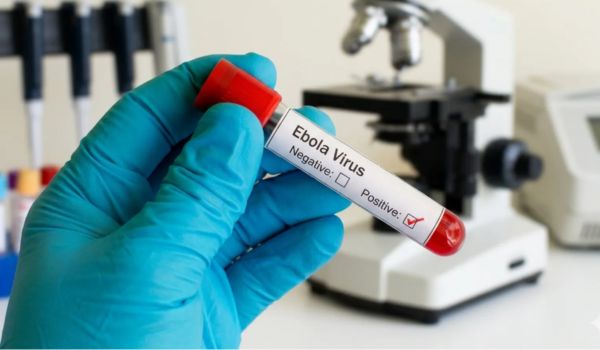
The Ugandan government has announced sweeping new public health measures, including suspension of flights and public transport links with the Democratic Republic of Congo (DRC), following confirmation of two imported Ebola Virus Disease (EVD) cases involving Congolese nationals.
The measures were announced after a meeting of the National Task Force on Ebola Virus Disease convened by Vice President Jessica Alupo and communicated by the Permanent Secretary at the Ministry of Health, Diana Atwine.
According to the Ministry of Health, both confirmed cases involved Congolese nationals who arrived from the DRC after exposure to the Ebola virus.
One patient died from the disease, while the second patient remains under medical care and is reportedly recovering steadily.
Health officials said the surviving patient tested negative for Ebola on Monday, May 18, 2026, and again on Wednesday, May 20, 2026. Authorities noted that the patient is now being managed for pre-existing comorbidities and is currently out of danger.
Despite the encouraging recovery, government officials said the risk of cross-border transmission remains high because of continued movement between Uganda and the DRC.
As part of the containment measures, government has temporarily suspended all flights between Uganda and the DRC, with the directive taking effect within 48 hours.
Authorities have also suspended public passenger ferry services on the Semliki River, cross-border bus transport and all public transport between the two countries for four weeks, although cargo, food and goods transport will continue.
In another major directive, all weekly markets in border sub-counties of high-risk districts have been suspended for the next four weeks.
Government also announced the temporary suspension of cultural celebrations and commemorative events that attract large gatherings in districts along the Uganda-DRC border.
The Ministry of Health said the restrictions are intended to minimize mass gatherings and reduce opportunities for virus transmission in high-risk communities.
Uganda is also intensifying screening, testing and treatment capacities along border points based on ongoing risk assessments.
Security patrols along porous border areas are being strengthened to reduce unauthorized cross-border movement, while only essential travel through gazetted entry points will be allowed for people originating from the DRC.
The Ministry further directed that Standard Operating Procedures (SOPs) be strictly enforced in schools, prisons, hotels, places of worship and markets in border districts.
Schools across the country will reopen as scheduled, but institutions have been instructed to strictly observe Ebola prevention guidelines issued by the Ministry of Health. Authorities said nearby health facilities will support schools in surveillance and response efforts.
The government also emphasized the need for enhanced death reporting systems across the country, especially in high-risk border districts and the Kampala Metropolitan Area.
Dr. Atwine urged the public to remain calm but vigilant, emphasizing that Uganda has experience managing Ebola outbreaks and has strengthened surveillance and response systems over the years.
The Ministry of Health called on members of the public to report any suspected Ebola symptoms immediately to the nearest health facility and to follow all infection prevention guidelines issued by health authorities.