


There is a moment many coffee drinkers in Kampala, and other towns in Uganda, have experienced but few can properly describe. You sit in a well-appointed café, good furniture, a serious espresso machine, a polished menu, and order a flat white.
What arrives is technically coffee: hot, caffeinated, and correctly served. But the milk is scalded, the espresso is over-extracted and bitter, and the latte art resembles an accident rather than a rosette.
You drink it. You do not return.This experience, repeated across Uganda’s growing café sector, is not the result of bad intentions. It reflects a structural gap that has long undermined Uganda’s potential as a serious coffee culture destination: the absence of a systematic, standards-driven pathway for training the people who prepare and serve coffee.
In Uganda’s café industry, barista skills have traditionally been acquired informally, through observation, imitation, and trial and error, with no consistent framework for quality. Someone watches a colleague make coffee, copies it loosely, and passes it on again. With each cycle, standards drift, like a fading photocopy.
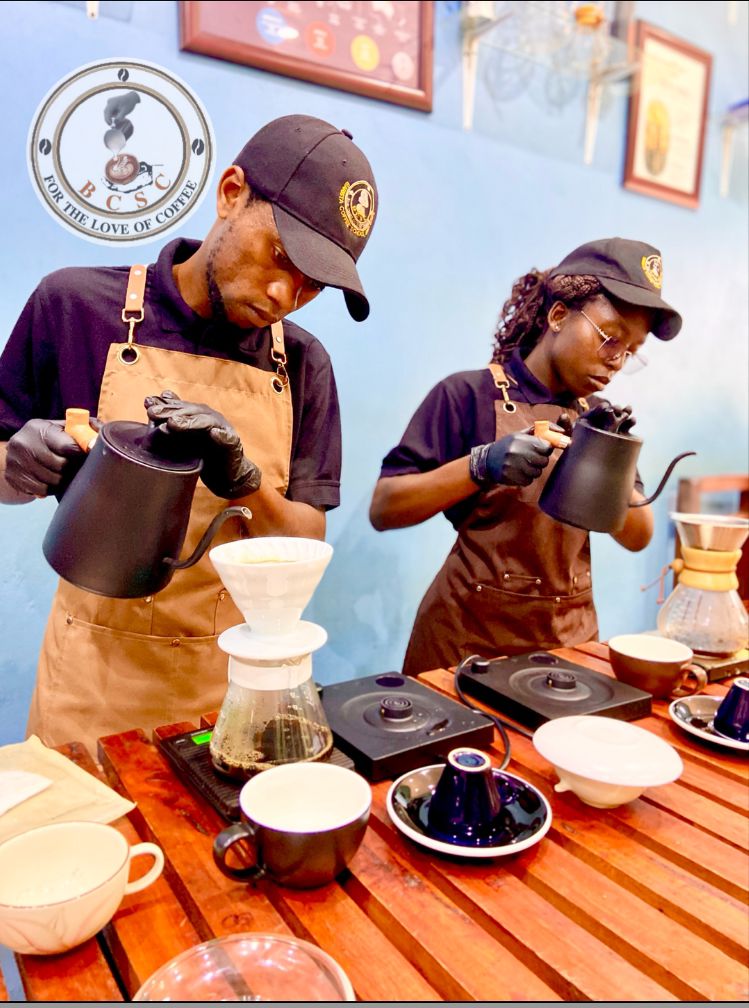
At Barista Coffee School and Café in Nalukolongo, Lubaga Division, that cycle is being deliberately broken. Its impact is already visible in the quality of graduates and in the emerging standards conversation within Uganda’s café industry.
What “Standard” Means in Coffee
Professional barista work is defined by a clear set of competencies: espresso extraction science, milk steaming, sensory evaluation, equipment calibration, bean sourcing, and customer service that shapes the overall experience.
The Specialty Coffee Association and similar bodies have codified these into structured curricula that allow baristas to be trained, assessed, and certified against global benchmarks.
For Uganda, Africa’s top coffee exporter, with 8.8 million bags worth $2.4 billion shipped in the year ending April 2026, the gap between production quality and café preparation has long raised concern.
The country produces excellent Robusta and increasingly high-quality Arabica, yet too often that coffee is prepared by someone whose training began and ended with informal imitation.
Built for the Real World
The school’s curriculum is designed around a simple principle: every skill must map to a real workplace requirement, and mastery must be demonstrated in practice.
The foundational curriculum covers coffee origins and processing (especially Uganda’s Robusta and Arabica), espresso extraction science, milk steaming and texturing, and equipment maintenance and calibration across different machines.
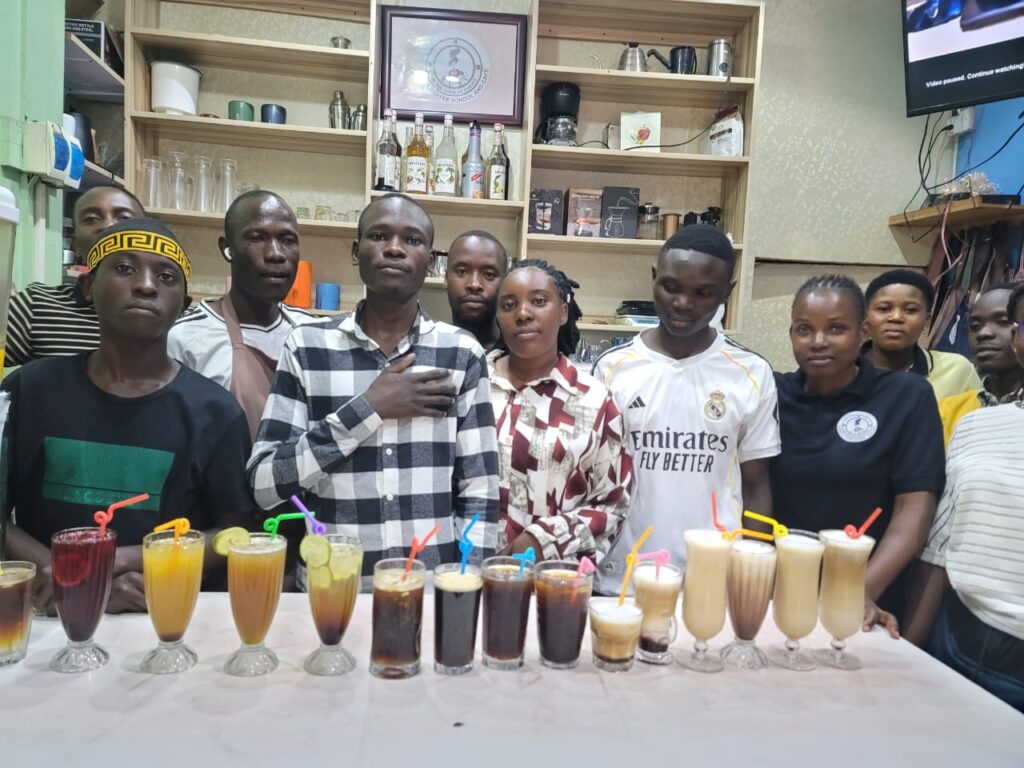
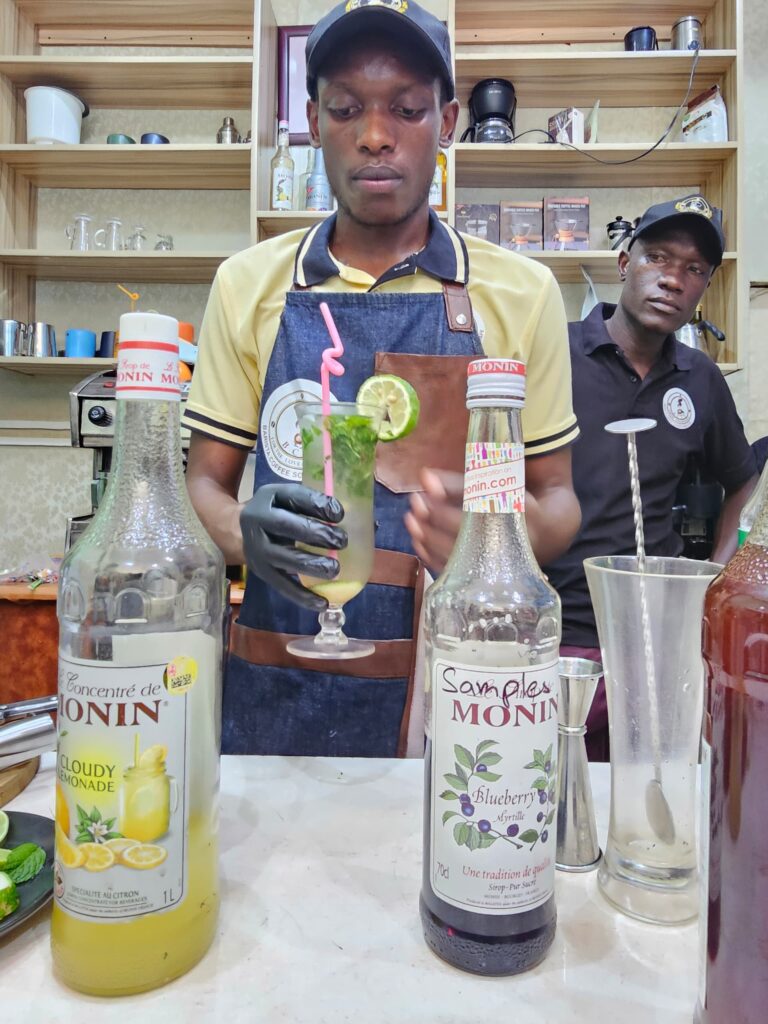
Advanced modules include latte art and milk science, alternative brewing methods, basic roasting, and sensory evaluation and cupping for independent quality assessment.
Professional conduct runs throughout, customer interaction, workplace communication, and service discipline that determine whether technical skill translates into value for employers.
Masterclasses in sourcing, advanced sensory analysis, and café business operations deepen specialist knowledge for selected students.
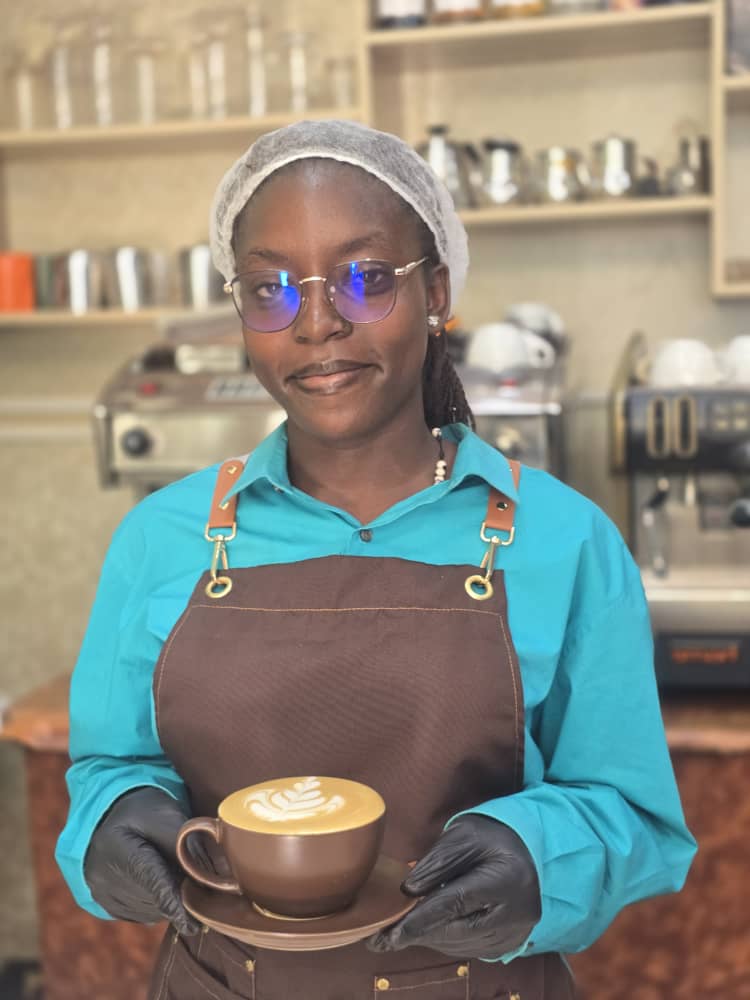
Joseline Nakate worked briefly in a café in Ntinda, where she believed she had learned “the basics.” “I thought I knew how to make coffee. After two days here at Barista Coffee School and Café, I realised I had been guessing,” she says. “I didn’t understand extraction time, milk texture, or why shots tasted inconsistent. I had no system, just trial and error.”
“The training gave me structure. Now I understand the variables, grind size, dose, yield, time, temperature, and I can diagnose and fix problems. That’s what separates guessing from knowledge.”
She is now preparing for certification and is in discussions with a Kampala specialty café that specifically sought graduates from the school after failing to find suitable candidates in the open market.
Abel Tumwesigye, a trainee came from a hotel background in Mbarara, where barista roles were typically informal and self-taught. “In most hotels, baristas learn from whoever came before them. When that person leaves, the gaps multiply. The standard keeps dropping,” he says.
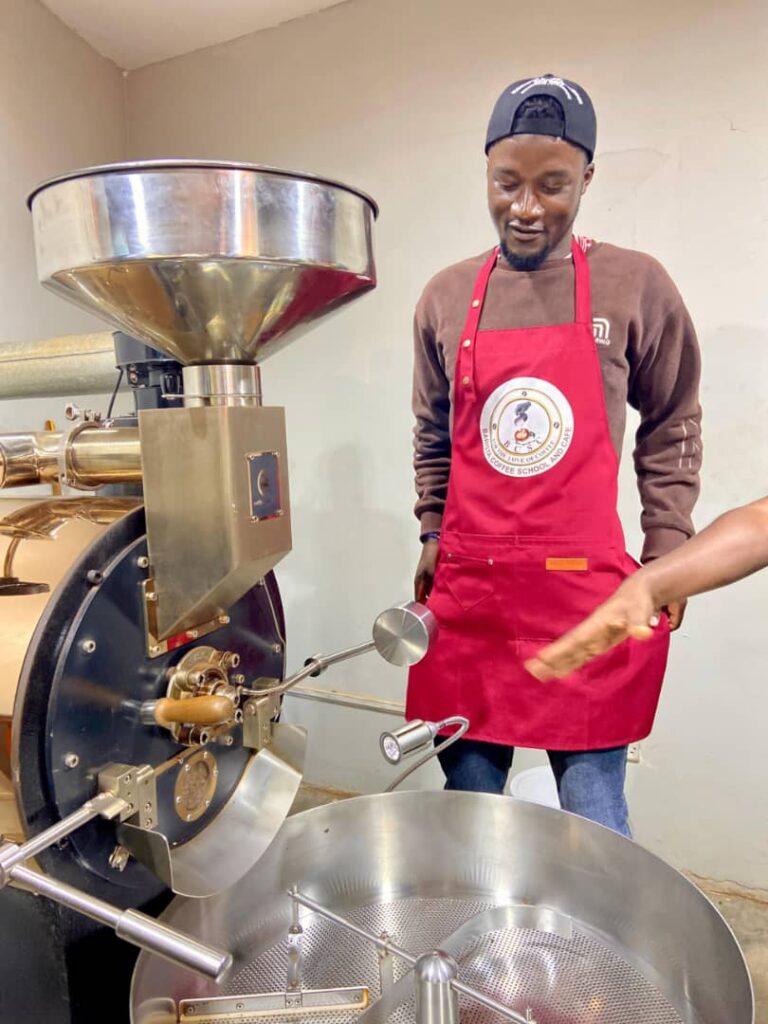
“At Barista Coffee School and Café, I expected techniques. I didn’t expect the science;why extraction changes flavour, how milk fat affects foam, how bean processing affects yield. That knowledge changes everything.”
“You can teach someone a recipe. But without understanding, they can’t adapt. This training gives you that understanding.” Sandra Kemigisha, 25,a enrolled to prepare for opening her own café.
“If you want to run a coffee business, you need to understand coffee. Otherwise, you depend entirely on other people’s standards,” she says.
She initially dismissed latte art as decorative. “Now I see it differently. Latte art shows whether milk, espresso, and technique are all correct. If it works, everything else is right too. It’s a signal of precision, not decoration.”
The Standard is the Strategy
Emmanuel Mugisha, the CEO of Barista Coffee School and Café, says the industry’s challenge is not production, but standards. “Uganda already produces world-class coffee. The issue is how it is prepared and presented. A poorly made cup made from excellent beans damages the reputation of the entire industry,” he says.
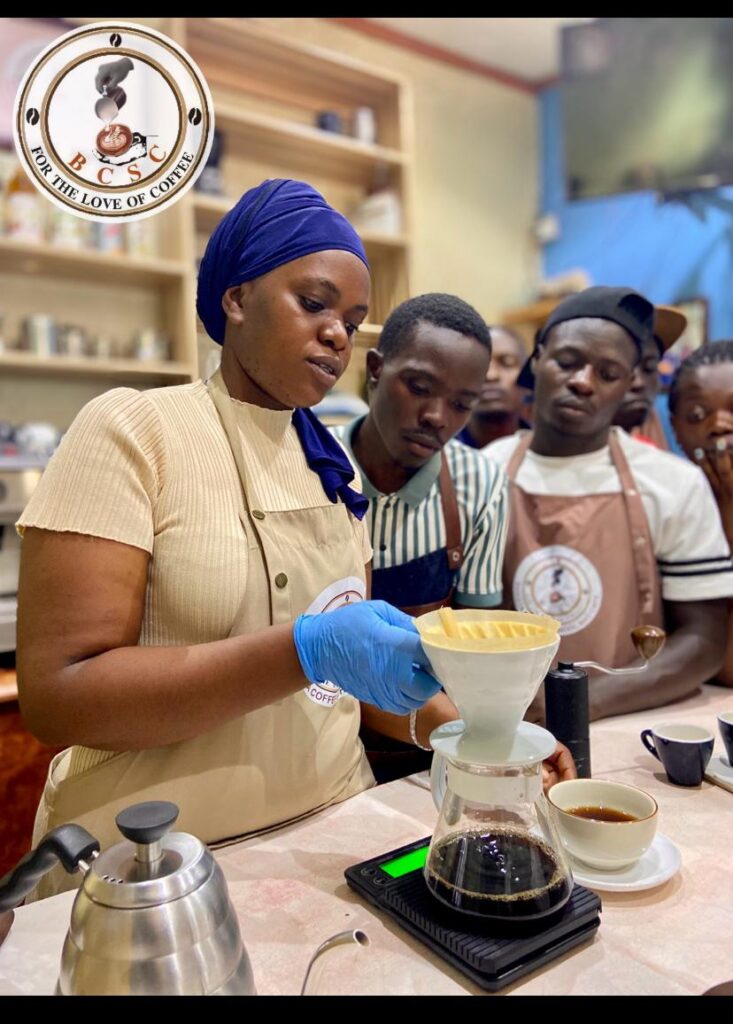
The curriculum, he explains, was designed from the end goal backwards, what a professional barista must be able to do in a real café or hotel environment. “We built it around employer needs and international standards. Every module exists because it reflects a real competency required in the industry.”
He links training directly to Uganda’s coffee ambitions. “Uganda wants to be recognised not just as a producer, but as a coffee culture country. That requires trained professionals who can present coffee at international standard consistently.”
The school’s achievements in regional competitions, including strong performances at the 2025 African Fine Coffees Association Conference, reinforce that positioning. “A certificate here means competency has been tested against a defined standard. Employers recognise that difference.”