


Parliament has raised fresh questions over the continued use of taxpayers’ money to finance Dei BioPharma, with MPs demanding greater accountability before the government commits another US$434 million to the pharmaceutical company.
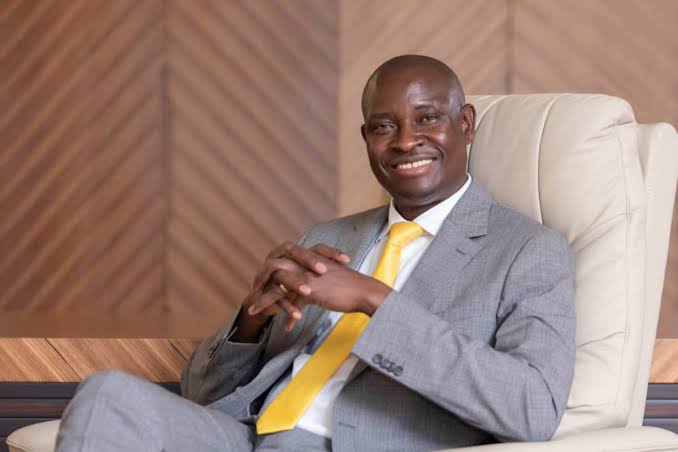
Dei BioPharma is owned and founded by the Ugandan scientist and entrepreneur Dr. Matthias Magoola.
The latest funding request has triggered scrutiny over how much public money has already been committed to the company, what the government owns in return, and whether previous investments have been subjected to a value-for-money assessment.
The controversy emerged during debate on the Presidential Affairs Committee report on science, technology and innovation, where MPs challenged a recommendation directing the government to provide the additional funds needed to complete and operationalise Dei BioPharma.
Deputy Speaker Thomas Tayebwa questioned the timing and process of the recommendation, warning that Parliament could end up authorising expenditure before critical procedures had been completed.
“You’re saying pay when you’re bypassing the processes,” Tayebwa said.
Shs723bn investment under scrutiny
The latest request comes after the government reportedly invested Shs723 billion in Dei BioPharma.
But MPs say Parliament still lacks sufficient evidence to establish the precise value of Government’s investment and the corresponding ownership stake.
Leader of the Opposition Joel Ssenyonyi pointed to the committee report’s record that proof of the government’s reported 9.4% shareholding in Dei BioPharma had not been provided.
He questioned why Parliament should approve another major injection of public money when the ownership position arising from the previous investment remains unclear.
“You’re saying there is no proof of government shareholding, but you’re saying government should inject a lot more money. This is extremely confusing,” Ssenyonyi said.
For the Opposition, the issue is not simply whether Dei BioPharma needs additional financing. It is whether taxpayers are receiving an identifiable and appropriately valued public asset in exchange for the money already committed.
MPs demand audit before more money
Ssenyonyi called for a value-for-money audit of funds already provided to Dei BioPharma before the government is allowed to seek additional funding.
“Before you can think about asking for more money, trillions of shillings for them, can we have a value-for-money audit of the money that has already been given before we add more money?” he asked.
His argument places the burden on Government to demonstrate what the previous Shs723 billion achieved before Parliament approves another large allocation.
Ssenyonyi also questioned the wider pattern of government support for selected private companies, arguing that numerous businesses are struggling without access to comparable taxpayer-funded bailouts.
“Numerous companies also require bailouts from the government. Why does the government continue to bail out these same companies, which are problematic, but there are other genuine businesses that are saying we are also struggling? Why don’t you bail us out?” he asked.
What is Government’s stake worth?
Julius Nakiyi, MP for Budadiri County East, focused on the valuation of Dei BioPharma.
He argued that if Shs723 billion represents the government’s reported 9.4% stake, the implied total equity value of the company would be approximately Shs7.7 trillion.
Nakiyi questioned whether the private shareholders’ contribution can justify their reported 90.6% stake.
“The argument is these people might have overvalued their company so that they dilute the shareholding of the government,” he said.
He called for a fresh valuation before any further public financing is approved.
“So we need a resolution in this Parliament that we revalue this company. Then we determine the true value of government shareholding in this entity,” Nakiyi said.
That demand introduces a fundamental question into the funding debate: whether the government’s previous investment bought an appropriately valued equity stake or whether taxpayers may be providing capital without equivalent ownership protection.
Concern over private-sector competition
The criticism extends beyond Dei BioPharma’s financial arrangements to the broader policy of repeatedly financing selected private enterprises from the Consolidated Fund.
PAC-Central Chairperson Patrick Oshabe Nsamba warned that such interventions could distort competition between companies receiving substantial public financing and businesses that raise their own capital.
“Some companies are depending entirely on the Consolidated Fund to run business,” Oshabe said.
He cited proposals for another Shs1.6 trillion for Dei BioPharma, alongside a proposed US$250 million for Inspire Africa Coffee, as evidence of what he described as an emerging pattern of heavy taxpayer support for selected enterprises.
“We are killing the private sector; we are killing innovation in the name of promoting innovation,” he said.
Oshabe instead called for an open and competitive innovation fund through which businesses could compete for government support on transparent terms.
Public money, private ownership
The Dei BioPharma controversy therefore goes beyond the latest US$434 million request.
At its centre is the question of how the government should deploy taxpayers’ money into privately structured enterprises and what safeguards should apply when public financing continues without clear evidence of valuation, ownership, and returns.
The MPs’ objections do not necessarily dispute the strategic importance of pharmaceutical manufacturing or innovation. Rather, they challenge the process through which additional public money is being committed.
Tayebwa’s warning that Parliament should not approve payment while bypassing required processes, Ssenyonyi’s demand for a value-for-money audit and Nakiyi’s call for a fresh valuation all point to the same accountability concern: Government should first establish what taxpayers have already bought before committing them to another substantial financial obligation.
The immediate test for Dei BioPharma is therefore not only whether the company can be completed and operationalised, but also whether Parliament can establish a clear, independently supported link between the billions already invested, the government’s ownership position, and the additional funds now being requested.
Until those questions are answered, the proposed US$434 million injection is likely to remain under intense parliamentary scrutiny.