


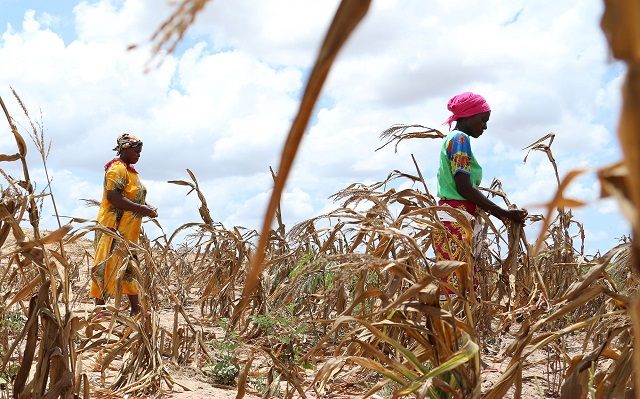
Government is preparing a nationwide irrigation expansion programme as prolonged drought and harsh weather conditions threaten crop production, livestock and household incomes, with district leaders being brought into the planning process this week.
The Ministry of Agriculture, Animal Industry and Fisheries (MAAIF) will convene elected and technical leaders from all districts on 7–8 October 2026 for a two-day consultation aimed at shaping interventions tailored to the water and agricultural needs of different parts of the country.
Agriculture Minister Frank Tumwebaze said the consultations follow Cabinet discussions on the worsening weather conditions and a directive from President Yoweri Museveni to conclude plans for the mass rollout of irrigation infrastructure.
The immediate concern is the growing impact of prolonged drought on farmers, with reports of poor crop germination and crop failures emerging from different parts of the country.
“The drought has persisted and many farmers are reporting cases of poor crop germination and/or crop failure,” Tumwebaze said in a message to farmers.
From drought response to irrigation investment
The proposed irrigation programme represents a potentially significant shift in Uganda’s approach to managing weather-related agricultural risks, from responding to crop losses after they occur to expanding the infrastructure needed to make farming less dependent on rainfall.
Tumwebaze said the planned intervention will focus on water conveyance to farms, with priority given to enterprises considered critical to food and income security.
These include food crops, coffee and cocoa, livestock feed such as maize and pastures, as well as fish farming.
The minister said the objective is to substantially increase the coverage of irrigated agriculture in both the short and medium term, reducing the exposure of farmers and livestock keepers to prolonged dry spells.
Districts to shape the investment map
Rather than adopting a uniform national irrigation model, MAAIF intends to use the district consultations to establish where and how investments should be prioritised.
District leaders will provide information on existing water coverage, terrain and the agricultural enterprises that should receive priority in their respective areas.
This information is expected to help the ministry develop a national irrigation intervention based on the actual conditions of individual districts and sub-regions.
The approach could also help government identify areas where irrigation infrastructure can generate the greatest economic impact by supporting commercially important crops alongside food production and livestock.
Protecting food and income security
The stakes extend beyond the immediate risk of crop failure.
For Uganda’s agricultural economy, prolonged drought can disrupt food supplies, reduce household incomes, increase pressure on livestock through shortages of pasture and water, and affect export-oriented value chains.
Tumwebaze specifically identified coffee and cocoa among the enterprises requiring protection because of their contribution to income security.
The inclusion of livestock feed and fish farming also broadens the proposed irrigation programme beyond conventional crop irrigation, pointing towards a more integrated approach to agricultural water management.
The minister said government is closely monitoring the situation and that the consultations are intended to provide the technical and local information needed to design the mass intervention.
A test for agricultural resilience
The planned rollout comes as climate variability increasingly complicates agricultural planning, making water availability a critical factor in protecting farm investment and sustaining production.
For farmers, irrigation can provide greater control over planting and production cycles, while for government it offers an opportunity to protect food supply and strengthen the resilience of strategic agricultural value chains.
But the scale of the proposed intervention will ultimately depend on the availability of financing, water resources, infrastructure and effective management systems.
The two-day district consultations therefore represent an important first step in determining how Uganda translates the political decision to expand irrigation into an investment programme that can reach farms across the country.
If successfully implemented, the strategy could shift irrigation from being a relatively limited component of Uganda’s agricultural system into a central pillar of the country’s effort to protect food production, rural incomes and livestock from increasingly unpredictable weather.