


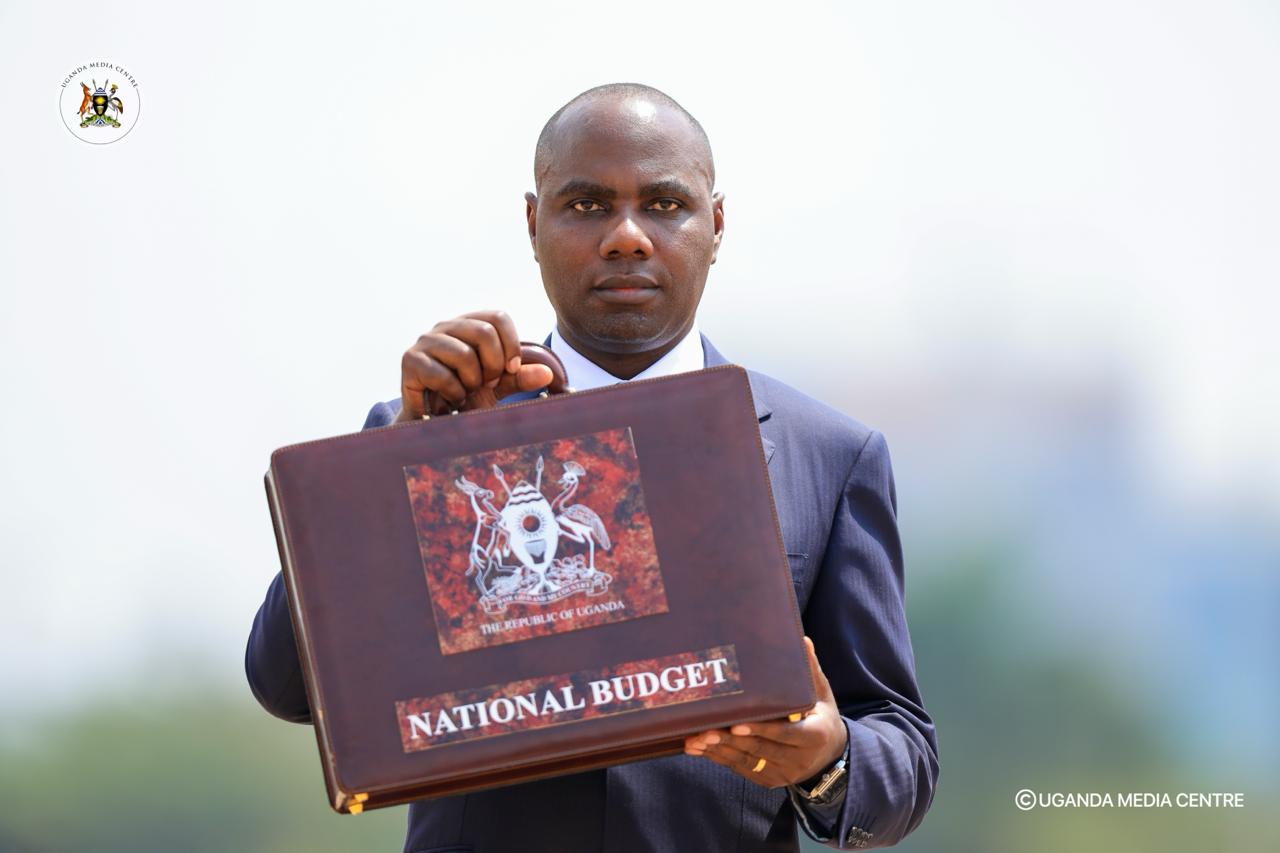
That question appears to be at the heart of the government’s Shs 72.4 trillion budget for the 2026/27 financial year.
Unlike previous budgets that largely focused on infrastructure expansion and macroeconomic stability, Finance Minister Henry Musasizi’s latest budget speech repeatedly returned to one central theme: monetisation.
The word appeared throughout the speech, reflecting a growing recognition within government that economic growth alone is not enough unless it translates into money in people’s pockets.
“The objective is full monetisation of Uganda’s economy,” Musasizi told Parliament while presenting the budget at Kololo Independence Grounds.
In practical terms, government wants every household, farmer, trader, artisan, manufacturer and service provider to participate in the cash economy.
The budget therefore represents more than an annual spending plan. It is arguably the clearest statement yet of government’s strategy to connect ordinary Ugandans to markets, jobs and income opportunities.
Why Monetisation?
Government’s argument begins with the economy itself.
Uganda’s economy is performing better than many analysts had predicted.
Economic growth reached 6.3 percent during the first three quarters of the current financial year and is expected to reach 7 percent by June.
Inflation remains low at about 3.6 percent.
Exports are growing.
Foreign investment is increasing.
Remittances from Ugandans abroad continue to rise.
Yet government acknowledges that these impressive macroeconomic numbers have not always translated into visible improvements at household level.
This explains why the budget is heavily focused on productive sectors that generate income directly rather than simply financing consumption.
The strategy rests on five pillars: commercial agriculture, industrialisation, services, digital transformation and market access.
The expectation is that these sectors will create jobs, increase productivity and generate wealth across the economy.
From Subsistence to Business
Perhaps nowhere is this shift more visible than in agriculture.
The sector employs the majority of Ugandans but contributes a much smaller share of national income.
Government’s concern is that millions of households remain trapped in low-productivity subsistence farming.
The Shs 2.26 trillion allocated to agro-industrialisation is therefore intended to transform farming into a commercial enterprise.
Irrigation schemes, agricultural mechanisation, improved seeds, livestock vaccines, extension services and value addition projects all serve one objective: increasing farmers’ earnings.
The anti-tick vaccine facility, coffee expansion programme and irrigation investments announced in the budget are all designed to increase production and profitability.
Government believes that unless farmers produce for markets rather than survival, household incomes will remain stagnant.
The Industrialisation Bet
The second major pillar is manufacturing.
Uganda has historically exported raw coffee, raw minerals and unprocessed agricultural commodities.
Musasizi’s budget makes it clear that government now wants Uganda to export products rather than raw materials.
The logic is simple.
A country that exports raw materials creates wealth elsewhere.
A country that processes its resources creates wealth at home.
This explains why government is investing heavily in industrial parks, mineral processing, pharmaceuticals, vehicle manufacturing and agro-processing.
The growth of factories to more than 10,000 nationwide is being presented as evidence that industrialisation is beginning to gain momentum.
The arrival of first oil later this year is also expected to reinforce this strategy.
Government’s focus is not merely on extracting crude oil but on using petroleum resources to support industrial growth.
Markets Matter More Than Production
One of the most striking themes in the budget speech was government’s emphasis on market access.
For decades, development discussions often focused on increasing production.
But Musasizi repeatedly stressed that production means little if producers cannot find buyers.
This explains the increased investment in standards, certification and trade facilitation.
The Uganda National Bureau of Standards has reduced product certification timelines dramatically.
Regional testing laboratories are being established.
Export promotion is being intensified.
Government is also relying heavily on regional integration through the East African Community, COMESA and the African Continental Free Trade Area.
The objective is to give Ugandan businesses access to larger markets beyond the country’s borders.
For government, markets are the bridge between production and income.
The Private Sector Takes Centre Stage
A notable shift in this year’s budget is government’s emphasis on private sector-led growth.
Rather than positioning government as the primary driver of economic activity, the budget increasingly portrays the state as an enabler.
Roads, electricity, railways, airports, digital infrastructure and standards systems are all being presented as tools for empowering businesses.
The underlying assumption is that wealth creation happens primarily through private enterprise.
Government’s role is to create the conditions that allow entrepreneurs, farmers and investors to thrive.
This explains the continued investment in transport infrastructure, energy generation, ICT connectivity and financial inclusion.
Oil, Technology And The Future
The budget also reveals how government sees Uganda’s future economy.
Oil is expected to provide a major boost to growth and revenue.
Technology is expected to drive productivity.
Innovation is expected to create new industries.
The investments in Kiira Motors, electric mobility, pharmaceuticals, fibre-optic infrastructure and digital services suggest that government is increasingly looking beyond traditional sectors.
The goal is to build an economy that is more diversified, productive and globally competitive.
The Real Test
Yet the success of the budget will not ultimately be measured by how much money is allocated.
Nor will it be judged solely by economic growth figures.
The real test will be whether ordinary Ugandans experience tangible improvements in their daily lives.
Will farmers earn more from their produce?
Will young people find jobs?
Will manufacturers access larger markets?
Will businesses become more competitive?
Will households move from subsistence to commercial activity?
These are the questions that will determine whether the government’s monetisation agenda succeeds.
The Shs 72.4 trillion budget lays out an ambitious roadmap.
Its promise is straightforward: convert economic growth into household income.
Whether that promise is fulfilled will depend not on the size of the budget, but on the effectiveness of its implementation.
As Uganda stands on the threshold of oil production and pursues its ambition of becoming a tenfold larger economy, the 2026/27 budget may ultimately be remembered as the year government shifted its focus from measuring growth to measuring prosperity.