Sunday, March 15, 2026
Home Blog

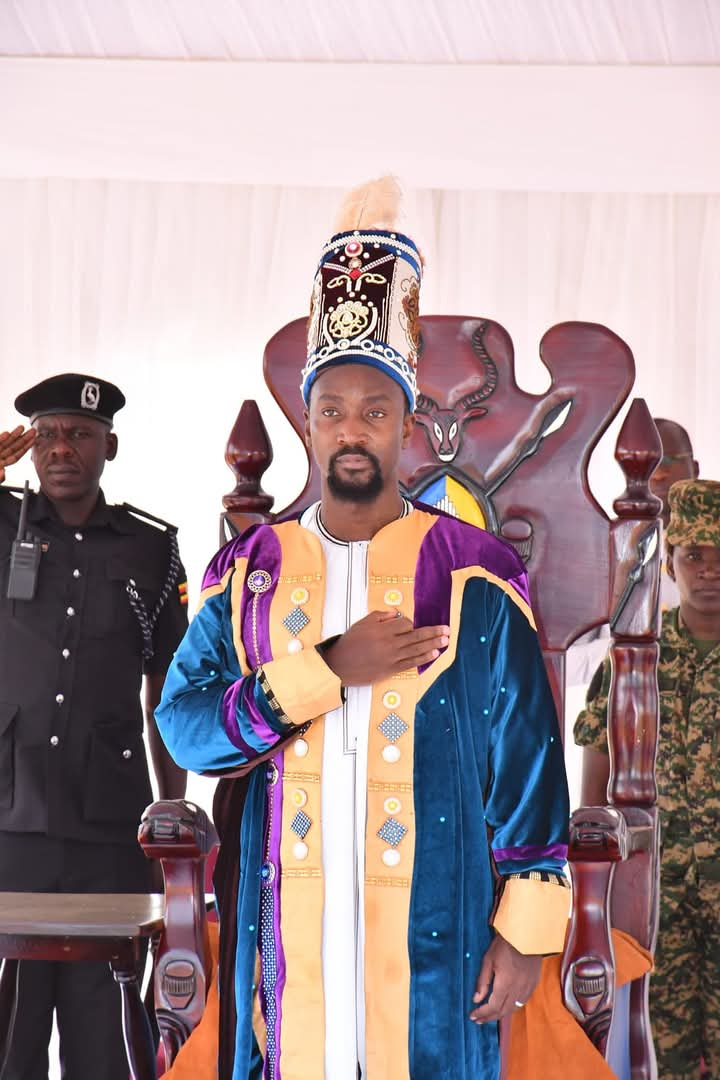
REASSURANCE: Kyabazinga Nadiope IV is in charge of Busoga Kingdom – Muvawala assures Basoga

0

The Katuukiro of Busoga Kingdom, Owekitibwa Joseph Muvawala, has in a lengthy and elaborative statement ‘assured Abasoga and the rest of Ugandans that His Majesty William Wilberforce Kadhumbula Nadiope IV is in charge and control of the Kingdom executing his duties as enshrined in the relevant legal regimes and Kisoga culture and norms.’

For close to two months, there has been rising concerns about the whereabouts of the Kyabazinga since his last public appearances in January. Matters were made worse when the First Deputy Prime Minister of Uganda, and Woman MP for Kamuli district, Rebecca Alitwala Kadaga, during a radio talksho with KBS Radio in Kamuli, announced that unscrupulous people had hijacked Obwakyabazinga.

In response, Muvawala said, “The Obwakyabazinga Bwa Busoga is under no control by any other forces apart from the authority and leadership of His Majesty Isebantu Kyabazinga,” adding “The Kyabazinga informs all of us that nobody is bigger than Busoga and our cosmopolitan nature and unity in diversity as Obwakyabazinga is our strength.”

PLANTING SEASON: Busoga Consortium launches school garden programme in Busoga model villages

0

The Director General of the Busoga Consortium for Development (BCD), Mula Anthony, has officially flagged off the BCD–CAU School Garden Programme for primary schools in the Busoga Model Villages.

The launch took place at Buteme Light SDA Primary School in Busana Model Village, located in Kamuli District.

Dr. Mula was accompanied by the district chairperson, Sarah Sambya, agricultural officers and members of the village action committee. The delegation was received by the school’s head teacher, Makubo Stephen.

As part of the visit, the delegation inspected the ongoing construction of a modern kitchen facility at the school, which is now about 90 percent complete. The facility is expected to support the planned launch of a soya milk school feeding programme for model schools under the Village Action Model next month.

During the event, Dr. Mula officially launched the school garden planting season and handed over seeds and farm inputs to support the initiative. The school received 30 kilograms of soybean seeds of the MAK SOY N6 variety and 18 kilograms of maize seeds of the Long 10H variety, along with fertilizers to boost production.

The inputs were received by head teacher Makubo, marking the revival of practical agricultural activities in schools aimed at improving nutrition among pupils and enhancing academic performance at the primary level.

Officials said the school garden programme will help integrate agriculture into learning while also supporting school feeding initiatives in the Busoga Model Villages, an approach intended to improve child nutrition and strengthen community-based development in the region.

NOT SAFE IN MY COUNTRY: Former presidential candidate Bobi Wine flees Uganda to exile after weeks in hiding amid security and military crackdown

0

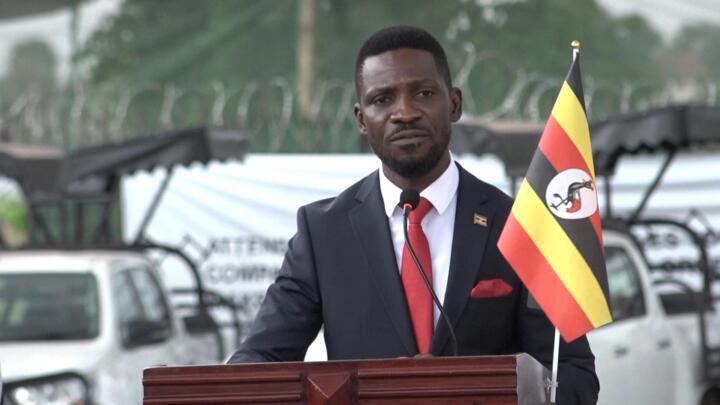
Opposition leader Robert Kyagulanyi Ssentamu, also known as Bobi Wine, has announced that he has fled Uganda after spending nearly two months in hiding, claiming security forces had been searching for him following the country’s recent disputed president elections in January. 

In a message addressed to Ugandans and friends of Uganda, the National Unity Platform leader said he had been forced to evade security forces after they allegedly attempted to arrest or harm him shortly after January poll in which the electoral commission declared President Yoweri Museveni winner.

Kyagulanyi claimed the military raided his home a day after the announcement of the election results, prompting him to go into hiding with the help of supporters. “A day later, gripped by shame and fear, the military invaded my home to harm me, but I was able to evade them and go into hiding,” Kyagulanyi said in the statement.

Weeks of Searches and Security Operations

According to the opposition leader, security agencies spent weeks attempting to locate him, conducting operations that he said included roadblocks, vehicle checks and raids on the homes of political associates. Government previously officially denied these claims.

Kyagulanyi alleged that the homes of several colleagues and leaders linked to the opposition were searched while security forces also targeted officers who had been assigned to his campaign.

“They have raided the homes of many colleagues and fellow leaders, mounted roadblocks and spot checks of vehicles and motorcycles, arrested and dismissed the police officers assigned to my campaign,” he said.

He added that his rural home and residence in Kampala were placed under tight surveillance, but that supporters helped shield him from authorities. “Well, they couldn’t find me because the people of Uganda sheltered me and protected me,” Kyagulanyi said.

Engagement With International Allies

The opposition leader said his departure from the country is temporary and intended to allow him to engage with international partners and supporters of Uganda’s democratic movement.

“Today, I am announcing my brief exit from the country to handle important work,” he said. “Over the next few weeks, I will engage with our friends and allies all over the world before returning to Uganda to continue the push for freedom and democracy.”

Kyagulanyi urged his supporters to remain united during his absence and to continue advocating for political reforms in Uganda.

Political Tensions Remain High

Kyagulanyi has been one of the most prominent challengers to President Museveni, who has ruled Uganda since 1986. His political platform, the National Unity Platform, has attracted significant support among young voters and urban populations.

Uganda’s elections have often been followed by heightened political tensions, with opposition groups frequently raising concerns about the electoral environment and security operations targeting political activists.

Kyagulanyi’s latest announcement is likely to intensify debate over the country’s political climate and the future of opposition politics. Despite leaving the country temporarily, the opposition leader said his political mission remains unchanged.

“For now, let’s remain focused and united,” he said, pledging to return and continue what he described as the struggle for freedom and democratic change in Uganda.

POLICE APPEAL: Football legend and coach, Mike Mutebi, still missing after Catholic seminar at Kisubi Beach

0

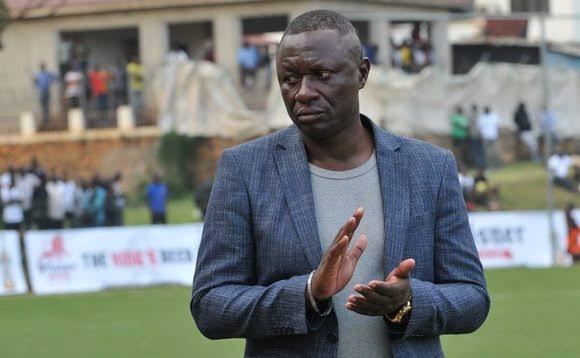
Police in Entebbe are investigating the disappearance of Mike Mutebi, a renowned football legend and coach, who went missing Saturday evening after attending a Catholic seminar at Kisubi Beach.

According to authorities at Entebbe Police Station, former Uganda Cranes coach Mutebi was last seen on the evening of March 7, 2026, at about 6:30pm as participants prepared to travel back to Kampala after the seminar.

However, when the group later arrived in Kawempe, Mutebi could not be accounted for, prompting concern among fellow participants and organizers.

Police say inquiries have since been launched to establish the circumstances surrounding the disappearance of the KCCA FC coach.

Authorities are now appealing to the public for any information that could help trace his whereabouts.

“Anyone with information about his whereabouts is urged to report to the nearest police station or contact Entebbe Police Station on 0775 318345 immediately,” police said in a statement.

Investigations into the matter are ongoing as security agencies continue efforts to locate the missing man.

TRAINED AND SKILLED: Journalists tipped on metrology and standards reporting to protect consumers

0

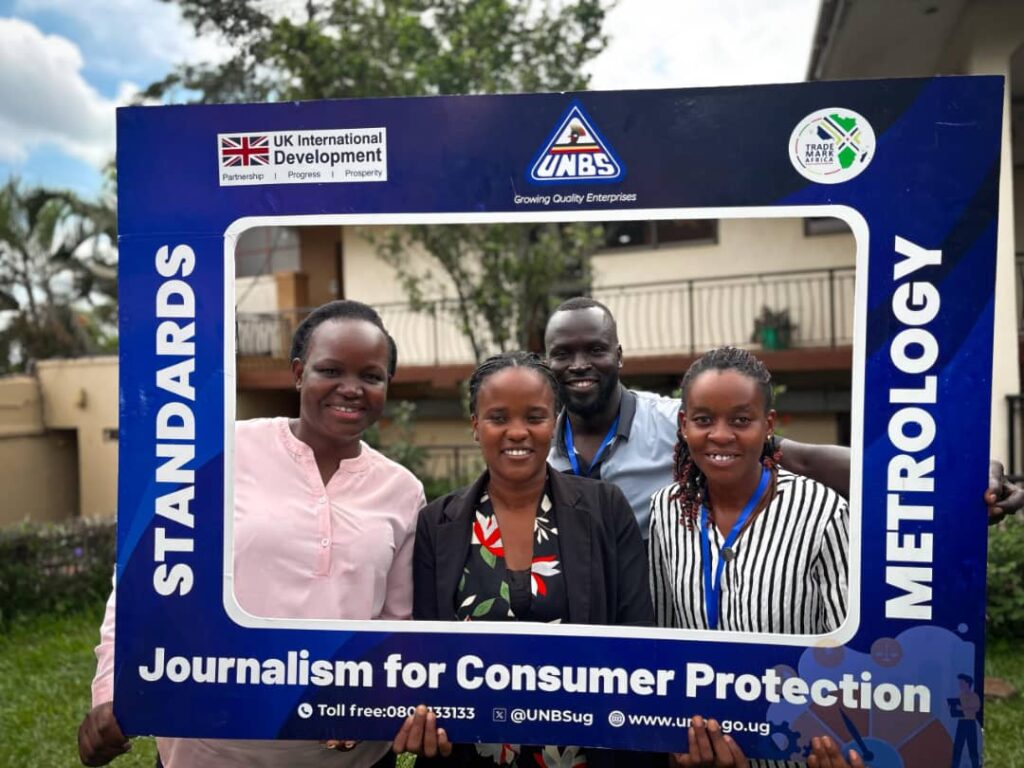
Journalists in Uganda have been urged to strengthen reporting on metrology and product standards to help protect consumers and support enforcement against substandard and counterfeit goods on the market.

The call was made during a three-day media training organized by the Uganda National Bureau of Standards (UNBS) at Hotel Paradise on the Nile. The workshop aimed to equip journalists with knowledge and skills to report effectively on measurement standards, product quality, and consumer protection.

Participants emphasized the need for journalists to develop investigative stories that inform the public while supporting regulatory agencies in enforcing standards.

Officials from the Uganda National Bureau of Standards noted that many products sold and consumed in Uganda are of poor quality or counterfeit, yet consumers continue to purchase them due to limited awareness or the lure of lower prices.

According to UNBS, some traders import substandard goods despite regulations, making it difficult for authorities to trace and eliminate such products from the market.

Speaking during the opening session, Daniel Arolwa, a UNBS official, urged journalists to play a proactive role in exposing unscrupulous business practices through responsible investigative reporting.

“Media practitioners should help identify and expose individuals dealing in substandard products so that the responsible authorities can take action for the good of the population,” Arolwa said. He, however, cautioned journalists to adhere to ethical and life-saving principles of reporting.

In Uganda, many consumers often rush to buy cheaper products without realizing that they may be of poor quality or counterfeit. UNBS warned that dealing in such products attracts legal penalties when offenders are apprehended.

UNBS also highlighted the importance of metrology, the science of measurement, in sectors such as agriculture where accurate weighing and testing are critical for trade and farmer incomes.

In a recent report released in Kampala, UNBS Director General Israel Ekwesigye said the country is making progress in ensuring agricultural products meet international standards.

The report focuses on measurement and testing of commodities such as coffee, tea and maize, which are key export crops.

“Accurate measurements are crucial in agriculture, from weighing produce to testing moisture levels,” said Ekwesigye. “Our report shows we are on the right track, but there is still work to be done to boost farmer incomes and increase exports.”

The report recommends strengthening metrology infrastructure and training more experts to support quality assurance in the agricultural sector.

As part of the training, journalists conducted field visits to assess compliance with standards and pricing practices in markets. At Jinja Central Market, butcher Ssekajja Muhammad told reporters that traders use verified weighing scales to ensure customers are not cheated.

UNBS said it is working with development partners such as TradeMark Africa and UK Aid to support media engagement and community outreach on standards and metrology issues.

The initiative is expected to enhance public awareness and strengthen collaboration between regulators, journalists and consumers in safeguarding product quality across Uganda.

BEYOND WINNING AND LOSING: While election outcomes often dominate public attention, the deeper lessons lie in the grassroots campaign experiences  

0

By Hagreaves Nsera

Recent reflections by four former district council candidates offered a rare and valuable window into the realities of grassroots elections in Uganda. While election outcomes often dominate public attention, the deeper lessons lie in the campaign experiences themselves – how candidates engage communities, the challenges they face, and what these encounters reveal about local democracy.

District councils play a critical role in local governance. They influence service delivery, planning, accountability, and the everyday interaction between citizens and the state. Yet discussions about elections at this level are often reduced to winners and losers, leaving little space to examine what the process teaches us about leadership, trust, and participation.

During a discussion dialogue organised by Engagement Forum for Transformation (EFT), a local political movement, one clear theme from the discussion was the enduring importance of grassroots engagement. Candidates agreed that direct, personal interaction remains the most effective way to build credibility.

Door-to-door conversations, community meetings, and listening sessions were consistently more impactful than posters or slogans. Voters responded positively when candidates took time to understand local concerns rather than simply presenting promises. “We organised several meetings in each village of Nsinze, and we moved door to door listening to and engaging the citizens on what pains them,” said Mr. Wandera Ronald, 26 years old, who contested and won the position of district councillor for Nsinze subcounty, Namutumba district.

However, these engagements also exposed the pressures shaping local politics. Many voters expressed expectations that went beyond policy positions, including immediate material assistance. While such expectations are understandable given economic realities, they raise broader questions about how citizens and leaders perceive political representation.

The discussion highlighted the need for sustained civic education so that elections are seen as a choice of leadership and ideas, not a transactional exchange. “People don’t wait or even want you to say anything about what you are going to do; they just demand money. Abantu bakukoba okunkumuse kumiyembe – figuratively translating to ‘give them money’. Ms. Baazale Marion Victo, 23 years old, who contested and won the position of woman district councillor for Nambale and Kidago sub-counties in Iganga District, said.

Another major issue was the challenge faced by new and non-incumbent candidates – limited resources. Politics is so transactional, and people expect to be given money anyhow. When you decide to contest, voters can ask you for money anywhere at any time, and they expect you to give it to them; otherwise, you will be damaging your chances of being voted in.

Victo added that she faced sexual harassment approaches in pursuit of resources. “You go to a respectable man in the village to propose the idea and ask for financial support. He says, ‘Come to this hotel at 10pm, and I will give you the money.’ Others would be point blank and ask you for sex as a way of paying back. This affected me psychologically because it was more from older men.” This challenge blocks many young ladies who have ideas and zeal to serve their community from contesting.

The candidates also reflected on the influence of incumbency. Established leaders often benefit from name recognition and existing networks, which can shape voter perceptions long before campaigns officially begin. This reality underscores the importance of internal party democracy and transparent candidate selection processes, which can help level the playing field and encourage competition based on ideas and performance. “Political parties are a very big factor because of the ordinary ground network which forms the starting votes,” said Mr. Baiswike Mwesigwa Grace, who contested for district councillor of Butansi subcounty, Kamuli district.

The election day itself was described as both intense and instructive. Regardless of outcomes, the process tested patience, discipline, and respect for institutions. Accepting results peacefully and constructively was seen as a measure of leadership maturity. The discussion emphasised that democratic culture is strengthened not only by competitive elections but also by how candidates and supporters respond to results.

Perhaps the most significant insights emerged from reflections on loss. None of the candidates framed their experience as wasted effort. Instead, they spoke of personal growth, expanded networks, and a deeper understanding of community needs. Campaigns, even unsuccessful ones, were described as platforms for learning and long-term engagement rather than one-time events.

These experiences carry important lessons for several stakeholders. For aspiring leaders, the message is clear: early preparation, community service, and integrity matter. Politics at the local level rewards consistency and presence over time. For political parties, there is a need to invest more in candidate training, grassroots structures, and issue-based messaging rather than relying solely on popularity or last-minute mobilisation.

For voters, the reflections invite a broader conversation about expectations and participation. Democracy functions best when citizens evaluate candidates on vision, character, and commitment to service. Strengthening this culture requires continuous civic education, not only during election periods.

Electoral institutions and civil society also have a role to play. Supporting peaceful campaigns, fair competition, and voter awareness contributes to healthier local governance. When elections are seen as learning processes rather than zero-sum contests, public trust in democratic institutions is strengthened.

Ultimately, the reflections from these grassroots campaigns point to a simple but powerful truth: democracy is built not only by those who win office but also by those who step forward to contest, engage, and learn. Their experiences enrich public understanding and help shape better leadership in the future.

As the country continues to reflect on governance and participation, such conversations deserve wider attention. They remind us that leadership begins long before Election Day and continues long after results are announced. In that sense, the true measure of a campaign is not only the vote count but also the contribution it makes to civic life. 

The author is a former district councilor candidate for Northern Division in Kamuli district and a civic leadership advocate. He is the Secretary General of the Engagement Forum for Transformation (EFT).

CRITICAL ANALYSIS: How Museveni has disempowered indigenous Ugandans since 1986

0

By Oweyegha-Afunaduula

Conservation Biologist and member of Center for Critical Thinking and Alternative Analysis

Preamble: An Invitation to See Clearly

The essay that follows is not written for those who seek comfort. It is written for those who seek truth—however inconvenient, however unsettling, however long suppressed.

For forty years, the Indigenous peoples of Uganda have witnessed a systematic dismantling of their collective power. This dismantling has not announced itself with drums and declarations. It has proceeded quietly, incrementally, through laws and policies and constitutions that promised one thing while delivering another. It has hidden behind the language of development, unity, and progress. It has persuaded even its victims that their suffering is incidental—the unfortunate but unavoidable byproduct of nation-building in a complex world.

This essay rejects that persuasion absolutely.

What follows is an exercise in multivariate analysis—a way of seeing that refuses the comfortable simplifications of disciplinary thinking. The majority of Ugandans, including many who consider themselves educated, have been trained to think in fragments. They analyze politics without ecology, economics without culture, law without history. They propose solutions that become new problems because they have never been taught to see the interconnections between the forces that shape their lives. This imprisonment in disciplinary silos is itself a form of disempowerment—a mental Bantustan that prevents the mind from perceiving the wholeness of its condition.

This essay is an escape attempt.

It names the pillars of disempowerment because what is named can be confronted. It traces the connections between land grabbing in the north, refugee education in the west, constitutional manipulation in Kampala, and economic exclusion everywhere. It reveals that these are not separate problems requiring separate solutions but a single integrated system requiring an integrated response. The reader who emerges from these pages still thinking in fragments has not truly read it.

The essay also names something else: the exogenous identity of President Tibuhaburwa Museveni. This is not named as accusation but as explanation. For four decades, polite discourse has danced around this fact, treating it as irrelevant to analysis. But a regime cannot be understood without understanding the identity of the man who built it and the community he has systematically elevated through every instrument of state power. The constitutional inclusion of the Banyarwanda as indigenous; the importation and documentation of refugees from the Great Lakes region; the allocation of educational resources to exogene children while indigenous classrooms crumble; the transformation of nomadic pastoralists into a constitutionally entrenched political base—all of this flows from a single source. To pretend otherwise is not analysis but complicity.

The reader may find this essay uncomfortable. Good. Discomfort is the beginning of awakening. For too long, the Indigenous peoples of Uganda have been silent, fearful, persuaded that their powerlessness is inevitable. The first thing to fear is fear itself. And at nearly seventy-seven years of age, what remains is not the anxiety of personal consequence but the clarity that comes from seeing beyond one’s own horizon. Death, when it comes, is simply the next phase of being. What matters is what one leaves behind.

This analysis is left behind.

It is written especially for the young—for those who will inherit either the ruins of this architecture or the foundations of a reconstructed indigenous dignity. It is written for the Acholi child watching gold extracted from ancestral land by outsiders. For the Muganda fisherman chased from Lake Victoria by soldiers while exogenes take his catch. For the Mukiga youth denied a national ID because bureaucratic requirements were designed for another era. For the Nubian professional passed over for appointment despite four generations of family presence. For every indigenous child sitting in a crumbling classroom while refugee children in nearby settlements receive properly funded educations.

For all, this essay is a tool. Use it to understand your condition. Use it to connect your suffering to the suffering of others. Use it to see that your enemy is not your neighbor from another district or another community, but the system that has fragmented you all. Use it to reclaim your memory, your belonging, and your power.

The architecture of erasure is formidable, but it is not indestructible. Memory, once reclaimed, becomes a weapon. Belonging, once asserted, becomes power. And the Indigenous nations of Uganda, once they remember that they are nations, will find the strength to demand what has been taken from them.

Read this essay with the attention it demands. Read it not as a consumer of information but as a participant in an argument about the future of this land. Read it, and then ask: What will be done with what is now known?

The answer to that question will determine whether this essay is merely a document—or the beginning of a movement.

I. Introduction: Naming Ourselves, Reclaiming Our Collective Memory

For four decades, a singular political project has defined the history of the territory once known as the British Uganda Protectorate. It is not a project of liberation, development, or unity, as its proponents claim. It is a project of erasure. This essay argues that President Tibuhaburwa Museveni has systematically constructed an architecture of disempowerment designed to dismantle the collective agency, identity, and sovereignty of the Indigenous peoples of Uganda.

To begin this analysis, an act of reclamation must be performed: the Indigenous nations must be named. The Indigenous Ugandans are the peoples belonging to the distinct traditional-cultural nations that the British colonialists found inhabiting this land. They are the Acholi, Alur, Baganda, Bagisu, Bagwere, Bagungu, Bakenyi, Bakiga, Bakonjo, Banyabindi, Banyankore, Banyara, Banyarwanda (the original pre-colonial communities that existed prior to colonial boundaries), Banyole, Banyoro, Baruli, Basoga, Batoro, Banyabinza, Banyagwasa, Batuku, Batwa, Chope, Dodoth, Ethur, Gim, Hima, Ikl, Iteso, Japhadhola, Jie, Jonam, Kakwa, Karimojong, Kebu (Okebu), Kuku, Kumam, Langi, Lugbara, Madi, Mening, Mvuba, Napore, Ngikutio, Pokot, Sabiny, Samia, Shana, So (Tepeth), Vonoma, and all others whose ancestors shaped this land’s ecology, culture, and history.

The regime in power, seeking to dissolve these nations into a malleable and compliant populace, has pursued a policy of Bantustanisation. As one analyst has observed, Uganda’s relentless creation of new districts—exploding from 33 at independence to over 100—has followed an ethnic pattern, producing what can accurately be described as “Veiled Bantustans”: territories resulting from national gerrymandering to form new districts composed of a majority ethnic group . Just as the apartheid regime in South Africa created fragmented, economically unviable “homelands” to disenfranchise the Black majority, the Museveni regime has relentlessly promoted the politics of meaningless enclaves—districts, constituencies, and sub-counties—as the primary units of identity. This administrative fragmentation is a deliberate political tool. Its purpose is to make Ugandans forget that they belong to fifteen or more Traditional-Cultural nations, replacing collective memory and national consciousness with a parochial scramble for district-level patronage. A person is no longer a proud member of the Kitara Confederacy or the Busoga Kingdom, but a supplicant from “Kazo District.” This is the first and most fundamental act of disempowerment: the erasure of the self.

To fully comprehend this four-decade-long project, the terms must be clearly defined. Empowerment is the process by which a people gain mastery over their affairs across all dimensions of their existence. Its pillars are:

· Ecological-Biological: Control over ancestral land, natural resources, and a healthy environment that sustains physical and cultural life.

· Socioeconomic: Equitable access to economic opportunities, fair taxation, and the power to shape the national economy for the collective good.

· Sociocultural: The freedom to practice, evolve, and transmit one’s culture, language, and social structures without coercion or replacement.

· Educational: Equitable investment in the minds of the young, ensuring that indigenous children receive the tools to compete and thrive in their own society.

· Temporal: The agency to set the pace of change, to integrate new technologies on one’s own terms, and to plan for a future where one belongs.

Disempowerment, therefore, is not merely a lack of these things. It is the active and systematic destruction of these pillars, rendering a people as human pollutants in their own environment—alienated from their land, irrelevant to their economy, and strangers to their own future. This essay will dissect the specific pillars of disempowerment that President Tibuhaburwa Museveni has erected to fortify his own “personalist” sovereignty at the expense of the Indigenous Ugandans who, for forty years, have been subjected to this architecture of erasure.

II. The Presidential Identity and the Project of Disempowerment

Any honest analysis of Uganda’s four-decade trajectory must confront a foundational truth that polite discourse has long evaded: President Tibuhaburwa Museveni is not an Indigenous but automatically became one after engineering Banyarwanda (in the Uganda Constitution 1995) as one of the Indigenous Groups of Uganda!). This fact is not incidental to the project of Indigenous disempowerment; it is the very key that unlocks its logic and explains its relentless consistency.

The 1995 Constitution’s inclusion of “Banyarwanda” as a constitutionally recognized indigenous community of Uganda represents the single most consequential manipulation of identity in the country’s post-colonial history. This provision, inserted at the insistence of the President  transformed what had been a fluid trans-boundary nomadic pastoralist (transhumancist) population into a legally entrenched constituency with full indigenous rights. The consequence has been profound and predictable: virtually any nomadic pastoralist from the Great Lakes region can now, through political patronage and selective documentation, claim Ugandan indigeneity at will.

This constitutional sleight-of-hand has enabled a demographic and political transformation that would otherwise have been impossible. The Banyarwanda community, now numbering over 11 million according to their own political mobilization , has been consolidated as the president’s unwavering political base. Their chairman’s declaration that “Museveni, with the wisdom of a sage and the courage of a lion, changed our story”  is not mere gratitude—it is an acknowledgment that their constitutional elevation came at the direct expense of every other indigenous nation.

From this foundational manipulation, all other pillars of disempowerment naturally flow. A president who has constitutionally elevated his own ethnic community cannot then govern as a neutral arbiter among indigenous nations. He governs instead as the champion of one against the many, using the machinery of the state to progressively weaken all others while consolidating his base. The “wave of imported refugees” that has characterized the regime’s later years is not a humanitarian accident but a logical extension of this project—each refugee family, properly documented and settled, represents future voters whose loyalty runs not to the indigenous nations whose land they occupy, but to the patron who granted them belonging.

III. The Pillars of Disempowerment

A. The Ecological-Biological Pillar: Land Dispossession and Environmental Alienation

For an Indigenous person, land is not a commodity; it is the foundation of identity, history, and belonging. President Museveni’s regime has systematically dismantled this foundation.

Land-Grabbing and Displacement: Under the guise of “investment” and “modernization,” the state has facilitated the large-scale grabbing of ancestral lands. The creation of vast ranch schemes, sugar plantations (like those in Bunyoro and Busoga), and national parks (often with support from international conservation organizations in a process of “eco-colonialism”) has resulted in the physical displacement of communities. The indigenous people are not consulted; they are evicted. Their agroecological systems, perfected over centuries, are bulldozed to make way for monocultures that benefit foreign and local elites connected to the regime.

In Northern Uganda, a particularly insidious pattern has emerged. As Eng. Olanya Olenge Tonny has documented, the region’s gold-rich lands face what he terms a “calculated invasion” by so-called “Balalo” herders—a strategic move orchestrated by powerful political interests to seize control of valuable mineral resources . The influx of cattle serves as a “deceptive prelude to the real prize: vast gold deposits,” with actors backed by well-connected “mineral mafias” exploiting insider knowledge of Uganda’s mineral wealth . Government agencies, including the National Forestry Authority (NFA) and Uganda Wildlife Authority (UWA), have been “weaponized to seize mineral-rich sub-counties,” violating indigenous rights and threatening the social fabric of communities already scarred by decades of conflict .

Even when the President issues directives ostensibly protecting indigenous land rights, the enforcement mechanisms themselves become instruments of disempowerment. When Museveni ordered the eviction of pastoralists from the Acholi region in 2025, the policy was implemented through military deployment, with fishermen subsequently accusing UPDF soldiers of brutalizing them and killing their colleagues during enforcement operations. The army deployment to curb illegal fishing across multiple regions has left “several landing sites in Busoga subregion and other parts of the country… economically disempowered” .

The Erasure of Belonging: This physical displacement creates a profound psychological disorientation. When a Mukonzo can no longer access the Rwenzori foothills that hold the spirits of his ancestors, or a Karimojong warrior is confined to a fraction of the vast rangelands his people managed for millennia, they are transformed into ecological refugees. The environment becomes foreign, a place where they are trespassers rather than custodians. This is the biopolitics of disempowerment: controlling a people by severing their lifeblood connection to their land.

B. The Socioeconomic Pillar: Weaponizing Poverty and Privileging the Exogene

The economic architecture of the Museveni regime is designed not for the prosperity of Indigenous Ugandans, but for their perpetual peripherisation.

Over-Taxation and Resource Extraction: The indigenous population bears the burden of multiple and overtaxation, from market levies to local council dues, while the state’s revenue is funneled into maintaining a vast military and a sprawling, corrupt bureaucracy. The wealth extracted from Uganda’s soil—coffee, minerals, oil—enriches a tiny elite and foreign companies, leaving the communities who live on that soil in deepening poverty.

The Affinity for the Exogene: This is perhaps the most deliberate and ideological pillar of economic disempowerment. The regime actively constructs a Uganda where the Exogene (foreigners and refugees) is privileged over the Indigenous person. By granting citizenship, national IDs, and passports to waves of immigrants from the Great Lakes region, and by actively courting Indian and Chinese nationals, President Museveni is engineering a demographic and economic shift.

The statistics are stark and undeniable. As one commentator noted in early 2026, “While citizens of Indian origin constitute less than one percent of our population, data from the Uganda Revenue Authority and related agencies consistently indicate that enterprises associated with this community contribute over 60 percent of industrial output, formal private-sector GDP, and tax revenue” . This disparity is not accidental but structural—the result of policies that have deliberately channeled indigenous Ugandans toward “survival-based economic activities” while enabling exogenes to “control value-addition, manufacturing, logistics, and large-scale agro-processing” .

Economic Peripherisation: Exogenes are encouraged to own and manage the commanding heights of the economy—from construction and retail to banking and manufacturing. Indigenous Ugandans are systematically excluded, pushed to the margins of their own economy to become laborers in their own land, or “modern-day nomads” roaming in search of casual work. The indigenous businessperson cannot compete with a well-financed, politically connected foreigner.

State Programs as Political Weapons: Programs like Emyooga, Operation Wealth Creation, and the Parish Development Model are fraudulently marketed as empowerment tools. In reality, they are political radar and tools for weaponizing poverty. Their distribution is not based on need or community development, but on political loyalty to the National Resistance Movement. Communities and urban areas that consistently vote against the President are starved of these resources, while NRM supporters are rewarded. This transforms poverty into a cudgel to enforce political compliance, ensuring that entire indigenous communities are punished collectively for their electoral choices. It is the institutionalization of economic discrimination.

C. The Sociocultural Pillar: The Engine of Erasure

If the economic pillar impoverishes the body, the sociocultural pillar is designed to capture and reprogram the mind and the social fabric.

Citizenship as a Political Tool: The 1995 Constitution established an explicit ethnic definition of Ugandan citizenship, including a schedule listing 65 ethnic groups considered indigenous . This framework, while appearing to protect indigenous identity, has instead become an instrument of division and exclusion. Communities like the Maragoli—estimated at around 18,000 people—have been rendered effectively stateless because they are not listed in the Third Schedule, denied national IDs and forced into a discretionary naturalization process that does not allow them to transmit citizenship to the next generation . Even communities formally recognized, such as the Nubians who trace their roots in Uganda to 1844, report being “rarely considered for public service appointments, including ministries, government boards, and foreign missions” despite their constitutional recognition .

Conversely, the regime has used executive orders to affirm the citizenship rights of politically aligned communities. Executive Order No. 1 of 2025 directed that “Indigenous Banyarwanda be treated as full citizens,” with President Museveni dismissing documentation requirements as “illogical and outdated” . The Bavandimwe community, over 11 million strong, has subsequently pledged unyielding support for Museveni in the 2026 elections, their chairman declaring, “We were ghosts in our own country, our dreams tethered by bureaucracy. But Museveni, with the wisdom of a sage and the courage of a lion, changed our story” .

Dismantling Clan and Kinship: The regime has accelerated the destruction of the clan-based extended family system, the ancient social security net and moral compass of Indigenous societies. Through urbanization, the imposition of nuclear family-centric economic models, and the glorification of individual accumulation over communal responsibility, the bonds of obuntu (or humanness) have been fatally weakened. The elder who once held authority is now ignored; the clan meeting that once resolved disputes is now replaced by a corrupt local court.

Importing and Integrating Exogenes: The sociocultural dimension is the frontline of erasure. By granting citizenship to refugees and immigrants, the regime is not just being “generous”; it is actively populating the body politic with people who have no historical ties to the Indigenous nations. These new citizens are given Ugandan IDs and passports, and crucially, are encouraged to integrate and take up leadership positions. An exogene can now stand for election as a Local Council chairperson or even a Member of Parliament in a community they have only recently joined. As a leader, they have no incentive to protect the cultural sites, sacred groves, or traditional knowledge of that indigenous community. Their loyalty is to the patron who granted them citizenship: the President. This ensures that even at the local level, leadership is alienated from the people it purports to serve, accelerating the erasure of cultural memory and practice.

D. The Educational Pillar: Weaponizing Refugee Funding to Starve Indigenous Minds

Among the most insidious and overlooked tools of indigenous disempowerment is the regime’s educational policy—specifically, the massive allocation of public resources to educate refugee children at the direct expense of indigenous Ugandan children.

Uganda hosts the largest refugee population in Africa, over 1.7 million people, with a policy that is internationally praised as “progressive” and “humanitarian.” This praise obscures a devastating reality for indigenous communities. The international funding that flows into Uganda for refugee education—channeled through UN agencies, international NGOs, and directly to the Ministry of Education and Sports—has created a two-tier system in which refugee children often receive superior educational opportunities to their indigenous hosts.

Refugee settlements in northern and western Uganda have become islands of educational investment surrounded by seas of indigenous neglect. Schools in these settlements receive dedicated funding for teachers, meals, learning materials, and infrastructure that neighboring indigenous schools—serving citizens whose families have occupied these lands for millennia—are denied. The government reports the construction of “over 4,500 additional classrooms in refugee-hosting districts” and the recruitment of “2,700 refugee teachers” , without acknowledging that these resources are directed to exogenes while indigenous children in the same districts crowd into dilapidated classrooms with unpaid teachers.

The budget allocations reveal the truth. Uganda’s domestic education budget, already inadequate at approximately 12% of national expenditure (below the 20% UNESCO recommendation), is stretched further to accommodate refugee education. The argument that international donors cover refugee education costs is deceptive: Comprehensive Refugee Response Framework data indicates that donor funding rarely covers the full cost, and the administrative burden of managing refugee education diverts ministry capacity from serving indigenous communities. More fundamentally, the very presence of this parallel system enables the government to neglect its obligations to indigenous children, knowing that international sympathy will ensure refugee children are not entirely abandoned.

The long-term strategic effect is precisely what any student of power would predict: the creation of a generation of exogenes equipped with education, skills, and credentials that enable them to compete successfully for employment, university admission, and professional positions against indigenous youth who have been systematically starved of educational investment. The refugee child who receives a properly funded education becomes the adult exogene who displaces the indigenous applicant from a government job, a university place, or a professional license.

This educational weaponization is not accidental. It follows logically from a regime whose foundational project is the elevation of one constituency and the progressive weakening of all others. By ensuring that exogene children receive educational advantages unavailable to indigenous children, the regime guarantees that the displacement of indigenous people from their own economy and society will continue into the next generation and beyond.

E. The Temporal Pillar: The Imposition of a Foreign Future

Disempowerment is also a matter of time. The regime imposes timescales that are designed to fail the indigenous population.

Wrong Time Schedules: Development programs are rushed, with unrealistic implementation schedules that preclude genuine community participation. When projects fail, it is blamed on the “backwardness” or “laziness” of the people, not the flawed timeline imposed upon them. In the twenty-first century, dominated by the Internet, social media, and AI, this tactic is lethal. The state introduces technology haphazardly, without a comprehensive plan for digital literacy or equitable access. Indigenous youth are thrown into a globalized digital arena without the cultural armor or critical thinking skills to navigate it, making them vulnerable to alienation, misinformation, and a new form of cultural colonization. They are forced to adapt to a future that was not built for them, further severing them from the accumulated wisdom of their past.

IV. The Constitution of 1995: The Master Pillar of Disempowerment

Underpinning all these pillars is the Uganda Constitution of 1995. It is presented as a symbol of democracy, but it is, in fact, the ultimate legal and intellectual tool for entrenching personalist rule and disempowering Indigenous nations. A detailed examination reveals how it facilitates every other form of disempowerment:

On Land (Ecological-Biological): While recognizing customary land tenure in principle, the Constitution’s framework has been fatally compromised. Article 244 vests all mineral rights in the state, granting the government “sweeping control over resources, often at the expense of landowners” . The Mining and Minerals Act, 2022, reinforces this by prioritizing state interests over local land tenure systems, particularly customary ownership prevalent in Northern Uganda. While the Land Act recognizes customary tenure, its weak enforcement leaves communities “vulnerable to land grabs disguised as development projects” .

On Citizenship (Sociocultural): The Constitution’s Third Schedule, listing 65 indigenous ethnic communities, creates a hierarchy of belonging that has proven deeply problematic . The Maragoli community’s exclusion from this list rendered them stateless for years, and despite receiving national IDs in 2018, they remain in a precarious position “pending the constitutional amendment for inclusion” . Conversely, the inclusion of the Banyarwanda—a direct result of presidential insistence—transformed a trans-boundary population into a constitutionally entrenched political base, enabling the demographic and educational transformations documented above.

On the Economy (Socioeconomic): The Constitution enshrines the principles of a liberalized economy, which has opened the door for the wholesale takeover of the economy by foreign interests, with no affirmative action clauses to protect or empower Indigenous capital. The result, as documented, is that enterprises owned by citizens of Indian origin contribute over 60 percent of industrial output while constituting less than one percent of the population .

On Education (Educational): While the Constitution provides for a right to education in its National Objectives and Directive Principles, this right is non-justiciable—meaning it cannot be enforced in courts of law. The absence of enforceable educational rights allows the government to direct resources toward refugee education at the expense of indigenous children without legal consequence. International obligations under the Comprehensive Refugee Response Framework are implemented through administrative action, while constitutional obligations to indigenous citizens remain aspirational and unenforceable.

On Executive Power (Temporal & Political): The Constitution created an all-powerful Executive, an “Imperial Presidency,” with control over the army, the police, the judiciary, and the resources of the state. It is this hyper-centralized power that allows the President to unilaterally set the national agenda, control the timescales of “development,” and dispense patronage (including citizenship, land, and educational resources) to his allies. The “Movement System” it initially enshrined was a direct mechanism to suppress multiparty democracy, ensuring that Indigenous interests, which are diverse, could never coalesce into a political force strong enough to challenge the personalist regime.

In essence, the Constitution is the legal cage within which Indigenous Ugandans are held. It promises freedom while ensuring captivity. It speaks of democracy while enabling dictatorship. It is the master pillar, the foundation upon which the entire architecture of erasure is built.

V. Conclusion: The Condition of Being Human Pollutants

The five pillars examined—ecological-biological, socioeconomic, sociocultural, educational, and temporal—do not operate in isolation. They form an integrated system designed to produce a specific condition: the transformation of Indigenous Ugandans into human pollutants in their own environment.

When an Acholi farmer watches gold being extracted from his ancestral land by outsiders while he cannot access the capital to participate; when a Muganda fisherman is chased from Lake Victoria by military enforcement while his catches are taken by better-equipped newcomers; when a Mukiga youth cannot obtain a national ID because his community’s documentation does not satisfy bureaucratic requirements designed for another era; when a Nubian professional is passed over for government appointment despite four generations of family presence in Uganda; when an indigenous child sits in a crumbling classroom while refugee children in a nearby settlement receive properly funded education—each experiences a specific form of disempowerment. But together, they constitute the collective experience of a people being systematically erased.

The evidence presented in this essay demonstrates that this erasure is not accidental. It is the logical outcome of policies deliberately crafted by a president of exogenous origin to concentrate power in his personalist regime while fragmenting and weakening the indigenous nations that might otherwise demand accountability. The constitutional elevation of his own community , the Bantustanisation of Uganda through district creation , the privileging of exogenes in the economy , the weaponization of refugee education funding , the selective application of citizenship rights , and the militarization of resource governance  all serve a single purpose: to ensure that Indigenous Ugandans can never again be masters of their own destiny.

Yet this essay is not merely an indictment. By naming the pillars of disempowerment, it also illuminates the path to re-empowerment. An Indigenous people who understand how they have been made powerless can begin to reclaim their power. The first step is remembering who they are—not as residents of arbitrarily created districts, but as members of ancient nations with histories, cultures, and claims to belonging that predate the colonial and post-colonial state.

The task ahead is monumental. But as the Nubian community’s petition to Parliament  and the Ethur resistance to mineral exploitation in Abim  demonstrate, the spirit of resistance remains alive. The question is whether Indigenous Ugandans can forge the integrative, multivariate analysis required to understand their wicked problems—and whether they can unite across the boundaries the regime has constructed to keep them apart.

The architecture of erasure is formidable, but it is not indestructible. Memory, once reclaimed, becomes a weapon. Belonging, once asserted, becomes power. And the Indigenous nations of Uganda, once they remember that they are nations, will find the strength to demand what has been taken from them.

For God and My Country

BRIDGING EASTERN UGANDA: How the Bukungu Ferries are transforming connectivity, trade, and regional growth

0

By Waiswa Michael Baluye

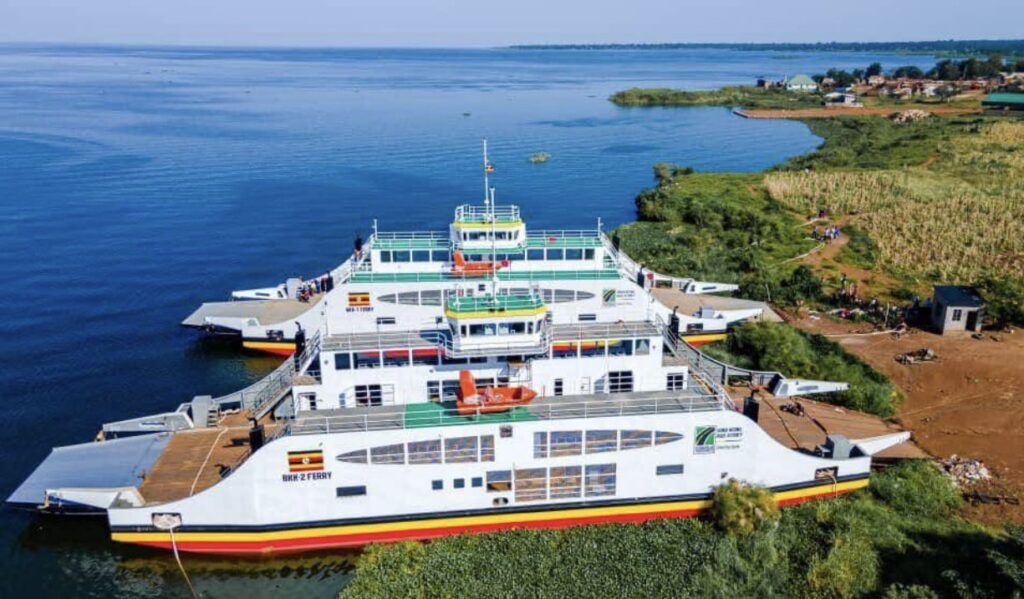
The recent commissioning of the MV Bukungu–Kagwara–Kaberamaido (BKK) ferries at Bukungu landing site in Buyende District marks a significant milestone for the people of eastern Uganda. These vessels are poised to deliver far-reaching benefits to communities across the Busoga, Lango, and Teso sub-regions, transforming transportation, trade, and regional integration.

The roots of this initiative stretch back over three decades. In 1990, the leaders of what was then Kamuli District petitioned President Yoweri Kaguta Museveni during his visit, urging the government to provide a ferry to connect the northern districts. This month, that long-standing promise has been fulfilled, demonstrating a concrete commitment to improving infrastructure and livelihoods in the region.

Below are the noted benefits for the people of the three sub-regions

Transforming Connectivity

Perhaps the most immediate impact of the BKK ferries is drastically improved connectivity. Travel across Lake Kyoga, which previously required an arduous journey of more than eight hours by road, can now be completed in approximately 1.5 hours by water. This rapid transit not only links Buyende in Busoga to Serere and Kaberamaido in Teso and near Lango, but also simplifies movement for residents, traders, and service providers, reducing the geographic isolation that has historically constrained these sub-regions.

Reducing Costs and Enhancing Safety

The ferry service, offered at no cost to passengers, makes travel considerably more affordable. Previously, long, circuitous road journeys were both expensive and unpredictable due to poor road conditions. The new ferries provide a safer, more reliable alternative, mitigating risks associated with treacherous road travel and unregulated water crossings.

Boosting Trade and Agriculture

The ferries are also expected to stimulate trade and strengthen agricultural markets. Farmers and traders transporting staples like cassava, groundnuts, sim-sim, and maize will now reach larger, more lucrative markets with greater efficiency.

The newly commissioned ferries are not merely vessels crossing Lake Kyoga; they are floating trade corridors intended to connect districts, reduce transport bottlenecks and expand commerce.

Faster transit reduces post-harvest losses, particularly for perishable goods, while lowering transportation costs increases profitability for producers. These improvements create a ripple effect that can invigorate local economies across Busoga, Lango, and Teso.

Expanding Access to Services and Opportunities

Improved mobility opens doors to better education, healthcare, government services, and employment opportunities. Residents can reach hospitals and schools more easily, while entrepreneurs and small businesses gain access to broader markets and clientele. By connecting communities more effectively, the ferry service enhances both individual livelihoods and regional economic activity.

Strengthening Regional Integration

Beyond practical benefits, the BKK ferries promote social cohesion and economic integration. By linking Busoga, Lango, and Teso, the project fosters interregional cooperation, shared marketplaces, and cultural exchange, laying the foundation for stronger ties that transcend district boundaries.

Laying the Foundation for Future Development

The introduction of the ferry service complements ongoing infrastructure plans, including road improvements and transport network expansions. Together, these initiatives have the potential to unlock significant economic growth, attract investment, and stimulate broader development across the three sub-regions.

In conclusion, the ferries at Bukungu are more than just a mode of transport — they represent strategic infrastructure designed to reduce travel time and cost, enhance safety, stimulate trade, improve access to services, and strengthen economic integration. For the people of Busoga, Lango, and Teso, the BKK ferries are a tangible step toward a more connected, prosperous, and inclusive eastern Uganda.

Mr. Waiswa Michael Baluye is the ONC Coordinator for Buyende district

UNLOCKING THE LAKE ECONOMY: Museveni positions BKK ferries as catalysts for trade and industrial growth

0

By Zaidhi Mugabi

When governments invest in infrastructure, the real return is measured not in ribbon-cutting ceremonies, but in economic activity. That was the central message from President Yoweri Kaguta Museveni as Uganda officially commissioned the Bukungu–Kagwara–Kaberamaido (BKK) ferries on the Lake Kyoga basin.

Delivered through Prime Minister Robinah Nabbanja at Bukungu Fish Landing Site in Buyende District, the President’s directive was clear: public infrastructure must be used productively—especially water transport projects designed to stimulate regional development.

Water Transport as Economic Infrastructure

The newly commissioned ferries are not merely vessels crossing Lake Kyoga; they are floating trade corridors intended to connect districts, reduce transport bottlenecks and expand commerce.

Museveni emphasized that free water transport is specifically meant to facilitate trade and economic integration between regions. By linking Buyende (Bukungu), Kaberamaido (Akampala) and Serere (Kagwara), the BKK ferries are expected to improve market access for agricultural produce, fish, and other goods produced within the Lake Kyoga basin.

For businesses operating in eastern and northern Uganda, reduced transport time and lower logistics costs could translate into improved margins and expanded market reach.

Leveraging Infrastructure for Industrialisation

Prime Minister Nabbanja used the commissioning ceremony to challenge local leaders and communities to think beyond transport.

She urged beneficiaries to leverage complementary government investments, particularly electricity, to attract industrialisation and value addition enterprises in the region.

The message aligns with Uganda’s broader economic strategy: infrastructure must feed production, and production must feed industry. Reliable transport across water bodies, coupled with power connectivity, creates the foundation for agro-processing plants, cold storage facilities, fisheries value chains and small-scale manufacturing hubs.

However, Nabbanja also stressed discipline and compliance; calling for patriotism, passion and strict adherence to laws governing water bodies and national security.

In business terms, sustainability and regulatory compliance will determine whether the ferries become engines of growth or underutilized assets.

Regional Cooperation Strengthened

The First Deputy Prime Minister and Woman MP for Kamuli District, Rebecca Alitwala Kadaga, praised the partnership between Uganda and Tanzania in strengthening water transport systems.

Such cross-border cooperation is increasingly important as East African economies pursue deeper integration under regional frameworks. Improved water transport not only boosts domestic trade but also strengthens supply chain linkages that can extend into neighboring markets.

Tanzania’s Ambassador to Uganda, Paul Kisesa Simuli, commended Uganda’s commitment to collaboration and pledged continued efforts to enhance diplomatic and economic ties—signaling the strategic value of infrastructure diplomacy within the region.

Financing and Project Structure

State Minister for Works, Fred Byamukama, revealed that financing for the BKK ferries and landing sites was committed across multiple financial years—2019/2020, 2021, 2022 and 2023.

However, he noted that funding for some landing sites faced uncertainty due to budget cuts—highlighting the fiscal pressures that often accompany large-scale infrastructure rollouts.

Each ferry project consists of three main components:

•             Two mono-hull ferries, each with capacity for 310 passengers including crew

•             Space for 14 private vehicles

•             Capacity to transport one long vehicle weighing up to 50 tonnes

This configuration is designed to accommodate both passenger mobility and commercial cargo—ensuring the vessels serve traders, transporters and local enterprises alike.

The Business Case for Lake Kyoga

For years, communities around Lake Kyoga have faced logistical challenges that limited their economic potential. The commissioning of the BKK ferries marks a strategic attempt to unlock what policymakers increasingly describe as the “lake economy.”

If effectively utilized, the ferries could:

•             Reduce the cost of moving agricultural produce

•             Expand fish trade and cold-chain opportunities

•             Encourage cross-district investment

•             Improve access to health, education and administrative services

Yet, as President Museveni underscored, infrastructure alone does not guarantee transformation. Utilisation, management and private sector participation will determine whether Lake Kyoga becomes a thriving commercial corridor.

The BKK ferries represent more than a transport upgrade—they are a test case for how regional infrastructure can power inclusive growth. The challenge now shifts from government to the market: turning public investment into sustained economic returns.

BARREL OF THE GUN: Why Uganda’s ultimate liberation must be of the mind

0

By Oweyegha-Afunaduula

Conservation Biologist and member of Center for Critical Thinking and Alternative Analysis

For four decades, the narrative of Uganda’s liberation has been dominated by a single, powerful story: the coming to power of the National Resistance Movement/Army (NRM/A) in 1986. This period has been celebrated, memorialized, and projected as the definitive liberation of the nation. But as we stand at the crossroads of the 21st Century, hurtling towards the 22nd, we must ask a fundamental and uncomfortable question: Is military liberation the ultimate liberation?

The answer, when examined through the lens of human potential and national progress, is a resounding no. While the capture of State House and the cessation of active hostilities are significant milestones, they represent only the most rudimentary form of freedom: the physical liberation of the body. True, holistic liberation—the kind that builds a prosperous, innovative, and just society—must go further. It must liberate the mind.

The Physical Liberation and Its Foundational Flaw

Military liberation is, by its very nature, a liberation of the body. It is an operation designed to remove a physical threat, to free territory from armed control, and to place new individuals in positions of power. It is based on the premise that the citizenry is under physical threat, a premise that, once addressed, is assumed to solve the nation’s ills.

However, this narrative often rests on a foundation of convenient myth. The “Ugandan” liberation war of 1981-86, projected as a purely internal affair to free Ugandans from tyranny, had a far more complex and regional character. A critical truth is that this struggle was inextricably linked to the interests of Tutsi refugees in Uganda. Their participation was not merely altruistic; it was a strategic move to secure resources and a power base, which would later be instrumental in the capture of power in Kigali from the Hutu regime. This revelation does not erase the Ugandan experience, but it forces us to see that the “liberation” was, in part, a means to an end beyond Uganda’s borders. It underscores that physical liberation, achieved through a coalition of diverse and sometimes self-interested parties, is a compromised and incomplete form of freedom.

The Interlinked Trinity: Body, Spirit, and Mind

Human beings are not merely physical entities. We are a complex trinity of body, spirit, and mind. These three dimensions are not separate; they are profoundly interlinked and interactive. You cannot claim to have liberated a person if you have freed their body from physical bondage but have shackled their spirit with fear and their mind with propaganda.

· The body yearns for physical safety and sustenance.

· The spirit craves meaning, hope, and a connection to something larger than itself.

· The mind seeks understanding, truth, and the capacity to imagine and create.

Every great human achievement, every “light” that has illuminated the world, began as a thought in a single mind. Conversely, every evil—from corruption and tribalism to genocide and authoritarianism—also begins as an idea in the mind before it manifests to harm the body and crush the spirit of a nation. Therefore, to build a healthy body politic and a vibrant national spirit, we must prioritize the liberation of the mind.

The Enslaved Mind: The Walking Coffin

The greatest tool of oppression is not the gun, but the narrative that justifies the gun. Propaganda is the enemy of mind liberation. It does not inform; it enslaves. It locks the mind into a stagnant, pre-approved reality, making it a servant to power rather than a sovereign entity. A mind subjected to decades of unchallenged propaganda is a mind that has been retarded in its development. It loses the ability to see beyond the system that created it. It cannot critically analyze, question, or innovate.

When such a mind is forced to think critically, it breaks; it is overstretched. This leads to what can only be described as Intellectual Death. This is a state where an individual, regardless of their academic credentials or the height of the leadership position they hold, is incapable of original, critical thought. They become, in essence, a walking coffin—a physically present human being whose intellectual and creative life has ended, imposing their stagnant ideas on a living, dynamic populace. A nation filled with such minds is a nation that cannot grow.

The Multi-Dimensional Mind and the Tyranny of “No Change”

The human mind is not a monolithic entity to be filled with slogans. It is a complex ecosystem with an infinite number of interlinked and interactive dimensions: the technical, the spiritual, the economic, the academic, the cultural, the political, the intellectual, the moral, the ethical, the psychological, the ecological, and the social.

Any meaningful liberation must target this mind-complex in all its dimensions. It must nurture a technically skilled populace with a strong moral compass, an economically productive citizenry with a deep ecological awareness. To focus solely on the political narrative of a 40-year-old military victory is to ignore 99% of what makes a human being and a nation thrive.

This brings us to the core obstacle to mind liberation in Uganda: the unwritten but fiercely protected “guiding principle” of governance: “No Change.” What is “No Change” if not a policy of stagnancy? To govern for stagnancy in a century defined by the exponential velocity of change driven by social media, the Internet, and Artificial Intelligence (AI) is not just to stand still. It is to go backwards. It is de-development. It is retrogression. It is forcing a nation to remain in the 20th Century while the rest of the world races into the 22nd.

A New Liberation: The Blueprint for a Digital Nation

We must urgently rethink the very concept of liberation. We must shift our immense national energy, time, and resources from celebrating a physical victory of the past to engineering a mental victory for the future. We must stop the primitive practice of digital authoritarianism—using the tools of the 21st Century to enforce a 20th Century mindset. If we fail, we risk being remembered as the generation that blocked Uganda from becoming a digital nation, a prosperous and innovative leader in the AI era.

To achieve this Mind Liberation, we must embark on a radical transformation of our intellectual and educational foundations:

1. Unify All Knowledge: We must dismantle the artificial silos between disciplines. We must learn and accept that all science is one, with three interdependent dimensions—the Arts (Humanities), the Social Sciences, and the Natural Sciences. To devalue the arts and social sciences, as we have been doing, is to demonstrate a profound ignorance of how human society actually functions. A physicist without ethics is a danger; an economist without culture is a tyrant.

2. Embrace New Knowledge Production: The future belongs not to narrow specialization but to integration. We must champion:

   · Interdisciplinarity: Combining two or more disciplines to create new understanding.

   · Crossdisciplinarity: Viewing one discipline from the perspective of another.

   · Transdisciplinarity: Creating a unity of knowledge beyond the confines of any single discipline.

   · Extradisciplinarity: Generating knowledge that lies completely outside the current structures of institutionalized learning.

3. Restore Public Intellectualism: We must urgently reconnect the academic space with the public square. We have allowed a culture of sterile academicism (publishing for the sake of promotion), scholasticism (debating trivialities), and careerism (pursuing personal advancement at the expense of truth) to replace the vital role of the public intellectual. We need thinkers who can translate complex ideas for the masses, challenge power, and guide public discourse. We need to rebuild the public intellectual space so that ideas can flow freely and challenge the stagnant waters of propaganda.

Conclusion: The Future Might of Humanity

The future might of any nation will not be judged by the size of its army, the longevity of its ruling regime, or the volume of its liberation songs. It will be judged by its mind power—its collective capacity to innovate, to adapt, to think critically, and to solve complex problems with wisdom and foresight.

The gun can only capture the capital; it can never capture the future. Only a liberated mind can do that. For Uganda to truly take its place as a digital nation marching triumphantly into the 22nd Century, we must lay down the mental weapons of propaganda and pick up the tools of critical thought. We must declare that the ultimate liberation—the liberation of the Ugandan mind—has finally begun.

For God and My Country.

CLASSROOM TO COMMUNITY: Busoga Agricultural & Vocational Institute commits to train the next generation of agripreneurs in Busoga

0

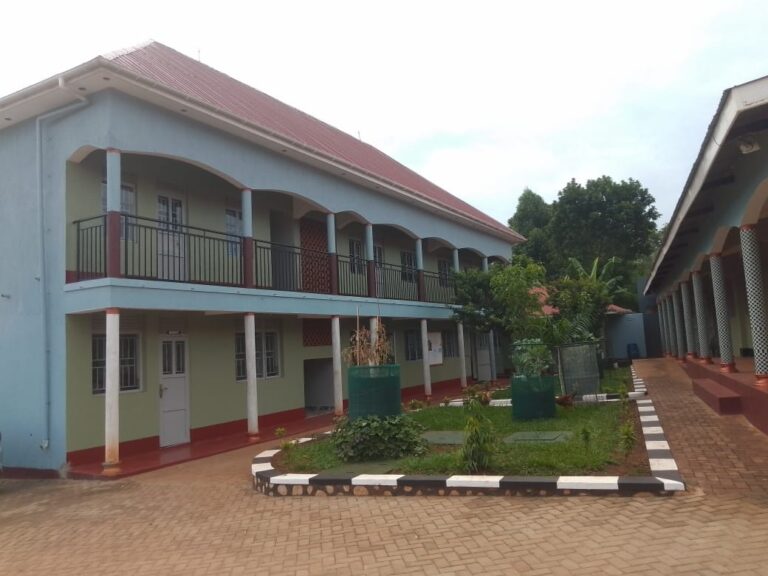
In the rolling landscapes of Jinja, a quiet transformation is taking root. At the Busoga Agricultural & Vocational Institute (BAVI), education is not confined to lecture halls or examination rooms. It is cultivated in gardens, tested in the field, and measured in real harvests.

With the launch of 100 scholarships for the 2026/2027 academic year, offering students the opportunity to study two semesters and intern abroad, the institute is positioning itself not only as a training centre, but as a model for community-driven agricultural excellence.

For Joel Sebwato, an administrator at BAVI, the vision extends far beyond enrolment numbers.

“We want this to be a model school that shows not only the learners but also the community what to do in farming and agribusiness. We are the first such school in Busoga and we want to be impactful,” Sebwato told Busoga Times in an interview recently.

The Institute, students can enroll for a Certificate in Agriculture, Diploma in Animal Production and Diploma in Crop Production.  The courses are examined by Uganda Vocational and Technical Assessment Board (UVTAB), the body responsible for assessment and certification of competences obtained through formal and informal technical and vocational education and training.

A School With a Demonstration Mission

In a region where agriculture remains the backbone of household incomes, the gap between traditional practices and modern agribusiness methods often determines whether farmers merely survive or truly prosper. BAVI’s ambition is to bridge that gap.

Unlike institutions that focus solely on theory, the institute blends vocational training with practical, hands-on experience. Students are taught not just how to grow crops or manage livestock, but how to approach farming as a business, complete with planning, value addition and market awareness.

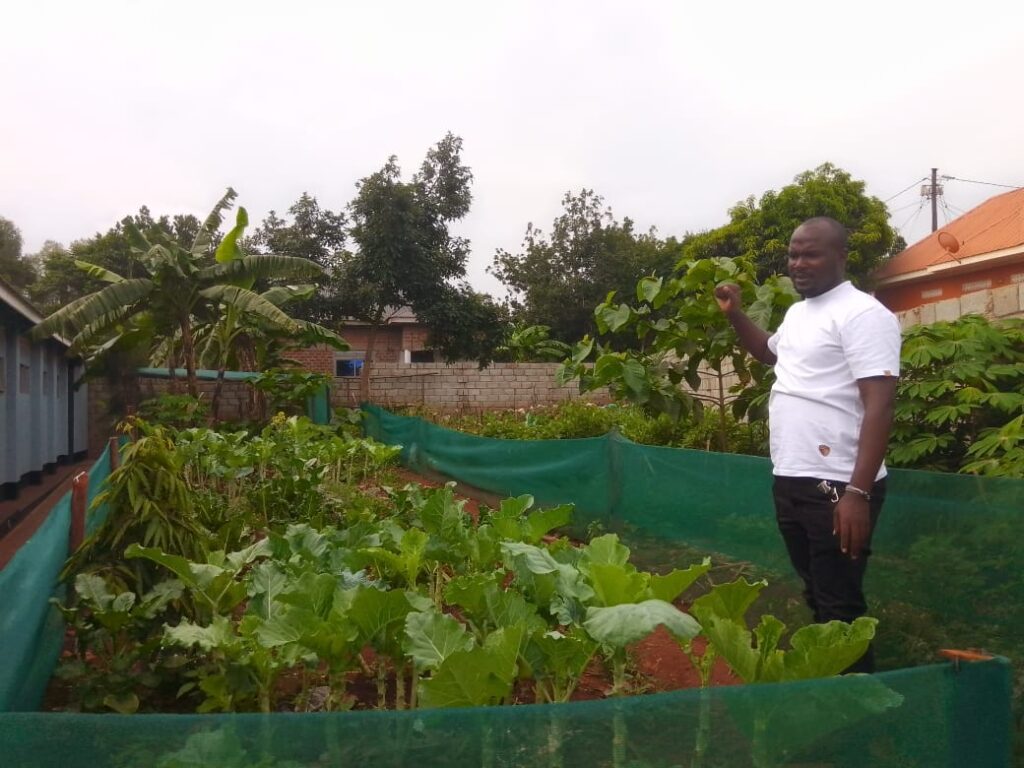
Joel Sebwato, an administrator at BAVI, shows off a mini urban farming garden at the school premises.

Sebwato believes this applied approach is what will set the institute apart. “We want people to see that what we teach here works when implemented and that it is what they need,” he explains. In other words, BAVI is determined to be a living example of its own curriculum.

Learning That Leaves the Campus

Central to the institute’s strategy is collaboration with local farmers. Rather than isolating learning within school boundaries, BAVI aims to embed its students in the very communities they are meant to serve.

“We want to collaborate with farmers in the community. Our learners should be able to put what they learn into practice by connecting them to farmers in the community,” Sebwato notes.

This community-linked model offers a dual advantage. Students gain real-world exposure, understanding the challenges farmers face daily. At the same time, farmers benefit from updated techniques, improved farm management practices and fresh ideas from the next generation of agripreneurs.

It is a partnership designed to create visible impact, one farm at a time.

Scholarships With Purpose

The newly announced scholarships reinforce this broader mission. By providing financial assistance for tuition and related expenses, the institute is widening access to students who may otherwise be unable to pursue agricultural or vocational training.

The inclusion of an international internship component further strengthens the value proposition. After two semesters of study, students will have the opportunity to intern abroad; gaining exposure to global best practices in farming and agribusiness.

When these students return, they do not simply bring certificates. They bring new perspectives, refined skills and expanded networks that can elevate local production systems.

Planting Seeds of Regional Leadership

As the first institution of its kind in the Busoga sub-region, BAVI is conscious of the responsibility that comes with being a pioneer. The goal, according to Sebwato, is not just to graduate students, but to influence how farming is practiced and perceived.

By demonstrating that agriculture can be innovative, profitable and professionally managed, the institute hopes to shift mindsets; particularly among young people who may view farming as outdated or unviable.

If successful, the impact will ripple outward: skilled graduates supporting local farmers, stronger agribusiness enterprises emerging from rural communities, and a region better equipped to compete in national and regional markets.

In many ways, BAVI’s scholarship campaign is more than an admissions drive. It is an invitation to students, to farmers and to the wider community, to reimagine agriculture as a dynamic, modern and transformative sector.

And as Sebwato puts it, the ultimate goal is simple yet ambitious: to show, not just tell, that what is taught in the classroom truly works in the field.