Wednesday, March 18, 2026
Home Blog Page 36

MATHEMATICAL SURVIVAL: Busoga bags seven star win against Booma FC to keep relegation fight alive

0

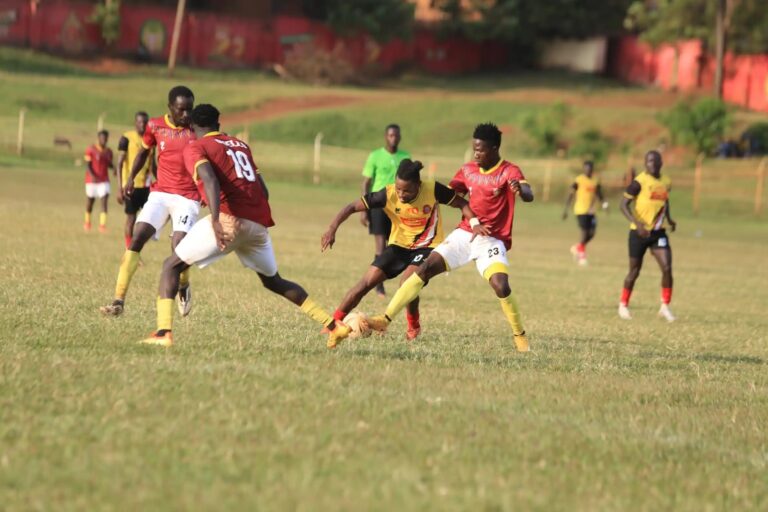
Busoga United kept their hopes of FUFA Big League survival alive in spectacular fashion, thrashing relegated Booma FC 7-0 at the FUFA Technical Centre in Njeru on Sunday evening.

The dominant performance lifted Busoga to 30 points from 27 matches, drawing level with 12th-placed Kigezi Homeboyz but trailing on goal difference.

While the margin of victory boosts confidence, the battle to avoid relegation now enters a complex phase of mathematics, permutations, and prayers ahead of the final match day.

Busoga’s final fixture will be an away clash against 4th-placed Blacks Power FC on June 21st. Only a win will keep Busoga’s survival hopes realistic. A loss or draw in this final fixture would confirm their relegation to regional football.

In the first round, Busoga edged Blacks Power 1-0 at the Kyabazinga Stadium in Bugembe, with Nasri Serwadda scoring the winner.

Coach Charles Lukula  Mbuzi and fans alike will be hoping for a repeat of that performance to push the team to 33 points—a tally that could be just enough to stay afloat.

Relegation Equation: What Must Happen

Even if Busoga wins, they still rely on other results going their way. Here’s a breakdown of the key matches that will decide Busoga’s fate:

 1. Kaaro Karungi vs Ntugasaze

Kaaro Karungi sits 11th with 31 points.

Ntugasaze is 9th with 33 points.

First leg: Ntugasaze won 3-2.

Busoga’s best-case scenario is a Ntugasaze win or a draw, which would freeze Kaaro Karungi at 31. A Kaaro Karungi win pushes them to 34 points—beyond Busoga’s reach—even with victory.

 2. Kigezi Homeboyz vs Myda FC

Kigezi is 12th with 30 points.

Myda is 10th with 32 points.

First leg: 1-1 draw.

Busoga needs Kigezi NOT to win. A draw or Myda win is acceptable. But a win for Kigezi would see them reach 33 points and stay ahead of Busoga on goal difference—effectively sending Busoga down.

 Current Table (Bottom Seven)

9. Ntugasaze – 33 pts

10. Myda – 32 pts

11. Kaaro Karungi – 31 pts

12. Kigezi Homeboyz – 30 pts

13. Busoga United – 30 pts

14. Arua Hills – 29 pts

15. Booma FC – 19 pts (Relegated)

The bottom four teams will be relegated, and Booma FC is already confirmed as one of them. That leaves three more slots to be decided, and Busoga United is among those fighting for air.

Final Day Drama: June 21st

All final fixtures will be played on Saturday, June 21st, setting up a thrilling climax to the season. For Busoga United, the equation is simple in theory but tricky in execution:

 1. Must win against Blacks Power to reach 33 points.

 2. Hope that Kigezi Homeboyz and Kaaro Karungi DO NOT win their matches.

 3. Anything less, and the Kyabazinga’s boys will face relegation despite Saturday’s seven-goal fireworks.

The mathematics of survival continues—but Busoga United has made sure the calculator is still working heading into the final day.

ENVIRONMENTAL CONSERVATION: Abasoga Nseete Students Association UCU plants trees in Jinja schools to curb climate change

0

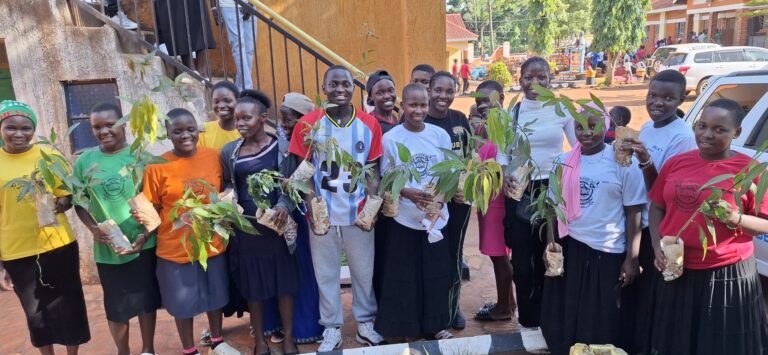
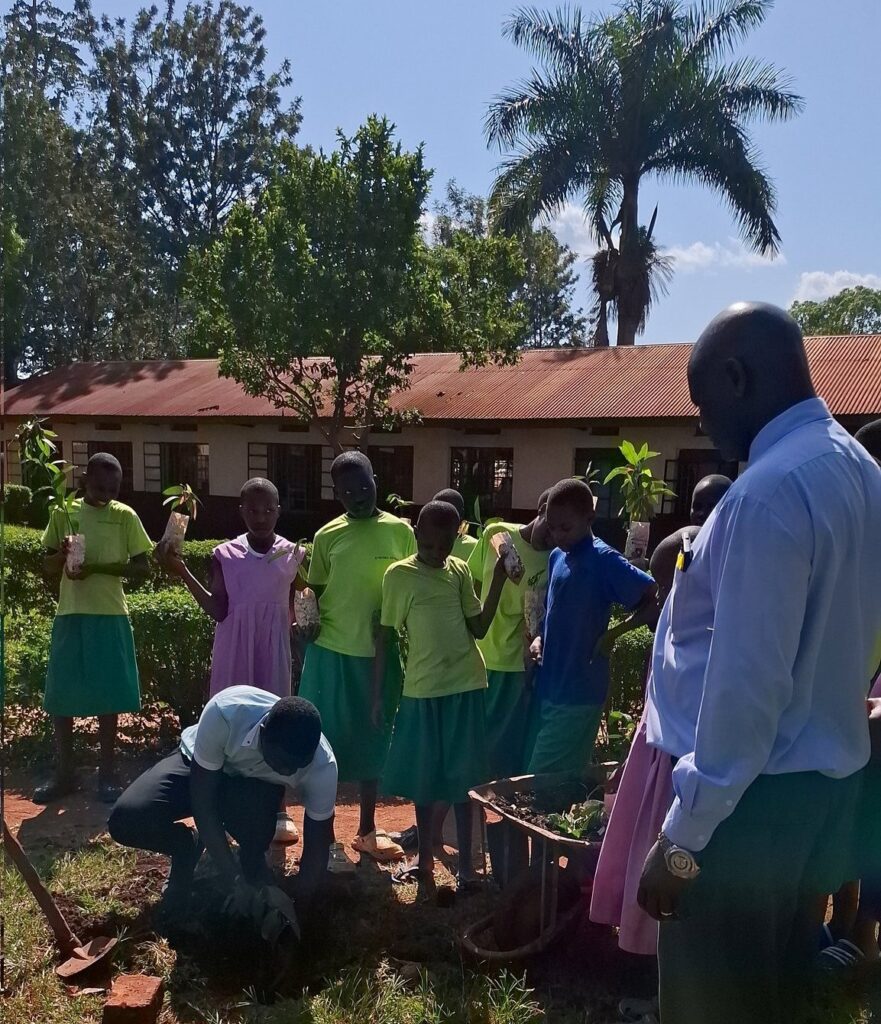
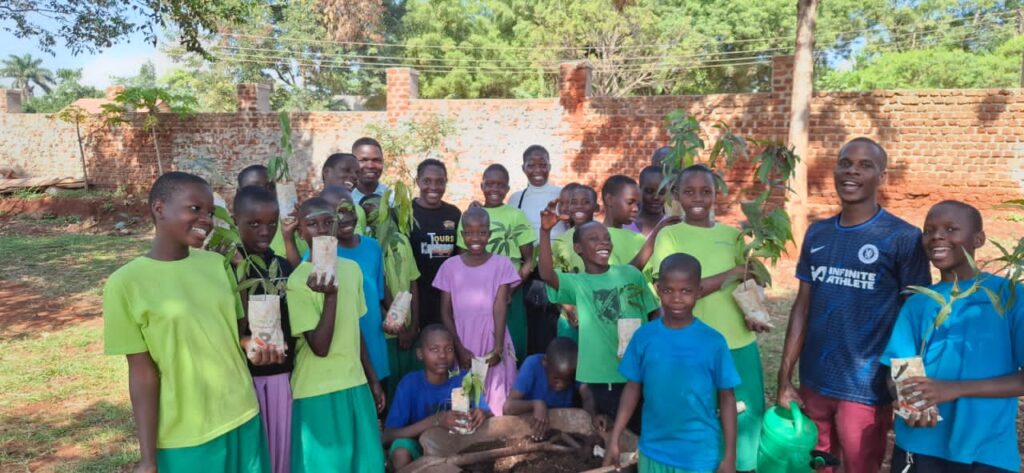
In a proactive step towards environmental sustainability and economic development, the Abasoga Nseete Students Association from Uganda Christian University (UCU) main campus recently visited Victoria Nile Primary School and Lwanda High School in Jinja City to plant fruit trees.

Under the guidance of Owek. Yafesi Bairukireki, Chairperson of the Busoga Kingdom Youth Council, the initiative reflects a commitment to the Kyabazinga’s vision for a greener and more prosperous Busoga.

Led by Ruth Kizige, Abraham Kamali, and Patience Musasizi, the UCU students brought a diverse selection of saplings, including mangoes, avocados, and jackfruit, as well as other shade-providing compound trees.

The selection was carefully considered, aiming to provide both environmental benefits and future economic opportunities for the schools and their surrounding communities.

Key to the project’s long-term success is the involvement of school environmental clubs. “We worked with the environment clubs in the different schools who promised to ensure that the trees grow,” confirmed Kizige, a dedicated climate activist.

This partnership empowers students to take ownership of the initiative and fosters a sense of environmental responsibility.

The project is deeply rooted in the vision of the Kyabazinga. “We’re motivated by the Kyabazinga youth agenda and we’re responding to the Kyabazinga’s 10th coronation speech where he encouraged people to plant trees,” explained Patience Musasizi, one of the student leaders.

The initiative aims to inspire a generation that understands the importance of environmental conservation in the face of climate change.

“Our mission is to raise a generation that understands the impact of climate change and how important it is for people to conserve the environment through tree planting,” Abraham Kamali said.

Beyond environmental sustainability, the Busoga Kingdom Youth Council envisions the trees as powerful tools for economic empowerment. Bairukireki highlighted the potential for poverty eradication, stating, “The trees are a strong tool for poverty eradication. They create favorable weather conditions for farming, where people can grow food for both sale and home consumption. They also act as a natural filter for our underground water making borehole water safer.”

The council’s goal is to cultivate a widespread culture of tree planting amongst the Basoga people, particularly among the youth. “We encourage every Musoga, especially the youths, to take part in tree planting,” Bairukireki urged.

He also expressed gratitude to the school administrations for their support and reiterated the council’s commitment to expanding the initiative to more schools, churches, and community spaces across the kingdom.

The initiative was met with enthusiastic responses from the schools. Livingstone Mbago, Head Teacher of Victoria Nile Primary School, expressed his gratitude for the trees and commended the students for their proactive engagement in the development of Busoga. He assured the council that Victoria Nile has ample land to accommodate many more trees.

Similarly, Mathias Wakasenzaali, Director of Lwanda High School, praised the initiative and encouraged the students to maintain their environmental commitment.

Robert, the president of the environmental club at Lwanda High School, further solidified this pledge by promising diligent care for the newly planted trees.

The Busoga Kingdom Youth Council’s tree planting initiative represents a significant step towards a greener and more prosperous future for Busoga.

By engaging the youth and fostering a sense of responsibility towards the environment, the council is planting not just trees, but the seeds of lasting change.

TYRANNY : How dictators legitimise themselves and consolidate their power

0

By Oweyegha-Afunaduula

A dictator dictates. He or she may seek to know your thinking or your idea about something or even follow your reasoning with interest but ultimately, he or she will follow what his or her mind tells him or her and enforce it with all the power in his or her hands. He or she will then proceed to build his or her legitimacy, the legitimacy of his or her regime or the legitimacy of his or her government.

Many claim themselves kings or queens, and many work hard and prefer to pass the reigns of power to one of their offspring. One-time former Libyan strongman, Mammuar Gaddafi called himself King of kings. After 42 years in power, many Libyans believed Gaddafi was a dictator, although he delivered goods and services, such as building houses for them, giving them free electricity and free water, after building a river in reverse direction.

People wanted democracy, freedom and democracy, besides the social goods and services, but he died these three from them.Connolly (2011) saw Col Muammar Gaddafi as renowned not just for his cruelty, but also his theatricality and a tyrant in the mould of Mussolini, Idi Amin and Omar Bongo. He asked if Gaddafi could be the last of the line. Of course not. There were dictators before him and there will be dictators in Africa long after him.

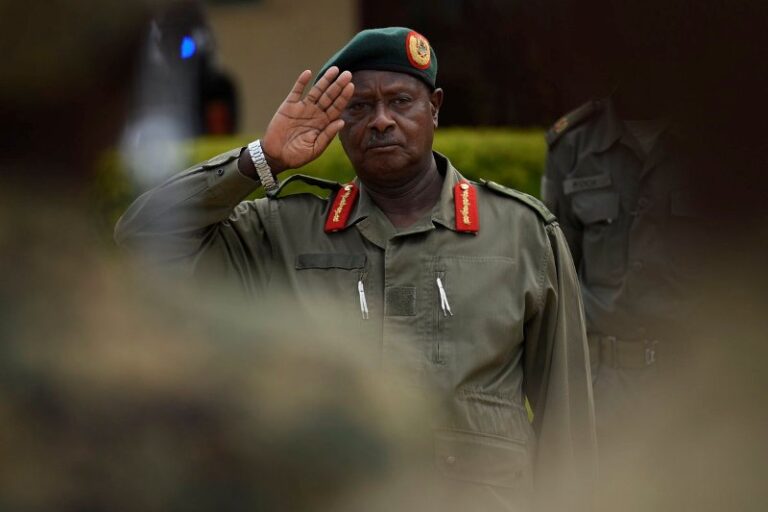
President Tibuhaburwa Museveni is considered by many in Africa and outside Africa as a dictator. He is one of Africa’s longest serving leaders. His rule brought many changes in Uganda. He is a very strong believer of dictatorship and absolutism,In 2005, he scrapped presidential term limits and the presidential age limit in 2017, which two actions, using Parliament, opened the way for him to manifest as an absolute ruler.

President Tibuhaburwa Museveni of Uganda waged a five- year bush war in the Luwero Triangle of Buganda, leading to hundreds of thousands losing their lives. He promised freedom, justice and democracy. The title of his once popular book is “Sowing the Mustard Seed: The Struggle for Freedom, Justice and Democracy.

However, after capturing the instruments of power in 1986 and promising “a fundamental change, not a mere change of guards”, time, which is the best judge, has revealed that freedom, justice and democracy were not the goal of President Tibuhaburwa Museveni’s Bush War but power to achieve his goals of liberation of a small exogenous ethnic group, wealth, glory and domination of the naturally indigenous groups of Uganda.

40 years later, President Tibuhaburwa Museveni is still in power and building hereditary politics and hereditary militarism. All indications are that he wants power to remain in his hands and his family well beyond his personal reign.

Many Ugandans and foreigners in and outside Uganda now think, believe and are convinced that President Tibuhaburwa Museveni has mutated from a liberator he sold himself to be a formidable dictator (e.g., Mugabi, 2028). The seeds of absolute power were always there. At one time, President Tibuhaburwa Museveni, very early in his rule, called himself Ssabagabe, which is the same as saying “King of kings”.

In 1962 when Uganda got political independence from the British colonialists, there were four hereditary Kings: the Kabaka of Buganda, the Omukama of Bunyoro, the Omukama of Toro, and the Omugabe of Ankole. There was also the Kyabazinga of the Territory of Busoga, with King-like Status.

In 1966, Apollo Milton Obote abolished all of them. However, when Tibuhaburwa Museveni, after capturing the instruments of power in 1986, was greeted with calls to restore the Kingdoms and semi-kingdom of Busoga. Even if he persisted in saying that he did not go to the bush to restore kingdom, when he presided over the making of the Uganda Constitution 1995, he showed that he meant business when he said he did not go to the bush to restore kingdoms.

The constitution does not contain the words Kingdoms and Kings. Instead, it contains the phrases “cultural institutions” and “Cultural Heads”. However, while all the former Kingdoms and Kings see themselves in those phrases, the Ankole Kingdom (Obugabe) is completely abolished.

Since the promulgation of the Uganda Constitution 1995, President Tibuhaburwa Museveni has ruled like a Life President. Although, since he subjected himself to electoral politics in 1996, he has effectively excluded alternative leaders in his politico-military organisation – National Resistance Movement (NRM)and others in alternative political parties from meaningfully and effectively competing for political power. He has ruled like a mega-King (a Ssabagabe) with a personalist politico-military organisation.

Until today, there have been persistent calls by members of NRM to President Tibuhaburwa Museveni to show them a successor. However, he has preferred silence on the matter, interspersed with growing influence on the Executive, Legislature, Judiciary and all the institutions of State.

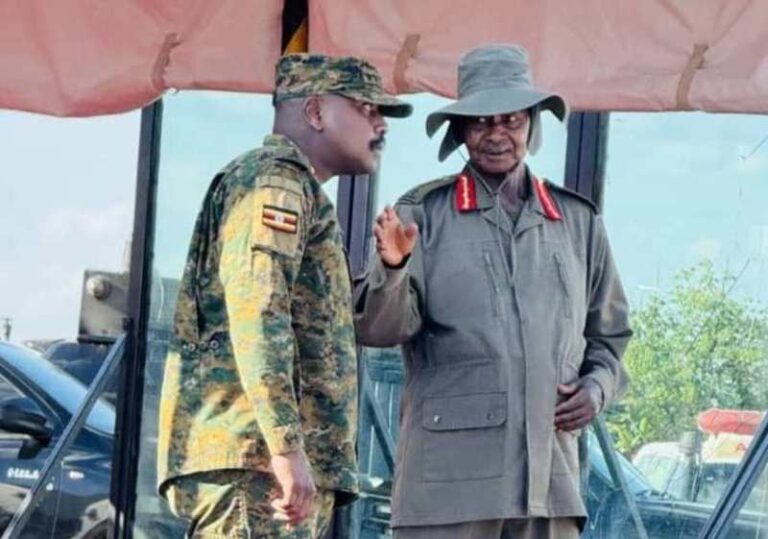
In terms of action, he fast-tracked promotions his only son – Muhoozi Kainerugaba – through the military ranks and major posts in the National Resistance Army (constituionalised in the Uganda Constitution 1995 as Uganda Peoples Defense Forces, UPDF).

Today, Muhoozi-Kainerugaba is a General and Chief of Defense Forces (CDF) in which capacity he has a lot of powers, previously exercised by President Tibuhaburwa Museveni, such as promoting military leaders, and can do anything under the Sun. For example, during the by-election in Kawempe North, he admitted that he was the one who despatched the paramilitary group called JATT, which reined a lot of havoc. 

President Tibuhaburwa Museveni used a lot of influence and money to ensure that the Parliament of Uganda enacted a new UPDF Act 2025, which allows for military justice over certain categories of civilians. In essence, the UPDF Act 2025 is the tool that President Tibuhaburwa Museveni and the CDF will use to govern Uganda together militarily and administer military justice as and when the two with.

Even if President Tibuhaburwa Museveni has not pronounced that General Muhoozi Kainerugaba is his successor, the thoughts and actions of the President and his son depict that the President has a heir: a politico-military heir in the person of Muhoozi Kainerugaba.

It is hereditary Militarism in action. If this is the case, then President Tibuhaburwa Museveni is a military dictator clothed in democratic attire. He has shown love for all practices that depict him as such, and which show that Uganda has all the time been governed towards hereditary militarism.

One writer, cited by QUORA, said that dictators may claim the title of “king” or adopt king-like behaviors for several reasons, including:

  1. Consolidation of Power: By positioning themselves as a monarch, dictators can legitimize their authority and create a sense of permanence. This can help suppress opposition and dissent, as they frame their rule as a natural extension of a historical or cultural legacy.
  2. Dynastic Rule: Dictators often wish to establish a dynasty, where power is passed down to their heirs. This can create a sense of stability and continuity for their regime, as well as ensure that their personal interests and policies are maintained beyond their own tenure.
  3. Cult of Personality: Many dictators cultivate a cult of personality, portraying themselves as larger-than-life figures. By adopting royal titles or behaviors, they enhance their image and promote loyalty among their supporters, who may see them as a father figure or protector of the nation.
  4. Cultural and Historical Context: In some regions, historical precedents of monarchy influence modern governance. Dictators may invoke royal imagery to tap into national pride or historical narratives, aligning their rule with traditional authority.
  5. Suppression of Democratic Norms: By claiming royal-like status, dictators can undermine the principles of democracy and governance. This often involves eliminating political opposition, controlling the media, and manipulating public perception to maintain their grip on power.
  6. Symbol of National Unity: Dictators may present themselves as the embodiment of the nation, similar to how monarchs have historically been viewed. This can foster a sense of national identity and unity, even if it is based on coercion and fear.

The adoption of king-like titles and behaviours by dictators or dictator-like rulers, serves to reinforce their power, legitimise their rule, and establish a legacy that they hope will endure beyond their lifetime. In fact, their hope is that by the time they leave physical life, they will have established family rule based on hereditary politics and hereditary militarism.

I have written about hereditary political leadership in Uganda before, wherein former kings in the country were erroneously, but constitutionally, reduced to cultural institutions without political power soon after President Tibuhaburwa Museveni called himself Ssabagabe and resisted raising the former Kingdom of Ankole (Obugabe) among his new cultural institutions. 

I have yet to write about hereditary militarism, but in Uganda the boundary between hereditary militarism and hereditary politics is absent because we have political military leadership with all power in the hands of the military, with military officers at the centre of governance in every sphere of human endeavour.

This particular article is about how exactly dictators build and maintain their legitimacy, consolidate their powerand go on to establish out-blown or concealed military rule with sovereignty over the Executive, Legislature, Judiciary and all institutions of the State. Weakening of constitutionalism and the institutions of state is the ultimate phenomenon accompanied by rising presidentialism and personalist power.

Dictators are frequently also called tyrants and tend to use a variety of methods to establish and maintain legitimacy. They often employing propaganda, controlling information, and using force to suppress dissent. They may also hold rigged elections, claim to represent the will of the people, or manipulate cultural narratives to appear legitimate. Muradiaga (2024) has written that for tyrants, private property is one of the first barriers to be levelled in pursuit of despotic power.

Worse still, assets that tyrants steal can then be used to prop up their unfree regimes, extending their iron-fisted sway by spending wealth that the regimes’ cadres never earned or worked for.Muradiaga (2024) adds that economic, financial, and asset-based repression represents a systematic strategy employed by authoritarian regimes to consolidate and sustain political control through financial institutions and legal frameworks designed to restrict, monitor, and penalize dissidents, critics and [alternative political parties and leaders].

This form of repression entails the instrumentalization of all available financial tools, both national and international, to neutralise political, civic, or social opposition while undermining the economic autonomy of critical people and groups (Muradiaga 2024).

Recently, the Parliament of Uganda passed a law simultaneously with the UPDF Act 1995 to help President Tibuhaburwa Museveni deprive alternative political parties of financial power. Financially poor parties cannot meaningfully and effectively carry out their political work and stand up to the NRM, whose access to State resources make it financially strong. The financial resources it has ends up equipping itself with capacity to buy political opponents and finance agents that penetrate the alternative political parties.

The financial squeeze of Opposition in Uganda on account of not meeting with the President in meetings such as those of IPOD is seen in the latest law regarding government financing of political parties in the country passed by Parliament simultaneously with the UPDF Act 2025.

According to Muradiaga (2024), in its most basic form, economic and financial repression for political control can manifest as confiscation of physical assets, such as land, properties, and businesses, under legal pretexts justifying expropriation. As financial technology has advanced and economies have become digital, however, authoritarian regimes have added newer methods that enable deeper, more precise control over the population.Muradiaga’s (2024) list of tactics that dictators use to squeeze alternative political leaders or bases includes:

1) Financial surveillance and violation of banking privacy. Authoritarian states will access (legally or not) the banking data of individuals and organizations, including their credit-card spending and any other financial flows that can be monitored. Through international-cooperation mechanisms meant to help in the fight against crime and terrorism, and through the use of Financial Intelligence Units (or FIUs — state agencies designed to keep tabs on suspicious financial dealings), regimes can track dissidents’ money in real time, both domestically and internationally.

2) Charges of money laundering and illicit financing. These are among the most effective tactics that authoritarian regimes can use in their efforts to delegitimize and criminalize opponents. Under the guise of fighting crime or terror, governments will freeze accounts, seize assets, and suspend the ability of individuals and organizations to operate. Groups that are deemed regime-unfriendly and that receive international donor funds are especially vulnerable.

3) Confiscation of physical and financial assets. In addition to surveillance and financial control, authoritarian regimes confiscate physical assets such as properties, homes, businesses, and other tangible resources. These expropriations are often justified by laws meant to stop money laundering or support national security, but which also allow the state to strip assets from regime opponents.

4) Manipulation of national and international financial institutions. Authoritarian regimes coopt both national financial institutions (banks, central banks, finance ministries) and international organizations through norms and regulations such as those of the Financial Action Task Force (FATF) to impose sanctions and financially isolate critics. This enables authoritarians to block access to global financial systems, cutting off critics from any possibility of receiving donations, conducting international transfers, or even conducting basic transactions.

Napoleon Bona Parte said he was the true representative of the people and the pillar of democracy in France even if he knew his was a military state. He was able to use the Parliament to convert himself from a military leader to an Emperor. He completely usurped the sovereign powers of the Parliament and made it dance to every tune he played in terms of administration, leadership, governance and war.  

During his political ideology (Bonapartism) was supreme and unchallenged and all leadership and governance sprang from it. He was an absolute ruler. His Parliament gave a semblance of parliamentary system, it placed significant power in the hands of the First Consul, Napoleon, who appointed many officials and controlled the legislative process. 

In the case of Uganda, the latest show of President Tibuhaburwa freeing himself from the people of Uganda and their representatives in Parliament is definitely the new Uganda People’s Defense Forces (UPDF) Act 2025, which gives a lot of power to the President’s son, Muhoozi Kainerugabawho for all, intent and purposes, is the chosen heir to the Presidential throne.

Both President Tibuhaburwa Museveni and General Muhoozi Kainerugaba have thanked the Members of Parliament whom, reportedly, the former referred to as children, for passing the UPDF Act 2025, which consolidates power in their hands. In the thinking of the President, those Members of Parliament who did not support the Act in its entirety were anti-Uganda and anti-people and should apologise.

It is becoming increasingly clear that President Tibuhaburwa Museveni can never be defeated through elections his government organises. He is seeking another term through an election in 2026. However, he is already militarily preparing to ensure that he emerges the winner. Even when he knows biometric voting can’t work effectively in Uganda, he has shown it is the one he prefers. He first claimed Kyagulanyi Ssentamu stole his 1 million votes during the 2021 elections (Draku, 2025). 

Just as I write, he has claimed Kyagulanyi Sssentamu stole 2.7 million votes in collusion with the Electoral Commission, which he singularly composes. Clearly, the results the next elections will not be decided by the voters but by rigging. Already the President claims more than half the population of Uganda belong to his Party, which he and his supporters claim is a mass party, even if most of the population consists of young people born after he grabbed power. Because he has never believed in pluralism, he is using money to destroy the integrity of the political parties.

Meanwhile, political opines, whom he has repeatedly referred to criminals may either be treated like the power vandals of Luwero (URN, 2025) or subjected to military justice under the UPDF Act 2025. In both cases the person at the centre in the CDF, General Muhoozi Kainerugaba who will be hard put to carry out the orders of the Commander in Chief, who is is his father.

A future ruler of Uganda can use the UPDF Act 2025 to consolidate power and decide to do away with Parliament the way President Idi Amin did and was able to rule the country for 8 years. With military justice, even the Judiciary of Uganda is already weakened.

Time will tell whether the father and son will free themselves from Uganda and from the people and how.

For God and My Country

Prof. Oweyegha-Afunaduula is a member of Center for Critical Thinking and Alternative Analysis

MOVING ON: Richard Kimera resigns as Butembe Sports Minister, eyes top national role

0

By Musa Kikuuno

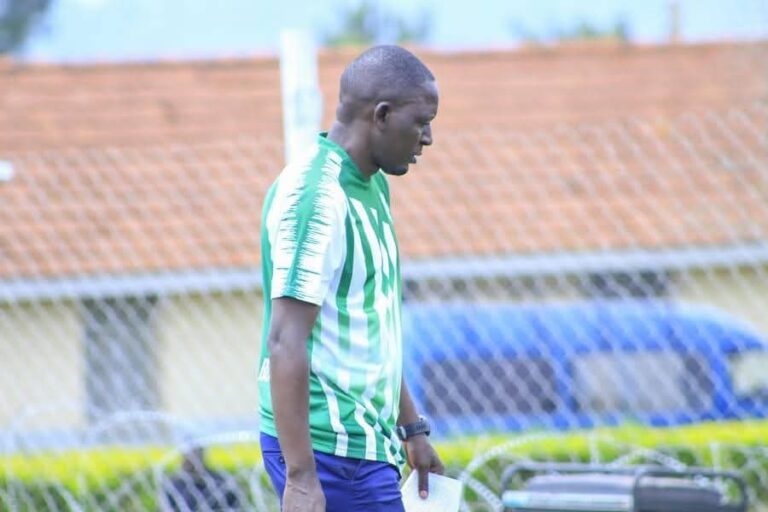
After a dedicated and transformative tenure, Kimera Richard has officially stepped down as the Sports Minister of Butembe Chiefdom, marking the end of an era that saw unprecedented success both on and off the pitch.

Kimera, who played a pivotal role in the establishment of the Busoga Masaza Cup, was the first Public Relations and Media Officer for the tournament.

He served diligently from the inaugural edition in 2016 through to the fourth, working closely with the Obwa Kyabazinga Bwa Busoga and the Tournament Organizing Committee to turn the Cup into one of the most respected regional football events, attracting major sponsorships and widespread community support.

In his most recent role as Sports Minister for Butembe, Kimera led the Chiefdom to remarkable achievements:

 5th Edition: Secured 3rd place

 6th Edition: Finished 2nd

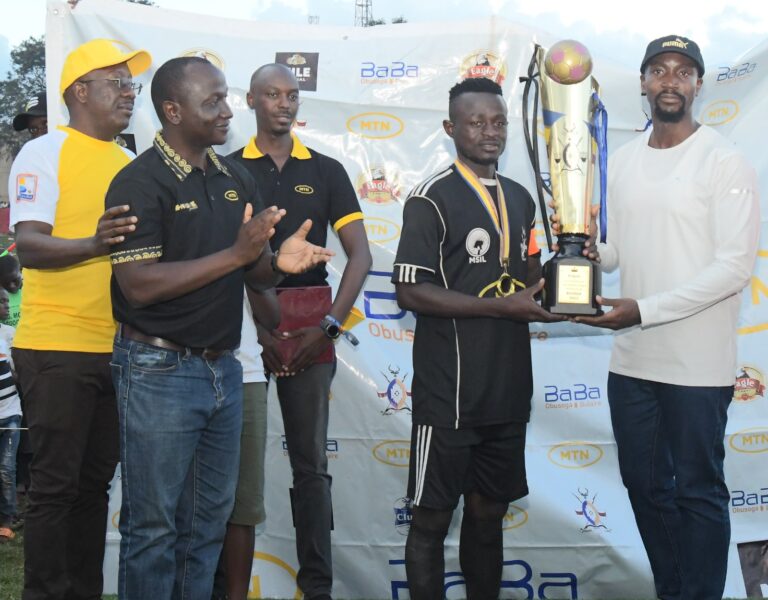
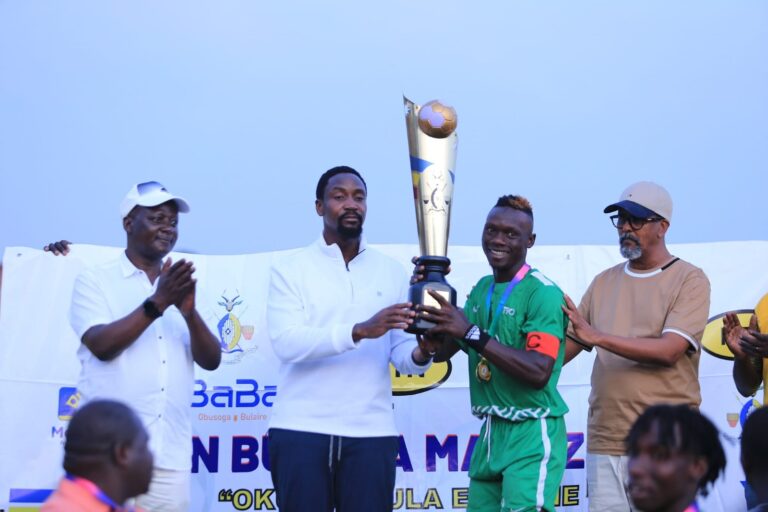
 7th Edition: Crowned Champions

Beyond the trophies, his leadership has helped groom talented players who have moved on to top leagues and even national teams. He has also mentored coaches and administrators, all while promoting a safe, inclusive, and family-friendly sports culture within Butembe.

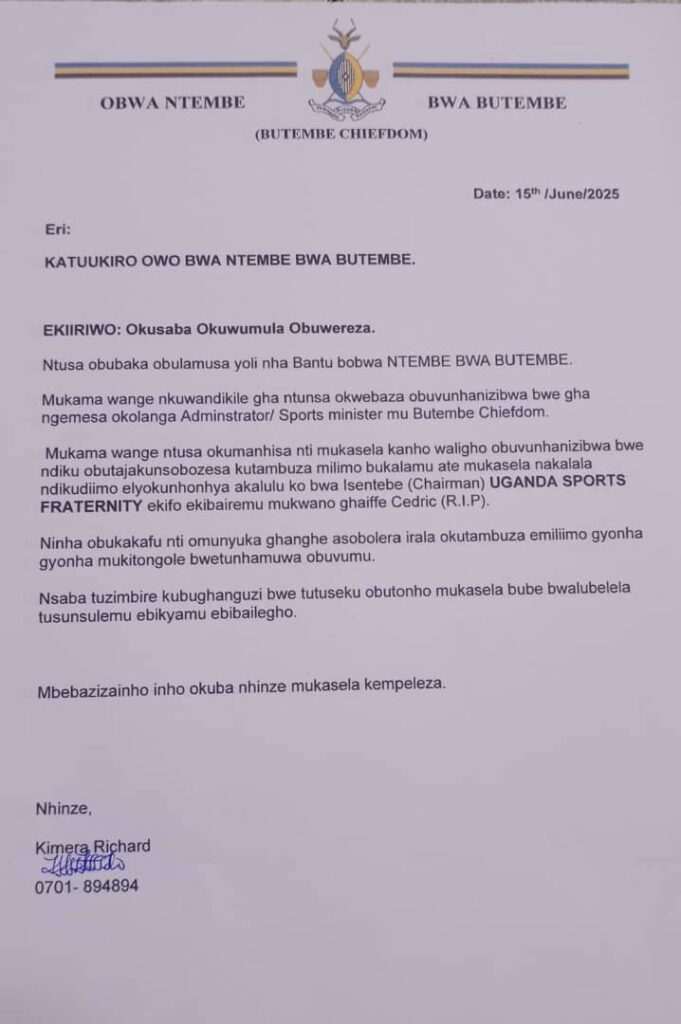
In his resignation letter dated June 15, 2025, addressed to the Katukiro of Butembe Chiefdom, Kimera wrote: “I am deeply grateful to Butembe Chiefdom for the trust and opportunity to serve; together, we built a legacy that will live on through every kick of the ball.”

As he steps down, Kimera now turns his focus to national service, announcing his bid for Chairman of the Uganda Sports Fraternity—a position left vacant following the recent passing of the former officeholder, Cedric Babu Ndilima.

Kimera is a senior journalist with NBS FM Jinja, widely known for his dedication to sports development and youth empowerment across Busoga. His next chapter is eagerly anticipated by many within Uganda’s sports circles.

IMPACTFUL GOSPEL: Kyabazinga lauds Radford Baptist Church’s impact on Busoga Kingdom

0

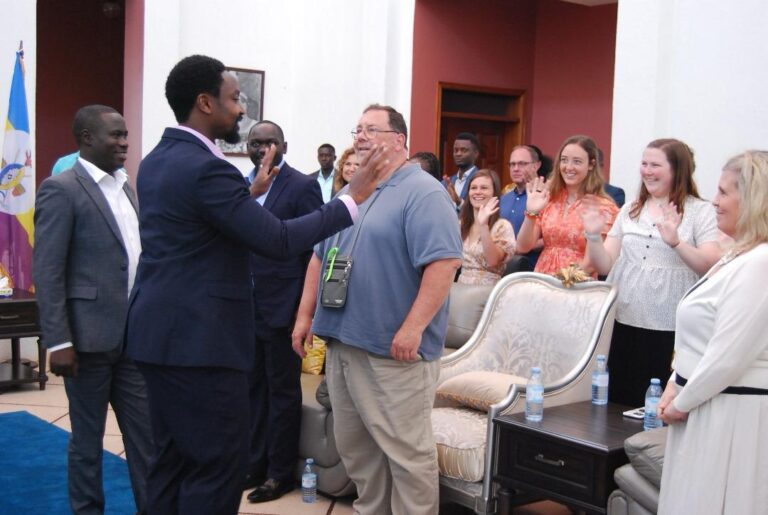
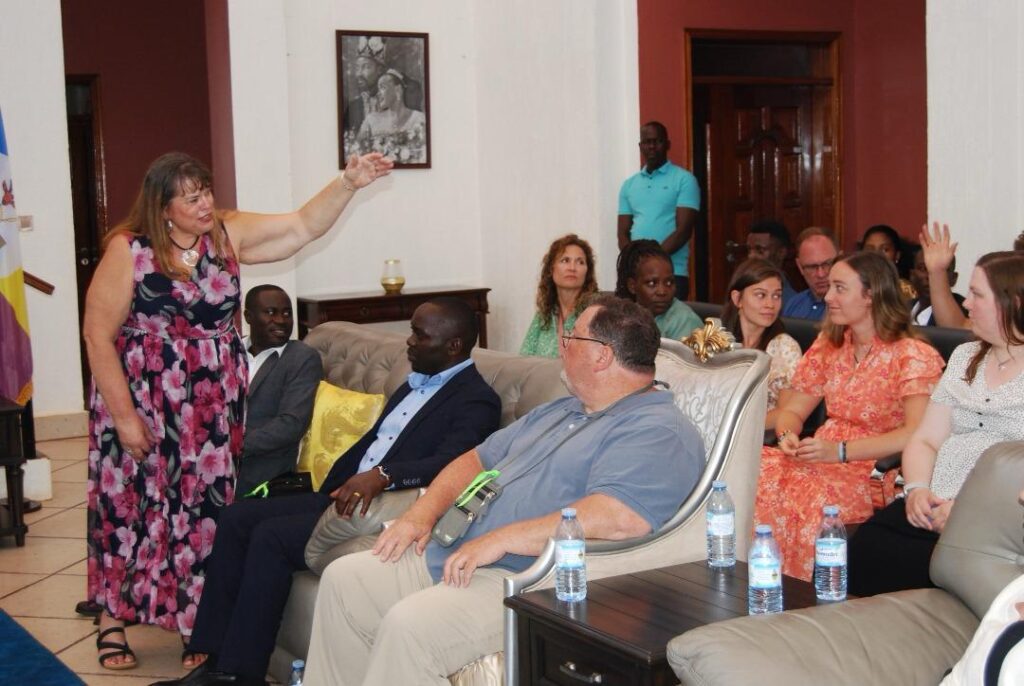
His Royal Highness (HRH) William Wilberforce Nadiope Gabula IV, the Kyabazinga, cultural ruler of the Busoga Kingdom, has expressed his profound appreciation and assured unwavering support to the Radford Baptist Church from Virginia, US, for their transformative work in the kingdom.

He lauded their efforts in education, healthcare, and spiritual development, emphasizing the positive impact on the community of Buwaidha village located in Buyende district and beyond.

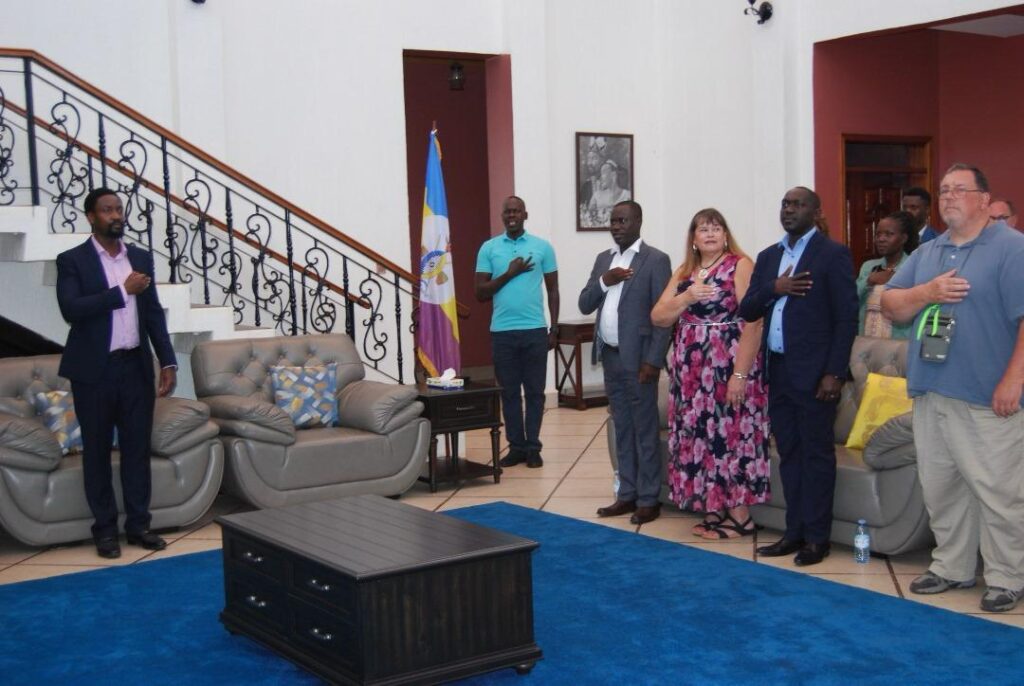
The Kyabazinga’s remarks came during a courtesy visit by a delegation from Radford Baptist Church to his palace at Igenge, Jinja City, on June 11th, 2025.

“We are happy that you are helping us to shape the different communities in Buwaidha. We hope that more people shall come,” the Kyabazinga stated, acknowledging the church’s commitment to the region.

He further emphasized the role of faith in societal improvement, stating, “Through religion you have constructed a church that is growing. We know that through being God fearing, our people shall be morally upright.”

The Kyabazinga noted that the initiative is especially impactful on the youth, fostering positive development and shaping the future generation. “I get the feedback. They are seeing a lot of new development,” he added.

Radford Baptist Church’s primary focus in Buwaidha village, located in Buyende district, has been centered around establishing a strong foundation for education and spiritual growth.

They have built a church and the New Life Schools Buwaidha, a school offering free, high-quality education to disadvantaged children whose families are unable to afford it.

The Kyabazinga himself launched the school in 2023, which initially boasted state-of-the-art infrastructure for pre-primary learners.

He also officiated the groundbreaking for the construction of a new structure designed to accommodate primary and secondary school classrooms, along with essential facilities such as libraries and laboratories, demonstrating the Kingdom’s commitment to the project.

Eng. Gerald Isabirye, a director of New Life Academy, highlighted the initial challenge of low school attendance in the area. “But now, the children in Buwaidha and the neighboring villages come to this school,” he explained, showcasing the positive impact of the academy on the community’s access to education.

During the meeting, the Kyabazinga reiterated his commitment to fostering a strong and lasting partnership with Radford Baptist Church. “We know that as time goes on; we shall further strengthen our relationship into different projects and exchange programs,” he said, envisioning future collaborations.

He also pledged to mobilize his subjects to embrace the messages and initiatives from Radford Baptist Church, further enhancing their livelihoods.

Stephanie Von Rosenberg, the Team Leader of the Radford Baptist Church delegation, outlined the multifaceted support they have provided to the people of Buwaidha over the past four years.

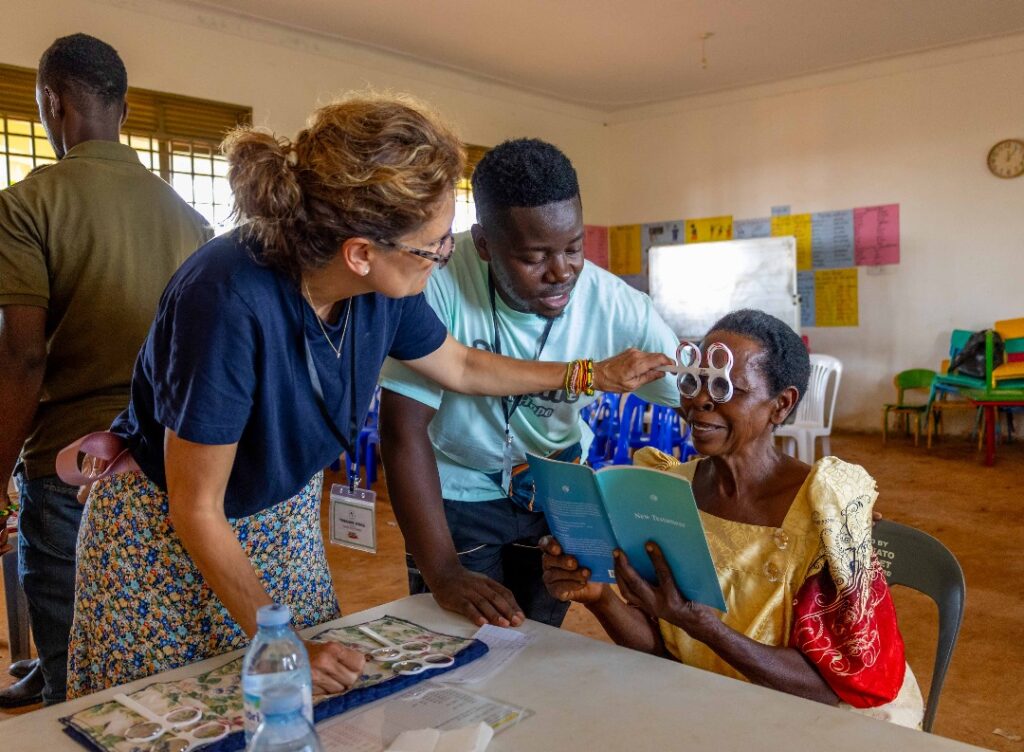
Beyond gospel outreach and education, they have established annual health camps offering crucial medical services. These health camps have addressed prevalent health issues in the community.

“Last year also, we saw a gentleman who was told his hand had to be amputated; he came to our clinic, our nurses saw him and treated him and gave him the medications. His hand is well now. We also have given away many, many free glasses. Everything for free,” Von Rosenberg recounted, highlighting the tangible impact of their healthcare initiatives.

She also shared a heartwarming story of saving a pregnant woman and her twins. “Also, last year was a woman who was pregnant with twins that were breached? We paid for her to have a C-section. And I’m happy to tell you that all three of them are healthy and strong,” she added, illustrating the life-saving support they provide.

This year’s health camp, held on June 10th, 2025, saw over 500 people receive medical attention from the Radford Baptist Church team. Von Rosenberg noted the progress made in addressing health challenges: “There was a red eyes pandemic; this year it was under control. We had enough to solve that.”

Ultimately, Von Rosenberg emphasized that the most significant achievement has been “bringing the gospel to the people of Buwaidha,” solidifying the spiritual foundation for lasting positive change in the community and fostering a strong and lasting relationship with the Busoga Kingdom.

The continued collaboration promises a brighter future for the people of Buwaidha and the wider Busoga Kingdom.

SITUATIONAL ANALYSIS: Busoga United in unenviable position as they face off relegated Booma in fight to shake off Big League relegation

0

By Musa Kikuuno | Busoga Times

Busoga United are staring down the barrel of relegation from the FUFA Big League as they prepare to host already-relegated Booma FC on Sunday 15th June at the FUFA Technical Centre in Njeru.

Victory is a must if the club is to extend its survival hopes to the final day of the season.

Relegation Battle Heats Up

Busoga currently sit 13th in the table on 27 points, level with 14th-placed Kigezi Homeboyz but ahead on goal difference. With four teams set to be relegated this season, and Booma already confirmed as one of them, the fight to avoid joining them has reached a critical point.

The teams from 10th to 14th – Kaaro Karungi (31 pts), MYDA (29), Arua Hill (29), Busoga (27), and Kigezi (27) – are separated by just four points, making this one of the tightest survival races in recent seasons.

Booma’s Poor Form Offers Busoga Hope

Booma have endured a torrid campaign and sit bottom with just 16 points. They have won only once away from home all season – a 1-0 victory over Kigezi Homeboyz in November 2024. Since then, they have lost eight and drawn three on the road.

Busoga, by contrast, have been stronger at home, recording six wins, three draws, and four losses. They also won the reverse fixture 2-1 in January.

What the Numbers Say

Busoga United (13th): 27 points (7 wins, 6 draws, 13 losses)

Booma FC (15th): 16 points – already relegated

Remaining Fixtures for Busoga:

▪️ vs Booma FC – June 15 (Home)

▪️ vs Blacks Power – June 22 (Away)

If Busoga secure all six remaining points, they will finish on 33 – likely enough to ensure safety. A draw or defeat against Booma, however, could seal their fate.

Final Day Drama Looms

Even if they defeat Booma, Busoga’s final match is away to promotion-chasing Blacks Power, who currently sit Fourth with 45 points. The first-leg meeting ended in a 1-0 win for Busoga, but replicating that result away from home will be a tall order.

The match could be decisive for both clubs — with one chasing promotion and the other battling to stay in the division.

In Summary

* Booma FC are already relegated.

* Busoga must win Booma to avoid joining them.

* The final day fixture away to Blacks Power could determine their fate.

* Three more teams, in addition to Booma, will drop at season’s end.

SOLDIER KING: How Uganda Is heading towards a new monarchised military

0

By Oweyegha-Afunaduula

Uganda is a country ever in transition just like all systems that are dynamic should be. There was a time when the country we now call Uganda was just a conglomeration of self-governing traditional-cultural nations, namely Acholi, Ankole, Buganda, Bugisu, Bukedi, Bunyoro, Busoga, Karamoja, Kigezi, Lango, Moyo, Sebei, Teso, Toro, Rwenzururu and West Nile.  They traded with each other through barter trade. There was nothing called tribalism then. This came with the British colonialists, who simply transplanted it for use as a colonial tool of divide and rule for their political gain. 

The colonialists strategised to bring all of them under one political entity they called British Uganda Protectorate, which persisted for 70 years. This was in 1962, the year the colonialists gave us political independence, converted to the Commonwealth Realm of Uganda (CWRU), a recognition that what they were leaving behind as a multi-nation country, or mega-country, was many different traditional nationalities; not one. A British Governor-General ruled CWRU on behalf of the Monarchy of England. Its military, called Kings African Rifles (KAR) was, therefore, a monarchized military. It belonged to the Monarchy of England.

In the independence constitution they conceived for their creation (CWRU) -the Uganda Constitution 1962 – recognised the traditional kingdoms of Ankole (Obugabe), Buganda (Obwakabaka), Bunyoro (Obukama) and Toro (Obukama). These were like subkingdoms of the Monarchy of England, not unlike those of Scotland, Wales and Ireland.

The independence constitution also created the Territory of Busoga (Obwakyabazinga), which was a quasi-kingdom. Initially, the British colonialists reduced Busoga to district status, although the authority that welcomed them at Nnenda Hill in 1894 was a Chwezi King of Busoga. The rest of the traditional nation states (except Rwenzururu, which was enforced into the Kingdom of Toro)were reduced to District status.

This was the political status quo on October 9 1963, when CWRU was renamed Uganda, and its governance placed in the hands of an Executive Prime Minister, Apollo Milton Obote, and a ceremonial President, Sir Edward Muteesa II, and ceremonial Vice-President, Sir William Wilberforce Kadhumbula Gabula Nadiope II.

Unfortunately, the Uganda Constitution 1962 was internally destabilising as it created power tensions and stresses between the centre and the peripheral power units, particularly the Kingdoms. It was a matter of time before the stresses and strains, especially between the centre and Buganda, resulted into a rather bloody transition in Kampala. Historical accounts indicate that the President of Uganda enlisted 5 of the Kabaka Yekka/Uganda Peoples Congress (KY/UPC) and his own Vice-President to overthrow the nascent government – which was of course treasonable. A governance-leadership crisis developed in early 1966. The Ministers were arrested, the President run off to exile and the Vice-President also fled the country. So, Obote remained alone to govern the country with his small number of Minister. He quickly organised to make a new Constitution -Uganda Constitution 1966. This did not abolish Kingdoms nor constitutionalise the Republic of Uganda.The Uganda Constitution that abolished kingdoms was the Uganda Constitution 1967, which formally abolished the traditional kingdoms and the Kyabazingaship of Busoga, and declared Uganda a republic.This move abolished the office of Prime Minister, consolidated Obote’s power and transitioned Uganda towards a more centralized system of government, with an all-powerful President. 

Obote has been accused of introducing the military in the political governance of Uganda, but this is not true. He inherited a system at independence, which was militarised. Most of the governors of Uganda had a military background. This was also true of the Provincial commissioners, District Commissioners and Police Commanders. Political militarism was what drove colonial rule in Uganda. The mistake Obote committed was to resuscitate the colonial methods of governance in the time of political crisis and retain it up to 25 January 1971 when his Army Commander, Idi Amin Dada removed him from power, thereby ushering in the era of military rule with civilians playing second fiddle to the military as soldiers dominated civilian spaces.

This status quo obtained until 1979 when militarised groups of Obote (Kikosi Maalum) and Museveni (Front for National Salvation) together with the Tanzania Peoples Defense Forces (TPDF) removed Idi Amin from power under the aegis of Uganda National Liberation Front/Uganda National Liberation Army (UNLF/UNLA). UNLA was essentially a loose association of Kikosi Maalum and Front for National Salvation. Deceptively, civilian rule was restored, with Yusuf Lule as President for 3 months and Binaisa as President for 11 months. However, the real power of decision-making lay with UNLA’s Military Council chaired by Paul Muwanga with Yoweri Museveni (now Tibuhaburwa Museveni). as vice-chairman. Yoweri Museveni had another power centre within the UNLF/UNLA set up as the Minister of Defense. As Minister of Defense, he was the political head of the Ministry of Defence and also of UNLA’s Military Council, which also included Tito Okello and Oyite Ojok.

Civilian rule was continued under Obote II regime, backed by UNLA but the former Minister of Defense, who stood for the post of President (as Uganda Patriotic Movement) , alongside Mayanja Nkangi (Conservative Party), Obote (Uganda Peoples Congress), Paulo Sssemogerere (Democratic Party), immediately militarily challenged the civilian of Obote who had been declared winner of the 1980 elections by the Uganda Electoral Commission. He claimed the Electoral Commission had rigged the elections in favour of Obote, yet in his view, Ssemogerere Democratic Party had worn those elections. He withdrew his FRONASA contingent from the UNLA soon after the elections, formed it into Popular Army (PRA). He started fighting UNLA, of which he was a member, but now a deserter.  He linked his PRA with Yusuf Lule’s Uganda Freedom Fighter (UFF) to form National Resistance Movement (NRM) and its military wing (National Resistance Army or NRA).

The military strategy was to ensure that the Obote regime did not settle in leadership to deliver goods and services to Ugandans. The strategy lasted five years. It was helped by internal conflicts between the Acholi and Langi in the UNLA and the eventual overthrow of the Obote regime by the Acholi led by Tito Okello and Basilio Okello on 27July 1985. That effectively marked the end of civilian rule in Uganda and the beginning of military hegemony again, which has lasted for more than 40 years, under Musevenism.

The Tito Okello Military Junta was overthrown by the NRM/A on 25 January, 1986 following the collapse of the arap Moi brokered Nairobi Peace Talks between the Tito Okello Military regime and the Yoweri Museveni rebel NRM/A.  Yoweri Museveni did not honour the agreement between Tito Okello and himself and continued to fight the forces of Tito Okello in the Luwero Triangle of Buganda. When he was sworn in on 26 January 1986 as the new President of Uganda, he declared that his was not just a mere change of guards but a fundamental change.

Forty years on President Tibuhaburwa Museveni has shown that he did not lie when he said his was a fundamental change, not just a mere change of guards. He has been able to reduce civilians to subordinates of the NRA, which he constitutionalised as Uganda Peoples Defense Forces (UPDF) in the new Uganda Constitution 1995 whose making he was the main architect of. He has effectively presided over the military capture of all the civic spaces and their militarisation. That constitution reduces former kingdoms and the Kyabazingaship of Busoga to mere cultural institutions without political power, and does not mention the words King and Kingdom.

Environmental militarism, hereditary militarism, political militarism and electoral authoritarianism have been interwoven in one web of military superiority over civilians, completely excluding the civilians from effective leadership and governance of the country.  Civilians are given positions that carry no power and authority but render them just labouring slaves of the military autocracy that has been growing and mushrooming in Uganda to the detriment of institutional survival under specific policy and legal regimes.

Military autocracy, also known as a military dictatorship, is a form of government where power is held by the military, either by a single leader (a strongman) or a group (a junta). These regimes are characterised by strongarm tactics, censorship, and a lack of democratic processes. In the current Uganda everything begins with President Tibuhaburwa Museveni and ends with President Tibuhaburwa Museveni. The military’s control over the government and civilian population is a key feature that is evident from top to bottom. To ensure that this is the case well in future, the unity of the NRM and UPDF (formally NRA) has persisted and become consolidated, lacking no resources because the NRM caucus in Parliament ensures that public funds sustain that unity at the expense of public goods and services. This explains why everyone prefers to quit everything else and get absorbed in the NRM/UPDF structure: Money, goods and services that would otherwise be for the common good go to them.

One flourishing school of thought thinks, believes and is convinced that what NRM/UPDF is doing everything possible to carry Uganda forward to a new monarchized military rule in Uganda with a soldier King not unlike what was the case in France during the reign of self-made Emperor Napoleon Bonaparte; Central African Republic during the reign of self-made Emperor Babtiste Bokassa; and what obtains in the Kingdom of Thailand.

A monarchised military” refers to the close, mutually beneficial relationship between the monarchy and the military in certain countries, particularly Thailand. This relationship often results in the military being heavily influenced by the palace and using its influence to maintain the political status quo. Where the leadership and governance of a country is in the hands of a family it is much easier for a monarchized military to evolve.

The term monarchised military was introduced by scholar Paul Chambers, using the Thailand model. Chambers (2024) has recently explained the nexus between the monarchy and the military. Together they have dominated the Thai political landscape.Chambers also talks about the impact of the monarchised military on the lèse-majesté.Lèse-majesté, often translated as “insulting the monarchy,” is a crime against the dignity of a ruling head of state or the state itself. It’s a concept that’s been a part of legal systems in various countries, particularly those with monarchies or strong symbolism attached to the head of state, such as Uganda. lèse-majesté laws can be enacted and evoked to detain and imprison activists and human rights defenders that may challenge the Monarchised military.

Although the school of thought mentioned in this article thinks, believes and is convinced Uganda is steadily moving towards a monarchised military with a soldier king, it is time which will tell. The school of thought argues that the recently enacted UPDF Act 2025 is a step in the journey towards a monarchised military and soldier king in Uganda. According to the school of thought, there is a cartel of repressive laws and others can be enacted to ensure that protests against such an eventuality are resisted by the regime, which retains the term resistance to itself and will fiercely move to militarily control civilians who may resist the eventuality.

The Ten Billion Dollar question is: If the NRM regime succeeds in converting the UPDF into a monarchised military in our lifetime, will it be a resilient monarchised military (e.g., Chambers and Waitoolkiat, 2017) and can it evolve beyond domestic interference, institutional corruption and personal gain (e.g., Cogan, 2023) all of which bog our military currently?

Just like is the case with the Thai military, the UPDF maintains a close interdependence with the First Family and a history of recurrent extra-constitutional interventions in domestic politics, particularly in elections wherein electoral authoritarianism is the rule rather than the exception. A culture of greed, corruption, and self-enrichment pervades the armed services, often sidelining professionalism and institutional integrity in favor of personal ambitions. Again, like is the case in Thailand’s military, Uganda’s military faces continuous and unaddressed challenges, with security-sector reform and modernisation efforts frequently disrupted by influential military elites, especially the President who is the Commander-in Chief, and Muhoozi Kainerugaba, who is the Chief of Defense Forces (CDF), seeking to assert control. We have seen high-ranking military officers exceeding their authority, engaging in activities that are ostensibly exploitative and detrimental to the country’s external relations. Some are reportedly engaged human and organ trafficking on the globe for personal gain.

For God and My Country

Prof. Oweyegha-Afunaduula is a member of Center for Critical Thinking and Alternative Analysis

UNENVIABLE TASK:  Bukooli Namayingo faces uphill battle as vacant committee threatens MTN Busoga Masaza Cup 2025 hopes

0

By Musa Kikuuno | BusogaTimes.com

As the anticipation builds for the kickoff of the MTN Busoga Masaza Cup 2025, Bukooli Namayingo finds itself in a precarious position. In a shocking turn of events, the team is currently operating with a virtually empty committee, leaving CEO Ivan Esau as the sole remaining figure. This unexpected leadership void casts a significant shadow over their preparations and raises serious concerns about their prospects in the upcoming tournament.

Speaking exclusively to Busoga Times, Esau confirmed the mass exodus following their disappointing early exit from the 2024 edition. “We are now looking at recruiting new committee members. The majority left their roles immediately after our last match of the last edition,” Esau explained. “It’s only the CEO position being technical that’s filled by me. All other positions are vacant.”

This internal crisis couldn’t have come at a worse time. With the organizing committee for the 2025 edition already underway, and Esau himself appointed to the central planning team, the pressure is on to quickly rebuild a comprehensive support structure for the team.

The vacant positions are critical for the smooth functioning of any competitive team and include vital roles such as Team Manager, Head Coach, Assistant Coach, Team Doctor, Physiotherapist, Media & Communications Officer, Logistics Coordinator, Welfare Officer, and Technical Advisor. Filling these roles with capable individuals will be crucial if Bukooli Namayingo hopes to make a meaningful impact on the tournament.

The team’s current predicament stands in stark contrast to their recent history. In the 2024 edition, Bukooli Namayingo languished at the bottom of Group Kagulu, overshadowed by Butembe and Buzaya. With only four points secured from four matches – a single win, a draw, and two defeats – they failed to progress to the knockout stage. The defining blow came in their final group match, a 1-0 defeat to Butembe in Budondo, sealing their fate and marking the end of their season.

This performance was a bitter pill to swallow for the team, especially considering their glorious triumph in 2022. That year, Bukooli Namayingo etched their name in Masaza Cup history, lifting their first-ever trophy after a hard-fought 1-0 victory against Kigulu in the final. This remarkable achievement now feels like a distant memory, overshadowed by the current internal turmoil.

This year, the focus will not just be on Bukooli Namayingo’s performance on the pitch, but also on their ability to overcome this significant administrative challenge. The team is facing a race against time to assemble a competent and dedicated committee that can guide them through the tournament.

Bukooli Namayingo’s internal restructuring will undoubtedly be one of the most closely watched stories in Busoga Masaza Cup football. Can the former champions rise from the ashes of disarray and rebuild a competitive team? Or are they destined for another year of rebuilding, struggling to recapture the magic that once defined their Masaza Cup journey? Only time will tell.

The list of recent champions continues to grow, showing how competitive the tournament has become:

2016: Bukooli North beat Bunha

2017: Butembe beat Bunha

2018: Kigulu beat Butembe

2019: Kigulu beat Bunha

2022: Bukooli Namayingo beat Kigulu

2023: Busiki edged Butembe 1-0 (Goal by Ismail Ndifuna)

2024: Butembe beat Bukono 1-0 (Goal by Ivan Nakalanda, 11th minute at Bugembe Stadium)

1996 TO PRESENT: The emergence of electoral authoritarianism in Uganda

0

By Oweyegha-Afunaduula

The quality of the human environment in Uganda has meteorically deteriorated in all the dimensions of the country’s total environment: the ecological biological dimension, the socioeconomic dimension, the sociocultural dimension and the temporal (time dimension).

Most deterioration has been experienced in the sociocultural dimension where ethics, morality and political development are deliberately abused, mainly by the political choices of the governors of the country as the allocate more and more time, energy and money in nonproductive arenas of the economy -particularly security – in order to control the movements, choices, actions and thinking of the people they govern.

The most targeted are the political actors in the Opposition and the knowledge workers in the humanities (arts) and social science at the universities for different reasons.

The political actors in the Opposition seek to challenge the incumbent and the ruling party for power. The knowledge workers traditionally challenge the social, economic, political and environmental choices of power academically and intellectually on university campuses and in the public space.

What power has sought to achieve is to depoliticise, deradicalise, deintellectualise and deactivate both the opposition political actors and the knowledge workers in the universities in order to nurture a more closed, silent population.

Because knowledge workers in the natural sciences and the attendant professions are less active on social issues such as those of human rights, power has preferred to raise them over and above those in the humanities and social science by paying those in the natural sciences and related professions and even more or less forcing Ugandan pupils and students to do only sciences by reducing government support to students that seek to advance their knowledge and skills in the humanities and social sciences.

The academic and intellectual quality of the universities and the performance of both academic staff and students in debates has grossly plummeted. At most university campuses the conspiracy of silence reigns, reflecting the National Resistance Movement’s (NRM’s) success story in separating academicism or scholasticism from intellectualism on university campuses. Currently, the local universities are contributing minimally to the intellectual development of the world in general and Uganda in particular.

There are far more factors contributing to the deterioration of the human environment in Uganda beyond academic and intellectual concerns.  0ther factors that must be factored in the equation of the erosion of the quality of Uganda’s human environment also have their origins in the political and military choices of the rulers of Uganda since 1986, but especially since 1996.

They include repressive laws such as the Political and Other Organisation, the Antiterrorism Law and the recently passed UPDF Act 2025, which, in combination, depress the political and intellectual development of the people since their primary role is to generate fear and inactivity and leave the freedom of thought to a few individuals.

There are also factors such as corruption, mafiasm, bantustanisation of the country, conversion of UPDF and NRM into supremacist institutions, emergence of Black(NRM regime functionaries) and Brown (Indians and Chinese) white supremacists (White supremacy perpetrated by non-whites has several related roots, some of which are as old as inequality and oppression), disappearance of police in Uganda Police, turning the Public State into Deep State, State violence and institutionalisation of violence, militarised personalist ruling NRM, de-democratisation, militarisation of justice, democratic deception and democratic disguise, presidentialism and presidentialisation of Opposition, patronage, profiteering, opposition enablers of the oppressor, precedence of military politics over and above civilian politics and military capture of Uganda’s civilian spaces.

I have written on virtually all these issues since 2004. Hopefully, researchers will break out of their hiding and begin to research these interwoven issues, which have been woven into a deadly tool to completely exclude the indigenous civilians from effective leadership and governance of their country well in the future. 

People excluded from participation in the leadership and governance of their country are unlikely to acquire the necessary experience and skills in leadership and governance, let alone be interested in their country well enough to feel that they are adequately human and patriotic. No amount of forcing them to be patriotic will yield a patriotic population

In this article I want to focus on the emergence of electoral authoritarianism, which President Tibuhaburwa Museveni and the National Resistance Movement (NRM) regime have employed, alongside deceptive democracy to effectively de-democratise Uganda and create a thick cloud of fear over the population since 1996.

We no longer have civilian superiority over the military, let alone civilian superiority over the democratisation process in Uganda. The democratisation process has been distorted by the militarisation of politics (Oweyegha-Afunaduula, 2025).

Van Wyke (2007) wrote that (1) African leadership styles are often characterised by: the need to achieve and hold power; nationalism that perceives one’s own nation or group as superior; distrust of others; and a task-orientated approach: (2) Instability and underdevelopment can challenge public authority and undermine the internal sovereignty of the state.

The resulting power vacuums create the conditions for the emergence of informal and private leadership. Informal and private leadership is the foundation of the Deep State.  The Deep State has the capacity to disorient the national budget so that its interests are fully financially financed at the expense of the public interest of education, agriculture, health, environment, transport, et cetera (Oweyegha-Afunaduula, 2022). Eventually the public state and institutions are consumated and weakened by the deep state in favour of itself.

Electoral authoritarianism, a relatively new form of non-democratic rule, involves using democratic institutions like elections while simultaneously violating liberal democratic norms, human rights and adhering to authoritarian methods. These regimes are often seen as distinct from hybrid regimes or illiberal democracies, and are characterized by the use of elections as a tool to legitimize power, even when elections are not free and fair.

Andreas Schedler (2015) has observed that electoral authoritarian regimes, such as the NRM regime in Uganda, practice authoritarianism behind the institutional facades of representative democracy. They hold regular multiparty elections at the national level, yet violate liberal-democratic minimum standards in systematic and profound ways.

Since the end of the Cold War, they have turned into the most common form of nondemocratic rule in the world. Responding to the empirical expansion of nondemocratic multiparty elections, Andreas Schedler’s (2015 study of “electoral authoritarian” regimes has taken center stage in comparative political science.

He has reviewed the conceptual and empirical foundations of this flourishing new field of comparative politics, summarized cutting-edge research on regime trajectories and internal regime dynamics, and laid out substantive issues and methodological desiderata for future research. Uganda scholars need to be involved in the ongoing research, preferably using the new knowledge production systems of interdisciplinarity, crossdisciplinarity, transdisciplinarity and extradisciplinarity (non-disciplinarity) in the true spirit of integration of knowledge, skills and experiences.

Uganda is often cited as a classic example of electoral authoritarianism, a system where a government maintains power by holding elections while simultaneously employing various repressive tactics to suppress opposition and ensure its continued rule (e.g Kagoro, 2024). Sserwadda (2021) characterised the Uganda type electoral authoritarianism as “Elections without democracy”. Anders Sjögren (2025) saw the elections as just ritualistic coronations of President Tibuhaburwa Museveni every five years. Moses Khisa thought that they are just a tool in the process of autocratisation in contemporary Uganda.

One school of thought believes the elections are a continuation of deceptive, disguised democracy designed to project President Tibuhaburwa Museveni and his militarised personalistic NRM as democratic when this is far from the truth.   However, it is perturbing that every five years civic political parties struggle to participate in such elections, and many are formed every five years, perhaps with the involvement of the incumbent President or his agents, even when they know the elections are won by President Museveni and his militarised NRM long before they are held.

The motivation for political parties to participate in NRM organised elections is thought to be the money that the political elite in the opposition get when they have parties that field candidates and participate in such schemes as Interparty Organisation for Dialogue (IPOD).

IPOD ritually brings the “Oppressor” and the leaders of the political parties in ritualistic meetings, ostensibly to pursue and promote democracy in the non-election period that follows the elections. The more Members of Parliament a party has the more money it gets. In this case, NRMO (as registered by the Uganda Electoral Commission), which has the largest number of Members of Parliament, gets most of the money.

However, there is a new Bill passed into law and awaiting the President to append his signature (or has he done so?) – a modification of the Political and Other Organisations Law – decreeing that a Party whose leader does not meet under IPOD and other arrangement with the NRM supremo and other party leaders, does not access State funds for its political work.

The financial squeeze for political parties that refuse to participate in the ritualistic meetings is a new formidable weapon with which “to kill” multipartyism, and for that matter, political pluralism in Uganda in the 21st Century. The President, Tibuhaburwa Museveni, committed himself to achieve the feat by 2020 when he was swearing in for his 5th term as President of Uganda. For sure he is still at it using a multiplicity of strategies, including electoral authoritarianism of course.

The Ten Million Dollar Question is: Are Ugandans ready to continue being hoodwinked by elections organised by NRM that are no more than a ritual coronation of President Tibuhaburwa Museveni, autocratising the country even more on the road to the making of a soldier king I wrote about the other day and to be confused by regime loving ideas such as IPOD that politically and militarily domesticate   political party leaders that will ultimately  be subject to military justice under the UPDF Act 2025. Well, Time, the best judge will judge.

For God and My Country.

Oweyegha-Afunaduula is a member of Center for Critical Thinking and Alternative Analysis
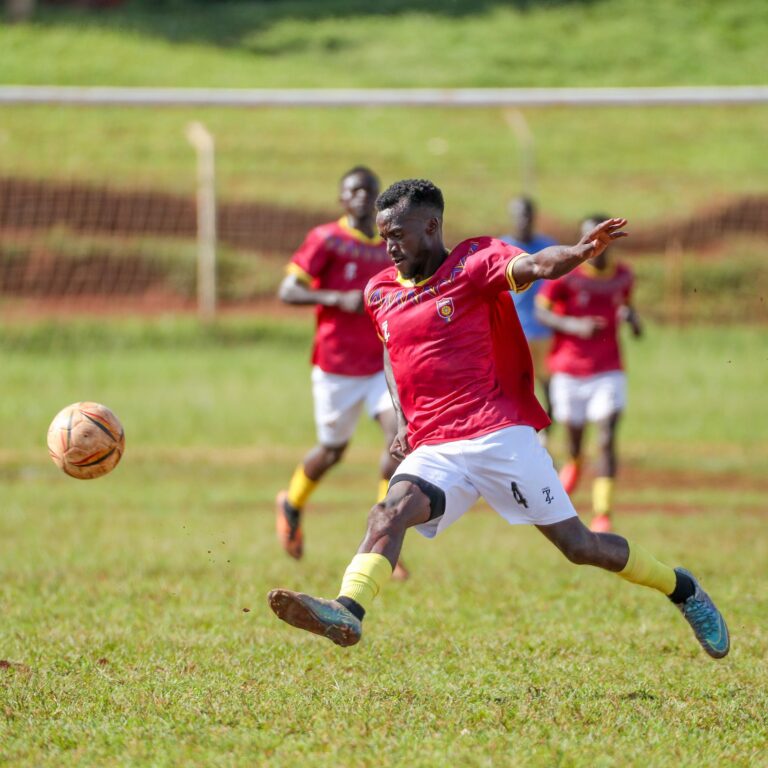
THE STAGE IS SET: 8th edition of the MTN Busoga Masaza Cup promises thrilling action

0

By Musa Kikuuno | BusogaTimes.com

Group Stages

Nendha Group

Butembe

Busiki

Kigulu

Bukooli Namayingo

Mawembe Group

Bukono

Bunhole Bunanumba

Budiope

Bugweri

Bukowe Group

Bugabula

Luuka

Bukooli Bugiri

Kagulu Group

Buzaya

Bulamogi

Bunha

Knockout Stage

Winner Nendha vs Runners-up Mawembe

Winner Mawembe vs Runners-up Nendha

Winner Bukowe vs Runners-up Kagulu

Winner Kagulu vs Runners-up Bukowe

Semi-Finals

Winner of Match 1 vs Winner of Match 2

Winner of Match 3 vs Winner of Match 4

The roar of the crowd, the vibrant colors, and the unbridled passion for football will soon engulf the Kingdom of Busoga once again. The 8th edition of the MTN Busoga Masaza Cup is just around the corner, kicking off on Saturday, June 28th, 2025, with a highly anticipated clash between hosts Budiope and Bukono at Irundu Primary School in Buyende District.

The announcement, delivered by the Minister of Sports in the Kingdom of Busoga, Owek. Amin Bbosa Nkono, during a meeting with Masaza Football Chairpersons and CEOs at Kyabazinga headquarters in Bugembe, has ignited a wave of excitement throughout the region.

“We are thrilled to announce the return of the MTN Busoga Masaza Cup,” said Owek. Amin Bbosa Nkono. “MTN Uganda remains our proud sponsor, and we shall communicate the date for the official launch soon.”

The tournament, known for its ability to unite communities and showcase local talent, promises to be even more competitive this year, thanks to a particularly intriguing group stage draw.

All Former Champions Clashed in One ‘Group of Death’

Perhaps the biggest talking point surrounding this year’s edition is the unprecedented grouping of all four former champions in a single group – the aptly named Nendha Group. This “Group of Death” features:

  • Butembe: Champions in 2017 and 2024
  • Busiki: Champions in 2023
  • Kigulu: Champions in 2018 and 2019
  • Bukooli Namayingo: Champions in 2022

This historically significant draw guarantees an intense and competitive group stage, with only two teams from Nendha Group advancing to the knockout rounds. The stakes are incredibly high, promising nail-biting encounters and potential upsets as Busoga’s most decorated footballing counties battle for survival.

Group Stage Line-up

The 14 participating counties, representing Busoga’s 11 chiefdoms, have been divided into four groups, each promising unique challenges and rivalries. Details about the other groups are eagerly awaited.

Following the group stages, the top two teams from each group will qualify for the quarter-finals, setting the stage for an even more intense battle for the coveted title.

The Road Ahead

With the tournament opener less than three weeks away, the atmosphere across Busoga is electric. The pressure is on, particularly for teams in the fiercely competitive Nendha Group.

Bukooli Namayingo, who are currently focused on rebuilding their technical team, face a daunting task, while Butembe, riding high after their 2024 triumph, will be determined to defend their crown against formidable opposition.

The 8th edition of the MTN Busoga Masaza Cup is poised to be a spectacle, a celebration of Basoga culture, and a testament to the power of football to unite communities.

All eyes will be on the field as these counties battle it out for glory, etching their names into the history books of the MTN Busoga Masaza Cup. Get ready for a month of thrilling action, unforgettable moments, and the crowning of a new champion!