Tuesday, March 17, 2026
Home Blog Page 44

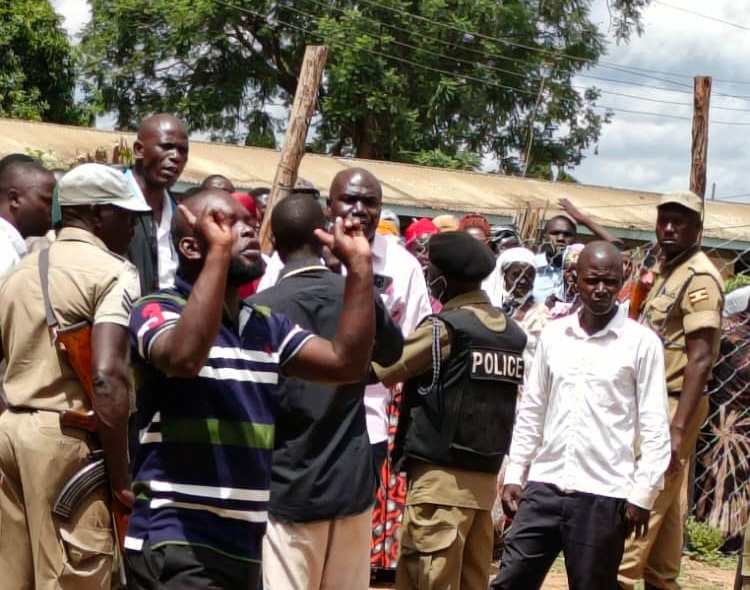
NRM VILLAGE PRIMARIES: Bugiri voting marred by violence, electoral irregularities; elections postponed in affected areas

0

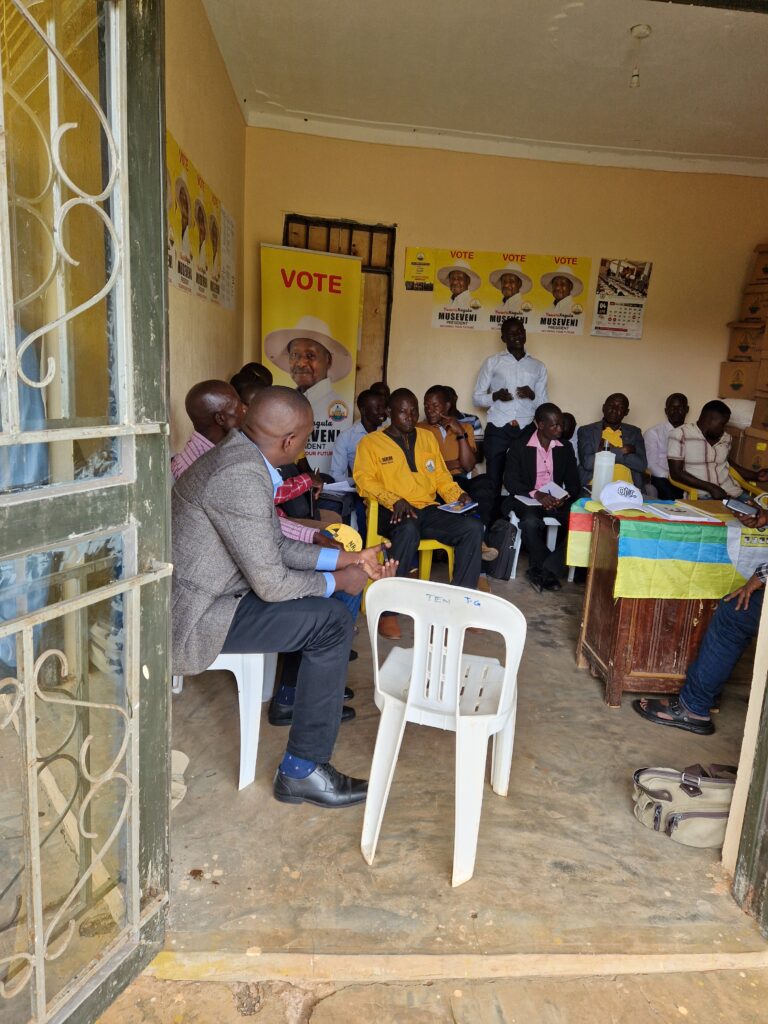
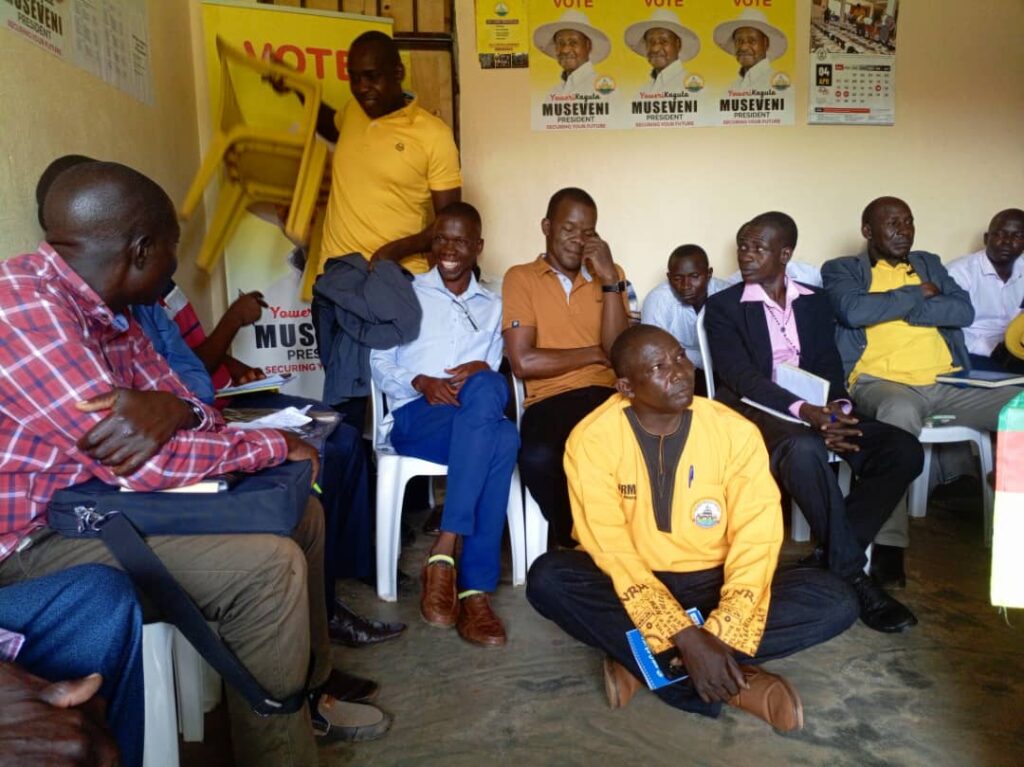
The National Resistance Movement (NRM) village-level primaries in Bugiri district were thrown into chaos on Tuesday, 6th May 2025, leading to the postponement of elections in several villages due to reports of violence and widespread electoral malpractice. The exercise, intended to verify NRM members and elect LC1 flag-bearers and village NRM structures, was marred by allegations of voter importation and register tampering.

According to a report by Bugiri district NRM Election Officer, Dan Ngia, in some urban centers, candidates were suspected of transporting voters from rural villages to unfairly influence the outcome of the elections. The situation escalated in Nawampanda Village, Itakaibolu Parish, Nankoma Town Council, where Ngia reported that a candidate allegedly tore the voters’ register. The incident was reported to the police by the Village Registrar.

As a result of these irregularities, the elections in the affected villages have been rescheduled for today, Wednesday, May 7th, 2025, at 10:00 am.

Nationwide Exercise Underway

Despite the challenges in Bugiri and other parts of the country, the NRM conducted a nationwide electoral exercise across over 72,000 villages in Uganda. The exercise, led by Dr. Tanga Odoi, Chairperson of the NRM Electoral Commission, aims to strengthen the party’s grassroots structures through a transparent and community-led verification process.

Speaking at a community baraza in Rwakitura, Dr. Odoi emphasized the party’s commitment to ensuring a fair and transparent process. “We are dedicated to ensuring that the voices of our members are heard clearly and that the leadership reflects the will of the community,” he stated.

Across the country, residents have been actively verifying the NRM register and electing village-level leaders, including Chairperson, Vice Chairperson, General Secretary, Treasurer, and Secretary for Publicity. Furthermore, Special Interest Groups such as women, youth, older persons, veterans, and persons with disabilities are also electing their representatives.

Dr. Odoi clarified the age eligibility for participation, stating that youth aged 18 to 35 are eligible to participate in NRM structures, while those vying for national youth leadership roles must be under 30.

The NRM leadership will be closely monitoring the rescheduled elections in Bugiri to ensure a free, fair, and transparent process and to prevent any further incidents of violence or electoral malpractice. The outcome of these primaries will be crucial in shaping the party’s representation at the local level and its overall strength in the region.

HOUSE OF GOD: Buyende Catholic Church embarks on Shs3 billion parish complex drive

0

St. Peter Apostle Bugaya Catholic Parish in Buyende is embarking on an ambitious project to construct a Shs3 billion complex, signaling a significant commitment to growth and service to its community. The initiative was launched with a resounding call to parishioners to contribute generously and give back to God.

The parish, only two years old, is guided by a clear vision, mission, and strong leadership, according to Parish Priest Rev. Fr. George Tenywa Kisige. Despite starting from scratch, Fr. Kisige expressed confidence in the project’s success, fueled by the goodwill of the Christian community.

“Being the Apostle Church Parish, we are faithfully looking at being a modern-era church, growing the faith, responding to contemporary needs, and being relevant to our flock,” Fr. Kisige stated. “We shall be two years this August, and though ambitious, the complex, which includes the modern church of 2,000 capacity, a monastery, and a convent, by the very providence and will of the people, is on course.”

The planned complex aims to provide a modern and spacious place of worship, as well as facilities for deeper spiritual reflection and service through the monastery and convent.

Beyond the physical infrastructure, the parish is deeply committed to strengthening the family unit. Fr. Kisige emphasized the church’s focus on rebuilding family and parenting institutions, addressing the rising tide of domestic violence, family breakups, and absentee parenting. This will be achieved through mindset change initiatives and community outreach programs.

Fr. Kisige also challenged leaders to prioritize service over rhetoric and to promote unity, peace, and harmony. He urged them to coexist peacefully and respect one another, recognizing that leadership is ultimately bestowed by God. He cautioned against seeking favor from shrines, emphasizing that true leadership comes from a divine source.

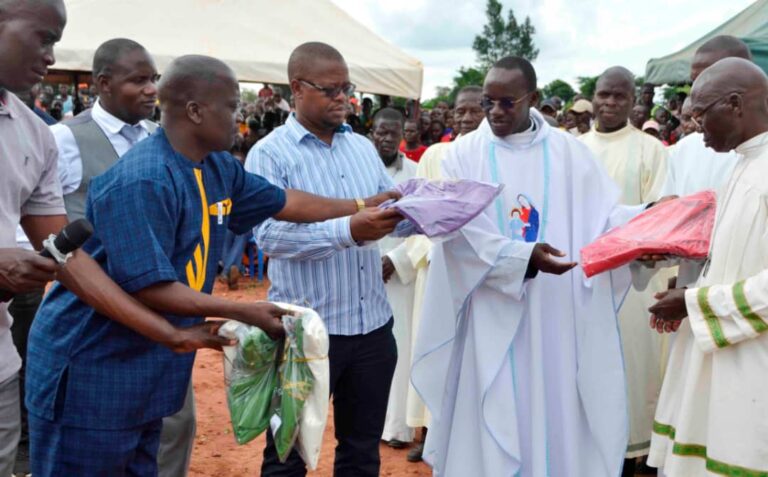
The church’s efforts received a significant boost during a recent mini-fundraising event. Budiope East MP and FUFA President Hashim Magogo contributed Shs20 million towards the project. Magogo, though a Muslim, acknowledged the crucial role of the Church in counseling and spiritual development, emphasizing values such as honesty, hard work, and forgiveness. He also presented the priest with a papal gift of four sets of priestly robes, brought from Rome, underscoring his belief in the blessings derived from serving God.

The mini-fundraising efforts have already yielded Shs120 million, with a mega fundraising event planned for next week to be conducted by the esteemed Jinja Catholic Bishop Martin Wamika.

The ambitious Shs3 billion project signifies a bold step for St Peter Apostle Bugaya Catholic Parish. With strong leadership, a committed community, and a focus on both spiritual and social development, the parish is poised to become a significant center of faith and service in Buyende.

BUDIOPE WEST: MP hopeful Fred Mbazira champions cash crop revival to combat poverty

0

Fred Mbazira, an aspiring Member of Parliament for Budiope West in Buyende district, is advocating for a return to traditional cash crops as a key strategy to alleviate poverty within the region.

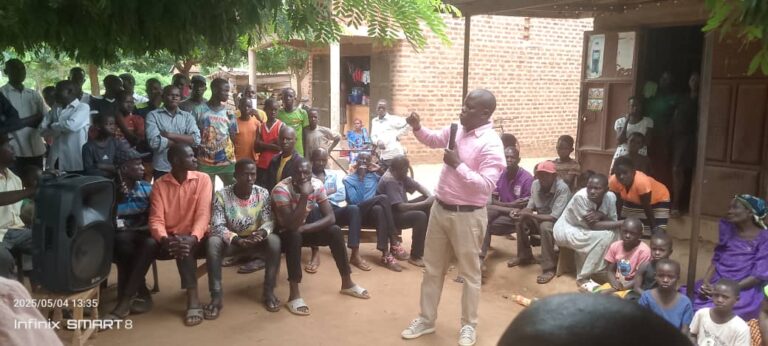
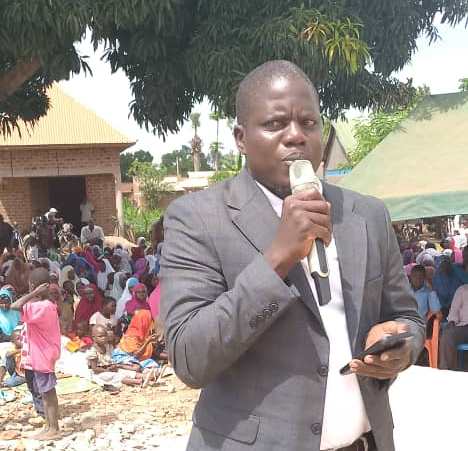
Speaking to the community of Makanga in Buyende Town Council, Mbazira, who is vying for the MP seat on the National Resistance Movement (NRM) ticket, urged residents to embrace the cultivation of crops like coffee, cotton, and cocoa, along with high-value vegetables like green pepper and fruits like watermelon.

Mbazira drew a stark contrast to the past, reminiscing about Busoga’s historical prominence as a major cotton producer. He highlighted how families previously thrived, utilizing cotton revenue to cover essential expenses such as education, healthcare, and housing construction. He lamented the shift towards lower-value crops like maize, cassava, potatoes, millet, and sorghum, which are now often treated as cash crops.

“These food crops are essential for food security, and every family should cultivate them,” Mbazira acknowledged. “However, for genuine poverty reduction, we must deliberately plant and commercially grow known high-value cash crops.”

He argued that this renewed focus on cash crops is crucial for the overall development of Budiope West. Pointing to the example of Western Uganda, he emphasized the link between agricultural productivity and infrastructure development. “Government can’t make roads in Buyende when the area is producing and putting nothing on the market,” Mbazira stated. “Western Uganda is able to get roads because they produce milk, matooke, Irish potatoes, and benefit from tourism.”

Mbazira’s argument centers on the idea that increased agricultural output of high-value crops will stimulate economic activity, attract investment, and ultimately justify government investment in infrastructure improvements within the region. This, he believes, will create a positive cycle of growth and prosperity for Budiope West.

He concluded his address by appealing to the people of Makanga and Budiope, urging them to support his candidacy during the upcoming NRM primaries. He framed this as the first crucial step towards achieving his vision of representing Budiope West in parliament in 2026 and driving the region’s economic transformation through a focus on cash crop production.

The message resonated with many in the community, who are eager to see a return to the economic prosperity they once enjoyed. The success of his message will be tested during the NRM primaries, where voters will decide if Mbazira’s vision for a cash-crop driven future resonates with their aspirations for Budiope West.

CULTURE POLLUTION: Politically and constitutionally-engineered indigenous groups of human beings – the case of Uganda

0

By Oweyegha-Afunaduula

Human beings (Homo sapiens), like elephant, lion, zebra and natural plants,constitute a natural entity on the biocultural landscape. Different indigenous groups of human beings are separated from each other ecologically, environmentally, culturally, socially, ethically and morally. Consequently, different groups of human beings tend to have characteristic belonging and identity within the pertinent bio-cultural landscapes. When this is the case, we talk of groups of human beings as“indigenous” to the various biocultural landscapes. They belong to different indigenous groups. The people are called indigenes. According to Oxford Advanced Learners Dictionary, the word indigenous means “belonging to a particular place rather than coming to it from somewhere else. Therefore immigrants, however long they have stayed in country, do not qualify to be called indigenes.

Thus, an indigene is a one who is indigenous to a particular place in the biocultural landscape and whose identity has been shaped by the pertinent environment for a long period of time. The indigene practices a defining culture in relation to the land in terms of crops grown, traditional energy system, burial, sacredness, extended family system, ecology, sociality, etc. People from elsewhere will try hard to destroy the culture, particularly the relationship to land, so that they either displace the indigenes, scatter them or dominate them in such a way that they can no longer practice their culture. This is happening among the Bantu and Luo areas, where people who belong to the nomadic-pastoral human energy system are grabbing land and introducing their mobile migratory culture in biocultural landscapes are foreign to them. Those of their kind in power are introducing schemes that are definitely destroying the time-tested biocultural landscapes and ethicomoral characteristics in favour of the sterile money culture.

According to the Constitution of the Republic of Uganda, which commenced on 8 October 1995 Third Schedule (Article 10 (a) Uganda’s indigenous communities as at 1st February, 1926, Banyarwanda (Tutsi) who either came to Uganda as labourers or as refugees, are included among the indigenous groups of Uganda.

Table 1 below puts Banyarwanda as Indigenous Group Number 24; Bahehe as indigenous group Number 14; and Nubi (Nubians) as indigenous Group Number 58. Until the emergence the Uganda Constitution 1995, I knew that the Tutsi, Hehe and Nubians in Uganda were refugees in Uganda who settled in the country where the biocultural landscape had indigenous groups that belonged to it with befitting identities.  I had worked in Tsavo National Park in southern Tanzania and came to know that the Hehe were the natives that were indigenous to the Iringa region of southern Tanzania.

Therefore, the Tutsi, Hehe and Nubians were artificial politically and constitutionally-created indigenous groups of Uganda and, therefore, alien to the biocultural landscape of the country. They lack long-term historical, ecological, environmental, ethical cultural and moral attachment to land in Uganda.

The Bahima were politically and constitutionally eliminated from the Ankole biocultural landscape and integrated into the Banyankore indigenous group dominated the Bairu, thereby both polluting and distorting it. Before, the Bahima were rulers of the Bairu and the Bairu were slaves of the Bahima.However, when President Tibuhaburwa Museveni captured the instruments of power through the barrel of the gun, the first thing he did was to destroy the pride of the Bahima, which was exacerbated by their continued attachment to the Kingdom of Ankole and its Obugabe, abolished by Apollo Milton Obote in the 1966 and 1967 Constitutions.

While the National Resistance Movement/National Resistance Army (NRM/A) regime of President Tibuhaburwa Museveni constitutionally introduced what it called cultural institutions in the Uganda Constitution 1995, whose making was chaired by President Tibuhaburwa Museveni himself, for Buganda, Bunyoro, Toro and Busoga, he declined to do the same for Ankole. He said he was Ssabagabe, akin to King of Kings. Ultimately, therefore, he obliterated Bahima as a group by integrating it intro what he cast as an indigenous group of human beings called Banyankore, which is a deception. There is no natural group called Banyankore consisting of Bahima and Basiru.

Putting Bahima and Bairu together is disorganisation of the biocultural landscape of Ankole intended to destroy the historical cultural evolution of the Bairu. It could be that the strategy was to revive the historical domination of the Bairu by the Hima. Since the Hima are related to the Tutsi, when it comes to opportunities, the Hima have got them at the expense of the Bairu under the guise that Banyankore are accessing them. Or else, the strategy was to create a grazing corridor with Ankole constituting a large portion of it. Thus, discrimination within the “Banyankore indigenous group” is easily achieved, widening the gap between the Hima and Bairu.

What, therefore, the Uganda Constitution 1995 wanted to do in Ankole was probably to completely dominate the biocultural landscape of the area in everyway as Hima-Tutsi. If the Bairu had successfully combated discrimination in Ankole, they need to re-strategise to combat discrimination designed from the centre rather than the periphery.  We need concrete sociological studies of the new scenario in Ankole and to test the theories advanced herein.

What is true is that indigenous groups are natural while constitutionally created indigenous groups are artificial and are destined to be rejected in future by the owners of the biocultural landscapes whose biology, ecology, ethics and morality in relation to the land were shaped over thousands of years. It is dangerous for people who came in from elsewhere to seek to make indigenous people foreigners of their biocultural landscape and destroy their belonging and identities for their own interests, such as owning both the land and its above-ground and belowground resources at the expense of the indigenes.  This is creating a disaster waiting to happen. If the indigenes wake up to their new reality, anything can happen. Already many indigenes have realised that they have been reduced to slaves within their country while their children and grandchildren are being sent into modern slavery in the Middle East while government is exploiting them in terms of overtaxation.

in summary, indigenous groups cannot be politically and constitutionally engineered, but can be given political and constitutional recognition and rights. many constitutions worldwide include special provisions for indigenous communities, granting them specific rights and acknowledging their traditional political structures and customary laws. in the case of an indigenous group called Banyarwanda it has no historical, ecological, environmental, cultural, ethical and moral attachment to any place in uganda. it was simply politically and constitutionally engineered and imposed on the biocultural landscape of uganda. this is potentially a source of violence in uganda in future. already land grabbing in uganda is mainly being done by people belonging to the artificial indigenous group. however, it was important to constitutionalise the natural indigenous groups of Uganda (e.g., Katharina Holzinger, et.al., 2018). Banyarwanda might be a minority ethnic group in Uganda but it is not an indigenous group. Calling it an indigenous group is deception with dire consequences. It is important to revise the constitution to include all the natural indigenous groups such as the Benet/Mosopishek, Bakingwe, Bagabo, Maragoli, Haya, Basese, Bagaya and Meru (Minority Rights Group, 2023) rather than indigenise foreign groups.

Table 1. The Indigenous Group of Uganda.

1.Acholi2. Aliba3. Alur4. Aringa5. Bamba6. Babukusu7. Babwisi8. Bafumbira9. Baganda10. Bagisu11. Bagungu12. Bagwe13. Bagwere14. Bahehe15. Bahororo16. Bakenyi17. Bakiga18. Bakonzo19. Banyabindi20. Banyabutumbi21. Banyankore22. Banyara23. Banyaruguru24. Banyarwanda 25. Banyole26. Banyoro27. Baruli28. Barundi29. Basamia30. Basoga31. Basongora32. Batagwenda33. Batoro34. Batuku35. Batwa36. Chope37. Dodoth38. Ethur39. Gimara40. Ik (Teuso)41. Iteso42. Jie43. Jonam44. Jopadhola45. Kakwa46. Karimojong47. Kebu (Okebu)48. Kuku49. Kumam50. Langi51. Lendu52. Lugbara53. Madi54. Mening55. Mvuba56. Napore57. Ngikuito58. Nubi59. Nyangia60. Pokot61. Reli62. Sabiny 63. Shana64. So (Tepeth)65. Vonoma[Third Schedule amended by section 48 of Act 11 of 2005].

For God and My Country

Further Reading

Avigail Eisenberg (2019). Indigenous Cultural Rights and Identity Politics in Canada. Review of Constitutional Studies, Volume 18, Issue 1, 2013 https://www.constitutionalstudies.ca/wp-content/uploads/2019/08/04_Eisenberg-4-1.pdf Visited on 19 April 2025 at 17:07 pm EAT.

Beckman, L., Gover, K., & Mörkenstam, U. (2021). The popular sovereignty of Indigenous peoples: a challenge in multi-people states. Citizenship Studies, 26(1), 1–20. https://doi.org/10.1080/13621025.2021.2011142

Hobbs, Harry (2021). First Nations, Settler Parliaments, and the Question of Consultation: Reconciling Parliamentary Supremacy and Indigenous Peoples’ Right to Self-Determination. Osgoode Hall Law Journal, Volume 58, Issue No.2 (Spring 2021).   7 15 2021, https://digitalcommons.osgoode.yorku.ca/cgi/viewcontent.cgi?article=3680&context=ohlj Visited on 19 April 2025 at 16:45 pm EAT.

Holzinger, K., Haer, R., Bayer, A., Behr, D. M., & Neupert-Wentz, C. (2018). The Constitutionalization of Indigenous Group Rights, Traditional Political Institutions, and Customary Law. Comparative Political Studies52(12), 1775-1809. https://doi.org/10.1177/0010414018774347 (Original work published 2019)

Minority Ethnic Groups (2023).Ugandan Constitution must include all ethnic minorities and indigenous peoples. Minority Rights Groups, MRG (2023), 23 March 2023https://minorityrights.org/ugandan-cons titution-must-include-all-ethnic-minorities-and-indigenous-peoples/ Visited on 19 April, 2025 at 16:29 pm EAT.

Muna Ndulo (2019).Constitutions and Constitutional Reforms in African Politics. Politics, Published online: 29 July 2019,https://oxfordre.com/politics/display/10.1093/acrefore/9780190228637.001.0001/acrefore-9780190228637-e-1324?d=%2F10.1093%2Facrefore%2F9780190228637.001.0001%2Facrefore-9780190228637-e-1324&p=emailAIqdgo.EOcgO2 Visited on 19 April 2025 at 16:51 pm EAT

Shrinkhal, R. (2021). “Indigenous sovereignty” and right to self-determination in international law: a critical appraisal. AlterNative17(1), 71-82. https://doi.org/10.1177/1177180121994681 (Original work published 2021)

Uganda Constitution 1995 “The Indigenous Group of Uganda”. [Third Schedule amended by section 48 of Act 11 of 2005].

TECH AGRIC: Buyende farmers embrace mechanization with Uganda Development Bank support

0

By Ali Lukomo

Buyende district farmers are experiencing a significant boost in their agricultural endeavors thanks to support from the Uganda Development Bank (UDB) and the advocacy of their Woman Member of Parliament. This initiative is poised to transform farming practices and improve livelihoods across the district.

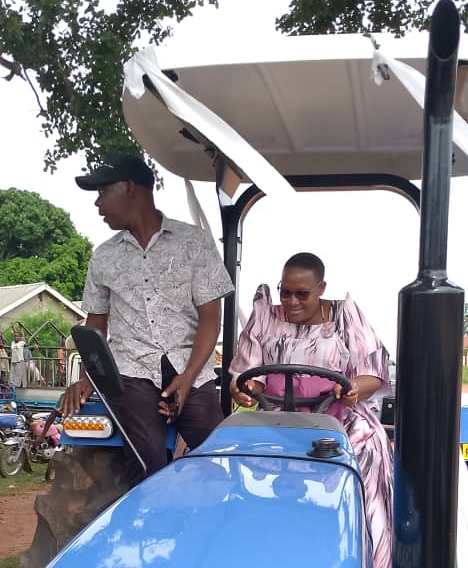
Farmer members of Buyende Farmer’s Link, a prominent farmer’s group in the region, are now enjoying the benefits of mechanized agriculture. Chairperson Hope Kyomuhendo expressed gratitude for the government’s support, highlighting the impact of receiving a tractor and a Shs150 million boost.

This financial support, distributed as loans to group members, enables farmers to invest in essential resources such as quality seeds and manure, ultimately leading to improved agricultural yields.

The handover of the tractor at Buyende Township Primary School was officiated by the Buyende district Woman MP, Nakato Mary Annet. She urged farmers to utilize the tractor responsibly and leverage the available loans to modernize their farming practices.

Emphasizing the importance of collective action, she also encouraged members to recruit more individuals into the groups, expanding the reach of these beneficial programs.

“This investment in mechanization is a game-changer for our farmers,” Nakato stated. “By embracing modern techniques and accessing the necessary resources, they can significantly increase their productivity and improve their quality of life.”

The loans provided through UDB are designed to be flexible and accessible, allowing farmers to tailor their investments to their specific needs. This has empowered them to adopt better farming techniques, ultimately contributing to food security and economic growth within the district.

Several farmers voiced their appreciation for Nakato’s unwavering support and her commitment to the development of Buyende. They acknowledged her role in facilitating access to resources and advocating for policies that benefit the agricultural sector.

While addressing the community, Nakato, who is vying for re-election, emphasized her dedication to further developing Buyende, particularly in agriculture and health education. She promised continued support in these crucial sectors if re-elected, solidifying her commitment to the well-being of the community.

This initiative in Buyende district serves as a model for how government support, combined with local leadership and farmer empowerment, can revolutionize agriculture and drive sustainable development.

The mechanization and access to financial resources are empowering Buyende farmers to cultivate a brighter future for themselves and their community. This marks a significant step towards modernizing agriculture in the region and ensuring food security for generations to come.

FOREWARNED: The dangers of family rule – the case of Uganda

0

By Oweyegha-Afunaduula

Way back in 2009 The Independent published a public awareness raising article on President Tibuhaburwa Museveni’s determination to establish family rule in Uganda titled “Family rule in Uganda. It is likely most of the reading public never chanced to see and read the article.

Citing historian Samwiri Karugire ‘s lecture on the topic “Wind of Change or Merely Change? African Politics Since Independence”, The Independent stressed that the biggest ills of Africa are the numbing corruption and nepotism. Karugire, as cited by the Independent, stated that our African rulers become insecure in their sumptuous offices and, therefore, they must surround themselves with their own relatives with whom, of course, they loot the national treasuries.’

Quoting journalist David Lamb, Karugire said: ‘The slain President William Tolbert of Liberia, when he was president of that country, made his brother Frank, president of the senate; another brother Stephen minister of finance; his sister Lucia was appointed mayor of the city of Bentol; one of his sons Ambassador at Large, his daughter Wilhemina presidential physician; his niece Tula, presidential dietician; his three nephews respectively, assistant minister for presidential affairs, agricultural attach in Rome and vice governor of the national bank; his four sons in-law respectively, minister of defence, deputy minister of works, commissioner for immigration and board member for Air Liberia. One brother-in-law was appointed to the senate, another as ambassador to Guinea and yet another as mayor of the capital city, Monrovia.’

This is not unlike what President Tibuhaburwa Museveni has done in Uganda. President Yoweri Museveni’s tenure in Uganda has seen significant involvement of his family in governmental roles (Bett, 2025). His wife Janet Museveni is Minister of Education, His son, Muhoozi Kainerugaba, is Chief of Defense Forces. His brother Gen. Caleb Akandwanaho a.k.a Salim Saleh is in charge of Operation Wealth Operation, a Member of the High Command of the Uganda People’s Defense Forces, and all leaders become anything in Uganda make pilgrimages to the man. This is what is called political patrimony. It is the fulcrum of patronage. Other relatives of the President in his government include:Bright Rwamirama – Minister for Animal Industry (His cousin); Shedrack Nzeire – Senior Presidential Advisor on Defense (His step brother); Miriam Karugaba – Administrator at The State House (His sister-in-law); Sabiiti Muzeyi – Former Deputy Inspector General of Police (His cousin);James Kateera – Military Commander (Cousin of his wife); Faith Mirembe – Private Secretary In Education and Social Services (His cousin); Sam Kutesa – Former Minister of Foreign Affairs (Father-in-law of Museveni’s son, Muhoozi); Allan Matsiko – Special Forces Command’s Intelligence Director (husband to Sam Kutesa daughter, the father-in-law of Muhoozi); Jim Muhwezi – Minister For National Security (Cousin Of Museveni’s wife); Susan Muhwezi – Presidential Assistant of the African Growth Opportunity Act (Cousin Of Museveni’s wife); John Karazaarwe – Senior Presidential Advisor On Local Government (Cousin Of Museveni’s wife); Henry Tumukunde – Former Senior Military Officer (Married a cousin of Museveni’s wife);  Moses Byaruhanga – Senior Presidential Advisor (Married a cousin of Museveni’s wife); Hope Nyakairu – Under-Secretary for Finance and Administration at The State House(Cousin Of Museveni’s wife); Jolly Sabune – Managing Director Cotton Development Authority (Cousin of Museveni’s wife); Natasha Museveni Karugire – Presidential Assistant In Charge of Household At State House (Museveni’s daughter); Joseph Ekwau – Presidential Advisor on Veterinary Issues (His nephew). This might explain why there is a lot of violence and kidnapping before during and after elections. Uganda is owned and ruled by the family of the President. The thought of losing the privilege perturbs the mind of the President. It would perturb you too if you were the one who sowed family rule.

This why Samwiri Karugire asked whether Uganda has gone through a wind of change or a mere change in the wind in regard to these African political practices. However, The Independent (2009) wondered what Samwiri Karugire would say since President Tibuhaburwa Museveni Natasha, the first daughter in the President family to his son, Edwin Karugire. What would Samwiri Karugire say when confronted with the reality of family rule in Uganda today?

Other African despots who behaved exactly like President Tolbert and President Tibuhaburwa Museveni were African despots of his time like Marshal Mobutu Sese Seko of then Zaire, Daniel arap Moi of Kenya, Omar Bongo of Gabon, Gnasingbe Eyadema of Togo, Obiang Ngwena of Equatorial Guinea, and many others (The Independent, 2009).

The Independent (2009) cited celebrated journalist Onyango Obbo and Professor Oloka Onyango (I understand these two are brothers and children of former Academic Registrar of Makerere University, Bernard Onyango) who both agreed that very early President Tibuhaburwa Museveni.

Onyango Obbo said, “One reason Museveni ended up with so many relatives in key security positions, is that fairly early in his presidency he sought to entrench his power by limiting the independent growth of his party, the NRM, and to dismantle the institutions of state (which he had, admittedly, helped rebuild considerably because he needed them for the reconstruction effort in his first 10 years in power). But one can never govern without organised institutions, and a force you can rely on to counter challenges to your authority. That is how, among other reasons, the security forces became the bedrock of Museveni’s power.” (The Independent, 2009).

Oloka Onyango said, “Museveni’s policy has always been to construct personal rule, not institutional rule. He has destroyed all institutions. And you could see this from the very beginning,’ Dr Oloka told The Independent, adding; “This is the trajectory he took from 1989 ‘consolidation and marginalisation. So, when you take that course, you have very few options especially in the new international setting i.e. who can best insulate you from the International Criminal Court (ICC) if not family [son and brother]”.

As the title of my article above says I want to explore the dangers of family rule using Uganda as a case study. Because I have previously explored many of the dangers in My previous writings, in this article I will just list the dangers here so that those who want to research more on the m can go ahead and do so. We need serious research in all dimensions of our deplorable situation. Here we go:

  1. Personalist rule.
  2. Personalist political party in power.
  3. Genocidal environment.
  4. Ecocidal environment.
  5. Ethnocidal Environment.
  6. Intellectual death of the nation.
  7. Apartheid-Style Governance of the Nation.
  8. Neglect of quality of education, health, nutrition and future of the nation.
  9. Deep state.
  10. Ethnicisation of the nation’s economy.
  11. Political ethnicisation and ethnic politicisation.
  12. Depoliticisation.
  13. De-democratisation.
  14. Depoliticisation
  15. Exacerbated Human rights violations
  16. Exacerbated abuse of power and the national budget.
  17. Death of debating society.
  18. Militarisation of society.
  19. State-inspired violence.
  20. Construction of a monolithic society.
  21. Unwarranted Kidnappings and killings.
  22. Domination of politics, leadership, governance and business by foreigners to cushion family rule.
  23. Raising foreigners over and above indigenous groups to cushion family rule.
  24. Erosion of citizenship, sovereignty and nationality to cushion family rule.
  25. Destruction of the local environments through land grabbing by people connected to power ethnically and kinwise.
  26. Imposed poverty and slavery (internal and external).
  27. Exploitation of natural resources by people closely related to the ruling family.
  28. De-institutionalisation.
  29. Overconcentration of power and authority in the institution of President.
  30. Disregard for and encroachment on the Constitution to remove constitutional roadblocks to family rule (e.g. age limits and term limits
  31. Accelerated oppression through taxation.
  32. Exacerbated ethnic nepotism and corruption, accompanied by protection of the corrupt who tend to be connected to power.
  33. Exacerbated soft spot for refugees ethnically related to power.
  34. Buying the consciences of Members of Parliament, Spiritual leaders and ordinary people by power for political gain (i.e., entrenchment of family rule).
  35. Use of money and jobs to glue people to family rule.

If you have followed the reasoning in this article, and if you have been following developments in Uganda, you may more characteristics of family rule.

For God and My Country.

Prof. Oweyegha-Afunaduula is a member of Center for Critical Thinking and Alternative Analysis

Reading List

Africa Confidential (2024). How Family and the Army Dominate Museveni’s Endgame. Africa Confidential, 13 May 2024https://www.africa-confidential.com/article-preview/id/14976/how-family-and-the-army-dominate-museveni%27s-endgame Visited on 05 May 2025 at 14:54 pm EAT.

Anderson, Charles H. and John R.  Carter (2015). A New Look at Weak State Conditions and Genocide Risk. Peace Econ Peace Sci Publ. Pol. 2015: 21(1): 1-36.

Ashleigh Landau (2024). EARLY WARNING COUNTRY REPORT (2024).  An Uncertain Future: Preventing Mass Atrocities in Uganda. OCTOBER 2024 https://earlywarningproject.ushmm.org/storage/resources/2918/An%20Uncertain%20Future_Ugandan%20Report_2024.pdf Visited on 02 May 2025 12:45 pm EAT..

Bett Hillary (2025).  Members of Museveni Family in Ugandan Family. Star, 24 February 2025.https://www.the-star.co.ke/news/infographics/2025-02-24-members-of-museveni-family-in-ugandan-government Visited on 05 May 2025 at 14:39 pm EAT.

Crook, Martin (2024). Ecologically induced genocide: A new synthesis. University of the West of West England, Bristol. Oct 24, 2024https://uwe-repository.worktribe.com/output/13897021 Visited on 02 May 2025 at 13:40 pm EAT.

Matogo, Phillip (2025). What’s Wrong with deepening military presence in the workings of government. Daily Monitor, March 1 2025.https://www.monitor.co.ug/uganda/lifestyle/reviews-profiles/what-s-wrong-with-deepening-military-presence-in-the-workings-of-government–4946858 Visited on 3 May 2025 at 13:39 pm EAT.

Muhairwe Ramson (2024). Corruption fuelling rampant environmental destruction, warns Transparency International. Nile Post, October 11 2024 https://nilepost.co.ug/crime/220987/corruption-fueling-rampant-environmental-destruction-warns-transparency-international Visited on 24 April 2025 at 16:50 pm EAT.

Musinguzi, Blanshe (2024). Uganda: The Rising Influence of Museveni’s Children, Close Family Members. The African Report, May 24 2024.https://www.theafricareport.com/349251/uganda-the-rising-influence-of-musevenis-children-close-family-members/ Visited on 05 May 2025 at 14:47 pm EAT

Mwenda, Andrew (2019). Is corruption the cause of our poverty? MUWADO,https://muwado.com/is-corruption-the-cause-of-our-poverty/?v=2a0617accf8b Visited on 24 April 2025 at 17:16 pm EAT.

Njoroge Linda (2023). Oweyegha-Afunaduula: How Ethnic Nepotism has derailed Uganda from the Democratic Path. Ultimate News, June 9 2023 https://ultimatenews.co.ug/2023/06/oweyegha-afunaduula-how-ethnic-nepotism-has-derailed-uganda-from-the-democratization-path/ Visited on 03 May 2025 at 13: 52 EAT.

Njoroge, Linda (2024). The Threat of Political Ethnisation of Uganda. Ultimate News, January 11 2024 at 13:54 at 13:55 pm EAT.

Njoroge, Linda (2025). What it means to liberate justice from the military in Uganda. Ultimate News, https://ultimatenews.co.ug/2025/02/oweyegha-afunaduula-what-it-means-to-liberate-justice-from-the-military-in-uganda/ Visited on 03 May 2025 at 14:04 pm EAT.

Oryem Nyeko (2022). No justice for Victims of Forced Disappearances in Uganda. Human Rights Watch, 08 December 2022.https://www.hrw.org/news/2022/12/08/no-justice-victims-forced-disappearances-uganda Visited on 03 May 2025 at 14:25 pm EAT,.

Oweyegha-Afunaduula Fred Charles (2022). The Disappearance of Police in Uganda Police: The Dangers. Daily Monitor, February 11, 2022  https://www.monitor.co.ug/uganda/news/insight/disappearance-of-police-in-uganda-police-the-dangers-3713354   Visited on 03 May 2025 at 14:10 pm EAT.

Oweyegha-Afunaduula (2023). Uganda: Plagued by Ethnicity, Tribalism of Both? Watchdog, https://www.watchdoguganda.com/op-ed/20221129/146058/oweyegha-afunaduula-uganda-plagued-by-ethnicity-tribalism-or-both.html Visited on 03 May 2025 at 13:48 pm EAT.

Oweyegha-Afunaduula (2025). From Genocide to Ecocide to Ethnocide to Intellectual Death in Uganda. Uganda Radio Network 20 January 2025 https://ugandaradionetwork.com/s/uganda-from-genocide-to-ecocide-to-ethnocide-to-intellectual-death/ Visited on 0 May 2025 at 12:36 pm EAT.

Oweyegha-Afunaduula (2025). How Militarised Personalist Parties Undermine democratisation: Uganda’s National Resistance Movement in Perspective. Charmar News, March 18, 2025https://charmarnews.com/how-militarised-personalist-parties-undermine-democratisation-ugandas-national-resistance-movement-in-perspective/ Visited on 03 May 2025 at 14:01 pm EAT.

Oweyegha-Afunaduula and Mayanja Lawrence (2022). Apartheid-Style Governance of Uganda: The Evidence.https://trustednewsug.com/index.php/2022/07/04/apartheid-style-governance-in-uganda-the-evidence/ Visited on 03 May 2025 at 13:44 pm EAT.

Oweyegha-Afunaduula (2022). The Political engineering of corruption in Uganda.https://www.watchdoguganda.com/op-ed/20220302/131201/oweyegha-afunaduula-the-political-engineering-of-corruption-in-uganda.html Visited on 24 April 2025 at 16:37 pm EAT.

Oweyegha-Afunaduula (2022). 21st Century Uganda Needs Enabling Laws, Not Repressive or Repressive Laws. Watchdog, 2022 https://www.watchdoguganda.com/op-ed/20221016/144344/oweyegha-afunaduula-21st-century-uganda-needs-enabling-laws-not-repressive-or-oppressive-laws.html Visited on 24 April 2025 at 16:34 pm EAT.

Oweyegha-Afunaduula (2023). The Engineering and institutionalisation of corruption by the Office of the Prime Minister. MUWADO, July 29 2023 https://muwado.com/the-engineering-and-institutionalization-of-corruption-by-the-office-of-the-prime-minister-of-uganda/?v=2a0617accf8b Visited on 24 April 2025 at 17:38 pm EAT.

Oweyegha-Afunaduula and Charles Kawagga (2023). The Engineering and Institutionalisation of corruption by the OPM.  Uganda Radio Network, 31 July 2023 https://ugandaradionetwork.com/s/the-engineering-and-institutionalisation-of-corruption-by-the-opm/ Visited on 24 April 2025 at 17:06 pm EAT.

Oweyegha-Afunaduula (2023). Promoting Corruption through money bonanzas via the office of President of Uganda.  MUWADO, August 6 2023 https://muwado.com/promoting-corruption-through-money-bonanzas-via-the-office-of-president-of-uganda/?v=2a0617accf8b Visited on 24 April 2025 at 17:54 pm EAT.

The East African (2009). The Politics of Keeping it in the Family. The East African, February 2009, https://www.theeastafrican.co.ke/tea/magazine/the-politics-of-keeping-it-in-the-family-1294052 Visited on 05 May 2025 at 14:57 pm EAT.

The Independent Team (2009). Family Rule in Uganda. The Independent,https://www.independent.co.ug/family-rule-uganda/ Visited on 05 May 2025 at 13:47 pm EAT

ROBERT ZIRIBASANGA: Buyende district NRM chairperson to be impeached over misappropriation of party funds and mismanagement of office

0

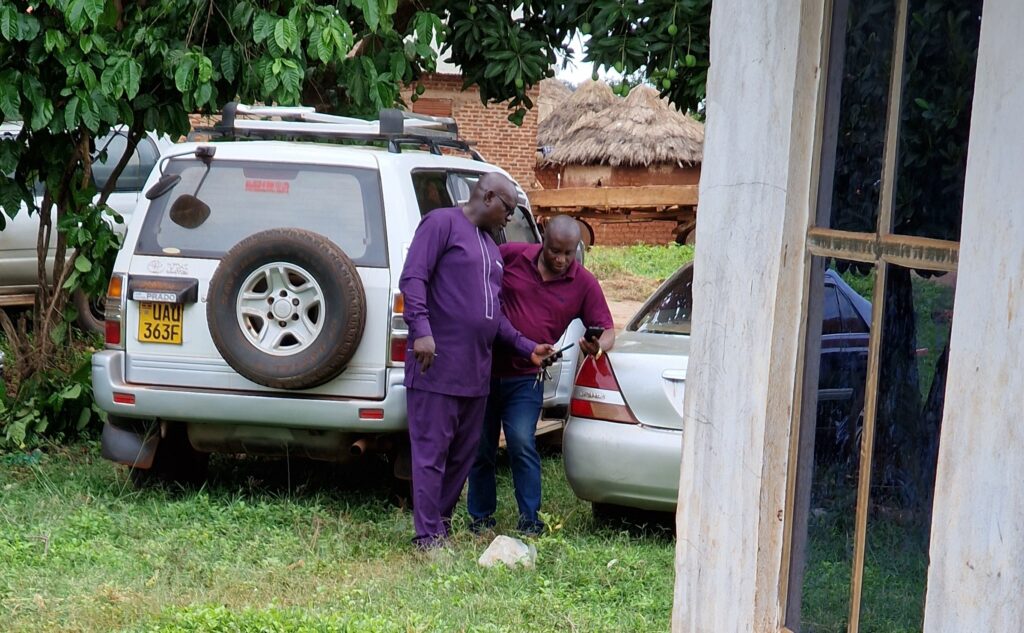
In Buyende district, the former district chairperson and current National Resistance Movement (NRM) chairperson, Robert Ziribasanga, survived being grabbed by the collars by the NRM District Executive Committee (DEC) members who bayed for his blood for allegedly misappropriating party funds and trying to illegally oust the district party administrator, Geoffrey Tenywa. Allegations Ziribasanga denied when contacted by Busoga Times.  

First things first, on 26th April 2025, DEC met to plan for how they will promote the party in the district ahead of party electoral activities and the 2026 general elections. According to DEC members who spoke to Busoga Times, just when the meeting was about to end, Ziribasanga, in an AOB, communicated that he had received several petitions from members of the party expressing dissatisfaction with the way Tenywa, the NRM district administrator, was executing his duties.

The riled members of DEC say that without indulging them, Ziribasanga judged that Tenywa should step aside to allow investigations into the cases brought against him. DEC members apparently refused to agree with their chairperson, causing a standoff that is now threatening to tear the party apart. In the same meeting, the DEC members came up with recommendations on how the matter can be resolved.

Among the recommendations was the idea of inviting the administrator for cautioning. Not amused by the recommendations, Ziribasanga apparently threw tantrums and called off the meeting without the team reaching a logical conclusion. A date for a meeting to sit and solve the matter—including DEC conducting the vote on the fate of the administrator—was suggested. The DEC met on a new date, on 29th April 2025, as suggested. Other matters were included on the agenda.

Among the issues that were raised during the meeting was how the Buyende district NRM election officer acquired office without the knowledge of DEC and how certain individuals received and now own motorcycles that came from the party headquarters meant for NRM sub-county chairpersons, yet they are not. These contentious issues were left hanging as answers were not forthcoming.

Back to the issue of the administrator, a vote was conducted, and Ziribansanga seemed to get his way because five members voted to retain the administrator, while six voted to suspend him. But here is the problem: apparently, one of the six voters who voted for the suspension of the administrator wasn’t a DEC member, and therefore her vote was illegal, which nullifies the results, at least according to Mangaraine Sharif, a DEC member, when contacted by Busoga Times. With this, the administrator’s impasse stretched further.

After DEC failed to save his job, the administrator petitioned Kampala, telling the NRM Secretary General that he was being forced out of office illegally because of local politics. According to available information, the SG in Kampala asked Tenywa to return to Buyende and resume his duties, as a solution is being sought.

Unfazed, Ziribasanga, on 1st May 2025, which was a public holiday (Labour Day), ordered Tenywa to pick up his suspension letter from the office of the Resident District Commissioner (RDC), a thing he refused because he doesn’t report to the RDC and the RDC doesn’t feature in the party administrative structures.

When this move refused to work, the District Police Commander, on 4th May 2025, ordered the party registrar to hand over the suspension letter to Tenywa, who refused to accept the letter, saying he cannot hand over office to DPC, let alone be forced to receive the letter.

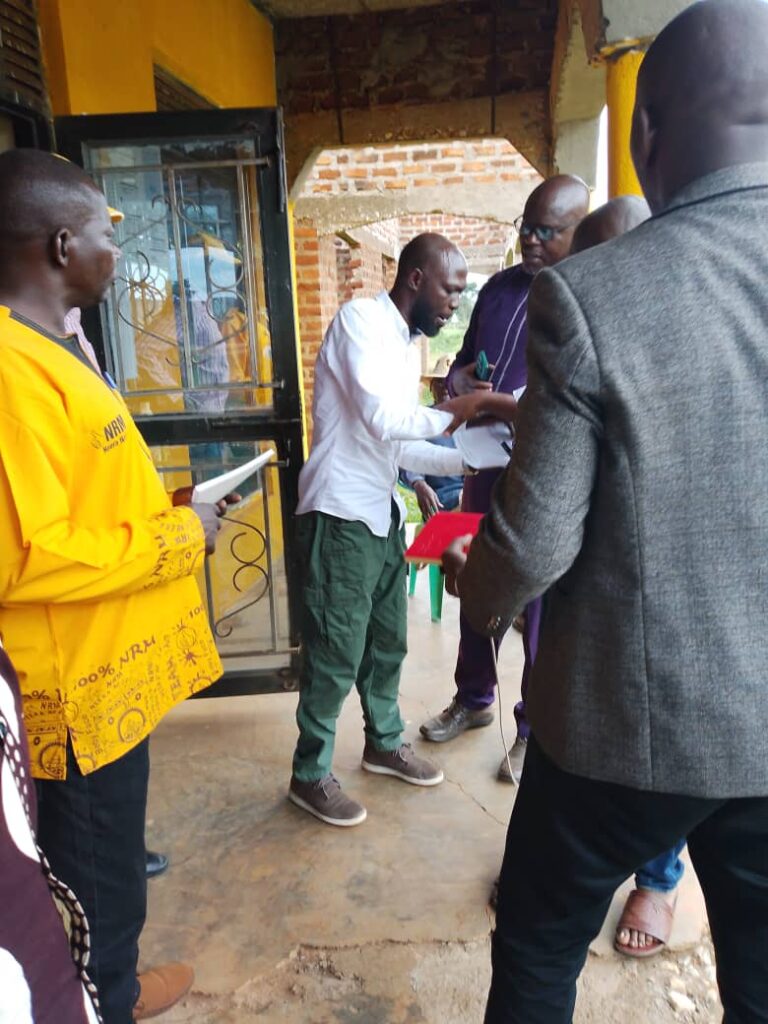
In a meeting that sat on 4th May 2025 at the NRM party offices in Buyende to train NRM sub-county registrars, the administrator, who is mandated to oversee the activities of the party, was thrown out of the meeting for allegedly having been suspended. It is at this point that some members of DEC who were present swung into action and almost lynched Ziribasanga, barraging him with several accusations, including swindling and mismanagement of Shs2M received every financial quarter.

It was chaotic as Ziribasanga, clad in a neatly pieced kaunda, was seen frantically trying to explain to the enraged DEC members. Now, the DEC members are vowing that impeaching their chairman is the best option to correct all that is going wrong within the NRM party in Buyende.

When contacted by Busoga Times, Ziribasanga, in a telephone interview, scoffed at DEC members alleging financial misappropriation, calling them liars because the money that comes goes to the district party account that has three signatories—himself, the secretary, and the admin. And there is no report indicating that there is any money that has been mismanaged, he said.

“The money that has been coming has been utilised. The money that they are talking about is money that comes to my personal account for my errands as the district chairman. It is not coming only to Buyende but to all districts. District [NRM] chairpersons receive money for their operations. We don’t give accountability to the district party executive. Those are people doing politics through blackmail. If they have any money issues that have not been handled, they should report it to the director of finance,” he said.

On the issue of the administrator, Ziribasanga denied initiating the process to kick out Tenywa, explaining that he was only reacting to the petitions received by the secretariat. He said he brought it to DEC for members to have an input.

He defended Mukyala Jesca for having voted in the vote to decide the fate of the administrator, confirming that Mukyala has been a DEC member, having replaced Hope Birungi, who had gone abroad. Ziribasanga said Mukyala has been participating in the activities of DEC. Asked if Mukyala replaced Birungi legally as per the party constitution, he was noncommittal but insisted that Mukyala has been a DEC member for many years.

“Those are useless allegations and politicking, and we are ready for the politics,” he said. He said that the fate of the administrator now rests in the hands of his employer, the secretariat in Kampala, not him, not DEC. We can only recommend his appointment, he said.

IMMORAL AND DISTURBING: Emerging genocidal environment in Uganda in the 21st century.

0

By Oweyegha-Afunaduula

A genocidal environment is an aspect of the socio-cultural dimension of the environment, particularly in the socio-political perspective, where those who initiate and perpetuate genocide are preoccupy ed with power acquisition and retention to perpetually access resources and dominate others for their selfish ends. They allocate a large portion of the national budget on the acquisition of weapons and tear gas, which they do not hesitate to use against those they claim to lead. They are usually evil men who do not care who they harm to get what they want.  Sometimes they create a genocidal environment within which they claim to be liberating people from repressive regimes when in fact their aim is power.

Once a genocidal environment has been created, a country’s total environment will be negatively affected in all its dimensions – the ecological-biological, the socio-economic, the socio-cultural and the temporal -wth mass or isolated atrocities proliferating as those behind them become increasingly arrogant and unremorseful.

In the ecological-biological they will clandestinely exploit the country’s resources for their selfish gain and exclude the indigenes from them. They will grab land, destroy time-tested agroecological systems, displace people and communities and cause people them to manifest as internal refugees subject to many environmental factors such as disease and hunger that interact in their gradual genocide, which may not be detected by the majority of unconscious people.

All that people see and experience is the supersonic rise in the death rate spread over a large expense of land. This is exacerbated by paying workers peanuts and denying them quality health or treatment in the hospitals. On an incremental basis more and more money is committed to militarisation (called peace and security) at the expense of social development. Violence is integral to peace and security pursuits and tends to overshoot peace and security with the passage of time as the people begin to question the behaviour and choices of the people of power.

The history of the world has always been punctuated by cycles of violence, regardless of time, region or race. Hardly a day goes by without the international media confronting us with news about mass atrocities, war, civil war, and genocidal events (Ton Zwaan).

Anderson and Carter (2015) have presented a rational model depicting a regime’s incentive to allocate resources to fighting rebels and killing civilians when it perceives internal threat to its political and territorial control. Their model guided them in investigating the risk of genocide.

A close link between mass atrocities and climate change exists. In Syria as protests (particularly in areas affected by drought and decreased food supply) against the government became more intense, the Syrian government started to massacre civilians. Eventually, the protests and crackdown from the government boiled over into a civil war with escalating mass atrocities on all sides.Genocide became manifest.

Genocideis one of the worst forms of violence. It has always led to horrific socio-economic, sociocultural and environmental impacts. The last decade of the 20th century was the most turbulent Rwanda had ever experienced in its history. The country was ravaged by civil war, genocide, mass migrations, economic crisis, diseases, return of refugees and environmental destruction. Rwandan families were affected by and are still dealing with impacts such as death, disease, disability, poverty, loss of dignity and imprisonment (Vadi Moodley, Alphonse Gahima and Suveshnee Munien, 2010).

The path of genocide into Rwanda (Howard Adelman and Astri Suhrke, 1999) started in Uganda, where close to 500 people (Dr Kiiza Besigye, pers comm) were massacred in the Luwero Triangle between 1981 and 1986 by rebels commanded by Rwandese refugees. The path of genocide ended in Zaire (Democratic Republic of Congo) where it has more or less settled with the Banyamulenge Rwandese refugees, seeking to gain a territory out of Easter DRC and declare sovereignty over it, reportedly supported by Rwanda  and Uganda

Apparently, another path of genocide in Northern Uganda (Ogenga Otunnu, 2017). Emerged and reportedly close to 400 people died in the mass atrocities committed by both the National Resistance Movement (NRA) of President Tibuhaburwa Museveni and the Lords Resistance Army (LRA)of Joseph Kony. Rwandese refugees who later overthrew the government of Juvenal Habyarimana in Kigali, Rwanda, participated in the genocide of Northern Uganda.

One writer, whose name I have forgotten, wrote that the biological and cultural integrity of social groups such as indigenous peoples and the territorially dependent placed-based groups are frequently prone to genocide. In the age of the Anthropocene, such social groups, are often the victims of an array of ecological and culturally genocidal coercive practices.

In 1997 President Tibuhaburwa Museveni, in a response to a question from a reporter of The Monitor, which gave way to present-day Daily Monitor, as to what kind of Uganda he envisioned beyond him, said that Uganda would be a very difficult country to govern. He may have had the thought of ruling Uganda as a life President, but it is unlikely he knew he would be in the hot seat for 40 years.

There is now evidence that a genocidal environment has been gradually emerging in Uganda. When there is a wide and deep divide between the rich and the poor; when there is a great divide between one ethnicity and other ethnicities, with one ethnicity accessing all the resources and opportunities at the expense of the other ethnicities; when the governance of a country is apartheid-like; when a country is politically  ethnicised or ethnically ethnicised; when government workers are paid peanuts even when they are professionally qualified with necessary experience while nincompoops are paid hugely simply because the they are kinsmen and kinswomen of the dominant group in power; when those who dominate power willingly violate the Constitution and human rights and take the violations as normal; when refugees from areas dominated by nomadic pastoralists are treated by power as superior to the indigenes and access jobs and other opportunities far more readily than the indigenes; when public money is used to satisfy the greed and selfishness of a few ethnically -related people, denying the majority of the citizens quality life, quality education, quality health, quality environment, quality nutrition and quality future. Besides, there is increasing arrogance of our political, military and police leaders, with spiralling joint determination to push indigenous civilians out of the leadership and governance of Uganda or to render them to the position of playing second fiddle to the dominant ethnic group. They are grabbing land in order to erase the indigenous belonging and ownership of the country in favour of their people. This way, they are displacing and dispossessing the indigenes and destroying their cultural, biological, ecological, spiritual, agroecological, emotional, ethical and moral attachment to their land, thereby converting them into internal refugees.

What is happening is happening contributing to the emergence of a genocidal environment. It is prescribing an uncertain future for Uganda (Ashleigh Landau, 2024) in which the citizens that will be there might experience more deadly mass atrocities than those that manifested in the genocidal environments of the Luwero Triangle and Northern Uganda created by the current governors of Uganda in the spirit of “militarily conquer, occupy and perpetually rule the natives” and exclude the indigenous civilians from the leadership and governance of their country. Matogo (2025) has discussed the wrong with deepening military presence in the workings of government in Uganda. We have just seen how the Chief of Defence Forces (CDF0, General Muhoozi Kainerugaba’s close linkage with NRM and its government compelled him to abuse the rights of Eddie Mutwe, the security man of former Presidential candidate, Kyagulanyi Sssentamu Bobi Wine, forcedly shaving his head, removing his beard, subjecting him at the basement of his residence and forcing him to learn Runyankore accompanied by saluting President Tibuhaburwa Museveni’s picture. The CDF in one of his famous tweets promised to do the same to Bobi Wine.

We are aware that justice is becoming more and more captured the military and militarised as the judiciary is becoming more and more subject to the dictates of the Executive (e.g., Oweyegha-Afunaduula, 2025). We are also increasingly aware of the disappearance of police in Uganda police with soldiers in command and in the rank and file of the Police force (e.g., Oweyegha-Afunaduula, 2022) and more and more subject to the dictates of the CDF. The Citizens cannot easily distinguish between the soldiers and policemen/women when human rights Violations are carried out by men and women in uniform.  If the Interahamwe of Rwanda carried out genocide against the Tutsis, in Uganda genocide would be carried indistinguishable people in uniform and sustained by the public. Writing in Human Rights Watch of December 8 2022, Oryem Nyeko, recorded that there is no justice in Uganda who forced to disappear. The cases of Eddie Mutwe is the latest example that people are forced to disappear and are maltreated, not in police cells but even in residences of people in or connected to power, mainly to sow seeds of fear and inaction often for political reasons.

There is need to rethink this kind of leadership and governance of Uganda. Clearly it is laying the ground for future genocides in the country. Already, a combination of emerging genocidal, ecocidal, ethnocidal environments and intellectual death (Oweyegha-Afunaduula, 2024) is charting a new deadly genocidal path that will be characterised by mass atrocities never before witnessed in Uganda in modern times.

For God and My Country.

Further Reading

Anderson, Charles H. and John R.  Carter (2015). A New Look at Weak State Conditions and Genocide Risk. Peace Econ Peace Sci Publ. Pol. 2015: 21(1): 1-36.

Ashleigh Landau (2024). EARLY WARNING COUNTRY REPORT (2024).  An Uncertain Future: Preventing Mass Atrocities in Uganda. OCTOBER 2024 https://earlywarningproject.ushmm.org/storage/resources/2918/An%20Uncertain%20Future_Ugandan%20Report_2024.pdf Visited on 02 May 2025 12:45 pm EAT..

Camila Misko Moribe Flávio de Leão Bastos Pereira and Nathalia Penha Cardoso de França( 2023). ECOCIDE: A NEW CHALLENGE FOR THE INTERNATIONAL CRIMINAL LAW AND FOR HUMANITY Journal of International Criminal Law Vol 4https://www.jicl.ir/article_172299_04444493f6c56a14f6eff39f15388721.pdf Visited on 02 May 2025 at 14:47 pm EAT.

Crook, Martin (2024). Ecologically induced genocide: A new synthesis. University of the West of West England, Bristol. Oct 24, 2024https://uwe-repository.worktribe.com/output/13897021 Visited on 02 May 2025 at 13:40 pm EAT.

Crook, M., Short, D., & South, N. (2018). Ecocide, genocide, capitalism and colonialism: Consequences for indigenous peoples and global ecosystems environments. Theoretical Criminology, 22(3), 298-317. https://doi.org/10.1177/1362480618787176 (Original work published 2018)

Crook, M., & Short, D. (2021). Developmentalism and the Genocide–Ecocide Nexus. Journal of Genocide Research23(2), 162-188. https://doi.org/10.1080/14623528.2020.1853914https://pure.roehampton.ac.uk/portal/en/publications/developmentalism-and-the-genocideecocide-nexus Visited on 02 May 2025 at 12:53 pm EAT.

Howard Adelman and Astri Suhrke (1999). The Parth of a Genocide: The Rwanda Crisi from Uganda to Zaire. Transaction Publishers, New Brunswick, New Jersey https://nai.diva-portal.org/smash/get/diva2:276851/FULLTEXT01.pdf Visited on 02 May 2025 at 12:44 pm EAT.

Martin Crook and Damien Short (2023). Chapter 8 Greenwashed relations of genocide. Elgaronline, 08 Jun 2023https://www.elgaronline.com/edcollchap/book/9781800881136/book-part-9781800881136-17.xml Visited on 02 May 025 at 13:32 pm EAT

Matogo, Phillip (2025). What’s Wrong with deepening military presence in the workings of government. Daily Monitor, March 1 2025.https://www.monitor.co.ug/uganda/lifestyle/reviews-profiles/what-s-wrong-with-deepening-military-presence-in-the-workings-of-government–4946858 Visited on 3 May 2025 at 13:39 pm EAT.

Njoroge Linda (2023). Oweyegha-Afunaduula: How Ethnic Nepotism has derailed Uganda from the Democratic Path. Ultimate News, June 9 2023 https://ultimatenews.co.ug/2023/06/oweyegha-afunaduula-how-ethnic-nepotism-has-derailed-uganda-from-the-democratization-path/ Visited on 03 May 2025 at 13: 52 EAT.

Njoroge, Linda (2024). The Threat of Political Ethnisation of Uganda. Ultimate News, January 11 2024 at 13:54 at 13:55 pm EAT.

Njoroge, Linda (2025). What it means to liberate justice from the military in Uganda. Ultimate News, https://ultimatenews.co.ug/2025/02/oweyegha-afunaduula-what-it-means-to-liberate-justice-from-the-military-in-uganda/ Visited on 03 May 2025 at 14:04 pm EAT.

Ogenga Otunnu (2017). The path to genocide in Northern Uganda. Refuge Vol 17 no.3 August 1998.

Oryem Nyeko (2022). No justice for Victims of Forced Disappearances in Uganda. Human Rights Watch, 08 December 2022.https://www.hrw.org/news/2022/12/08/no-justice-victims-forced-disappearances-uganda Visited on 03 May 2025 at 14:25 pm EAT,.

Oweyegha-Afunaduula Fred Charles (2022). The Disappearance of Police in Uganda Police: The Dangers. Daily Monitor, February 11, 2022https://www.monitor.co.ug/uganda/news/insight/disappearance-of-police-in-uganda-police-the-dangers-3713354   Visited on 03 May 2025 at 14:10 pm EAT.

Oweyegha-Afunaduula (2023). Uganda: Plagued by Ethnicity, Tribalism of Both? Watchdog, https://www.watchdoguganda.com/op-ed/20221129/146058/oweyegha-afunaduula-uganda-plagued-by-ethnicity-tribalism-or-both.html Visited on 03 May 2025 at 13:48 pm EAT.

Oweyegha-Afunaduula (2025). From Genocide to Ecocide to Ethnocide to Intellectual Death in Uganda. Uganda Radio Network 20 January 2025 https://ugandaradionetwork.com/s/uganda-from-genocide-to-ecocide-to-ethnocide-to-intellectual-death/ Visited on 0 May 2025 at 12:36 pm EAT.

Oweyegha-Afunaduula (2025). How Militarised Personalist Parties Undermine democratisation: Uganda’s National Resistance Movement in Perspective. Charmar News, March 18, 2025https://charmarnews.com/how-militarised-personalist-parties-undermine-democratisation-ugandas-national-resistance-movement-in-perspective/ Visited on 03 May 2025 at 14:01 pm EAT.

Oweyegha-Afunaduula and Mayanja Lawrence (2022). Apartheid-Style Governance of Uganda: The Evidence.https://trustednewsug.com/index.php/2022/07/04/apartheid-style-governance-in-uganda-the-evidence/ Visited on 03 May 2025 at 13:44 pm EAT.

Sample, Emily and Henry Theriault (2022). Guest Editorial: Environmental Degradation and Genocide Studies and Prevention: An International Journal, Vol 16  Issue 1: 4-10https://digitalcommons.usf.edu/cgi/viewcontent.cgi?article=1911&context=gsp Visited on 02 May 2025 at 13:41 pm EAT

Simon Adams (2016). From Global Warming to Genocide Warning: Climate Change and Mass Atrocities. ReliefWeb, 4 December 2016, https://reliefweb.int/report/world/global-warming-genocide-warning-climate-change-and-mass-atrocities Visited on 02 May 2025 at 14:47 pm EAT

STIMSON (2019). The Looming Accelerant: The Growing Links between Climate Change, Mass Atrocities, and Genocide. International & Regional Organizations, July 11 2019,https://www.stimson.org/2019/looming-accelerant-growing-links-between-climate-change-mass-atrocities-and-genocide/ Visited on 03 May 2025 at 14:12 pm EAT.

Vadi Moodley, Alphonse Gahima and Suveshnee Munien (2010). Environmental causes and impacts of the genocide in Rwanda: Case studies of the towns of Butare and Cyagugu. Accord, October 26 2010 https://www.accord.org.za/ajcr-issues/environmental-causes-and-impacts-of-the-genocide-in-rwanda/ Visited on 02 May 2025 at 13:09 pm EAT.

Uğur Ümit Üngör (Editor). Genocide: New Perspectives on its Causes, Courses, and Consequences. Amsterdam University Press. https://library.oapen.org/bitstream/handle/20.500.12657/24478/1005637.pdf?sequence=1&isAllowed=y Visited on 02 May 2025 at 13:57 pm EAT

Verdeja, Ernesto(2012).The Political Science of Genocide: Outlines of an Emerging Research Agenda. Perspectives on Politics Vol. 10, No. 2 (June 2012), pp. 307-321 (15 pages) Published By: American Political Science Association.


THE VINE: Adult learners, mothers graduate in acquired skills 

0

Even with the coming of Universal Primary Education, many people in Kamuli district remained illiterate because of reasons like early child marriages, especially for girls. To resuscitate life, many young mothers in Kamuli are forming local social village savings associations where they are relying on small loans to start up businesses.

The Vine Uganda, through its community development programme, identified these community challenges and gaps and introduced Functional Adult Literacy classes and hands-on skills.

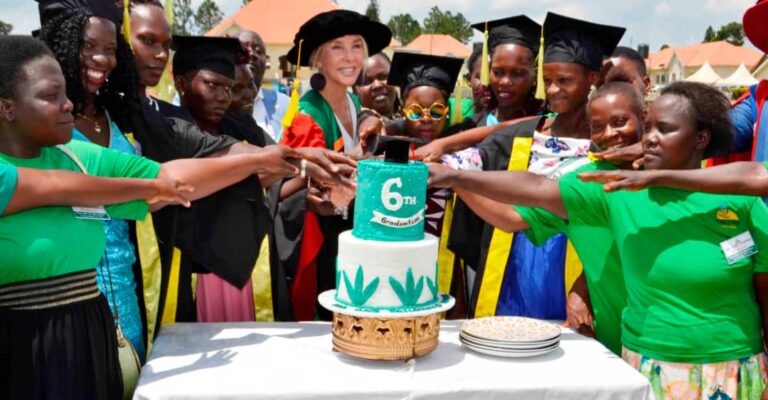
Speaking at the Vine 6th graduation ceremony where 170 Functional Adult Literacy learners and 7 women graduated in tailoring recently, Gari Meacham, the President of The Vine, said with God everything is possible and that the graduates have proven that with faith and endurance, the impossible becomes real.

Meacham underscored the value of literacy and knowledge now that they can run away from thumb printing, being cheated off figures, agreements and documentation. Meacham challenged the graduates to support the families and communities better.

“Literacy brings dignity, unlocks a world of knowledge and helps you to be treated fairly, and today by God’s providence and grace, we honour you with both respect and celebration,” she said, and called for discipleship to take salvation to maturity by bringing hope of Christ to every soul touched “and in return for this given gift, give it back to God.”

Richard Mwogereze, the Executive Director of The Vine Uganda, assured that with practical hands-on training, assessments and real-life projects, they have been able to instil competencies to make their students relevant in the communities said the skills project is to provide education for life so as to accelerate sustainable development and transformation in communities.

He urged the graduates to live by the organisation’s vision, ideals and focus, saying their completion is a major step towards personal and community transformation.

“The Vine Uganda welcomes you to learn and ushers you to the world of work to serve. Be different and bound by our core values of “to love God” and knowledge to change the world. Integrity, spirituality and morality will draw customers to you,” Mwogereze charged.

Vero Mirembe, who was the best tailoring student, revealed that The Vine “rescued” many young girls and mothers from despair. She said with skills acquired, they will be able to support themselves, at last have dignity, be economically liberated and change for the better.

“The Vine has lifted many young girls and mothers, giving us hope filled with faith, and in God’s trust we shall bear the much valued fruits in His Glory,” she said after receiving her start-up sewing machine and kit.

Kamuli District chairperson Maxwell Kuwembula, in his speech delivered by his vice chairperson Sarah Sambya, emphasised that the economy is changing from a job to a skills economy, so without skills, no job is envisaged.

Kuwembula said The Vine was spot on in its skilling aspect because equality and affirmative action for women and youth can best be achieved through honest work and self-employment as the government is short of jobs.

“Go to the field, build trust through timely and quality delivery, but also be innovative and go the extra mile to add value to your work,” he advised.

GOOD JOB: Kiira region successfully conducts interviews for Probationer Police Constables (PPCs) interviews with 99.9% pass rate

0

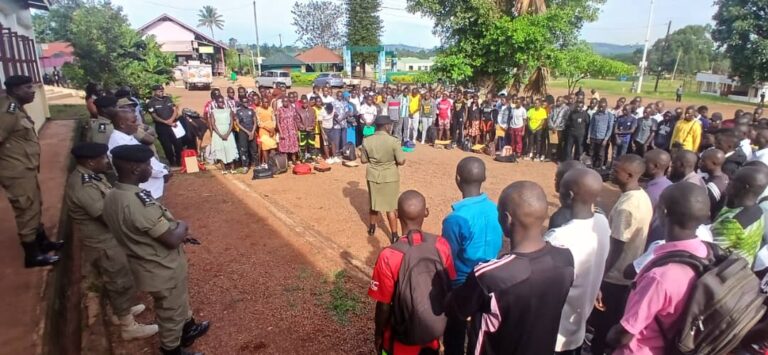
Kiira region got a pat on the back for organizing smooth interviews for Probationer Police Constables (PPCs) Saturday, May 3, 2025, at the National Agricultural Showgrounds.

According the team leader, ACP Zula Ganyana, the region managed time, registered no disrupting incidents, and registered no cases of forged academic or any other relevant documents

According to a statement released by SP James Mubi, the PROKiira/Jinja, the candidates were well briefed and debriefed by the team leader, and the exercise started at 0800/C and ended at 1800/C.

In attendance were the RCC Jinja City Mr Richard Gulume, Deputy RDC Jinja district Mr Andrew Ntange, Deputy RPC SSP David Katunda, Regional HR SSP Andrew Muzira, the three DPCs and local leaders among others.

Ganyana emphasized that the exercise is free of charge, transparent and merit based. She offered parental guidance to the candidates to take care of their lives to avoid getting involved in criminal activities, getting pregnant for the ladies before the final list of successful candidates is out. Adding that, they should keep their records very clean in their respective communities since they are now good police ambassadors.

The RCC Mr Richard Gulume stated that the government is committed in creating job for Ugandans for instance those joining the prestigious Uganda police, sister forces etc.

The RPC stressed out to the applicants that a modern police officer should be knowledgeable, technologically compliant, ideologically stable, audible, smart and disciplined ready to work anywhere as and when duty calls.

The list for successful candidates that will proceed to PTS Kabalye in Masindi district for the initial police training, will be published via all official social media platforms of the force, local radio stations and gazetted places like main police stations and regional police headquarters across the country at an appropriate time.