Friday, May 22, 2026
Home Blog Page 43

DELICATE HOPE: Busoga United’s survival hopes still alive after draw at Arua Hills but it must make no er, no error

0

By Musa Kikuuno | Busoga Times

Sunday, 8 June 2025

Weekend Results Summary:

Arua Hills 1-1 Busoga United

Blacks Power 5-0 Ntugasaze

Kaaro Karungi 1-1 Buhimba Saints

Kigezi HomeBoyz 1-0 Paidha Black Angels (Played on Saturday)

Kiyinda Boys 1-1 Onduparaka

Booma 0-5 Gadaffi

Relegation Zone Snapshot:

8th Kataka – 33 pts

9th Kaaro Karungi – 31 pts

10th Myda – 29 pts

12th Arua Hills – 29 pts

13th Kigezi HomeBoyz – 27 pts

14th Busoga United – 27 pts

15th Booma – 19 pts

Busoga United kept their survival hopes alive in the FUFA Big League after a hard-fought 1-1 draw against Arua Hills at the Barifa Stadium in Arua on Sunday.

The draw takes Busoga United to 27 points from 26 matches, leaving them in 14th place—second from bottom—in a league where the bottom four will be relegated to the regional leagues.

With two crucial games left to play, the Jinja-based side still has a mathematical chance of avoiding the drop.

Busoga will host bottom-placed Booma FC on 15th June at Kyabazinga Stadium, before wrapping up the season against promotion-chasing Blacks Power on 21st June.

The stakes couldn’t be higher: anything less than maximum points from both fixtures will confirm their relegation.

Currently, the difference between 9th-placed Kaaro Karungi (31 points) and 15th-placed Booma (19 points) is just 12 points, with some teams having games in hand. Booma, for instance, has four remaining games and could theoretically collect 12 points—potentially leapfrogging several teams if results go their way.

Relegation Battle Intensifies

The relegation fight is wide open from 8th to 15th positions, with clubs like Kataka (33 pts), Myda (29 pts), Kigezi HomeBoyz (27 pts), and Booma all in the mix. No team in the bottom half has yet been confirmed relegated, leaving the final two matchdays critical.

Title Race Heats Up

Meanwhile, at the top end of the table, the title race is equally intense. Buhimba Saints (49 pts) hold a slim lead over Calvary (48 pts), with Gadaffi (46 pts), Blacks Power (45 pts), and Paidha Black Angels (43 pts) closely behind.

MORE MONEY PLEASE: Proposal to increase PDM allocation from UGX100 million to UGX 200 million per parish

0

By Waiswa Michael Baluye

During the recent Thanksgiving ceremony of the Honorable Minister for Presidency, Hon Milly Babalanda —graced by the presence of His Excellency the President—the LC1 Chairperson, in his welcoming remarks, made a heartfelt appeal to the Government to increase the Parish Development Model (PDM) allocation from UGX 100 million to UGX 200 million.

As a monitor of the PDM program, I was greatly encouraged by this request, as it mirrors the very concerns and appeals I regularly receive from community members—many of whom are still awaiting their first disbursement.

Some parishes are vast and densely populated. The current allocation is insufficient to accommodate all eligible beneficiaries. An increase in funding would significantly expand coverage, enhance economic participation, and allow a greater number of residents to benefit from the initiative.

As the grace period for the initial batch of recipients draws to a close, it is critical to emphasize the importance of timely loan repayments. These repayments are essential to ensure that other SACCO members can also access the funds. However, there is a growing concern that some beneficiaries may be unwilling or unmotivated to repay their loans. Incentives and continued sensitization are recommended to encourage compliance.
Furthermore, I urge district leaders—particularly those in the District Commercial Office—to intensify community engagement and sensitization efforts to promote transparency, accessibility, and sustainability of the program.

It is also crucial to address some of the challenges being reported at the SACCO level. These include:

Allegations of corruption, where some PDM SACCO leaders demand kickbacks from beneficiaries before disbursing funds.

Favoritism, where leaders prioritize their relatives or inner circles over the wider community.

These practices undermine the integrity and goals of the PDM program and must be addressed with urgency.

Despite these challenges, the community is overwhelmingly grateful for the PDM initiative. With the proposed increase in funding and improved oversight, the program has the potential to transform livelihoods across the country.

Recommendation:

That the Government urgently considers increasing the PDM allocation from UGX 100 million to UGX 200 million per parish.

That mechanisms be put in place to improve transparency, recovery of funds, and equitable access by all eligible members.

Baluye Michael Waiswa
ONC Coordinator – BUYENDE DISTRICT

THANKSGIVING: How inadequate education and COVID-19 almost cost Milly Babalanda Museveni’s favor, ministerial job

0

To serve as the Minister for Presidency in President Yoweri Museveni’s government is a formidable undertaking. The role demands unwavering commitment, laser-like focus, and unwavering loyalty, qualities that Milly Babalanda has demonstrably displayed throughout her career, ultimately earning her a place in the President’s inner circle.

Babalanda recently shared her remarkable journey during a Thanksgiving ceremony at Iringa Primary School in Buyende district, expressing her gratitude for the path that led her to her current position.

A Foundation of Humility and Faith

Addressing the President and those assembled, Babalanda emphasized the importance of her upbringing in a humble but religious family. This foundation instilled in her a meek and humble character, qualities she believes have been instrumental in her success. She expressed profound gratitude to the individuals who guided and nurtured her along the way.

“If it were not for them, I would not be here counting my blessings before you,” she acknowledged. “Your interventions shaped me into someone of substance; namely, from an invisible girl to a public figure you admire. I thank God for enabling me to build and maintain my character and for not shaming you this far.”

Rising Through the Ranks: Mobilization and Opportunity

Babalanda attributes her ascent to her character and resilience, particularly her skills in political mobilization. These qualities led to opportunities to engage in mobilization efforts, both within the Busoga region and across Uganda, under the direction of President Museveni.

She specifically thanked Rebecca Kadaga, acknowledging her trust and engagement in political mobilization efforts. Through these endeavors, Babalanda met President Museveni, who recognized her “special appeal and commitment” and her “love” for Uganda. This led to her spearheading the Busoga Rural Development Association (BRUDA), aimed at mobilizing lower earners.

From BRUDA, Babalanda’s career trajectory accelerated. She was appointed Deputy Resident District Commissioner (RDC) for Busia, followed by a pivotal role in the President’s mobilization office within the National Resistance Movement (NRM) at Mbuya, deputizing Milly Kamukama, the former Principal Private Secretary (PPS) to the President.

When Insufficient Education almost Cost her the Ministerial Job

On May 8, 2016, Babalanda faced a challenging moment. President Museveni informed her of his intention to appoint her as a cabinet minister. However, during their discussion about her educational background, a critical issue arose. The President encouraged her to pursue further education, recognizing a gap in her qualifications stemming from a previous educational institution that lacked proper accreditation.

“I went back to school not because I did not qualify for the job at that time, but it was due to the mistake I made after my ‘O’ levels; of joining an institution that was not affiliated to the UBTEB,” she explained. This experience, she emphasized, served as a crucial lesson for parents to carefully consider the accreditation and affiliation of their children’s schools.

Instead of being discouraged, Babalanda embraced the President’s advice. She was appointed as his Personal Assistant and Senior Presidential Advisor while simultaneously pursuing her education. Despite the challenges, she successfully navigated both roles, contributing to the President’s victory. “Mzee, I did not disappoint you. I went back to school and now I am a proud owner of a bachelor’s degree through your efforts and yet I am also enrolling for a master’s degree.”

Proving Doubters Wrong: Reforms and Integrity

Babalanda shared her story to highlight President Museveni’s commitment to grooming talent and providing opportunities. She acknowledged the skepticism surrounding her appointment as Minister for Presidency in 2021, but asserted that her performance and the reforms she has implemented speak for themselves.

“When he appointed me Minister in 2021 many people doubted my ability and competencies. However, to those I have worked with and those following the Presidency in the last 5 years, I think there are many reforms registered. Indeed, the performance of the presidency is undisputedly high,” she stated.

She expressed gratitude for the opportunity to serve and vowed to uphold the trust placed in her. “I thank God that in the many scandals that have been registered in the country, where even intellectuals have been victims, your daughter Babalanda does not feature anywhere. I may not be rich, but I am contented with the chance you gave me to serve, and I promise not to disappoint you as the appointing authority.”

Overcoming COVID-19

Adding to the weight of her journey, Babalanda shared her experience battling COVID-19 shortly after her ministerial appointment. She expressed profound gratitude to President Museveni for his intervention and to God for granting her a second chance at life.

“In 2021, I almost lost my life to Covid-19… I battled the virus, but it had weakened me so much,” she recounted. She also thanked Haji Yunus Kakande and Haji Faruk Kirunda for their unwavering support during her recovery.

President Museveni’s Affirmation: A Long-Time Mobilizer

President Museveni echoed Babalanda’s sentiments, praising her dedication and leadership. He recognized her as a “long-time mobilizer” for the NRM.

“I’m very happy to be here to thank God for the life of my daughter, Hon. Babirye Milly Babalanda. Babirye has been a good leader and mobilizer of the NRM. I found her here in Busoga with the women’s group; that’s how I got to know her,” Museveni said. He also acknowledged her resilience in overcoming COVID-19, further solidifying her position as a valued and trusted figure in his government.

President Museveni concluded the event by contributing UGX100m towards the construction of a local church and pledging government support for infrastructure development in the region, highlighting the ongoing commitment to progress and development.

Milly Babalanda’s story is a testament to the power of humility, hard work, and unwavering loyalty in navigating the complex landscape of Ugandan politics, showcasing a journey from humble origins to the heart of the presidency.

NO LONGER AT EASE: Museveni warns of divisionism and ‘political camps’ in National Resistance Movement; urges party members to unite

0

President Yoweri Museveni has issued a strong warning to leaders and members of the National Resistance Movement (NRM) against the formation of political camps within the party, emphasizing the importance of unity and adherence to the party’s core principles.

Speaking at a thanksgiving ceremony for Minister for Presidency, Babirye Milly Babalanda, held on Saturday at Iringa Township Primary School in Buyende District, President Museveni reminded the NRM faithful of the party’s foundation.

“We didn’t agree with old political parties like the Democratic Party (DP) which were promoting sectarianism based on religion and tribe. As NRM we believe in politics of interest, that is why we have the four core principles of Patriotism, Pan-Africanism, Socio-economic transformation and democracy,” he stated.

He explained that NRM members should prioritize working together for the betterment of Uganda, guided by the established principles. “So, you leaders need to be clear about this. Have politics of principles, not politics of selfishness. When we fought Idi Amin, he did not understand patriotism, Pan-Africanism, and socio-economic transformation,” the President emphasized.

Acknowledging that differences may arise, President Museveni urged members to resolve conflicts through dialogue and understanding. “If you have differences, it’s understandable but now you are all NRM. That means you must all believe in patriotism, Pan-Africanism, Socio-economic transformation and democracy. So, what’s your problem? We shall sit down and discuss. You don’t have to fight or be angry. The NRM aims are clear and well written down.”

Beyond party unity, the President reiterated his call to the people of Busoga to focus on wealth creation as a crucial step towards poverty eradication. He emphasized the importance of distinguishing between development and wealth.

“That’s why in addition to development, add the word wealth. We don’t want poor families,” he said. The President clarified that while development benefits the entire community, wealth is a personal pursuit that contributes to individual prosperity and overall national growth.

DOMESTIC VIOLENCE: Wife in Kamuli district removes husband’s left testicle using sharp knife in attempted murder case

0

A 60-year-old man from Kamuli Municipality is recovering in hospital after allegedly being attacked by his wife, who police say attempted to murder him and mutilate his genitals. Masanka Richard, a resident of Busoigo cell, Kasoigo ward, Northern Division in Kamuli Municipality, was reportedly attacked in his sleep late Friday night.

Police have arrested his wife, identified as 40-year-old Rehema, in connection with the brutal assault.

According to initial police investigations, on June 6th, 2025, the couple were at their home when, at approximately 11:00 PM, Masanka went to bed, leaving Rehema outside. While he was asleep, Rehema allegedly attacked him, attempting to strangle him before inflicting a severe injury that resulted in the removal of his left testicle.

Masanka was immediately rushed to Kwagala Medical Centre-Buwengempya for emergency treatment and later transferred to Kamuli General Hospital for further medical attention. His current condition is unknown.

ASP Kasadha Micheal, Regional Spokesperson for Busoga North, issued a statement condemning the attack. “We condemn the attack and similar acts of violence. We remain committed to ensuring that we deal with such acts expeditiously,” he stated.

He further urged couples facing conflict to seek counseling or legal redress, emphasizing that violence “destroys lives and families.”

The investigation is ongoing to determine the motive behind the attack. Rehema remains in police custody and is expected to face charges of attempted murder.

This incident highlights the ongoing issue of domestic violence and the need for accessible resources for couples experiencing conflict in the region. The police are appealing to anyone with information related to the case to come forward and assist with their inquiries.

Uganda Premier League gossip round up  – who is moving to where

0

By Musa Kikuuno – Busoga Times

Kaizer Chiefs are interested in signing Uganda Cranes striker Steven Dese Mukwala from Simba SC, with head coach Nassedrine Nabi personally scouting him in Dar es Salaam. (Micky Jnr)

Kaizer Chiefs assistant Cedric Kaze and head of recruitment Thembela Maliwa reportedly held a secret meeting with Mukwala’s agent. (Micky Jnr)

RS Berkane have also shown interest in Mukwala and are prepared to offer $300,000. (Micky Jnr)

Simba SC president Mo Dewji has ordered a freeze on all transfer talks until the Tanzanian Premier League season ends. (Busoga Times)

KCCA forward Usama Arafat Kizza is being tracked by Marumo Gallants, TS Galaxy, and Durban City. (iDiski Times)

Vipers SC are also interested in Usama as they build a team to reach the CAF Champions’ League group stage. (Busoga Times)

Jude Ssemugabi has joined Vipers SC on a three-year deal from Kitara FC. (Swift Sports)

SC Villa winger Patrick Jonah Kakande has attracted interest from Vipers, KCCA, and NEC FC ahead of his contract expiry at the end of June. (Busoga Times)

NEC FC are looking to strengthen their defence with Villa’s Arnold Odong , Bright Stars’ Warren Bbule , and Samuel Kato on their shortlist. (Busoga Times)

KCCA FC could part ways with forward Sadat Anaku , whose one-year contract expires this month following an injury-hit season. (Busoga Times)

Wakiso Giants striker Hudson Mbalire is being targeted by NEC and KCCA, though he remains under contract. (Busoga Times)

Jamus SC (South Sudan) have completed the signing of Ugandan defender Hassan Wasswa Dazo from Kator FC Juba. (Busoga Times)

Former TP Mazembe midfielder Manuma Mungwengi has also joined Jamus SC on a two-year deal. (Busoga Times)

SC Villa captain Ronald Ssekiganda has signed a pre-contract with Rwanda’s APR FC, explaining his absence from Villa’s final league games. (Busoga Times)

KCCA head coach Jackson Magera is expected to be confirmed permanently, with the freedom to appoint his backroom staff. (Busoga Times)

POVERTY ALLEVIATION: Namuganza ushers in prosperity to Bukono with State House’s PAD program

0

By Joseph Sooka

Namutumba District is set to experience an economic upswing as Princess Persis Namuganza, the State Minister in the Ministry of Lands Housing and Urban Development and MP for Bukono, has successfully brought President Yoweri Museveni’s Poverty Alleviation Department (PAD) program to her constituency.

This initiative promises to deliver livestock, fish fingerlings, and bees, aiming to alleviate poverty and foster wealth creation among the residents.

Lydia Balemezi, the Senior President’s Assistant in the Poverty Alleviation Department at State House, revealed that Namuganza actively sought the President’s intervention to extend the impactful PAD program to Bukono.

“The President has sent me to Bukono Constituency to ensure that people benefit from this program and get out of poverty. This program will run in this area for five years,” Balemezi announced during a preparatory meeting held on Friday, June 6, 2025, bringing together residents from all sub-counties within the constituency.

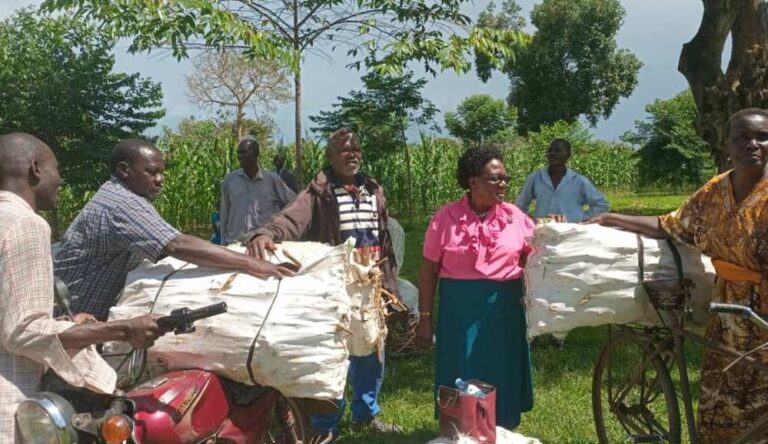
Balemezi further explained that the program will unfold in phases. “I’m training you first, and you will get these livestock, fish fingerlings, and bees in the few months to come. But the first thing we are giving you is cassava stems and potato leaves,” she disclosed before distributing the initial agricultural inputs.

The PAD program, established in 2000, acts as a central hub for pledges made by the President to combat poverty and boost wealth creation across Uganda.

Currently operational in 38 districts, including Bukono Constituency, the program provides beneficiaries with essential resources like livestock, fish fingerlings, and bees to kickstart income-generating activities.

“I congratulate the people of Bukono for the President granting this program to reach Bukono, as we will provide cows to every person during my tenure here,” Balemezi affirmed, emphasizing the long-term commitment to empowering the community.

The program adheres to five core pillars: home preparation, enterprise selection, and comprehensive beneficiary preparation before livestock distribution.

As a preliminary step, Namuganza’s constituents will receive cassava stems and potato leaves, both rich in calcium, to improve their overall health and well-being.

Balemezi issued a strong caution against potential detractors. “I warn politicians not to misguide people with negative attitudes about this program, and residents should not be misled because this program aims to improve your livelihood,” she stated, urging the community to embrace the opportunity.

Representing Namuganza at the beneficiary orientation sessions organized in each sub-county, Dorothy Nantambi echoed the call for participation. She encouraged residents to fully embrace the program to realize the Minister’s vision of lifting them out of poverty.

The initial beneficiaries of the cassava stems and potato leaves expressed their profound gratitude to Namuganza and called upon the President to continue supporting her.

They lauded her dedication to mobilizing support for the National Resistance Movement (NRM) within the constituency and the entire district.

“Minister Namuganza deserves to be unopposed because her services are unmatched,” they collectively asserted, highlighting her significant contributions to the community’s well-being.

The introduction of the PAD program, spearheaded by Namuganza, promises a brighter future for Bukono Constituency, paving the way for increased prosperity and a tangible improvement in the lives of its residents.

QUESTION: Is the National Resistance Movement government weaponising poverty against Ugandans?

0

By Oweyegha-Afunaduula

In a video lecture by Dr Howard Nicholas, a Sri Lankan economist and social scientist, Senior Lecturer in Economics at the International Institute of Social Studies (ISS) of the Erasmus University of Rotterdam, cited by Samuel Phillips (2024), made this statement below about poverty in Africa:

“Africa, historically, sub-Saharan Africa has been fundamental to the global prosperity of the advanced countries, and Africa has a role to play. It has a role as a raw material producer.We will not allow sub-Saharan Africa to escape that.

We do everything to keep Sub-Saharan Africa where it is also impoverished. It’s absolutely vital for the prosperity of everyone else. So, let’s get clear about that. Okay. And this means all the economic structures, all the global institutions and the economics we teach, everyone is all designed to keep Africa exactly where it is.

Many decades after the colonialists granted African countries political independence, we remain mired in poverty. Poverty is the reason we care without giving. It is the reason we are pissed but act like we are not; it also explains why we behave like we have forgotten the pains we remember (Tete, 2020). 

Poverty is a convoluted problem which the World Bank defines as ‘living on less than $1.90 a day, or about $700 per year’, which puts one tenth of the world’s population below the global poverty line. Poverty is not entirely about surveying family income, income disparity, or the need for economic advancement. Poverty defines and alters everything about an individual’s reality (Tete, 2020).

Kefason (2019) argued that Poverty of the people is now a political weapon for politicians, and that because poverty is a weapon, most politicians would not want to be disarmed of this weapon. Therefore, if a country is to be great again, the people must take the weapon from the politicians by giving power back to the people. 

This is what makes the clarion call “People Power” powerful. It explains why those in power whose tool of control of the poor is poverty do everything possible to arm themselves against the poor and try to isolate people-sensitive people from the people.

Forget about NRM government’s use of guns and tear gas to weaponize itself against the people, mainly the poor.  Any government in Africa has many other ways through which to weaponise itself against the people. Poverty is the most formidable and most enduring weapon. However, the main or major way the NRM government has discovered to be most useful in weaponizing poverty against the people is through corruption of everything conceivable.

Embezzlement is the most depriving form of corruption. That is why in Uganda the President of Uganda is protecting the corruption industry against Ugandans.   Every day if you listen to the news in Uganda or sample discussions in social media groups, all you will be hearing is the millions or billions of shillings that is missing in one local government, ministry, agency, department, like Bank of Uganda or even shoddy deals in Parliament between the legislators and the Executive.

The Inspector General of Government (IGG), Bettie Kamya Turomwe, has failed to fight corruption in government because the President personally protects corruption against Ugandans. When the IGG wanted to use the lifestyle audit method, which worked so well in Singapore to eliminate corruption in the country, the President discouraged her, arguing it would discourage the corrupt from investing their loot in the country adding “Afterall they are stealing government money”! According to the IGG the country loses UGX 10 trillion every year to corruption. The overall result is that the absolute majority of Ugandans are not enjoying economic well-being.

When economic well-being becomes a threat toa dictatorship, poverty turns into a tool for oppression (Mansoureh Galestan, 2025). In Iran, a recent revelation by Masoud Roghani Zanjani, former head of the Iranian regime’s Planning and Budget Organization, has exposed a chilling strategy at the core of Iran’s ruling theocracy. 

According to an interview with Abdi Media on March 9, 2025, Roghani Zanjani disclosed that the regime’s Supreme Leader, Ali Khamenei, once told former President Akbar Hashemi Rafsanjani, “If people become prosperous, they will abandon religion.”

The statement is not a mere slip of the tongue; it is the key to understanding the Iranian regime’s systematic strategy of using economic hardship as a means of control. It sheds light on why, despite vast natural resources, Iran’s economy remains in a perpetual state of crisis. Under Khamenei’s rule, economic suffering is not an accident -it is a policy ((Mansoureh Galestan, 2025).

I am finding it difficult to delink President Tibuhaburwa Museveni’s strategy of using poverty as a tool o f oppression from what obtains in Iran. The right to a decent standard of living – including access to food, healthcare, and housing—is enshrined in Article 25 of the Universal Declaration of Human Rights. Yet, the NRM regime in Uganda, like the regime in Iran, has deliberate economic, health, social and land policies contradict these principles, keeping millions in a state of deprivation.

The truth remains that the identity of Africa in general and Uganda in particular is not that of poverty, backwardness, wars, chaos and the other stuff you hear in the news. The identity of Africa is that of great riches, ancient wisdom, mental and spiritual power (Samuel Phillis, 2024).

Africa is portrayed as poor, not because she is poor, but because those who benefit from the exploitation of her human and natural resources need a weapon or a falsehood that constantly reminds the African that all he needs is food, clothes and a place to hide his head from the elements (Samuel Phillips, 2024). The weapon or false hood is poverty. In Uganda President Tibuhaburwa Museveni has made poverty an everyday song.

A year before presidential elections, he uses it as a political weapon against his opponents, reminding the vulnerable that he is solving their poverty situation through Myooga, Parish Development Models and Operation Wealth Creation, yet he is constantly, persistently and perennially poverty against them, sinking them further and further in the abyss of poverty through sustaining corruption and entrapping them more and more in underdevelopment and the debt trap for power, wealth, domination and continuous exploitation.

At no time in the history of Uganda has a government borrowed from the international and domestic markets, ostensibly to fight poverty and develop Ugandans, as has the National Resistance Movement (NRM) government has. The External debt now stands at nearly 100 trillion shillings yet the borrowing virus is becoming more and more virulent.

As it borrows inscessantly, with no real evidence on the ground that poverty is being conquered and that Uganda and its people are being developed, the President of Uganda continues to try and convince all that Uganda’s economy is now a middle-income economy. That is precisely what he was doing in his national address on 5th June 2025.

There is no doubt that by just looking at the wealth of Busoga and Karamoja, Uganda is extremely wealthy. Yet the NRM government continues to falsely cast Karamoja and Busoga as the poorest subregions of Uganda. The constant, persistent questions are: Why does the wealth of Uganda continue not to be reflected in the lives of Ugandans? Why do we continue to be trapped in a deadly dept trap that show no promise of loosening itself around us?

Some thinkers in Africa and elsewhere continue to argue that we are poor because we are poor and because we are poor, we are poor.  Many continue to blame the colonialists for not allowing us to have leaders who can lead. Instead, they argue, we have authoritarian rulers pretending to be leading us out of poverty, yet they are benefiting from our poverty. Colonial and neocolonial strategies of exploitation and domination depend heavily on underdevelopment, creating a dual economy where a small elite benefited and still benefit from Western investments while the majority languished and continue to languish in poverty (e.g., Tochukwu Agu, 2024). Current poverty in Uganda is linked to past poverty mediated by the colonialists while the elite as their agents.  In recent years, Chinese finance has slowly but surely replaced Western capital in sinking us deeper in poverty and dependency. There is increasing threat that we shall bequeath our wealth and assets to China after failure to repay our debts to her.

Let me emphasise. Today the politico-military elite in power in Uganda are busy preaching fighting poverty through such strategies as Myooga, Operation wealth creation and Parish Development Model, yet they are entrenching our colonial reliance on extraction of natural resources, thereby undermining all their efforts at fighting poverty.  They are extracting fish, gold, rare earth minerals, using foreigners such as Chinese and Indians, but the proceeds are not clearly reflected in the national budget and the natural owners of the resources are not benefitting at all.

It is also important to examine the way the regime in power recruits for its security organs. For a long time, President Tibuhaburwa Museveni has told young people that he has jobs in his security organs. Springer-Gould (2020) indicated that we could examine the weaponisation of poverty by looking at the way government recruits its military personnel, police personnel, paramilitary officers, prison warders and intelligence officers from schools of low-income communities where quality of education is low.

The policy of erecting seed schools in Uganda may be more for a steady supply of such people for security organs than affording every Ugandan opportunity to get education. As Mwenda once told us, there is nothing that President Tibuhaburwa Museveni does without political intent. Weaponisation of poverty is going on in Uganda along many dimensions, and the education dimension is a clear one, linked to militarisation of the country and its economy.

With this temporary mindset instilled within the military industry, a culture of “disposable” labor emerges and workers run the risk of being dehumanised or solely sought after for their physical capabilities (e.g., Springer-Gould, 2020). Recently so many top soldiers in Uganda were compelled to retire before their retirement time was due. Although the recent enaction of the UPDF Act 2025 assures them of huge retirement benefits, dehumanisation cannot be ruled out.

Therefore, the policies and practices are contributing to the entrenchment of income poverty among the indigenous groups of Ugandans. Effectively, the rulers are weaponising poverty in general and the economic disparities in particular to suppress resistance to bad governance and exploitation and, in essence, are maintaining, magnifying and transplanting the colonial legacy into the future for political gain and continued control of the indigenes of the country.

Understanding these relationships is critical to developing effective strategies for poverty alleviation that address the historical context of inequality. To combat poverty effectively, Uganda must implement policies that prioritise equitable resource distribution, revamp educational frameworks to enhance critical thinking and local knowledge, and eradicate the corruption that undermines national development. Only by confronting the colonial legacy can Uganda hope to break free from the cycle of poverty and achieve lasting economic empowerment (see also, Tochukwu Agu, 2024).

In summary, poverty is a vice. However, in Uganda in particular and the world in general power (financial and political) is using it against those who suffer the pain inflicted by the vice and who frequently lied to that they are being developed. Garikai Bonga (2023) has recently investigated the weaponisation of poverty in his pursuit of understanding the link between poverty and politics.If we are to have any form of self-worth which is becoming a luxury in Africa in general and Uganda in particular, then the elimination of extreme poverty must be the bedrock of any comprehensive development strategy of development, irrespective of the stakeholders developing the blueprint. Individually and collectively, the only way to be immune to the “weaponised poverty” is to be kitted in education, discipline and skills (Tete, 2020). However, the type and quality of education is critical. We shall benefit more if we embrace the new and different types of knowledge production, namely: interdisciplinarity, crossdisciplinarity, transdisciplinarity and extradisciplinarity (or non-disciplinarity).

We should organise, not agonise, against the use of economic hardship as a weapon to control the citizens (e.g., Mansoureh Galestan, 2025). Besides weaponised poverty is enslavement and robbery of our future by the elite in power. We should not be deceived anymore that anyone is working hard to pull us out of poverty. Enslavement and weaponised poverty go hand in hand. An enslaved people suffering from weaponised poverty belongs to the past, not present. Such people is the human waste of the 21st Century.

For God and My Country

Prof. Oweyegha-Afunaduula is a member of Center for Critical Thinking and Alternative Analysis

SAFE ROAD USAGE: Jinja embraces cycling as City leaders mark World Cycling Day

0

By Joseph Sooka

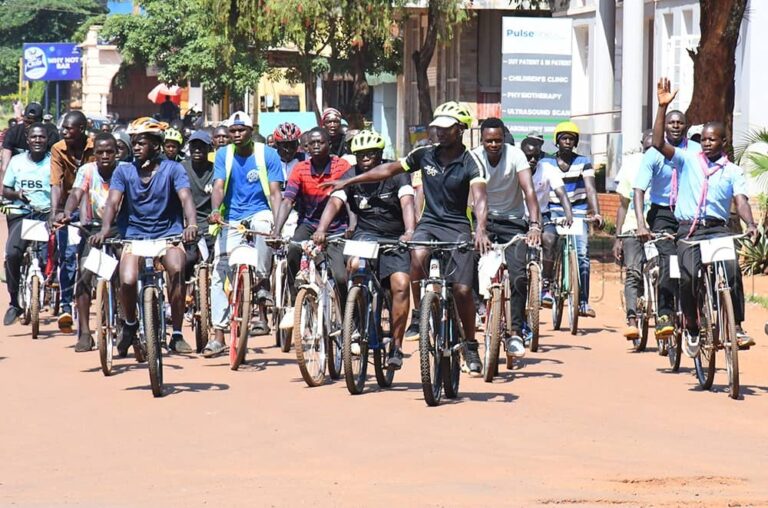
Jinja City is warming up to celebrate World Car Free Day 2025, an initiative that promotes safe cycling and a people-centered city. This celebration is the culmination of three years of research by Coop-Africa in partnership with Jinja City to promote safe cycling.

During a critical mass organized in Jinja, authorities stressed that the research was necessitated by the increasing safety threats posed by drivers and motorcycle riders who operate beyond recommended speed limits.

According to Marieke De Wild, Coop-Africa Programs Manager, 99% of cars and motorcycles operate beyond allowed limits, putting bicycle operators’ lives at risk. For instance, on Jinja Main Street, where the maximum allowed speed is 20Km/hr, drivers operate at around 35Km/hr and above.

“Ninety nine (99%) of cars and motorcycles operate beyond the allowed speed limit. This is really a threat on the roads,” Marieke noted.

To address this, some roads in Jinja City, such as Masese industrial area road and Jinja Namasagali railway line, have been mapped for renovation with bicycle lanes to increase safety for non-motorized transport. Additionally, solar-powered speed display screens will be installed to help reduce overspeeding.

“There is also installation of solar powered speed display screens along some roads in Jinja city, which displays the speed being used by a certain road user. This helps to inform such a person how to reduce the speed or maintain hence reducing accident possibilities,” she said. 

Harnest Nabihamba, Jinja City’s Environment Officer, welcomed the Car Free Day initiative, highlighting its benefits for good health, physical exercise, and clean air.

He encouraged parents to opt for bicycles as a mode of transport for their school-going children, emphasizing that bicycle usage promotes a friendly nature and good health.

“Bicycles are also commercial since they are little bit cheaper when compared to means of transport,” Nabihamba urged.

Edgar Kabaale, General Manager of Coop-Uganda, expressed his gratitude to all who attended the critical mass event, highlighting the significant role bicycles play in various aspects of life, including education, health, business, sports, and more.

In partnership with Jinja City Council, Coop-Uganda gears to commemorate this special day in September to recognize and appreciate the efforts of cyclists in promoting a carbon-free city.

The celebration is part of Jinja City’s efforts to promote a carbon-free city, with Coop-Uganda and Jinja City Council collaborating to recognize the efforts of cyclists.

CORRUPT SYSTEM: Fisheries Protection Unit Accused of Bribery and Illegal Fishing on Lake Victoria

0

By Bamutaze Sam

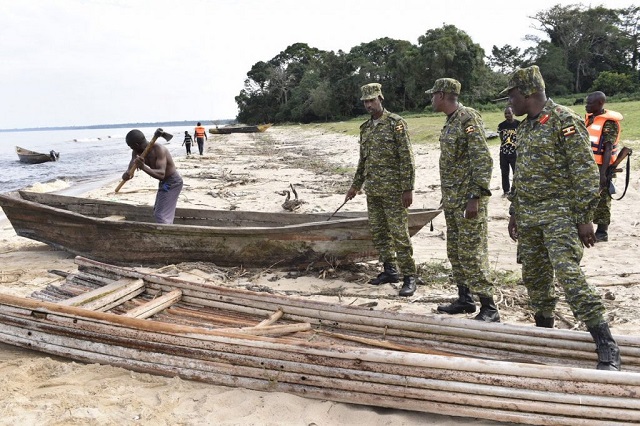
The Fisheries Protection Unit (FPU) is facing serious allegations of corruption, bribery, and participation in illegal fishing activities on Lake Victoria, according to local fishermen in Mayuge District.

These accusations paint a picture of a corrupt system that is crippling the local economy and undermining efforts to preserve the lake’s fish stocks.

Locals, led by Kwatulila Saida, an aspiring Member of Parliament for Bunya South in Mayuge District, have voiced their concerns, stating that fishermen are being forced to pay exorbitant bribes to the FPU in order to conduct their business.

Kwatulila, a member of the National Unity Platform (NUP), claims that fishermen are being charged between UGX 500,000 to UGX 1,000,000 every week just to be allowed to fish.

This financial burden, she argues, is contributing to the economic downfall of communities surrounding Lake Victoria in Mayuge.

“People are charged money by authorities to carry out fishing activities, especially in Bwonda Town Council, Nango, and Lubya in Malongo Sub County, leaving them with no hope for development,” Kwatulila explained.

The complaints go beyond simple extortion. Kwatulila alleges a multi-layered system of corruption where fishermen are targeted by multiple units of the FPU.

“If you pay officers from Bwonda barracks, and officers from Lubya barracks find you on the lake, you have to pay them too. This act has left many people with nothing to do since many don’t have money to bribe the officers.”

Even more disturbingly, the FPU is accused of facilitating illegal fishing practices. According to Kwatulila, “When you are caught with immature fish, you have to pay them, and after officers transport the immature fish to markets around Mayuge and sell them.”

This accusation suggests that the very unit tasked with protecting the lake’s resources is profiting from its destruction, directly contributing to the depletion of fish stocks and harming the long-term sustainability of the fishing industry.

These allegations are not new. In 2024, the Third Deputy Prime Minister and Woman Member of Parliament for Mayuge District, Lukia Isanga Nakadama, along with FPU officers and Mayuge district local leaders, visited Bwonda Town Council and Malongo Sub County, promising improvements to the system.

However, locals claim that the situation remains unchanged, highlighting a failure of leadership and a persistent culture of impunity within the FPU.

Kwatulila further accuses local leaders in Bunya South County of exploiting this situation for political gain, using the promise of reform as a recurring theme during election seasons. This suggests a lack of genuine commitment to addressing the issue and a perpetuation of the corrupt system for personal benefit.

The accusations against the FPU are serious and demand immediate investigation. If proven, they reveal a deeply entrenched culture of corruption that is undermining the local economy, destroying the environment, and eroding public trust.

A swift and transparent investigation, followed by decisive action against those found guilty, is crucial to restore integrity to the FPU and protect the future of Lake Victoria and the communities that depend on it.

The government must prioritize addressing these issues to ensure the sustainable management of Lake Victoria’s resources and the economic well-being of the people of Mayuge District.