Saturday, May 23, 2026
Home Blog Page 44

DO-OR-DIE: Busoga United face Arua Hill in relegation showdown

0

By Musa Kikuuno  

Full Weekend Fixtures

Saturday, June 7

Kigezi Homeboyz vs Paidha Black Angels

Sunday, June 8

Arua Hill SC vs Busoga United

Blacks Power vs Ntugasaze

Booma FC vs Gaddafi FC

Kaaro Karungi vs Buhimba United

Kataka FC vs MYDA FC

Kiyinda Boys vs Onduparaka FC

The FUFA Big League returns this weekend with thrilling fixtures lined up across the country, including a make-or-break clash for Busoga United as they travel west to face Arua Hill SC on Sunday, June 8, 2025.

Busoga United heads into the encounter with everything to play for. Positioned 13th on the 15-team log with 26 points from 25 matches, the team faces possible relegation should they lose and results elsewhere—particularly from MYDA FC—go against them. A victory, however, could potentially lift them out of the danger zone, depending on how MYDA performs.

Arua Hill SC, only one position above Busoga United in 12th, has amassed 28 points and is not yet clear of relegation fears itself, adding more weight to the weekend’s showdown.

Head-to-Head: Busoga’s Upper Hand

Busoga United can take confidence from recent form against Arua Hill. The two sides have clashed three times since May 2023, and Busoga has come out on top in all three meetings. Most recently, on January 5, 2025, Busoga edged Arua Hill 2-1.

Prior to that, they secured a 1-0 win in September 2023 and a commanding 4-1 victory in May 2023. Of those victories, two came in the Premier League, while one was in the Big League, showing Busoga’s dominance across competitions.

Arua Hill’s last triumph over Busoga United dates back to December 12, 2022, when they claimed a narrow 1-0 win in the Uganda Premier League. Since then, the tides have turned, and Arua will be desperate to break their losing streak against the visitors.

Title Race Heats Up

At the top of the table, the title race is reaching boiling point. Buhimba United and Calvary FC are neck-and-neck with 48 points apiece. However, Buhimba has a crucial game in hand, giving them a slight edge and hopes of clinching the league title if they maintain momentum.

As the league enters its final stretch, fans can expect drama, determination, and decisive moments across all grounds. For Busoga United, the mission is clear—win or face the drop.

BABALANDA’S THANKSGIVING: Museveni returns to Buyende where unfulfilled NRM promises linger

0

By Moses Kintu

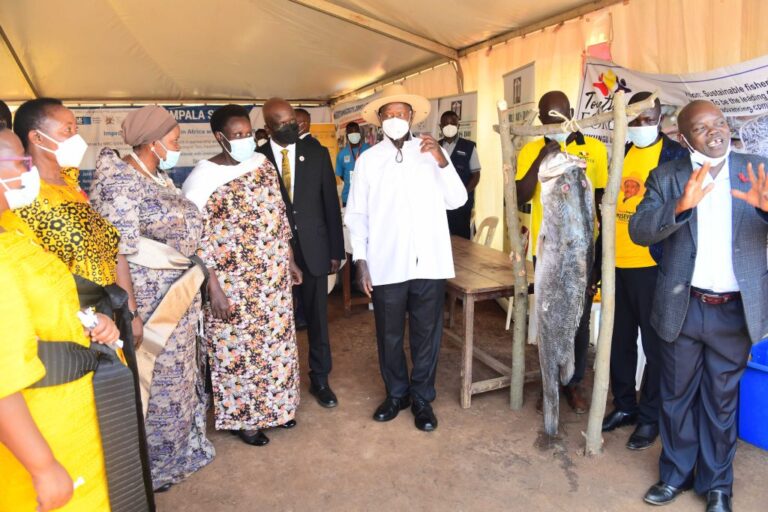
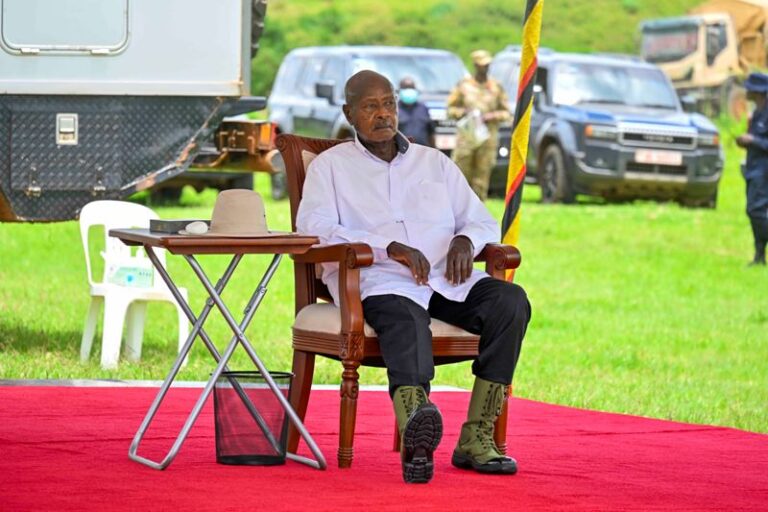
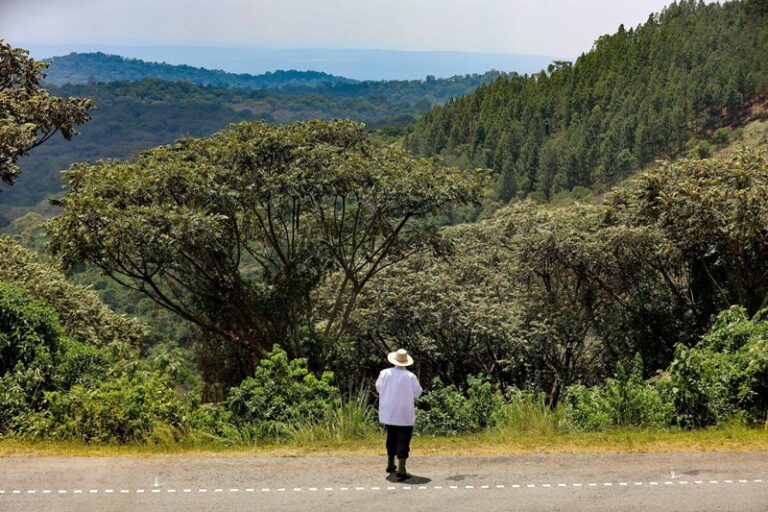
President Yoweri Museveni is slated to attend a thanksgiving ceremony organized by Minister for Presidency Milly Babirye Babalanda at Iringa Primary School in Buyende district tomorrow, 7th June, 2025. This visit marks the President’s return to Buyende just months after commemorating World AIDS Day in Bukungu.

While the event is ostensibly a celebration, it takes place against a backdrop of lingering skepticism and unfulfilled promises made by Museveni and his National Resistance Movement (NRM) to the people of Buyende.

For many residents, the President’s visits have become a recurring cycle: promises made, hopes raised, and ultimately, little tangible change on the ground. The upcoming Thanksgiving is sparking questions about whether this visit will be any different.

One of the most prominent unfulfilled promises is the construction of the road connecting Kamuli district to Buyende via Mbulamuti to Bukungu landing site.

This crucial infrastructure project has been repeatedly included in the national budget for years, yet construction remains elusive, leaving residents frustrated and hindering economic development in the region.

The situation isn’t new. During a similar Thanksgiving ceremony in February 2025 at Wesunire Primary School, organized to launch the Milly Babalanda Foundation, the Minister for Energy and Mineral Development, Ruth Nankabirwa, acknowledged the unfulfilled promises.

She urged the people of Budiope West, where Babalanda aspires to represent in the 12th Parliament, to rally behind Babalanda in the upcoming elections, promising that supporting her would ensure the NRM finally delivers on its commitments.

This linking of political support with the fulfillment of promises raises concerns about whether the residents of Buyende are being asked to trade their votes for basic necessities and long-awaited development.

While Babalanda’s efforts to bring attention and resources to Buyende are acknowledged, the continuous cycle of promises followed by inaction fuels cynicism.

Buyende is considered a stronghold for the NRM regime. The question now looming large is whether the NRM, under Museveni’s leadership and with the backing of figures like Babalanda, will finally translate these promises into reality.

Will the upcoming visit be another opportunity to make pledges that remain unfulfilled, or will it mark a turning point where tangible progress begins to address the needs of the people of Buyende?

Only time will tell if this thanksgiving will be a genuine celebration of progress or just another reminder of promises broken. The residents of Buyende are waiting, watching, and hoping that this time, the NRM will finally deliver.

KADAGA vs ANITA AMONG: Busoga leaders unite to back Kadaga in NRM CEC race amid intensifying political pressure

0

By Joseph Sooka

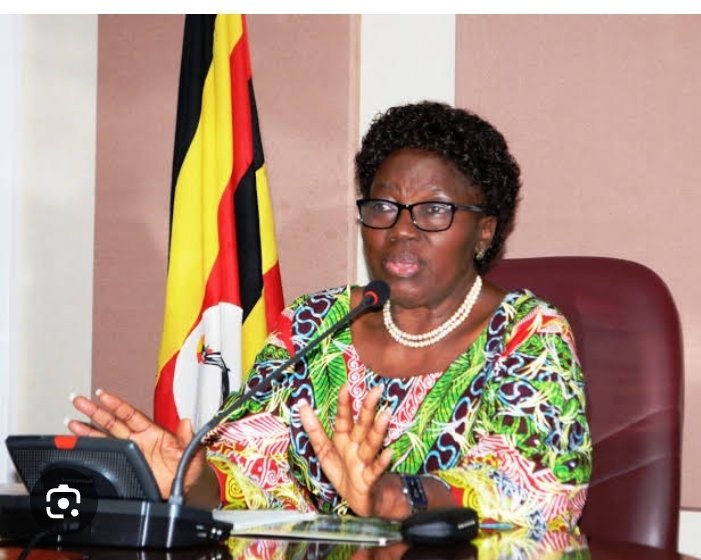
As political tension continues to rise within the National Resistance Movement (NRM) over the position of Second National Vice Chairperson (Female) on the Central Executive Committee (CEC), several leaders from Busoga region have publicly declared their unwavering support for Rebecca Alitwala Kadaga, the current office bearer.

A coalition of NRM stakeholders including Members of Parliament, district chairpersons, LC5 leaders, youth and women leagues, SIGs (Special Interest Groups) such as Persons with Disabilities (PWDs), and opinion leaders convened at the Civil Service College in Jinja City today, 04th june 2025, led by Luuka South MP, Steven Kisa Bakubalwayo, to express their commitment to ensuring Kadaga retains her position during the upcoming NRM Delegates’ Conference in August 2025.

While addressing the gathering, Kisa read a joint statement emphasizing Kadaga’s long-standing contribution to the NRM and Uganda at large.

“Kadaga has been a pillar for many across the country and especially in Busoga. She has served diligently in several key positions. We are gathered here today to reaffirm our support and rally behind her to retain her seat on the CEC,” said Kissa.

He pledged to “work tooth and nail” to solicit nationwide support for Kadaga’s continued leadership, arguing that her voice is crucial for women’s empowerment, regional representation, and the NRM’s internal cohesion.Bugabula North MP, John Taylor, questioned the legitimacy of those challenging Kadaga’s candidacy.

“I don’t know where some people get the audacity to contest against Mama Kadaga, who is a well-established figure in the NRM,” he remarked.

Similarly, Buzaaya County MP, Martin Mugabi Muzaale, expressed concern over internal divisions within Busoga.

“While other regions are throwing their weight behind Kadaga, we still have disgruntled voices within our own backyard. Kadaga is a brand—Busoga needs Kadaga, and Kadaga needs Busoga. We must support her by all means necessary. We don’t want Busoga to be left out of the CEC ‘cake’,” he added.

Newly elected NRM Chairperson for Kamuli District, Bazanya Mathew, who is also aspiring to represent Bugabula South, echoed his commitment to mobilizing support for Kadaga.

In a similar vein, Mayuge LC5 Chairman and Governor of Busoga Consortium for Development (BCD), Bishop Frank Tibagendeka, assured full backing from both the political and development fronts.

It can be noted that the race for NRM’s Second National Vice Chairperson (Female) is currently a two-horse contest between Rebecca Alitwala Kadaga, former Speaker of Parliament and current Vice Chairperson (Female) and Anita Annet Among Magogo, current Speaker of Parliament and Woman MP for Bukedea District.

This high-stakes rivalry has already caused factionalism within Busoga, with local groups branding themselves as “Team Mama” (for Kadaga) and “Team Mulamu” (for Among).

Observers suggest that the outcome of this contest will have major implications for both the regional balance of power within the NRM and national-level party dynamics, as both candidates carry significant influence and loyal followings.

As the August conference approaches, all eyes remain fixed on the unfolding political drama particularly in Busoga, where loyalty, legacy, and leadership are clashing at the heart of Uganda’s ruling party.

DECEPTIVE AGENDA: Presidentialisation of the opposition in Uganda

0

By Oweyegha-Afunaduula

Uganda has been politically independent since 9th October 1962 but it’s people remain largely politically undeveloped and politically illiterate. Politics is largely focused on accessing political office or power, money, resources and consumable good and services at the expense of others.

Political leaders have taken advantage to consolidate and retain power at all costs by ensuring that those who would provide alternative leadership are as divided as possible.

More critically important, the alternative political associations or political parties, are conducting their political business by dancing to the political tune being played by the incumbent President, whom they have let to set his own political agenda unchallenged.

The Opposition leaders no longer concentrate on renewing political leadership in their own parties or the country. Or else they concentrate on fighting each other within their parties, and seem to hate the word “Compromise”.

When they agree to disagree they spend time and energy forming new political parties, most of which do not direct their political bullets at the incumbent President but at their colleagues in the other parties.  

Some of them actually have ties with the top leaders in the ruling regime either politically or financially and see no reason why they should struggle to liberate the country.

I characterize what is going on in the political spectrum of Uganda and its Opposition as the Presidentialisation of the Opposition of Uganda”.

This might, therefore, mean that the politics of the Opposition begins and ends with President Tibuhaburwa Museveni. It could also mean the President has a lot of influence on the creation of new parties or the politics within existing parties.

The presidentialisation of the Opposition in Uganda could also mean that the opposition parties are increasingly focusing on the presidency as the primary target and symbol of their political power and influence. As a consequence, Opposition political leaders are:

1.Concentrating on winning the presidency. Efforts and resources are heavily invested in capturing the presidency, potentially overshadowing other important electoral contests or local governance issues.

2. Playing Leadership-Centric Politics whereby the opposition’s identity and messaging might become heavily reliant on the charisma, popularity, and leadership style of their presidential candidate, rather than on party ideology, policies, or grassroots organising.

3. Potentially neglecting other levels of governance. With a strong focus on the presidency, there is the danger that there will be less emphasis on building strong Opposition presence in parliament, local councils, or other governance structures, which are crucial for checks and balances, policy implementation, and representation at the grassroots level.

There is no doubt that this trend will  have long-term implications for Uganda’s political landscape, including how political power is contested, how policies are developed and implemented, and how democratic institutions function.

Already, as the Opposition diverts its attention and focus from liberation and change, the ruling regime has succeeded in designing and enacting policies and laws respectively that are violent and disempowering. It will take a very long time to de-presidentialise the Uganda political landscape in general and the Opposition in particular.

In the meantime both the regime in power and the Opposition will be burdens to the people of Uganda, meaningless and ineffective in terms of development, transformation, change and progress in a century of new knowledge and new communication technologies. The country will continue on the path of de-democratisation, hereditary militarism and political militarism. The dream of independence and sovereignty will never be realized if the trend continues. The real beneficiaries will be foreigners. In one sentence, This is reversal of independence, a process that has been on for the last 40 or so years

For God and My Country.

Oweyegha-Afunaduula is a member of Center for Critical Thinking and Alternative Analysis

VIOLENT LAWS: Uganda, the bitter country of the 21st century

0

I recently wrote an article “Violent policies violent laws in generating and sustaining violence in Uganda”.

 I wanted us to begin focusing on violence in the non-physical form so that we redesign our view of the national security budget, which currently emphasizes physical violence, to include non-physical violence.

I detailed the various forms of non-physical violence, which have greatly compromised the health and security of our population. However, I settled on violent policies and violent laws, which together with other physical and non-physical forms of violence have contributed to the bitterness of our people.

We have given poverty far more concern and nothing about the bitterness of the nation. I have received many responses to the article. However this one below from a seasoned  member of the Fourth Estate caught my attention:

“Society is increasingly becoming violent. Violence at individual level, family level, community level, state level. No sympathy and empathy. Ubuntu has collapsed. We look at each other as enemies and with suspicion. Hatred, bitterness, anger.

Our minds are toxic. The other day, someone posted a picture of Capt Francis Babu’s son soliciting for urgent support to have a heart transplant worth Shs 1.5bn. This attracted cold, callous mass cyber bullying…

the netizens celebrating Cedric Babu’s helplessness at ICU, and eventual death. The question is: How did we end up here? The country is bitter and deeply divided. What can be done to reverse this worrying trend?”

For God and My Country

Oweyegha-Afunaduula is a member of Center for Critical Thinking and Alternative Analysis

CATTLE THEFT: Nabirumba residents demand for improved security to safeguard livestock

0

By Moses Kintu

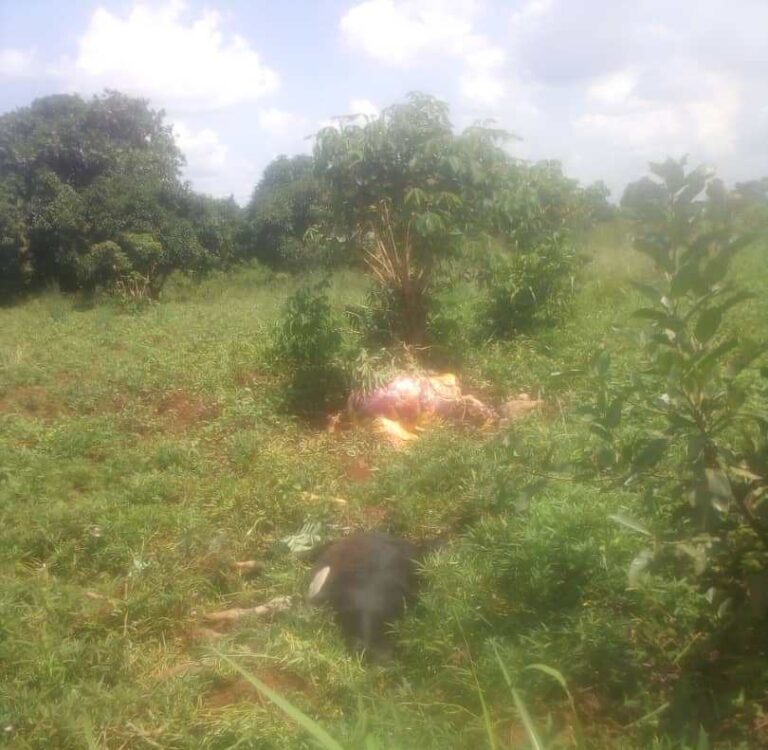
Residents of Nabirumba, a sub-county in Kamuli district, are living in fear as a wave of cattle theft sweeps through their villages. The rampant incidents, particularly in Butwale, Bukalu, and Buluta, have left farmers reeling and demanding immediate action from the government.

The alarming rise in livestock theft is causing significant economic hardship for the predominantly agricultural community. Families are losing their primary source of income and sustenance, leading to growing frustration and a sense of insecurity.

Paul Kyebanakolanga, the chairman of LC 2 Nabirumba 1, expressed his grave concerns in an interview with this publication. He made a direct appeal to the government, urging them to prioritize the safety and security of Nabirumba residents by bolstering police presence and resources in the area.

A key point of contention highlighted by Kyebanakolanga is the ineffectiveness of current police investigation methods. He specifically criticized the reliance on police dogs, claiming they are insufficient for tracking thieves and that evidence gathered through canine tracking is often rejected in court. “The police dogs are simply not enough,” he argued. “We need more sophisticated and reliable methods of investigation.”

“We are in desperate need of more security,” Kyebanakolanga stated. “Our people are losing their livelihoods, and we need the government to step in and protect us from these criminals.”

Echoing Kyebanakolanga’s concerns, Jacob Lwanga, the youth chairman of Nabirumba, added his voice to the call for increased security. “Our young people are afraid to invest in livestock farming because of the high risk of theft,” Lwanga explained.

“We need the government to take this issue seriously and provide us with the protection we deserve.” He further reiterated the inadequacy of police dogs in their current capacity, suggesting a need for improved training or the implementation of alternative tracking methods.

The cries from Nabirumba highlight a growing concern in rural Uganda regarding livestock theft and the capacity of law enforcement to effectively combat it.

Residents are pleading for a more robust security presence and a modern approach to investigation to protect their livelihoods and restore a sense of security within their community.

The pressure is now on the government to respond to these urgent calls and implement measures that will bring an end to the cattle rustling plaguing Nabirumba.

NEEDED CHANGE: Transitioning from environmental illiteracy to environmental literacy in Uganda

0

By Oweyegha-Afunaduula

What is Literacy?

Literacy, at its core, is the ability to read and write. More broadly, it encompasses the skills and knowledge needed to effectively communicate and understand information in various forms, including oral and digital contexts. 

This includes understanding and using language for various purposes, such as generating and expressing ideas, interacting with others, and participating in social, environmental, academic and intellectual activities. 

It includes the ability to think critically, reason from many angles, generate different or alternative analyses in newer ways, critique and engage in different discourses, even in Artificial Intelligence discourseand social media discourses, without disciplinary limitations.

These days one is adequately literate if one can integrate knowledge interdisciplinarily, crossdisciplinarily, transdisciplinarily, extradisciplinarily or non-disciplinarily. Therefore, to be literate means to be able to transcend human-made barriers or borders in our brains, which limit our thinking and make it narrow, and go beyond simplicity towards embracing complexity.To this end, adequately literate people despise simplicity and value complexity.

Types of Literacy

There are types of literacy such as reading and writing literacy, numerical literacy, financial literacy, social literacy, economic literacy, digital literacy, health literacy, cultural literacy, spiritual literacy, ethical literacy, moral literacy, media literacy, emotional/physical literacy, ecological literacy and environmental literacy. 

We can talk of critical thinking literacy, cortical reasoning literacy, critical reading literacy, critical writing literacy, critical analysis literacy, critical discourse literacy, Artificial Intelligence literacy and social media literacy.

We can also talk of disciplinary literacy, interdisciplinary literacy, crossdisciplinary literacy, transdisciplinary literacy and extradisciplinary or non-disciplinary literacy. All these types of literacy, apart from disciplinary literacy, enable the ones that possess them to integrate and generate knowledge in different ways. Those who can do that are not slow thinkers or narrow-minded people, and they love knowledge or generating knowledge to produce new knowledge, without fear of being criticised or challenged. They enjoy producing new ideas or theories in the market place of ideas and theories. They do not hesitate to venture into restrictive social political or intellectual environments. Let me say a little about each of these different literacies.

Disciplinary Literacy

Disciplinary literacy is the ability to preserve, multiply and ward off critique of disciplinary cultures from outside the disciplines. Disciplinary literacy depends on how effective knowledge workers in a disciplinary culture can protect each other and discard those who do not fit in. The knowledge workers write for each other rather than for those outside the disciplines. They promote and reward each other as well as tame each other to socially survive in the disciplines.

Integrative Literacies

Unfortunately, the new integrative knowledge cultures and literacies of interdisciplinarity, crossdisciplinarity, transdisciplinary and extradisciplinarity (or nondisciplinarity are exposing its capacity to address the complex problems of the world and restricting the employability of disciplinary knowledge workers in a world of practice dominated by internet and artificial knowledge and requiring broader knowledge and more interaction between knowledge workers beyond disciplinary cocoons. They are helping to demystify disciplinary literacy

Interdisciplinary Literacy

Interdisciplinary literacy is the ability to critique disciplinary cultures and work effectively across disciplines.

Crossdisciplinary Literacy

Crossdisciplinary literacy is about understanding how literacy practices, including reading and writing vary across different academic disciplines. It is bout recognising that each field has its own unique way of communicating and representing knowledge. Instead of just general reading and writing skills, crossdisciplinary literacy focuses on how those skills are applied within specific subject areas like biology, history, etc

Transdisciplinary Literacy

Transdisciplinary literacy involves combining knowledge from multiple disciplines to address complex real-world problems, fostering a holistic understanding of the world beyond traditional academic fields. It emphasises collaboration, critical thinking, critical reasoning and the ability to engage with different perspectives and knowledge systems

Extradisciplinary Literacy (Or Non-disciplinary Literacy)

Extra disciplinary literacy in essence refers to the ability to effectively engage with knowledge, skills and methods that extend beyond the boundaries of a specific discipline or field of knowledge and practice. It is about understanding and applying knowledge from different areas, fostering a more holistic and interconnected approach to learning and problems. This literacy characterises or characterised our traditional indigenous African cultures before they were penetrated by colonialists.

All the different types of literacy have their opposites I could write an essay on each of these types of literacy illiteracy. However, in this article I want to focus on environmental literacy and environmental illiteracy; actually, on “Transitioning from Environmental Illiteracy to Environmental Literacy in Uganda”.

Environmental Literacy

Environmental literacy is crucial for understanding the intricate relationships between human systems and the natural world. It encompasses knowledge of ecological principles, environmental issues, and sustainable practices.

Some key aspects of environmental literacy include:

  1. Appreciating that we are part of and not apart from the environment.
  2. Appreciating that humanity is integral to the environment and that the environment is integral to humanity.
  3. Appreciating that the environment is not just physical but also non-physical, with four dimensions: ecological-biological (the physical), sociocultural (nonphysical), socioeconomic (non-physical) and time or temporal dimension (non-physical).
  4. Understanding that each dimension constitutes one-quarter or 25% of the total environment.
  5. Understanding that environmental problems arise when the equilibrium between the four dimensions of the environment is upset, or when humanity seeks to maximise benefits in one dimension at the expense of the others.
  6. Appreciating that the dimensions of the environment are not mutually exclusive but mutually inclusive and that they are also multidimensional.
  7. Understanding that most changes take place in the sociocultural dimension of the environment where our cultures, ethics, moralities, psychologies, knowledges, understandings, wisdoms, insights and spiritualities are located in relation to the total environment
  8. Understanding ecosystems, habitats, microhabitats, biodiversity, species distributions and extinctions, food chains and food webs, and biotic and nature rights.
  9. Recognising the impact of human activities on the environment in its different dimensions.
  10. Familiarity with the ideas of sustainability, sustainable practices and renewable energy sources.
  11. Awareness of the policy-making process, environmental policies and conservation efforts.
  12. Awareness of ideas such as environmental governance, environmental stupidity, environmental ignorance, environmental militarism, environmental education, environmental management and environmental conservation.
  13. Awareness of the linkages between culture and the environment and how these linkages maintain or sustain the biocultural landscapes, natural belonging and natural identities.
  14. Understanding how environmental learning, conservation and management can best be promoted by education if the social science territory, arts (or humanities) territory) and natural science territory of knowledge organisation and production are not delinked.
  15. Understanding the value of social science and political science in the conservation and management of the environment and nature.
  16. Understanding why continuing with stressing disciplines of knowledge (disciplinarity) and the way the produce knowledge and practice conservation and management of the environment and nature will never succeed in the enterprise.
  17. Recognising the success in conservation and management of the environment and nature will only be possible if our universities open up to the new and different strategies of knowledge production, namely: interdisciplinarity, crossdisciplinarity, transdisciplinarity and extradisciplinarity (non-disciplinarity) which maximise human interaction for conservation and management of the environment in that order.

When one is knowlegible, aware, concerned and ready to take action to promote all these different key aspects of environmental literacy, one is really adequately environmentally-literate. Unfortunately, today we lack the cadre of people active in knowledge production and engaged in environmental conservation and management that are adequately environmentally literate. It is worse among those who make policies to govern the environment.

We have to promote environmental literacy for everyone from bottom to top of society, and especially for those who say and manifest as leaders because all environmental problems and issues begin with the leaders and end with the leaders.

By promoting environmental literacy, we can empower individuals to make informed decisions and take action to protect the planet. We must work concertedly to ensure that we begin to have environmentally literate governance of not only the environment, nature, country and region, such as the Nile Basin region of Africa, but the whole Planet Earth; our only home.

Environmentally-literate governance refers to decision-making processes and policies that incorporate a deep understanding of environmental issues, sustainability, and ecological principles. This approach considers the long-term impacts of governance on the environment and prioritizes sustainable development. Environmentally-literate governance can lead to more effective environmental protection, sustainable development, and improved human well-being. It will definitely lead to changes in the military and political attitudes of leaders and rulers whose decisions, choices and actions are the primary causes of environmental decay and collapse.

The Key characteristics of environmentally-literate governance include:

  1. Understanding that the future of environmental conservation and management is and should be in the hands of current and future generations of the youth.
  2. Understanding that working to raise the environmental curiosity of the young people by ensuring they adequately interact with wildlife in the wild or in the zoos.
  3. Promoting Informed policy-making whereby environmental decisions are based on scientific research and environmental data, instead of the decisions, choices and actions of one person who happens to be the President of a country.
  4. Promoting sustainable resource conservation and management wherein governance prioritises conservation and efficient use of naturalresources.

3. Promoting environmental accountability wherein leaders and rulers are held accountable for environmental stewardship and their mistakes and failures to take appropriate actions to conserve and manage the environment wisely.

4. Promoting stakeholder engagement wherein environmental governance involves diverse stakeholders, including citizens, experts and communities.

In short environment literacy in its widest sense is what we need to meaningfully and effectively conserve and manage the environment in the 21st Century and beyond.

Environmental Illiteracy

Environmental illiteracy is the opposite of environmental literacy. It refers to a lack of knowledge, wisdom, understanding, insights and skills related to environmental issues, problems, concepts and challenges. It reflects narrowness of conception of what the environment is. It encompasses a deficit in the ability to make informed decisions about environmental matters, engage in responsible environmental behaviour and contribute to solutions for environmental problems, issues and challenges in time and space.

Key aspects of environmental illiteracy include:

  1. Lack of knowledgeA deficiency in understanding fundamental environmental concepts, ecological relationships, and the causes and consequences of environmental issues.
  2. Limited understanding of complex systems:Difficulty grasping the interconnectedness of environmental systems, the impact of human actions on ecosystems, and the complexities of environmental problems.
  3. Absence of skills for informed decision-making:Inability to analyze environmental information, evaluate different perspectives, and make reasoned choices about environmental issues.
  4. Reduced motivation for environmental action:A lack of awareness, concern, or understanding of the importance of environmental protection, leading to less engagement in pro-environmental behaviors.

Consequences of environmental illiteracy include:

  1. Reduced ability to address environmental challenges:Individuals may struggle to understand the urgency of environmental problems and the need for action.
  2. Limited engagement in environmental solutions:A lack of understanding and awareness can hinder participation in environmental initiatives and advocacy efforts.
  3. Inadequate support for environmental policies:People may be less likely to support environmental regulations and policies if they do not understand the need for them or the potential benefits.
  4. Increased environmental damage:A lack of environmental literacy can lead to unsustainable practices and behaviors that harm the environment.

It is because of environmental illiteracy:

  1.  That universities continue to retain or design environmentally-deficient disciplinary curricula and resist interdisciplinary, crossdisciplinary, transdisciplinary and extradisciplinary (nondisciplinary) curricula.
  2. That we continue to teach learners that we are apart from, not part of the environment.
  3. That we continue to design environmentally-illiterate policies.
  4. That we continue to govern the environment as if it is just for exploitation.
  5. That we continue to initiate projects and programmes in our environment that are environmentally illiterate.
  6. That we continue to burden our environment with genetically modified seeds
  7. That we continue to burden our environments with plastics, organic pesticides and herbicides and industrial fertilisers
  8. That we disconnect traditional cultures from the land and the lakes.
  9. That we continue to tolerate invasive nomadic pastoralists to extend their grazing systems into traditional cultural agroecological farming systems that are conservation-oriented.
  10. That we continue to militarise and are now over-militarising our environment.
  11. That we continue to deny humanity environmentally-literate governance of Planet Earth.

Transition from Environmental illiteracy to Environmental Literacy

It is getting too late for us to transition from environmental illiteracy to environmental literacy It is possible to transition from environmental illiteracy to environmental literacy. The transition can be achieved through appropriate environmental education designed to produce adequately environmentally-literate people as detailed in this article. Both formal and informal environmental education is necessary. Community engagement in environmental initiatives is important. It is necessary to ensure that time-tested strategies of community conservation and management, for example, through agroecological farming, are promoted where the environment gains immensely from community participation. Environmental education will gain immensely if curricula accommodate the strategy of analog forestry, which is a response to the truism that we cannot completely rediscover our past environmental-ecological-biological history. Oweyegha-Afunaduula (2025) stated that the idea of analog forestry needs to be integrated in school and university curricula because superior to other methods of regreening biocultural landscapes where natural forests were integral to the landscapes but have been receding because human activities.  The method can be used to restore our agroecological systems to enhance food security. However, if nomadic pastoral people from elsewhere continue to have a field day on our biocultural landscapes, the method won’t be applicable and our agroecological farming systems will continue to disappear. This will be confounded by the ecologically and environmentally empty socioeconomic models such as Myooga, Operation Wealth Creation and Parish Development Model, which only focus on financial and economic gains of the beneficiaries at the expense of natural ecologies and environments.

Conclusion

We must stop displaying environmental deception and begin to pursue environmental development, which takes in account all the dimensions of the environment in equal measure. However, one of the biggest problems facing a country like Uganda is the rise and rise of presidentialism whereby the President can involve himself in everything small and big at the expense of the environment, people and institutions. Unless we have an environmentally-literate institution of President, we are bound to continue moving more and more away from environmentally-literate environmental conservation and management to the detriment of our environmental future.Our environmental will continue to be increasingly rich in genocide, ecocide, ethnocide and intellectual death.

Critical thinking, cultural competency, the ability to meet challenges and navigate differences and stewardship of our environment are necessary to thrive on our fast-changing planet.

For God and My Country.

Prof. Oweyegha-Afunaduula is a member of Center for Critical Thinking and Alternative Analysis

DISTRICT DREAMS: Residents in Bukono beg Museveni to fulfill district status and road infrastructure promises

0

By Joseph Sooka

Residents of Bukono Constituency, Namutumba District, have issued a poignant reminder to President Yoweri Museveni regarding the long-standing pledge to elevate their constituency to district status.

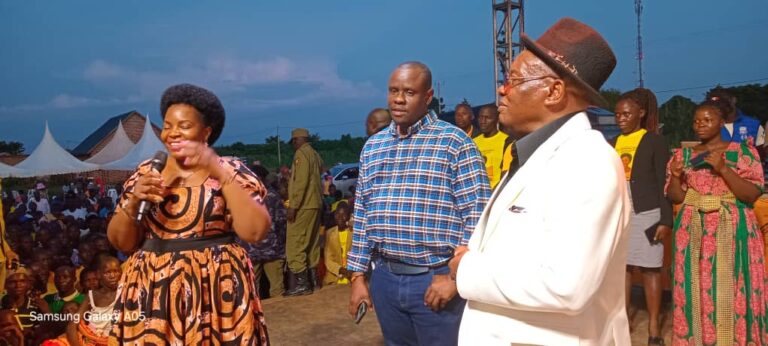
Led by Abdullah Kamede, the LC I chairpersons in this Constituency, the locals presented a comprehensive report to two key ministers: State Minister for Youth and Children Affairs, Balaam Balugahare, and State Minister for Housing, Princess Persis Namuganza, who also serves as the constituency’s Member of Parliament.

The report was submitted during the Ekibinuko Va Mundolo event at Ivukula Town Council headquarters, designed to enlighten youths about government initiatives, including the Youth Livelihood program.

The locals implored the ministers to petition President Yoweri Museveni to address their concerns, emphasizing that upgrading Bukono to a district would significantly enhance service delivery.

“We are perplexed as to why President Museveni has not responded to our pleas, despite our unwavering support in previous elections,” they queried. Furthermore, they urged the President to honor his commitment to tar the road connecting Busembatia to Bukono and Bukedi Sub-region, which would catalyze economic growth.

“The treacherous terrain of the Mpologoma Swamp renders it arduous to traverse to Palisa, resulting in exorbitant costs when traveling to Bukedi sub-region,” they lamented. Notably, Bukono Constituency is one of the largest in the district, comprising seven sub-counties.

Prior to the event, the ministers inspected a grain milling machine procured by youths in Nakyere Village, Kibale Town Council, utilizing the Youth Livelihood fund.

The youths, led by Paul Wadawa, expressed gratitude to the government for the funding but requested more advanced machinery and increased financial support.

“Our organization, the Walumbe Youth Livelihood Milling Group, has achieved notable success through the Youth Livelihood fund, including the acquisition of this grain milling machine and creation of employment opportunities,” they acknowledged.

“However, we require additional funding and modern equipment to augment our activities and benefit a larger youth population,” they added.

The duo ministers, Balugahare and Namuganza, were tasked with conveying the pressing challenges faced by the residents to the President for resolution.

Minister Balugahare, the chief guest, commended the youths and pledged to present their report to the President. He also warned of imminent investigations into technical personnel suspected of misappropriating government funds earmarked for poverty alleviation in Namutumba.

“There are glaring discrepancies in the Youth Livelihood Program in Namutumba,” he noted. “Upon my arrival, I requested the technical personnel to provide accountability records. They disclosed that since 2015, the government has disbursed Shs1.4 billion, with 100 million demanded from beneficiaries and 4 million for the government. When aggregated, the total demanded amounts to Shs104 million. I inquired about the whereabouts of the Shs1300M balance, and they claimed it was still pending collection from beneficiaries,” he revealed.

Consequently, he instructed the Resident District Commissioner, Fredrick Bangu, to furnish clear accountability reports forthwith. Failure to comply would necessitate a formal referral to General Isoke of the anti-corruption unit for thorough investigation.

Minister Namuganza, the guest of honor, stated that upon his return to Busoga, President Museveni intends to engage with youths and gain insight into the challenges they face. She highlighted that this meeting precedes the President’s visit.

“The President has entrusted Minister Balugahare with the task of evaluating youths who have judiciously utilized government funds to establish lucrative ventures,” she explained. “We will subsequently report back to President Museveni and collaborate with youths in Busoga to identify avenues for addressing pressing challenges,” she added.

Moreover, she commended her constituents for their unwavering support for President Yoweri Kaguta Museveni and encouraged them to maintain their allegiance.

BOOSTING ACADEMIC EXCELLENCE: Kyabazinga installed as Chancellor of Lubega Institute of Nursing and Health Professionals

0

By Joseph Sooka

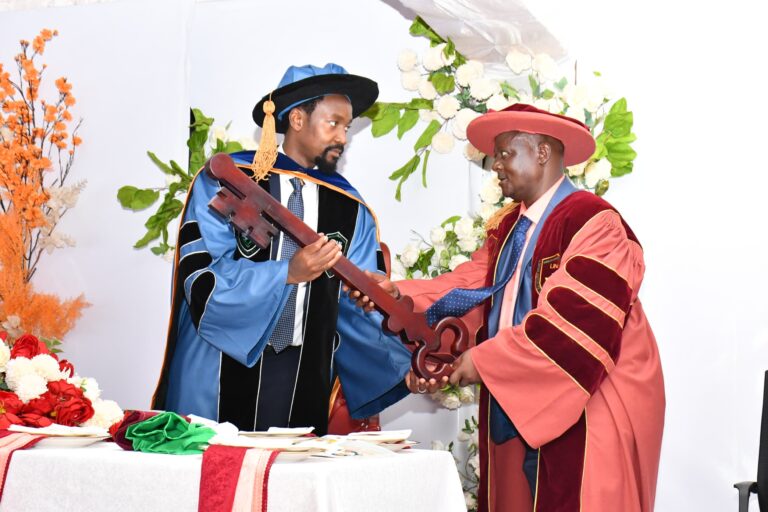
Issebantu Kyabazinga of Busoga, His Majesty William Gabula Nadiope IV, has been installed as the first chancellor of Lubega Institute of Nursing and Health Professionals.

The Kyabazinga was installed during a colourful ceremony at the institute in Busei village, Iganga Municipality, on May 30th, 2025.

During the installation event, the Executive Director of Lubega Institute of Nursing and Health Professionals, Prof. Dr. Lubega Muhamadi, who is also Busoga Kingdom’s 1st Deputy Prime Minister, handed over artefacts of the institute, the mace and chancellor medallion to the Kyabazinga.

In his remarks, Prof. Dr. Lubega said the Monarch’s installation as Chancellor marks a new chapter in his commitment to institutional excellence, health development, and the empowerment of Uganda’s next generation of professionals.

“His rare blend of traditional legitimacy, academic distinction, and international advocacy makes him an exemplary figure in African leadership, hence his nomination as Chancellor of Lubega Institute of Nursing and Health Professionals,” said Prof. Lubega, who is also the national chairperson of the Uganda Muslim Supreme Council (UMSC). 

In his inaugural speech, His Majesty William Gabula Nadiope IV remarked that during his tenure as a chancellor, his focus shall be on guiding the institution’s strategic direction, ensuring that they boost academic excellence and promote its overall well-being.

“This will entail providing leadership and overseeing our institute’s governance in addition to acting as a bridge between the institution and external stakeholders,” he said.

“However, teamwork, unity of purpose, and transparency should be our yardstick in realising all our wishes and aspirations,” the Monarch added.

Busoga Kingdom’s Prime Minister Dr. Joseph Muvawala extended appreciation to Prof. Dr. Lubega for a job well done for the institute to be worthy to have a chancellor who is the Kyabazinga of Busoga.

Muvawala appreciated the team they have worked with to make Busoga what it is and personally thanked the Luwangula family for a job well done in ObwaKyabazinga Bwa Busoga.

He thanked the Kyabazinga for accepting to lead the academic institution and lastly committed that they shall use their offices and power to ensure that the institute turns into one of the best medicine universities in the Country.

Present at the event were Issabalangira of Busoga and Menhya of Bugweri Chiefdom, Sam Nkuutu, Kisiki of Busiki Chiefdom, Nkono of Bukono Chiefdom, and Luba of Bunha Chiefdom, among others.

Busoga Kingdom Ministers present included Kyabazinga Affairs Minister Owek. Yudaya Babirye, Constitutional Affairs Minister Owek. Alex Luganda, Minister of State for Finance Owek. Ivan Kiirya and Minister of State for Education Owek. Nasabu Nantale.

MATHEW BAZANYA: New Kamuli district NRM Chairperson vows to revamp and protect party from opposition encroachers

0

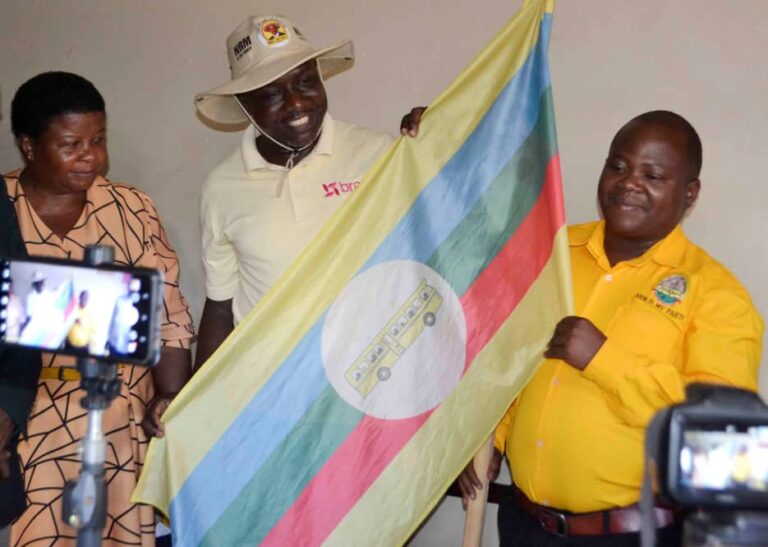
Kamuli district’s ruling National Resistance Movement (NRM) chapter has a new leader at the helm, with Mathew Bazanya taking over as the district chairperson. Tasked with uniting a party fractured by recent elections and dwindling support, Bazanya faces a significant challenge: to rejuvenate the NRM in Kamuli and reclaim its dominance in the face of rising opposition influence.

The handover ceremony, held at the Party Offices in Buwenge Empya, saw Resident District Commissioner (RDC) for Kamuli, Rose Birungi, officially charge Bazanya with his mission. Emphasizing the vulnerability of the party in the Busoga region, Birungi urged the new team to safeguard it from “poachers” and reignite its popularity.

“You come at a time when Busoga is in the spotlight for infiltration by opposition,” Birungi stated. “The recent elections have slightly resurrected factions and political emotions leaving the party members shaky and prone to the lurking eagles ready to recruit the frustrated lot. So, it is your first challenge to hold the party together.”

In his maiden acceptance speech, Bazanya laid out his plan to bridge the existing divides within the party, expand its membership base, and ensure the effective implementation of the NRM manifesto. He promised a proactive approach driven by fresh ideas.

“We come on board with fresh ideas, pro-active methods of work and having had the opportunity to be told face to face about the party weaknesses, we shall constantly, collectively and passionately serve it to the satisfaction of the grassroot member,” Bazanya vowed.

He emphasized the importance of reaching out to those who lost in the recent elections, leveraging the experience of veteran leaders, and building upon existing party programs while upholding the vision of the party’s founding father, President Museveni.

Acknowledging the challenges ahead, Bazanya identified waning party support, infiltration by the opposition, and the high expectations of the people as key obstacles.

“We are aware, vigilant and wary of the waning party support, infiltration from the political wave of opposition and the high expectations of the people and trust our team these are the driving gears, potholes, humps along our road as party,” he explained.

Looking ahead, Bazanya highlighted the upcoming Central Executive Committee (CEC) elections as a critical moment for the party. He passionately rallied support for the First Deputy Prime Minister and Woman MP for Kamuli, Rebecca Alitwala Kadaga, emphasizing her importance to the region.

“Without mincing words or hiding allegiance, Kamuli and Busoga must remain the home base for our party torchbearer Mama Kadaga and we are committed to supporting her full gear and extraordinary back up because without her, at the national kitchen we remain orphaned. Nothing for us Busoga without her period,” Bazanya declared, underscoring the region’s unwavering commitment to Kadaga.

Bazanya’s appointment marks a pivotal moment for the NRM in Kamuli. His youthful energy, commitment to unity, and clear vision for the party’s future offer a beacon of hope for revitalizing the NRM’s position in the district and the wider Busoga region.

The coming months will be crucial in determining whether he can successfully navigate the challenges ahead and deliver on his promises to revamp the party and restore its strength.