
Friday, May 22, 2026
Home Blog Page 42

SOLDIER KING: How Uganda Is heading towards a new monarchised military

0

By Oweyegha-Afunaduula

Uganda is a country ever in transition just like all systems that are dynamic should be. There was a time when the country we now call Uganda was just a conglomeration of self-governing traditional-cultural nations, namely Acholi, Ankole, Buganda, Bugisu, Bukedi, Bunyoro, Busoga, Karamoja, Kigezi, Lango, Moyo, Sebei, Teso, Toro, Rwenzururu and West Nile.  They traded with each other through barter trade. There was nothing called tribalism then. This came with the British colonialists, who simply transplanted it for use as a colonial tool of divide and rule for their political gain. 

The colonialists strategised to bring all of them under one political entity they called British Uganda Protectorate, which persisted for 70 years. This was in 1962, the year the colonialists gave us political independence, converted to the Commonwealth Realm of Uganda (CWRU), a recognition that what they were leaving behind as a multi-nation country, or mega-country, was many different traditional nationalities; not one. A British Governor-General ruled CWRU on behalf of the Monarchy of England. Its military, called Kings African Rifles (KAR) was, therefore, a monarchized military. It belonged to the Monarchy of England.

In the independence constitution they conceived for their creation (CWRU) -the Uganda Constitution 1962 – recognised the traditional kingdoms of Ankole (Obugabe), Buganda (Obwakabaka), Bunyoro (Obukama) and Toro (Obukama). These were like subkingdoms of the Monarchy of England, not unlike those of Scotland, Wales and Ireland.

The independence constitution also created the Territory of Busoga (Obwakyabazinga), which was a quasi-kingdom. Initially, the British colonialists reduced Busoga to district status, although the authority that welcomed them at Nnenda Hill in 1894 was a Chwezi King of Busoga. The rest of the traditional nation states (except Rwenzururu, which was enforced into the Kingdom of Toro)were reduced to District status.

This was the political status quo on October 9 1963, when CWRU was renamed Uganda, and its governance placed in the hands of an Executive Prime Minister, Apollo Milton Obote, and a ceremonial President, Sir Edward Muteesa II, and ceremonial Vice-President, Sir William Wilberforce Kadhumbula Gabula Nadiope II.

Unfortunately, the Uganda Constitution 1962 was internally destabilising as it created power tensions and stresses between the centre and the peripheral power units, particularly the Kingdoms. It was a matter of time before the stresses and strains, especially between the centre and Buganda, resulted into a rather bloody transition in Kampala. Historical accounts indicate that the President of Uganda enlisted 5 of the Kabaka Yekka/Uganda Peoples Congress (KY/UPC) and his own Vice-President to overthrow the nascent government – which was of course treasonable. A governance-leadership crisis developed in early 1966. The Ministers were arrested, the President run off to exile and the Vice-President also fled the country. So, Obote remained alone to govern the country with his small number of Minister. He quickly organised to make a new Constitution -Uganda Constitution 1966. This did not abolish Kingdoms nor constitutionalise the Republic of Uganda.The Uganda Constitution that abolished kingdoms was the Uganda Constitution 1967, which formally abolished the traditional kingdoms and the Kyabazingaship of Busoga, and declared Uganda a republic.This move abolished the office of Prime Minister, consolidated Obote’s power and transitioned Uganda towards a more centralized system of government, with an all-powerful President. 

Obote has been accused of introducing the military in the political governance of Uganda, but this is not true. He inherited a system at independence, which was militarised. Most of the governors of Uganda had a military background. This was also true of the Provincial commissioners, District Commissioners and Police Commanders. Political militarism was what drove colonial rule in Uganda. The mistake Obote committed was to resuscitate the colonial methods of governance in the time of political crisis and retain it up to 25 January 1971 when his Army Commander, Idi Amin Dada removed him from power, thereby ushering in the era of military rule with civilians playing second fiddle to the military as soldiers dominated civilian spaces.

This status quo obtained until 1979 when militarised groups of Obote (Kikosi Maalum) and Museveni (Front for National Salvation) together with the Tanzania Peoples Defense Forces (TPDF) removed Idi Amin from power under the aegis of Uganda National Liberation Front/Uganda National Liberation Army (UNLF/UNLA). UNLA was essentially a loose association of Kikosi Maalum and Front for National Salvation. Deceptively, civilian rule was restored, with Yusuf Lule as President for 3 months and Binaisa as President for 11 months. However, the real power of decision-making lay with UNLA’s Military Council chaired by Paul Muwanga with Yoweri Museveni (now Tibuhaburwa Museveni). as vice-chairman. Yoweri Museveni had another power centre within the UNLF/UNLA set up as the Minister of Defense. As Minister of Defense, he was the political head of the Ministry of Defence and also of UNLA’s Military Council, which also included Tito Okello and Oyite Ojok.

Civilian rule was continued under Obote II regime, backed by UNLA but the former Minister of Defense, who stood for the post of President (as Uganda Patriotic Movement) , alongside Mayanja Nkangi (Conservative Party), Obote (Uganda Peoples Congress), Paulo Sssemogerere (Democratic Party), immediately militarily challenged the civilian of Obote who had been declared winner of the 1980 elections by the Uganda Electoral Commission. He claimed the Electoral Commission had rigged the elections in favour of Obote, yet in his view, Ssemogerere Democratic Party had worn those elections. He withdrew his FRONASA contingent from the UNLA soon after the elections, formed it into Popular Army (PRA). He started fighting UNLA, of which he was a member, but now a deserter.  He linked his PRA with Yusuf Lule’s Uganda Freedom Fighter (UFF) to form National Resistance Movement (NRM) and its military wing (National Resistance Army or NRA).

The military strategy was to ensure that the Obote regime did not settle in leadership to deliver goods and services to Ugandans. The strategy lasted five years. It was helped by internal conflicts between the Acholi and Langi in the UNLA and the eventual overthrow of the Obote regime by the Acholi led by Tito Okello and Basilio Okello on 27July 1985. That effectively marked the end of civilian rule in Uganda and the beginning of military hegemony again, which has lasted for more than 40 years, under Musevenism.

The Tito Okello Military Junta was overthrown by the NRM/A on 25 January, 1986 following the collapse of the arap Moi brokered Nairobi Peace Talks between the Tito Okello Military regime and the Yoweri Museveni rebel NRM/A.  Yoweri Museveni did not honour the agreement between Tito Okello and himself and continued to fight the forces of Tito Okello in the Luwero Triangle of Buganda. When he was sworn in on 26 January 1986 as the new President of Uganda, he declared that his was not just a mere change of guards but a fundamental change.

Forty years on President Tibuhaburwa Museveni has shown that he did not lie when he said his was a fundamental change, not just a mere change of guards. He has been able to reduce civilians to subordinates of the NRA, which he constitutionalised as Uganda Peoples Defense Forces (UPDF) in the new Uganda Constitution 1995 whose making he was the main architect of. He has effectively presided over the military capture of all the civic spaces and their militarisation. That constitution reduces former kingdoms and the Kyabazingaship of Busoga to mere cultural institutions without political power, and does not mention the words King and Kingdom.

Environmental militarism, hereditary militarism, political militarism and electoral authoritarianism have been interwoven in one web of military superiority over civilians, completely excluding the civilians from effective leadership and governance of the country.  Civilians are given positions that carry no power and authority but render them just labouring slaves of the military autocracy that has been growing and mushrooming in Uganda to the detriment of institutional survival under specific policy and legal regimes.

Military autocracy, also known as a military dictatorship, is a form of government where power is held by the military, either by a single leader (a strongman) or a group (a junta). These regimes are characterised by strongarm tactics, censorship, and a lack of democratic processes. In the current Uganda everything begins with President Tibuhaburwa Museveni and ends with President Tibuhaburwa Museveni. The military’s control over the government and civilian population is a key feature that is evident from top to bottom. To ensure that this is the case well in future, the unity of the NRM and UPDF (formally NRA) has persisted and become consolidated, lacking no resources because the NRM caucus in Parliament ensures that public funds sustain that unity at the expense of public goods and services. This explains why everyone prefers to quit everything else and get absorbed in the NRM/UPDF structure: Money, goods and services that would otherwise be for the common good go to them.

One flourishing school of thought thinks, believes and is convinced that what NRM/UPDF is doing everything possible to carry Uganda forward to a new monarchized military rule in Uganda with a soldier King not unlike what was the case in France during the reign of self-made Emperor Napoleon Bonaparte; Central African Republic during the reign of self-made Emperor Babtiste Bokassa; and what obtains in the Kingdom of Thailand.

A monarchised military” refers to the close, mutually beneficial relationship between the monarchy and the military in certain countries, particularly Thailand. This relationship often results in the military being heavily influenced by the palace and using its influence to maintain the political status quo. Where the leadership and governance of a country is in the hands of a family it is much easier for a monarchized military to evolve.

The term monarchised military was introduced by scholar Paul Chambers, using the Thailand model. Chambers (2024) has recently explained the nexus between the monarchy and the military. Together they have dominated the Thai political landscape.Chambers also talks about the impact of the monarchised military on the lèse-majesté.Lèse-majesté, often translated as “insulting the monarchy,” is a crime against the dignity of a ruling head of state or the state itself. It’s a concept that’s been a part of legal systems in various countries, particularly those with monarchies or strong symbolism attached to the head of state, such as Uganda. lèse-majesté laws can be enacted and evoked to detain and imprison activists and human rights defenders that may challenge the Monarchised military.

Although the school of thought mentioned in this article thinks, believes and is convinced Uganda is steadily moving towards a monarchised military with a soldier king, it is time which will tell. The school of thought argues that the recently enacted UPDF Act 2025 is a step in the journey towards a monarchised military and soldier king in Uganda. According to the school of thought, there is a cartel of repressive laws and others can be enacted to ensure that protests against such an eventuality are resisted by the regime, which retains the term resistance to itself and will fiercely move to militarily control civilians who may resist the eventuality.

The Ten Billion Dollar question is: If the NRM regime succeeds in converting the UPDF into a monarchised military in our lifetime, will it be a resilient monarchised military (e.g., Chambers and Waitoolkiat, 2017) and can it evolve beyond domestic interference, institutional corruption and personal gain (e.g., Cogan, 2023) all of which bog our military currently?

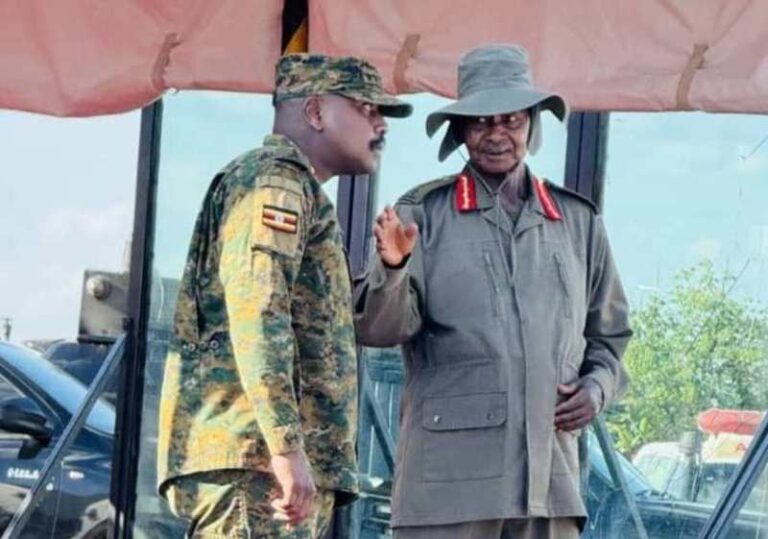
Just like is the case with the Thai military, the UPDF maintains a close interdependence with the First Family and a history of recurrent extra-constitutional interventions in domestic politics, particularly in elections wherein electoral authoritarianism is the rule rather than the exception. A culture of greed, corruption, and self-enrichment pervades the armed services, often sidelining professionalism and institutional integrity in favor of personal ambitions. Again, like is the case in Thailand’s military, Uganda’s military faces continuous and unaddressed challenges, with security-sector reform and modernisation efforts frequently disrupted by influential military elites, especially the President who is the Commander-in Chief, and Muhoozi Kainerugaba, who is the Chief of Defense Forces (CDF), seeking to assert control. We have seen high-ranking military officers exceeding their authority, engaging in activities that are ostensibly exploitative and detrimental to the country’s external relations. Some are reportedly engaged human and organ trafficking on the globe for personal gain.

For God and My Country

Prof. Oweyegha-Afunaduula is a member of Center for Critical Thinking and Alternative Analysis
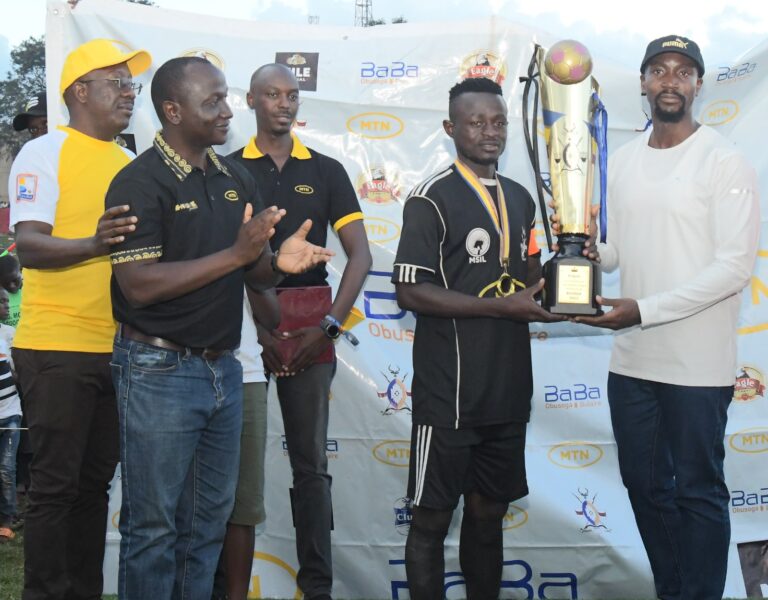
UNENVIABLE TASK:  Bukooli Namayingo faces uphill battle as vacant committee threatens MTN Busoga Masaza Cup 2025 hopes

0

By Musa Kikuuno | BusogaTimes.com

As the anticipation builds for the kickoff of the MTN Busoga Masaza Cup 2025, Bukooli Namayingo finds itself in a precarious position. In a shocking turn of events, the team is currently operating with a virtually empty committee, leaving CEO Ivan Esau as the sole remaining figure. This unexpected leadership void casts a significant shadow over their preparations and raises serious concerns about their prospects in the upcoming tournament.

Speaking exclusively to Busoga Times, Esau confirmed the mass exodus following their disappointing early exit from the 2024 edition. “We are now looking at recruiting new committee members. The majority left their roles immediately after our last match of the last edition,” Esau explained. “It’s only the CEO position being technical that’s filled by me. All other positions are vacant.”

This internal crisis couldn’t have come at a worse time. With the organizing committee for the 2025 edition already underway, and Esau himself appointed to the central planning team, the pressure is on to quickly rebuild a comprehensive support structure for the team.

The vacant positions are critical for the smooth functioning of any competitive team and include vital roles such as Team Manager, Head Coach, Assistant Coach, Team Doctor, Physiotherapist, Media & Communications Officer, Logistics Coordinator, Welfare Officer, and Technical Advisor. Filling these roles with capable individuals will be crucial if Bukooli Namayingo hopes to make a meaningful impact on the tournament.

The team’s current predicament stands in stark contrast to their recent history. In the 2024 edition, Bukooli Namayingo languished at the bottom of Group Kagulu, overshadowed by Butembe and Buzaya. With only four points secured from four matches – a single win, a draw, and two defeats – they failed to progress to the knockout stage. The defining blow came in their final group match, a 1-0 defeat to Butembe in Budondo, sealing their fate and marking the end of their season.

This performance was a bitter pill to swallow for the team, especially considering their glorious triumph in 2022. That year, Bukooli Namayingo etched their name in Masaza Cup history, lifting their first-ever trophy after a hard-fought 1-0 victory against Kigulu in the final. This remarkable achievement now feels like a distant memory, overshadowed by the current internal turmoil.

This year, the focus will not just be on Bukooli Namayingo’s performance on the pitch, but also on their ability to overcome this significant administrative challenge. The team is facing a race against time to assemble a competent and dedicated committee that can guide them through the tournament.

Bukooli Namayingo’s internal restructuring will undoubtedly be one of the most closely watched stories in Busoga Masaza Cup football. Can the former champions rise from the ashes of disarray and rebuild a competitive team? Or are they destined for another year of rebuilding, struggling to recapture the magic that once defined their Masaza Cup journey? Only time will tell.

The list of recent champions continues to grow, showing how competitive the tournament has become:

2016: Bukooli North beat Bunha

2017: Butembe beat Bunha

2018: Kigulu beat Butembe

2019: Kigulu beat Bunha

2022: Bukooli Namayingo beat Kigulu

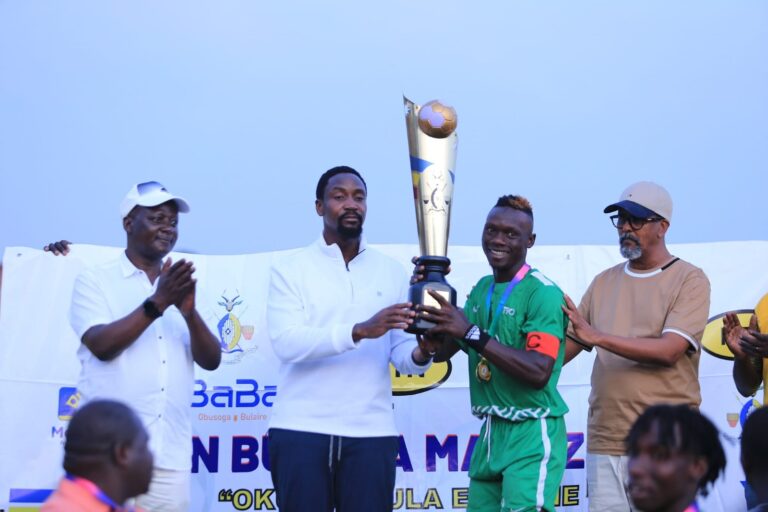
2023: Busiki edged Butembe 1-0 (Goal by Ismail Ndifuna)

2024: Butembe beat Bukono 1-0 (Goal by Ivan Nakalanda, 11th minute at Bugembe Stadium)

1996 TO PRESENT: The emergence of electoral authoritarianism in Uganda

0

By Oweyegha-Afunaduula

The quality of the human environment in Uganda has meteorically deteriorated in all the dimensions of the country’s total environment: the ecological biological dimension, the socioeconomic dimension, the sociocultural dimension and the temporal (time dimension).

Most deterioration has been experienced in the sociocultural dimension where ethics, morality and political development are deliberately abused, mainly by the political choices of the governors of the country as the allocate more and more time, energy and money in nonproductive arenas of the economy -particularly security – in order to control the movements, choices, actions and thinking of the people they govern.

The most targeted are the political actors in the Opposition and the knowledge workers in the humanities (arts) and social science at the universities for different reasons.

The political actors in the Opposition seek to challenge the incumbent and the ruling party for power. The knowledge workers traditionally challenge the social, economic, political and environmental choices of power academically and intellectually on university campuses and in the public space.

What power has sought to achieve is to depoliticise, deradicalise, deintellectualise and deactivate both the opposition political actors and the knowledge workers in the universities in order to nurture a more closed, silent population.

Because knowledge workers in the natural sciences and the attendant professions are less active on social issues such as those of human rights, power has preferred to raise them over and above those in the humanities and social science by paying those in the natural sciences and related professions and even more or less forcing Ugandan pupils and students to do only sciences by reducing government support to students that seek to advance their knowledge and skills in the humanities and social sciences.

The academic and intellectual quality of the universities and the performance of both academic staff and students in debates has grossly plummeted. At most university campuses the conspiracy of silence reigns, reflecting the National Resistance Movement’s (NRM’s) success story in separating academicism or scholasticism from intellectualism on university campuses. Currently, the local universities are contributing minimally to the intellectual development of the world in general and Uganda in particular.

There are far more factors contributing to the deterioration of the human environment in Uganda beyond academic and intellectual concerns.  0ther factors that must be factored in the equation of the erosion of the quality of Uganda’s human environment also have their origins in the political and military choices of the rulers of Uganda since 1986, but especially since 1996.

They include repressive laws such as the Political and Other Organisation, the Antiterrorism Law and the recently passed UPDF Act 2025, which, in combination, depress the political and intellectual development of the people since their primary role is to generate fear and inactivity and leave the freedom of thought to a few individuals.

There are also factors such as corruption, mafiasm, bantustanisation of the country, conversion of UPDF and NRM into supremacist institutions, emergence of Black(NRM regime functionaries) and Brown (Indians and Chinese) white supremacists (White supremacy perpetrated by non-whites has several related roots, some of which are as old as inequality and oppression), disappearance of police in Uganda Police, turning the Public State into Deep State, State violence and institutionalisation of violence, militarised personalist ruling NRM, de-democratisation, militarisation of justice, democratic deception and democratic disguise, presidentialism and presidentialisation of Opposition, patronage, profiteering, opposition enablers of the oppressor, precedence of military politics over and above civilian politics and military capture of Uganda’s civilian spaces.

I have written on virtually all these issues since 2004. Hopefully, researchers will break out of their hiding and begin to research these interwoven issues, which have been woven into a deadly tool to completely exclude the indigenous civilians from effective leadership and governance of their country well in the future. 

People excluded from participation in the leadership and governance of their country are unlikely to acquire the necessary experience and skills in leadership and governance, let alone be interested in their country well enough to feel that they are adequately human and patriotic. No amount of forcing them to be patriotic will yield a patriotic population

In this article I want to focus on the emergence of electoral authoritarianism, which President Tibuhaburwa Museveni and the National Resistance Movement (NRM) regime have employed, alongside deceptive democracy to effectively de-democratise Uganda and create a thick cloud of fear over the population since 1996.

We no longer have civilian superiority over the military, let alone civilian superiority over the democratisation process in Uganda. The democratisation process has been distorted by the militarisation of politics (Oweyegha-Afunaduula, 2025).

Van Wyke (2007) wrote that (1) African leadership styles are often characterised by: the need to achieve and hold power; nationalism that perceives one’s own nation or group as superior; distrust of others; and a task-orientated approach: (2) Instability and underdevelopment can challenge public authority and undermine the internal sovereignty of the state.

The resulting power vacuums create the conditions for the emergence of informal and private leadership. Informal and private leadership is the foundation of the Deep State.  The Deep State has the capacity to disorient the national budget so that its interests are fully financially financed at the expense of the public interest of education, agriculture, health, environment, transport, et cetera (Oweyegha-Afunaduula, 2022). Eventually the public state and institutions are consumated and weakened by the deep state in favour of itself.

Electoral authoritarianism, a relatively new form of non-democratic rule, involves using democratic institutions like elections while simultaneously violating liberal democratic norms, human rights and adhering to authoritarian methods. These regimes are often seen as distinct from hybrid regimes or illiberal democracies, and are characterized by the use of elections as a tool to legitimize power, even when elections are not free and fair.

Andreas Schedler (2015) has observed that electoral authoritarian regimes, such as the NRM regime in Uganda, practice authoritarianism behind the institutional facades of representative democracy. They hold regular multiparty elections at the national level, yet violate liberal-democratic minimum standards in systematic and profound ways.

Since the end of the Cold War, they have turned into the most common form of nondemocratic rule in the world. Responding to the empirical expansion of nondemocratic multiparty elections, Andreas Schedler’s (2015 study of “electoral authoritarian” regimes has taken center stage in comparative political science.

He has reviewed the conceptual and empirical foundations of this flourishing new field of comparative politics, summarized cutting-edge research on regime trajectories and internal regime dynamics, and laid out substantive issues and methodological desiderata for future research. Uganda scholars need to be involved in the ongoing research, preferably using the new knowledge production systems of interdisciplinarity, crossdisciplinarity, transdisciplinarity and extradisciplinarity (non-disciplinarity) in the true spirit of integration of knowledge, skills and experiences.

Uganda is often cited as a classic example of electoral authoritarianism, a system where a government maintains power by holding elections while simultaneously employing various repressive tactics to suppress opposition and ensure its continued rule (e.g Kagoro, 2024). Sserwadda (2021) characterised the Uganda type electoral authoritarianism as “Elections without democracy”. Anders Sjögren (2025) saw the elections as just ritualistic coronations of President Tibuhaburwa Museveni every five years. Moses Khisa thought that they are just a tool in the process of autocratisation in contemporary Uganda.

One school of thought believes the elections are a continuation of deceptive, disguised democracy designed to project President Tibuhaburwa Museveni and his militarised personalistic NRM as democratic when this is far from the truth.   However, it is perturbing that every five years civic political parties struggle to participate in such elections, and many are formed every five years, perhaps with the involvement of the incumbent President or his agents, even when they know the elections are won by President Museveni and his militarised NRM long before they are held.

The motivation for political parties to participate in NRM organised elections is thought to be the money that the political elite in the opposition get when they have parties that field candidates and participate in such schemes as Interparty Organisation for Dialogue (IPOD).

IPOD ritually brings the “Oppressor” and the leaders of the political parties in ritualistic meetings, ostensibly to pursue and promote democracy in the non-election period that follows the elections. The more Members of Parliament a party has the more money it gets. In this case, NRMO (as registered by the Uganda Electoral Commission), which has the largest number of Members of Parliament, gets most of the money.

However, there is a new Bill passed into law and awaiting the President to append his signature (or has he done so?) – a modification of the Political and Other Organisations Law – decreeing that a Party whose leader does not meet under IPOD and other arrangement with the NRM supremo and other party leaders, does not access State funds for its political work.

The financial squeeze for political parties that refuse to participate in the ritualistic meetings is a new formidable weapon with which “to kill” multipartyism, and for that matter, political pluralism in Uganda in the 21st Century. The President, Tibuhaburwa Museveni, committed himself to achieve the feat by 2020 when he was swearing in for his 5th term as President of Uganda. For sure he is still at it using a multiplicity of strategies, including electoral authoritarianism of course.

The Ten Million Dollar Question is: Are Ugandans ready to continue being hoodwinked by elections organised by NRM that are no more than a ritual coronation of President Tibuhaburwa Museveni, autocratising the country even more on the road to the making of a soldier king I wrote about the other day and to be confused by regime loving ideas such as IPOD that politically and militarily domesticate   political party leaders that will ultimately  be subject to military justice under the UPDF Act 2025. Well, Time, the best judge will judge.

For God and My Country.

Oweyegha-Afunaduula is a member of Center for Critical Thinking and Alternative Analysis
THE STAGE IS SET: 8th edition of the MTN Busoga Masaza Cup promises thrilling action

0

By Musa Kikuuno | BusogaTimes.com

Group Stages

Nendha Group

Butembe

Busiki

Kigulu

Bukooli Namayingo

Mawembe Group

Bukono

Bunhole Bunanumba

Budiope

Bugweri

Bukowe Group

Bugabula

Luuka

Bukooli Bugiri

Kagulu Group

Buzaya

Bulamogi

Bunha

Knockout Stage

Winner Nendha vs Runners-up Mawembe

Winner Mawembe vs Runners-up Nendha

Winner Bukowe vs Runners-up Kagulu

Winner Kagulu vs Runners-up Bukowe

Semi-Finals

Winner of Match 1 vs Winner of Match 2

Winner of Match 3 vs Winner of Match 4

The roar of the crowd, the vibrant colors, and the unbridled passion for football will soon engulf the Kingdom of Busoga once again. The 8th edition of the MTN Busoga Masaza Cup is just around the corner, kicking off on Saturday, June 28th, 2025, with a highly anticipated clash between hosts Budiope and Bukono at Irundu Primary School in Buyende District.

The announcement, delivered by the Minister of Sports in the Kingdom of Busoga, Owek. Amin Bbosa Nkono, during a meeting with Masaza Football Chairpersons and CEOs at Kyabazinga headquarters in Bugembe, has ignited a wave of excitement throughout the region.

“We are thrilled to announce the return of the MTN Busoga Masaza Cup,” said Owek. Amin Bbosa Nkono. “MTN Uganda remains our proud sponsor, and we shall communicate the date for the official launch soon.”

The tournament, known for its ability to unite communities and showcase local talent, promises to be even more competitive this year, thanks to a particularly intriguing group stage draw.

All Former Champions Clashed in One ‘Group of Death’

Perhaps the biggest talking point surrounding this year’s edition is the unprecedented grouping of all four former champions in a single group – the aptly named Nendha Group. This “Group of Death” features:

  • Butembe: Champions in 2017 and 2024
  • Busiki: Champions in 2023
  • Kigulu: Champions in 2018 and 2019
  • Bukooli Namayingo: Champions in 2022

This historically significant draw guarantees an intense and competitive group stage, with only two teams from Nendha Group advancing to the knockout rounds. The stakes are incredibly high, promising nail-biting encounters and potential upsets as Busoga’s most decorated footballing counties battle for survival.

Group Stage Line-up

The 14 participating counties, representing Busoga’s 11 chiefdoms, have been divided into four groups, each promising unique challenges and rivalries. Details about the other groups are eagerly awaited.

Following the group stages, the top two teams from each group will qualify for the quarter-finals, setting the stage for an even more intense battle for the coveted title.

The Road Ahead

With the tournament opener less than three weeks away, the atmosphere across Busoga is electric. The pressure is on, particularly for teams in the fiercely competitive Nendha Group.

Bukooli Namayingo, who are currently focused on rebuilding their technical team, face a daunting task, while Butembe, riding high after their 2024 triumph, will be determined to defend their crown against formidable opposition.

The 8th edition of the MTN Busoga Masaza Cup is poised to be a spectacle, a celebration of Basoga culture, and a testament to the power of football to unite communities.

All eyes will be on the field as these counties battle it out for glory, etching their names into the history books of the MTN Busoga Masaza Cup. Get ready for a month of thrilling action, unforgettable moments, and the crowning of a new champion!

ILLEGAL SEX: 1415 cases of teenage pregnancies registered in Kamuli district between January to March 2025

0

By Bamutaze Sam

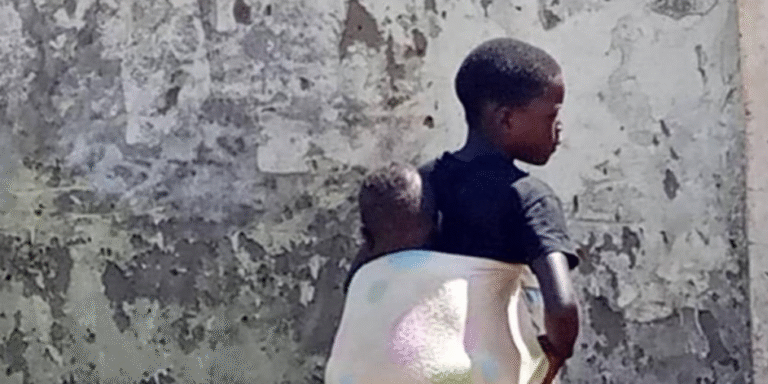
Kamuli District is grappling with a concerning surge in teenage pregnancies, primarily attributed to a lack of effective parenting skills and widespread poverty within families in the communities.

The situation is particularly dire in Balawoli and Namwendwa sub-counties, where teenage pregnancy rates have reached a staggering 38 percent, leading to a significant increase in school dropouts across villages.

Despite the government’s efforts to promote education through Universal Primary Education (UPE) and Universal Secondary Education (USE) programs, Kamuli District continues to struggle with alarmingly high rates of teenage pregnancies and subsequent school discontinuations.

Speaking to journalists, Rev. Sosan Buuza, the Vicar of St. Mark Church in Kamuli Municipality, laid blame squarely at the feet of parents, citing a critical deficiency in parenting skills.

“Parents are responsible for all these cases,” he stated, emphasizing a shift in family dynamics where “children in Kamuli District have turned to be leaders in families.”

Rev. Buuza further highlighted the pervasive issue of poverty, explaining how financial hardship forces children into labor to support their families.

“Poverty has also caused a lot of problems in the district where children are sent to look for money to run families,” he said.

This desperation leaves vulnerable teenagers exposed to exploitation and increased risk of early pregnancies.

The Uganda National Family Planning Association (UNFPA), during a stakeholders meeting in Kamuli Municipality, voiced strong concerns regarding alleged collusion between police officers and parents when cases of teenage pregnancy are reported.

Instead of diligently investigating and combating these incidents, UNFPA accused some officers of hindering justice, further exacerbating the problem.

Religious leaders in the district have now issued a clarion call for a comprehensive action plan, urging all stakeholders to actively participate in the fight against teenage pregnancies and early marriages.

“We need an action plan and call for responsible authorities to come on board to fight this act,” they emphasized, highlighting the urgency and collaborative effort required to address this deeply rooted issue plaguing Kamuli District.

The crisis demands a multi-pronged approach, focusing on:

Empowering parents: Providing parenting skills training and education to equip them with the tools to guide and support their children effectively.

Addressing poverty: Implementing sustainable poverty alleviation strategies to reduce financial pressures on families and prevent them from relying on child labor.

Strengthening law enforcement: Ensuring police accountability and preventing collusion in cases of teenage pregnancy through rigorous oversight and training on child protection laws.

Promoting comprehensive sex education: Providing age-appropriate and accurate information on reproductive health and contraception within schools and communities.

Empowering girls: Promoting girls’ education and providing opportunities for them to develop their potential and make informed choices about their future.

Only through a concerted and coordinated effort can Kamuli District hope to curb the alarming tide of teenage pregnancies and ensure a brighter future for its young people.

COACH OZIL INTERVIEW: MTN Busoga Masaza Cup has given me the opportunity to grow as a football coach

0

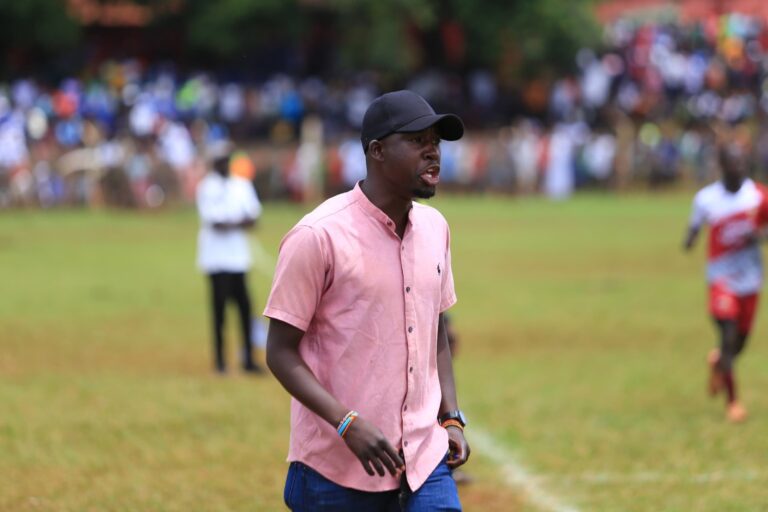
As excitement builds ahead of the Busoga Masaza Cup 2025, Busoga Times’ Musa Kikuuno sat down with one of the region’s most promising and passionate young coaches, Coach Ozil , known off the pitch as Kitakule Isaac . In this one-on-one, he shares insights on his coaching journey, his current projects, and whether fans can expect his return to the Masaza Cup touchline this year.

Q: coach Ozil, welcome to Busoga Times. For starters, who is Coach Ozil?
Coach Ozil: Thank you so much. My real name is Kitakule Isaac, but most people in the football world know me as Coach Ozil. I am a certified CAF C license holder and currently preparing to pursue my CAF B license in the near future. Coaching is not just a job to me—it’s my passion and calling.

Q: Well, What are you currently working on, and how is work going?
Coach Ozil:
I’ve been working with Jinja Comprehensive Secondary School for the past two years. I recently extended my contract by another year, running through to June 1, 2026. Work is progressing well—we’re now in serious preparations for the upcoming USSSA 2026 competitions. The players are motivated, and we’re aiming high.

Q: Coach, You featured in the last Masaza Cup edition with Butembe. Should fans expect to see you back this year?
Coach Ozil: That’s a tricky one—I honestly can’t give a direct answer right now. As of now, I’m not in discussions with any Masaza team. However, football is unpredictable. I always keep the door open for opportunities that align with my professional goals. So, like we say in football, “We never say never.” If the right team comes with a vision that matches mine, I will be open to listening.

Q: But Ozil, among all the known coaches in the Masaza Cup, how would you rank yourself?
Coach Ozil: I don’t believe in competing with fellow coaches. My principle is to focus on self-improvement and adding value to my journey. That said, if you look at my progress over the last 2–3 years, there are visible signs of growth, and many people have seen that. But I still have bigger goals I’m chasing.

Q: How do you find coaching in general?
Coach Ozil: I love coaching—it’s been nothing but a blessing for me and my family. It’s my passion, and so far, the experience has been very positive. I’ve enjoyed every moment on the touchline.

Q: You’re among the youngest coaches in Uganda. What motivated you to start coaching early?
Coach Ozil: Honestly, it was pure passion. I’ve always had a deep love for football and an urge to guide and develop talent from a young age. I knew I wanted to make a difference not just by playing but also from the technical bench. That’s what drove me to start early.

Q: In your opinion, which team is the best in the Masaza Cup? And would you coach it if offered the opportunity?
Coach Ozil: That’s a very dynamic question. In Masaza Cup, no team is permanently better than the other—it all depends on preparations, signings, and the vision of the club’s executive.

Look at the last two seasons: In 2023, Busiki FC made it to the final in their first-ever qualification and became champions. In 2024, Bukono FC surprised everyone by reaching the final on their first group-stage qualification and finished as runners-up.

So, I can’t point out a single “best” team. If given a chance to coach any team that has ambition and proper planning, I would definitely consider it.

Musa Kikuuno
Alright thanks for joining us Coach, as Busoga times, we do wish you all the best, as Busoga Masaza Cup 2025 edges closer, fans should keep an eye on Coach Ozil. Whether or not he appears on the touchline, his journey remains one of growth, inspiration, and passion for the game not only in the region but beyound.

FATAL LOVE: Young man in Kamuli killed in fight over beautiful girlfriend

0

The territorial police of Busoga North have launched an investigation into the death of 24-year-old Kisaame Kagena, a resident of Namaira village, Kitayundwa sub-county in Kamuli district.

Kisaame is believed to have died following a fight apparently triggered by a dispute over a girlfriend.

According to preliminary reports, Kisaame was found in a coma by eyewitnesses. Before losing consciousness, he reportedly identified his girlfriend, 20-year-old Sofia, as being connected to the incident.

He was rushed to Namaira Health Center II, where he was pronounced dead.Witnesses quoted Kisaame as saying, “I am dying, but Sofia caused all this,” before he succumbed to his injuries.

Waiswa Sula, speaking to Busoga Times, stated that the deceased had been romantically involved with Sofia.

He added that Sofia had been seen in the company of several “youth goons” in the village, hinting at potential conflicts arising from the relationship.

At the time of reporting, police in Namaira had apprehended Sofia to assist with the ongoing investigation. Kisaame’s body is currently awaiting burial.

Busoga Times has learned that the Busoga North police spokesperson is yet to issue an official statement regarding the incident.

The investigation is focused on identifying the individuals involved in the alleged fight and determining the full circumstances surrounding Kisaame’s death.

The identity of the other individuals involved in the fight remains unknown, and they are currently at large.

The incident highlights the potential for violence in relationships and the need for peaceful resolution of disputes.

Police are urging anyone with information related to the case to come forward and assist with the investigation.

POLITICS OF BULLETS: Guns spit fire as military again raides NUP headquarters injuring and arresting many

0

Tensions are escalating in Uganda following a reported military raid on the National Unity Platform (NUP) headquarters in Makerere-Kavule.

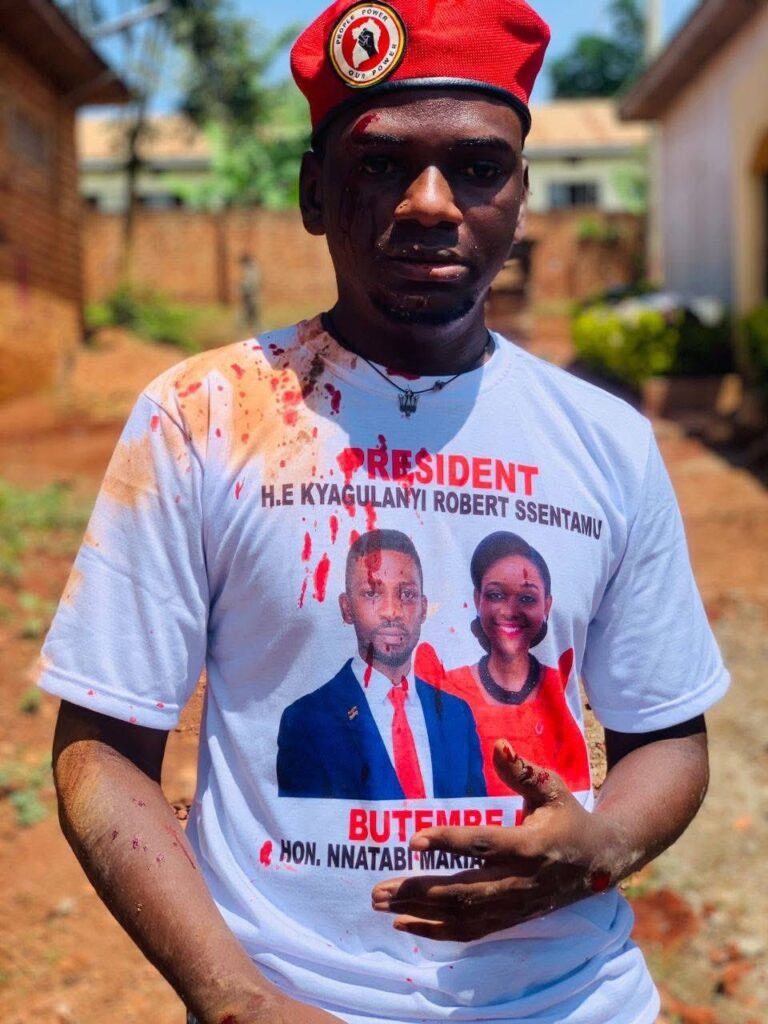
NUP President Kyagulanyi Ssentamu Robert, widely known as Bobi Wine, took to social media to condemn the incident, claiming that bullets were fired and several party members were injured and arrested.

“The military and police just raided the NUP Headquarters and fired bullets,” Bobi Wine stated. “Several comrades have been injured and others arrested. No explanation has been given for this criminality!”

The allegations paint a picture of a forceful intervention that has disrupted a planned meeting at the NUP headquarters.

Details surrounding the raid remain scarce, and independent verification of the events is still pending.

Law enforcement authorities have yet to release an official statement addressing the alleged raid, the reasons behind it, or the reported injuries and arrests.

This incident adds to a growing list of concerns regarding the treatment of the NUP and its members.

On June 7th, 2025, police actions similarly disrupted a NUP meeting in Jinja and Mityana.

Bobi Wine at the time criticized the authorities, stating, “Despite informing the police in time and making every effort to liaise with local police in various regions and districts, the police has raided and broken up meetings in all constituencies of Mityana and Jinja. Several comrades have been injured. In other districts, the police have simply declined to meet our teams on the ground. Not a sign of strength but panic and fear! The momentum for change is on.”

These repeated disruptions raise questions about the government’s commitment to allowing freedom of assembly and political expression, particularly for opposition parties.

Critics argue that such actions stifle dissent and undermine the democratic process.The NUP has rapidly gained popularity in recent years, positioning itself as a significant challenger to the ruling National Resistance Movement (NRM).

The party’s platform focuses on issues of social justice, economic equality, and good governance, resonating with a large segment of the Ugandan population, especially the youth.

The alleged raid on the NUP headquarters is likely to further polarize the political landscape and exacerbate existing tensions.

It remains to be seen what the long-term impact of this incident will be on the NUP’s activities and the upcoming political climate in Uganda.

International observers and human rights organizations are likely to closely monitor the situation and call for investigations into the allegations of excessive force and unlawful

NOT EDUCATED: Bugiri’s Kasajja Mulumba academic papers questioned in petition logged at NRM secretariat

0

The upcoming National Resistance Movement (NRM) primaries in Bugiri District have been thrown into disarray following a petition challenging the eligibility of incumbent LC5 Chairperson, Kasajja Davidson Mulumba, to contest for the position.

A local voter, identified as Mr. Kyotaite Muhussein, through his legal representatives, Bumpenje & Co. Advocates, has formally petitioned the NRM Electoral Commission chairperson, seeking to prevent Mulumba’s nomination.

The crux of the petition revolves around alleged discrepancies in Mulumba’s academic qualifications, specifically his fulfillment of the minimum educational requirements stipulated by Ugandan law for the position of District Chairperson.

According to the petition, which was delivered to the NRM chairperson, “We act for and on behalf of Mr. Kyotaite Muhussein and whose instructions we address you as hereunder.”

The document then directly quotes Section 123(d) of the Local Governments Act Cap 243, which states: “a person shall not qualify for elections as chairperson of district or city unless that person has completed a minimum education of advanced level standard or its equivalents.”

Bumpenje & Co. Advocates argue that a thorough review of Mulumba’s academic credentials reveals a failure to meet this crucial requirement.

“Upon review of the academic documents for Mr. Kasajja Davidson Mulumba Chairperson LC5 Bugiri District, he does not meet the minimum academic requirements as stipulated under the relevant laws for the position of Chairperson LC5,” the petition alleges.

The timing of the petition is significant, coinciding with the NRM Electoral Commission’s announcement on June 2nd, 2025, inviting aspiring candidates to collect nomination forms for the NRM primaries, covering both parliamentary and LC5 chairperson positions.

The lawyers are explicitly urging the NRM Electoral Commission to exercise caution. “We kindly request that, in case he contests in the forthcoming NRM primaries, NRM Electoral Commission should not nominate Kasajja Davidson Mulumba until review of this matter and ensure that only qualified candidates who meet the statutory requirements are accepted for nomination.”

The petition concludes with a stern warning, escalating the stakes considerably. “Take notice that should the commission proceed to nominate him: the decision will be vigorously contested in court at the expense of the commission and the candidate. Expect no further notice.”

This underscores the petitioner’s determination to pursue legal action should their concerns regarding Mulumba’s qualifications be ignored.

This development raises serious questions about the vetting process for NRM candidates and the party’s commitment to upholding the stipulated legal requirements for holding public office.

The NRM Electoral Commission now faces the delicate task of thoroughly investigating the allegations presented in the petition, potentially impacting the political landscape of Bugiri district and the credibility of the NRM primaries.

The outcome of this review will undoubtedly be closely watched by both supporters and critics of the incumbent chairperson, as well as those interested in ensuring transparent and legally sound electoral processes within the party.

The looming threat of legal action adds further pressure on the commission to act decisively and fairly.

HEROES DAY: What defines a hero?

0

By Waiswa Michael Baluye

As we celebrate Hero’s Day today, let’s define the qualities of a hero. A hero is often seen as someone who stands out through their actions, character, and impact on others.

Several key qualities commonly define heroism: Bravery and Courage: Heroes are known for their willingness to face danger or difficult situations head-on, often putting themselves at risk for a greater cause.

Outstanding Achievements: They are recognized for extraordinary accomplishments—whether in battle, everyday life, or specialized fields—that surpass the norm.

Role Models: By living out their values and actions, heroes inspire others and often become symbols of hope and aspiration.

Overcoming Adversity: Heroes demonstrate resilience by facing and overcoming significant challenges, proving their determination and strength.

Moral Character: At the heart of heroism is a strong moral compass; heroes often choose to do what is right, even when it comes at a personal cost.

Mr. Waiswa Michael Baluye is the ONC Coordinator for Buyende district