Friday, May 22, 2026
Home Blog Page 41

SOMBRE TAKEOVER: Sarah Sambya takes oath as acting LC5 Chairperson for Kamuli District following Kuwembula’s passing

0

By Moses Kintu

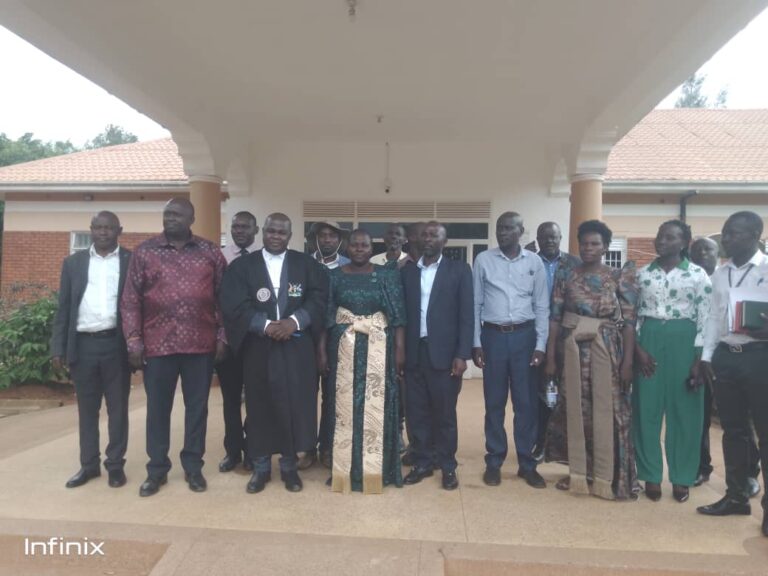
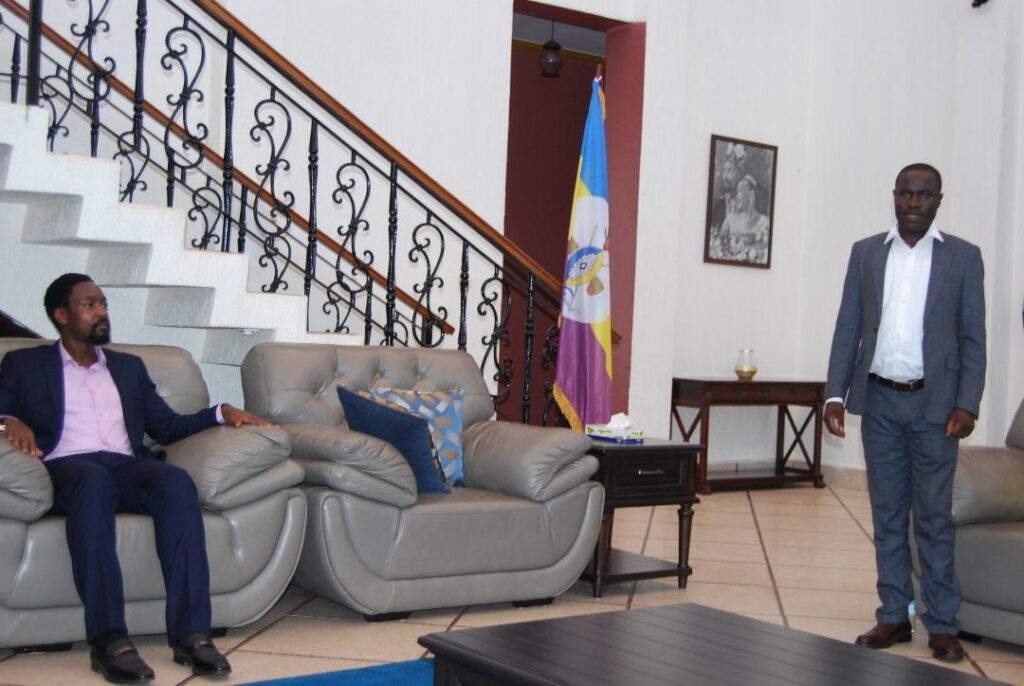
Kamuli District has a new leader at its helm as Sarah Sambya, the former LC5 Vice Chairperson, was officially sworn in as the acting LC5 Chairperson on Monday.

The ceremony, presided over by Chief Magistrate Owino Paul, took place at the district boardroom and marked the transition following the tragic death of former Chairperson Maxwell Kuwembula Mugudde in a car accident last week.

The solemn event saw the attendance of various district officials, councilors, and members of the media, highlighting the significance of the change in leadership for the district.

Following the swearing-in ceremony, Chief Administrative Officer (CAO) Nasser Mukiibi pledged his unwavering support to Sambya, assuring her of a conducive working environment.

He emphasized the importance of continuity and effective service delivery to the people of Kamuli during this period of transition.

In her address after taking the oath, the newly appointed acting chairperson, Sarah Sambya, called upon the technical staff of the district to collaborate seamlessly with her administration.

Emphasizing the need for unity and dedication, she urged them to focus on delivering essential services effectively to the residents of Kamuli.

The transition of power adheres to the established legal procedures. According to local government regulations, upon the death of a district chairperson, the Minister for Local Government is required to instruct the CAO to invite the Chief Magistrate to oversee the installation of the Vice Chairperson in an acting capacity.

This move ensures continuity of governance and provides stability while the district mourns the loss of their former leader and prepares for the next steps in determining a permanent replacement for the LC5 Chairperson position.

The focus now shifts to Sarah Sambya as she steps into her new responsibilities and navigates the district through this challenging time, striving to uphold the legacy of her predecessor and serve the people of Kamuli with dedication.

POLITICAL ALLIANCE: Budiope West MP race sees major shakeup as former MP Musoke backs Mutagaya against Minister Babalanda

0

The political landscape in Budiope West, Buyende district, is undergoing a significant transformation as politicians vying for the Member of Parliament seat consolidate their efforts to secure victory.

In a surprising turn of events, former Budiope West MP Robert Musoke has announced his withdrawal from the race, throwing his weight behind fellow aspirant Dennis Mutagaya.

This development, as reported by Busoga Times, is seen as a strategic alliance aimed at challenging the ambitions of Minister for Presidency Milly Babalanda, who is also in the running.

Robert Musoke has announced his withdrawal from the race, throwing his weight behind fellow aspirant Dennis Mutagaya

Sources suggest that the partnership between Musoke and Mutagaya is specifically designed to counter Babalanda’s influence, particularly in Nkondo Sub County.

Mutagaya, hailing from Buyende Town Council, is optimistic that Musoke’s supporters in Nkondo will now rally behind his campaign, effectively expanding his base and diminishing support for Minister Babalanda, who is considered an outsider due to her origins in neighboring Kamuli district.

Speaking to Busoga Times, Musoke emphasized the importance of Budiope West being represented by a “son of the soil,” citing this as the driving force behind his decision to endorse Mutagaya.

His declaration resonates with local sentiments and potentially weakens Babalanda’s appeal to voters who prioritize local representation.

In response to the endorsement, Mutagaya expressed his gratitude and welcomed Musoke to his team. He highlighted the alliance as an opportunity to bridge divisions within the constituency, particularly between Buyende Town Council and Nkondo.

https://soundcloud.com/busoga-times/dennis-mutagaya-welcomes

“For the time, we are going to have peaceful elections in Buyende Town Council and Nkondo,” Mutagaya stated in an interview. “We are coming with a new trend; instead of fighting, we are uniting. I am happy that my brother has decided to support me. This has given us a new chapter of peace.”

The collaboration between Musoke and Mutagaya signals a potential shift in the dynamics of the Budiope West parliamentary race.

By combining their resources and support bases, they aim to present a unified front against Minister Babalanda, leveraging the sentiment of local representation to their advantage.

This alliance promises to be a significant factor in shaping the outcome of the upcoming elections and ushering in a new era of political unity in the region.

BUGIRI’S NEW KINGMAKER: How Solomon Silwany eclipsed Justine Lumumba to reshape Busoga’s political horizon

0

By Kyotaite Muhussein

Bugiri and the broader Busoga sub-region, long accustomed to the formidable political presence of figures like Justine Kasule Lumumba, are now witnessing a compelling recalibration of power.

A new architect is meticulously laying bricks, and his name, Solomon Silwany, echoes with increasing resonance across the political landscape, suggesting a torch has quietly, but decisively, passed hands.

For years, the political narrative of Bugiri and indeed much of Busoga was often narrated through the lens of Justine Kasule Lumumba. A seasoned politician, her career trajectory was nothing short of meteoric.

From serving as the Women’s Representative for Bugiri District in Parliament since 2001, she ascended to the influential position of Chief Government Whip, a strategic conduit between the Executive and the Legislature.

Her zenith arrived with her appointment as the Secretary General of the ruling National Resistance Movement (NRM) in 2014, a role that cemented her as a political titan, a veritable high priestess of the party’s machinery, wielding immense influence across the nation.

Her voice carried the weight of the party, her presence a magnet for political activity, and her camp, once an undisputed bastion of power in Bugiri, seemed unassailable.

However, the winds of political fortune are ever-fickle, and the current whisper on the ground suggests a new breeze, strong and purposeful, is now blowing from Bukooli County Central, championed by the diligent Solomon Silwany.

While Lumumba transitioned into a cabinet role as Minister in the Office of the Prime Minister (General Duties) in 2021, a significant national appointment, the pulse of grassroots influence in her former political heartland appears to have shifted.

Solomon Silwany, the Member of Parliament for Bukooli County Central, is not merely rising; he is demonstrably consolidating power with the quiet precision of a master craftsman.

His ascent to the Parliamentary Commission, the highest decision-making organ of Parliament, speaks volumes of his growing clout within the legislative arm. This is no mere backbencher; he is now a hand guiding the legislative compass.

But it is his strategic actions on the ground that truly paint the picture of a dominant force. Silwany has invested not just in political rhetoric, but in tangible symbols of party strength and presence.

The recently commissioned NRM Party offices in Bugiri District, a project he spearheaded, stand as a testament to his commitment and organizational prowess. This event, however, was also a crucible moment.

It was here, as Justine Kasule Lumumba and her favored candidate, Stephen Mutumba, notably abandoned the ceremony, that the fault lines in Bugiri’s political landscape became starkly visible.

It was at this very juncture that Silwany, sensing the shifting currents and the palpable disconnect between the old guard and the aspirations of the grassroots, made the decisive move to contest for the NRM District Chairperson position.

Perhaps the most telling indicator of this evolving dynamic comes from the political chessboard of Bugiri itself. Solomon Silwany’s subsequent victory as the newly elected NRM Chairman of Bugiri district, directly defeating Stephen Mutumba – Kasule Lumumba’s preferred candidate and the former chairman – amidst considerable chaos, was a thunderclap.

This triumph, a noticeable tremor beneath the surface of Busoga politics, stands in stark contrast to Lumumba’s struggling camp. A particularly poignant development is the alignment of figures like Namatende, a seasoned politician who once challenged Lumumba, with Silwany’s camp for the upcoming 2026 elections.

This migration of political allies is a powerful metaphor for the shifting allegiance and trust among local political actors – a clear sign that the political tides are turning.

Furthermore, Silwany has emerged as a key convener of regional NRM leaders, as evidenced by his role in leading a group of Busoga NRM figures to back Speaker Anita Among’s candidature for the NRM delegates’ conference. This initiative positions him not just as a local leader, but as a significant regional broker, capable of mobilizing and directing political currents across Busoga.

In the grand tapestry of Ugandan politics, influence is not static. While Justine Kasule Lumumba’s legacy as a powerful national figure remains etched in the annals of the NRM, the ground beneath Bugiri and Busoga is undeniably yielding to a new gravitational pull.

Solomon Silwany, with his strategic investments in party infrastructure, his ascending role in Parliament, and his growing ability to unite regional political forces, is fast becoming the undeniable political compass for Bugiri and a significant influencer across the vast, fertile plains of Busoga. The political pendulum, it seems, has swung, and Silwany’s star is undeniably in the ascendancy.

Mr. Kyotaite Muhussein – Political Analyst and Lawyer

HAT-TRICK STAR: Kabene settles into Crested Cranes setup with ease after remarkable exploits at ongoing Uganda’s CECAFA Campaign

0

Sylvia Kabene etched her name into CECAFA history with a dazzling first-half hat-trick, powering Uganda’s Crested Cranes to a dominant 5–0 victory over South Sudan in the 2025 CECAFA Senior Women’s Championship.

The defending champions bounced back impressively after a narrow 1–0 loss to Burundi in their opening fixture. In that game, Kabene came on as a second-half substitute for Latifa Nakasi. But on Sunday evening at the Azam Complex, she made her first tournament start—and wasted no time making an impact.

The Musoga forward from Mafubira, who plays for St. Noah Girls FC, found the net in the 6th, 21st, and 34th minutes, completing a hat-trick in just 34 minutes—the first of the 2025 edition.

Her stellar performance earned her the Woman of the Match award walking away with  an award of Two hundred and fifty thousand Tanzanian shillings.

“ I thank the Almighty for this win. I managed to score three goals and was named Woman of the Match. I appreciate my teammates for their teamwork and my coach for giving me the opportunity to play today,” Kabene said after the match.

Shamirah Nalugya and Zainah Namuleme added a goal each to seal a comprehensive win for the Crested Cranes, who now sit joint-top of the standings alongside hosts Tanzania, both with three points and a +4 goal difference.

Kenya follows with the same number of points but a slightly lower goal difference (+3). Burundi and South Sudan round out the table, with the latter yet to register a point.

Action returns on Tuesday June 17th, when Tanzania faces Burundi and Uganda meets regional rivals Kenya in what is expected to be one of the tournament’s most thrilling encounters.

Kabene’s hat-trick draws parallels to standout performances from the 2022 CECAFA tournament. That year, Tanzania’s Omary Mwanahamisi scored three goals and Opa Clement netted four in a 12–0 rout of Zanzibar, while Ethiopia’s Aregash Kalsa Tadesse also registered a hat-trick against South Sudan.

As the tournament heats up, Sylvia Kabene has emerged as one of the standout names—her performance not only reviving Uganda’s title hopes but also capturing the pride and passion of fans across Busoga and beyond.

At the end of this tournament, a team that will have collected many points will be crowned champions since it’s being played in a round robin format.

MATHEMATICAL SURVIVAL: Busoga bags seven star win against Booma FC to keep relegation fight alive

0

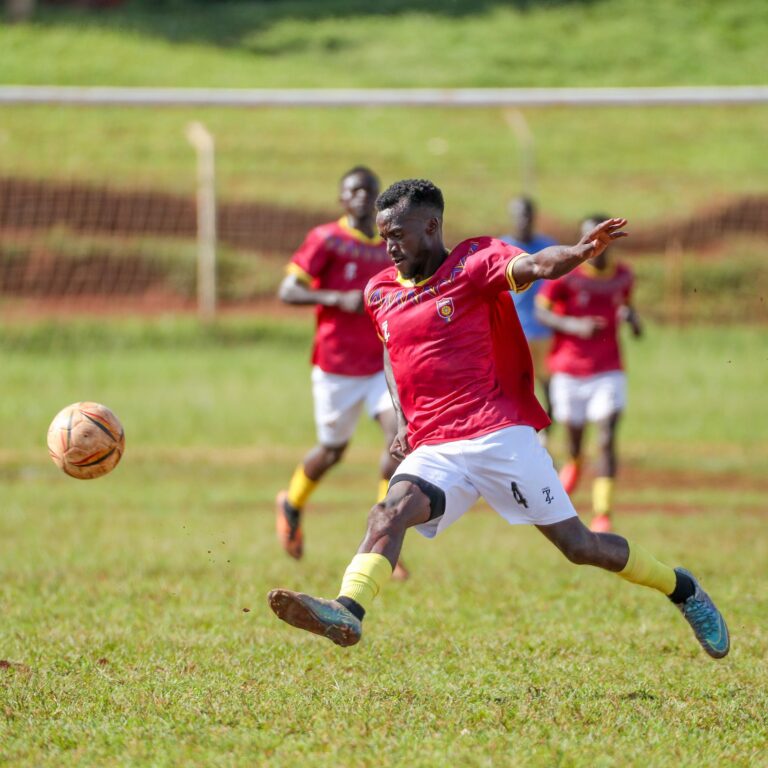
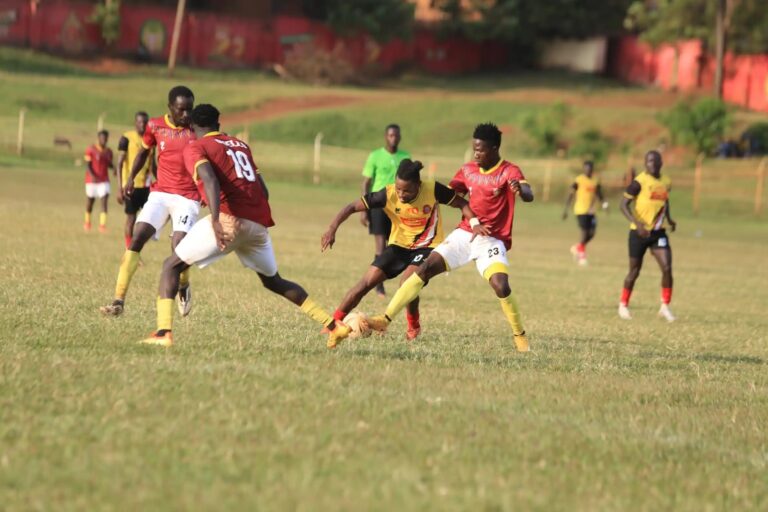
Busoga United kept their hopes of FUFA Big League survival alive in spectacular fashion, thrashing relegated Booma FC 7-0 at the FUFA Technical Centre in Njeru on Sunday evening.

The dominant performance lifted Busoga to 30 points from 27 matches, drawing level with 12th-placed Kigezi Homeboyz but trailing on goal difference.

While the margin of victory boosts confidence, the battle to avoid relegation now enters a complex phase of mathematics, permutations, and prayers ahead of the final match day.

Busoga’s final fixture will be an away clash against 4th-placed Blacks Power FC on June 21st. Only a win will keep Busoga’s survival hopes realistic. A loss or draw in this final fixture would confirm their relegation to regional football.

In the first round, Busoga edged Blacks Power 1-0 at the Kyabazinga Stadium in Bugembe, with Nasri Serwadda scoring the winner.

Coach Charles Lukula  Mbuzi and fans alike will be hoping for a repeat of that performance to push the team to 33 points—a tally that could be just enough to stay afloat.

Relegation Equation: What Must Happen

Even if Busoga wins, they still rely on other results going their way. Here’s a breakdown of the key matches that will decide Busoga’s fate:

 1. Kaaro Karungi vs Ntugasaze

Kaaro Karungi sits 11th with 31 points.

Ntugasaze is 9th with 33 points.

First leg: Ntugasaze won 3-2.

Busoga’s best-case scenario is a Ntugasaze win or a draw, which would freeze Kaaro Karungi at 31. A Kaaro Karungi win pushes them to 34 points—beyond Busoga’s reach—even with victory.

 2. Kigezi Homeboyz vs Myda FC

Kigezi is 12th with 30 points.

Myda is 10th with 32 points.

First leg: 1-1 draw.

Busoga needs Kigezi NOT to win. A draw or Myda win is acceptable. But a win for Kigezi would see them reach 33 points and stay ahead of Busoga on goal difference—effectively sending Busoga down.

 Current Table (Bottom Seven)

9. Ntugasaze – 33 pts

10. Myda – 32 pts

11. Kaaro Karungi – 31 pts

12. Kigezi Homeboyz – 30 pts

13. Busoga United – 30 pts

14. Arua Hills – 29 pts

15. Booma FC – 19 pts (Relegated)

The bottom four teams will be relegated, and Booma FC is already confirmed as one of them. That leaves three more slots to be decided, and Busoga United is among those fighting for air.

Final Day Drama: June 21st

All final fixtures will be played on Saturday, June 21st, setting up a thrilling climax to the season. For Busoga United, the equation is simple in theory but tricky in execution:

 1. Must win against Blacks Power to reach 33 points.

 2. Hope that Kigezi Homeboyz and Kaaro Karungi DO NOT win their matches.

 3. Anything less, and the Kyabazinga’s boys will face relegation despite Saturday’s seven-goal fireworks.

The mathematics of survival continues—but Busoga United has made sure the calculator is still working heading into the final day.

ENVIRONMENTAL CONSERVATION: Abasoga Nseete Students Association UCU plants trees in Jinja schools to curb climate change

0

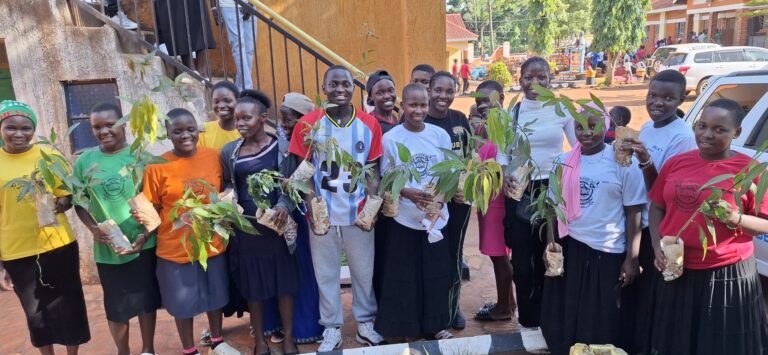
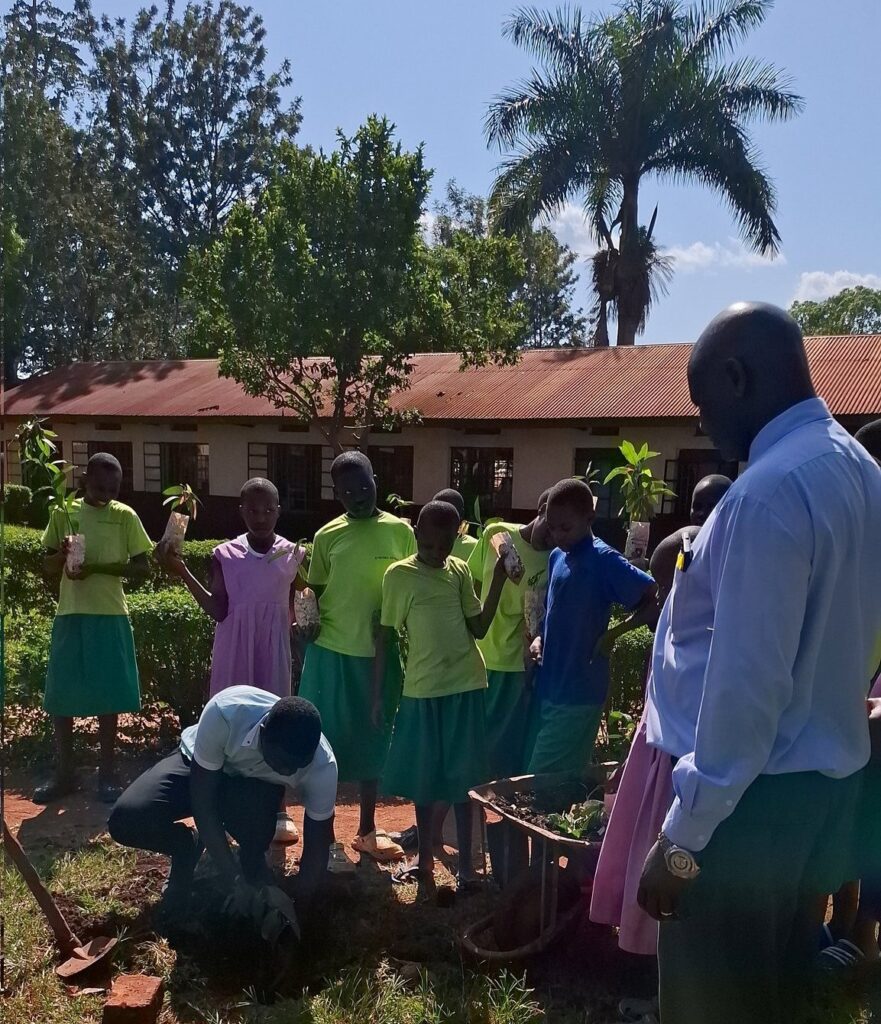
In a proactive step towards environmental sustainability and economic development, the Abasoga Nseete Students Association from Uganda Christian University (UCU) main campus recently visited Victoria Nile Primary School and Lwanda High School in Jinja City to plant fruit trees.

Under the guidance of Owek. Yafesi Bairukireki, Chairperson of the Busoga Kingdom Youth Council, the initiative reflects a commitment to the Kyabazinga’s vision for a greener and more prosperous Busoga.

Led by Ruth Kizige, Abraham Kamali, and Patience Musasizi, the UCU students brought a diverse selection of saplings, including mangoes, avocados, and jackfruit, as well as other shade-providing compound trees.

The selection was carefully considered, aiming to provide both environmental benefits and future economic opportunities for the schools and their surrounding communities.

Key to the project’s long-term success is the involvement of school environmental clubs. “We worked with the environment clubs in the different schools who promised to ensure that the trees grow,” confirmed Kizige, a dedicated climate activist.

This partnership empowers students to take ownership of the initiative and fosters a sense of environmental responsibility.

The project is deeply rooted in the vision of the Kyabazinga. “We’re motivated by the Kyabazinga youth agenda and we’re responding to the Kyabazinga’s 10th coronation speech where he encouraged people to plant trees,” explained Patience Musasizi, one of the student leaders.

The initiative aims to inspire a generation that understands the importance of environmental conservation in the face of climate change.

“Our mission is to raise a generation that understands the impact of climate change and how important it is for people to conserve the environment through tree planting,” Abraham Kamali said.

Beyond environmental sustainability, the Busoga Kingdom Youth Council envisions the trees as powerful tools for economic empowerment. Bairukireki highlighted the potential for poverty eradication, stating, “The trees are a strong tool for poverty eradication. They create favorable weather conditions for farming, where people can grow food for both sale and home consumption. They also act as a natural filter for our underground water making borehole water safer.”

The council’s goal is to cultivate a widespread culture of tree planting amongst the Basoga people, particularly among the youth. “We encourage every Musoga, especially the youths, to take part in tree planting,” Bairukireki urged.

He also expressed gratitude to the school administrations for their support and reiterated the council’s commitment to expanding the initiative to more schools, churches, and community spaces across the kingdom.

The initiative was met with enthusiastic responses from the schools. Livingstone Mbago, Head Teacher of Victoria Nile Primary School, expressed his gratitude for the trees and commended the students for their proactive engagement in the development of Busoga. He assured the council that Victoria Nile has ample land to accommodate many more trees.

Similarly, Mathias Wakasenzaali, Director of Lwanda High School, praised the initiative and encouraged the students to maintain their environmental commitment.

Robert, the president of the environmental club at Lwanda High School, further solidified this pledge by promising diligent care for the newly planted trees.

The Busoga Kingdom Youth Council’s tree planting initiative represents a significant step towards a greener and more prosperous future for Busoga.

By engaging the youth and fostering a sense of responsibility towards the environment, the council is planting not just trees, but the seeds of lasting change.

TYRANNY : How dictators legitimise themselves and consolidate their power

0

By Oweyegha-Afunaduula

A dictator dictates. He or she may seek to know your thinking or your idea about something or even follow your reasoning with interest but ultimately, he or she will follow what his or her mind tells him or her and enforce it with all the power in his or her hands. He or she will then proceed to build his or her legitimacy, the legitimacy of his or her regime or the legitimacy of his or her government.

Many claim themselves kings or queens, and many work hard and prefer to pass the reigns of power to one of their offspring. One-time former Libyan strongman, Mammuar Gaddafi called himself King of kings. After 42 years in power, many Libyans believed Gaddafi was a dictator, although he delivered goods and services, such as building houses for them, giving them free electricity and free water, after building a river in reverse direction.

People wanted democracy, freedom and democracy, besides the social goods and services, but he died these three from them.Connolly (2011) saw Col Muammar Gaddafi as renowned not just for his cruelty, but also his theatricality and a tyrant in the mould of Mussolini, Idi Amin and Omar Bongo. He asked if Gaddafi could be the last of the line. Of course not. There were dictators before him and there will be dictators in Africa long after him.

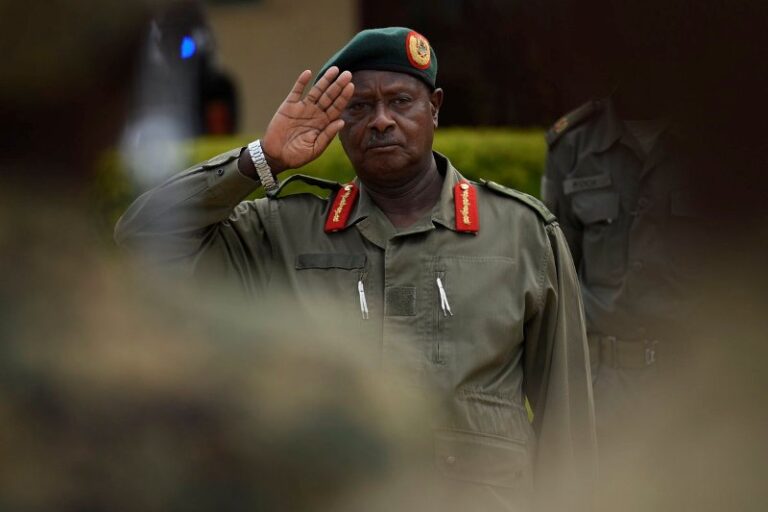
President Tibuhaburwa Museveni is considered by many in Africa and outside Africa as a dictator. He is one of Africa’s longest serving leaders. His rule brought many changes in Uganda. He is a very strong believer of dictatorship and absolutism,In 2005, he scrapped presidential term limits and the presidential age limit in 2017, which two actions, using Parliament, opened the way for him to manifest as an absolute ruler.

President Tibuhaburwa Museveni of Uganda waged a five- year bush war in the Luwero Triangle of Buganda, leading to hundreds of thousands losing their lives. He promised freedom, justice and democracy. The title of his once popular book is “Sowing the Mustard Seed: The Struggle for Freedom, Justice and Democracy.

However, after capturing the instruments of power in 1986 and promising “a fundamental change, not a mere change of guards”, time, which is the best judge, has revealed that freedom, justice and democracy were not the goal of President Tibuhaburwa Museveni’s Bush War but power to achieve his goals of liberation of a small exogenous ethnic group, wealth, glory and domination of the naturally indigenous groups of Uganda.

40 years later, President Tibuhaburwa Museveni is still in power and building hereditary politics and hereditary militarism. All indications are that he wants power to remain in his hands and his family well beyond his personal reign.

Many Ugandans and foreigners in and outside Uganda now think, believe and are convinced that President Tibuhaburwa Museveni has mutated from a liberator he sold himself to be a formidable dictator (e.g., Mugabi, 2028). The seeds of absolute power were always there. At one time, President Tibuhaburwa Museveni, very early in his rule, called himself Ssabagabe, which is the same as saying “King of kings”.

In 1962 when Uganda got political independence from the British colonialists, there were four hereditary Kings: the Kabaka of Buganda, the Omukama of Bunyoro, the Omukama of Toro, and the Omugabe of Ankole. There was also the Kyabazinga of the Territory of Busoga, with King-like Status.

In 1966, Apollo Milton Obote abolished all of them. However, when Tibuhaburwa Museveni, after capturing the instruments of power in 1986, was greeted with calls to restore the Kingdoms and semi-kingdom of Busoga. Even if he persisted in saying that he did not go to the bush to restore kingdom, when he presided over the making of the Uganda Constitution 1995, he showed that he meant business when he said he did not go to the bush to restore kingdoms.

The constitution does not contain the words Kingdoms and Kings. Instead, it contains the phrases “cultural institutions” and “Cultural Heads”. However, while all the former Kingdoms and Kings see themselves in those phrases, the Ankole Kingdom (Obugabe) is completely abolished.

Since the promulgation of the Uganda Constitution 1995, President Tibuhaburwa Museveni has ruled like a Life President. Although, since he subjected himself to electoral politics in 1996, he has effectively excluded alternative leaders in his politico-military organisation – National Resistance Movement (NRM)and others in alternative political parties from meaningfully and effectively competing for political power. He has ruled like a mega-King (a Ssabagabe) with a personalist politico-military organisation.

Until today, there have been persistent calls by members of NRM to President Tibuhaburwa Museveni to show them a successor. However, he has preferred silence on the matter, interspersed with growing influence on the Executive, Legislature, Judiciary and all the institutions of State.

In terms of action, he fast-tracked promotions his only son – Muhoozi Kainerugaba – through the military ranks and major posts in the National Resistance Army (constituionalised in the Uganda Constitution 1995 as Uganda Peoples Defense Forces, UPDF).

Today, Muhoozi-Kainerugaba is a General and Chief of Defense Forces (CDF) in which capacity he has a lot of powers, previously exercised by President Tibuhaburwa Museveni, such as promoting military leaders, and can do anything under the Sun. For example, during the by-election in Kawempe North, he admitted that he was the one who despatched the paramilitary group called JATT, which reined a lot of havoc. 

President Tibuhaburwa Museveni used a lot of influence and money to ensure that the Parliament of Uganda enacted a new UPDF Act 2025, which allows for military justice over certain categories of civilians. In essence, the UPDF Act 2025 is the tool that President Tibuhaburwa Museveni and the CDF will use to govern Uganda together militarily and administer military justice as and when the two with.

Even if President Tibuhaburwa Museveni has not pronounced that General Muhoozi Kainerugaba is his successor, the thoughts and actions of the President and his son depict that the President has a heir: a politico-military heir in the person of Muhoozi Kainerugaba.

It is hereditary Militarism in action. If this is the case, then President Tibuhaburwa Museveni is a military dictator clothed in democratic attire. He has shown love for all practices that depict him as such, and which show that Uganda has all the time been governed towards hereditary militarism.

One writer, cited by QUORA, said that dictators may claim the title of “king” or adopt king-like behaviors for several reasons, including:

  1. Consolidation of Power: By positioning themselves as a monarch, dictators can legitimize their authority and create a sense of permanence. This can help suppress opposition and dissent, as they frame their rule as a natural extension of a historical or cultural legacy.
  2. Dynastic Rule: Dictators often wish to establish a dynasty, where power is passed down to their heirs. This can create a sense of stability and continuity for their regime, as well as ensure that their personal interests and policies are maintained beyond their own tenure.
  3. Cult of Personality: Many dictators cultivate a cult of personality, portraying themselves as larger-than-life figures. By adopting royal titles or behaviors, they enhance their image and promote loyalty among their supporters, who may see them as a father figure or protector of the nation.
  4. Cultural and Historical Context: In some regions, historical precedents of monarchy influence modern governance. Dictators may invoke royal imagery to tap into national pride or historical narratives, aligning their rule with traditional authority.
  5. Suppression of Democratic Norms: By claiming royal-like status, dictators can undermine the principles of democracy and governance. This often involves eliminating political opposition, controlling the media, and manipulating public perception to maintain their grip on power.
  6. Symbol of National Unity: Dictators may present themselves as the embodiment of the nation, similar to how monarchs have historically been viewed. This can foster a sense of national identity and unity, even if it is based on coercion and fear.

The adoption of king-like titles and behaviours by dictators or dictator-like rulers, serves to reinforce their power, legitimise their rule, and establish a legacy that they hope will endure beyond their lifetime. In fact, their hope is that by the time they leave physical life, they will have established family rule based on hereditary politics and hereditary militarism.

I have written about hereditary political leadership in Uganda before, wherein former kings in the country were erroneously, but constitutionally, reduced to cultural institutions without political power soon after President Tibuhaburwa Museveni called himself Ssabagabe and resisted raising the former Kingdom of Ankole (Obugabe) among his new cultural institutions. 

I have yet to write about hereditary militarism, but in Uganda the boundary between hereditary militarism and hereditary politics is absent because we have political military leadership with all power in the hands of the military, with military officers at the centre of governance in every sphere of human endeavour.

This particular article is about how exactly dictators build and maintain their legitimacy, consolidate their powerand go on to establish out-blown or concealed military rule with sovereignty over the Executive, Legislature, Judiciary and all institutions of the State. Weakening of constitutionalism and the institutions of state is the ultimate phenomenon accompanied by rising presidentialism and personalist power.

Dictators are frequently also called tyrants and tend to use a variety of methods to establish and maintain legitimacy. They often employing propaganda, controlling information, and using force to suppress dissent. They may also hold rigged elections, claim to represent the will of the people, or manipulate cultural narratives to appear legitimate. Muradiaga (2024) has written that for tyrants, private property is one of the first barriers to be levelled in pursuit of despotic power.

Worse still, assets that tyrants steal can then be used to prop up their unfree regimes, extending their iron-fisted sway by spending wealth that the regimes’ cadres never earned or worked for.Muradiaga (2024) adds that economic, financial, and asset-based repression represents a systematic strategy employed by authoritarian regimes to consolidate and sustain political control through financial institutions and legal frameworks designed to restrict, monitor, and penalize dissidents, critics and [alternative political parties and leaders].

This form of repression entails the instrumentalization of all available financial tools, both national and international, to neutralise political, civic, or social opposition while undermining the economic autonomy of critical people and groups (Muradiaga 2024).

Recently, the Parliament of Uganda passed a law simultaneously with the UPDF Act 1995 to help President Tibuhaburwa Museveni deprive alternative political parties of financial power. Financially poor parties cannot meaningfully and effectively carry out their political work and stand up to the NRM, whose access to State resources make it financially strong. The financial resources it has ends up equipping itself with capacity to buy political opponents and finance agents that penetrate the alternative political parties.

The financial squeeze of Opposition in Uganda on account of not meeting with the President in meetings such as those of IPOD is seen in the latest law regarding government financing of political parties in the country passed by Parliament simultaneously with the UPDF Act 2025.

According to Muradiaga (2024), in its most basic form, economic and financial repression for political control can manifest as confiscation of physical assets, such as land, properties, and businesses, under legal pretexts justifying expropriation. As financial technology has advanced and economies have become digital, however, authoritarian regimes have added newer methods that enable deeper, more precise control over the population.Muradiaga’s (2024) list of tactics that dictators use to squeeze alternative political leaders or bases includes:

1) Financial surveillance and violation of banking privacy. Authoritarian states will access (legally or not) the banking data of individuals and organizations, including their credit-card spending and any other financial flows that can be monitored. Through international-cooperation mechanisms meant to help in the fight against crime and terrorism, and through the use of Financial Intelligence Units (or FIUs — state agencies designed to keep tabs on suspicious financial dealings), regimes can track dissidents’ money in real time, both domestically and internationally.

2) Charges of money laundering and illicit financing. These are among the most effective tactics that authoritarian regimes can use in their efforts to delegitimize and criminalize opponents. Under the guise of fighting crime or terror, governments will freeze accounts, seize assets, and suspend the ability of individuals and organizations to operate. Groups that are deemed regime-unfriendly and that receive international donor funds are especially vulnerable.

3) Confiscation of physical and financial assets. In addition to surveillance and financial control, authoritarian regimes confiscate physical assets such as properties, homes, businesses, and other tangible resources. These expropriations are often justified by laws meant to stop money laundering or support national security, but which also allow the state to strip assets from regime opponents.

4) Manipulation of national and international financial institutions. Authoritarian regimes coopt both national financial institutions (banks, central banks, finance ministries) and international organizations through norms and regulations such as those of the Financial Action Task Force (FATF) to impose sanctions and financially isolate critics. This enables authoritarians to block access to global financial systems, cutting off critics from any possibility of receiving donations, conducting international transfers, or even conducting basic transactions.

Napoleon Bona Parte said he was the true representative of the people and the pillar of democracy in France even if he knew his was a military state. He was able to use the Parliament to convert himself from a military leader to an Emperor. He completely usurped the sovereign powers of the Parliament and made it dance to every tune he played in terms of administration, leadership, governance and war.  

During his political ideology (Bonapartism) was supreme and unchallenged and all leadership and governance sprang from it. He was an absolute ruler. His Parliament gave a semblance of parliamentary system, it placed significant power in the hands of the First Consul, Napoleon, who appointed many officials and controlled the legislative process. 

In the case of Uganda, the latest show of President Tibuhaburwa freeing himself from the people of Uganda and their representatives in Parliament is definitely the new Uganda People’s Defense Forces (UPDF) Act 2025, which gives a lot of power to the President’s son, Muhoozi Kainerugabawho for all, intent and purposes, is the chosen heir to the Presidential throne.

Both President Tibuhaburwa Museveni and General Muhoozi Kainerugaba have thanked the Members of Parliament whom, reportedly, the former referred to as children, for passing the UPDF Act 2025, which consolidates power in their hands. In the thinking of the President, those Members of Parliament who did not support the Act in its entirety were anti-Uganda and anti-people and should apologise.

It is becoming increasingly clear that President Tibuhaburwa Museveni can never be defeated through elections his government organises. He is seeking another term through an election in 2026. However, he is already militarily preparing to ensure that he emerges the winner. Even when he knows biometric voting can’t work effectively in Uganda, he has shown it is the one he prefers. He first claimed Kyagulanyi Ssentamu stole his 1 million votes during the 2021 elections (Draku, 2025). 

Just as I write, he has claimed Kyagulanyi Sssentamu stole 2.7 million votes in collusion with the Electoral Commission, which he singularly composes. Clearly, the results the next elections will not be decided by the voters but by rigging. Already the President claims more than half the population of Uganda belong to his Party, which he and his supporters claim is a mass party, even if most of the population consists of young people born after he grabbed power. Because he has never believed in pluralism, he is using money to destroy the integrity of the political parties.

Meanwhile, political opines, whom he has repeatedly referred to criminals may either be treated like the power vandals of Luwero (URN, 2025) or subjected to military justice under the UPDF Act 2025. In both cases the person at the centre in the CDF, General Muhoozi Kainerugaba who will be hard put to carry out the orders of the Commander in Chief, who is is his father.

A future ruler of Uganda can use the UPDF Act 2025 to consolidate power and decide to do away with Parliament the way President Idi Amin did and was able to rule the country for 8 years. With military justice, even the Judiciary of Uganda is already weakened.

Time will tell whether the father and son will free themselves from Uganda and from the people and how.

For God and My Country

Prof. Oweyegha-Afunaduula is a member of Center for Critical Thinking and Alternative Analysis

MOVING ON: Richard Kimera resigns as Butembe Sports Minister, eyes top national role

0

By Musa Kikuuno

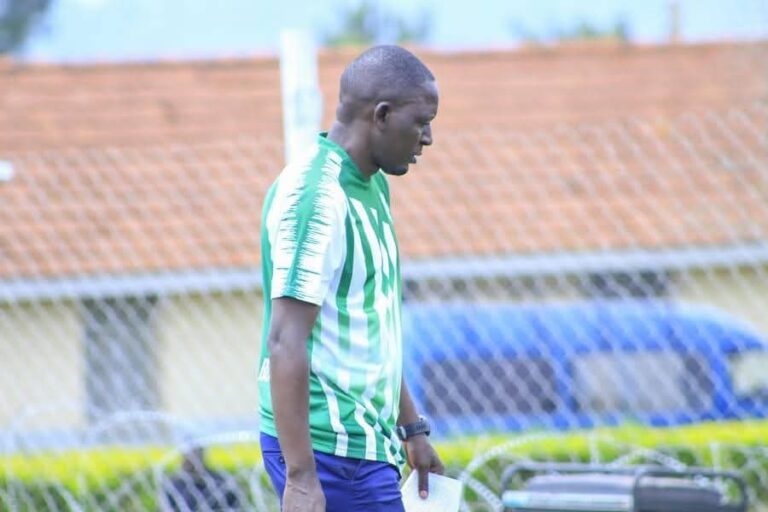
After a dedicated and transformative tenure, Kimera Richard has officially stepped down as the Sports Minister of Butembe Chiefdom, marking the end of an era that saw unprecedented success both on and off the pitch.

Kimera, who played a pivotal role in the establishment of the Busoga Masaza Cup, was the first Public Relations and Media Officer for the tournament.

He served diligently from the inaugural edition in 2016 through to the fourth, working closely with the Obwa Kyabazinga Bwa Busoga and the Tournament Organizing Committee to turn the Cup into one of the most respected regional football events, attracting major sponsorships and widespread community support.

In his most recent role as Sports Minister for Butembe, Kimera led the Chiefdom to remarkable achievements:

 5th Edition: Secured 3rd place

 6th Edition: Finished 2nd

 7th Edition: Crowned Champions

Beyond the trophies, his leadership has helped groom talented players who have moved on to top leagues and even national teams. He has also mentored coaches and administrators, all while promoting a safe, inclusive, and family-friendly sports culture within Butembe.

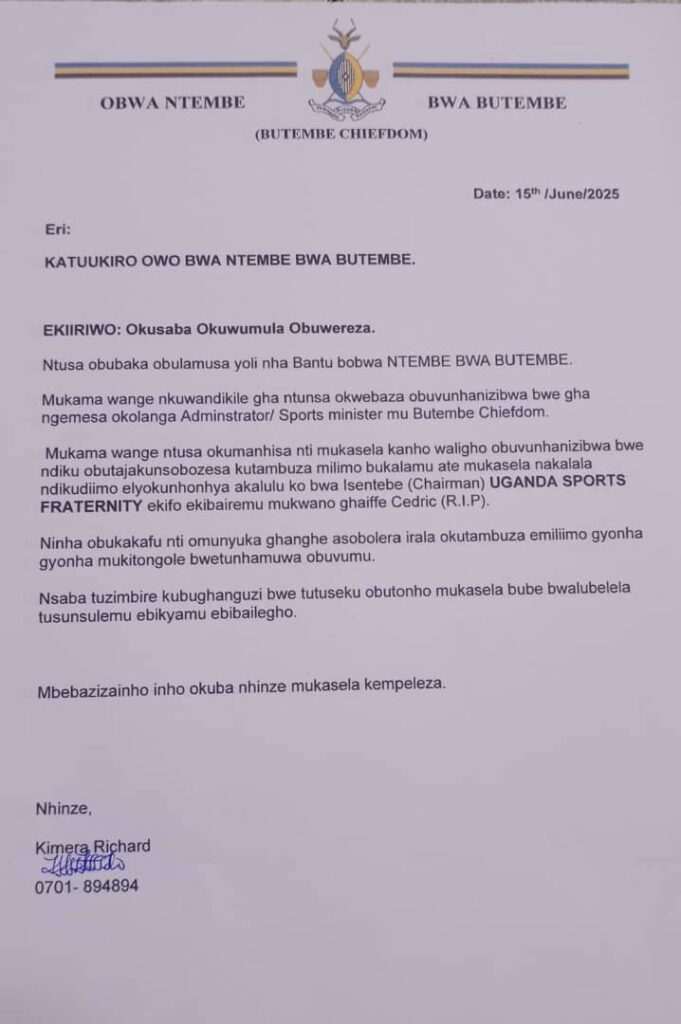
In his resignation letter dated June 15, 2025, addressed to the Katukiro of Butembe Chiefdom, Kimera wrote: “I am deeply grateful to Butembe Chiefdom for the trust and opportunity to serve; together, we built a legacy that will live on through every kick of the ball.”

As he steps down, Kimera now turns his focus to national service, announcing his bid for Chairman of the Uganda Sports Fraternity—a position left vacant following the recent passing of the former officeholder, Cedric Babu Ndilima.

Kimera is a senior journalist with NBS FM Jinja, widely known for his dedication to sports development and youth empowerment across Busoga. His next chapter is eagerly anticipated by many within Uganda’s sports circles.

IMPACTFUL GOSPEL: Kyabazinga lauds Radford Baptist Church’s impact on Busoga Kingdom

0

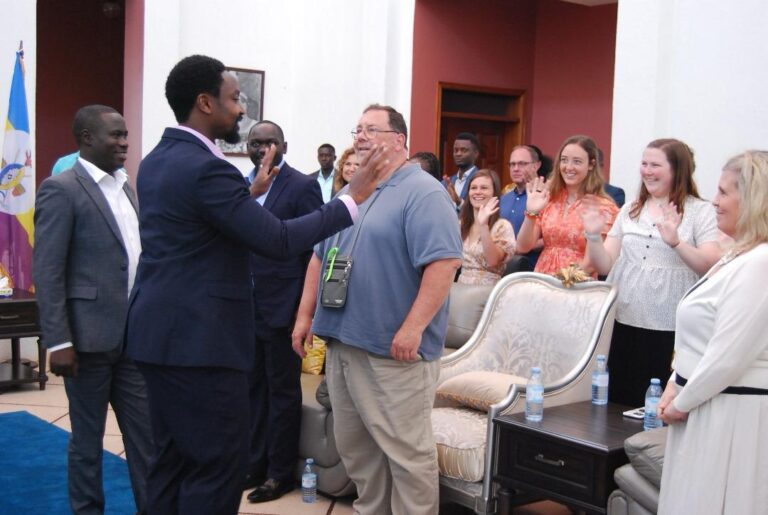
His Royal Highness (HRH) William Wilberforce Nadiope Gabula IV, the Kyabazinga, cultural ruler of the Busoga Kingdom, has expressed his profound appreciation and assured unwavering support to the Radford Baptist Church from Virginia, US, for their transformative work in the kingdom.

He lauded their efforts in education, healthcare, and spiritual development, emphasizing the positive impact on the community of Buwaidha village located in Buyende district and beyond.

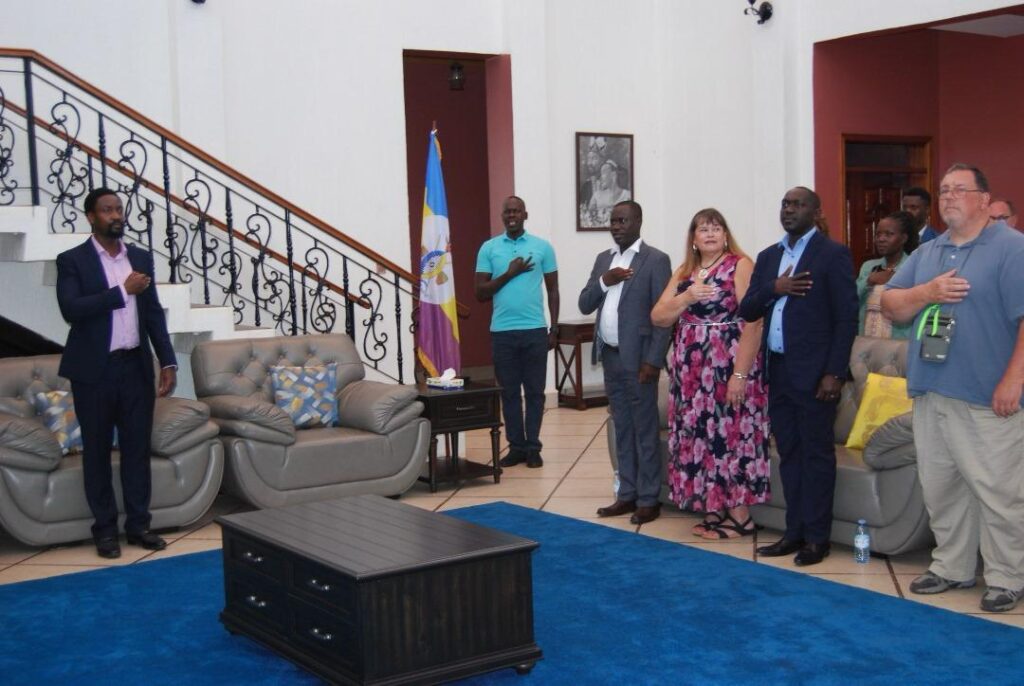
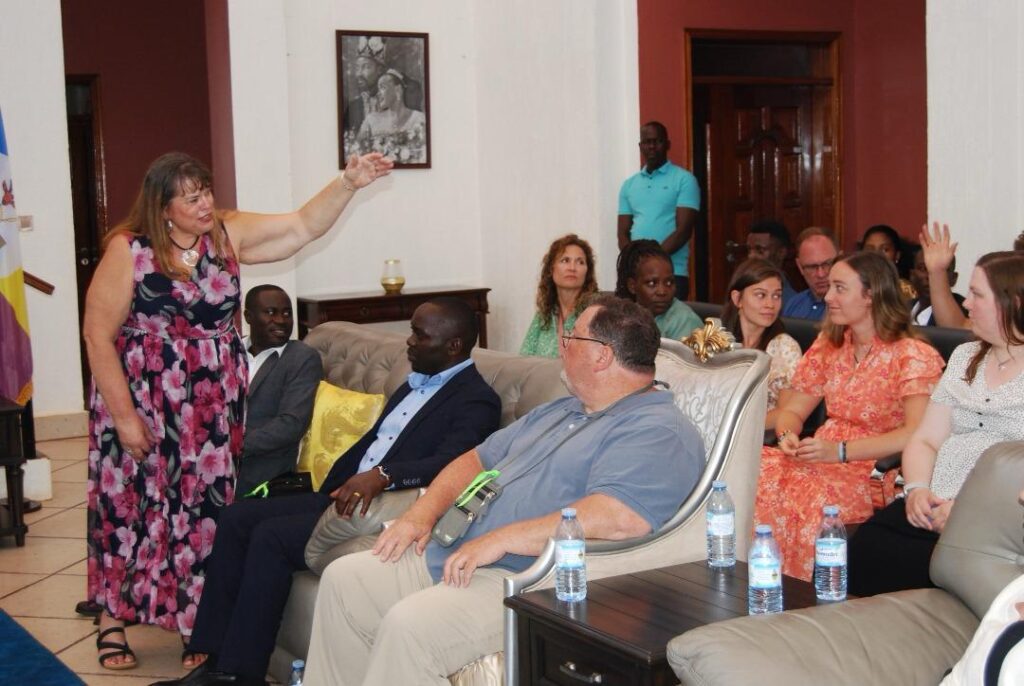
The Kyabazinga’s remarks came during a courtesy visit by a delegation from Radford Baptist Church to his palace at Igenge, Jinja City, on June 11th, 2025.

“We are happy that you are helping us to shape the different communities in Buwaidha. We hope that more people shall come,” the Kyabazinga stated, acknowledging the church’s commitment to the region.

He further emphasized the role of faith in societal improvement, stating, “Through religion you have constructed a church that is growing. We know that through being God fearing, our people shall be morally upright.”

The Kyabazinga noted that the initiative is especially impactful on the youth, fostering positive development and shaping the future generation. “I get the feedback. They are seeing a lot of new development,” he added.

Radford Baptist Church’s primary focus in Buwaidha village, located in Buyende district, has been centered around establishing a strong foundation for education and spiritual growth.

They have built a church and the New Life Schools Buwaidha, a school offering free, high-quality education to disadvantaged children whose families are unable to afford it.

The Kyabazinga himself launched the school in 2023, which initially boasted state-of-the-art infrastructure for pre-primary learners.

He also officiated the groundbreaking for the construction of a new structure designed to accommodate primary and secondary school classrooms, along with essential facilities such as libraries and laboratories, demonstrating the Kingdom’s commitment to the project.

Eng. Gerald Isabirye, a director of New Life Academy, highlighted the initial challenge of low school attendance in the area. “But now, the children in Buwaidha and the neighboring villages come to this school,” he explained, showcasing the positive impact of the academy on the community’s access to education.

During the meeting, the Kyabazinga reiterated his commitment to fostering a strong and lasting partnership with Radford Baptist Church. “We know that as time goes on; we shall further strengthen our relationship into different projects and exchange programs,” he said, envisioning future collaborations.

He also pledged to mobilize his subjects to embrace the messages and initiatives from Radford Baptist Church, further enhancing their livelihoods.

Stephanie Von Rosenberg, the Team Leader of the Radford Baptist Church delegation, outlined the multifaceted support they have provided to the people of Buwaidha over the past four years.

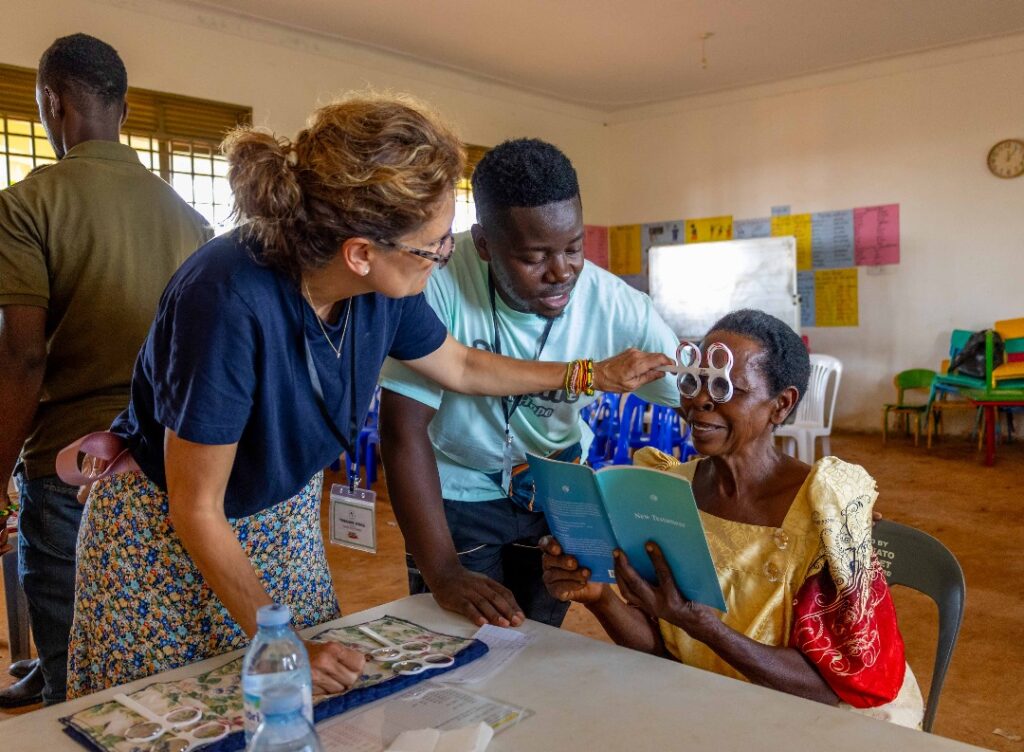
Beyond gospel outreach and education, they have established annual health camps offering crucial medical services. These health camps have addressed prevalent health issues in the community.

“Last year also, we saw a gentleman who was told his hand had to be amputated; he came to our clinic, our nurses saw him and treated him and gave him the medications. His hand is well now. We also have given away many, many free glasses. Everything for free,” Von Rosenberg recounted, highlighting the tangible impact of their healthcare initiatives.

She also shared a heartwarming story of saving a pregnant woman and her twins. “Also, last year was a woman who was pregnant with twins that were breached? We paid for her to have a C-section. And I’m happy to tell you that all three of them are healthy and strong,” she added, illustrating the life-saving support they provide.

This year’s health camp, held on June 10th, 2025, saw over 500 people receive medical attention from the Radford Baptist Church team. Von Rosenberg noted the progress made in addressing health challenges: “There was a red eyes pandemic; this year it was under control. We had enough to solve that.”

Ultimately, Von Rosenberg emphasized that the most significant achievement has been “bringing the gospel to the people of Buwaidha,” solidifying the spiritual foundation for lasting positive change in the community and fostering a strong and lasting relationship with the Busoga Kingdom.

The continued collaboration promises a brighter future for the people of Buwaidha and the wider Busoga Kingdom.

SITUATIONAL ANALYSIS: Busoga United in unenviable position as they face off relegated Booma in fight to shake off Big League relegation

0

By Musa Kikuuno | Busoga Times

Busoga United are staring down the barrel of relegation from the FUFA Big League as they prepare to host already-relegated Booma FC on Sunday 15th June at the FUFA Technical Centre in Njeru.

Victory is a must if the club is to extend its survival hopes to the final day of the season.

Relegation Battle Heats Up

Busoga currently sit 13th in the table on 27 points, level with 14th-placed Kigezi Homeboyz but ahead on goal difference. With four teams set to be relegated this season, and Booma already confirmed as one of them, the fight to avoid joining them has reached a critical point.

The teams from 10th to 14th – Kaaro Karungi (31 pts), MYDA (29), Arua Hill (29), Busoga (27), and Kigezi (27) – are separated by just four points, making this one of the tightest survival races in recent seasons.

Booma’s Poor Form Offers Busoga Hope

Booma have endured a torrid campaign and sit bottom with just 16 points. They have won only once away from home all season – a 1-0 victory over Kigezi Homeboyz in November 2024. Since then, they have lost eight and drawn three on the road.

Busoga, by contrast, have been stronger at home, recording six wins, three draws, and four losses. They also won the reverse fixture 2-1 in January.

What the Numbers Say

Busoga United (13th): 27 points (7 wins, 6 draws, 13 losses)

Booma FC (15th): 16 points – already relegated

Remaining Fixtures for Busoga:

▪️ vs Booma FC – June 15 (Home)

▪️ vs Blacks Power – June 22 (Away)

If Busoga secure all six remaining points, they will finish on 33 – likely enough to ensure safety. A draw or defeat against Booma, however, could seal their fate.

Final Day Drama Looms

Even if they defeat Booma, Busoga’s final match is away to promotion-chasing Blacks Power, who currently sit Fourth with 45 points. The first-leg meeting ended in a 1-0 win for Busoga, but replicating that result away from home will be a tall order.

The match could be decisive for both clubs — with one chasing promotion and the other battling to stay in the division.

In Summary

* Booma FC are already relegated.

* Busoga must win Booma to avoid joining them.

* The final day fixture away to Blacks Power could determine their fate.

* Three more teams, in addition to Booma, will drop at season’s end.