Tuesday, March 17, 2026
Home Blog Page 49

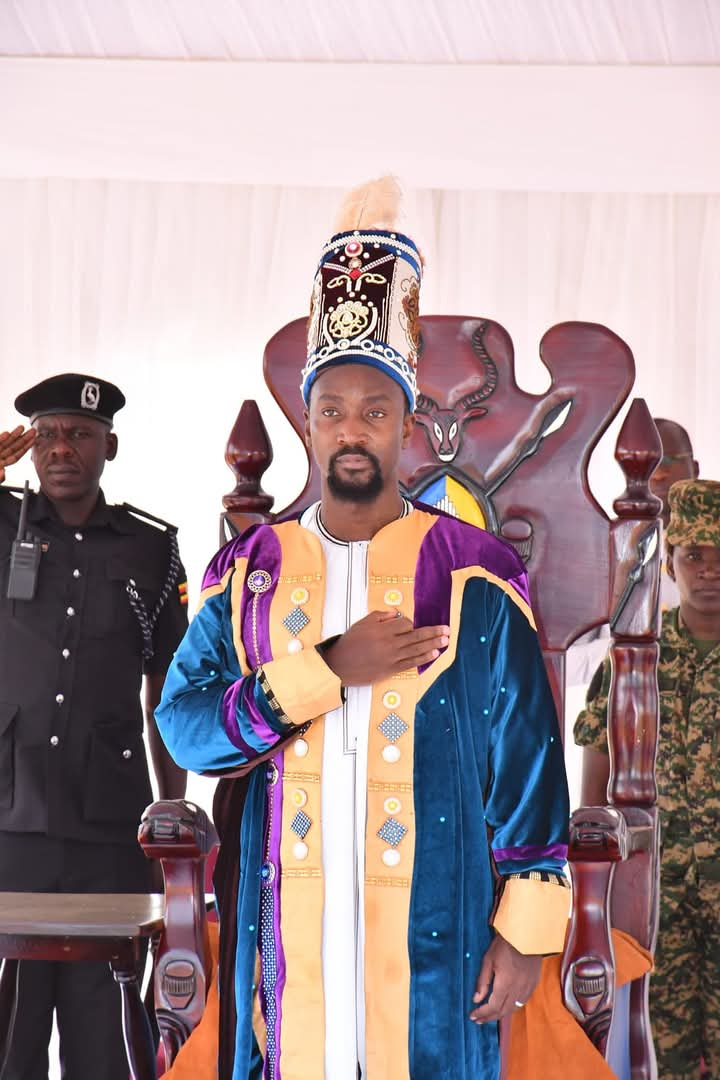
REASSURANCE: Kyabazinga Nadiope IV is in charge of Busoga Kingdom – Muvawala assures Basoga

0

The Katuukiro of Busoga Kingdom, Owekitibwa Joseph Muvawala, has in a lengthy and elaborative statement ‘assured Abasoga and the rest of Ugandans that His Majesty William Wilberforce Kadhumbula Nadiope IV is in charge and control of the Kingdom executing his duties as enshrined in the relevant legal regimes and Kisoga culture and norms.’

For close to two months, there has been rising concerns about the whereabouts of the Kyabazinga since his last public appearances in January. Matters were made worse when the First Deputy Prime Minister of Uganda, and Woman MP for Kamuli district, Rebecca Alitwala Kadaga, during a radio talksho with KBS Radio in Kamuli, announced that unscrupulous people had hijacked Obwakyabazinga.

In response, Muvawala said, “The Obwakyabazinga Bwa Busoga is under no control by any other forces apart from the authority and leadership of His Majesty Isebantu Kyabazinga,” adding “The Kyabazinga informs all of us that nobody is bigger than Busoga and our cosmopolitan nature and unity in diversity as Obwakyabazinga is our strength.”

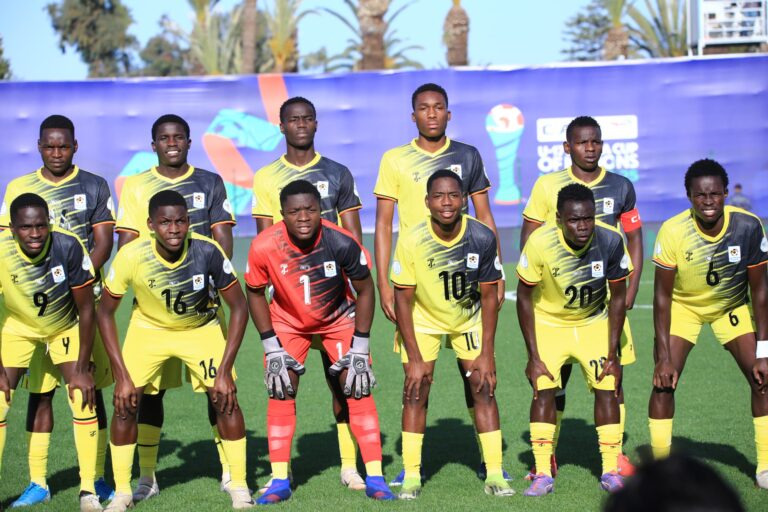
TIGHT TARGET: Uganda U-17 Cubs faces must-win game against Zambia to qualify for knockouts and 2025 FIFA U-17 World Cup

0

By Musa Kikuuno, Busoga Times

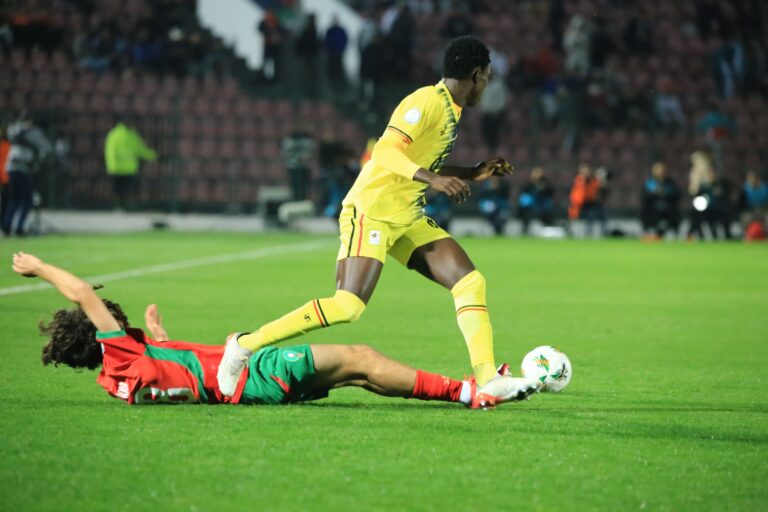
The Uganda U-17 Cubs are on the brink of making history at the 2025 Africa U-17 Cup of Nations (AFCON) in Morocco, with a decisive match against Zambia on Sunday, April 6, 2025, that could see them qualify for both the knockout stages and the 2025 FIFA U-17 World Cup in Qatar.

Going into the final group stage match, Uganda sits in third place in Group A with 3 points, just behind Morocco and Zambia, both of whom have 4 points. Tanzania is at the bottom of the group with no points, and their chances of advancing are already extinguished.

Morocco, already assured of qualification, sits at the top of the group due to their strong goal difference and will face Tanzania in the final match. Whether Morocco wins or loses, they will proceed to the knockout rounds. The only question for the Moroccan team is whether they will finish first or second in the group, depending on other results.

For Uganda, however, the stakes couldn’t be higher. The Cubs must defeat Zambia to have any chance of progressing to the knockout stages. A win would not only secure Uganda a place in the quarterfinals but also guarantee their qualification for the 2025 FIFA U-17 World Cup, as the top 10 teams in the AFCON will book their spots in Qatar.

A draw or loss would see Zambia advance, alongside Morocco, leaving Uganda’s World Cup dreams in jeopardy. In such a scenario, Zambia would secure second place, and Morocco would remain top of the group. The Cubs’ fate lies in their hands, with everything riding on their performance against Zambia, who will also be eyeing a victory to cement their qualification for the knockouts.

While Uganda’s journey in the competition still has some uncertainty, the Cubs have shown great determination so far, and fans are hopeful that they can rise to the occasion and secure a historic win.

With only one game to go, all eyes will be on Sunday’s encounter between Uganda and Zambia, a match that promises to be a thrilling finale to Group A. A victory for Uganda could propel them to greater glory, but only if they can conquer their regional rivals in a winner-takes-all clash.

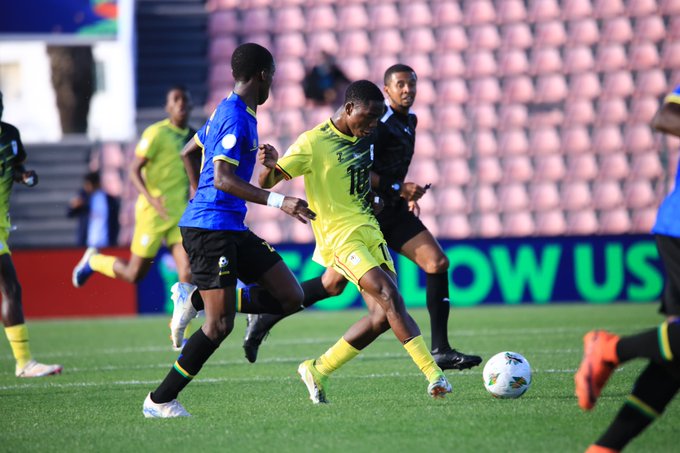
REDEMPTION: Uganda makes easy work out of Tanzania at U17 AFCON in Morocco

0

Goals from Simon Wanyama, Richard Okello and James Bogere were enough to see Uganda Cub beat their neighbours Tanzania at the ongoing U17 AFCON tournament in Morocco.

The results restore confidence in the teenage Uganda who lost their tournament opener 5-0 against hosts Morocco. Uganda heavily struggled to match the qualities of the Moroccans.

The Cubs earned their spot in the 2025 AFCON by winning the CECAFA U17 Qualifiers, defeating Tanzania 2-1 in the final. Uganda is in Group A with hosts Morocco, Zambia and Tanzania.

Uganda’s last U17 AFCON appearance in 2019 saw them finish third in the group stages, missing out on advancement to the World Cup.

Going into this tournament, Uganda Cubs coach Ssenyondo said their target was to use the tournament to qualify for the U17 World Cup. The semi-finalists at the tournament qualify for the World Cup.

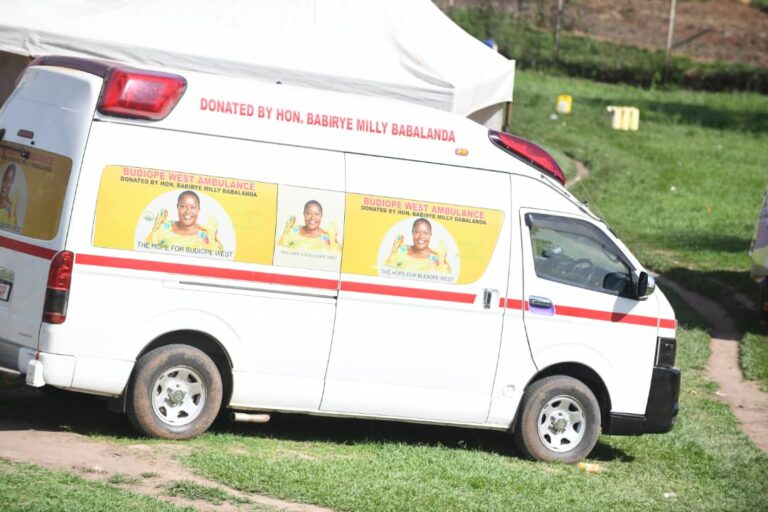
ARRESTED: How Milly Babalanda’s ambulance is causing problems in Buyende

0

Under normal circumstances, and considering the health-services-related challenges the people in Buyende district face on a daily basis, a donation of an ambulance is supposed to attract rapturous ululations.

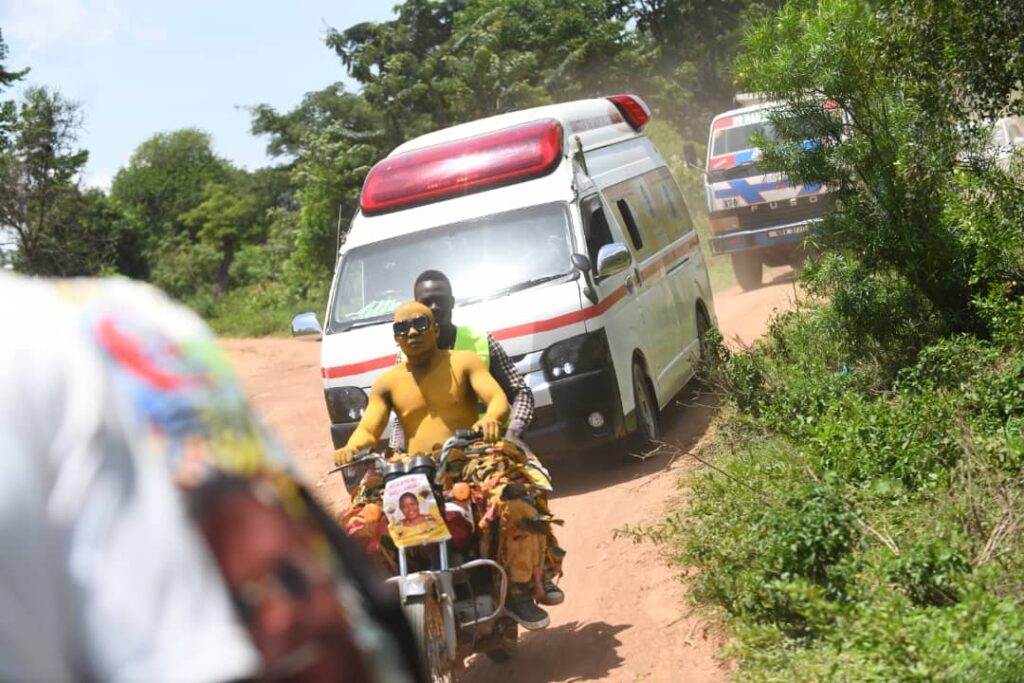
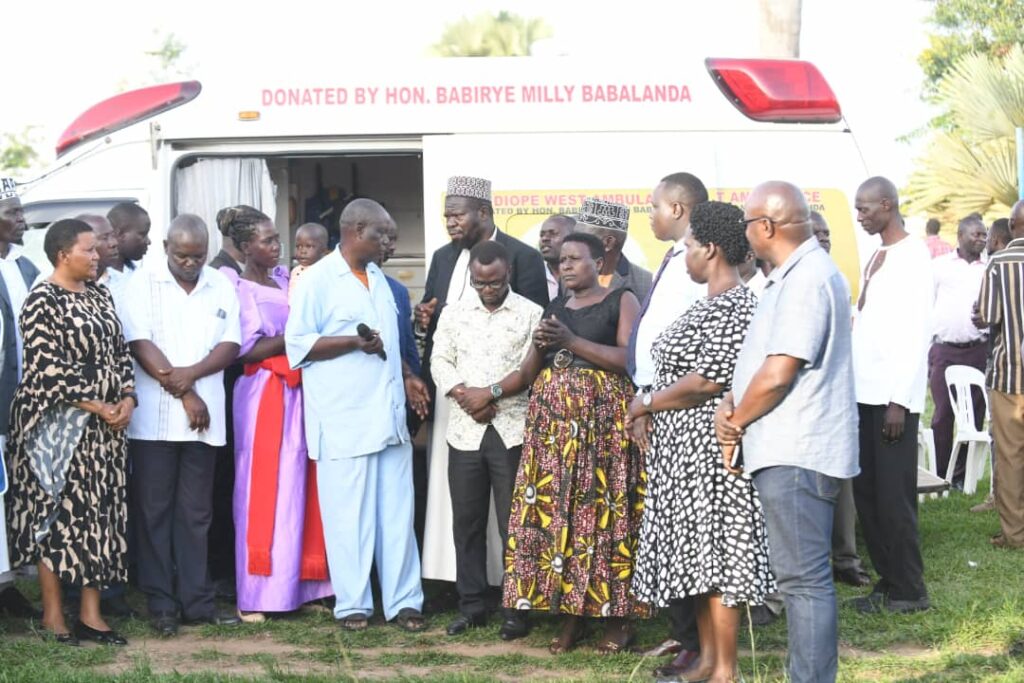
However, this is turning out not to be the case after the minister for presidency, Babirye Milly Babalanda, donated one such ‘brand-new’ ambulance to Kidera Health Center, Buyende District, on 2nd April 2025.

The minister’s plan is that the ambulance enhances local health services in the constituency; however, what ideally is her good gesture and good will has received resistance from some members of the community.

A resident in Kidera Town Council said, “People are saying an ambulance is not among the critical challenges Kidera Health Centre IV faces; the issues that need to be addressed are elevating it to a substantive health IV because it’s still registered as health center 3 by the government.”

Adding, “Then there is a need for enough human resources and more wards because as of now both men and women share one ward.”

Voices from Kidera and across Buyende are saying the minister doesn’t know the problems affecting the people because she is a foreigner. And now, it seems that the ambulance is adding another problem to the many problems the minister is struggling to solve.

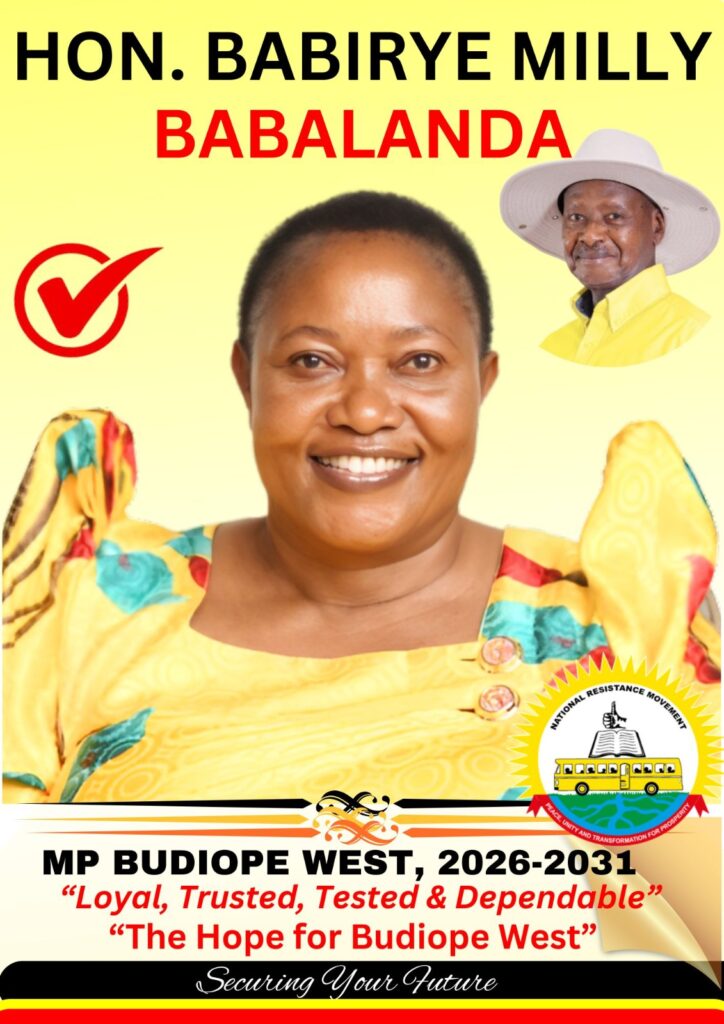
The problems stem from Babalanda’s tumultuous political ambition in her adopted district. She has expressed interest in standing for Member of Parliament in the Budiope West constituency.

Budiope West rejects Babalanda

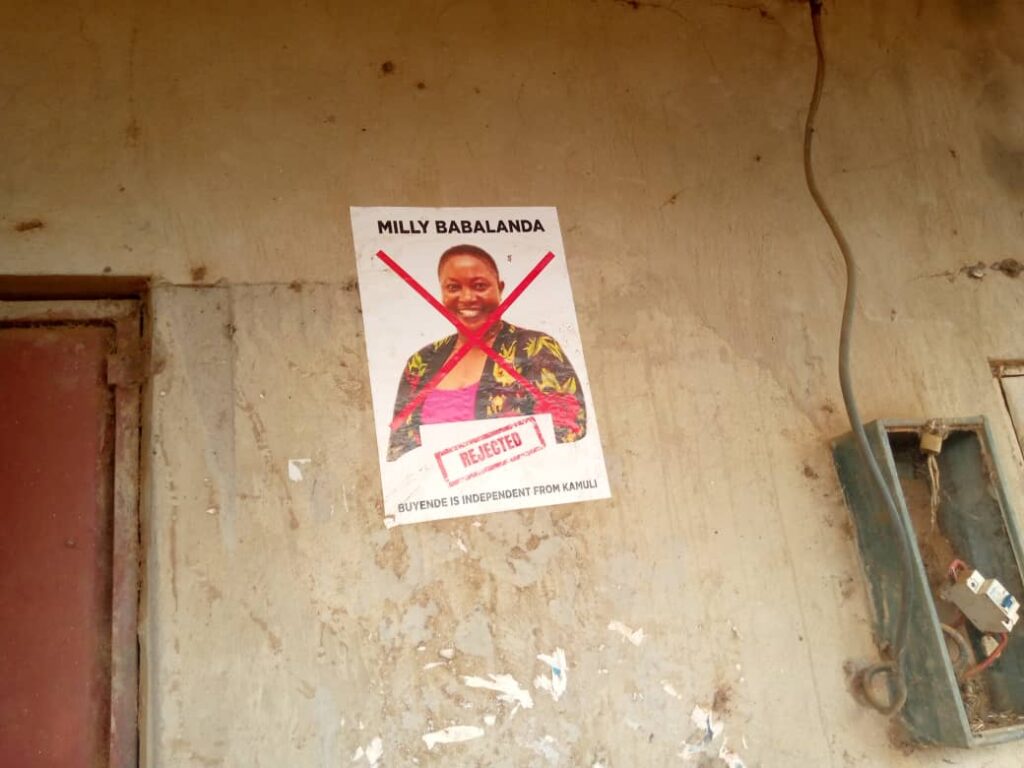
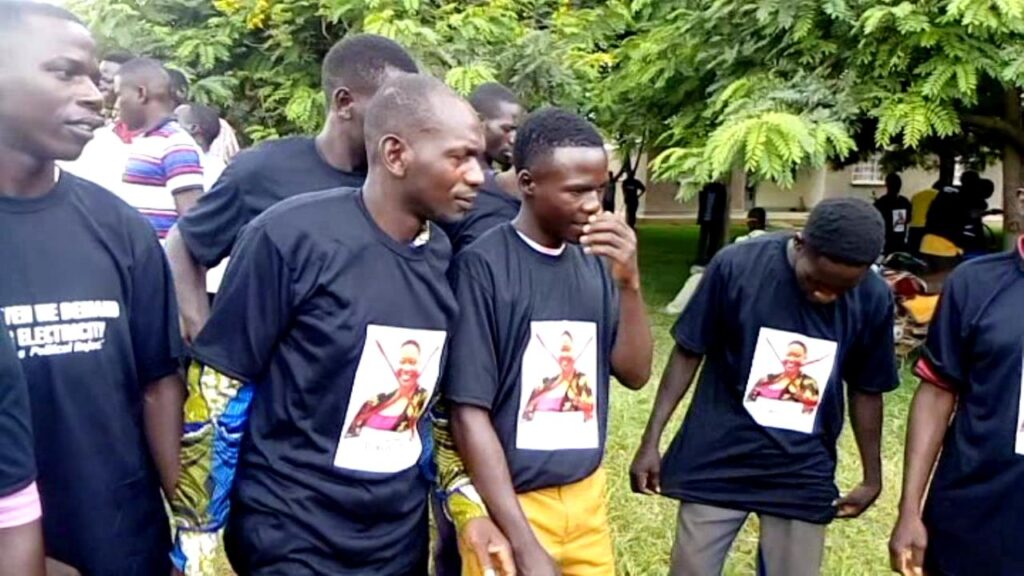
The minister’s political ambitions in Budiope have been hard hit. Around this time last year, ahead of the Women’s Day celebration at Iringa Primary School in Nkondo sub-country, youths organised peaceful protestations rejecting her political aspirations in Budiope West.

The youthful protestors reasoned that Babalanda, who hails from Kamuli, cannot stand for political office in Buyende as if Buyende doesn’t have educated and able indigenous persons to stand for these political offices.

The day ended with a sizeable number of youth arrested and detained at Buyende Central Police stations for days allegedly under the orders of the minister. This didn’t go down well with the voters in the constituency who questioned the minister’s intentions.

Ever since, Babalanda or her agents have received hostile receptions at public meetings, especially burial ceremonies. It, therefore, comes as no surprise when some people soundly rejected the idea of the ambulance, arguing that it wasn’t their immediate health-related problem.

The problematic ambulance

Embarking on its maiden voyage in the constituency, like the Titanic did on the calm Atlantic Ocean before picking a knock with the iceberg, the ambulance landed into problems when it picked up nails that tore its tyres, prompting it into an undesired stop.

Babalanda’s camp believes that these nails were intentionally planted by the anti-Babalanda crusaders who want to fail the minister in her political ambition to conquer Budiope West.

Like it is every time the minister is challenged in the constituency, someone or some people end up being arrested by the police. Following the launch of the ambulance on Wednesday, police have reportedly arrested a young man going by his moniker Commander Sande.

Speculators in Buyende are saying that Sande and others on the run, and being hunted by the police, are being accused of deliberately planting the nails that endangered the ambulance. The truth in these allegations are issues the police can handle through thorough investigations.

NO COMMON SENSE: Why are you Justices when you cannot dispense justice? Bugweri’s Katuntu questions judiciary over reckless handling of bail applications 

0

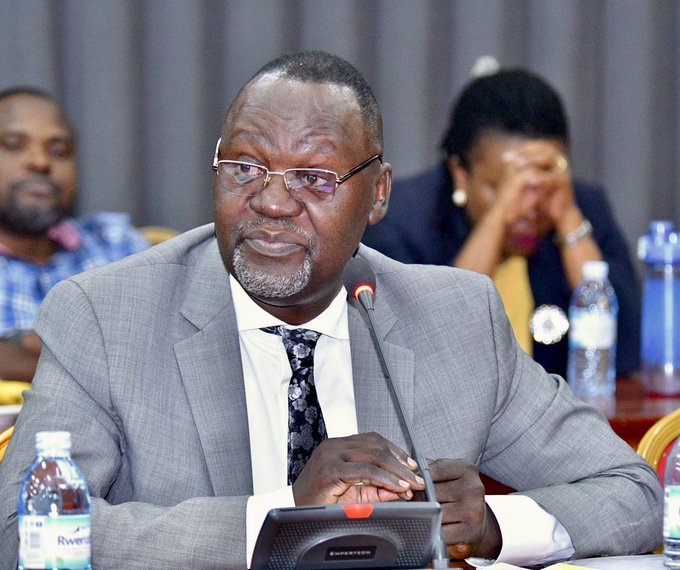
Members of Parliament (MPs) on the Legal Committee have rebuked the Judiciary for the reckless handling of bail applications, with some lawmakers wondering whether some judicial officers even have common sense or deserving of titles like Worships, Lordship, or Justices, yet all their actions are characterised by injustices like adjourning for two weeks just to decide on a bail application.

The attacks were led by Abdu Katuntu, the MP for Bugweri County, and Medard Ssegoona, the MP for Busiro East, during a meeting held with officials from the judiciary who had come to present their 2025/26 ministerial policy statement.

“There is this simple thing called bail. And somebody adjourns a case for two weeks to grant bail. This is madness. This is purely madness. It is not professional. It’s not legal. It’s not common sense. Take a decision whether you grant it or not. Simple. But you adjourn for two weeks to consider bail or even more; what are we doing, gentlemen? And some of you, we call you lordships. We call you worships. Why are you Justices when you cannot dispense justice?” argued Katuntu.

“You adjourn a bail application. What is so novel in a bail ruling? Someone tells you, I’m going to hear your case, but I’ll hear your bail application two weeks, three weeks away from today. You are defeating the Constitution. Because in the Constitution, everybody is entitled to be free, except where their accuser places on your table justification for restriction. Isn’t that the position of the law? Every innocent person is entitled to freedom. Now, you’re aiding the State to incarcerate somebody who is innocent until two weeks when that person will come to justify his freedom. I think it’s unfair,” remarked Ssegoona.

Exorbitant bail fees

The Judiciary was also castigated for the exorbitant bail fees imposed on suspects, with Katuntu accusing judicial officers of vulgarising and monetarising bail applications, wondering if there aren’t other mechanisms that can be used to enforce the appearance of suspects in courts.

“Why has money been the factor of the bail? Money. Why don’t we think about other things, such as the attendance, other than it being economics? Because bail is about for you to secure his attendance. And we have vulgarised it; it is about money. It’s just vulgar, actually. Money, money, money. So me, who doesn’t have money, I have no opportunity because the biggest factor is money,” Katuntu said.

“Why do you charge a lot of money? Somebody has been arrested. Actually, somebody is a victim. The police arrest people and beat them up; we witnessed it in Kawempe recently. Someone has been boxed by the DPC; he comes to you with a swollen face; you remand him, and then when you choose to hear, you ask for a lot of money. These ordinary people, they pick on the streets, trying to survive. Why do you make bail so prohibitive?” Ssegoona asked.

New law on bail proposed

Ssegoona also wondered if the Judiciary has a system that periodically reviews the decisions of these judicial officers and offered to be among those to review these decisions, to which Katuntu proposed the enactment of an independent law on bail applications.

“We should start thinking about going away from the guidelines and make substantive legislation which sort of ties your hands. It’s very unfortunate because you want a judicial officer to have discretion, to exercise it judiciously. But if we are faced with a fatal problem, cured by the law, then we go to that level because somehow you are not exercising that discretion properly,” remarked Katuntu.

Judiciary apologises

Pius Bigirimana, Secretary to the Judiciary, apologised on behalf of the Judiciary, stating, “I want to take this opportunity to apologise on behalf of the judiciary for some of the shortcomings that have been experienced. And some of them are systemic; others are for individuals in the judiciary. We do apologise. But we are not just seated; we are looking at all those areas that have got weaknesses and seeing how to fix them, both in the human resources and in the systems.”

Bigirimana, however, defended the monetisation of bail, saying it is currently the only available means, saying, “For the time being, that’s what we have. But we shall benefit from members’ ideas. If you can come up with, for example, a proposal, you will have helped us. But for the time being, it is that.”

We will burn you

Ssegoona warned the judiciary that Ugandans might be prompted to emulate their Kenyan counterparts, who set Kenya’s Parliament on fire and also set court buildings ablaze, due to the declining public trust in the judicial system.

“You get somebody who is battered, who is bleeding, and you remand that person. You do not even instruct prisons; go and keep this person in hospital. Instead, you say, I am remanding somebody to Luzira. You know, just next door in Kenya, Kenyans went and burnt their parliament. We do not want to see Ugandans burning our courts. Why? Because once the dignity of the court is questioned and shaken, we are in trouble because somebody who would have taken me to court will use a panga and will resort to mob justice,” warned Ssegoona.

Number of prisoners on remand without unknown

The MPs were also shocked to learn that the Judiciary had written to the Commissioner of Prisons, Johnson Byabashaija, demanding a list of all the inmates on remand without trial, prompting Ssegoona to question if the same Judiciary that committed these suspects had forgotten about the dates they were supposed to return to court for trial.

His remarks followed a revelation by Pamela Lamunu, Acting Chief Registrar, who informed the MPs that the Judiciary had written to Uganda Prisons Services requesting the list of all people on remand without trial.

Ssegoona noted, “Before you receive information from the Commissioner General, you are the one who remanded these people. You definitely know who you remanded; you know when you required them to come back. How can somebody be in prison for a year without your remand warrant? When people are being committed to the high court for trial, you also have that record because the magistrate who is committing notes on the file.”

UNPREDICTABLE FUTURE: Why is Uganda likely to be ungovernable beyond President Tibuhaburwa Museveni?

0

By Oweyegha-Afunaduula

Uganda offers almost unequalled opportunities for the study of civil war with no less than fifteen cases since independence in 1962 (see Figure 1) – a number that makes it one of the most conflict-intensive countries on the African continent. The current government of Yoweri Museveni has faced the highest number of armed insurgencies (seven), followed by the Obote II regime (five), the Amin military dictatorship (two) and the Obote I administration (one).2 Strikingly, only 17 out of the 47 post-colonial years have been entirely civil war free (Stefan Lindemann, 2010).

In 1997 Wafula Oguttu’s independent Newspaper, The Monitor, which was replaced by present-day Daily Monitor, asked President Tibuhaburwa Museveni, what kind of Uganda he envisioned after him. Very quickly responded in one word: Ungovernable. The President did not reveal why he thought, believed and was convinced Uganda will be ungovernable after him.

President Tibuhaburwa Museveni, may have been guided in his answer by the fact that after the fall of President Idi Amin Dada, who called himself President for life, Uganda was ungovernable after the transition from Uganda National Liberation Front/Army (UNLF/A) rule to Uganda People s Congress/Uganda National Liberation Army (UPC/UNLA) rule.

UNLA had previously included President Tibuhaburwa Museveni’s guerilla force called Front for National Liberation (FROASA), and former President Apollo Milton Obote’s guerilla force called Kikosi Maalum (KM). FRONASA and KM had spent almost 7 years waging guerilla war Idi Amin’s Uganda Army (UA) but separately. It was the Moshi Conference of disparate groups held in the Tanzanian Town of Moshi, which included UPC, Democratic Party (DP) and FRONASA. The Moshi Conference brought FRONASA and KM together to form the armed wing of UNLF -the UNLA. 

Prior to the formation of UNLA and UNLA FRONASA and KM made Amin’s governance of Uganda so extremely difficult that by 1979, the military regime collapsed and Idi Amin fled the country, first to Libya and them Arabia where he died and was buried. His appeal to President Tibuhaburwa Museveni to enable his body to be buried in Uganda when he died, met deaf ears. He himself had returned the body of former President Sir Edward Mutesa II, but President Tibuhaburwa Museveni was not ready to do the same to his body.

The period between 1980 to 1986 was characterised the violence numerous rebel groups, all directing their guns onto the UPC/UNLA regime, which also got stressed and strained by mistrust and suspicion between Langi and Acholi soldiers of the UNLA. FRONASA quit UNLA en masse to regroup as Popular Resistance Army (PRA).

The following were the rebel groups that were fighting the Obote II government: Museveni’s PRA; Yusuf Lule’s Uganda Freedom Fighters (UFF), Andrew Kayira’s Uganda Freedom Movement (UFM); Federal Democratic Movement (FEDEMO); Moses Ali’s Uganda National Rescue Front (UNRF); Juma Oris WNBF; Amin Onzi’s Former Uganda National Army (FUNA); Uganda National Liberation Front – Anti Dictatorship JointLule-National Resistance Movement/Museveni National Resistance Army (NRA); Uganda People’s Democratic Army (UPDA). There was also the mouth war weapon called the Gang of Four (Nabudere, Tandon, Rugumayo, Omony Ojok), which was communist oriented. Simply Uganda was ungovernable. So many war lords! After the NRM/A grabbed power on 25th January 1986, Holy Spirit Movement; (HSM); Uganda People’s Army (UPA); Lord’s Resistance Army(LRA); West Nile Bank Front(WNBF)and Allied Democratic Forces (ADF) emerged.  NRA conquered HSM, UPA, LRA and WNBF but as I write, it is still combating ADF

With so many War Lords and the contradictory political messages of the Gang of Four and especially the propaganda of the NRM/A combined with the multiple fire powers, Uganda proved to be a very ungovernable country. This was compounded by the stresses and strains within the UNLA between the Langi and Acholi soldiers.

With such a history of rebellion, no one can disagree with President Tibuhaburwa Museveni when he says the potential for Uganda to be ungovernable is extremely high after his rule. Let me try to just list what makes the ungovernability of Uganda beyond President Museveni a real possibility.

Why Uganda will be Ungovernable

  1. Environmental decay and collapse, and climate change which will cause conflicts over dwindling resources and food scarcity.
  2. Ethnicity, which has been confounded by ethnic politicisation and political ethnisation
  3. The overpenetration of the country by refugees who the indigenous people perceive as benefitting from the country’s resources and opportunities far more than they are.
  4. The widespread perception by Ugandans that their country has been occupied by people of extraneous origin
  5. Land grabbing by people from mainly Rwanda and Mulenge in Eastern Democratic Republic of Congo (DRC).
  6. Exclusionary politics, which keeps power and authority in within a small group of people dominated by one ethnic group and of kith and kin.
  7. Mineral rich areas see their natural resources being clandestinely being exploited without them benefitting in any way
  8. Exclusionary populism, which understands the people as an ethnically or culturally homogeneous unit and excludes those who do not belong to the dominant ethnic group in terms of power and authority.
  9. The extremely widening gap between the rich and the poor
  10. Extreme corruption scandals that have shaken the country, resulting in people becoming stinkingly rich without working while denying the absolute majority of Ugandans development, transformation and progress in the 21st Century.
  11. Hereditary politics, which casts Uganda as a monarchy without the approval of the broad masses of Ugandans (i.e., Hereditary politicians refers to politicians (especially modern politicians) whose political position can be seen as being conferred by or based on inheritance from a parent or grandparent in some sense).
  12. Political dynastyor political family simply means that several members of the same family (whether related by blood or marriage) are involved in politics, regardless of the type of office. Thus, hereditary politician can be said to be a more specific subset of political dynasty as it refers to the next generation/s gaining the same political office as their parent or grandparent.

All thse and more will translate into conflicts and rebellions and make Uganda ungovernable beyond President Tibuhaburwa Museveni. If they persist they will combine to confirm President Museveni’s fear or prediction that Uganda will be ungovernable beyond his rule.

For God and My Country

For God and My Country

Allan Chekwech (2012). The Armed Groups of 1080s. Daily Monitor, November 9 2012,https://www.monitor.co.ug/uganda/special-reports/uganda-50/the-armed-groups-of-1980s-1529784 Visited on 43 April 2025 at 9:58 am EAT

Bogner, A., & Rosenthal, G. (2017). Rebels in Northern Uganda after their return to civilian life: between a strong we-image and experiences of isolation and discrimination. Canadian Journal of African Studies / Revue Canadienne Des Études Africaines, 51(2), 175–197. https://doi.org/10.1080/00083968.2017.1306451

Day, Christopher R (2011). The Fates of Rebels: Insurgencies in Uganda.Comparative Politics Vol, pp. 439-458 (20 pages) Published By: Comparative Politics, Ph.D. Programs in Political Science, City University of New York

Day, Christopher. “3 Multiple Fates: Rebel Groups in Uganda”. The Fates of African Rebels: Victory, Defeat, and the Politics of Civil War, Boulder, USA: Lynne Rienner Publishers, 2019, pp. 51-100. https://doi.org/10.1515/9781626378193-004

Henry Makmot (2012). Moshi Conference as told by Henery Makmot. http://www. jjanguonkwekule.blogspot.com   23 February 2012.

Kasozi, Abdu. 1994. The Social Origins of Violence in Uganda, 1964-1985, Montreal: McGill-Queen’s University Press.

Stefan Lindemann (2010). EXCLUSIONARY ELITE BARGAINS AND CIVIL WAR ONSET: THE CASE OF UGANDA. Working Paper no. 76 – Development as State-makingCrisis States Research Centre. August 2010. https://www.lse.ac.uk/international-development/Assets/Documents/PDFs/csrc-working-papers-phase-two/wp76.2-exclusionary-elite-bargains-and-civil-war-onset.pdf Visited on 3 April 2025 at 10:29 am EAT

NOT GOOD AT ALL: Bugiri LC5 chairperson abandoned at a guest house after an unpaid driver runs off with govt car keys

0

All is not well for the Local Council Five (LC5) chairperson of Bugiri District, Mulumba Kasajja Davidson, after his driver, Kasolo Amuza, abandoned him the night of 1st April 2-25 at Queen’s Guest House Bugiri over nonpayment.

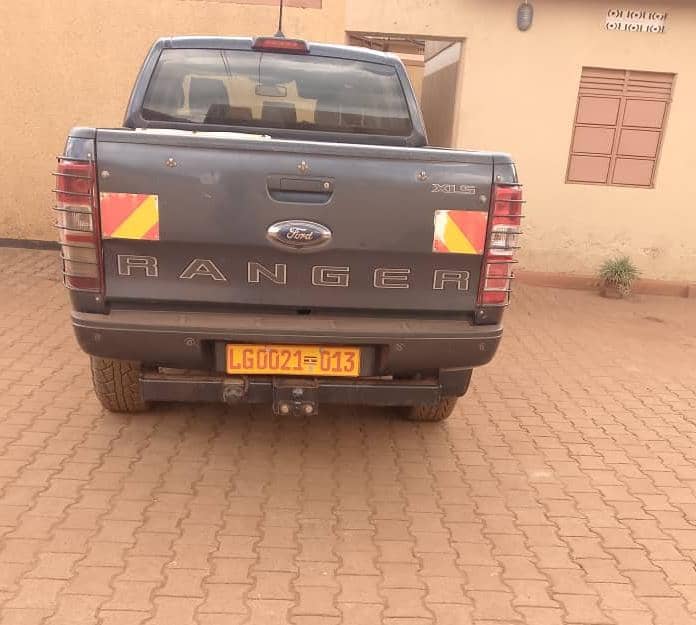
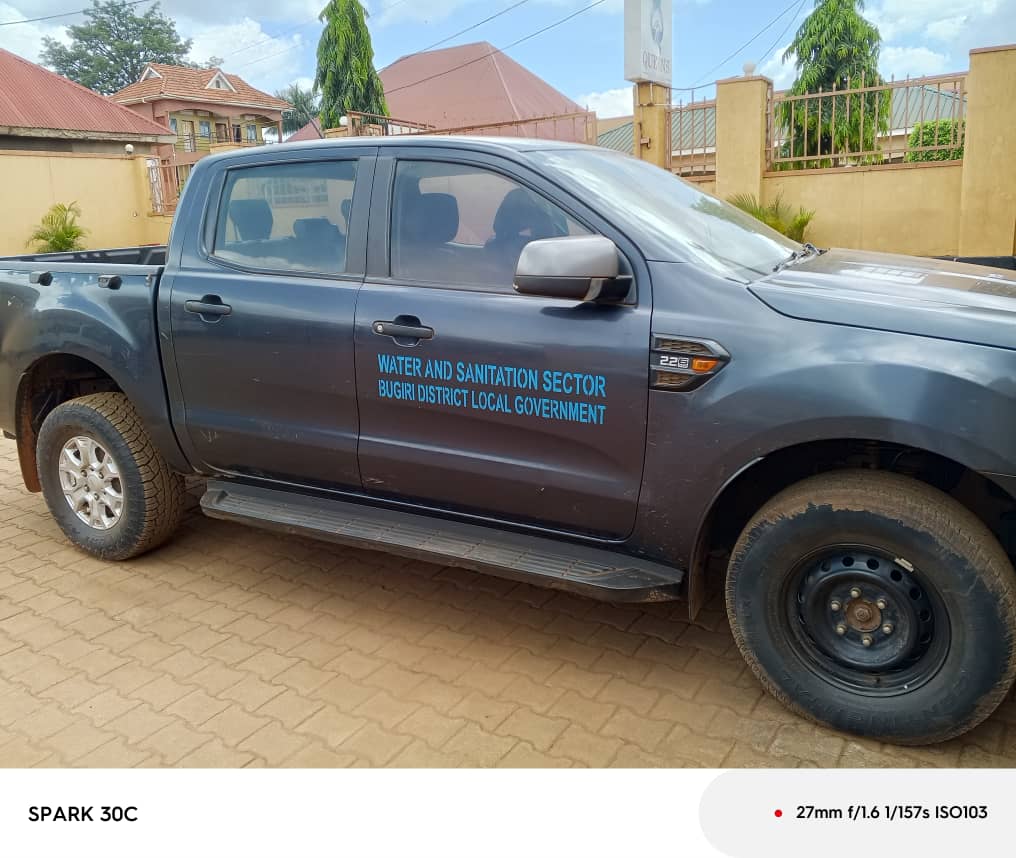
To punish him properly, Kasolo ran off with the keys to Mulumba’s official car, a Ford Ranger double cabin with registration number LG0021013, which had been parked at the lodging facility parking lot.

It is not yet clear what the two adults had gone to do at the lavish lodging facility that particular evening, but it was the time Kasolo chose to squeeze his boss, who was elusive when it came to matters of paying his wages.

On seeing that his boss wasn’t coughing up his wages as he was demanding, Kasolo decided to pull a big one on his boss by running away with the keys, leaving Mulumba stranded with the immovable car.

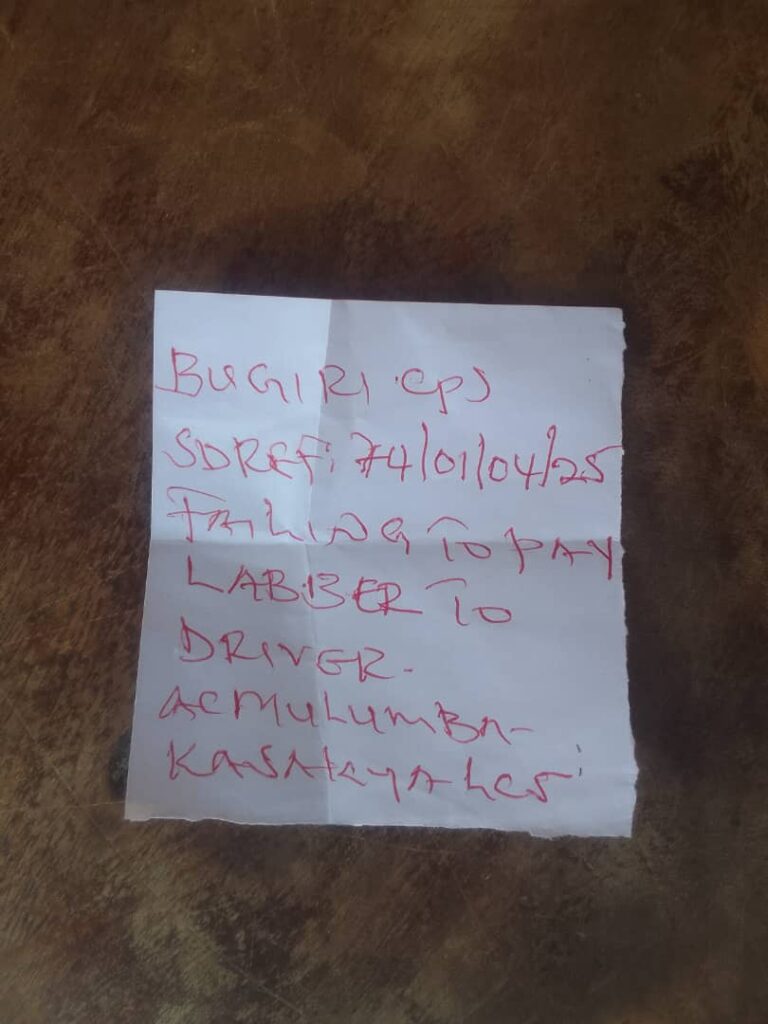
In an attempt to get justice, Kasolo ran to the Bugiri Central Police Station and filed a case under reference number SDRF74/01/0/25, accusing his boss of failing to pay for his labour.

According to sources in Bugiri, Kasolo is not a government employee as he should be; he was privately hired by Mulumba, and for the last two and a half years, he has been chauffeuring the big man of Bugiri without pay.

Sources further reveal that Kasolo demands a salary or wage worth about UGX 6.5m – which Mulumba wasn’t hesitant to remit. The police is currently handling the matter.

NEW PHENOMENON: Will Bobi Wine influence Uganda’s political trajectory beyond 2026?

0

By Oweyegha-Afunaduula

In this article I introduce the concept of political trajectory. We can advance a country’s political trajectory as the evolution and development of the political system and governance in a country, reflecting changes in structure, ideology, and power dynamics over time. For any country, its political trajectory has been shaped by significant historical events, constitutional amendments, and shifts in public opinion, leading to the emergence of a distinct political culture characterized by either democratic principles or their violation. In Uganda, the political trajectory has for the last 40 years been under control and manipulation by President Tibuhaburwa Museveni’s personalist tendencies and his personalist party, the National Resistance Movement, the unicameral parliament and the many obnoxious laws it has made. The new political phenomenon of Kyagulanyi is a new influence presenting enormous influence on this political trajectory. The question is shall we see a shifting political trajectory fully accommodating political pluralism untainted by militarism and use of money and jobs to kill pluralism of society?

Bobi Wine emerged at a time when Africa is growing younger: 60 percent of the population in Sub-Saharan Africa is under the age of 25. The rise of the young and urban will increase political competition because it renders the current political establishment, which mostly consists of veterans and descendants of the independence revolution, inadequate. New parties or factions that can capture and harness the progressive attitudes of young people will become more popular. In fact, the dethroning of established political parties is happening right now (Rop, 2020).

Uganda had got used to the political activism of Dr Kiiza Besigye the man who challenge president Tibuhaburwa Museveni 4 times but ended up saying that elections cannot remove the President from power. Indeed, the President him had declared during a political campaign in Seeta Mukono in 1996 that a mere piece of paper cannot remove him from power; that he is a quarter pin of a bicycle that goes in by hitting and comes out by hitting.

Bobi Wine’s story has been presented in a documentary as transcending his personal identity to symbolize a broader phenomenon on Uganda’s political scene. Specifically, it depicts Bobi Wine as representing the voices of those who have been marginalized and oppressed, questioning the established ruling class, and presenting a vision of a democratic and inclusive Uganda. His intriguing presence, bravery, and refusal to conform to societal norms, while defying the status quo strikes a chord with a population longing for authentic representation, equity, and social justice (Lwanga Gasuza Musisi, 2025). Bobi Wine’s appeal reaches far beyond the borders of Uganda, attracting global attention and support for his devotion to democracy and human rights. His impressive aptitude for utilizing social media and harnessing the influence of youth activism has made him a prominent figure in the fight against authoritarianism (Lwanga Gasuza Musisi, 2025).

According to Bobi Winehimself “The most important issue facing Uganda is a situation where we have to decide between an individual and a country. That is the most serious dilemma right now.We have a country, which is yearning to go in a certain direction, but then again there is an individual [read President Tibuhaburwa Museveni] seeking to satisfy his ego (Angopa, 2018).Luke Melchiorre (2021) identified four things that he thought were integral to his politics: Building a Movement, Defying all Expectations; A Target of Unprecedented State Repression; Generational Dimension; and Populism. He concludes that if Bobi Wine’s brand of generational populism proves successful, its repercussions could be felt across Africa. It could serve as a model for opposition politicians who are operating in countries with similar demographic characteristics and facing many of the same political obstacles.

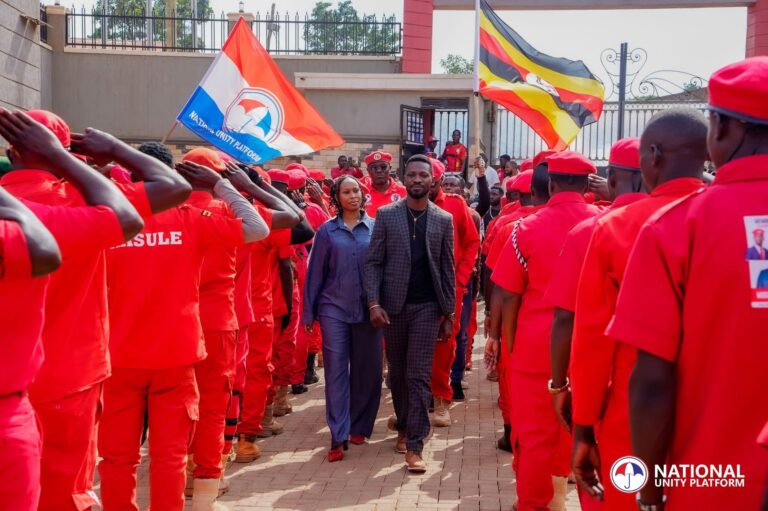
Bobi Wine innovated the concept of People Power, which later transformed into the National Unity Platform (NUP), and his popularity was rapidly growing, particularly among Uganda’s youth and urban population.Bobi Wine contended that if democracy is to work in such a young nation, alliances at the national, regional and other levels have to ensure that issues such as the constitutionalism, the rule of law, inclusiveness in political participation remain on the agenda (Kasirye, 2018). However, his concept of People Power was, along the way, pirated by President Tibuhaburwa Museveni’s Movementists to demonstrate that NRM also has youth who support the party. Indeed recently, in an unprecedented show of being youth sensitive, the NRM developed a party membership register of 20 million members, the majority of whom are youth. Even 16- and 17-year-olds were registered as NRM members. This was supposed to undercut Bobi Wine’s claim to youth power. Kyagulanyi will not be able to claim that the youth support him when by NRM party register the majority are registered NRM members. This is a subtle way of stealing an election long before it is held. In any case, he will not be allowed  to interface with the population the way  President Tibuhaburwa Museveni has been doing since the beginning of the year and will do until election time in 2026.

To grasp the magnitude of Bobi Wine and his “people power” movement, it is essential to understand the historical and political context of Uganda. Since gaining independence from the British in 1962, Uganda has had a challenging political landscape marked by repressive regimes, corruption, and socio-economic stagnation. Yoweri Museveni, the current leader, captured power in 1986 after a five-year armed rebellion, promising to establish a democratic system of government with high respect for the rule of law and civil liberties. Almost four decades later, Museveni and his ruling National Resistance Movement (NRM) political party have consolidated power through human rights violations, corruption, patronage, and political persecution of his opponents (Lwanga Musisi, 2025).

Looking back the 2021 election was not just a political contest, but also a turning point in Uganda’s political history. President Tibuhaburwa Museveni, who had once belittled Bobi Wine, found himself confronting a new political force he could no longer ignore. Bobi Wine and NUP are the greatest threat the President faces, as we recently saw during the By-election in North Kawempe, where many parties participated by Bobi Wine’s NUP triumphed.

There is no doubt that the influence of Bobi Wine and his supporters have reshaped the political conversation, and as we approach the next election, the echoes of 2021 will undoubtedly play a role in shaping Uganda’s political future and/or political trajectory. It seems arrests and kidnappings of NUP members will not change the ongoing influence on the political trajectory of the country. Although Bobi Wine and his NUP have been accused of being chaotic and violent, it’s chaos and violence of State security organs prominently evident.

The forces that propelled Bobi Wine to political infamy and fuel his People Power movement go beyond one man. Growing discontent with a neglectful, autocratic government is the basis for his popularity. Bobi Wine’s liberal, democratic vision is attractive to a people living under the repressive, lawless dictatorship of Yoweri Museveni. In other words, the rise of Bobi Wine represents the growing disenchantment with the political establishment – not only in Uganda but also throughout the continent (Rop, 2020).  

Ever since President Tibuhaburwa Museveni offered himself for elections, he has remained invincible (Osiebe, 2020).Will the political landscape continue to shift, or will President Tibuhaburwa Museveni’s NRM hold firm against the growing wave of oppositionespecially among the youth? Indications are that people whom NUP had endorsed as members when they still belonged to their own parties are determined to weaken Bobi Wine and the party, which serves the interests President Tibuhaburwa Museveni and his party. Whatever the case, the political trajectory of Uganda would have followed a different direction if Bobi Wine and his NUP did not emerge. The oldest political partied in the country – Democratic Party (DP) and Ugasnda Peoples Congress (UPC) had struck alliances with NRM, and were no longer appealing, especially to the youth. The Forum for Democratic Change (FDC), which was the biggest opposition party in the country since 2001, became torn apart by money, reportedly from President Tibuhaburwa Museveni. So, Bobi Wine and his NUP found a political landscape with disorganised political parties not so attractive to the youth. He and his party filled the gap. If it is not NUP to influence a new direction for Uganda’s political trajectory, which party will? It will serve the country well if opposition parties reconsider disunity and present themselves to the population as one block. Otherwise their disunity will continue to be the reason why President Tibuhaburwa Museveni continues to rule Uganda with diminishing returns.

For God and My Country.

Further Reading

Aggrey Baba (2025). M7’s Worst Nightmare: How Kyagulanyi turned the Tables and rocked Uganda’s Political Foundation -a Glimpse of 2026. Mulengera 11 March 2025, https://mulengeranews.com/m7s-worst-nightmare-how-kyagulanyi-turned-the-tables-rocked-ugandas-political-foundation-a-glimpse-of-2026/ Visited on 02 April 2025 at 11:10 am EAT.

Anna Katharina Osterlow (2022). The Freedom Fighter Bobi Wine. A VIDEO ANALYSIS OF POPULIST PERFORMANCE IN UGANDA. https://www.gicnetwork.be/wp-content/uploads/2022/05/01_The-Freedom-Fighter-1.pdf Visited on 02 April 2025 at 12:46pm  EAT

Barbara Angopa (2018). Robert Kyagulanyi: Uganda Stuck with President Museveni. Aljazeera, 3 January 2018, https://www.aljazeera.com/news/2018/1/3/robert-kyagulanyi-uganda-stuck-with-president-museveni Visited on 02 April 2025 at 12:35 pm EAT.

Garhe Osiebe (2020). The Ghetto President and Presidential Challenger in Uganda. Researchgate, April 2020 https://www.researchgate.net/publication/340667375_The_Ghetto_President_and_Presidential_Challenger_in_Uganda Visited on 02 April 2025 at 11:45 am EAT.

Jolly Rop (2020). The Rise of Bobi Wine: How a Rapper from the Slums is igniting a Revolution in Uganda. Havard International Review, 16 November 2020, https://hir.harvard.edu/who-is-bobi-wine/ Visited on 02 April 2025 at 11:34 am EAT

Luke Melchiorre (2021). Bobi Wine has shaken up Uganda’s politics: Four things worth knowing about him. THE CONVERSATION, January 13 2021, https://theconversation.com/bobi-wine-has-shaken-up-ugandan-politics-four-things-worth-knowing-about-him-153205 Visited on 02 April 2025 at 12:23 pm EAT.

Luke Melchiorre (2021). Our liberation is a matter of now: an interview with Bobi Wine. African Arguments, May 19 2021 https://africanarguments.org/2021/05/our-liberation-is-a-matter-of-now-an-interview-with-bobi-wine/ Visited on 02 April 2025 at 12:12 pm EAT

Luke Melchiorre (2023). Generational populism and the political rise of Robert Kyagulanyi – aka Bobi Wine – in Uganda. Review of African Political Economy, June 2023, Vol. 50, No. 176 (June 2023), pp. 212-233 Published by: ROAPE Publications Ltd: https://www.jstor.org/stable/10.2307/48814425

Lwanga, G. Musisi (2025). Review: Bobi Wine – People’s President. The Elite Africa Project, 01 April 2025. https://www.eliteafricaproject.org/post/review-bobi-wine-the-peoples-president Visited on 02 April 2025 at 11:57 am at EAT.

Samuel Kasirye (2018). People Power: An Emergent Political Movement in Uganda. Rosa Luxemburg Stiftung https://www.rosalux.de/en/news/id/39405/people-power-an-emergent-political-movement-in-uganda Visited on 02 April 2025 at 12:34 pm EAT.

Faulty start for Uganda Cubs at U17 AFCON in Morocco

0

Morocco 5 – 0 Uganda

The Moroccans turned on the heat, and the Ugandans got burnt in the opening match of the Under Seventeen (U17) Africa Cup of Nations, which was played at the 15,000-capacity Stade El Bachir (Mohammedia) Stadium in Morocco.

The hosts turned on the song early when Ilies Belmokhtar scored in the third minute for his team to embark on a 5-0 victory against the Ugandans. Driss Cheikh scored the second at the eighth minute before Ziyad Baha scored the third at the twenty-fourth minute mark. Belmokhtar added a second at the thirty-second minute mark, sending the match into a break with Morocco leading 4-0. Baha added his second goal of the day at the seventy-one minute mark. Belmokhtar was voted Man of the Match.

Uganda plays neighbours Tanzania next on 3rd April 2025 at the Stade El Bachir (Mohammedia) stadium. Uganda is in Group A with hosts Morocco, Zambia and Tanzania. The Cubs earned their spot in the 2025 AFCON by winning the CECAFA U17 Qualifiers, defeating Tanzania 2-1 in the final.

Going into this tournament, Uganda Cubs coach Ssenyondo said their target was to use the tournament to qualify for the U17 World Cup. The semi-finalists at the tournament qualify for the World Cup.

Uganda’s last U17 AFCON appearance in 2019 saw them finish third in the group stages, missing out on advancement to the World Cup.

MUSEVENI ERA: White elephant projects and financial haemorrhage in Uganda – 1986 to present

0

By Oweyegha-Afunaduula

A “white elephant project” is a metaphor for a possession, project, or venture that is expensive to maintain or acquire but yields little or no practical value or benefit, essentially a costly burden. White elephant projects are generally initiated with great enthusiasm and expectations. However, due to reasons such as poor planning, lack of demand, lack of wisdom, cost overruns, or corruption, these projects end up becoming financial burdens with little or no utility benefit or profitability. Financial haemorrhage is integral to white elephant projects.

A “financial haemorrhage” refers to a situation where there’s a severe and rapid loss of financial resources, often due to uncontrolled or unsustainable spending or losses. Haemorrhaging money is a place nobody wants to end up in. Even the word “haemorrhaging” sounds a bit nasty.In the world of finance, haemorrhaging money means losing significant sums of money, sometimes it is called “bleeding money.” 

There is no political regime in Uganda since independence in 1962 that undertook so many white elephant projects, resulting in enormous financial haemorrhage as did the NRM region between 1986 to the present. Every white elephant project was regarded as development. The greatest collective outcome of the white elephant projects was corruption in every aspect of human life and human endeavour. Corruption has sabotaged every aspect of development in Uganda: economic, social, political, human, infrastructural, et cetera.

If I give you a list of while elephant projects in Uganda you will be surprised. They include the Bush War, Barter Trade, Banks, Cooperatives, Privatisation, Politics, Militarism, Liberation Day Celebration, Elections, Uganda Airways, Parish Development Model, Myooga, Decentralisation, Bonna Bagaggawale, Operation Wealth Creation, State House,  Electricity Generation, Executive, Cultural Institutions, National Environment Management Authority, Inspector-General of Government, Uganda Airways, Uganda Railways, Uganda National Road Authority, Mineral Development, Oil  and Petroleum, University Education Development, Universal Secondary Education and Universal Primary Education, Tristar, Atiak Sugar, Lubow Hospital, Coffee, and Domestic/External Government Borrowing, to name but a few.  They have individually and collectively yielded little or no utility beneft or profitability, and as expected exacted enormous financial burden and haemorrhage on the country and the taxpayers of Uganda.

The most dangerous white elephant project is Government’s Domestic and External Borrowing, which is wildly supersonically growing is Domestic and External Government Borrowing. A lot of financial haemorrhage has occurred and continues to mushroom via government’s domestic and external borrowing with little or no value added to the development, transformation and progress of the country and citizens of Uganda in real terms except in figures given by government officials.

Don’t ask me who is responsible for financial haemorrhage that is denying Uganda and its people development, transformation and progress. It is obvious: President Tibuhaburwa Museveni and his Cabinet, who together or separately conceive the projects and the Parliament of Uganda, which allocates money for the project with little or no critical thinking and/or critical analysis of government proposals of projects. However, in a country where presidentialism is entrenched and everything small and big originates from the President, there is every temptation to advance that the force behind the financial haemorrhage of the country is the President of Uganda, who influences how the other actors think, act and perform according to his choices. The President is the substantive Minster of Finance. The characteristic financial bleeding is making national budgets and not sticking to them, and making several supplementary budgets on top of the annual national budgets, usually for politics, administration, state house and war. -the easiest way to get money.  Financial may occur officially (e.g., Vanguard, 2014) through capital flight.

Let me say a little about some of the different white elephant projects I have mentioned in this article to initiate debate on financial haemorrhage or financial bleeding in Uganda over the last 45 years of NRM/A invasion, occupation, conquest and domination of Uganda’s colonics, social, political, financial and environmental spaces.

Uganda’s Barter Trade Project

Barter trade, or bartering, is the direct exchange of goods or services for other goods or services without the use of money or a monetary medium. This was the first economic choice of the NRM/A when the new rulers sympathised with Marxist-socialist principles of managing society. However, it lasted only 18 months when rebel leader and President Tibuhaburwa Museveni shifted his economic policies in favour of World Bank and International Monetary Fund financial, monetary and economic choices. The country suffered a lot of financial haemorrhage during the Barter Trade debacle and continues to suffer the scourge under World Bank and IMF patronage.

Financial Haemorrhage of Banks

In Uganda, several banks have faced closure or significant issues, including Teefe Bank, International Credit Bank, Greenland Bank, The Co-operative Bank, National Bank of Commerce, Global Trust Bank, and Crane Bank. It is significant to note that Uganda Commercial Bank was sold off under mysterious circumstances, and there was a lot of financial bleeding before, during and after the sale (e.g., Brownbridge, 2002).

Financial Haemorrhage of Cooperatives

The collapse of cooperatives in Uganda occurred particularly in the 1970s and 1980s, and was largely attributed to political instability, economic liberalization, and mismanagement, leading to the failure of many, though some managed to survive. However, we all now know that it was the policy of the National Resistance Movement /Army during and after its bush war in the Luwero Triangle. A lot of financial bleeding occurred in what looked like scorch-earth policy, with most of the money and resources of the cooperatives ending in the pockets and hands of the bush fighters in government. Citizens of Uganda lost their money and properties and never rose again financially and economically.

Foreign Exchange Debacle of 1987

Ugandans and institutions were promised a stable and productive economy after the 1987 foreign exchange intervention by the bushmen in power when three zeros were removed from their money. Many institutions, businesses collapsed, never to rise again due to financial haemorrhage.  Since then, however, Uganda has faced a foreign exchange “debacle” due to mounting public debt, declining foreign exchange reserves, and a depreciating shilling, impacting the economy and its ability to service debt. 

Uganda’s Retrenchment Project

Retrenchment is the reduction of costs or spending in response to economic difficulty. The action makes employees redundant. In Uganda, the new NRM/A government carried out a retrenchment exercise in the early 1990s. It reasoned that it was removing dead wood (old people) from public service to ensure efficiency and a small productive force in the civil service. However, instead, the numbers of employees mushroomed over time and became ethnically overinflated with many people drawing elephant-sized salaries, thereby exacting enormous strain on the economy. The taxpayer has continually suffered financial bleeding. 

Privatisation Project

Uganda’s privatization project, initiated in 1993, aimed to reduce the government’s role in the economy and promote private sector development by transferring ownership of state-owned enterprises (SOEs) to the private sector.  Some enterprises were given away at peanuts (even at ONE SHILLING). With the passage of time, it became known that many enterprises passed into the hands of NRM rulers and functionaries, with foreigners (Indians) serving as fronts. Financial haemorrhage was enormous. And of course, most workers in those enterprises lost income

Politics,

Militarism Project

While there is widespread thinking , belief and conviction that militarism is emerging to be the greatest threat to Uganda’s peace and stability (Nalubwama, 2025), through financial haemorrhage occasioned by the country’s military belligerence in the Great Lakes region and over- engagement in the electoral processes will be the greatest threat to economic and social developmentin the country so long as NRM/A-cum-NRM/UPDF consolidates its hold onto power beyond 40 years, which seems to be the plot. Just recently on March 28 Parliament retrospectively approved 39.1 billion to the UPDF, ostensibly to ensure peace and security in South Sudan although it is not impartial in the current conflict in the country.

Liberation Day Celebrations Project

The NRM/NRA has since 1987 celebrated what it calls Liberation Day, although many Ugandans think the day 25th January 1986 was not liberation of Ugandans as such but Tutsi refugees and former refugees in Uganda that captured the instruments of power from the Tito Okello Military Junta. Some of the refugeed, organised as Rwandese Patriotic Front /Army (RPF/A) within NRM/A ended up capturing the instruments of power in Kigali, Rwanda in 1994. Uganda continued to bleed financially as the RPF/A entrenched itself in power, since despite denials, NRM/A provided a lot of support to its baby -RPF/A – beyond 25th January 1985. The Liberation Day Celebrations Project has been made a national project, thereby consuming billions, perhaps trillions of shillings over the last nearly 40 years.

Uganda Elections Project

Very early in its rule in Uganda the NRM/A declared that democracy is expensive. This has been demonstrated in electoral politics since the early 1990s, when NRM/A organised National Resistance Council elections to make the Uganda Constitution 1995. However, since then the constitution, which they said would stand the test of time has been revised 63 times, and is about to be revised by raiding the UPDF Act to make sure that civilians accused of terrorism and/or treason are tried in the military courts legally. Elections have been highly monetised, thereby compromising electoral democracy by making it too expensive for people of integrity but no money to offer themselves for electoral office. Political corruption has risen supersonically, just as elections consume a lot of money to organise and execute.

Uganda’s Borrowing Project

An update on Uganda’s debt situation of 31st January 2025, stated that Uganda’s total public debt currently stands at Shs94. 9 trillion as of June 2024, with debt servicing consuming nearly a third of domestic revenue. There is no indication that the NRM government is about to consciously curtail its borrowing instincts. Neither is it bothered by the fact that it is pushing the debt burden to future generations of Ugandans unlikely to benefit from the incessant borrowing. The country is financially bleeding and future generations will financially bleed via the debt channel, with talk of development, transformation and progress of Uganda being mere talk. It is a few individuals in the country and those outside the country that are involved in negotiating who are benefitting from the loans domestically and externally. They are a burden to the country today and to future generations tomorrow.

I could go on and to give you to what extent Uganda has financially bled under NRM/A reign but due to lack of time and space let me end here. You can do individual research on the other white elephant projects I have named in this article. My aim was to cause you to start thinking critically, reasoning critically and analysing critically our country’s financial and economic situation burdened by financial haemorrhage for almost 40 years of white elephant projects. Many times what we regard as success stories are while elephant projects.

For God and My Country

Further Reading

Editorial (2024). Financial Haemorrhage in The Public Sector (2). Independent, January 23 2024, https://independent.ng/financial-haemorrhage-in-the-public-sector-2/ Visited on 29 March 2025 at 19:26 pm EAT.

Ismail Musa Ladu (2017). URA takes Head-on the fight Against Illicit Financial Flows. Daily Monitor, December 11 2017, https://www.monitor.co.ug/uganda/business/prosper/ura-takes-head-on-the-fight-against-illicit-financial-flows-1730424 Visited on 29 March 2025 at 19:42 pm EAT.

Martin Brownbridge (2002). Resolving Bank Failures in Uganda: Lessons from Recent Bank Failures. Researchgate, July 2002 Development Policy Review, 20(3):279-291.https://www.researchgate.net/publication/227814027_Resolving_Bank_Failures_in_Uganda_Policy_Lessons_from_Recent_Bank_Failures  Visited on 30 March 2025 at 10:31 am EAT

Olivia Nalubwama (2025). Is Militarism the greatest threat to Uganda’s peace and stability? The Observer, March 12 2025. https://observer.ug/viewpoint/is-militarism-the-biggest-threat-to-ugandas-peace-and-stability/ Visited on q11:45 am EAT

Otiato Guguyu (2019). Decade Long Haemorrhage that put the National Bank on deathbed. Financial Standard, Jun 11, 2019https://www.standardmedia.co.ke/sports/amp/financial-standard/2001329350/decade-long-haemorrhage-that-put-national-bank-on-deathbed Visited on 29 March 2025 at 19:33 pm.

VANGUARD (2014). Nigeria: Financial Haemorrhage – Nigeria Bleeds As U.S.$1.7 billion Goes Out Weekly. All Africa, 27 January 2014https://allafrica.com/stories/201401270292.html Visited 29 March 2025 at 19:18 pm EAT