Saturday, May 23, 2026
Home Blog Page 48

BABIRYE MILLY BABALANDA: Minister for Presidency declared NRM Women League Chairperson for Nkondo Sub-County in Buyende district

0

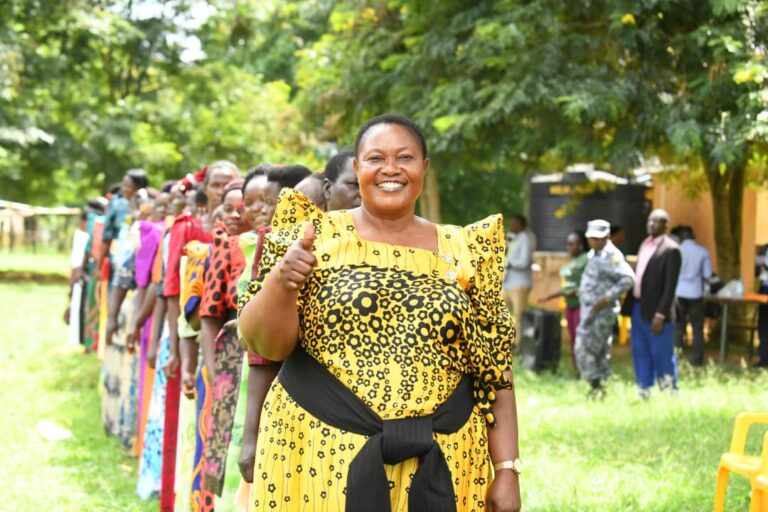
The Minister for the Presidency, Babirye Milly Babalanda, has been declared the winner of the National Resistance Movement (NRM) Women League Chairperson election for Nkondo Sub-county, Budiope West constituency. The announcement came after the conclusion of internal party elections held on16th May 2025 in Buyende district.

The victory puts the Minister in a position of hope within the NRM party at the grassroots level and highlights her continued commitment to pursuing political leadership in Budiope West constituency where she is vying to represent as a Member of Parliament.

The minister won with 30 votes out 40 voters who were eligible to vote at Sub county level. She defeated Nazilina Namukoma Jackline, who got only 10 votes of 40 voters.

Working for the people

The elections were conducted successfully and the declaration was announced by the Nkondo sub county NRM Registrar Kigundu Richard who urged the elected leaders not to take position not for prestige but rather for service delivery for their people.

After the being declared Winner, the happy minister extended her heartfelt thanks to the women and people of Nkondo sub county for supporting the NRM government, especially the Party Chairman Rt Gen.Museveni and Mama Janet Museveni who is also the Minister for education and sports.

In the earlier grassroots party elections, the minister had been elected unopposed as chairperson LC 1 Women League in Kalogoi A Village,  unopposed LCII chairperson in Iringa East Parish women League and today  16th-May-2025 was elected Chairperson women League at Sub county level for Nkondo Sub county.

The NRM Women League plays a vital role in mobilizing support for the party, advocating for policies that benefit women, and ensuring female representation in decision-making processes.

Shaky landing for the minister

While this election marks a significant victory, Minister Babalanda’s political journey in Buyende district hasn’t been without its challenges. As a native of Kamuli district, her efforts to establish political roots in Buyende have faced resistance.

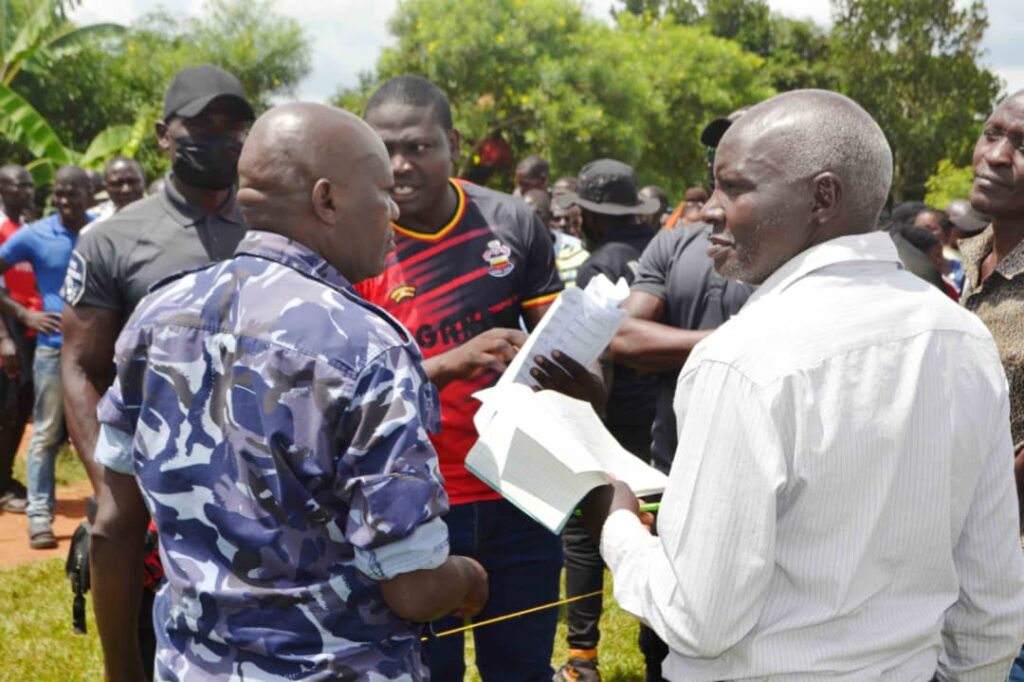
Reports indicate that the Minister has encountered opposition from local youths who disapprove of her political intentions. Instances of disagreement have led to arrests and tension within the community, suggesting a need for greater engagement and reconciliation between the Minister and her constituents.

This latest win, however, could be a step in building bridges and solidifying her base in the district. Only time will tell if this win can quell the dissenting voices and help her solidify her political aspirations in Budiope West constituency.

Bugabula South NRM voters defy Tanga Odoi’s mediation, insist on electoral process

0

National Resistance Movement (NRM) grassroots elections in Namisambya Parish, Kitayunjwa Sub County, Kamuli District, witnessed a dramatic turn of events as voters defied a mediation attempt by the NRM Electoral Commission chairman, Tanga Odoi. The elections, already marred by three prior failed attempts, took a contentious path after Odoi intervened to resolve the intense rivalry between aspirants vying for the Bugabula South parliamentary seat.

The Bugabula South race features a crowded field of ambitious contenders, including Maurice Kibalya, Asuman Kiyingi, Thomas Kategere, and Mathew Bazanya. Allegations surfaced that these individuals had mobilized their own “brigades,” contributing to the disruption and failure of the initial three election attempts in Kitayunjwa. Specifically, Bazanya was accused of spiriting away members of the Electoral College under the pretense of a benchmarking tour, prompting his rivals to petition Odoi’s Commission, citing deep dissatisfaction with his actions.

In an effort to de-escalate tensions and prevent further disruption, Tanga Odoi stepped in to mediate. His intervention aimed to harmonize the competing interests of the aspirants, fostering a spirit of compromise and unity within the NRM structure. After discussions, the rivals seemingly reached an agreement, proposing a power-sharing arrangement across different levels.

The agreed-upon arrangement stipulated the following:

  • Namisambya 1 Parish: Bazanya and Kiyingi would assume the roles of Chairman and Publicity Secretary, respectively.
  • Naminage Parish: Kibalya and Kategere would take on the positions of Chairman and Secretary, respectively.
  • Sub-County Level: Rebecca Kadaga would be the Chairperson, Kiyingi the Vice Chairperson, Kategere the Secretary, Kibalya the Publicity Secretary, and Bazanya would handle the Finance portfolio.

However, this carefully crafted compromise unraveled when the Electoral College convened at Namisambya Primary School on Thursday. Members of the Electoral College vehemently rejected the mediated arrangement, arguing that Tanga Odoi’s intervention was merely guidance and not a binding directive. They asserted that the power-sharing agreement violated the core NRM principles of grassroots participation and infringed upon their democratic right to choose their leaders freely.

“We appreciate the mediation efforts by our party organs, but we take it with a pinch of salt. We must follow the party election principles and allow voters to decide,” declared Aga Mutyabule, who ultimately challenged Bazanya in the subsequent election. His statement was met with resounding applause from the assembled members of the Electoral College.

Emboldened by their collective stance, the Electoral College proceeded with the voting process, defying the mediated arrangement. The results underscored the voters’ determination to exercise their democratic rights. In the election for the position contested by Bazanya, he secured a decisive victory over Mutyabule, garnering 235 votes compared to Mutyabule’s 36. Stephen Balikoowa secured a protest vote of 225 against Kiyingi’s 38.

The events in Bugabula South highlight the complex interplay between party leadership, grassroots participation, and the democratic aspirations of NRM members. While Tanga Odoi’s intervention aimed to foster unity and prevent conflict, the voters ultimately prioritized their right to choose their leaders through a free and fair electoral process. This incident serves as a reminder of the importance of upholding democratic principles within political parties and respecting the voice of the electorate at all levels.

ARRESTED: Boda Boda rider and driver nabbed in Kaliro cattle theft ring

0

Kaliro, Uganda – Territorial police in Kaliro have apprehended a 21-year-old boda boda rider and a 22-year-old driver suspected of stealing cattle. The suspects have been identified as Bwambale Moses, a resident of Kamwanyi zone in Gayaza, Wakiso District, and Muhwezi Living, residing in Kazinga on Gayaza Road, Wakiso.

The arrest occurred at Nabigere village, Bugonza Parish, Namugongo Subcounty in Kaliro District, where the suspects were intercepted while driving a Land Cruiser Prado TX with registration number UBD 599 U. The vehicle was carrying suspected stolen cattle and was en route to Kaliro.

According to preliminary investigations, on May 15th, 2025, at approximately 2:00 am, local residents observed the vehicle parked suspiciously in a bush. Suspecting the illegal loading of livestock, they promptly alerted the district police commander. A standby squad was immediately dispatched to the scene.

Upon arriving, the police found the vehicle already in motion. Attempts to halt the vehicle proved unsuccessful, leading to a chase. Police officers fired warning shots but the suspects continued to flee, resulting in the vehicle overturning.

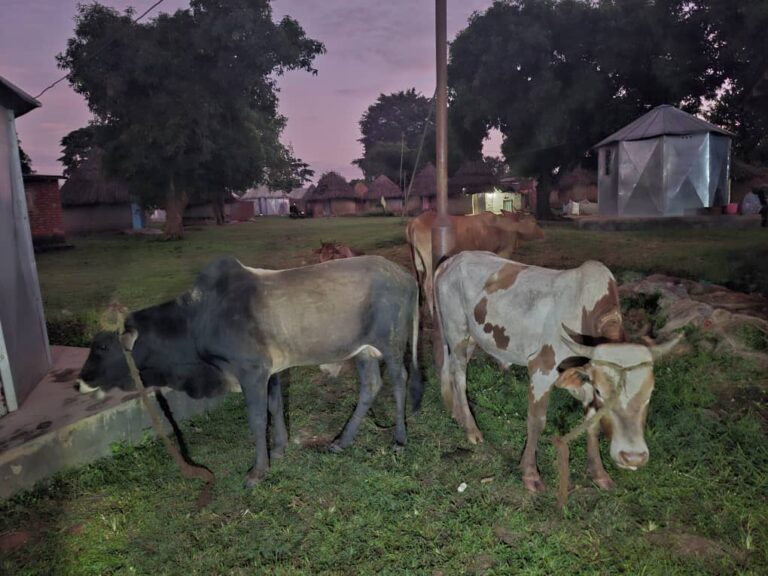
Following the incident, the suspects were apprehended and four heads of cattle were recovered from the vehicle.

Muhwezi Living sustained serious injuries during the incident and is currently receiving treatment at Bumanya Health Centre IV.

ASP Kasadha Micheal, Regional Spokesperson for Busoga North, confirmed that statements have been taken from relevant witnesses, including the owners of the stolen cattle. “Further investigations are ongoing to establish more facts related to this crime,” ASP Kasadha stated. The police are working to determine the origin of the cattle and the full extent of the suspects’ involvement in the alleged theft.

The suspects are currently in police custody while awaiting further legal proceedings. This incident highlights the ongoing issue of cattle theft in the region and underscores the importance of community vigilance in reporting suspicious activity to the authorities.

USSSA FOOTBALL: Jipra’s disqualification from schools football, a calculated move to frustrate Busoga football development?

0

By Musa Kikuuno — WhatsApp: 0756322265

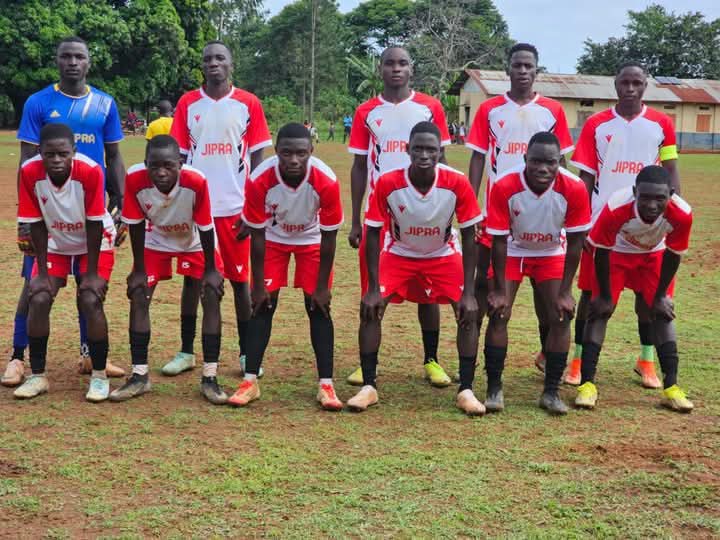
Jinja Progressive Academy (Jipra)’s abrupt disqualification from the 2025 Uganda Secondary Schools Sports Association (USSSA) football championships has sparked debate—not only over the school’s alleged misconduct but also about fairness, and football politics in Uganda.

According to USSSA, Jipra was found guilty of two violations after an investigation by the Games Organizing Committee:

Fielding ineligible players — specifically, Isabirye Adrian and Ntege Musa, who were said to be suspended due to accumulating two yellow cards each.

Engaging in violent conduct , including the assault of match officials and incitement of crowd violence, violating USSSA Rules 8.1 and 8.2.

The legitimacy of disqualifying Jipra players based on yellow card suspensions is questionable. During the mandatory semi-final preparatory meeting at Ngora High School—attended by Jipra, Buddo SS, and Bukedea Comprehensive—it was agreed to scrap the rule regarding suspension for accumulated yellow cards ahead of the semi-finals a decision again ignored during Jipra’s disqualification.

Jipra also raised serious concerns about the referees assigned to officiate their semi-final match against St. Mary’s Kitende. Despite the complaints made through their games teacher, USSSA officials ignored these concerns. The poor refereeing in that particular match reportedly contributed to heightened tensions and ultimately violent incidents.

Further controversy surrounds St. Mary’s Kitende, a top contender that did not attend the preparatory meeting but rejected all the amendments made there without facing any disciplinary consequences. This inconsistency suggests a selective enforcement of rules.

Jipra is a powerhouse in both Busoga and Ugandan youth football, developing national-level talents like Okello Richard, captain of Uganda’s U17 national team and a key player for BUL FC Junior Team. Okello recently led Uganda to qualify for the FIFA U17 World Cup, a historic first for Uganda, highlighting Jipra’s vital role in football development.

This disqualification also denies Jipra and Busoga the opportunity to participate in the FEASSA Games, despite having qualified, limiting these youthful and talented boys from exposing their skills at the East African level and beyond.

While discipline is necessary, enforcement must be fair and transparent, especially when it impacts schools nurturing national talent. It is unfair to punish one school harshly while excusing others under similar or worse circumstances.

As Uganda prepares for its historic FIFA U17 World Cup debut, a pressing question remains:

Was Jipra’s disqualification truly about discipline—or a calculated move to frustrate Busoga’s football development?

VENOMS: Vipers win seventh UPL title  

0

By Musa Kikuuno | Busoga Times

Vipers SC have been crowned the 2024/25 StarTimes Uganda Premier League champions after defeating Kitara FC 2-0 at Royals Park, Butema. Goals from Gusto Mulondo and Yunus Sentamu secured the crucial victory, earning Vipers an unassailable 68 points with one match remaining.

Under the guidance of coach Fred Muhumuza, Vipers sealed their seventh league title, adding to previous triumphs in 2009/10, 2014/15, 2017/18, 2019/20, 2021/22, and 2022/23. The win puts them four points clear of second-placed NEC FC, who edged SC Villa 1-0 at Mutesa II Stadium, Wankulukuku — a result now rendered inconsequential in the title race.

Meanwhile, BUL FC continued their impressive second-round form with a 1-0 win over Maroons FC at the FUFA Technical Centre in Njeru. Abdul Karim Ndugwa’s 25th-minute strike extended BUL’s unbeaten run in the second half of the season to 14 matches — winning 11 and drawing three, with no losses.

The 2024/25 UPL season nears its close with champions crowned and remarkable records set.

UPDF AMENDMENT BILL: FDC says rushed process raises suspicions about the bill’s intentions

0

The Uganda People’s Defence Forces (UPDF) Amendment Bill 2025 has been tabled before Parliament, igniting swift controversy and raising concerns over transparency and due process.

The bill, formally introduced by Minister of Defense and Veteran Affairs Jacob Oboth-Oboth, seeks to reinstate the trial of civilians in military courts, a practice recently barred by the Supreme Court in a ruling on January 31, 2025.

The proposed legislation has drawn sharp criticism from the Forum for Democratic Change (FDC), who allege that Parliament is rushing the bill through without adequate public consultation or stakeholder participation.

According to the FDC, the party leadership received a late-night invitation at 5:25 PM yesterday to appear before the Committee of Defense and Legal Affairs at 9:00 AM today to provide their input on the bill, including written memoranda.

“How can we adequately scrutinise a bill in just one night?” questioned an FDC spokesperson. “The haste raises suspicions about the bill’s intentions.”

Further fuelling the controversy, the FDC pointed to a public notice regarding the bill published in the New Vision newspaper yesterday, with a deadline for submissions coinciding with today’s meeting. In addition, the party claims that the bill itself was inaccessible on the Parliamentary website, effectively hindering public scrutiny.

“This lack of access and the extremely short timeframe granted for review and input are unacceptable and undermine the fundamental principles of parliamentary democracy,” the FDC stated in a press release.

The FDC has formally requested more time to prepare their objections, emphasizing the serious implications of the bill. “FDC members have suffered greatly under military courts, and we strongly object to this unconstitutional law,” they stated. “Indeed, bad laws have far-reaching consequences, impacting everyone regardless of political affiliation.”

The reinstatement of military court jurisdiction over civilians remains a contentious issue, with critics arguing it undermines the principles of civilian justice and due process. The Supreme Court’s January ruling further solidified this argument, raising questions about the legitimacy of the proposed amendment.

As the bill progresses through Parliament, the debate surrounding its purpose, transparency, and potential impact on civil liberties is expected to intensify. The FDC’s call for greater scrutiny and extended consultation underscores the growing anxiety over the perceived rushed nature of the legislative process. The coming days will be crucial in determining the fate of the UPDF Amendment Bill 2025 and its potential ramifications for Uganda’s legal landscape.

WHY THE RUSH?: NUP condemns “sham consultation” over UPDF Amendment Bill  

0

The National Unity Platform (NUP), the leading opposition party in Uganda, has vehemently criticized the Ugandan Parliament’s handling of the Uganda People’s Defence Forces (UPDF) Amendment Bill, calling it a “sham consultation” designed to rush through unconstitutional legislation.

The party’s secretary general, David Lewis Rubongoya, expressed outrage at what he perceived as a deliberate attempt to stifle public input on a controversial bill that would allow civilians to be tried in military courts.

“Very unfortunate to see the Parliament of Uganda behave in this manner,” he said in a post on X. “This morning, we received this invitation to appear and give our views on the UPDF Amendment Bill. The invitation was for today at 9:00am!”

He also highlighted inconsistencies in the Parliamentary procedure, pointing to an advertisement published in newspapers the day before, requesting public feedback by the close of business the same day.

Furthermore, he claimed the link provided for accessing the bill was non-functional. “Yesterday, an advert ran in the newspapers asking the public to give their views by close of business today. The link that was provided through which people would access the law wasn’t working. In fact, I tried to check last evening, and the website was off,” he stated.

He believes the rushed timeline and technical difficulties are indicative of a deliberate effort to bypass proper scrutiny and push through a law they deem unconstitutional. “You can see how eager they are to pass this unconstitutional law even if it means violating every law in the book!” he added.

He confirmed they have responded to the invitation, requesting sufficient time to prepare a comprehensive response to what they describe as a “very problematic law” that seeks to “illegally take civilians back to military courts.”

This concern stems from previous experiences, as the NUP claims its members have been subjected to persecution through the military court system. “NUP members have been gravely persecuted through the military courts – for whatever worth it may have, we want to be on record about our strong objection,” he concluded.

The UPDF Amendment Bill has raised concerns among human rights organizations and opposition groups, who fear it could be used to silence dissent and further militarize civilian life.

The NUP’s strong condemnation of the consultation process further fuels the debate surrounding the bill, raising questions about the government’s commitment to transparency and due process in the legislative process.

The controversy surrounding the bill is likely to escalate as it moves through the parliamentary process.

ELECTION VIOLENCE: Tear gas fails to disperse Rebecca Kadaga and Anita Among clashing supporters in Kamuli

0

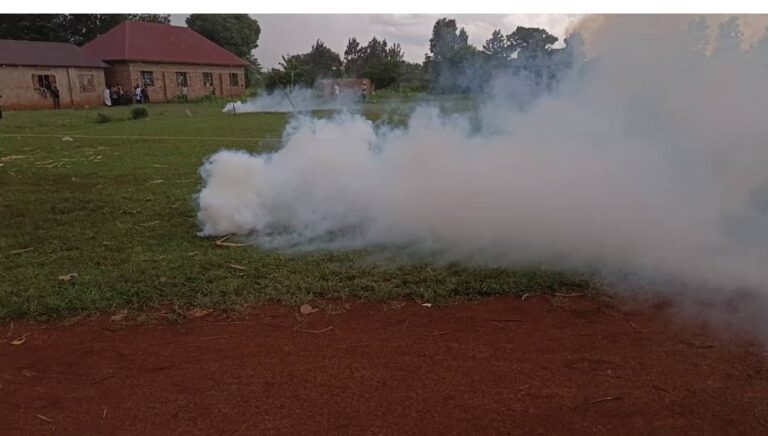
The National Resistance Movement (NRM) structure elections (election of parish structures) in three parishes within the Kitayunjwa sub-county of Bugabula South constituency, in Kamuli district, were on Monday postponed after police efforts to disperse supporters with tear gas proved unsuccessful. The heated contest, reportedly fueled by divisions between supporters of Speaker Kadaga and Deputy Speaker Among, saw intense clashes surrounding the LC2 NRM party elections.

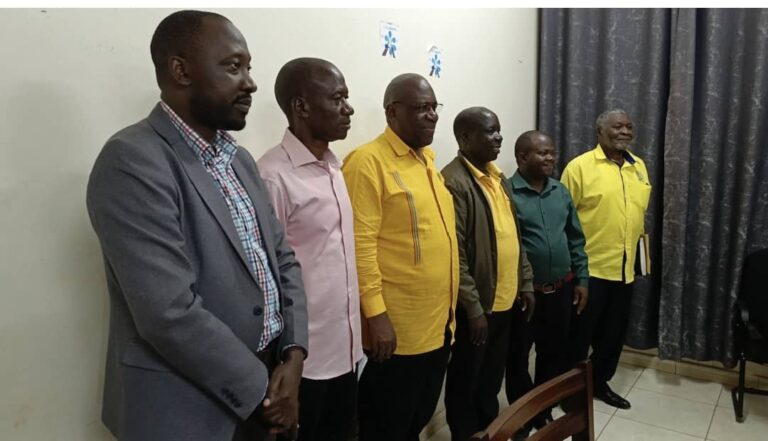
The central figure in the upheaval appeared to be newcomer Mathew Bazanya, a close ally of former Speaker of Parliament and Kamuli district Woman MP Alitwala Rebecca Kadaga. He faced a formidable alliance allied to Speaker Anita Annet Among. The alliance reportedly comprised the current MP for Bugabula County South, former MP Asuman Kiyingi, and former Kamuli LCV Thomas Kategere—all hailing from Kitayunjwa sub-county.

Kadaga and Among are foes vying for a bigger party position – the position of NRM national vice-chairperson (female).

At Namisambya Parish, where elections were initially cancelled following petitions alleging Bazanya’s camp attempted to hide electorates under the guise of a seminar, Bazanya addressed his supporters, delivering what many considered “sad” news.

“We are not weakened, but strengthened by the cancellation of our elections here,” he declared, urging them to remain steadfast. “All these are manipulations of dying horses, but power remains with you, the voters.”

Similar scenes unfolded at Naminage Parish, the home ground of incumbent MP Maurice Kibalya. Despite a heavy downpour and the deployment of tear gas by police, Bazanya’s supporters remained defiant, chanting slogans in support of Kadaga. Reports indicate that even the tear gas proved ineffective in dispersing the determined crowd.

The pattern of disruptions extended to Namaganda Parish, leading to the eventual postponement of elections across all three locations.

Following the failed elections, tensions escalated further. Supporters of Kibalya reportedly targeted Bazanya’s political “shrine,” destroying it and carrying the wreckage to Kibalya’s Community Hospital. The incident underscores the deeply polarized political climate in the region.

In related news, Milly Babalanda, the Minister for Presidency and aspiring MP for Budiope West, was elected unopposed as chairperson of the Women’s League in Iringa Parish. This victory was reportedly “as a reward for her unconditional support and promotion of women.”

The future of the postponed elections in Kitayunjwa sub-county remains uncertain, but the events of today highlight the passionate engagement, and potential volatility, within the Ugandan political landscape.

BUSOGA UNITED: Relegation survival hangs by a thread after disappointing season

0

By Musa Kikuuno  

Busoga United’s stay in the FUFA Big League is teetering on the edge after a series of underwhelming performances this season. With just five games remaining, the club sits in 12th position out of 15 teams—just in the relegation zone—and faces an uphill battle to avoid an unceremonious drop to the regional leagues.

After 23 games played, Busoga United has managed only 6 wins, 5 draws, and 12 losses, collecting 23 points in total. A -13 goal difference further reflects the side’s struggles on both ends of the pitch. The recent 0-1 home defeat to MYDA, a direct rival in the relegation scrap, added salt to already deepening wounds and set alarm bells ringing across the Busoga region.

Four teams will face relegation at the end of the 28-game season, and Busoga’s current form offers little reassurance. The teams below—Kigezi Homeboyz (22 points), MYDA (20 points), and Booma (19 points)—are breathing down Busoga’s neck with a game in hand, making the final five fixtures crucial for survival.

With a maximum of 15 points left to play for, the margin for error is razor-thin. To realistically ensure survival, Busoga United may need to win at least three of their final matches and hope their rivals falter. The match against Booma at the Kyabazinga Stadium could well determine which side escapes the drop.

Beyond the numbers, the club’s performance this season has raised concern among supporters, many of whom are disillusioned by what they perceive as a lack of urgency and ambition from both players and management. The once-proud club now stares down the barrel of relegation to the regional leagues, a fate that would drastically alter its visibility, funding, and future prospects.

As the league draws to a close, Busoga United finds itself in unfamiliar and dangerous territory. The next five games are not just fixtures—they are battles for survival, pride, and the very soul of football in Busoga.

Remaining Fixtures:

May 18 – Away to Ntugasaze

May 25 – Home vs. Gaddafi

June 8 – Away to Arua Hills

July 15 – Home vs. Booma

July 21 – Away to Blacks Power

BUSOGA REGION: Once a food hub, now in need—the sad story  

0

By Emmanuel Nsadhu

As I sit in the middle of Kampala’s endless traffic and skyscrapers, my mind often drifts back to the peaceful, food-rich village of my childhood, Buyoboya in Namutumba District. Back then, in the late 1990s and early 2000s, Busoga was a paradise of plenty. Food was not only abundant but also shared freely. Neighbors were family. Granaries were full. Gardens were productive. And joy was in the simple things: digging with grandfather, feasting on sweet potatoes, collecting mushrooms, or storytelling under moonlit skies.

But fast forward to 2025, and the contrast is heart-wrenching. That vibrant, self-sustaining Busoga of my childhood is now a shadow of its former self. What was once the “food basket” of Uganda has become a region dependent on imported food, struggling to feed itself, with many living in chronic poverty.

Busoga is not a desert. It is blessed with fertile soils, reliable rainfall, and access to water bodies like Lake Victoria, the Nile River, River Mpologoma, and Lake Kyoga. Its flat terrain makes it ideal for mechanized agriculture. The environment has not changed drastically; what has changed is the mindset, the leadership, and the support systems that once made agriculture a dignified and sustainable way of life.

Historically, Busoga contributed massively to Uganda’s agricultural output. Even President Milton Obote referred to it as the country’s “food basket.” From cassava and bananas to groundnuts and sweet potatoes, Busoga fed not only its own people but exported food to other regions. Lorries would come directly to villages like Buyoboya to purchase harvests. A full granary was the norm, not the exception.

Yet today, according to successive Uganda Bureau of Statistics (UBOS) reports from 2019 to 2024, Busoga ranks consistently among the poorest regions in Uganda. Alarmingly, a significant portion of its population now struggles to afford even two meals a day.

During my recent travels through Busoga in March 2025, the reality on the ground deeply disturbed me. In Kamuli Town, a small urban center surrounded by rural districts like Buyende, Kaliro, and Luuka, I witnessed trucks from other regions offloading matoke, onions, yams, and even cassava. The irony was painful. Why must a food-rich region import food?

The story was the same in Namutumba, where traders confirmed sourcing their produce from Mbale, Buganda, and even Mbarara. One youth I met dismissed farming as hard work with uncertain returns. “It’s easier to buy food from the market,” he said. “Farming is for the old and poor.”

Throughout my journey, I found the landscape barren, poorly maintained, and largely surrendered to sugarcane plantations. In districts like Namutumba and Iganga, subsistence farming has been abandoned, and few own gardens larger than an acre. Livestock rearing has collapsed due to rampant theft. Most young people have traded hoes for bodabodas, cooking chapati in towns, or migrating as domestic workers to other regions and many youth acquiring passports to go for “ekyeyo” in the UAE countries.

One would ask, where did we go wrong? The answer to this, is straight and simple. Busoga’s descent into food poverty is a result of several interlinked factors:The factor is monoculture mismanagement where sugarcane has replaced food crops, often without adequate returns. Secondly youth disinterest in agriculture seeing it as backward and unrewarding, especially with no skills or support. Thirdly many local leaders focus more on politics than policy or practical solutions.Fourthly the rise of handouts and political tokenism has crippled self-reliance.And lastly Farmers lack access to inputs, information, markets, and extension services.

During President Museveni’s May 2024 visit to Busoga, he expressed deep concern, wondering aloud how people live through such poverty. However, the issue is not just economic, it is cultural, structural, and generational. And while several government and NGO-led interventions have been introduced, many have not borne fruit due to poor implementation, corruption, and lack of community ownership.

If this trend continues, Busoga risks becoming a permanent hub of beggars. A place that once prided itself on hospitality, abundance, and self-sufficiency could soon depend entirely on other regions for survival.

This should alarm all of us the Basoga, religious leaders, political figures, artists, businesspeople, elites, and the cultural establishment. We must rise not just to speak, but to act.We need a comprehensive food revival agenda that will address the following:

  • Reignite interest inagriculture through youth skilling and agribusiness support.
  • Diversify farming beyond sugarcane into high-value food crops.
  • Revive cooperatives and savings groups to support smallholder farmers.
  • Promote a culture of pride in farming through media and education.

As echoed in the Busoga anthem, it’s time we join hands in fighting poverty, ignorance, and disease. But without food security, all these battles will be lost before they begin.

Let’s not allow the legacy of our grandparents like Mzee Sabasi Balaba who never bought food to be buried in our silence. Let’s return Busoga to the food hub it once was.

Mr. Emmanuel Nsadhuis a  concerned musoga from Namutumba District