Tuesday, March 17, 2026
Home Blog Page 50

BUSOGA KINGDOM WRANGLES: A peep in the past and present

0

By Oweyegha-Afunaduula

Besides the selfish political preservation wishes, what has baffled me most is the alleged sell-off of Busoga kingdom property (especially land) by the leaders in Bugembe to enrich themselves at the expense of our people. If this is true, it is not only absurd but criminal.

Neither Kyabazingas Sir William Wilberforce Kadhumbula Gabula Nadiope II nor his nemesis Henry Waako Mulooki ever indulged in such madness! If anything they created the wealth. Unscrupulous people casting themselves as leaders have grabbed or continue to grab.

People like Ali Balunywa, Charles Afunaduula Ovuma, Mwangu, Lubandi, Lwigale, Mpabulungi, Martin Namansa, Williams, Balodha Mufumba, Heriword and several others, did galvanize Basoga to have the best rural and peri-urban road network in Uganda; initiated education and health programmes/centres; encouraged people to grow cash/ food crops and send children to school; and an equitable bursary scheme at primary, secondary and university levels of education.

Fast forward: how can a region that is endowed with highly educated and exposed people allow the current status quo take centre stage?

When compared to Buganda Kingdom’s achievements, we should be very ashamed of what’s going on in Bugembe/ Busoga.

In the 1950s and 1960s it was always Buganda first then Busoga next in terms of development, transformation and progress. Sadly in the century when other regions are transforming the lives and circumstances of their people supersonically, the leadership of Busoga seems to be presiding over the meteoric decline of the mineral rich region.

It is true. Behind every problem is the problem of leadership.

For God and My Country.

REGIONAL PEACE: Is Uganda rendering the East African Standby Force a white elephant project?

0

By Oweyegha-Afunaduula

A “white elephant project” is a metaphor for a possession, project, or venture that is expensive to maintain or acquire but yields little or no practical value or benefit, essentially a costly burden. White elephant projects are generally initiated with great enthusiasm and expectations. However, due to reasons such as poor planning, lack of demand, lack of wisdom, cost overruns, or corruption, these projects end up becoming financial burdens with little or no utility benefit or profitability.


This particular article is seeking to prove that the East African Standby Force (EASF) may emerge as a white elephant project, particularly due to Uganda’s military belligerence in Eastern Africa and the Great Lakes region.


There was a time when East Africa was much securer than it is today. That was the time when the region consisted of only three countries: Kenya, Tanzania and Uganda. There was no need for EASF because the peoples of the region were interacting far more freely than they are today.


We had a similar currency and similar common services under organisations mutually agreed to be erected such as East African Airways Corporation, East African Habours Corporation and East African Railways Corporation. They were all run by a functional East African Community with its Headquarters in Arusha, Tanzania. East African workers would work anywhere in the region with no fear of their peace and security being antagonised. For me I worked in the East African Marine Fisheries Research Organisation (EAMFRO) based in Zanzibar and Dr. John Balirwa worked in the East African Fresh Water Fisheries Organisation (EAMFRO) based in Jinja, Uganda. We were proud members of the East African Community as were others working in the various organisations of the community ina tranquil regional working environment.


Today there is another East African Community much bigger but far less secure and less peaceful than the defunct East African Community we worked in and for. The members are Burundi, Democratic Republic of Congo (DRC) Kenya, Rwanda, Somalia, South Sudan, Tanzania and Uganda. Political actors want it to be even bigger, ostensibly to create a large economic block. The most enthusiastic about a large economic block is President Tibuhaburwa Museveni of Uganda. However, the greatest threat to the existence of the East African Community as a peaceful, secure and productive community in which the peoples interact amicably and respect themselves is the military belligerence of Rwanda and Uganda. The two countries are under the political and military domination and control of rulers who belong to the small Tutsi ethnicity, and who believe that might is right.


Currently both Rwanda and Uganda are militarily active in the DRC. They have been accused of supporting the rebellion of immigrants of Tutsi ethnicity called Banyamulenge because they are located mainly in an area of the DRC called Mulenge. The rebels have organised their violence under a guerilla group called M23.


According to reliable sources they get their modern weapons from Rwanda and Uganda, whose soldiers are also said to be part of the rebel group, just like the Rwandese refugees in Uganda joined the National Resistance Movement/Army and emerged from it as Rwandese Patriotic Front/Army, subsequently capturing the instruments of power in Kigali, Rwanda. Uganda’s army is in South Sudan, ostensibly to secure the country against rebels, but more, to secure the President of that country’s power against his former Vice-President. The other members of the East African Community do not approve of Rwanda’s and Uganda’s military belligerence in the DRC and Uganda’s military belligerence in South Sudan.
Military belligerence refers to a state of hostility or actively engaging in armed conflict, encompassing both the actions of a country’s armed forces and the broader political and strategic context of such actions. 


East African Standby Force
There is what is called the “East African Standby Force EASF), which was formed to ensure peace and security in any of the member States of the East African Community in case there was threat to peace and security that was bound to affect the East African region. The EASF was established in 2007 and reached full operational capability (FOC) in December 2015, a year before schedule. The EASF is one of the five regional standby brigades as part of the African Standby Force (ASF) and has a broad-ranging membership in terms of geographic location. It has 10 active member states: Burundi, Comoros, Djibouti, Ethiopia, Kenya, Rwanda, Seychelles, Somalia, Sudan, and Uganda.  Tanzania is not part of it.


The lack of a dedicated home continues to form a challenge for the commitment and relevance of the EASF. Also, the lack of appreciation of the EASF and its achievements so far links back to the issues of a broader or more narrow interpretation of the EASF agenda. The EASF Secretariat feels insufficiently consulted by the African Union, and some members of the EASF Secretariat have also lamented the lack of investment and strategic thinking on behalf of the EASF Member States. While the AU confirms that the EASF is part and parcel of the African Standby Force, it has not sufficiently taken its 13 responsibilities to truly achieve the necessary cooperation. By supporting and funding too many organisations, donors contribute to the fragmentation of a patchwork of peace and security organisations in Eastern Africa. The new 2014 Agreement pledged to establish an EASF Peace Fund to finance the deployment of peace support operations, with funds to be generated from a variety of sources, including amongst others 12% of the annual budget, voluntary contributions, and external sources such as the EU’s African Peace Facility (APF).


Donor’s interest in EASF has diminished due to lack of strategic thinking and engagement by EASF donors. While there were no clear political objectives from any of the EASF member states, the military pillar of the EASF and its activities has received more attention as opposed to the civilian and police elements. Fortunately, most member states are paying their contributions to the EASF. Ethiopia, Kenya and Uganda contribute most to the EASF budget and are perceived as having the most influence in the policy organs’ meetings and capacity. Rwanda and Burundi are the two states from Central Africa that decided to join the EASF, and both have pledged several battalions and equipment. Somalia, Sudan and Djibouti are the three states from the Horn of Africa, and provide smaller contributors. Lastly, the Seychelles and Comoros are the two island states that have sought to gain more access to mainland security structures through joining the EASF. Sudan has not paid its contributions since 2013, when South Sudan became independent.


Apparently, South Sudan participated in the EASF operations in DRC in 2024 (Radio Tamazuj, 2024). In December 2024, South Sudan’s President Salva Kiir Mayardit flagged off a battalion of 750 soldiers to the Democratic Republic of Congo (DRC).


For a long time, however, EASF was dormant (Wambui, 2024). In fact, Edmund Kagire (2018) reported in the East African Standard that the EASF hang in the balance. However, the African Defense Force (ADF) reported in February 2024 that EASF was ready to begin resolving conflicts in Eastern Africa (ADF, 2024). Even the East African Standard in September 2024 reported that the EASF was ready to deploy in South Sudan (Fred Oluoch, 2024). It, therefore, came as a surprise that instead of EASF deploying in South Sudan it was Uganda, which deployed its UPDF in March 2025. It was even more surprising because EASF and Uganda had just signed an MOU in August 2024 to enhance Early Warning and Response Capabilities (UBC, 2024). Because Uganda is one of the three most consistent contributors to the EASF Fund, one would have expected the Government of Uganda to encourage EASF to deploy in South Sudan so that UPDF just enhances early warning and response capabilities of the EASF in keeping with the MOU Uganda signed with EASF. Instead, however, the Chief of Defense Forces (CDF), General Muhoozi Kainerugaba, rushed to deploy a UPDF contingent in South Sudan without seeking the approval of the Parliament of Uganda first. Perhaps he wanted to follow in the footsteps of his father, President Tibuhaburwa Museveni, who has been deploying the UPDF to countries such as Somalia, DRC, Central African Republic (CAR) and Equatorial Guinea without Parliamentary approval and then getting the approval retrospectively at very high cost to the Ugandan taxpayers.
Uganda Peoples Defense Forces in South Sudan Power Conflict
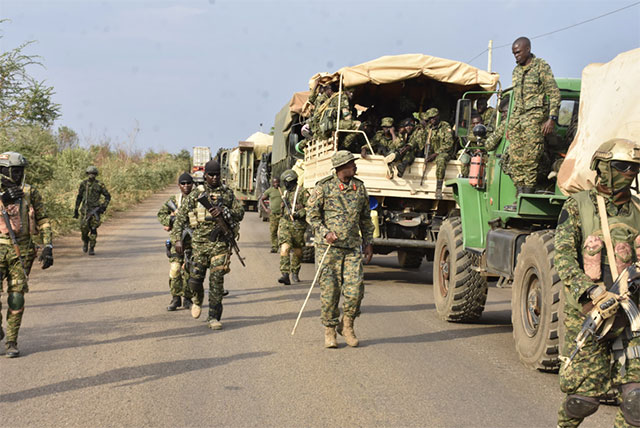
The whole world in general and Ugandans in particular now know that President Tibuhaburwa Museveni has ceded the power of deploying Ugandan troops to his CDF. As I mentioned above the CDF deployed the UPDF to resolve power conflicts between President Kiir and Vice-President Machar. According to the CDF “UPDF Commandos arrived in Juba to support South Sudan People’s Defence Forces (SSPDF) in the current crisis”. If I remember well, he mentioned he sent the troops to secure President Kiir against Machar.
Kiir belongs to the Dinka, the largest ethnic group in South Sudan, while Machar is from the Nuer, the second-largest ethnic group. The Dinka represent around 35% of the population. The Nuer are around 16%. But there are many other small ethnic groups (The Independent, 2025). There is no love left between the Dinka and the Nuer because of their divergent cultures. Dinka people, like the Tutsi and Hima, are known for being proud cattle keepers, and cattle are a central part of their culture and economy in South Sudan. Apparently, even the Nuer people are known as cattle keepers, with their lives and culture deeply intertwined with their cattle wealth and the role of cattle in their economic and social systems. 
Both the Dinka and Nuer are power hungry and militaristic. After Nuer boys undergo an initiation ceremony, they are given the responsibility of protecting their family’s cattle herd, which can involve participating in “blood feuds,” inter-communal wars, and revenge attacks, suggesting a militaristic culture. The Dinka initiation ceremony, a vital coming-of-age custom, marks the transition from boyhood to manhood and includes rituals like scarification, lessons from elders, and traditional dances, often involving boys aged 14-21. Therefore, the Dinka are less militaristic than the Nuer culturally.
In 1999 the Nuer formed their own South Sudan Liberation Movement/Army (SSLM) although they initially belonged Dr John Garang’s Sudanese People’s Liberation Movement/Army (SPLM/A). However, SPLA was an Ethnic Dinka Army. This could have moved the Nuer to form their own politico-military movement. Thus South Sudan is politically and militarily polarised along Dinka-Nuer axis, which makes the country ever prone to politicomilitary conflict.
Andrew Mwenda’s The Independent said it was wrong to send Ugandan troops to South Sudan. Many critical analysts are united in concluding that because UPDF is not impartial in the South Sudan conflict, it will just catalyse and escalate it. World Without War’s Director, Edward H. Carpenter, condemned the use of chemicals by UPDF in Sudan., saying “This is not just an escalation. It is a potential war crime”. Indeed, in any war situation, civilians are killed, raped and abused, and in some cases, genocide is carried out. According to Garang Malak (2025), writing in the East African Standard of 25 March 2025, instead of ensuring peace and security, Ugandan troops in South Sudan are causing controversy and rifts between South Sudanese government coalition partners because Uganda is not impartial.
What could escalate the conflict is General Muhoozi Kainerugaba’s series of posts on X. He wrote that “as of two days ago, our Special Forces units entered Juba to secure it”. “We the UPDF (Ugandan military), only recognise one President of South Sudan, H.E. Salva Kiir … Any move against him is a declaration of war against Uganda! All those who commit that crime will learn what it means!” The existence of EASF was ignored. It was not even clear whether EASF contributed any money to the current UPDF’s military efforts in South Sudan.
It is not the first time Uganda has deployed UPDF in South Sudan. The Government of Ugandan deployed the Ugandan People’s Defense Forces (UPDF) in South Sudan shortly after the outbreak of the third civil war on 15 December 2013. The intervention was instrumental in hindering further escalation of violence during the first weeks of the conflict (Øystein Rolandsen, Fanny Nicolaisen and Tove Heggli Sagmo 2015). Uganda ignored the existence of the East African Standby Force.
There is no doubt South Sudan is a key element in the strategy to maintain Uganda’s dominant position in the Great Lakes region. To keep Salva Kiir in power in Juba and thereby controlling the outcome – or lack of such – of negotiations to end the civil war has been a way to maintain South Sudan as a sphere of influence. But as South Sudan’s economy is rapidly disintegrating and as Salva’s power base shrinks, the political cost of this strategy is rising (Øystein Rolandsen, Fanny Nicolaisen and Tove Heggli Sagmo 2015). However, it is also known that some big people in power in Uganda have business interests in South Sudan to secure.
There is growing concern among right thinking Ugandans regarding the escalating financial cost to the taxpayers and diversion of money from social and other types of development. Every time troops are sent to South Sudan it is without parliamentary approval. Then funds are demanded retrospectively. It is not easy to establish how the figures requested are arrived at. For example, on 28 March 2025 the Parliament of Uganda retrospectively approved 39.1 billion for UPDF operations in the Sudan (Bagala, 2025). Accounting in war situations is next to impossible. One school of thought argues that much of the money allocated to war ends up on bank accounts of the military chiefs.
According to experts, a rise in political tensions in South Sudan and an escalation of violence in the Upper Nile State have raised fears of a return to civil war in the world’s youngest nation (The Independent, 2025). The UPDF is now integral to the South Sudan conflict involving President Kiir and Vice President Machar. Apparently, UPDF has been accused of waging chemical warfare in South Sudan (Javira Ssebwami, 2025) although the UPDF commanders in the country have denied it.
The cardinal question is: Why did Uganda pre-empt or exclude EASF from the current South Sudan Conflict? The other question is: With its unilateral decisions to deploy troops in hotspots of conflict in East Africa, isn’t Uganda rendering EASF a white elephant project?
Further Reading
ADF (2024). East African Standby Force ready to resolve conflicts, Leadership says. ADF Magazine, February 2024, https://adf-magazine.com/2024/02/eastern-africa-standby-force-ready-to-resolve-conflicts-leadership-says/ Visited on 28 March 2025 at 13:46 pm EAT.
Andrew Bagala (2025). South Sudan’s VP says Uganda is violating Arms Embargo. Daily Monitor, March 25 2025. https://www.monitor.co.ug/uganda/news/national/south-sudan-s-vp-machar-says-uganda-is-violating-arms-embargo-4978374 Visited on 28 March 2025 at 14:30 pm EAT
Edmund Kagire (2018). East African Standby Force hangs in the balance. East African Standard, August 4 2018, https://www.theeastafrican.co.ke/tea/news/east-africa/east-africa-standby-force-hangs-in-the-balance-1399766 Visited on 28 March 2025 at 13:41 pm EAT
Elizabeth Kamurungi (2024). From Tristar to Atiak Sugar: A Puzzle of White Elephant Govt Projects. Daily Monitor, November 04 2024 https://www.monitor.co.ug/uganda/special-reports/from-tristar-to-atiak-sugar-a-puzzle-of-white-elephant-govt-projects-4811110#story, Visited on 29 March 2025 at 12>02 pm EAT.
Fred Oluoch (2024). Eastern Africa Standby Force ready to deploy to South Sudan. East African Standard, September, 22 2024 https://www.theeastafrican.co.ke/tea/news/east-africa/eastern-african-standby-force-ready-to-deploy-to-south-sudan-1403058 Visited on 28 March 2025 at 14:o4 pm EAT.
Garang Malak (2025). Why Ugandan Troops are causing controversy in South Sudan. The East African Standard, March 25 2025. https://www.theeastafrican.co.ke/tea/news/east-africa/why-ugandan-troops-are-causing-controversy-in-south-sudan-4979022 Visited on 29 March 2025 at 10:30 am EAT.
Javira Ssebwami (2025). UPDF denies using chemical weapons in South Sudan. PML Daily, March 28 2025. https://www.pmldaily.com/news/2025/03/updf-denies-using-chemical-weapons-in-south-sudan.html Visited on 28 March 2025 at 15:02 pm EAT.
Radio Tamazuj (2022). South Sudan sends off troops joining EAC Standby Force in DRC. Radio Tamazuj December 28 2024 https://www.radiotamazuj.org/en/news/article/south-sudan-sends-off-troops-joining-eac-standby-force-in-drc Visited on 28 March 2025 at 14:14 pm EAT
Mary Wambui (2024). Once Dormant, the East African Standby Force is ready to deploy. East African Standard, January 26 2024 https://www.theeastafrican.co.ke/tea/news/east-africa/once-dormant-east-africa-standby-force-ready-to-deploy-4504116#google_vignette Visited on 28 March 2025 at 13:34 pm EAT.
New Memorandum of Understanding: Agreement on Establishment of EASF, June 2014 http://www.easfcom.org/images/documents/2016/easf_key_documents/Agreement_on_Establishment _of_EASF_Fin.pdf.
NTV (2025). UPDF requests UGX 39.1 billion for South Sudan peacekeeping operation. NTV, 28 March 2025, https://www.ntv.co.ug/ug/news/national/updf-requests-ugx-39-1-billion-for-south-sudan-peacekeeping-operation-4981734 Visited on 28 March 2025 at 14:27 pm EAT.
Øystein Rolandsen, Fanny Nicolaisen and Tove Heggli Sagmo (2015). The Cost of Uganda’s Military Intervention in South Sudan. PRIO, May 29 2015.
Parliament of Uganda (2025). Parliament of Uganda approves UPDF deployment in South Sudan, March 21 2025 https://www.parliament.go.ug/news/3645/parliament-approves-updf-deployment-south-sudan Visited on 28 March 2025 at 14:23 pm EAT
Sophie Desmidt and Volker Hauck (2017). Understanding the East African Standby Force: A regional mechanism without political home. ECDPM, https://ecdpm.org/application/files/3716/6135/3498/EASF-Background-Paper-PEDRO-Political-Economy-Dynamics-Regional-Organisations-Africa-ECDPM-2017.pdf Visited on 28 March 2025 at 13:05 pm EAT.
The Independent (2025). UPDF wrong on South Sudan Deployment. The Independent, March 23 025, https://www.independent.co.ug/cover-story-updf-wrong-on-south-sudan-deployment/ Visited on 28 March 2025 at 14:44 pm EAT
Uganda Broadcasting Corporation (2024). Uganda and East African Standby Force Sign MOU to enhance Early Warning and Response Capabilities. UBC, August 22 2024. https://ubc.go.ug/2024/08/22/uganda-and-eastern-africa-standby-force-sign-mou-to-enhance-early-warning-and-response-capabilities/ Visited on 28 March 2025 at 13:58 pm EAT.
GlobeNewswire (2025). Chemical Weapons attack in South Sudan condemned by World without War. World Without War, March 24 2025. https://www.globenewswire.com/news-release/2025/03/24/3048082/0/en/Chemical-Weapons-Attack-in-South-Sudan-Condemned-by-World-Without-War.html Visited on 28 March 2025 at 15:08 pm EAT.


REMARKABLE WINS: JIPRA boys and girls win Jinja’s USSSA football finals

0

REMARKABLE WINS: JIPRA clinches twosome victory in USSSA football district finals

By Musa Kikuuno, Busoga Times

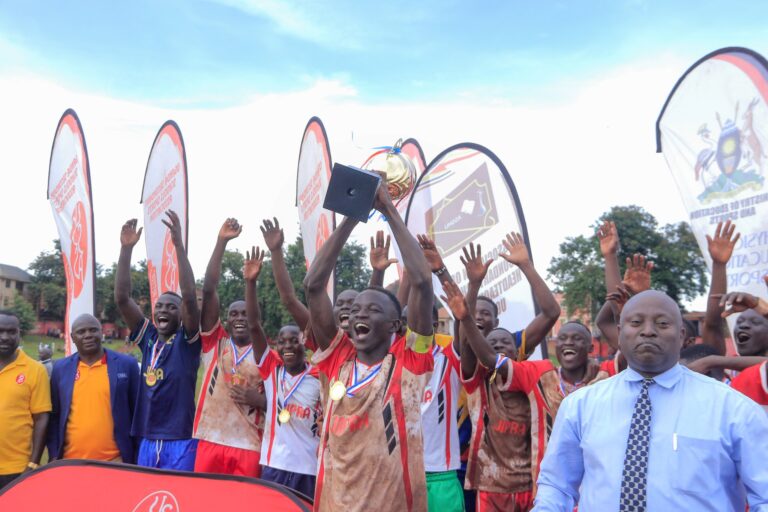
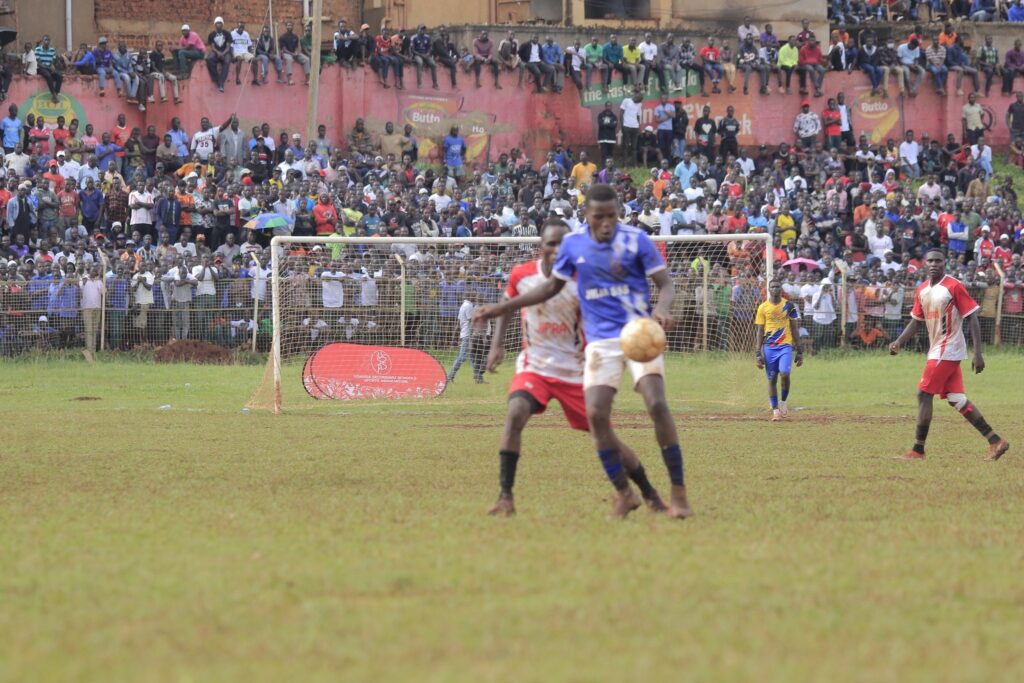
Kyabazinga Stadium, Bugembe – Jinja Progressive Academy (JIPRA) made history with a remarkable double victory in the USSSA Boys and Girls Football District Finals at Kyabazinga Stadium. The event drew thousands of enthusiastic fans from across Jinja District, including the Katukiro of Busoga, Owek. Joseph Muvawala Nsekere, who came to witness the exciting finals.

In the girls’ final, JIPRA triumphed over Jinja Senior Secondary School with a 1-0 victory, successfully defending their title as USSSA Girls District Champions—a feat they also achieved last year.

The boys’ final was a tense affair, ending in a draw against Jinja SSS. In the ensuing penalty shootout, JIPRA emerged victorious with a 4-1 score, claiming the USSSA Boys District Championship and completing a historic double.

JIPRA’s success not only earned them the district titles but also secured their places in the regional competitions, alongside Jinja SSS, Jinja Comprehensive, and Lwanda High School, who will represent Jinja District at the regional level.

JIPRA’s impressive victories this year have solidified their status as the dominant football force in Jinja District.

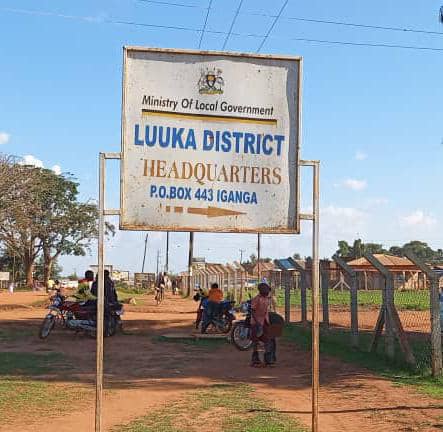
UGANDA: Where citizens are taken for granted – Luuka district in context

0

By Oweyegha-Afunaduula

The last time my road from Ikumbya to Nantamali was well surfaced with murram was when my lifelong friend, the late Martin Mukasa Musumba was LC 5 Chairman of Iganga. My District, Luuka was still just a county in Iganga District. Musumba had a small annual budget and did not have the Presidential 1 billion Shillings which LC5 Chairmen get these days and never show the difference between having 1 billion Shillings and not having it: they make the roads the same way they made them before, without gutters and small bridges in swampy areas.

Martin Musumba with his small budget would work on the roads the same way his successors do like before but make a difference to show that the 1 billion Shillings is not wasted. He would surface roads with murram, lay gutters, create channels for running water not to spoil roads, make bridges, and then show accountability for his small budget. Since he left, Iganga District has been bantustanised into Luuka, Namutumba, Bugweri, etc. But the new District leaders cannot explain why they are leaders.

Luuka is perhaps the only huge district which does not have a tarmac road. Since it became a district in 2011, it has been promised to have some tarmac roads, and I hear money for tracking the promised roads has been included in each annual national budget. Fortunate for both the district and national leaders,  the wananchi are ever ready to vote for them without asking them for accountability.

Cry My beloved District Luuka, Cry My beloved Country Uganda.

TEE OFF: Golf Union vice president pledges to entrench sport in Busoga

0

The Vice President of Uganda Ladies Golf Union (2025–2026) and also the Lady Captain of Jinja Golf Club, Helen Waiswa Tanyinga Lunkuse, has appealed to the people in Busoga to embrace and popularise golf as a sport because it is a powerful tool for social transformation.

Lunkuse, who was interacting with journalists at Richmond Hotel Butabala Kamuli on Thursday, 27 March, 2025, explained that the sport of golf helps build social capital, instills discipline, encourages mental resilience and opens doors to global opportunities.

She challenged leaders in Busoga region to identify, mentor and empower young talent by creating inclusive spaces at golf clubs. She said the sport should be used as a bridge to connect ambition with opportunity and as a firm commitment to empower the next generation.

“For the love of the game and our youth’s future, I pledge to serve with commitment, integrity, and a spirit of collaboration,” Lunkuse promised, adding, “Let us work together to ensure that more juniors, especially from our local communities, are given the chance to thrive through golf.”

“Together”, Lunkuse said, “we can elevate the profile of golf in Uganda, not only as a competitive sport but as a platform for character building, lifelong networks, and national pride.”

Lunkuse confessed that the task ahead is enormous with daunting challenges now that she is entrusted with chairing the Competitions Committee and spearheading Junior Golf Development across the country. I take these duties seriously, understanding that the future of golf in Uganda lies in nurturing the next generation, she said with conviction.  

Busoga Kingdom Minister for Kyabazinga Affairs, Yudaya Babirye Kigenyi, congratulated Lunkuse upon her election as the Vice President of the Uganda Ladies Golf Union and said Busoga is looking up to her to develop golf in the region’s local communities, schools and institutions.

East African Legislative Assembly Member of Parliament and former Woman Member of Parliament for Buyende District, Veronica Babirye Kadogo, said Lunkuse’s achievements and aspirations are going to inspire women to take on the sport of golf in Busoga.

“Helen Tanyinga is a human rights advocate, mentor and development practitioner and is passionate about gender equality, community empowerment and climate justice. She will drive golf everywhere and to everyone. We should utilise her to catch up with golf in our schools, institutions and communities,” Kadogo said.

The proprietor of Richmond Hotel Butabala in Kamuli, Christopher Kalema, offered a free venue for meetings meant to develop the game. She invited the golf fraternity to introduce golf at Lillian Children Arena and Gardens Butabala. “We are a sporting family with deep roots in the community, so we shall give necessary support to Helen in her quest to develop golf in rural communities,” Kalema said.  

Who is Lunkuse?  

Lunkuse is the founder and executive director of Rape Hurts Foundation, which provides holistic support to survivors of gender-based violence. She is a trained legal researcher, project manager and policy analyst with extensive experience in advocacy, capacity building and youth mentorship.

She is an old girl of Wanyange Girls School in Jinja and Seeta High School in Mukono and an alumna of Makerere University, where she graduated with a bachelor’s degree in environmental management and a master’s in human rights.

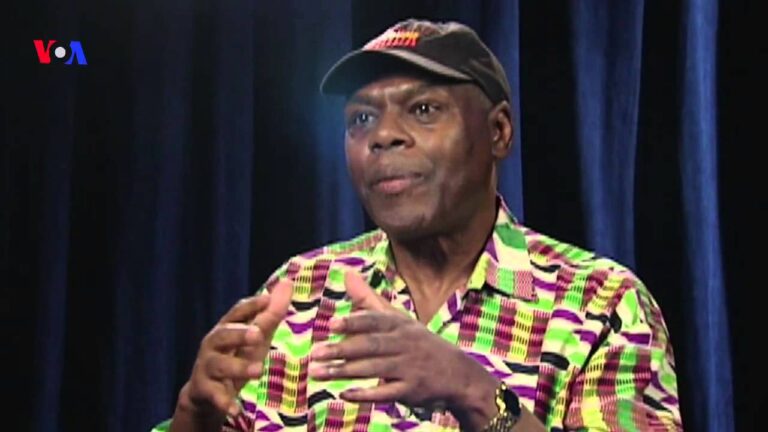
Veteran journalist Shaka Ssali, 71 years, dies

0

Ugandan veteran journalist, most recognized for his service at Voice of America’s Straight Talk Africa has died. Shaka Ssali, who retired from active journalism recently, was announced dead on Thursday aged 71 years.

As the host of “Straight Talk Africa,” he tackled some of the most pressing issues on the continent, from politics and corruption to social justice and human rights. Ssali’s unique style, which blended wit, humor, and intellectual curiosity, made him a beloved figure among audiences. He had a rare ability to connect with people from all walks of life, from heads of state to ordinary citizens.

Born in the small town of Kabale, Uganda, Ssali’s journey to becoming a legendary journalist was remarkable. He attended Kikungiri Primary School and later Kigezi High School. He, however, dropped out of secondary school in the 1960s. He enlisted in the Uganda Army as a paratrooper, a decision that eventually led him to flee the repressive regime of Idi Amin in 1976.

Seeking refuge in the United States, Ssali returned to education, earning his bachelor’s, master’s, and PhD in Cross-Cultural Communications at the University of California, Los Angeles (UCLA).

His work as a journalist started with a humble beginning at VOA, where he first co-hosted Africa World Tonight.

GOOD SERVANT: NRM chooses to retain chaotic Tanga Odoi as chairperson of the party electoral commission

0

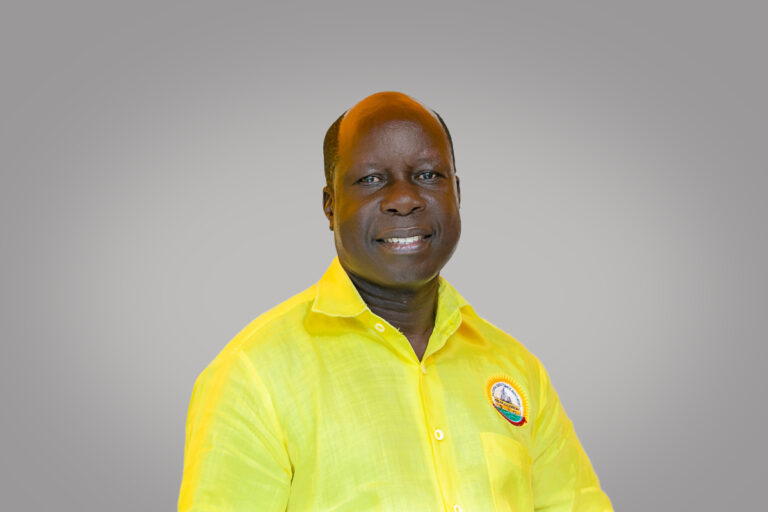
The Central Executive Committee (CEC) of the National Resistance Movement (NRM) has approved Tanga Odoi for another term as the chairman of the party’s electoral commission, Busoga Times has learnt.

This development comes at a time when the party is entering a busy period where the party will conduct internal party elections to choose flag bearers in the 2026 general elections. Tanga Odoi has released a roadmap to this effect. The roadmap is being implemented.

Tanga Odoi’s reign has been characterised by chaotic and violent party elections, quarrels and complaints, electoral malpractices, and internal party fights. His return will be a surprise to many party members.

However, his reappointment seems to be a vote of confidence and an appreciation reward from the appointing authority, President Yoweri Museveni.

While a complete list of the commissioners hasn’t been availed, it is believed that Arimpa John Kigyaji has been dropped. Other members of the Commission are aJacan Omach as Deputy Chair, Alisemera Jane Babiiha, Amb. James Kinobe, James Tweheyo, Zaitun Driwaru and Juliana Auma.

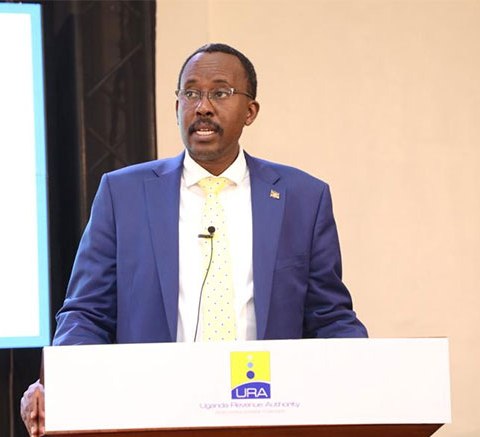
RISING QUESTIONS: Is gov’t takeover of school fees collection a boost to education or a shortcut to hitting URA’s revenue targets?

0

By Daglous Bakinyumya  

The recent announcement by the government of Uganda to take over the collection of school fees for all public schools has sparked mixed reactions across the country. While government officials paint the policy as a reform to promote transparency, improve efficiency, and relieve parents of exploitative fees, many education stakeholders remain skeptical about the true intention behind the move.

Could this policy be a backdoor for the Uganda Revenue Authority (URA) to shore up revenue collection ahead of the 2026 elections, or is it a genuine attempt to reform the education sector?

Under the new arrangement, parents will no longer pay school fees directly to individual schools. Instead, payments will be channeled through the URA’s centralized system using the Payment Registration Number (PRN) code. The government will then redistribute the funds to schools. Officials argue that this approach will ensure fair distribution, minimize misuse of funds, and prevent illegal levies by school administrators.

On paper, this sounds like a strategic intervention to sanitize school finance management. However, questions remain unanswered, and fears are mounting among school heads, teachers, and even some parents.

Is it Revenue Collection or Education Reform?

One of the biggest questions on everyone’s mind is: Is this about helping education or boosting revenue collection? The involvement of URA raises eyebrows. Traditionally, URA is mandated with tax collection, not school fee management. Bringing a revenue authority into the heart of education financing signals that this might be more about revenue than reform.

The government’s growing financial needs, especially in the run-up to the 2026 elections, cannot be ignored. Massive campaign financing, public project launches, and increasing public debt all hint at a government eager to consolidate funds.

With over 13 million students in Uganda’s public school system, channeling fees through URA could create a new stream of consistent cash flow. Whether this money strictly goes back to schools as claimed—or ends up elsewhere—remains to be seen.

Transparency vs Bureaucracy

There’s no denying that some public school administrators have exploited parents for years through unauthorized charges and hidden levies. If properly implemented, the centralized collection system could indeed curb these practices, offering parents relief from unpredictable fee structures.

However, centralizing payments also introduces a layer of bureaucracy that could cripple school operations. What happens if URA delays disbursements? Schools have strict academic calendars, and a delay in funds could mean halted projects, unpaid salaries, and even students sent home for lacking resources. The flexibility schools currently enjoy in planning and responding to emergencies may disappear entirely.

As one headteacher lamented, “We used to make decisions quickly. If a classroom needed urgent repairs or we needed to buy food for the students, we didn’t wait for a committee or ministry approval. This new system may force us to wait, even in emergencies.”

Why Election Timing and Political Undertones

Another red flag is the timing of the policy. Coming just months before the 2026 general elections, critics suspect the move is more political than progressive. Could the government be laying down infrastructure to generate funds for election activities under the guise of education reform? It wouldn’t be the first time that major policies have doubled as political strategies.

It also opens the door to politicizing education—what was once a school-level administrative matter now becomes a national political tool. If schools begin to associate financial support with political loyalty or face delays for lack of alignment, the ripple effects could be disastrous.

Will Academic and Infrastructure Development: A Hit or Miss?

Supporters argue that centralizing school funds will improve infrastructure and academic investment, as funds will be monitored closely. But skeptics argue the opposite—without autonomy, school leaders may be restricted in how they develop their institutions. School-specific needs, especially in rural areas, may be overlooked by centralized systems designed with a one-size-fits-all mindset.

In short, the policy could leave brilliant headteachers with their hands tied, unable to innovate or respond to local realities.

What’s the Real Goal?

So, what is the government really aiming at? Is it to regulate school fee structures that have gone wild in some institutions, or is it to maximize state revenue collection under the guise of fairness?

The truth may lie somewhere in between. There is a legitimate case for improving transparency in school finances. However, the government must address stakeholder concerns transparently. If not, this could become yet another well-meaning policy sabotaged by poor implementation and hidden political motives.

Final Thoughts

The government’s decision to take over school fees collection is undoubtedly bold—but whether it’s bold in the right direction remains uncertain. While it has the potential to streamline funding and curb mismanagement, its link to URA raises fundamental questions about intent. Is education being weaponized for financial gain, or is this a true attempt at reform?

If the government is genuinely concerned about the burden of high school fees and irregular charges, then the solution lies in policy and legislative reform—not in transferring payment systems to a revenue authority. Let government draft and table a bill in Parliament aimed at regulating school fees across both public and private schools, ensuring fairness, accountability, and standardization. Such a law would have far-reaching and lasting impact compared to this current concept, which appears uncertain, rushed, and vulnerable to bureaucratic failure.

At the same time, school administrations and management boards—especially in private institutions—must also reflect deeply on their core mission. Education should be a service, not a money-making venture. The growing trend of excessive fees and hidden charges not only exploits parents but also risks tarnishing the credibility and integrity of these institutions. If the drive for profit continues unchecked, schools risk killing their very purpose and trust in the communities they serve.

Until this new centralized system proves itself efficient, timely, and responsive to the unique needs of schools, stakeholders will continue to question whether this move was truly for the benefit of learners—or just a convenient way for URA to hit its revenue targets more easily.

Mr. Daglous Bakinyumya is a Political TV Producer and TV Host – @BDouglasPaapa

A WONDER: Has luck played different roles in my life trajectory?

0

By Oweyegha-Afunaduula

A dictionary definition of the word luck is “success or failure apparently brought by chance rather than through one’s own actions. Chip Denman identifies four uses of the word luck, namely: luck as superstition; retrospective luck, luck as seizing future opportunity and separating skill from luck as contributors to success.  Chip Denman then gives a short definition of luck as “when the outcome of a chance event is favorable to the individual under consideration”.

There can be good luck and bad luck. Hard luck is often ironically or sarcastically, to express sympathy or commiserations. However, Neil Levy (2024) in his article “Explainer: Does Luck Exist” published in The Conversation of 7 July 2012 says that “No-one has luck. We can’t truly say of someone they’re lucky, meaning they are the kind of person to whom lucky things can be expected to happen” He is also the author of Hard Luck: How Luck Undermines Free Will and Moral Responsibility. He adds, “Roughly, the more often something happens to someone, the less luck is involved. Of course, someone can be lucky or unlucky twice: lightning can strike twice. But the person who is lucky twice, or more, is not a lucky person: their past luck doesn’t give us any reason to expect luck in their future”.

In many religious traditions, the concept of luck is often viewed as a matter of divine providence or fate, rather than random chance, with the belief that God or a higher power is ultimately in control of events, and that good or bad outcomes are part of a larger divine plan. 

From an earthly perspective, things may seem to happen at random, but throughout the whole of Scripture, it is clear that God is in control of all of His creation and is somehow able to take the random acts of natural law, the free will of both good and evil men, and the wicked intent of demons and combine them all to accomplish His good and perfect will (Genesis, 50:20). Christians, specifically, are given the promise that God works all things, whether seemingly good or bad, together for good to those who love Him and are called according to His purpose (Romans 8:28). As a Christian, I believe everything good or bad is mediated by the Supreme God, God Almighty, whom Africa knew before others elsewhere knew Him.Africans had their own sophisticated religious traditions and beliefs, including concepts of a high god or force, before the arrival of colonialists and the introduction of Abrahamic religions. The high God was in the life of every African reigning good or bad luck.

The divine, often associated with a deity or a higher power, is considered spiritual, sacred, and transcendent, while the non-divine encompasses the physical, material, and mundane aspects of reality. 

In this article, I view “luck” as a random occurrence, not something controlled by a divine being even I believe that higher power is in charge of our life’s trajectories. A “life trajectory” refers to the overall path or course a person’s life takes, encompassing significant events, experiences, and transitions over time. Kristin Weaver (2024) wrote that it is possible for one to change one’s life’s trajectory. You can ask What Life Trajectory am I on and change it to start living a life of purpose (Deharty, 2018; Young, 2024).Ryan Freeman (2024) has told us exactly how we can control the trajectory of our lives from the past, to a upward trajectory, to a stagnant trajectory to a down ward trajectory. Ryan Freeman says, “We have control of our lives and the trajectory we are on. If we want a certain type of life we have to make it happen. We all have the power to change our path by setting the right objectives, a plan that will build the right skill sets, and by believing that we can improve. We can create the life we want for ourselves, but it all starts by having the right trajectory”. In this case we have the free will to change our trajectories, and God and luck, therefore, may not be integral to our trajectories. However, as Neil Levy (2011) said, luck undermines free will and moral responsibility for our lives or life trajectories.

I decided to write this article after a discussion with an OB of Busoga College Mwiri who thought that many OBs of the ancient school found themselves in the different stations of life they found themselves in because of luck. He said Justice Dr Egonda Ntende did not have the luck to become the Chief Justice of Uganda because he lacked good luck although he had all the credentials to serve in that capacity. He was responding to my article “The Judge I valued Highly”. He gave along list of OBs that he thought became what they did because of luck, including: former Chief Justice Waako Wambuzi, Apollo Milton Obote, Wanume Kibedi, Dr James Rwanyarare, Dr Ruhakana Rugunda, Prof. Lutalo- Bossa, Prof. W.G. Kanyeihamba, Prof, Barnabas Nawangwe, Lt Colonel Lukakamwa, Lt Colonel Obitre Gama, and many others.

After researching the topic of luck, I thought that free will is stronger than luck in determining one’s life trajectory. Free will can change one’s life trajectory. When I asked how I ended up at Mwiri Primary School, Busoga College, Mwiri, the University of Dar-es-Salaam, and the University of Nairobi as pupil and student and a lecturer at Makerere University, my free will was involved, except my move to the University of Dar-es-Salaam because in the case of the latter, the East African Students Exchange Council decided to send to there instead of Makerere University, which I had put as my first choice.

When I ended up at Makerere as a lecturer, I had a strong free will to do so. My credentials were secondary. If I had not decided to move to Makerere, I wouldn’t. When it came to leadership in Makerere I had a strong free will to lead. I had been a leader in Busoga College, Mwiri; so concluded I could lead. And yes, my will to lead was endorsed by Makerere University Academic Staff when they first elected me as Chairman, Academic Staff development Staff, then Deputy Secretary General and then Secretary General of Makerere University Academic Staff Association (MUASA). Luck was not involved.

Earlier, when I joined the East African Marine Research Organisation (EAMFRO) of the East African Community and based in Zanzibar, some luck may have been involved. It was my Head of Zoology Department, Prof. A>S. Msangi, who, because of my excellent academic performance, recommended me to the Director General of EAMFRO, Dr. Sam Kitaka. The Director-General flew in from Zanzibar to interview me in the presence of my professor. He convinced me that because of my excellent academic performance, I would soon go for Ph. D studies in Biological Oceanography and be the first African to be qualified in that area in East and Central Africa. I agreed to join EAMFRO. There was no free will it was luck and availability of opportunity. The Director-General Left me with an air ticket to Zanzibar. Luck also struck when I was called for an interview at the headquarters of the East African Community in Arusha. I was among 12 candidates that were called for the interview from the three East African countries then (Kenya, Tanzania and Uganda). However, all the other 11 did not turn up for the interview. I was confirmed in my job. That is when I concluded God was on my side; that God presented good luck.

When I joined the Nile Basin Discourse (NBD), a regional civil society organisation for the 11 countries of the Nile Basin, I first served as Vice-Chairman, Nile Basin Discourse Forum (NBDF), one of the 11forums of the NBD before becoming its chairman. Then I found myself on the Board of NBD and Acting Secretary-General of the organisation, before being elected its chairman shortly after. I had the free will to serve as the topmost civil society leader in the Nile Basin, but I belief both God and luck were involved in my rise. I served as Chairman from 008 to 2010. It was during my service than NBD got virtually all its governance instruments. Thus, free will, God and luck can interact to determine one’s trajectory of life although it is true that one can change one’s life trajectory. I can conclude that life has played important roles in my life trajectory.

Further Reading

Adam Dehaty (2018). What Life Trajectory Am I on? Linkedin, April 21 2018. https://www.linkedin.com/pulse/what-life-trajectory-am-i-adam-dehaty/ Visited on 27 March 2025 at 14:57 pm EAT.

Bez Kategorii (2017). Back from the darkness: how i stood up and changed the trajectory of my life. Albright Partners, October 6 2017. https://albrechtpartners.com/en/how-to-change-your-life/ Visited on 27 March 2025 at 15: 16 pm EAT

Certified Excellence Team (2024). Timeline and Life Trajectory.  Certified Excellence, July 25, 2024https://certified-excellence.com/topics/8-5-timeline-and-life-trajectory/ Visited on 27 March 2025 at 14:29 pm.

Do What You Love (2025). You Can Change the Trajectory of Your Own Life. Do What You Love, 2025. https://dowhatyouloveforlife.com/you-can-change-the-trajectory-of-your-own-life/ Visited on 27 March 2025 at 14:41 pm EAT.

Gauthier, JA., Aeby, G. (2023). Life Trajectories as Products and Determinants of Social Vulnerability. In: Spini, D., Widmer, E. (eds) Withstanding Vulnerability throughout Adult Life. Palgrave Macmillan, Singapore. https://doi.org/10.1007/978-981-19-4567-0_18

Keely A. DuganRandi L. VogtAnqing ZhengOmri GillathPascal R. DeboeckR. Chris FraleyD. A. Briley (2024).Life events sometimes alter the trajectory of personality development: Effect sizes for 25 life events estimated using a large, frequently assessed sample. Personality, 11 April 2023,https://onlinelibrary.wiley.com/doi/10.1111/jopy.12837 Visited on 27 March 2025 at 14:34 pm.

Kristin Weaver (2024). Is it possible to Change Your Life’s Trajectory: 3 Steps to Priotising Purpose Over Self. Brainz Magazine April 26 2024. https://www.brainzmagazine.com/post/is-it-possible-to-change-your-life-s-trajectory-3-steps-to-prioritizing-purpose-over-selfhttps://www.brainzmagazine.com/post/is-it-possible-to-change-your-life-s-trajectory-3-steps-to-prioritizing-purpose-over-self Visited on 27 March 2025 at 14:50 pm EAT

Neil Levy (2011). Hard Luck: How Luck Undermines Free Will and Moral Responsibility. Oxford University Press.https://philpapers.org/rec/LEVHLH-2 Visited on 27 March 2025 at 15:37 pm EAT.

Miriam Young (2024). Changing your trajectory to start living a life of purpose. Tiny Buddha, 2024, https://tinybuddha.com/blog/changing-trajectory-live-life-purpose/ Visited on 27 March 2025 at 15:10 pm EAT

Ryan Freeman (2014). How can we control the trajectory of our lives? The Fearless Mind, 11 June 2014. https://thefearlessmind.com/how-can-we-control-the-trajectory-of-our-lives/ Visited on 27 March 2025 at 15:21 pm EAT.

Schatzki, T.R. (2022). The Trajectories of a Life. In: Stauber, B., Walther, A., Settersten, Jr., R.A. (eds) Doing Transitions in the Life Course. Life Course Research and Social Policies, vol 16. Springer, Cham. https://doi.org/10.1007/978-3-031-13512-5_2

TRIBUTE: The Judge I value highly

0

By Oweyegha-Afunaduula

When he and his wife visited Jane and me at our humble home in Nawaka village a couple of years ago, it was a big surprise. Only God knew that the couple would visit us. It was a great honour to be visited by a Judge unexpectedly.

We did not know how to welcome and host a Judge, because in our more than 40 years together we had not had such an experience. However, it was a welcome experience because Judges become very remote from ordinary people once they are named on the Bench.

I had left the Judge at Busoga College, Mwiri in 1971 when I completed my Senior Six studies. I don’t remember what year he was in because it was not easy for me to follow every student although I was a school prefect.

I had also left him at Mwiri Primary School after completing my Junior Leaving education in 1965. It is possible he was in Primary Two with Professor Waswa Balunywa.

When I met the Judge again it was in 1976. He was working at the Chambers of former Minister Moses Kintu in Jinja. It was a good encounter. He told me he had risen to become the Head Prefect of Busoga College, Mwiri and then gone on to become a law graduate from Makerere University.

I remember he was a very social gentleman with a free talking style. I told him I had also graduated from the University of Dar-es-Salaam and was now working as a Fisheries Research Officer with the East African Marine Fisheries Research Organization of the East African Community. I told him to work hard and be consistent and build his character of integrity and honesty rather than manifest as just another character among characters.

I was not surprised when he was appointed a judge. He deserved it. And he had unique leadership qualities that would benefit the Judiciary of Uganda. I was not also surprised when he was hired as a judge in Seychelles.

We were, therefore, very happy when the Judge and his wife visited us. I knew it was a blameless, corruption-free Judge visiting. He introduced his wife and I introduced him to my wife and members of my family who were around, including Isaac Afunaduula who is a Senior Lawyer at the Ministry of Defense and a Dean at Victoria University.  I liked the advice he gave to Isaac Afunaduula.

I am happy the Judge gave a good example to young lawyers and judges when he decided to study for and acquire a Ph.D in law, in keeping with his commitment to excellence in the administration of Justice, although there are some highly educated judges who are frustrating justice in the country.

If I were the Executive I would have appointed our visiting Judge Chief Justice of Uganda, but I am not. And my criteria for effective guardians of Justice are different.

I am sure the Judge in question is approaching retirement without any controversies during his service to the nation. Unfortunately, he will retire at a time when the Judiciary is having a serious test of its capacity to dispense justice, and when the Executive is insistent that civilians should be tried in military courts.

Although the Judiciary says civilians should not be tried in military courts, the Executive has pushed to have the UPDF Act rethought to make trying civilians in military courts legal. The ruling party  is said to have approved. Because it dominates the Uganda Parliament, the Executive will get what it wants. It got the obnoxious laws it wanted. Why not this one?

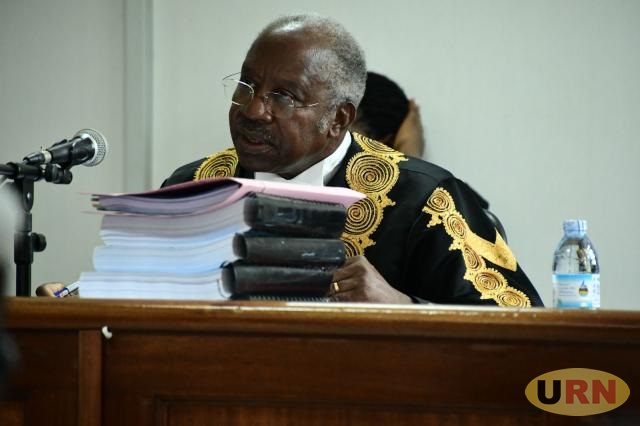
The Judge I am writing about is Justice Dr Egonda Ntende (in photo below).

For God and My Country

Justice Dr Egonda Ntende. Photo/URN