The chairperson of the Uganda Electoral Commission (EC), Justice Simon Byabakama, Monday announced that they have extended the nationwide Voter Register update by seven days, starting tomorrow, Tuesday, 11th January 2025, to 17th February 2025.
Byabakama said this decision was reached at after the Commission taking into account its observations in the field and assessment and appeals from stakeholdera.
“Since the commencement of the Update Exercise on 20th January, 2025, members of the Commission, management, and staff have been in the field in the different regions of the country.
“Supervising the exercise, monitoring progress, listening to stakeholders, taking stock of emerging issues, and getting a practical feel and appreciation of the challenges faced and the solutions being applied.
“Since the start of the exercise, commendable progress has been made in registering new voters, effecting transfers for those who wish to change their voting locations, and facilitating those who come to check for the correctness of their particulars.
“However, we have also received reports and observed ourselves some challenges that have affected the pace of the Update Exercise, notably the limited number of registration kits from NIRA and their occasional breakdowns due to old age.
361,432 new voters
“In spite of the challenges faced since the commencement of the update exercise, as of today, 361,432 new voters have been added to the National Voters Register while 292,021 applications for transfers have been made. This figure does not include the learners who were registered by NIRA and whose data is still being processed.
“As you are aware, 18,103,603 (eighteen million one hundred and three thousand six hundred and three) voters were registered for the 2020/2021 General Elections. Since then, the Voter Register has been updated through voter registration exercises.
Only 19 million voters on the register
“As of today, the National Voters Register stands at 19,925,574 (nineteen million nine hundred twenty-five thousand five hundred and seventy-four) voters.
“The Commission, taking into account its observations in the field and assessment, as well as appeals from stakeholders, among other reasons.
“The EC has decided, therefore, to extend the Update Exercise for seven (7) days, starting Tuesday 11th and ending Monday 17th February 2025, after which there will be no further extension.
“During the extension, the exercise will continue to be conducted at update stations starting from 8:00 am to 6:00 pm, every day, including weekends.
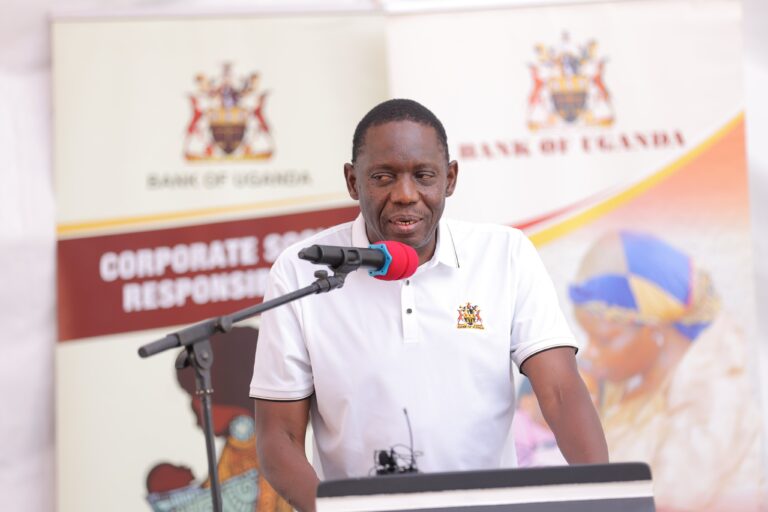
The deputy governor of Bank of Uganda Michael Atingi-Ego has been appointed by President Yoweri Museveni as the full governor of the country’s central bank, according to media reports on Monday.
He has been serving the finance sector regulator in acting capacity since the death of Emmanuel Tumusiime – Mutebile in Januaury 2022.
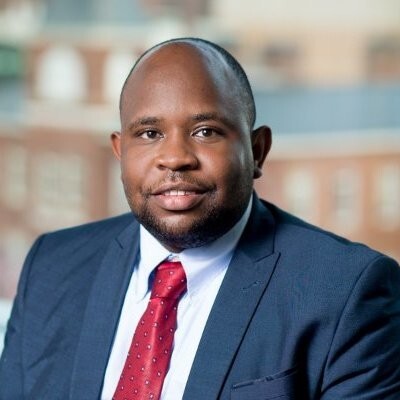
Atingi-Ego will be replaced by economist Augustus Nuwagaba as the new deputy governor. In 2022, Nuwagaba, and many others including the now PSST at the ministry of finance, Ramathan Ggoobi, and former MUBS Principal Wasswa Balunywa, had been tipped to replace Mutebile but it never happened leaving Atingi-Ego to continue at the helm of the central bank in acting capacity.
Atingi-Ego was appointed deputy governor by Museveni in 2020. Before that, he had worked as Executive Director of the Macroeconomic and Financial Management Institute of Eastern and Southern Africa (MEFMI) from September 2018.
He started career at the BoU in August 1984, advancing to Executive Director of Research. He researched and published on macroeconomic and financial policies and statistics.
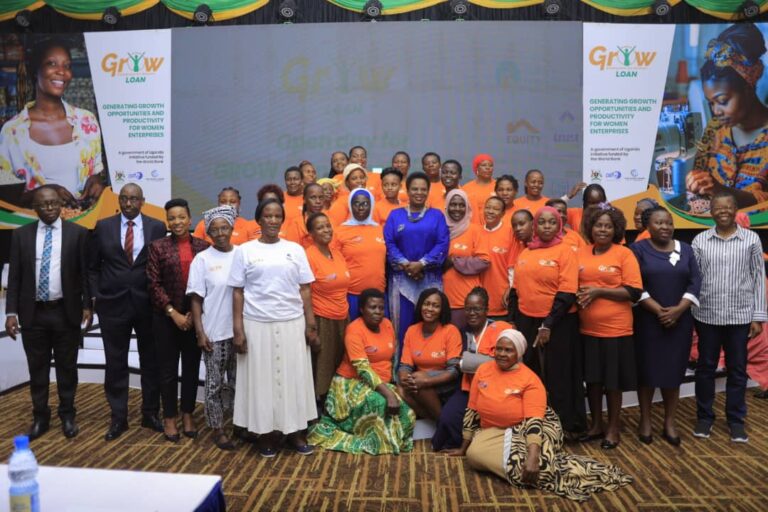
It is exactly one year ever since the Generating Growth Opportunities and Productivity for Women Entrepreneurs (GROW) project’s loan facility was launched.
The initiative was launched by the Vice President of Uganda, Jessica Alupo. On Friday, officials from the Ministry of Gender, Labour and Social Development, Private Sector foundation met with over 500 women who accessed the grow loans in greater Kampala.
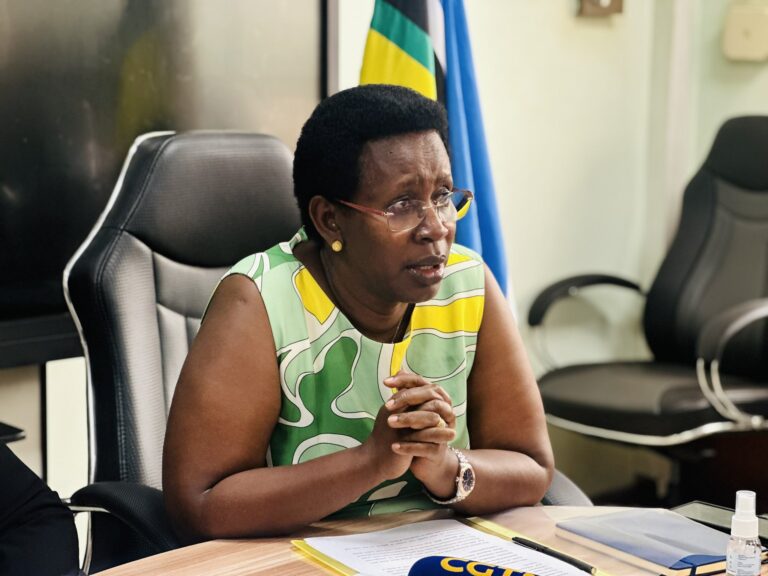
The aim of the meeting was to address loan beneficiaries and tracking the process and progress of how they are using the loans. The state Minister for Gender, Labour and Social Development Hon Betty Amongi said that women in Uganda are leading in entrepreneurship and the government will continue supporting them under the GROW project until they formalize their businesses.
The GROW loan is given through six banks that include Centenary Bank, Finance Trust Bank, DFCU Bank, Stanbic Bank, Equity Bank and Post Bank and these are given to strictly women owned enterprises.
Hon Among also said that in the beginning, many doubted that we couldn’t fulfill the initiative of giving out loans to the women entrepreneurs around the country but one year later, it has become a success and the government is still coming up with other women empowerment projects under grow.
She congratulated the women upon acquiring the financing and cautioned them to repay their loans on time such that other women can benefit from the same fund.
Monica, a farmer based in Mbarara applied for the loan at DFCU Bank, meeting all requirements, including collateral, proof of business, and bank statements and secured UGX 200,000,000 which she used to order 20 exotic dairy cows from Kenya, including Gorand, Friesian, and Jersey breeds, each costing UGX8,000,000.
Monica is a farmer operating a 16-acre farm in Mbarara City with eight Friesian cows, 400 poultry, an orchard, banana plantation, fishponds, piggery, rabbit farming, a winery, fruit processing, and feed cultivation.
By utilizing animal waste for bio-slurry and biogas, Monica enhances productivity while earning UGX23,000,000 monthly. She says she got to learn about the GROW loan project on UBC and TV West.
There was a fall in consumer demand during January dropping the headline Stanbic Purchasing Managers’ Index (PMI) to 49.5 compared to the December reading of 53.1. Readings below 50.0 are indications of deterioration of private sector operating conditions.
Christopher Legilisho, Economist at Stanbic Bank said, “Surprisingly, the Ugandan Purchasing Managers’ Index (PMI) eased in January as new orders and output reflected subdued consumer demand. The private sector may well have lost momentum in January. Further, backlogs declined due to less consumer demand.”
The Stanbic PMI is compiled by S&P Global from responses to monthly questionnaires sent to purchasing managers. The sectors covered by the survey include agriculture, mining, manufacturing, construction, wholesale, retail and services.
The PMI is a weighted average of the following five indices: New Orders (30%), Output (25%), Employment (20%), Suppliers’ Delivery Times (15%) and Stocks of Purchases (10%).
According to the latest survey, lower new orders subsequently dampened business activity levels, which were broadly unchanged on the month in January. Unlike the fall in new business, which was largely centred on the service sector, the decline in output was broad-based by monitored segment.
Legilisho said, “However, quantities purchased increased, and inventories and supplier delivery times improved due to optimism about future output and efficiency gains by vendors. Therefore, the retreat in new orders and output may prove temporary.”
He said, “Firms reported an increase in input costs due to higher utility bills as well as a rise in purchase prices for staple products, for instance, foodstuff, stationery, cement and toiletries. Staff costs rose, with a slight uptick in the manufacturing, wholesale, and retail segments. Output prices too increased as firms passed on higher input and purchase prices to consumers. This implies a slight rise in inflationary pressures in January compared to the
case in December, aligning with the inflation print that rose to 3.6% y/y. The private sector is upbeat about the business outlook for the next 12 months.”
Average input prices continued to increase at the start of 2025, following higher reported purchase and staff costs. Survey respondents noted that utility and raw material costs ticked up, with some also mentioning increased overtime payments to staff.
Ugandan businesses raised their selling prices, in response, with output charges increasing for the fifth month running. Although the uptick in total input prices was broad-based by sector, construction registered a reduction in output charges in January.
Ugandan private sector firms cut employment for the third month running in January, amid lower new orders and renewed evidence of spare capacity. Companies indicated a drop in backlogs of work, following an increase in December.
Nonetheless, private sector firms were upbeat in their expectations regarding the outlook for output over the coming year. Business confidence was positive in all sectors amid hopes of stronger demand conditions in the coming months. Finally, despite hikes in purchase costs, Ugandan businesses signaled another monthly increase in input buying in January
Finally, despite hikes in purchase costs, Ugandan businesses signaled another monthly increase in input buying in January. A fourteenth successive monthly improvement in vendor performance helped support firms’ efforts to build safety stocks, as inventories rose further.
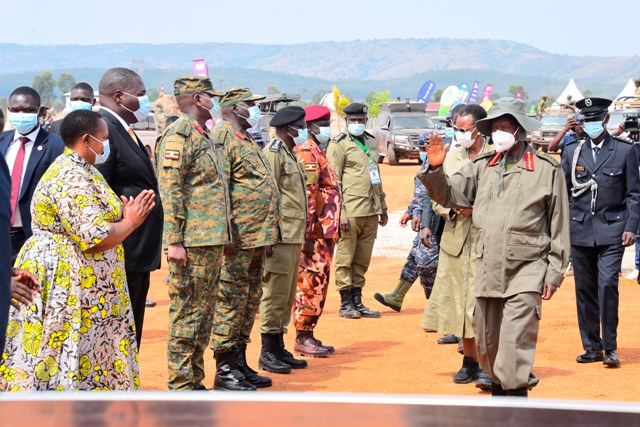
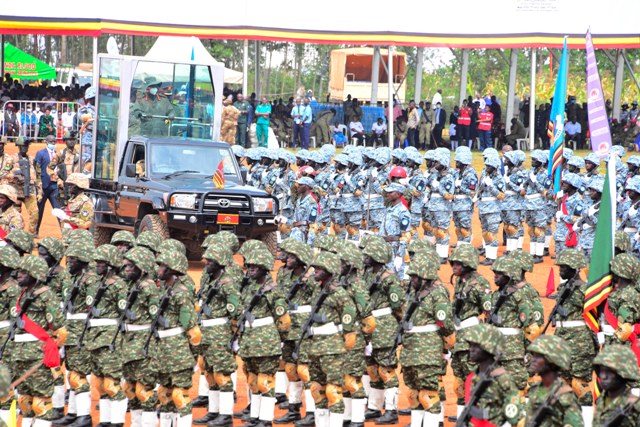
President Yoweri Museveni used the 44th Tarehe Sita Anniversary celebrations at Kasasa Township Grounds in Kyotera District on Thursday to remind and encourage Ugandans to add value to their products, especially farm produce, so as to benefit more from their economic sweat.
“The value addition with coffee we are moving. We are supporting a number of groups. Therefore, when we tell you that we are targeting an economy of USD 500 billion, in the next few years, take serious note of what we are saying,” the President said.
“The Greater Masaka area is moving forward in terms of commercialization of coffee, palm oil and milk. Add irrigation to your efforts and the sky will be the limit. In the Katonga flood plain we can do a lot of fishing. This rice I see there, I don’t think it’s a good idea, we shall talk about it,” he added.
Economy growing
Museveni, who is also the Commander-In-Chief of the Uganda People’s Defence Forces (UPDF), noted that the economy of Uganda is growing progressively, all in the account of the five phases that the economy and society have gone through since 1986.
“As a consequence of all this, although we still have a lot to do, our economy will be USD59.3 billion by June 2025 using the Foreign Exchange Method but USD168.5 billion by the Purchasing Power Parity (PPP) method. Remember we started with USD4 billion in 1986,” he said.
“The phases include minimum economic recovery by bringing back the 3Cs (Coffee, cotton and copper) and 3Ts (Tobacco, Tea and Tourism) of the colonial economy which Idi Amin has destroyed, the second phase was to expand this small economy, that is why with coffee now, we are at 9 million bags, we used to be at 2 million bags.Phase three is to diversify the economy, phase four is adding value and lastly, phase five, we have entered the knowledge economy which include automobile and vaccines.”
Peace and stability
President Museveni further revealed that the National Resistance Army (NRA) from the beginning was fighting for certain philosophical, ideological and strategic principles and targets, citing them as some of the reasons why Uganda has been peaceful all these years.
The President reiterated UPDF’s capacity to protect Ugandans and their property.
“Like the CDF Gen. Muhoozi has assured you, the UPDF has all the capacity to protect you, supported by you as well as protecting your property.”
Gen MUhoozi said the UPDF continues to work tirelessly to consolidate the fruits of the liberation struggle to ensure not only peace and security within Uganda’s border but also supporting other countries on the African continent.
Tarehe Sita is observed annually on 6th February, and it is a symbol of the founding of the people’s army. The celebrations ran under the theme: “Celebrating Pan African Solidarity and People’s Sacrifice in the Struggle for Freedom and Democracy for Socio-Economic Transformation”.
President Yoweri Museveni has assured that Uganda’s economy will grow into double digits when the country starts producing its oil.
“After June (this year), our economy will grow by 7.3 percent without oil. That’s a high growth speed; very few countries can achieve that. With oil, our rate of growth will go into double digits; more than 10 percent,” he said.
The President made the remarks today during the 44th Tarehe Sita Anniversary celebrations at Kasasa Township Grounds in Kyotera District.
The celebrations ran under the theme: “Celebrating Pan African Solidarity and People’s Sacrifice in the Struggle for Freedom and Democracy for Socio-Economic Transformation”.
Tarehe Sita is observed annually on 6th February, and it is a symbol of the founding of the people’s army. The day commemorates the heroic efforts of the founding fathers and the people’s revolution.
The President noted that the economy of Uganda is growing progressively, all in the account of the five phases that the economy and society have gone through since 1986.
By Musa Kikuuno, Busoga Times Sports Writer ll whatsapp 075632265
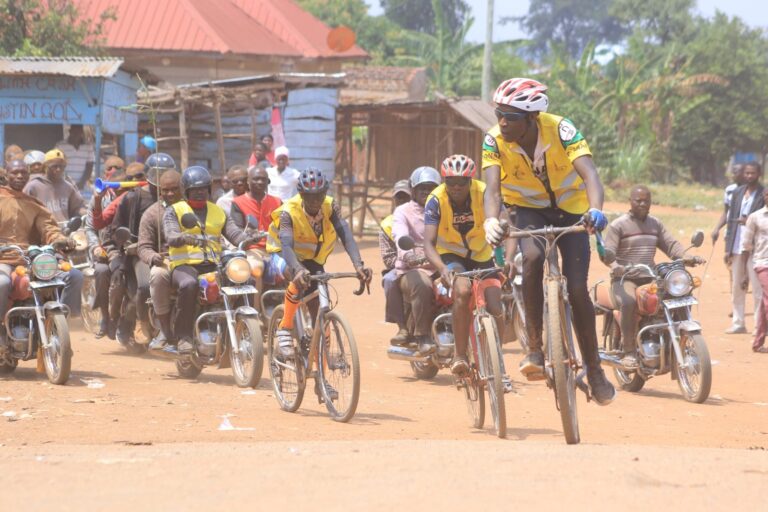
The stage is set for an exciting showdown as the best cyclists from across Busoga prepare to compete in the Grand Finale of the MTN Busoga Annual Cycling Championship on February 15, 2025.
With 44 top riders qualifying through grueling preliminary races, all eyes will be on the two categories: the Tippa Bike (Maanhi Ga Kifuuba) and Mountain Sports Bike.
The stakes are high, as the competition promises thrilling action and prestigious rewards, including brand-new motorcycles for the champions.
The journey to the final has been nothing short of exhilarating. The preliminary races took place from January 18 to February 2, 2025, across various chiefdoms in Busoga, with riders battling for their spot in the finale.
Cyclists from the 11 chiefdoms of Busoga, including Luuka, Bulamogi, Bukooli, Bugabula, Bukono, Busiki, Bunha, Kigulu, Bugweri, Butembe, and Bunhole Bunhanhumba, competed fiercely, each striving to secure a place in the prestigious final race.
In the Tippa Bike category, 22 cyclists emerged victorious, including the top finishers from the regions of Luuka, Bugabula, Bukooli, and beyond. Notable names like Musitwa Andrew from Luuka, Mulondo Rashid from Luuka, Defending champion Luganda Tiffu of Bukooli and Damba Bashir from Bunhole Bunhanhumba are among the qualified cyclists.
Similarly, the Mountain Sports Bike category saw the best riders from across the chiefdoms earn their place in the final, with cyclists such as defending champion Jonh Odoto from Kigulu, 16 year old Bazaale Bosco from Busiki, Magemeso Mensuramu and Kiwanuka Musirimu from Luuka making it through.
The grand finale will be a 188 km race, with cyclists facing a demanding course that will test their endurance and skill. All 44 finalists are guaranteed a UGX 50,000 reward from MTN Uganda, the event’s main sponsor, but the real prizes await the top finishers.
The ultimate prize for the winner is a brand-new motorcycle, while second-place finishers will walk away with UGX 2,000,000, and third-place cyclists will receive UGX 1,000,000. The fourth and fifth-place finishers will earn UGX 500,000 and UGX 300,000, respectively. Cyclists who finish outside the top five will also be honored with a token of UGX 50,000 for their participation.
As the countdown to the grand finale continues, anticipation is building for what promises to be an unforgettable day of cycling action. With top-tier athletes from across the region gearing up for the race of their lives, the MTN Busoga Annual Cycling Championship promises to be a thrilling and historic event for both participants and spectators alike.
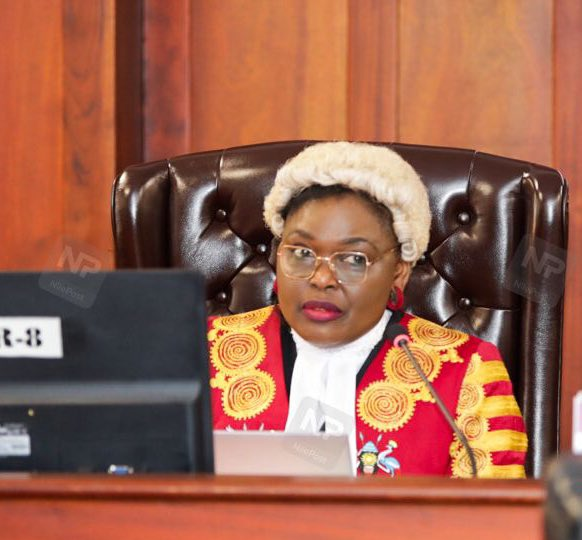
In a landmark ruling, Justice Catherine Bamugemereire of the Supreme Court has suspended all proceedings in the General Court Martial (GCM), declaring the trial of civilians in military courts unconstitutional.
The decision marks a pivotal moment for Uganda’s legal system, prompting urgent calls for military justice reforms.
Justice Bamugemereire ruled that the General Court Martial lacks the constitutional mandate to try civilians, emphasizing that its structure and procedures violate the principles of fairness and impartiality enshrined in Uganda’s Constitution.
“Judicial power, as per the law, is vested in the judiciary, and the General Court Martial is subordinate to the judicial system,” she stated.
“It is an overreach to create an offense making civilians liable for crimes under military law.”
Her ruling suspends all ongoing civilian trials in the GCM, except those involving military personnel.
She further directed that all cases pending trial in the military tribunal be subjected to judicial review, placing an injunction on further proceedings.
Justice Bamugemereire’s decision follows an earlier judgment by Justice Monica Mugenyi, who, along with a panel of seven justices, ruled that Section 117(1)(h) of the Uganda People’s Defence Forces (UPDF) Act—allowing civilians to be tried in military courts—was unconstitutional.
Justice Mugenyi raised concerns about the GCM’s lack of independence and impartiality, stating, “The General Court Martial is not an independent and impartial court and is inconsistent with the Constitution.”
She further called for military court reforms, recommending that appointments to the General Court Martial be made in consultation with the Judicial Service Commission to ensure legal expertise and impartiality. While her judgment left room for amendments to the UPDF Act, she reaffirmed that civilian trials in military courts must be reconsidered.
In a decisive ruling, Justice Elizabeth Musoke became the third Supreme Court judge to reinforce limits on the General Court Martial’s authority.
She concurred with Justice Mugenyi’s judgment but went further, asserting that the GCM is strictly a disciplinary body with no jurisdiction over civilians.
“The cases that may be tried here are limited to discipline, and the nature of punishment is limited to disciplinary sanctions,” she stated.
Justice Musoke emphasized that the General Court Martial lacks the fundamental attributes of a proper judicial body—such as independence and impartiality—and cannot qualify as a subordinate court under Uganda’s legal framework.
“It is erroneous to expand its jurisdiction beyond its disciplinary scope,” she ruled. “All criminal matters ought to be handled by courts of judicature.”
Her judgment also struck down Sections 119 and 179 of the UPDF Act, declaring them unconstitutional for extending the GCM’s jurisdiction beyond disciplinary offenses and improperly allowing the trial of civilians.
She ruled that only UPDF personnel and disciplinary offenses fall within the GCM’s mandate. Furthermore, any military case resulting in imprisonment must be transferred to the Director of Public Prosecutions (DPP) for judicial review.
The Supreme Court’s rulings set the stage for significant legal reforms, ensuring that civilians are not subjected to military trials in violation of their constitutional rights.
With ongoing trials of high-profile figures, including opposition leader Dr. Kizza Besigye, under scrutiny, the judgments highlight the urgency of aligning Uganda’s military court system with constitutional principles.
The rulings reinforce judicial oversight, emphasizing the need for a fair and impartial justice system.
As the legal landscape shifts, the Supreme Court has sent a clear message: Uganda’s judiciary is committed to upholding the rule of law and ensuring that justice is administered fairly and transparently for all citizens.
Uganda’s Ministry of Health has confirmed an outbreak of the Sudan Ebola Virus Disease (SUDV) in Kampala, marking the country’s seventh outbreak of the virus.
The Ministry’s Permanent Secretary, Dr. Diana Atwine, told a press conference in Kampala that laboratory tests conducted at three national reference laboratories returned positive results.
The confirmed case, identified as the index case, is a 32-year-old male nurse employed at Mulago National Referral Hospital. According to Dr. Atwine, the patient initially presented with fever-like symptoms and sought treatment at multiple facilities, including Mulago National Referral Hospital, Saidina Abubakar Islamic Hospital in Matugga (Wakiso District), and Mbale Regional Referral Hospital in Mbale City. He also visited a traditional healer.
Over five days, his condition worsened, with high fever, chest pain, and breathing difficulties progressing to unexplained bleeding from multiple body sites. The patient later suffered multi-organ failure and succumbed to the illness at Mulago National Referral Hospital on January 29, 2025. Post-mortem tests confirmed he had contracted the Sudan Ebola Virus.
In response to the outbreak, health authorities have swiftly activated emergency measures. Rapid Response Teams have been deployed to Mbale City and Saidina Abubakar Islamic Hospital, where suspected cases have been identified.
Dr. Atwine reported that 44 contacts have been listed so far, including 30 health workers and patients from Mulago National Referral Hospital, 11 family members of the deceased, and four health workers from Saidina Abubakar Islamic Hospital.
She added that the deceased would receive a safe and dignified burial to prevent further spread of the disease, emphasizing the Ministry’s commitment to containing the outbreak.
Authorities have launched a targeted vaccination campaign for all identified contacts to curb further transmission. The Ministry of Health has urged the public to remain vigilant and adhere to preventive measures.
Dr. Atwine reassured Ugandans that the government is in full control of the situation and remains committed to safeguarding lives. She encouraged people to report any suspected Ebola cases to the toll-free line, 0800-100-066, or visit the nearest health facility.
This marks Uganda’s seventh Sudan Ebola outbreak. The last outbreak, which ended on January 11, 2023, resulted in 164 infections and 55 confirmed deaths. Since the first recorded outbreak in 2000, Uganda has reported a total of 325 cases and 224 deaths linked to the virus. Health officials continue to monitor the situation closely as containment efforts intensify.
By Musa Kikuuno, Sports Writer, Busoga Times II Whatsapp 075632265
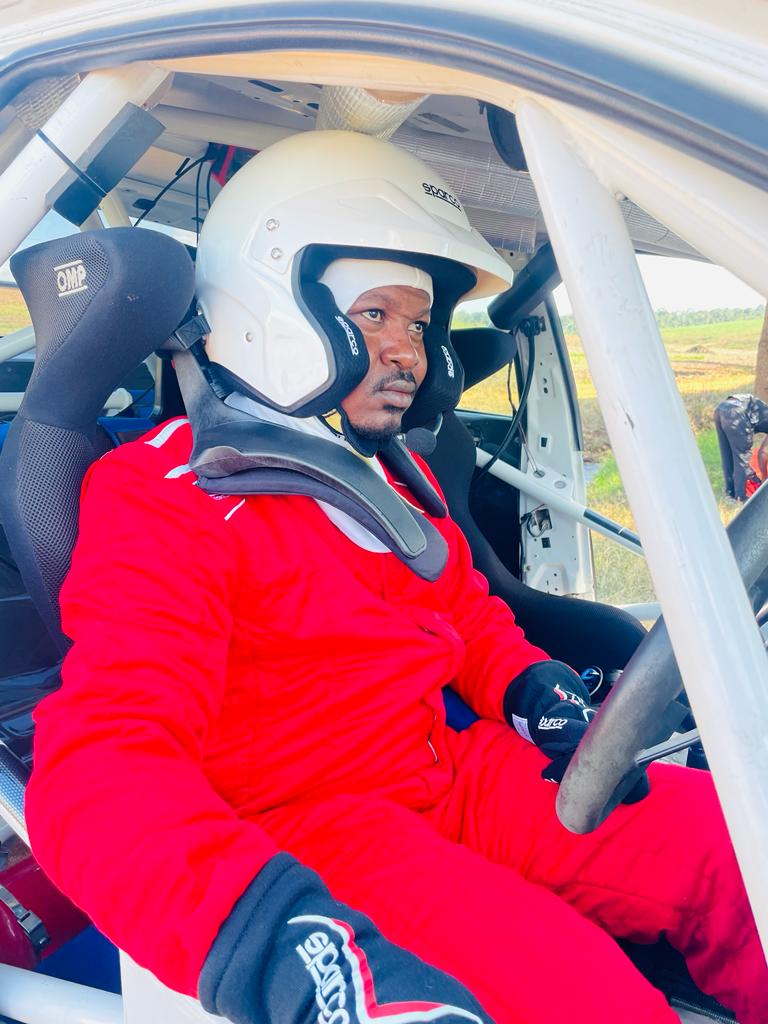
Musa Ssegaabwe, a name making waves in the Ugandan motorsport scene, is on a journey that few can relate to.
From humble beginnings in Luweero to becoming a rising star in rally racing, his story is one of passion, dedication, and raw talent.
I had the privilege of sitting down with the man of the moment to discuss his remarkable journey from co-driver to champion driver in just one year.
Thanks for joining us. For starters, who is Musa Ssegaabwe?
Thank you so much. By coincidence, we are all Musas, but I am Musa Ssegaabwe, born in Luweero and currently residing in Bulindo Kira. I started rally driving in 2024 in the CRC category, which is a category for beginners.
But before I became a driver, I was a co-driver or navigator. I was drawn to co-driving because I wanted to gain skills to eventually become a driver. Before I joined motorsport, I used to drive on the streets, and those who know me can testify to that.
You mentioned being a co-driver. What exactly does a co-driver do in a rally?
A co-driver, also known as a navigator, sits beside the driver and reads the map, guiding them on the route. They inform the driver about upcoming turns, bumps, and other obstacles on the track. It’s crucial for the driver to trust their co-driver’s directions to make it through the race successfully.
Speaking of co-drivers, you’ve partnered with Mathias Kiyenga. How has the partnership been, especially with the success you’ve had?
Mathias Kiyenga is my co-driver, and we make a perfect team. I’m a Muganda, and Mathias is a Musoga, and I always say, “Obusoga bulaire” (Busoga reigns). We’ve become brothers, and we do almost everything together, both good and bad. I really appreciate his support.
You switched from being a navigator to a driver and won the CRC in your first year. How did that feel?
It felt incredible, but I wasn’t completely new to racing. I had driven on the streets before, and in 2023, I became the champion in the Time Trial (TT) event while driving a Benz AMG GLE.
I was passionate about driving, and joining a more organised event like the CRC was a natural progression. I also used to drift my Lexus car, so when I transitioned to driving, it felt like I was finally where I belonged.
You just mentioned the transition from CRC to NRC. How are drivers promoted from CRC to NRC?
CRC is for beginners, and drivers come from events like autocross. I moved from autocross to CRC and then NRC. In CRC, we drive about 50% of what NRC drivers do.
For example, in the Mbarara rally, the NRC drivers covered seven stages, while CRC drivers only completed five.
You’ve only been in motorsport for a year. How would you describe your experience so far?
It’s been an amazing year! In 2024, I transitioned from co-driving to full-time driving, and I ended up winning two championship titles, including in the CRC and autocross. We completed all the events without major vehicle issues, which is every driver’s goal.
Let’s talk about the Mbarara circuit. You were penalised during stage one. What happened there?
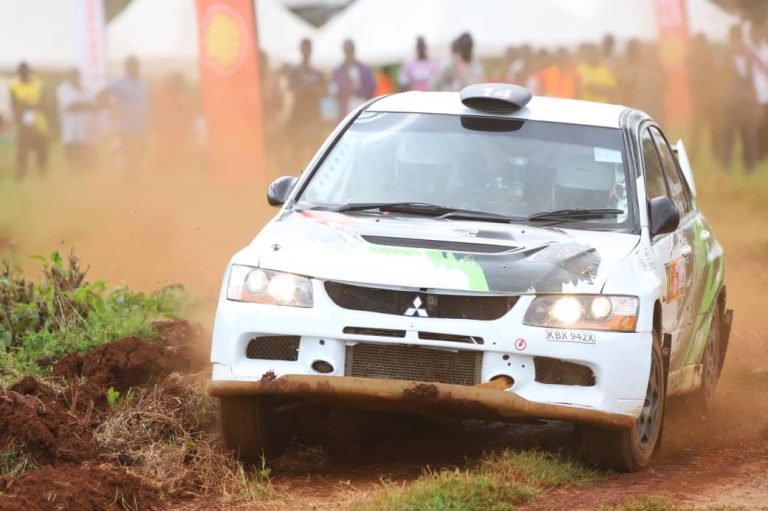
We had prepared our vehicle well for Mbarara, and during the race, we were pushing high speeds, reaching 220 km/h. When we approached a sharp bend, we couldn’t slow down in time, and we went off track.
At that speed, it’s tough to navigate a corner, but with quick intervention, we managed to control the car. Despite the damage, our team did a fantastic job, and within 40 minutes, we were back on the track.
The rally continued, and by the end of the day, we were in 29th place out of 37 competitors. The next day, we pulled back to 8th, despite the 18-minute penalty.
40 minutes to get back on the track after such a big incident—that’s incredible. How did you switch your mindset after that?
The vehicle was back to normal, and I had the determination to finish what we started. We were there to compete, and despite the setbacks, we kept pushing.
It wasn’t easy, but we managed to finish strong, even with torn tires and an exhaust issue. That’s what rally racing is all about—overcoming challenges and finishing strong.
The penalty you received in Mbarara was for speeding, yet some people argue that you race too fast. What do you say to that?
People who criticise don’t understand the nature of the competition. Racing is about being faster than the rest. If you go slow, you’ll lose. That’s the reality of the sport.
Looking ahead, how prepared are you for the upcoming Masaka Rally in April?
We are preparing for Masaka, and despite the challenges we faced in Mbarara, we’ve learnt a lot. We’re currently working on our vehicle, and I’ll be heading to Poland to get new spare parts. Masaka will be a fresh challenge, and I’m determined to give my best.
You drive a Mitsubishi Evo 9. Is there a chance you might switch cars anytime soon?
We have no plans to switch cars for this year unless something significant comes up. The Evo 9 has been good to us, and we’re focusing on improving it.
What about your ultimate goal in this sport? Where do you see yourself in the future?
My goal is to become the NRC Champion of Uganda. Once I achieve that, I can consider retiring. I’m a huge Arsenal fan, and just like our team is striving for a Champions League win, I too aim to be at the top of Ugandan rally racing.
Many people would love to join motorsport. What advice would you give to someone interested in this sport?
Motorsport isn’t something you rush into. It requires preparation, patience, and a lot of learning. When I got my car, I didn’t immediately start racing.
I spent time training with it and learning the ins and outs. Anyone looking to join should be prepared to invest time, energy, and money into the sport.
Finally, Musa, you’ve had an incredible journey so far. What’s your message to your fans and supporters?
I want to thank my fans, my co-driver Mathias Kiyenga, my mechanics, my wife, and my family for their continued support. I also want to send my love to everyone at Segamu 14 Consults Limited. Keep supporting us, and we’ll keep making you proud.
Thank you for your time, Musa, and good luck in the Masaka Rally.
Thank you. It was my pleasure.
As Musa continues to break barriers in motorsport, there’s no telling just how far he’ll go. With his passion, determination, and remarkable teamwork, the future looks bright for this talented racer. Keep an eye on Musa Ssegaabwe—he’s just getting started.
Websites store cookies to enhance functionality and personalise your experience. You can manage your preferences, but blocking some cookies may impact site performance and services.
Essential cookies enable basic functions and are necessary for the proper function of the website.
Name
Description
Duration
Cookie Preferences
This cookie is used to store the user's cookie consent preferences.