Sunday, March 15, 2026
Home Blog Page 6

OPINION: Why Kaliro deserves serious and independent leaders who can think for themselves

0

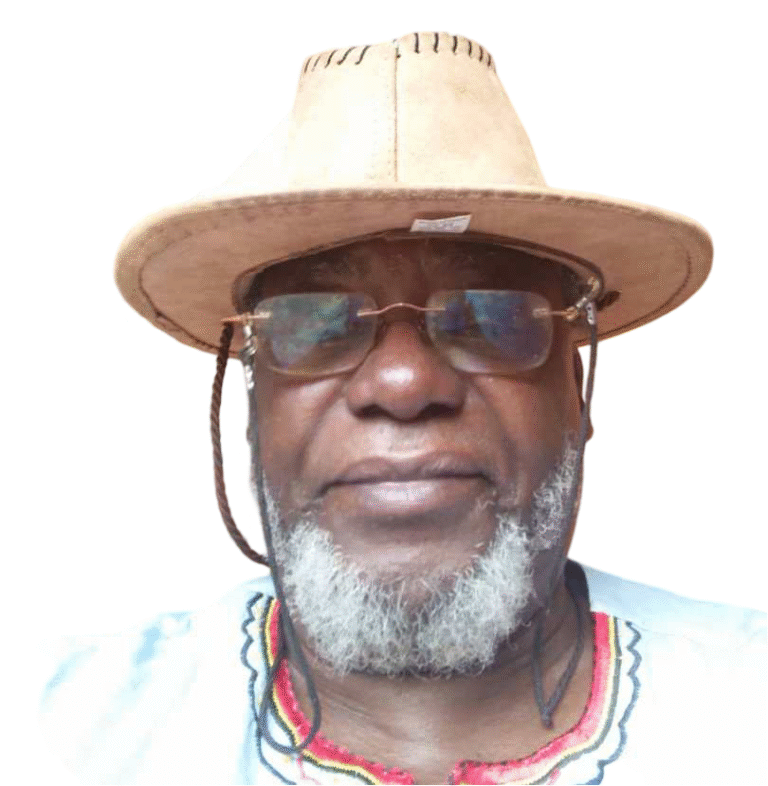
By Wabwire Andrew

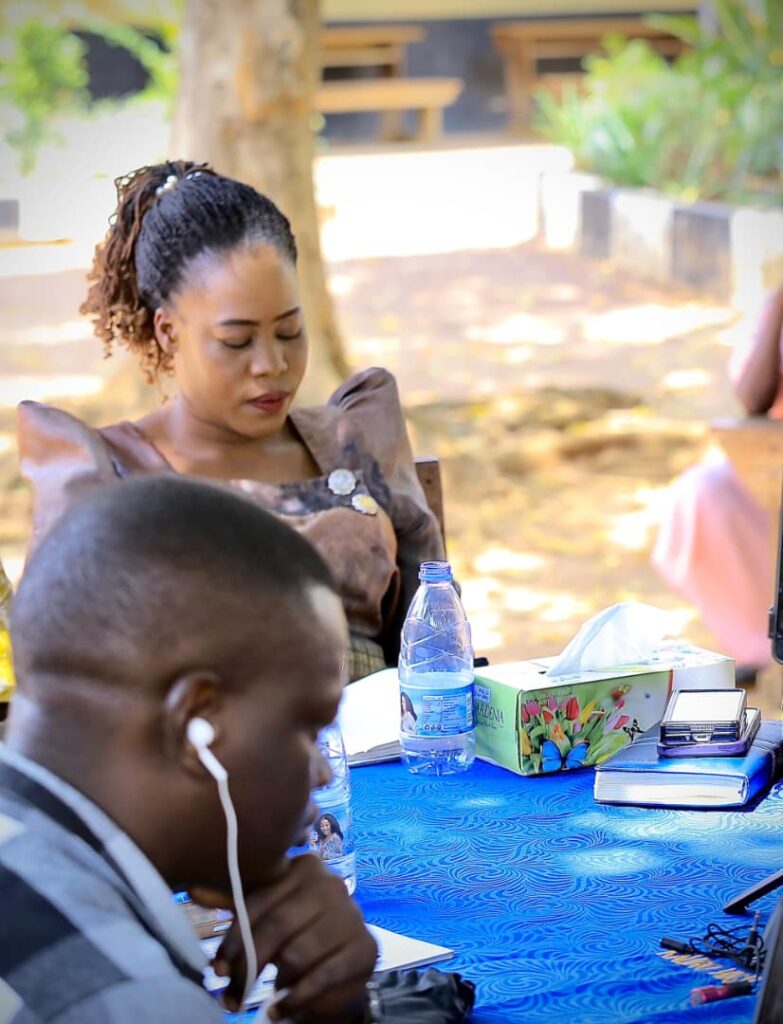
Early this week, on Tuesday 6th January, NBS Radio organized a live debate in Kaliro District at Kaliro High School under the program “Ensi Nebyayo,” moderated by Sir Grace Mwesigwa. The debate brought together all candidates contesting for the Woman Member of Parliament seat, a position with eight contenders.

A debate is meant to test leadership, confidence, vision, and the ability to articulate issues affecting the people—without assistance. Unfortunately, what unfolded was deeply disappointing and embarrassing.

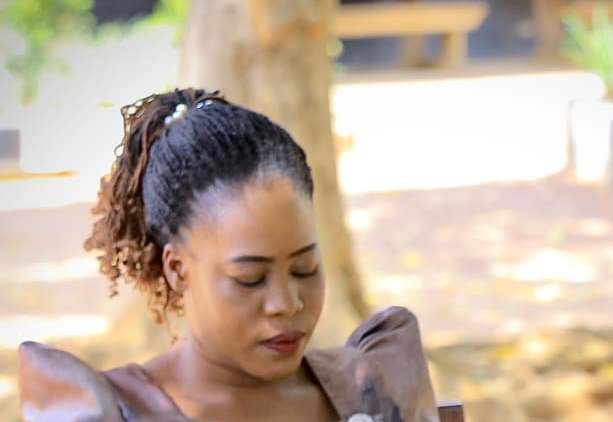
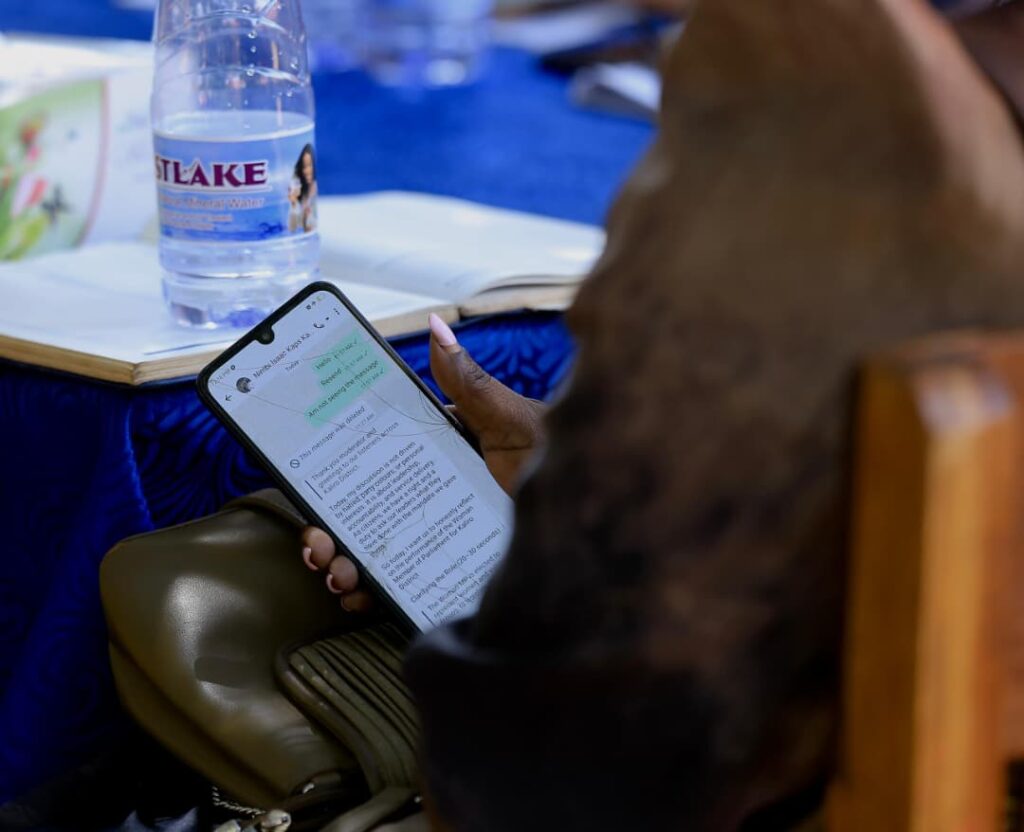
One candidate, Namukobe Ruth, who is often very vocal in criticizing Brenda Namukuta, the incumbent, for allegedly failing to deliver for the people, was seen seeking guidance via WhatsApp on what to say during the live debate.

This was not hearsay; our camera captured the chat, where she was asking Nimbi Isaac Kaps to send her talking points to read on air.

This is nothing short of shameful.

How does a candidate fail to articulate issues in a local district debate yet claim readiness for national-level parliamentary debates? If someone cannot speak independently at Kaliro High School, what should we expect when they reach the floor of Parliament?

To make matters worse, when asked about what she has achieved during her term as a youth leader, Namukobe openly stated that her only role was to supervise Namukuta Brenda. Is supervision alone an achievement? Is that the vision we want to send to Parliament?

Leadership is not about noise, insults, or relying on others to think for you. Leadership requires ideas, substance, preparation, and independence of thought. Imagine someone seeking to represent thousands of people, yet unable to debate without being spoon-fed what to say. That is not leadership—it is opportunism.

Even at a simple local council-level debate, there was zero substance, zero clarity, and nothing tangible to show. If a candidate fails at the smallest platform, how can we trust the same mind to sit in Parliament and speak for Kaliro District?

As 15th January approaches, fellow citizens, the message is simple: Vote wisely.

Let us not send empty heads to Parliament because doing so would be digging our own grave as a district. If Kaliro is to move from where it is to where we all want it to be, we must reject opportunism and choose leaders who are prepared, competent, and capable.

Kaliro deserves better.

Mr Wabwire Andrew is the ONC Coordinator, Kaliro District.

 andrewwabwire872@gmail.com

MULIRIRE APPEAL LOSS EXPLAINED: Magogo set to retain Budiope East parliamentary seat after high court upheld Electoral Commission’s decision to denominate ‘Uncle Dan’

0

The High Court has upheld the Electoral Commission’s decision to annul the nomination of Mulirire Daniel as a parliamentary candidate for Budiope East Constituency, Buyende District, in a ruling that reaffirms strict compliance with Uganda’s election laws on resignation from public service .

In a detailed judgment delivered by Justice Simon Peter M. Kinobe, the court dismissed Mulirire’s appeal against the Electoral Commission (EC), concluding that he failed to satisfactorily prove that he had resigned from the Uganda Police Force at least 90 days before nomination, as required by law .

Background to the dispute

Mulirire had been duly nominated on October 22, 2025, but his candidacy was challenged by Yeko Ibrahim, a registered voter in the constituency. Yeko petitioned the EC, arguing that Mulirire was still a serving police officer and had not attached proof of resignation to his nomination papers .

After hearing the complaint, the Electoral Commission on December 23, 2025 annulled Mulirire’s nomination, citing non-compliance with Section 4(4)(a) of the Parliamentary Elections Act, which requires public officers to resign at least 90 days before nomination day .

Aggrieved, Mulirire appealed to the High Court, arguing that he had resigned earlier and that the Commission acted illegally, unfairly, and without properly hearing him.

Constitutionality question settled

One of the central arguments raised by Mulirire was that Section 4(4)(a) of the Parliamentary Elections Act is unconstitutional, relying on earlier Constitutional Court decisions that questioned similar provisions in the Constitution.

Justice Kinobe rejected this argument, noting that the matter had already been settled by the Supreme Court in Wasike Stephen Mugeni v Aggrey Awori Siryoyi, which confirmed that the resignation requirement remains valid and enforceable law in Uganda .

“The attempt to challenge the resignation requirement was misconceived and devoid of merit,” the judge ruled, affirming that public officers seeking elective office must strictly comply with the law .

Proof of resignation: a fatal gap

Although the court agreed that the law does not explicitly require proof of resignation to be attached at the moment of nomination, it emphasized that once a complaint is lodged, the burden shifts to the candidate to present cogent and credible evidence of resignation.

Mulirire relied on a photocopied letter purportedly accepting his resignation from the Uganda Police Force. However, the court found the document inadequate, noting that it was uncertified, did not clearly indicate the author’s authority, and was unsupported by additional evidence such as a stamped resignation letter or affidavit from the issuing office.

“The petitioner failed to discharge the requisite burden that at the time of nomination, he had resigned from public office,” Justice Kinobe held, concluding that the Commission was justified in annulling the nomination .

Fair hearing claim rejected

Mulirire also claimed that his right to a fair hearing had been violated, arguing that the EC conducted an ex-parte meeting before he was served with the complaint.

The court disagreed, finding that he was notified, given time to respond, and did in fact file a response which the Commission considered. Justice Kinobe stressed that election disputes require expeditious handling, and that procedural flexibility is permissible as long as the affected party is afforded a reasonable opportunity to be heard .

Implications for future candidates

The ruling sends a clear signal to public officers eyeing political office: resignation must not only occur within the legal timelines, but must also be demonstrable with clear and authentic documentation when challenged.

As Uganda heads deeper into an election season marked by heightened scrutiny of nominations, the decision reinforces the Electoral Commission’s authority and underscores the courts’ unwillingness to relax mandatory legal requirements.

For Budiope East, the judgment effectively keeps Mulirire off the ballot, reshaping the political contest in the constituency and offering a cautionary tale to aspiring candidates from public service.

THE MORTAL COIL: Why democratic resurrection is impossible under Uganda’s militarized NRM state

0

By Oweyegha-Afunaduula

With Ugandans set to return to the polls, the nation finds itself trapped in a familiar ritual—one not of democratic renewal, but of managed authoritarian endurance. The 2026 general elections unfold not as a contest of ideas, but as a coronation process for a regime that has systematically fused state, military, and family into an unassailable fortress of power. As opposition parties and civil society raise urgent, credible concerns over last-minute legal changes, a restricted voters’ register, and the ominous silence on election-related violence, the Electoral Commission’s assurances ring hollow against a decades-long pattern of subversion. These are not mere administrative glitches; they are the deliberate tools of what analysts term an “electoral dictatorship”.

This article argues that democracy in Uganda has not simply been weakened under the National Resistance Movement (NRM); it has been structurally and irrevocably nullified. The regime has been replaced by a hybrid system built on three pillars: a militarized political sphere, a subverted electoral architecture, and a project of monarchical succession. Together, these pillars ensure that the ballot box is a theater, not a mechanism for change, making genuine democratic governance impossible for as long as this system persists.

Historical Roots of Making Democratic Resurrection Impossible

Uganda’s democratic regression has its roots in the NRM’s ascent to power in 1986. The movement’s initial promise of restoring democracy and stability gradually gave way to authoritarian entrenchment. Key milestones include the abolition of term limits in 2005, allowing President Museveni to extend his rule, and the 2009 Anti-Counterfeit Act, which has been used to suppress opposition voices. The regime’s manipulation of electoral processes, exemplified by the 2011, 2016, and 2021 elections, has further eroded democratic institutions.

Deep State-Mafia Framework

The Deep State-Mafia Framework has enabled the NRM to maintain power through a complex web of patronage, corruption, and coercion. In the economic sphere, this is evident in the allocation of lucrative contracts and resources to loyalists. A prime example is General Salim Saleh Akandwanaho, Museveni’s brother, who has built a mini-state in Gulu, Northern Uganda, from which he dispenses patronage and exercises significant influence.

Saleh’s Gulu mini-state is a symbol of the regime’s corruption and cronyism. He has constructed a state-of-the-art palace, rumored to be more luxurious than President Museveni’s State House in Entebbe. This opulent complex serves as a hub for Saleh’s business and political interests, solidifying his position as a key powerbroker in the regime.

Through his Gulu operation, Saleh has cultivated a network of loyalists and clients, whom he rewards with contracts, jobs, and other benefits. This patronage machine has helped maintain the regime’s grip on power in the region, while also enriching Saleh and his associates.

Operation Wealth Creation, Myooga, and Parish Development initiatives have been criticized for generating poverty and dependence, thereby “oiling” the patronage machine. These programs often prioritize short-term gains for loyalists over long-term development, perpetuating a cycle of corruption and underdevelopment.

In the political sphere, the Deep State-Mafia Framework has facilitated the suppression of opposition voices and the manipulation of electoral processes. The Legislature and Judiciary have been compromised, with key positions filled by loyalists, ensuring that the regime faces little to no accountability.

The Pillar of Militarized Politics

The militarization of politics is a critical component of Uganda’s authoritarian system. The UPDF has been deployed to quell dissent, intimidate opposition, and maintain the regime’s grip on power. The promotion of Muhoozi Kainerugaba to Chief of Defence Forces in 2024 exemplifies the fusion of military and political power, cementing the regime’s control.

The Pillar of Subverted Electoral Architecture

The electoral process in Uganda is designed to favor the ruling party. Key concerns include:

– Disqualification of already qualified opposition candidates

– An opaque and inaccessible voters’ register

– Last-minute legal changes, such as the introduction of new election technology without adequate public scrutiny

– Weaponization of security during the electoral process

The Pillar of Monarchical Succession: The “Muhoozi Project”

The promotion of Muhoozi Kainerugaba to the apex of military power is the definitive act that seals Uganda’s democratic fate. The “Muhoozi Project” is an open political enterprise, with Muhoozi aggressively courting a political following and declaring his presidential ambitions for 2026.

Conclusion and Forward Path

The evidence leads to an inescapable conclusion: Uganda under the continued rule of the NRM and the Museveni dynasty is institutionally, constitutionally, and practically incapable of hosting a democratic transition. Elections are reduced to expensive rituals that provide a veneer of legitimacy for a system sustained by coercion, patronage, and hereditary planning.

The struggle must be to challenge the legitimacy of an anti-democratic system itself—a system that has enthroned a political monarchy at the expense of popular sovereignty. Recognizing this truth is the first, and most necessary, step toward envisioning a future beyond it.

For God and My Country

STRONG ARM OF THE LAW: Security warns politicians against election violence in Busoga

0

Security agencies have warned politicians to restrain their supporters from engaging in election-related violence, urging strict adherence to electoral laws, regulations, and acceptable campaign practices.

Kamuli Resident District Commissioner (RDC) and district head of security, Rose Birungi, condemned acts of violence among political supporters, noting that in some cases those clashing belong to the same political party—an action she said undermines the credibility of the electoral process.

Addressing the media on the district’s election security situation, Birungi issued a stern warning to candidates and their campaign teams.

“We strongly warn candidates to rein in their supporters, campaign brigades, and assistants against hate politics, violence, and disruptions,” Birungi said. “We shall apply the strong arm of the law against anyone who flouts election guidelines and laws as an individual. We cannot tolerate hooliganism and insecurity under the guise of electioneering.”

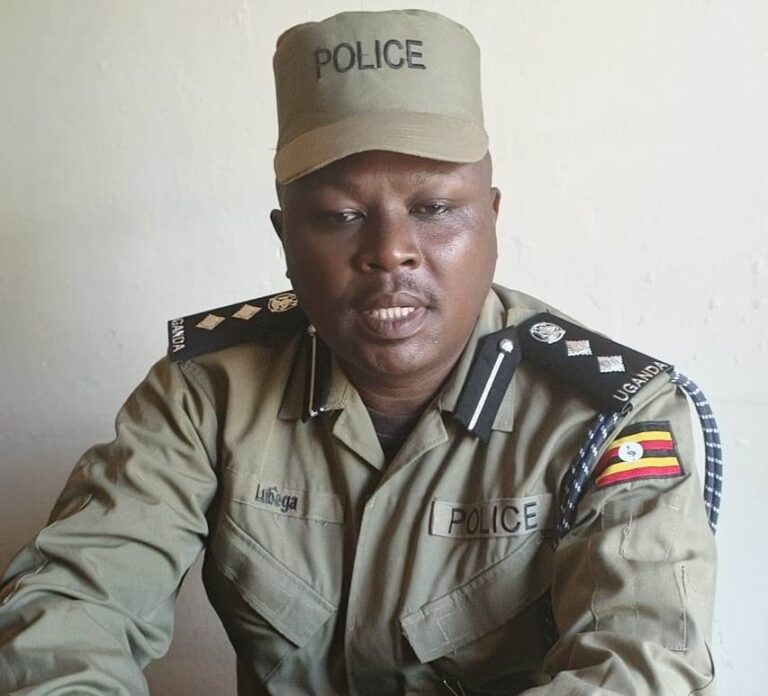
Meanwhile, Busoga North Region Police Spokesperson Samson Lubega reported that clashes have been registered in several election hotspots, including Budiope East, Bugabula South, and Kamuli Municipality.

Lubega assured the public that security agencies are fully prepared to manage the situation.

“We have received and responded to cases of violence and hooliganism. We warn anyone involved or planning to engage in such acts that we shall arrest and keep them in custody,” Lubega said. “We will not allow the security situation to degenerate into anarchy and lawlessness by thugs disguising themselves under the cover of elections.”

He added that security agencies have built sufficient capacity to counter disruptions and should not be taken lightly.

Lubega cited several recent incidents, including a report by Matthew Bazanya, whose official campaign vehicle was allegedly stoned at Ndalike in Namwendwa Sub-county, shattering the windscreen.

He also mentioned clashes between supporters of Mastula Namatovu and Baroda Watongola in Kamuli Municipality, as well as ongoing tensions between rival camps of Eng. Moses Magogo and Daniel Mulirire in Budiope East.

“We are treating these incidents as serious security threats intended to derail the electoral process, and individuals responsible will be held personally accountable for insecurity and lawlessness,” Lubega said.

Bazanya, the Kamuli District NRM Chairperson and flag bearer for Bugabula South Constituency, accused his opponent Sanon Dhizaala of ring-fencing Namwendwa Sub-county and Ndalike Parish as no-go zones for rival candidates.

Bazanya alleged that he was assaulted during his scheduled campaign visit to Ndalike—his opponent’s home village—and that his vehicle was vandalised.

“Nobody has a monopoly on hooliganism, and such actions are a sign of panic and weakness,” Bazanya said. “We expect civility in these campaigns if we are to serve our people. Threats and harassment do not help anyone.”

He added that instead of retaliating, he would continue engaging security agencies to ensure law and order prevails.

Security officials have called for calm as campaigns continue, warning that election-related violence will not be tolerated under any circumstances.

BLOODSHED ON LAKE KYOGA: Fishing dispute turns violent at Budipa Landing Site in Buyende following raid from Teso fishermen

0

By Ali Lukomo

Tension flared at Budipa landing site in Irundu Sub-county, Buyende District, following a violent clash between local fishermen and alleged invaders from the Teso sub-region over fishing territory and the use of illegal fishing gear.

Residents said more than 20 boats carrying fishermen from Teso crossed into Budipa waters on Lake Kyoga and allegedly began fishing using kokota, a prohibited fishing method. The intrusion reportedly angered the local fishing community, leading to a confrontation that left several people injured.

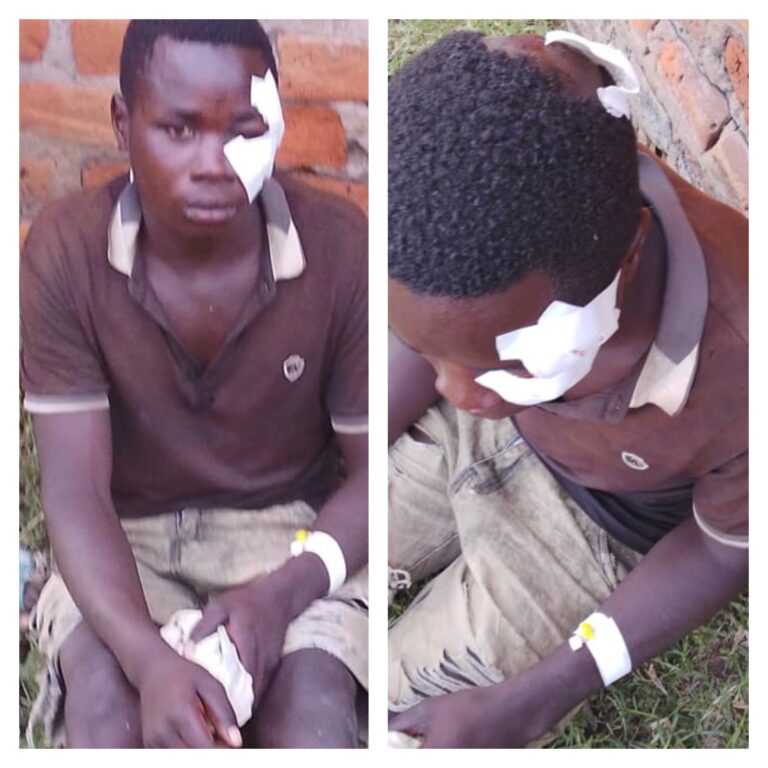
According to community members, nine of the alleged invaders were apprehended by locals and later handed over to police. The injured were admitted to various health centres in Irundu Sub-county for treatment.

Umar Mwase, a youth leader and fisherman at Budipa landing site, condemned the use of illegal fishing gear and called for urgent intervention by security agencies.

“For years, we have never used kokota on this lake. We will not allow people from Teso and Bulamoji to come here with illegal fishing tools,” Mwase said. “We are determined to protect this lake, even if it costs us our lives.”

Mwase claimed that the invaders initiated the violence, hacking several local fishermen during the clash. He appealed to local leaders, police, and the military to intervene and safeguard the community.

Confirming the incident, Julius Bwanga, the Gombolola Internal Security Officer (GISO) for Irundu, said the confrontation arose from a dispute over fishing territory.

“The fishermen in Budipa felt threatened when their counterparts from Teso encroached on their waters using illegal fishing gears such as kokota,” Bwanga explained. “When they attempted to stop the illegal activity, they were attacked, resulting in injuries on both sides.”

Bwanga added that nine suspects are currently being held at Irundu Police Station as investigations continue. He strongly condemned the use of illegal fishing methods on Lake Kyoga.

The Officer in Charge of Irundu Police Station, ASP Rogers Magabula, said the Beach Management Unit (BMU) at Budipa intervened promptly when the fighting broke out.

“An unknown number of fishermen crossed from Serere District in the Teso sub-region and started fishing in Budipa waters using illegal gear, which angered the local fishermen and led to the fight,” Magabula said in a telephone interview.

He further revealed that during the chaos, the invading fishermen reportedly fled with an engine boat belonging to a Budipa fisherman.

“The BMU team managed to arrest nine suspects, who are now in our custody. We are working with police in Serere District to recover the stolen engine boat,” Magabula added.

Authorities have called for calm as investigations continue, warning against illegal fishing practices that threaten both livelihoods and peace on Lake Kyoga.

Kokota nets have been classified as illegal under the Fisheries Act of 2019 because they cause massive by‑catch and threaten the lake’s biodiversity. The Ministry of Water and Environment has repeatedly warned fishing communities that the use of such gear will result in seizure of equipment and prosecution.

The incident underscores the fragile balance between livelihood needs and sustainable resource management on Lake Kyoga, a critical source of food and income for thousands of Ugandans. As the district grapples with the fallout, the call for decisive action against illegal fishing methods is likely to echo in the days ahead.

MAGOGO vs MULILIRE: An MP race fight fueled by a blind love for candidates, voters’ ignorance and an era of election violence

0

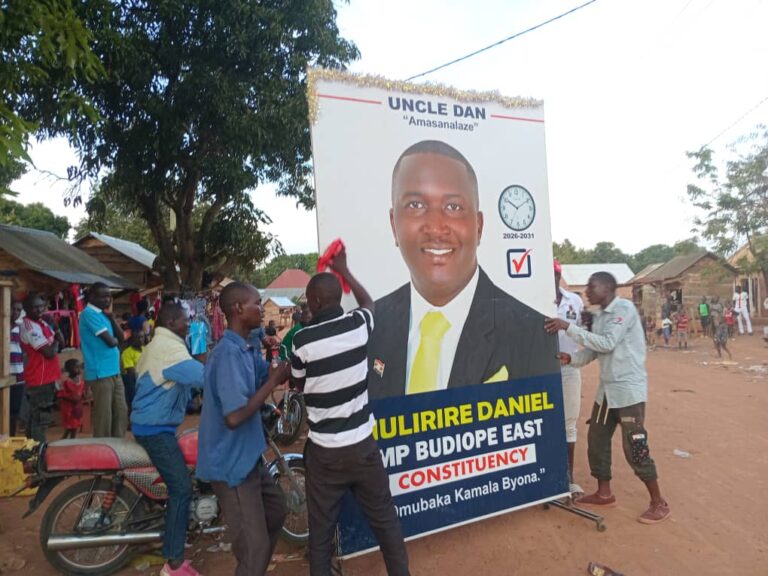
For many supporters of Budiope East Member of Parliament Eng. Moses Magogo, Christmas came early this year. Just days into the festive season, the Electoral Commission annulled the parliamentary nomination of his strongest challenger, Mulilire Daniel, a decision that has since plunged the Buyende District constituency into political uncertainty, anger, and violence.

The ruling, delivered under case MIN. COMP 058/2025, followed a complaint by a voter, Yeko Ibrahim, who challenged Mulilire’s eligibility on technical grounds. According to the complaint, Mulilire failed to present proof of resignation from government service at the time of his nomination, a legal requirement under Section 4(4)(a) of the Parliamentary Elections Act.

Electoral Commission Chairperson Justice Simon Mugenyi Byabakama agreed, nullifying Mulilire’s nomination and overturning the Returning Officer’s earlier decision to clear him to contest. Legally sound or not, the ruling landed heavily on an already tense political landscape.

In Budiope East, politics is never just about paperwork.

A Constituency with a Long Memory

Mulilire’s rise in the race has been swift. A political newcomer, he gained momentum after Geoffrey Dhamuzungu, former MP and longtime rival of Magogo, bowed out following a bruising and violent NRM primary contest earlier this year. Dhamuzungu’s supporters, disillusioned but politically restless, are widely believed to have regrouped around Mulilire.

That realignment altered the political equation in a constituency where grudges run deep and elections are fiercely contested. Mulilire’s disqualification therefore did not simply remove a candidate; it disrupted an emerging political force.

Allegations, Suspicion, and the Shadow of Power

Almost immediately, murmurs of bias spread across the constituency. Some voters accused the Electoral Commission of acting under political influence, pointing to the fact that Speaker of Parliament Anita Among, wife to Magogo, is one of the most powerful figures in government. While no evidence has been presented to substantiate the claims, the perception alone has fueled resentment and distrust among sections of the electorate.

Mulilire has since taken the matter to court, with a hearing set for 30 December 2025. The court’s ruling, expected within days after the hearing, will likely determine whether the political temperature cools, or further escalates.

When Politics Turns Violent

The consequences of the Commission’s decision were felt almost immediately on the ground.

On 26 December 2025, according to police, violence broke out at Miru Trading Centre in Kagulu Sub-county. According to police, supporters of both Magogo and Mulilire clashed following news of Mulilire’s disqualification. The unrest quickly spilled into nearby Kasokoso and Bumpanga villages, where improvised shrines were torched and several people injured.

By the following day, retaliatory attacks had displaced residents, forcing families to flee their homes in fear.

Busoga North Police spokesperson Samson Lubega confirmed that security forces were swiftly deployed, including the FFU Zonal Commander and the Buyende District Police Commander. Three suspects have since been arrested, statements recorded from victims, and patrols intensified across the affected areas.

Beyond enforcement, police have turned to community policing and dialogue in a bid to calm tempers in a constituency where emotions are running high.

An Election Still in the Balance

As the festive season fades, Budiope East remains on edge. At the heart of the crisis lies a familiar Ugandan dilemma: where the letter of the law collides with political loyalty, power, and public perception.

Whether the courts will reinstate Mulilire, or affirm his disqualification, remains to be seen. What is clear, however, is that the contest for Budiope East has already left blood spilled long before ballots are cast.

TOUGH JOB AHEAD: Uganda Cranes left frustrated after late penalty miss seals 1–1 draw with Tanzania in AFCON 2025 thriller

0

The Uganda Cranes saw their hopes of a crucial first win at the TotalEnergies Africa Cup of Nations 2025 slip away in heartbreak fashion, as a missed penalty in stoppage time left them sharing points with regional rivals Tanzania in a rain-soaked 1–1 draw in Group C.

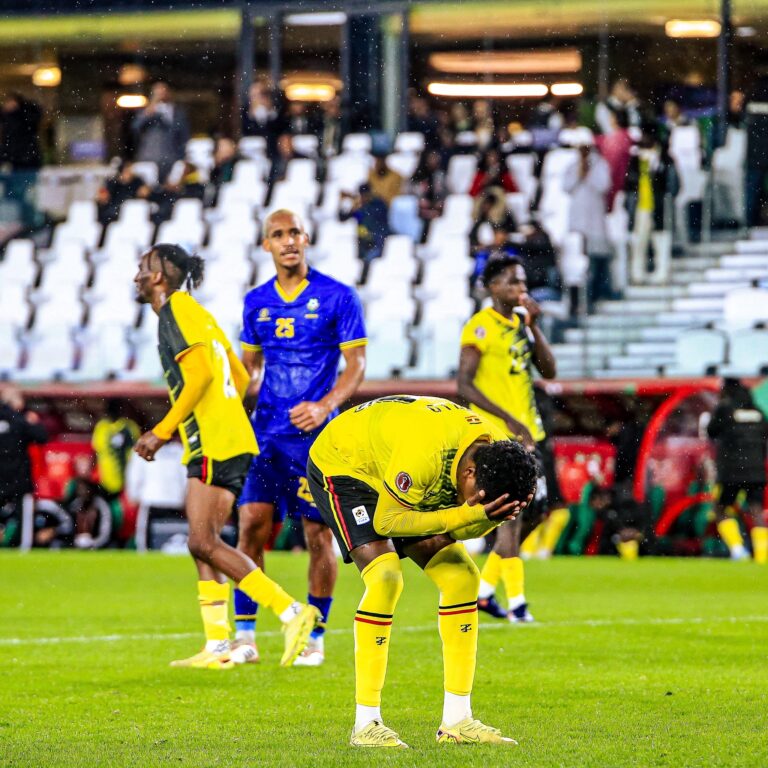
In a tense and dramatic encounter at Al Medina Stadium, the Cranes fought back from behind to level the score, only to be denied all three points when Allan Okello sent a late penalty over the crossbar in the dying moments of added time.

Tanzania struck first in the 59th minute after a controversial handball decision against Baba Alhassan inside the box. Simon Msuva stepped up confidently and converted from the spot, sending goalkeeper Ivan Runge the wrong way to put the Taifa Stars ahead in front of a passionate East African diaspora crowd.

However, Uganda responded with renewed vigor. Head coach Paul Joseph Put made decisive substitutions, introducing Denis Omedi and powerhouse striker Uche Ikpeazu, who immediately changed the complexion of the game.

The tactical shift paid off in the 80th minute when Omedi, cutting in from the left flank, delivered a pinpoint cross into the box. Ikpeazu, rising above the Tanzanian defense, powered a header past goalkeeper Asuman Lubanza to send the Ugandan faithful into raptures and level the score.

With momentum swinging in their favor, Uganda continued to press and were awarded a golden opportunity in the sixth minute of stoppage time. James Bogere was brought down inside the penalty area after a well-timed run and cross, prompting a penalty call.

But the moment proved too much for Okello, who struck the ball high over the bar, sparking wild celebrations from the Tanzanian bench and leaving the Cranes crestfallen.

Despite dominating possession and creating more clear-cut chances — including Rogers Mato’s first-half header that cannoned off the crossbar — Uganda could not convert their superiority into a winner.

Speaking after the match, an emotional but composed Coach Paul Put expressed his belief that his side deserved more. “I think we didn’t deserve a draw. I think we had more opportunities. If you look at ball possession, we had more of it. We also missed a penalty, which is very painful — but that is part of football,” Put said.

He emphasized the need for resilience, particularly given the team’s young profile and the long-term goal of preparing for the 2027 AFCON, which Uganda will co-host.

“We have a very young team, so my responsibility is also to build a team for 2027. I spoke to the players and told them we need to keep the belief. You have to play until the last whistle. Yes, we are disappointed — but we need to reset the mindset and prepare for the match against Nigeria, which we know will not be easy.”

The result leaves Group C wide open heading into the final round of fixtures. Uganda sits mid-table with one point, behind Nigeria and Tanzania on goal difference, while all four teams in the group remain in contention for the knockout stages.

The Cranes’ next match — a must-win clash against group favorites Nigeria — will take place in three days’ time and could determine their fate in the tournament. A victory would reignite their progression hopes, while a loss or draw is likely to spell an early exit.

EAST AFRICA DERBY: Uganda Cranes look to rebound against Tanzania’s Taifa Stars after AFCON opening defeat to Tunisia

0

The Uganda Cranes’ journey at the TotalEnergies CAF Africa Cup of Nations 2025 got off to a rocky start with a 3-1 defeat to Tunisia in their Group C opener at the Prince Moulay Abdellah Stadium in Rabat.

Despite a spirited second-half resurgence, Uganda were unable to overcome a determined Tunisian side, leaving fans across the nation crestfallen.

Back home, social media and sports forums erupted with frustration, as passionate supporters expressed their disappointment over the team’s underwhelming first-half performance.

Introduced late in the match, forward Allan Okello made an immediate impact, orchestrating Uganda’s lone goal through substitute Dennis Omedi in the 78th minute.

Omedi, also brought on in the second half, capitalized on Okello’s intelligent through-ball to slot past the Tunisian keeper, giving Ugandan fans something to cheer about.

Though disappointed, the Cranes are refusing to dwell on the loss. Both players and management are focusing squarely on the next challenge — a crucial East African derby against regional rivals Tanzania, set for Saturday, December 27, 2025, at 8:30 PM (EAT), at the same Rabat venue.

Speaking at a pre-match press conference, forward Allan Okello acknowledged the setback but remained optimistic.

“We didn’t start the way we wanted, but it is a tournament and we know what we need to do right to get a good result,” said Okello, who has been in fine club form recently but was left on the bench for the Tunisia clash.

Head coach Paul Put echoed that sentiment, praising his team’s improved intensity in the second half against Tunisia.

“The reaction in the second half was encouraging. We raised our aggression and started to create chances. This is the level we must start with from the first whistle in the next game,” Put emphasized.

With pressure mounting, the Belgian tactician urged his players to show resilience ahead of the Tanzania showdown.

“We have to stand up, we have to believe, and give a good performance to make everybody in Uganda happy,” Put declared. “It’s now about character. We must respond with pride and determination.”

The upcoming clash with Tanzania is more than just regional bragging rights — it’s a must-win encounter if Uganda hopes to keep their knockout stage dreams alive.

The two East African nations have a long-standing football rivalry, and with both teams likely starting from the same point after their opening matches, the stakes couldn’t be higher.

Kickoff for the Uganda vs Tanzania match is scheduled for 8:30 PM (EAT) on Saturday, December 27, 2025.

TOOLS OF DEMOCRACY: Electoral Commission receives parliamentary ballot papers ahead of 2026 general elections

0

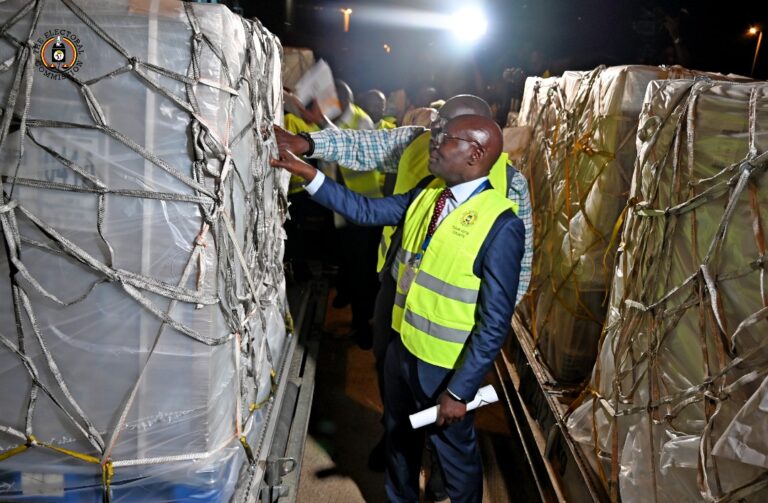
The Electoral Commission (EC), led by Chairperson Justice Byabakama Mugenyi Simon, on the night of 25 December 2025 received a consignment of ballot papers for Directly Elected Members of Parliament at Entebbe International Airport, marking a key milestone in preparations for the 2026 General Elections.

The latest delivery follows the arrival of Presidential ballot papers on 24 December 2025. The consignment was received in the presence of key stakeholders, including representatives of presidential candidates, political parties, accredited election observers, and members of the media. The Electoral Commission says the open handling of election materials reflects its commitment to transparency, accountability, and public confidence in the electoral process.

According to the Commission, the timely arrival of sensitive electoral materials is intended to allow adequate time for verification, storage, and distribution to polling stations across the country ahead of voting day.

Ugandans are scheduled to go to the polls on 15 January 2026 to participate in the Presidential and Parliamentary Elections, during which voters will elect a President and their respective Members of Parliament.

The Electoral Commission has called upon all eligible voters to turn out in large numbers and exercise their constitutional right to vote, while urging political actors and the general public to maintain peace throughout the electoral period as the country prepares for another national democratic exercise.

INTERVIEW: Waiswa Baluye gives reasons why Ugandans still believe Yoweri Kaguta Museveni should continue as President of Uganda

0

As Uganda continues to debate the legacy of President Yoweri Museveni, whose leadership has spanned nearly four decades, public opinion remains deeply divided. While critics point to concerns over democratic erosion and political repression, some Ugandans still credit Museveni with transforming a war-torn nation into a relatively stable economic and regional power.

In a recent interview, Michael Waiswa Baluye, the Office of the National Chairman (ONC) coordinator for Buyende district and long-time supporter of the National Resistance Movement (NRM), shared his perspective on why he believes President Museveni’s long tenure has been beneficial for Uganda.

President Yoweri Kaguta Museveni has been in power since 1986. What do you see as his greatest achievement?

That’s easy – relative peace and stability. Before 1986, Uganda was a country ravaged by coups, dictatorships, and civil conflict. From Idi Amin to Milton Obote’s second regime, we saw endless cycles of bloodshed.

When President Museveni’s National Resistance Army (NRA) took power, they didn’t just win a war; they brought an ideology of disciplined governance. For nearly 40 years, we’ve not had a full-scale civil war. That’s a monumental shift, and it cannot be dismissed.

Critics argue that stability has come at the cost of democracy. How do you respond?

I understand the concern, especially among the youth. But let’s be honest, Uganda today is not perfect, but it is functional. President Museveni brought experience and continuity.

When you have a leader who has navigated the Cold War, regional conflicts, terrorism, and global economic crises, that institutional memory is invaluable. We don’t need abrupt changes that could destabilise the system. Leadership isn’t a popularity contest; it’s about who can steer the ship through storms.

How do experience and continuity factor into this support?

President Museveni’s long tenure is seen by us supporters as an advantage. We believe his experience enables him to manage regional security threats, diplomacy, and internal governance with fewer disruptions than a sudden leadership transition might cause.

Let’s talk about development. What has changed under President Museveni’s leadership?

Look at the roads. I remember travelling across the country in the 1980s and 1990s; it took days and weeks on terrible roads. Today? It’s under hours on paved highways. The same goes for electricity; access has more than tripled in the last two decades. Urban centres like Jinja, Gulu, and Arua are growing fast.

We now have industrial parks, new schools, and better hospitals. This didn’t happen by accident. It happened because of long-term planning. You can’t implement infrastructure projects over five-year election cycles and expect results. President Museveni’s longevity enabled consistency.

Some people say Uganda’s influence in the region has grown. Do you agree?

Absolutely. President Museveni is respected across Africa, not just as a leader, but as a strategic thinker. Uganda has contributed troops to AMISOM in Somalia, played a key role in mediating conflicts in South Sudan and the DRC, and remains a cornerstone of East African regional security.

That gives Uganda a voice on the global stage. We’re no longer seen as a backwater state; we’re a country that matters. And much of that diplomatic capital comes from President Museveni’s personal involvement and experience.

What about internal security? The LRA insurgency, for example, caused immense suffering.

President Museveni’s government is credited by us supporters for defeating or weakening insurgent groups such as the Lord’s Resistance Army (LRA) and for participating in regional and international efforts against extremist groups, which we say has improved national and regional security.

True—the LRA was a nightmare, especially in the North. But under President Museveni’s direction, the UPDF eventually degraded Joseph Kony’s forces to the point where they’re no longer a national threat. We also see Uganda playing active roles in countering Al-Shabaab and other extremist groups.

The security apparatus isn’t perfect, but it’s far more capable than it was in the 1980s. Ugandans today can travel, do business, and live without fear of rebel invasions or coups. That peace is priceless.

President Museveni is often seen as a Pan-Africanist. How important is that for a modern Uganda?

Very important. President Yoweri Museveni is often praised for advocating Pan-Africanism, African self-determination, and regional integration. We see him as a leader who resists excessive foreign political pressure and promotes African-led solutions.

He’s one of the few African leaders who consistently speaks out against foreign interference. Whether it’s rejecting conditional aid or advocating for regional integration through the African Continental Free Trade Area, he pushes for African self-determination.

He stood with Mandela, supported liberation movements, and still believes that Africa must solve its problems without Western imposition. That message resonates with many of us who want dignity and sovereignty.

How do supporters assess social and economic reforms under his leadership?

We point to gradual reforms in education, health, and the economy. Programmes such as Universal Primary Education (UPE), expansion of health services, and economic liberalisation are cited as milestones achieved during his presidency.

Universal primary education was revolutionary. Millions of children who would have never seen a classroom are now literate. We’ve expanded healthcare access, fought HIV/AIDS aggressively, and made strides in maternal health.

Economic liberalisation opened doors for private sector growth. Yes, youth unemployment remains a problem, and corruption is a challenge—but progress has been made. You can’t reform a broken system overnight.

Some fear that after President Museveni, Uganda might descend into chaos. Is that a legitimate concern?

A key concern among President Yoweri Museveni’s supporters is the fear that abrupt political change could trigger instability, unrest, or economic uncertainty. For us, continuity is seen as less risky than an untested transition.

We’ve had one dominant political figure for nearly four decades. A sudden vacuum could trigger power struggles. I’m not saying President Yoweri Museveni should rule forever, but a managed, peaceful transition is essential. The alternative? We risk repeating the chaos of the 1970s. Stability must come first, even as we push for reform.

What is the broader lesson for citizens, especially young people?

In a democracy, it is healthy for citizens to listen to multiple perspectives, critically examine evidence, and form independent opinions. Understanding why we support President Museveni does not require agreement—but it helps enrich national dialogue.