
Thursday, May 21, 2026
Home Blog Page 5

PERSISTENT POVERTY: Buyende is second poorest district in Busoga but this resource rich district is poorest in region according to UBOS’ revealing poverty report

0

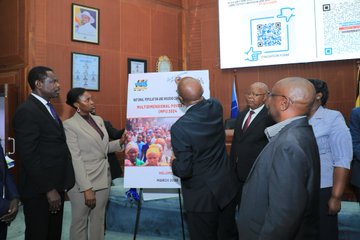
The Uganda Bureau of Statistics (UBOS) on Thursday unveiled the Multidimensional Poverty Index (MPI) Census Monograph 2024 – Volume 5 at Statistics House, Kampala, providing the most comprehensive snapshot yet of poverty across the country.

The report shows that 27% of Ugandans are multidimensionally poor, facing simultaneous deprivations in education, health, living standards, and access to basic services.

Regional Poverty Trends

At the regional level, Kampala topped the list with the lowest MPI of 0.088, reflecting strong access to services, infrastructure, and economic opportunities associated with urbanisation. It is followed by Buganda (0.182), Teso (0.242), Lango (0.256), Ankole (0.258), and Busoga (0.259). These sub-regions perform better than the national average of 0.270, indicating relatively improved household welfare.

Sub-regions slightly above the national average include Kigezi (0.286), Madi (0.291), Bugisu (0.298), Bunyoro (0.301), Bukedi (0.309), Tooro (0.313), Rwenzori (0.322), and Acholi (0.323). The highest poverty levels are recorded in Sebei (0.335), West Nile (0.390), with Karamoja being the worst performer at 0.569, highlighting deep structural challenges including food insecurity and limited infrastructure.

Busoga District Performance

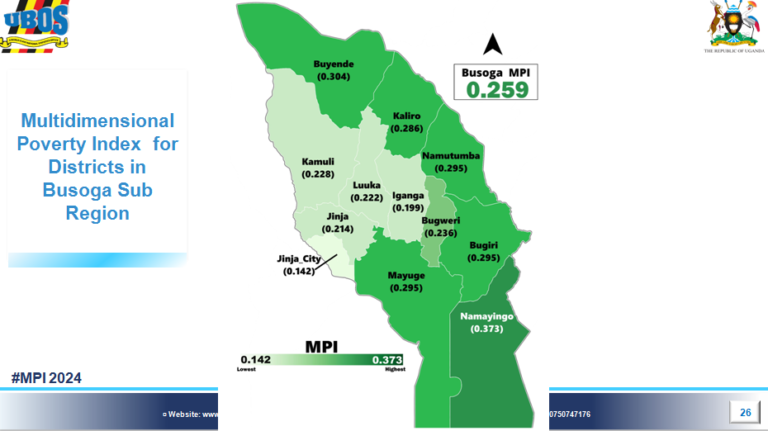
Within Busoga, sharp disparities emerged between urban and rural districts. Jinja City emerged as the best performing district with an MPI of 0.142, benefiting from better infrastructure, services, and economic opportunities. It is followed by Iganga District (0.199) and Jinja District (0.214).

Districts performing below the regional average but showing moderate poverty include Luuka (0.222), Kamuli (0.228), and Bugweri (0.236).

Mid-level performers around or slightly above the Busoga average are Kaliro (0.286), Bugiri (0.295), Mayuge (0.295), and Buyende (0.304). These districts show some progress but continue to face gaps in essential services, education, and living standards.

At the bottom of the ranking is Namayingo District (0.373), followed by Buyende District (0.304), despite both being rich in natural resources, including agriculture, fishing, and minerals. Namayingo’s high MPI underscores persistent challenges such as limited social services and high vulnerability among fishing communities.

Full ranking (best to worst):

  1. Jinja City – 0.142
  2. Iganga – 0.199
  3. Jinja District – 0.214
  4. Luuka – 0.222
  5. Kamuli – 0.228
  6. Bugweri – 0.236
  7. Kaliro – 0.286
  8. Bugiri – 0.295
  9. Mayuge – 0.295
  10. Buyende – 0.304
  11. Namayingo – 0.373

The data highlights a clear urban–rural divide, with Jinja City significantly outperforming rural districts due to concentrated employment, infrastructure, and service delivery.

Implications and Government Response

The MPI measures poverty beyond income, capturing multidimensional deprivations in health, education, and living standards. Dr. Chris N. Mukiza, UBOS Executive Director, emphasized that the Monograph provides critical indicators for progress towards SDG 1 on eliminating poverty in all its forms, urging policymakers to adopt targeted, district-specific strategies.

Officials including Geoffrey Ekanya, MP Tororo North County, and Faith Nakut, MP for Napak District, stressed the need for more effective interventions, citing persistent poverty in regions like Karamoja, Bukedi, and West Nile. Amos Lugoloobi, Minister of State for Planning, called for stronger utilisation of UBOS data to guide development planning and address gaps in sanitation, education, and access to essential services.

The findings underscore the urgency for targeted, region-specific interventions, particularly in high-poverty districts like Namayingo and Buyende, where resource wealth has not translated into improved living standards.
POVERTY BURDEN: UBOS reports reveals 27% of Ugandans are trapped in poverty; women, rural communities bear brunt of Uganda’s raging multidimensional poverty

0

The Uganda Bureau of Statistics (UBOS) has released the Multidimensional Poverty Index (MPI) Census Monograph 2024 – Volume 5, offering a stark and comprehensive picture of poverty in Uganda that goes far beyond income.

The report, disseminated on March 26, 2026, at Statistics House in Kampala, reveals that 27 out of every 100 Ugandans (27%) are multidimensionally poor, experiencing overlapping deprivations in critical aspects of life such as health, education, and living standards.

Poverty Beyond Money

Delivering the keynote, UBOS Executive Director Chris Mukiza emphasized the need to rethink how poverty is defined and addressed.

“Poverty is not only monetary – it is also about losing a child to unclean water, lacking representation, and lacking access to basic freedoms,” Mukiza said.

He noted that the MPI monograph is derived from the 2024 National Population and Housing Census and is part of a broader series of thematic reports aimed at deepening understanding of Uganda’s development landscape.

According to Mukiza, the findings will be critical in tracking progress towards Sustainable Development Goal 1, which seeks to eliminate poverty in all its forms, urging policymakers to use the data to design more targeted and responsive interventions.

Stark Regional Inequalities

While the national MPI stands at 27%, the report highlights deep regional disparities.

The Karamoja sub-region remains the hardest hit, with an MPI of 56%, meaning more than half of its population is deprived across multiple dimensions. It is followed by West Nile at 39.0% and Sebei at 33.5%.

At the district level, Kaabong District records the highest MPI at 0.639, while Kampala remains the least deprived at 0.088, with just 8.8% of residents classified as multidimensionally poor.

The findings reinforce Uganda’s enduring urban-rural divide, with poverty more pronounced in rural areas (31.5%) compared to urban areas (27.0%), reflecting disparities in access to essential services and economic opportunities.

Who Is Most Affected?

The MPI analysis also sheds light on the social dimensions of poverty.

Female-headed households are more affected than male-headed ones, highlighting persistent gender inequalities in access to resources and opportunities.

Age is another key factor. Child-headed households face the highest levels of deprivation at 36%, underscoring the vulnerability of households without stable adult support.

These patterns point to the need for targeted interventions that address not just where poverty exists, but who is most affected and why.

Data as a Development Tool

Speaking on behalf of the UBOS Board Chair, Irene Birungi Mugisha described reliable statistics as a “strategic national asset” essential for improving livelihoods.

She noted that Uganda’s long-standing commitment to poverty eradication—from the Poverty Eradication Action Plan of the 1990s to the current National Development Plans—has increasingly relied on quality data to guide investments in infrastructure, agriculture, and social programmes.

Initiatives such as NAADS, Operation Wealth Creation, and the Parish Development Model, she said, can benefit significantly from MPI insights to better target beneficiaries and measure impact.

A Call for Smarter Policy and Partnerships

Development partners and policymakers welcomed the MPI as a transformative tool for evidence-based planning.

Thangavel Palanivel of the United Nations Development Programme said the index helps identify who is being left behind and guides more equitable resource allocation.

Similarly, John Ilukol from the World Bank noted that the MPI provides a more comprehensive understanding of poverty, beyond traditional income measures, and will inform programme design and targeting.

Lawmakers, including Geoffrey Ekanya and Faith Nakut, pointed to persistent regional inequalities and called for more effective, targeted interventions, particularly in chronically deprived areas like Karamoja.

From Statistics to Impact

Minister of State for Planning Amos Lugoloobi stressed that while Uganda has made progress in data collection, the real challenge lies in utilising the data effectively.

He noted that the MPI provides deeper insights into persistent challenges such as inadequate sanitation and unequal access to services, and called for collective action across government, private sector, and academia.

Lugoloobi reaffirmed government’s commitment to infrastructure development, including roads, electricity, industrial parks, and railways, as a foundation for inclusive growth and job creation.

A Turning Point in Poverty Measurement

The MPI Monograph 2024 – Volume 5 represents a significant shift in how Uganda understands and measures poverty.

By capturing multiple, overlapping deprivations, it moves the conversation beyond income to the real conditions shaping people’s lives, from access to clean water and education to healthcare and dignity.

As Uganda pushes forward with its development agenda, the report offers a clear message: ending poverty will require more than economic growth, it will demand targeted, data-driven solutions that address its many dimensions.

INTERNATIONAL WOMEN’S DAY: Buyende leaders urged to reconcile for improved service delivery in district that is in acute need of development

0

By Zaidhi Mugabi

Leaders in Buyende District have been urged to embrace reconciliation and unity as a foundation for improving service delivery and advancing development across the district and the wider Busoga sub-region.

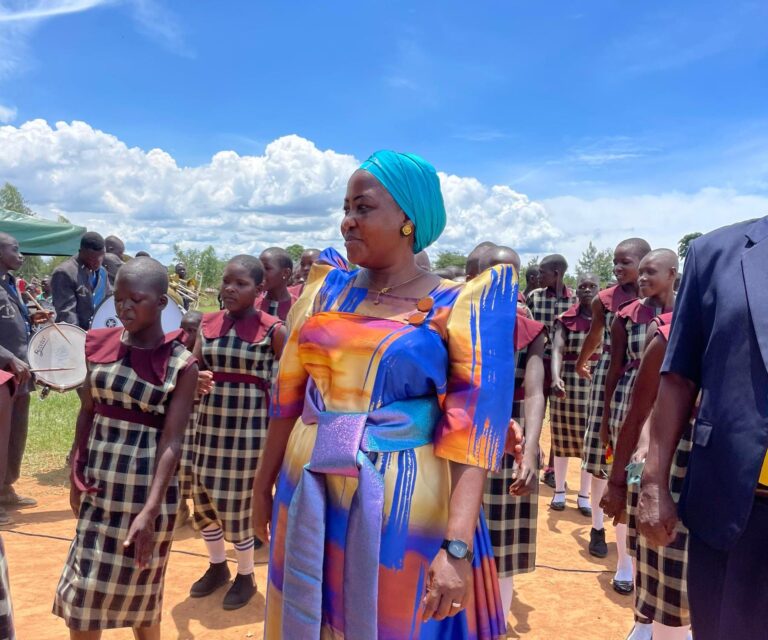
The call was made by Woman Member of Parliament-elect Namulondo Sarah during celebrations to mark International Women’s Day held at Kakooge Primary School in Buyende Sub-county.

Namulondo emphasized the need for leaders at all levels to work together and put aside differences in order to effectively serve the public.

“Leaders must reconcile and focus on collective service delivery for the good of our people,” she said, adding that unity among stakeholders is critical to addressing community challenges.

At the same event, outgoing district chairperson Michael Kanaku criticized some civil servants, accusing them of prioritizing personal interests at the expense of service delivery.

Kanaku pointed to persistent shortcomings in key sectors such as education, healthcare, and transport, urging incoming leaders to take decisive action.

He specifically called on the district’s new leadership, including Member of Parliament-elect Sharif Mangarine, to strengthen oversight and ensure accountability among public servants.

“Much attention must be given to civil servants whose actions are undermining service delivery,” Kanaku said.

The event, held under the theme “Scaling Up Investment to Accelerate Access to Justice for All Women and Girls,” also highlighted the growing role of women in leadership.

Mary Gorett, representing the United Nations, commended the resilience and integrity of the girl child, describing them as trustworthy and capable future leaders.

She noted that empowering girls and women remains essential in building inclusive governance systems and achieving sustainable development.

The celebrations brought together district leaders, civil servants, and community members, with a shared message on the need for collaboration, accountability, and investment in women’s empowerment.

Speakers reiterated that unity among leaders, coupled with improved oversight of public service delivery, will be key in transforming livelihoods in Buyende and the greater Busoga region.

HEATH COOKING: TotalEnergies commissions modern LPG plant in Jinja to boost clean energy access

0

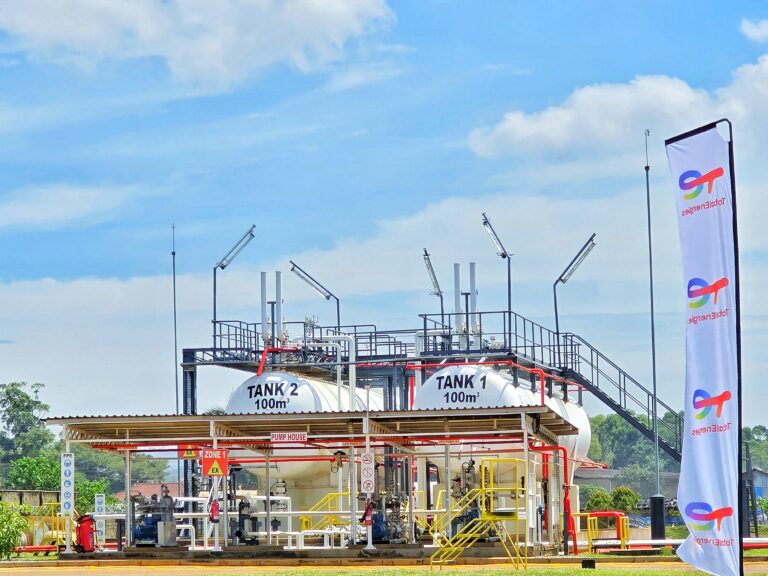
TotalEnergies Marketing Uganda Limited has commissioned a newly revamped Liquefied Petroleum Gas (LPG) filling and storage plant in Jinja, marking a significant step in expanding access to clean and reliable cooking energy across Uganda.

The upgraded facility, fitted with state-of-the-art automated technology and advanced safety systems, is designed to ensure precision in cylinder filling, eliminate leakage, and guarantee tamper-proof sealing, giving consumers confidence in both safety and value.

Speaking at the commissioning ceremony, Managing Director Olufemi Babajide described the investment as a reflection of the company’s long-term commitment to Uganda’s energy transition.

“This refurbished plant reaffirms our commitment to lead the delivery of quality, reliable, clean energy to all Ugandans,” Babajide said, noting that the project aligns with Uganda’s ambitions to develop local LPG production alongside its oil sector.

He added that the facility underscores TotalEnergies’ broader role in supporting sustainable development through safe operations, efficient service delivery, and environmental stewardship.

The commissioning also drew senior regional leadership, including Biova Agbokou, Executive Vice President for East and Central Africa, who emphasized the project’s contribution to the company’s global clean cooking agenda.

“This modern facility demonstrates our commitment to expanding access to clean cooking energy, which reduces health risks associated with traditional fuels like charcoal and firewood,” Agbokou said.

She highlighted that LPG not only improves health outcomes but also saves time for households, enabling greater focus on education, relationships, and economic activities, while significantly cutting carbon emissions.

The plant’s commissioning was officiated by Steven Kaboyo, who commended TotalEnergies for aligning with Uganda’s sustainability goals and promoting cleaner, safer energy alternatives.

Expanded Capacity and Future Growth

According to Operations Manager Jese Egesa, the facility sits on approximately five acres and has undergone a major upgrade since its initial construction in 2016.

The revamped plant now boasts:

•           Storage capacity of up to 140 tonnes of LPG

•           Daily production exceeding 40 tonnes, up from 30 tonnes

•           Cylinder output ranging between 40–50 tonnes per day, depending on demand

Egesa noted that additional space remains available for future expansion, positioning the facility as a strategic hub for growing Uganda’s LPG market.

Supporting Uganda’s Energy Transition

The commissioning was welcomed by Uganda National Oil Company (UNOC), with Business Development Manager Ben Kagonyera describing the development as timely for Uganda’s clean energy ambitions.

“LPG remains a critical component in advancing cleaner energy solutions across the country,” Kagonyera said.

He also pointed to the long-term potential of domestic gas production linked to Uganda’s oil projects, noting that LPG supply is expected to increase once oil production begins.

“Gas production will begin simultaneously with oil production, creating an opportunity to supply locally produced LPG to Ugandans,” he explained.

Driving Clean Cooking Adoption

The revamped Jinja facility strengthens TotalEnergies’ position in Uganda’s downstream energy sector while supporting national efforts to transition households away from biomass fuels.

With cleaner cooking solutions gaining urgency due to health, environmental, and economic considerations, investments like this are expected to play a critical role in shaping Uganda’s sustainable energy future.

COST OF URBANIZING: Trade order raises questions on whether we are protecting or eroding the gains

0

By Ibrahim Shamiru Byakika

The recent enforcement of the trade order has triggered concern across the country, raising serious questions about the true meaning of “protecting the gains” in Uganda’s development journey.

Whereas the directive may have been introduced with the intention of improving order, sanitation, and urban organization, its implementation has instead exposed significant gaps, especially in how policies are applied across different categories of urban centers.

There is a clear difference between Kampala’s Central Business District (CBD), cities, municipalities, and town councils. Treating them as if they operate under the same conditions is both unrealistic and unfair.

Many of the areas recently elevated to city, municipality, and town council status are still largely rural in nature. Their economies depend heavily on small-scale and informal businesses operated by low-income earners with minimal capital. These are ordinary Ugandans whose daily survival depends on small trade.

When these areas were granted new administrative status, people jubilated. It was seen as progress, a gateway to better services, improved infrastructure, and enhanced economic opportunities. However, today, that excitement has turned into frustration and distress.

Many of the affected traders are beneficiaries of government initiatives such as the Parish Development Model (PDM), where they received modest funding, often about UGX 1 million, to start small businesses.

Others are ghetto youth who were supported with small startup capital to promote self-reliance, especially during previous political engagements.

Today, many of them are stranded. What, then, is next for them?

If these citizens were mobilized and supported to engage in small businesses as a pathway out of poverty, then policy actions must protect and sustain those efforts. Displacing them abruptly without preparation or viable alternatives risks undoing the very progress that has been made at the grassroots.

This brings into sharp focus the question: what was meant by “protecting the gains”? If the gains refer to economic empowerment of ordinary Ugandans, then they must be safeguarded through inclusive planning, proper consultation, and humane implementation of policies.

Equally, the vision of “Uganda Empya” must be reflected in practical actions. For many citizens, this vision represents hope for inclusive development and shared prosperity.

However, those hopes risk fading if policies continue to disrupt rather than support livelihoods.

One of the biggest shortcomings in the current situation has been inadequate sensitization. Traders were not sufficiently informed or prepared for the implications of the trade order. There was minimal stakeholder engagement, and no clear alternative trading spaces were provided prior to enforcement.

Urbanization should be a gradual and inclusive process, not an abrupt imposition.

Policies designed for structured environments like Kampala’s CBD should not be applied wholesale to municipalities and town councils that are still developing. These areas require time, infrastructure, and continuous engagement to transition effectively.

Moving forward, there is an urgent need to review and re-revise the trade order. A balanced approach should include meaningful consultations with traders, proper sensitization, provision of alternative trading spaces, and a phased implementation strategy.

Development must be people-centered. If Uganda is truly committed to “protecting the gains,” then the livelihoods of its most vulnerable citizens must be at the forefront of every policy decision.

Otherwise, the question will persist: are we protecting the gains or eroding them?

The writer is a media practitioner and community mobilizer.

Email:shamiruibrahim@gmail.com

PLANTING PROFITS: How the Best Farmers competition is rewiring Uganda’s agribusiness value chain

0

The 12th edition of the Best Farmers Competition was launched on 24 March 2026 in Njeru, Jinja district with one clear message: Uganda’s agricultural future lies in transforming farming from subsistence to a fully-fledged business.

At the heart of enabling that shift is dfcu Bank, whose growing role in the initiative is shaping how farmers access finance, scale operations, and integrate into the wider agricultural value chain.

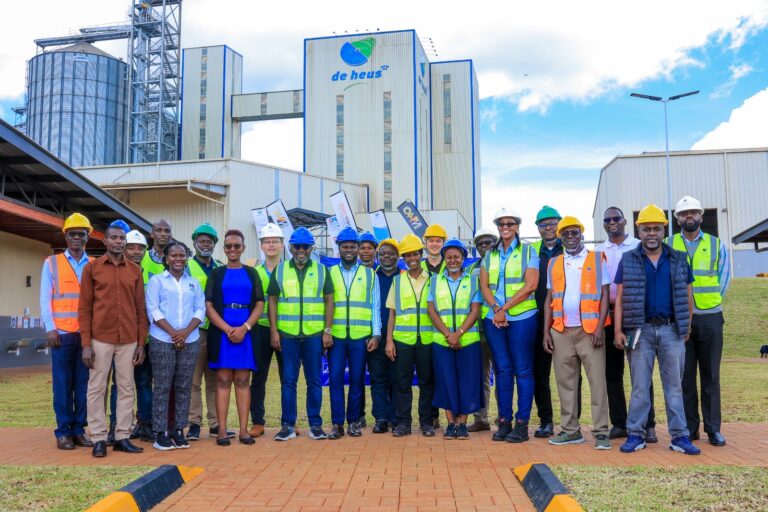
Held at the De Heus/Koudijs Animal Nutrition Plant, the unveiling marked a new phase for the competition under the Vision Initiative for Sustainable Agriculture (VISA) Programme, backed by a €1 million grant from the Embassy of the Kingdom of the Netherlands.

The initiative brings together a coalition of partners including Vision Group, KLM, and Koudijs. They all aligne around the single goal of commercialising agriculture.

Financing the Entire Value Chain

For dfcu Bank, the competition is more than sponsorship, it is a strategic platform to demonstrate how financing can unlock productivity across agriculture.

Mathias Jumba, Head of Integrated Channels at the bank, emphasized that this year’s theme, Farming as a Business; Growth, Commercialisation and Cooperatives, reflects a shift in thinking.

“The entire value chain matters; from the farm gate to supermarket shelves. Every link must be strong, and dfcu is committed to financing every link,” Jumba noted.

This approach positions the bank not just as a lender, but as an ecosystem enabler through supporting farmers, processors, transporters, and agribusinesses. By embedding financial services across the chain, dfcu is helping reduce bottlenecks that often limit farmers’ ability to scale.

A Legacy of Agricultural Development

Founded in 1964 with a mandate to develop Uganda, dfcu Bank’s involvement in agriculture is rooted in its institutional DNA. Its decision to support the Best Farmers Competition since its inception in 2014 reflects a long-term belief that farming is a viable enterprise.

Over the years, the competition has evolved into one of Uganda’s most respected agricultural platforms, recognising 137 farmers nationwide and awarding over Shs1.6 billion in prize money; funds that winners have largely reinvested into mechanisation, irrigation, and modern technologies.

For dfcu, this track record provides tangible proof that access to finance, combined with knowledge and exposure, can transform livelihoods.

Building Bankable Farmers

While the competition is known for its rewards, including an all-expenses-paid trip to the Netherlands for winners, dfcu Bank is particularly focused on the process behind the prizes.

Participants undergo rigorous profiling, evaluation, and media exposure through Vision Group platforms. This, according to Jumba, helps farmers sharpen their business acumen and become more attractive to financial institutions.

Dr Emma Naluyima, one of the first winners of the competition, reinforced this perspective, noting that modern farmers must be “bankable, visitor-ready, and keep proper books of accounts.”

Through initiatives such as the dfcu Foundation and its alignment with the VISA Programme, the bank is extending training, mentorship, and tailored financing solutions to farmers, ensuring they are not just productive, but financially literate and investment-ready.

Driving Commercial Agriculture Nationwide

The competition’s national reach, spanning 10 sub-regions, ensures inclusivity, even in areas where agriculture is less developed. According to Don Wanyama, CEO of Vision Group, this deliberate structure creates regional role models who inspire peer learning and adoption of best practices.

By supporting such a model, dfcu Bank is helping to democratize access to agricultural financing, ensuring that even farmers in underserved regions can transition from subsistence to commercial production.

This transition is critical. Commercial farmers are better positioned to export, adopt technology, create jobs, and contribute to tax revenues, making agriculture a true engine of economic growth.

Strengthening Cooperatives and Market Access

A key focus of the 2026 edition is revitalising cooperatives, many of which exist only on paper despite Uganda having over 30,000 registered groups. By recognising high-performing cooperatives and exposing them to global best practices, the competition aims to strengthen collective bargaining and market access.

This aligns closely with dfcu’s financing model, which increasingly targets group-based lending and value chain financing—structures that reduce risk while improving farmers’ access to capital.

Linking Recognition to Investment

The presence of Koudijs Uganda SMC Ltd at the launch highlighted the importance of pairing farmer recognition with real sector investments. The company’s expanding aqua feed production—now reaching export markets in Kenya and Tanzania—demonstrates how industrial support strengthens the broader agricultural ecosystem.

For dfcu Bank, such developments create bankable opportunities across the chain—from input supply to export financing.

Investing in Uganda’s Future

As Uganda pushes toward agricultural transformation, the role of financial institutions is becoming increasingly central. Through its active participation in the Best Farmers Competition, dfcu Bank is not only facilitating access to capital but also shaping a new generation of commercially minded farmers.

“Together, we are proving that when you invest in farmers, you are investing in Uganda’s future,” Jumba said.

With 13 more winners set to be crowned in 2026 and Shs150 million in prizes to be awarded, the competition continues to grow in scale and impact. But beyond the accolades, it is the strengthening of Uganda’s agricultural value chain—powered by partnerships like dfcu Bank—that may prove to be its most enduring legacy.

DEEPER SOCIETAL PROBLEM: When fathers walk away, the burden is left to the mothers

0

By Emmanuel Nsadhu

I still remember the small but meaningful moments of my childhood when my mother would serve me a modest meal, and my father would quietly add a piece from his own plate, especially when there was meat. Those simple acts of love made all the difference. But not every child in Uganda grows up with that kind of presence.

This month on 8th, the world commemorated International Women’s Day 2026 under the theme “Rights. Justice. Action. For ALL Women and Girls.”This reminded us to confront a painful and growing reality: more and more women are raising children alone.

Recent data from the Uganda Bureau of Statistics indicates that single-parent households—mostly led by women have risen significantly in recent years. Behind these numbers are real stories of resilience, struggle, and, too often, abandonment.

A recent post on tiktok captured this reality. A 33-year-old mother of three openly expressed her desire for a serious partner—someone mature and financially stable. Instead of empathy, she was met with harsh judgment: told she had no right to choose, only to wait and be chosen.

This response reflects a deeper societal problem. In Uganda, single mothers are often blamed, shamed, and overlooked—while the men who father these children and disappear are rarely held accountable.

Single motherhood cuts across all divides. It affects women regardless of education, income, or social status. It is no longer a distant issue, it is our reality. It is our sisters, colleagues, and friends. So, we must ask difficult questions: “Where are the fathers?” “Why is responsibility so easily abandoned?” “And what kind of society are we building when one parent carries the full weight of raising a child?”

Part of the challenge lies in how we are raising our boys. While many well-meaning initiatives focus on empowering the girl child and rightly so—there is often less emphasis on nurturing responsible, emotionally aware boys who grow into accountable men. Without guidance, mentorship, and positive role models, some young men grow up without a clear sense of responsibility in relationships and fatherhood.At the same time, we cannot ignore the role of changing social dynamics. Economic pressures, shifting relationship expectations, and the pursuit of financial stability have all reshaped how relationships are formed and sustained. In some cases, this has led to fragile unions, transactional relationships, and ultimately, broken families.

Yet, amidst all this, one truth remains: women continue to carry the heaviest burden.Single mothers in Uganda face economic hardship, social stigma, and emotional strain. They work twice as hard providing, nurturing, and protecting—often without support. Their children, too, face challenges, from emotional gaps to limited opportunities.

As we continue commemorating the International Women’s “month,” this is not just a moment for celebration—it is a call to action. We must promote responsible fatherhood and hold men accountable for their roles, invest in mentoring boys, shaping them into respectful and responsible men, support single mothers, not stigmatize them, and finally strengthen families and communities, ensuring no parent feels alone.

Supporting women is not just about empowering them in isolation—it is about creating an environment where they are not forced to carry life’s burdens alone.A stable home is not a luxury. It is a right.A supportive partner is not a privilege. It is a responsibility.

When fathers walk away, mothers rise—but they should not have to rise alone.

Mr. Emmanuel Nsadhu is a Nursing Officer and community health advocate with a keen interest in family wellbeing and social dynamics in Uganda.

BREAKING: Bateme Sports Foundation Takes Strategic Pause

0

The Bateme Sports Foundation has announced a temporary suspension of its activities, marking a significant moment for one of the region’s most impactful grassroots sports initiatives.


In an official notice to members, partners, and the wider community, the foundation explained that the pause is part of a strategic move aimed at strengthening its long-term vision, building a more sustainable structure, and improving its sports programs. The organization emphasized that the decision is not a closure, but rather a step toward returning stronger, more organized, and more impactful.


During this period, all major activities and tournaments supported by the foundation will be put on hold.
The announcement comes after a remarkable period of success for the foundation, particularly in regional football. Bateme Sports Foundation played a key role in supporting the Kigulu Ssaza team during the MTN Busoga Masaza Cup, helping them secure last year’s championship title. Kigulu emerged victorious in a tightly contested final, winning 1–0 against Luuka, a triumph widely celebrated across the Region.


The foundation’s contribution to grassroots sports development, talent nurturing, and community engagement has earned it strong support and recognition. Its involvement in Kigulu’s championship run further cemented its reputation as a driving force behind local football success.


Founders Lukwita Michael, Kasadah Yasin (Hatim), and Denis Bateme expressed gratitude to supporters for their continued trust and commitment. They called for patience and ongoing support as the organization undergoes restructuring.


As the community reflects on Bateme’s achievements, there is growing hope that this pause will pave the way for an even stronger return—one that continues to uplift sports and talent across the region.

PATRIOTIC OFFICER NUMBERS: Commissioner JB Mubito elated by PLU’s numerical identification system and eager the same to be introduced in Busoga

0

There is growing excitement among members of the Patriotic League Uganda (PLU) in the Busoga sub-region following a new initiative by the group’s chairman and Supreme Leader, Muhoozi Kainerugaba, to introduce a structured identification system for its top leadership.

Under the arrangement, members of the Central Committee are being assigned unique “Patriotic Officer” (PO) numbers, a move supporters say is boosting organization and identity within the political outfit.

One of those who has welcomed the development is John Bosco Mubiito, the Resident District Commissioner (RDC) of Kumi District and a promoter of the Patriotic League Uganda. In a post on X, Mubiito expressed enthusiasm, noting that some leaders had already received their numbers.

“Our lucky colleagues are getting numbers from our Supreme Leader in PLU,” he said, describing the initiative as a sign of growing cohesion within the league.

Mubiito added that members from the Busoga sub-region, particularly in Buyende District, are eagerly awaiting similar recognition, which they believe will further energize grassroots mobilization.

He emphasized that such direct engagement from the leadership plays a key role in strengthening patriotism and unity among members, especially as the league continues to expand its footprint across the country.

The Patriotic League Uganda has in recent months intensified its mobilization efforts, targeting young people and community leaders, with a focus on promoting national values and civic participation.

MUSEVENI AND RUTO: East Africa bets on Kisumu–Malaba SGR extension to lower transport costs, boost trade, and enhance region’s competitiveness

0

Presidents Yoweri Kaguta Museveni, of Uganda, and William Ruto, of Kenya, jointly officiated the launch of the Kisumu–Malaba Standard Gauge Railway (SGR) Extension (Phase II), a major infrastructure project expected to enhance trade and transport efficiency across East Africa.

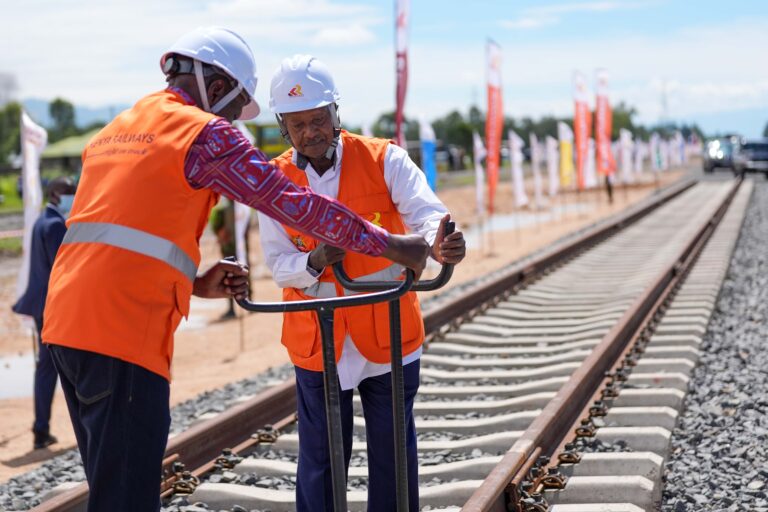
Prior to the ceremony, President Museveni held a closed-door meeting with President Ruto, discussing bilateral relations, regional trade, and infrastructure development between the two countries. The launch was marked symbolically as the two leaders tightened a bolt on the railway line to signify the commencement of construction works.

“This is a very important function of launching the Naivasha–Kisumu to Malaba Standard Gauge Railway,” President Museveni said, describing the milestone as a key step in regional infrastructure development. He highlighted that the railway forms part of a broader plan to rationalise transport systems, particularly in Uganda, where over-reliance on road transport increases costs and inefficiencies.

“The railway is part of the rationalisation of our transport system, especially on the Ugandan side, which is irrational and wasteful because passengers, light cargo, heavy cargo, and petroleum products are all concentrated on the roads,” Museveni explained. He added that Uganda plans to move heavy cargo to rail, petroleum products to pipelines and water transport, and reserve roads mainly for passengers and light cargo, a strategy expected to reduce congestion and improve competitiveness.

The Ugandan President also underscored the importance of producing high-quality, affordable goods to remain globally competitive. “If Africa does not address these cost pushers—high transport costs, expensive electricity, and high financing costs—we shall be outpriced and our goods will not be competitive even within Africa,” he warned.

President Ruto praised Museveni’s commitment to regional integration and East African unity, noting that the SGR from Suswa through Kisumu to Malaba will unlock Kenya’s economic potential while benefiting the wider East African region. The project is expected to strengthen connectivity to the Port of Mombasa and facilitate trade with landlocked countries including Uganda, Rwanda, Burundi, South Sudan, and the Democratic Republic of Congo.

Ruto highlighted the need for efficient transport, noting that cargo volumes through the Port of Mombasa reached 7.37 million tonnes in just six months of 2025, with nearly 70 percent destined for Uganda. He warned that slow logistics corridors—currently taking up to 80 hours from Mombasa to Malaba and over 100 hours to Kampala—undermine competitiveness.

“The railway extension will significantly improve the Northern Corridor by reducing transport time, lowering freight costs, and improving the movement of goods between Uganda and the Kenyan coast,” he said.

The Kisumu–Malaba SGR extension is also expected to boost key economic sectors including agriculture and fisheries around the Lake Victoria basin, while forming part of a broader regional railway network connecting Mombasa, Nairobi, Naivasha, Kisumu, Malaba, and ultimately Kampala.

Both Presidents expressed optimism that the project will accelerate regional integration, enhance trade efficiency, and strengthen economic cooperation between Kenya and Uganda.