


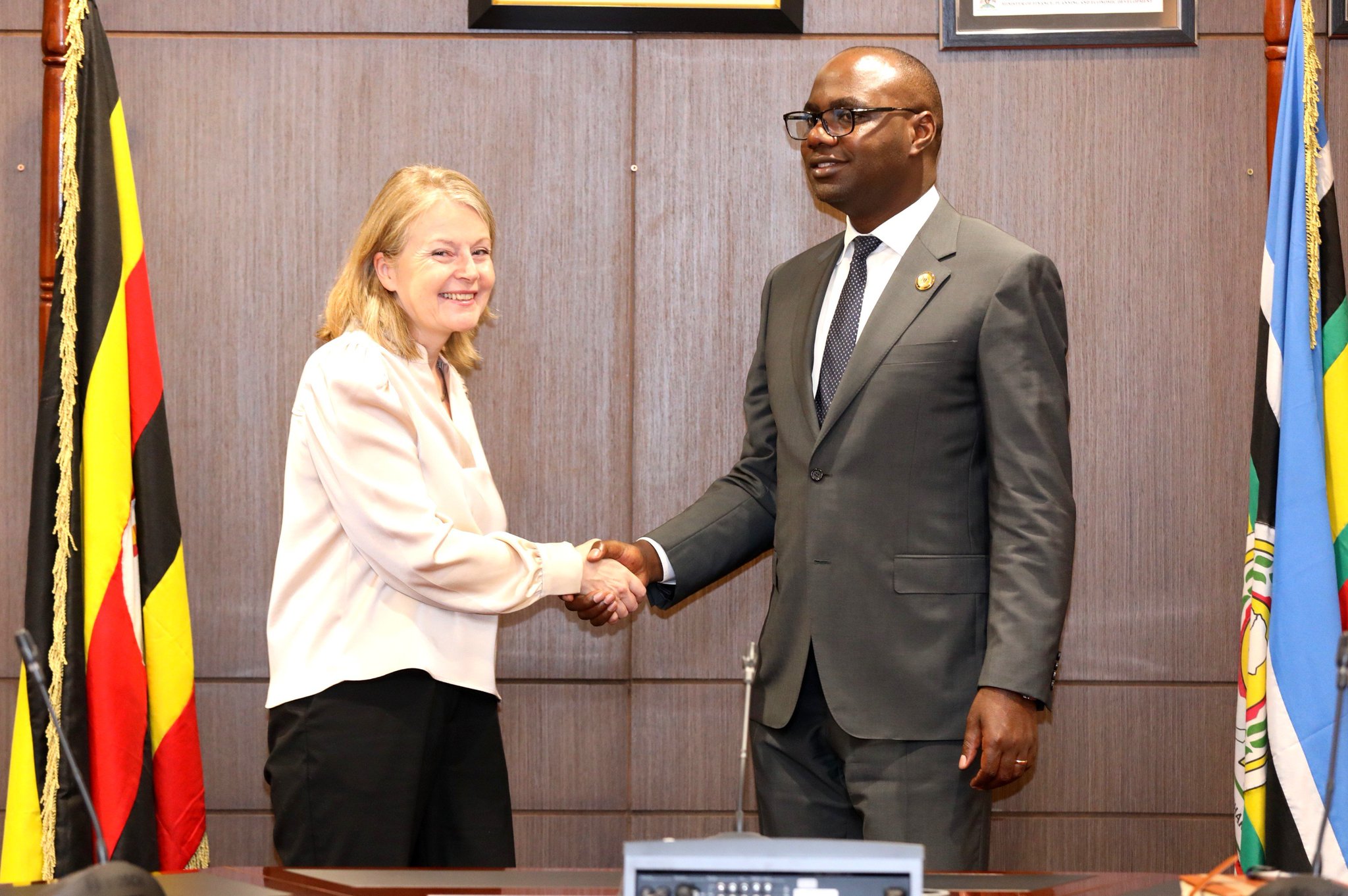
The Government of Iceland has approved an US$8 million grant to support infrastructure development in Namayingo, Kwania and Amolatar districts, with a focus on education, water and sanitation.
The funding will be implemented over the 2026–2028 period as Iceland resumes development cooperation with Uganda.
Iceland’s Head of Mission to Uganda, Katrín Einarsdóttir, disclosed the development during a meeting with Finance Minister Henry Musasizi at the Ministry of Finance, Planning and Economic Development in Kampala.
The grant is expected to support the construction and improvement of schools, alongside investments in water and sanitation infrastructure in the three districts.
Iceland renews support to Uganda
Musasizi welcomed Einarsdóttir and thanked the Icelandic Government for its longstanding support to Uganda, particularly through development programmes implemented in Kalangala, Buikwe and Namayingo.
He said Uganda has a clearly defined development direction under its Tenfold Growth Strategy, which seeks to accelerate economic transformation over the next 15 years.
Musasizi invited Iceland to expand its partnership with Uganda beyond traditional development assistance and support the country’s priority economic sectors and their enablers.
“We want you to attract foreign direct investments and tourists, support value addition and innovations. Promote Uganda as the best investment destination,” Musasizi said.
He said Uganda’s development ambitions require stronger partnerships in investment, tourism, innovation and value addition, particularly in sectors identified under the government’s ATMS agenda and their supporting sectors.
Focus on future generations
Einarsdóttir, who was accompanied by her deputy and other mission officials, said Iceland was ready to continue supporting Uganda’s development, particularly through investments that benefit future generations.
She highlighted education as a key area of cooperation, alongside infrastructure and other programmes aimed at improving people’s livelihoods.
However, she stressed that accountability would remain central to Iceland’s support.
According to Einarsdóttir, Uganda’s programmes must have clear financial oversight and demonstrate quality in implementation to ensure that resources are used effectively.
She said such accountability is important because Iceland’s development assistance is ultimately funded by Icelandic taxpayers.
The renewed cooperation comes as Uganda seeks to mobilise more development financing and private investment to support its long-term economic transformation agenda.
The new grant is expected to complement government efforts to improve access to education, clean water and sanitation while strengthening basic infrastructure in the beneficiary districts.