


By: Bakinyumya Douglas Paapa
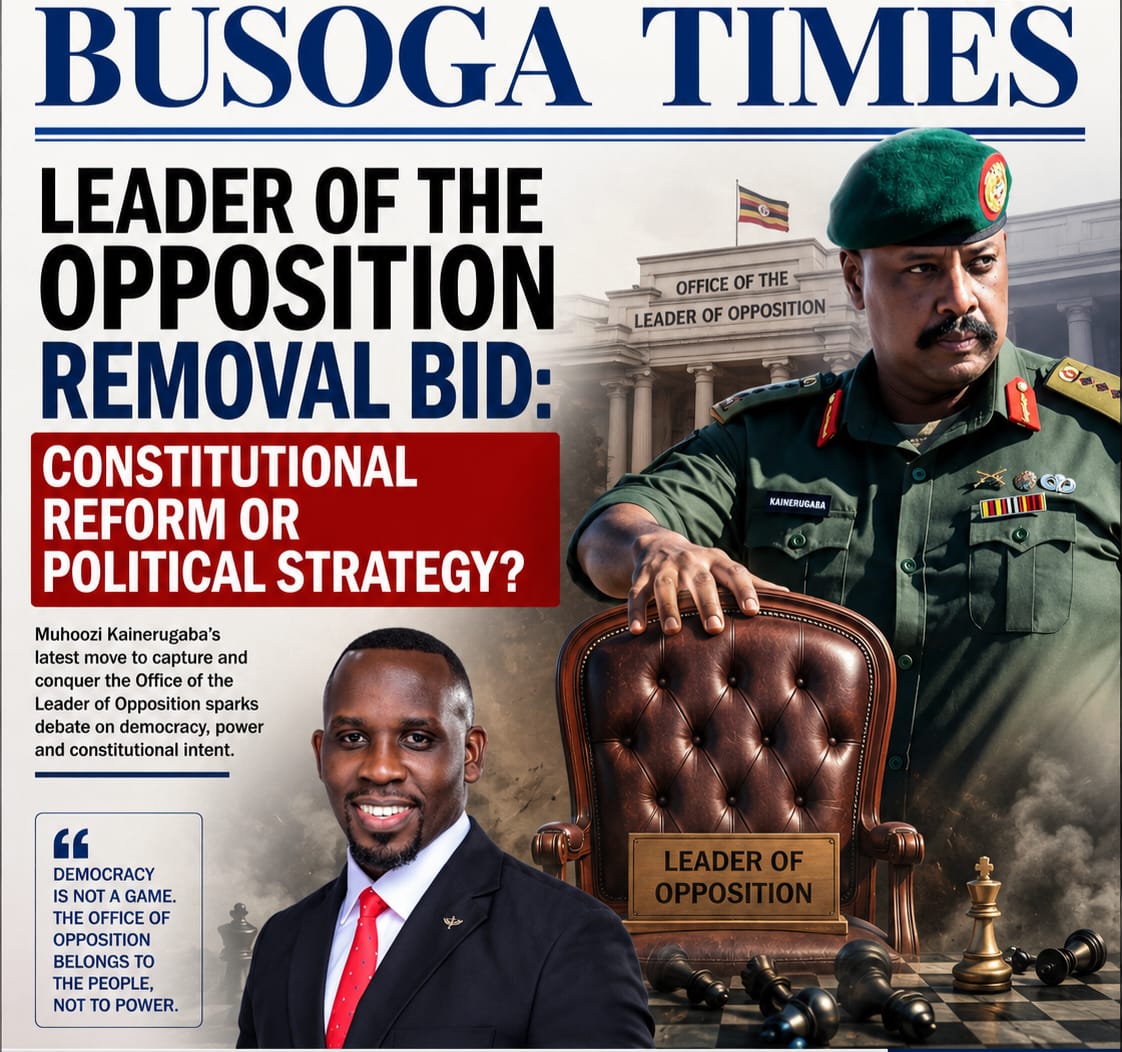
New Battle Over Uganda’s Opposition LeadershipUganda’s political landscape has once again been thrust into controversy following a legislative initiative seeking to fundamentally change how the Leader of the Opposition (LoP) in Parliament is selected.
What appears on the surface to be a constitutional reform has rapidly evolved into a fierce political contest, with critics questioning whether the proposed amendment is genuinely intended to deepen democracy or strategically remove the current Leader of the Opposition, Hon. Joel Ssenyonyi.
At the centre of the debate is Buyaga West County MP Hon. Denis Namara, a legislator affiliated with the Patriotic League of Uganda (PLU), who has formally notified Parliament of his intention to introduce the Administration of Parliament (Amendment) Bill, 2026.
The proposed legislation seeks to amend Section 8 of the Administration of Parliament Act by allowing both opposition and independent Members of Parliament to elect the Leader of the Opposition instead of leaving the appointment to the largest opposition party.
If enacted, the proposal would significantly reshape Uganda’s parliamentary opposition structure and redefine one of the country’s most influential constitutional offices.
The Timing Raises Political QuestionsThe proposal has emerged just days after Chief of Defence Forces and PLU Chairman Gen. Muhoozi Kainerugaba publicly declared that he intended to remove Joel Ssenyonyi from the position of Leader of the Opposition.
Through posts on X, Gen. Muhoozi announced that the process of appointing what he described as “our own Leader of the Opposition” had already begun, assigning PLU Secretary General and Kasambya County MP David Kabanda to spearhead the initiative.
The close proximity between these political declarations and the proposed legislation has inevitably fuelled speculation that the amendment is less about institutional reform and more about altering the balance of power inside Parliament.
Whether coincidence or coordinated political strategy, the optics have intensified national debate.The Existing Constitutional FrameworkUganda’s current parliamentary arrangement is straightforward.
The office of the Leader of the Opposition belongs to the political party with the largest numerical representation outside government.
Once elected by voters, Members of Parliament do not individually elect the Leader of the Opposition. Instead, the largest opposition political party formally appoints its parliamentary leader.
Following the 2021 General Election, the National Unity Platform (NUP) emerged as Uganda’s largest opposition party, making Joel Ssenyonyi the legitimate holder of the office under the existing legal framework.
The proposed amendment seeks to fundamentally alter that principle by extending voting rights to independent Members of Parliament and other opposition legislators.
Supporters describe the proposal as expanding democracy.Critics view it as diluting party mandates that voters themselves determined during elections.
Ssenyonyi’s Anti-Corruption Profile
Joel Ssenyonyi has built much of his political identity around exposing alleged corruption, scrutinising public expenditure and demanding greater government accountability.
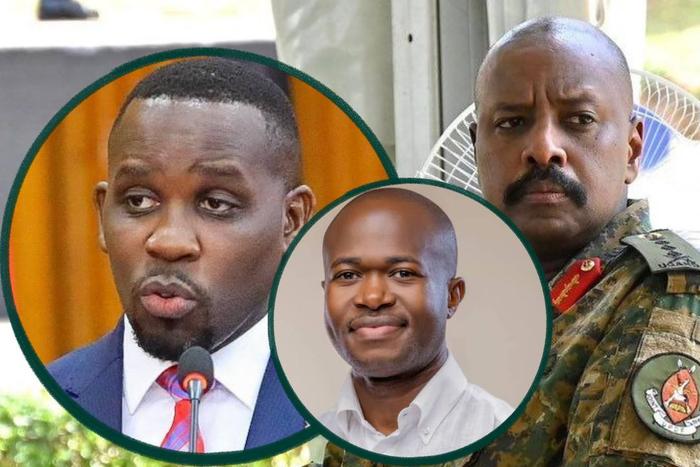
As Chairperson of Parliament’s Committee on Commissions, Statutory Authorities and State Enterprises (COSASE) before becoming Leader of the Opposition, Ssenyonyi gained national recognition through high-profile investigations into government institutions.
His continued criticism of public spending and alleged abuse of office has earned him praise from sections of the public while simultaneously attracting fierce resistance from ruling party supporters and political rivals.
Supporters argue that the current campaign against him is a reaction to his uncompromising oversight role.
His critics, however, insist the issue is about improving internal democracy within the opposition.
Constitutional Reform or Political Engineering?
Every democracy has the right to review and improve its laws.Constitutional and legislative reforms are healthy when they strengthen institutions rather than individuals.
The challenge arises when reforms appear to target a specific office holder instead of addressing long-term institutional weaknesses.
Many constitutional scholars argue that reforms should be undertaken calmly, transparently and through broad national consensus—not during periods of intense political confrontation.
If changes are perceived as being designed to remove particular leaders, they risk undermining public confidence in Parliament’s independence.
The Opposition’s Resistance
Several opposition political parties, including the Forum for Democratic Change (FDC), Uganda People’s Congress (UPC), Alliance for National Transformation (ANT) and others, have expressed concern over the proposal.
They argue that allowing broader parliamentary voting could weaken party discipline, create competing centres of opposition authority and ultimately fragment Uganda’s multiparty democratic system.
For them, the office of the Leader of the Opposition belongs to the voters who determined parliamentary numbers not to political negotiations after elections.
Their concern is that changing the rules midway may establish precedents capable of weakening future opposition leadership regardless of which party holds the largest bloc.
The Bigger Democratic Test
Beyond Joel Ssenyonyi himself lies a far more important national question.Should constitutional offices be redesigned whenever political interests change?
Or should institutional stability remain above short-term political competition?
Democracy is measured not simply by passing laws but by ensuring those laws strengthen institutions, preserve public confidence and protect the will expressed by voters.
Any reform touching one of Parliament’s highest constitutional offices must therefore withstand public scrutiny, legal examination and democratic legitimacy.
InConclusion: Parliament Faces a Defining Moment
The proposed amendment has evolved into much more than a debate over one individual.It has become a test of Uganda’s constitutional maturity, parliamentary independence and commitment to multiparty democracy.
Whether this initiative proceeds or not, the discussion has exposed the growing contest over political power ahead of Uganda’s evolving democratic journey.
The central question now remains:Is this genuine constitutional reform designed to deepen democracy, or is it political engineering aimed at reshaping Uganda’s opposition from within?
Parliament’s response may define not only the future of the Leader of the Opposition but also the credibility of Uganda’s democratic institutions for years to come.
Bakinyumya Douglas Paapa(Political TV Producer & Host – @BDouglasPaapa)