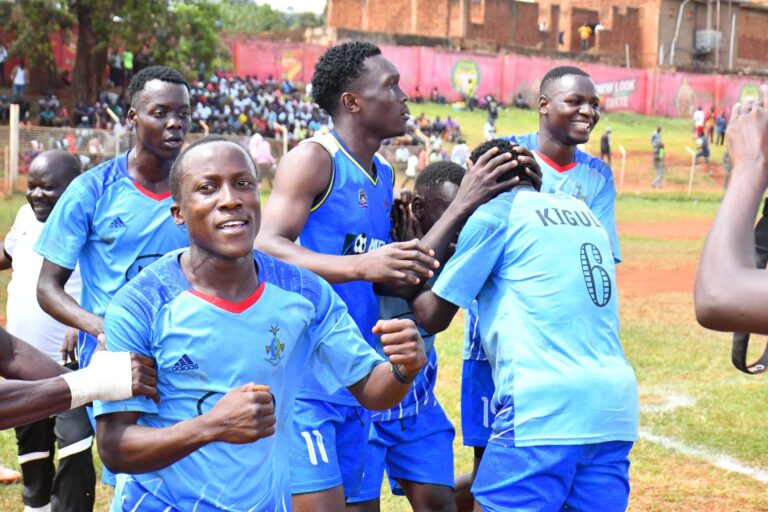
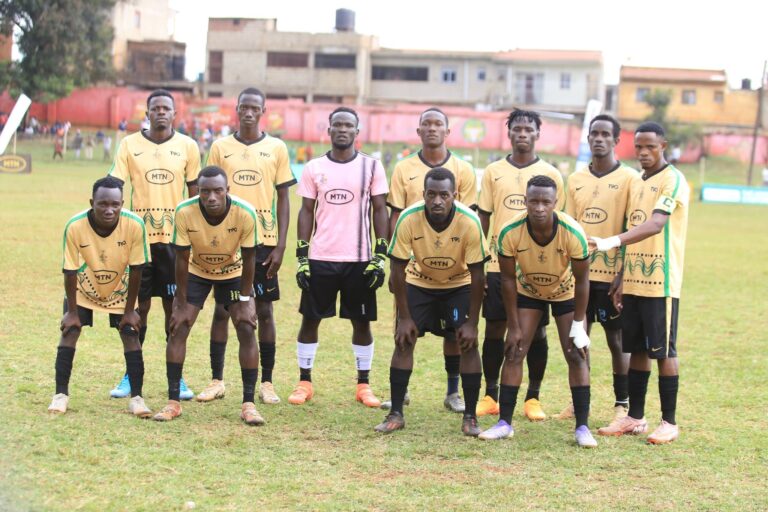
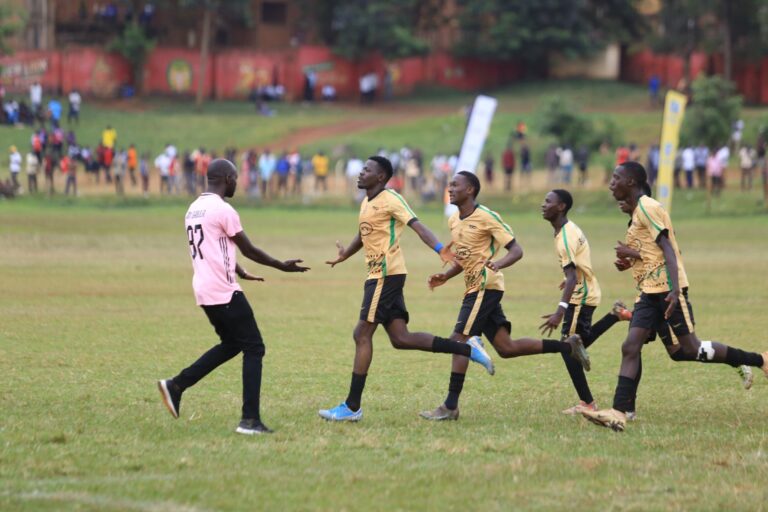
The 8th edition of the Busoga Masaza Cup has its finalists — Kigulu and Luuka — after a dramatic semifinal weekend at the Kyabazinga Stadium, Bugembe.
On Saturday, Luuka made history by reaching their first-ever final since the tournament’s inception in 2016, following an emphatic 3-1 victory over Bugabula. The result capped off a fairy-tale run for the underdogs, who had never gone beyond group stages before this year.
In the day’s earlier fixture, two-time champions Kigulu confirmed their dominance in the competition with a 2-0 win over 2022 champions Bukooli Namayingo. This will be Kigulu’s fourth appearance in a Busoga Masaza Cup final after featuring in 2018, 2019, and 2022. They lifted the title back-to-back in 2018 and 2019, becoming the only side in history to achieve that feat, before losing narrowly to Bukooli Namayingo in the 2022 final (1–0).
The upcoming final — whose date is yet to be confirmed — will be hosted at the Kyabazinga Stadium in Jinja City, where Kigulu will be seeking a third crown, while Luuka chase a maiden championship in what promises to be a classic battle between experience and ambition.
Recent editions of the tournament have consistently produced surprises, with underdog stories lighting up the competition. Bukooli Namayingo shocked the region in 2022, Busiki followed suit by winning in 2023, and Bukono reached last year’s final before falling to Butembe. This year, Luuka have carried the same spirit, defying odds to reach the final for the first time ever.
Meanwhile, the third-place playoff will see Bukooli Namayingo face Bugabula, as both sides battle for pride and prize money. The winner of the playoff will walk away with UGX 6 million, while the fourth-placed team earns UGX 4 million. The runners-up will take home UGX 8 million, and the champions will pocket a grand prize of UGX 13 million.
Kick-off: 4:00 PM Venue: Kyabazinga Stadium, Bugembe – Jinja City
Luukavs Bugabula
The much-anticipated Busoga Masaza Cup semi-final clash between Bugabula and Luuka is set for Saturday, 18th October 2025, at 4:00 PM in the Kyabazinga Stadium, Bugembe, Jinja City. This encounter promises intensity, history, and revenge, as the two sides meet for the third time this season after sharing the same Bukowe group earlier in the competition.
Both teams finished level on nine points from four games in the group stages, each winning three and losing one — interestingly, both defeats came against each other, with identical 1-0 away wins. Luuka, however, topped the group on goal difference, while Bugabula followed closely behind.
Bugabula: The Nearly Men Chasing History
For Bugabula, this semi-final marks their fourth consecutive appearance since 2022 — a record of consistency yet tainted by heartbreak. Despite their regular presence in the last four, they have never reached a final since the tournament’s inception in 2016. This year, they are determined to rewrite history and finally step onto the big stage.
Under coach Ronald Lukungu, the Kamuli-based side advanced to the semis after a tense 1-1 draw with Bunha, winning on penalties. Ibrahim “Kazindula” Musisi, last year’s top scorer, proved vital again, netting a late equalizer in the 84th minute. His return adds firepower to a squad built on defensive solidity.
The center-back pairing of David Balondemu and Yiga Keith has been outstanding throughout the tournament, providing stability behind a dynamic midfield anchored by Kimuli Michael, whose box-to-box energy has kept Bugabula balanced and resilient. Attacker Edgar Madombe (09), a bright spark in the group stages, will be eager to rediscover his form and make an impact in the knockouts as Bugabula aim to end years of semi-final frustration.
Luuka: Newcomers with a Point to Prove
On the other hand, Luuka are writing a new chapter in their history. This is their first-ever semi-final appearance in the Masaza Cup, and their fairytale run has captured fans’ imagination. Guided by experienced coach Warishe Abdullah, assisted by Coach Saleh God, and managed by Mr. Bwire Osodo Godfrey, Luuka have combined tactical discipline with attacking flair.
Their emphatic 3-0 quarter-final victory over Bulamogi sent a clear message to their rivals. Star forward Kasakya Ibra (14) was the hero of the night, scoring a hat-trick — his first goals of the tournament — proving his big-match temperament. Playmaker Kiiza Emmanuel (10) remains the creative heartbeat of the team, orchestrating attacks and creating scoring chances, while Umaru Baluzire (7) adds pace, long-range threat, and unpredictability up front.
Defensively, the trio of Karogo Farouk, Bakitwale Ronald, and Mwesigwa Kenneth has been the foundation of Luuka’s success, combining composure with excellent game reading to shut down opposition attacks.
As the sun sets over Kyabazinga Stadium, one thing is certain — history will be made. Either Bugabula finally break their semi-final curse, or Luuka’s dream run continues into their maiden final.
Uganda’s Parliament is set to convene next Monday, October 20th, 2025, with a packed agenda that includes the crucial consideration of five loan requests totaling a staggering UGX 8.287 trillion. These substantial funds are earmarked for critical road construction projects and energy infrastructure development across the nation.
According to the official Order Paper released by Parliament today, the Minister of Finance, Planning, and Economic Development will present these borrowing proposals for parliamentary approval. The loans are primarily sourced from international financial institutions including the World Bank, Standard Chartered Bank, and Citi Bank.
Among the key proposals, the Ministry of Finance seeks to borrow up to €230,454,687.23 from Citi Bank. This facility is intended to finance the “design and build” of the vital Jinja-Mbulamuti-Kamuli-Bukungu Road, spanning 127 kilometers, and an additional 10 kilometers of roads within Jinja City.
Furthermore, a significant portion of the funds, up to €115,876,831 from Standard Chartered Bank, is allocated to the “critical oil roads” package, specifically Package 6B. This includes the design and build for the upgrading of the Karugutu-Ntoroko Road (56.5 km), a crucial link to Rwebisengo (8.2 km), and 3.3 kilometers of town roads in Ntoroko district, totaling approximately 68 kilometers.
In addition to road infrastructure, Parliament will also consider a loan of up to €342,592,806.25 from Standard Chartered Bank. This significant sum is designated for the construction of the 400kV Karuma-Tororo Double Circuit Transmission Line and associated substations, as well as the 132/33kV Ntinda Substation Project. This investment highlights the government’s commitment to bolstering the national power grid and ensuring reliable electricity supply.
The Ministry is also looking to secure a loan of up to €192,959,605.47 from Citi Bank to finance Phase I of the “Enhancing Agricultural Production, Quality and Standards for Market Access Project.” This initiative aims to boost the agricultural sector, a cornerstone of Uganda’s economy.
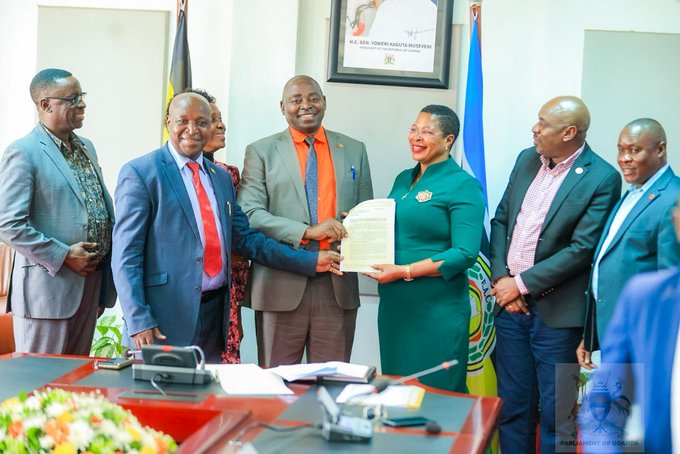
The impending parliamentary session follows a proactive move last week by the Parliament’s Committee on National Economy. Under the chairmanship of Bosco Ikojo, the committee held a meeting to consider several loan proposals after receiving a directive from Speaker Anita Among.
“I received a communication from the office of the Speaker that Cabinet had considered a number of loan proposals and were referred to Parliament,” explained Mr. Ikojo.
“But now that Parliament is still on recess, she administratively decided to write to the chairperson of the committee for us to consider this loan request pending resumption of the House. We shall have to present to them. That is why I had to request the Minister of Finance to appear before this committee to make sure that at least we officially receive all these loans and then we move on to scrutinize them, pending the resumption of the House and honour reporting by the committee.”
The upcoming plenary sitting is expected to see rigorous debate and scrutiny of these substantial loan requests as Parliament deliberates on their necessity and impact on the nation’s debt profile and future development. The projects funded by these loans are anticipated to have a transformative effect on Uganda’s infrastructure, connectivity, and economic potential.
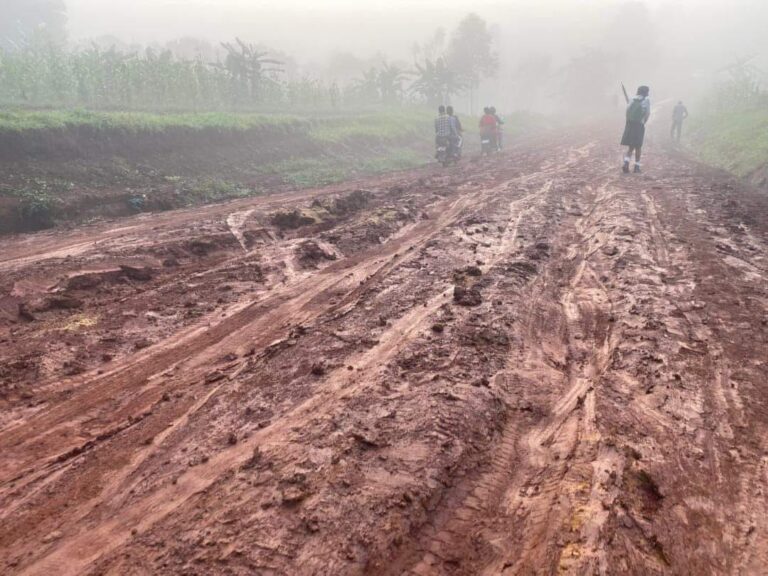
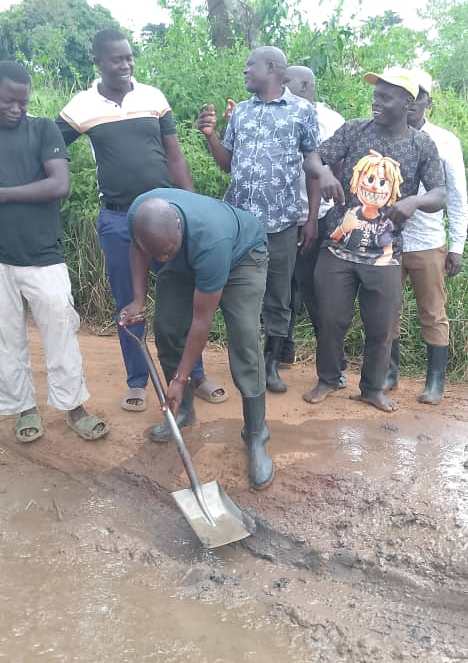
In a move reminiscent of bygone days when communities rallied together through collective effort, Kalori Dhizaala, the NRM flag bearer for Kamuli District Chairperson, has embarked on a “bulungibwansi” (community work) initiative, focusing on rehabilitating impassable local roads.
The initiative, which began in Kagumba Sub-county, aims to bridge the gap left by delayed government intervention and foster a renewed sense of community responsibility.
Historically, “bulungibwansi” was a cornerstone of community development, with residents actively participating in tasks like road maintenance, building communal structures, and other vital projects.
However, in recent times, the responsibility for infrastructure development has largely shifted to the government. Dhizaala’s campaign seeks to reawaken this spirit of self-reliance and cooperation, emphasizing that community involvement is crucial, especially when official resources are stretched.
“We are opening a new chapter,” stated Dhizaala during an engagement with residents and local leaders in Kagumba Sub-county, an area plagued by numerous roads that have become virtually impassable.
“This initiative is a gesture of ‘bulungibwansi’ to demonstrate that the community and its leaders can work hand-in-hand. After all, it is we, the community members, who use these roads daily.”
Kagumba Sub-county, in particular, faces significant challenges. Many of its roads have not seen grading or maintenance for extended periods. Even those that have received some attention are riddled with potholes, a consequence of heavy transportation of goods such as milk, sugarcane, and cattle, which are vital to the local economy.
Dhizaala urged the community to embrace patriotism, equating community work to love for one’s country and locality. “Loving your country means supporting each other and cherishing the place you live in,” he remarked.
As Dhizaala gears up for the district chairperson elections, this hands-on approach appears to be a strategic effort to connect with and win the trust of the electorate. He is not solely focusing on roads, however.
His vision extends to other vital social services, including access to clean water and improved healthcare, promising to champion these areas should he be entrusted with the leadership seat.
To kickstart the roadwork in Kagumba, Dhizaala provided essential support, including fuel for a tipper truck and resources for murram digging, mobilizing local participation to address the immediate road concerns.
The initiative signifies a call to the Kamuli community to embrace this ideology of collective action, demonstrating that even in an era of centralized governance, the power of “bulungibwansi” can still pave the way for progress.
The community in Kamuli has been strongly warned against linking disability in children with witchcraft, with advocates urging parents to seek medical attention rather than turning to traditional healers.
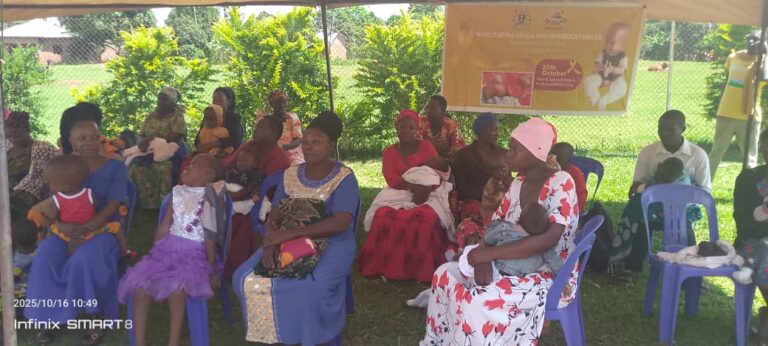
This vital message was delivered during a one-day health camp organized by the Spina Bifida and Hydrocephalus Association Uganda (SHAU) at Kitayunjwa Health Three.
SHAU, a non-governmental organization formed by parents of children suffering from Spina Bifida and Hydrocephalus, conducted the camp to provide much-needed medical care and education.
Children with hydrocephalus and Spina Bifida received treatment, while others were referred to specialized hospitals such as those in Mbale.
Jackline Ahimbisibwe, SHAU’s Eastern Region Coordinator, speaking to our correspondent, affirmed their commitment to Kamuli for a period of five years.
During this time, the organization will tirelessly sensitize the community about Spina Bifida and Hydrocephalus, conditions that affect children, and establish effective pathways for disseminating crucial health information.
Ahimbisibwe highlighted a prevalent and dangerous misconception. “Usually, mothers who deliver these children develop fears that maybe they were bewitched, and others end up going to witch doctors,” she explained.
She sharply contrasted this with the medical reality, stating that these birth defects usually affect the fetus as early as four weeks into pregnancy, long before any perceived “bewitchment.”
Reinforcing this critical message, Musota Ali, working with one of SHAU’s sister organizations, emphatically warned parents against consulting witch doctors. “Instead of thinking their children were bewitched, parents should go to specialists for proper treatment,” he urged, stressing the importance of evidence-based medical care.
Looking ahead, the Spina Bifida and Hydrocephalus Association Uganda is committed to a comprehensive awareness campaign. They plan to work closely with local leaders, cultural leaders, political leaders, religious leaders, and technical staff in Kamuli. This collaborative effort aims to raise awareness about the importance of promoting children’s rights, especially for those living with debilitating conditions like Spina Bifida and Hydrocephalus. The message is clear: understanding and medical intervention, not superstition, are the rightful paths to supporting these vulnerable children.
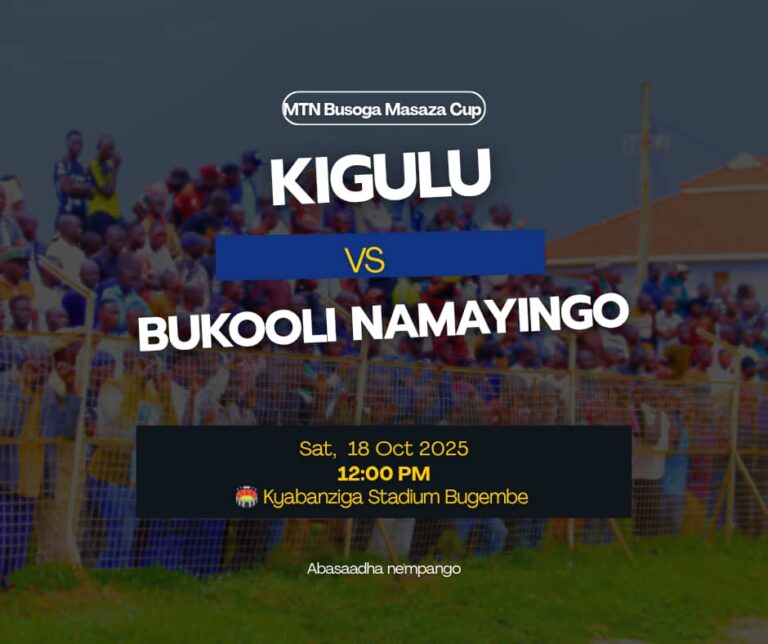
The Busoga Masaza Cup returns this weekend with an electrifying doubleheader at Kyabazinga Stadium, Bugembe. The early semi-final clash on Saturday, October 18th at 12:00 PM will see Bukooli Namayingo and Kigulu rekindle their rivalry in what promises to be a heated repeat of the 2022 final, where Bukooli Namayingo emerged champions after a narrow 1-0 win.
This encounter sets the stage for redemption, pride, and a place in the 2025 final — with both teams backed by strong history and passionate supporters.
Kigulu Seeking Revenge and a Return to Glory
Kigulu, one of the most decorated sides in the competition, enter the semi-final with determination to reclaim lost glory. Under coaches Eddy Kaspat Kibwika and Yusuf Bagalaliwo, the Iganga-based side have blended youth, speed, and tactical maturity.
Since the tournament’s revival in 2016, Kigulu have played in three finals, winning two back-to-back titles in 2018 and 2019, against Bunha and Butembe respectively. Their only final loss came in 2022 to Bukooli Namayingo, a wound they’ll be eager to heal this weekend.
They topped the Nhendha group and knocked out last year’s finalists Bukono 2-1 in the quarter-finals at Bugembe. Their strength lies in midfield dominance, led by Saad Mukiibi (08), the team’s engine and chief creator. Supporting him are pacy wide men Suleiman Kisubi (17) and Ukasha Mulondo (11), while Armstrong Owori (03) and John Mwesigwa (04) add defensive solidity and attacking width.
Bukooli Namayingo Aiming for Second Title
Under the experienced and tactical Coach Siraji Bogere, Bukooli Namayingo are chasing history — a second title and Bogere’s third as a manager. The 2022 champions have shown resilience and structure throughout the campaign, even when their away form wavered.
After qualifying from the group stages with nine points, all earned from home wins, Bukooli Namayingo squeezed past Bugweri in the quarter-finals, winning 4-2 on penalties after a tense goalless draw.
Key to their ambitions are Ismail Ndifuna (11) — a fast, clinical forward and former Busiki cup winner — and midfield general Odenga Iduma (04), known for his powerful box-to-box displays. Defensively, Mangeni Derrick (05) and Soita Douglas (12) form one of the tournament’s most disciplined center-back pairings, while Sanya Hassan (06) provides balance, both shielding the backline and linking play forward.
Head-to-Head
The two sides met twice in the group stage — each winning their home game. Kigulu edged Bukooli Namayingo 2-1 in Iganga, while Bukooli Namayingo responded with a 1-0 win in Namayingo. Both finished level on nine points, proving how evenly matched they are.
Kigulu’s last semi-final appearance in 2023 ended in heartbreak, losing to Butembe on penalties at Kakindu Stadium. Bukooli Namayingo, meanwhile, last reached the semis in 2022 — and went on to lift the trophy.
The Uganda National Teachers’ Union (UNATU) has suspended its 32-day industrial action to pave the way for Parliamentary deliberations on salary disparities among teachers. The decision follows formal communication from the Speaker of Parliament recalling key committees to address the issue that has kept teachers away from classrooms for over a month.
In a statement issued on Thursday, UNATU General Secretary Baguma Filbert Bates said the union had achieved significant progress through the strike, including reopening stalled negotiations and securing government acknowledgment of the pay gaps between teachers of sciences and those of arts and humanities.
“Suspension is not surrender. It is a strategic decision to allow Parliament, which is the very institution that allocates the national budget, to act,” Baguma said.
Progress Achieved
According to UNATU, the industrial action—launched on 15th September 2025—compelled the government to formally recognize the existence of salary disparities. On 16th September, UNATU met with officials from the Ministries of Public Service, Gender, Labour and Social Development, and Education and Sports, during which the government admitted to the inequality.
Subsequently, the union presented its grievances before the Public Service National Negotiating and Consultative Council on 8th October, which promised feedback within two weeks. On the same day, the union petitioned the Speaker of Parliament, Rt. Hon. Anita Among, who has since directed the Committees on Education & Sports, Public Service, and Local Government to urgently consider the matter.
UNATU hailed this as “the first formal recognition in three years” that the issue deserves parliamentary attention, calling it a major victory for teachers nationwide.
Decision to Suspend Industrial Action
In a special sitting on 16th October, the UNATU National Executive Council (NEC) and branch chairpersons resolved to suspend the strike after receiving written assurance from the Speaker that Parliament was handling the matter “expeditiously.”
The union called on its members to resume work immediately, urging patience as the legislative process unfolds.
“Let us give the Speaker and the Committees a chance to demonstrate sincerity,” the statement read. “If justice is not served, we shall return to industrial action—stronger, broader, and indefinite.”
A Message to Parliament and the Public
UNATU’s leadership commended the Speaker’s intervention and expressed cautious optimism that Parliament would act “in the interest of justice and national integrity.” The union emphasized that the struggle was not only for teachers but also for the learners whose education depends on a motivated teaching force.
Baguma reiterated that the union’s primary demand remains equitable salary enhancement for teachers in primary and post-primary institutions, particularly those in arts and humanities, to match the standard agreed upon in the 2018 Public Service Union framework and targeted for implementation in the FY 2022/23.
Looking Ahead
While suspending the strike, UNATU vowed to remain vigilant, organized, and ready to resume industrial action should Parliament or government fail to honor their commitments.
“We have not surrendered our struggle; we have institutionalized it,” the statement declared. “We now have an accountability centre—Parliament.”
The union concluded by reminding lawmakers that teachers’ trust and the credibility of Parliament were now on the line.
“If you stand for justice, history will remember you as heroes and heroines of fairness. If you turn away, the burden of betrayal will rest on your record forever.”
When 34-year-old Joan Nabirye reaches for her favourite lotion every morning, she rarely thinks about what it’s made of. Like many Ugandan women, her daily routine includes a mix of shampoos, soaps, perfumes, nail polish, and hair treatments — the very products that make her feel beautiful and confident. Yet behind their pleasant scents and glossy labels lies a hidden danger that scientists and environmental advocates are now sounding the alarm about: chemicals that disrupt the body’s natural hormones.
These substances — known as Endocrine-Disrupting Chemicals (EDCs) — are found in thousands of consumer products used every day. They are part of what keeps plastics soft, perfumes long-lasting, and lotions silky smooth. But according to experts, their widespread use has created a silent health crisis, especially for women.
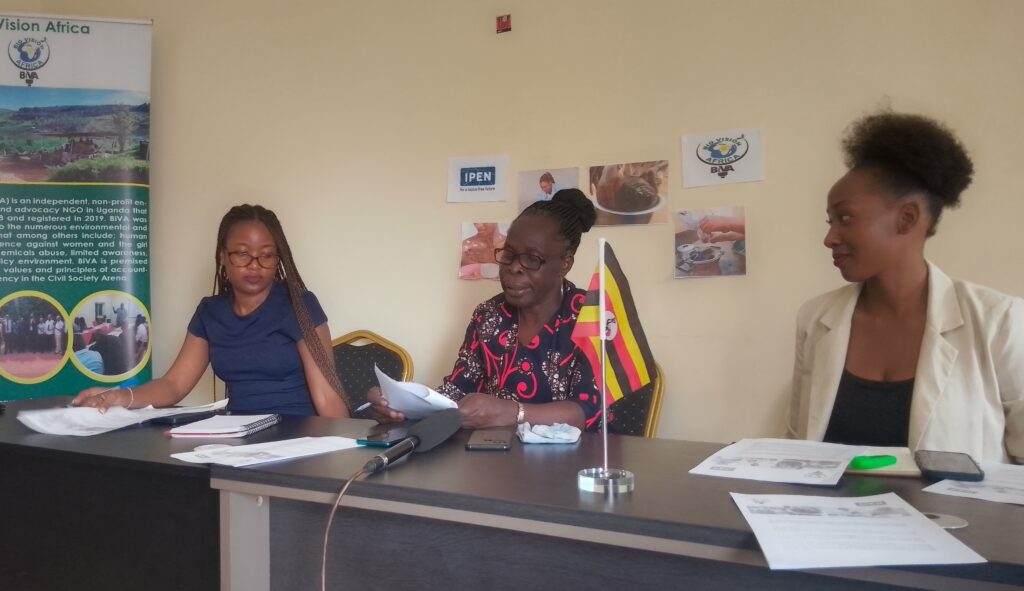
This week, Bio Vision Africa (BIVA), in collaboration with the International Pollutants Elimination Network (IPEN), launched a national campaign under the IPEN Women’s Global Communication Initiative to raise awareness about the dangers of these chemicals and to push for stronger policies to protect women and communities in Uganda. The campaign will run through to end of December.
A Hidden Menace in Everyday Life
“These chemicals, commonly known as phthalates, are everywhere,” explains Betty Obbo, BIVA’s Program Officer for Gender and Extractives. “They are in personal care products like cosmetics, lotions, shampoos, soaps, and perfumes — but also in everyday materials like paint, adhesives, and plastic packaging.”
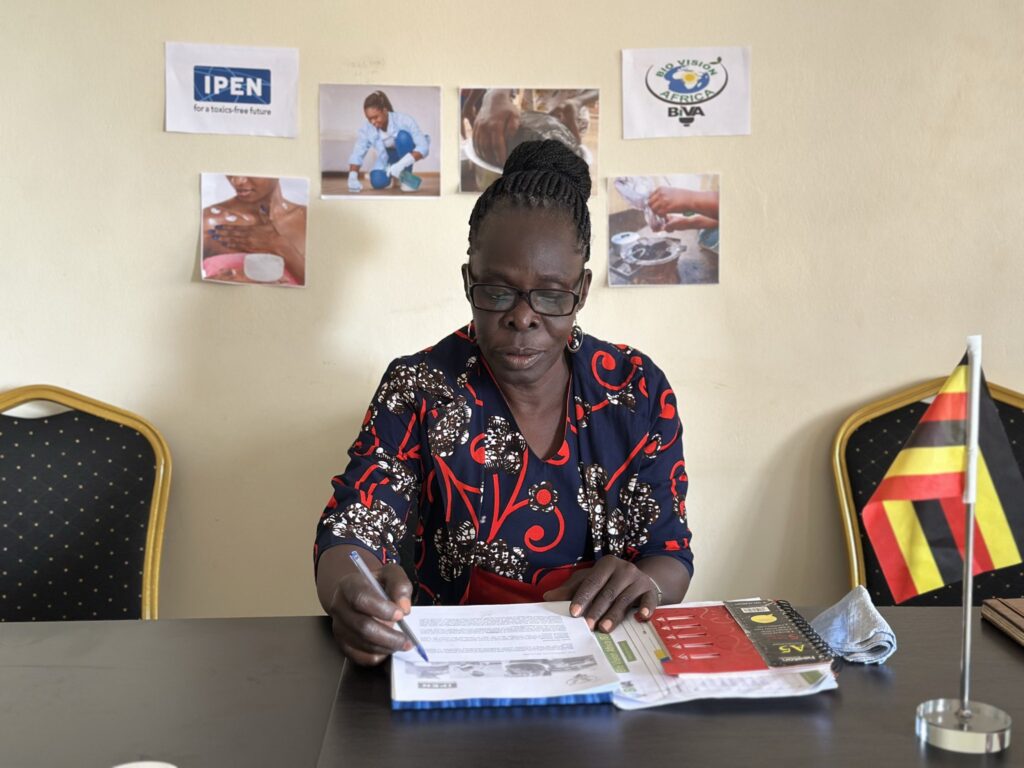
Betty Obbo, BIVA’s Program Officer for Gender and Extractives
Their chemical properties make them valuable to manufacturers — softening plastics, increasing durability, and improving texture. But their ability to mimic or block hormones in the human body is what makes them dangerous. Scientific evidence links exposure to these chemicals with reproductive disorders, reduced fertility, cervical cancer, premature births, and developmental problems in children.
And for women, the risk is much higher
“Women are the primary users of cosmetics and personal care products,” says Esther Kamese, BIVA’s Program Officer for Youth, Food Systems, Biodiversity and Climate Change. “Frequent and prolonged exposure increases their vulnerability. Urban women, in particular, are using more of these products as lifestyles change — yet few know what they are really exposing themselves to.”
Everyday Practices, Everyday Risks
Beyond cosmetics, women in Uganda face another layer of exposure through household practices that seem harmless but are actually toxic.
Kamese points to the widespread use of plastics and polythene bags (kaveera) to light charcoal stoves, prepare, or serve food — practices that release harmful substances into the air and food.
“These are things we do daily without realizing the consequences,” she says. “When plastics burn, they release chemicals that can cause long-term health problems. Women and children, who spend the most time around cooking spaces, bear the greatest risk.”
For many households, these habits are driven by convenience and lack of awareness rather than negligence. “We can’t blame women for trying to make ends meet or find affordable solutions,” Obbo adds. “That’s why education and advocacy are so critical.”
A Call for Stronger Protection
BIVA’s campaign aims not just to raise awareness, but also to push for policy change. The organization is calling on the Ugandan government to phase out toxic chemicals, close regulatory loopholes, and align national standards with international chemical management frameworks such as the Stockholm Convention, the Minamata Convention, and the Strategic Approach to International Chemicals Management (SAICM).
Bio Vision Africa has launched a national campaign under the IPEN Women’s Global Communication Initiative to raise awareness about the dangers of chemicals in beauty products.
“These global agreements give countries a roadmap for managing hazardous substances safely,” says Obbo. “Uganda must act now to strengthen its laws, protect women, and ensure that industries prioritize safer alternatives.”
Empowering Women Through Knowledge
The campaign’s approach is rooted in community empowerment. Through workshops, media engagement, and partnerships with women’s organizations, BIVA hopes to give women the tools to make informed choices about the products they use — and to demand safer options from producers and policymakers alike.
“Protecting women from endocrine-disrupting chemicals is not just a women’s issue,” Kamese emphasizes. “It’s about protecting families, communities, and future generations. When women are informed, they become powerful advocates for change.”
As the campaign unfolds, women like Joan may begin to see their daily beauty routines in a new light. Awareness, advocates say, is the first step toward transformation — a move from unknowing exposure to empowered action. Because every woman deserves to live beautifully — and safely.
Hon. Bazanya Mathew, the aspiring Member of Parliament for Bugabula South Constituency and patron of Bugabula Eisaza, has rewarded the Bugabula team with millions of shillings and a fully paid outing after their dramatic quarter-final victory over Bunha in the ongoing MTN Busoga Masaza Cup.
The thrilling match, played on Sunday evening at Kyabazinga Stadium in Bugembe, saw Bugabula edge past Bunha 3–2 in a penalty shootout after a tense 1–1 draw in normal time. The result sent the Kamuli-based side into the semi-finals once again, keeping their dream of reaching a first-ever Masaza Cup final alive.
In appreciation of their spirited performance, Hon. Bazanya gifted each Bugabula player with UGX 100,000 and pledged more rewards should the team continue their fine form. He later hosted the team to a free celebration outing, footing all expenses as a token of motivation ahead of the semi-finals.
Bugabula will now face Luuka this Friday at 4:00 pm, again at the Kyabazinga Stadium in Bugembe — a clash that promises fireworks as both sides eye a ticket to the 2025 Busoga Masaza Cup final.
Despite consistent performances, Bugabula have fallen short at the semi-final hurdle in the last three editions: losing to Kigulu (2022), Busiki (2023), and Butembe (2024). The 2025 campaign now presents a golden chance to rewrite history and reach the finals for the first time since the tournament’s inception in 2016.
Hon. Bazanya, who also doubles as the Kamuli NRM District Chairperson following his swearing-in four months ago, reaffirmed his commitment to supporting local sports development in Bugabula and across Busoga.
The stage is fully set for the MTN Busoga Masaza Cup 2025 semi-finals, slated for Friday 17th October at the Kyabazinga Stadium, Bugembe in Jinja City, with two mouth-watering clashes promising high-octane football and renewed rivalries.
In the early kick-off at 12:00pm, Kigulu will lock horns with Bukooli Namayingo, a thrilling repeat of their Nhendha Group battles. Both sides won their home fixtures during the group stages — Kigulu triumphed 2-1 in Iganga, while Bukooli Namayingo edged 1-0 in Namayingo — setting the stage for an explosive decider at a neutral ground.
Later at 4:00pm, attention will turn to the Bukowe Group reunion as Luuka faces Bugabula. These two sides also traded 1-0 victories during the group stage, making the semi a perfect test of consistency and tactical discipline.
Kigulu reached this stage after a 2-1 victory over Bukono, thanks to goals from Ukasha Mulondo and Sizomu Benjamin, while Nabola Emmanuel netted the consolation for Bukono. Bukooli Namayingo, on the other hand, saw off Bugweri 4-2 in penalties after a goalless draw, with their captain showing nerves of steel in the shootout.
In the other quarter-final ties, Luuka cruised past Bulamogi 3-0, courtesy of a brilliant Kasakya Ibra hat-trick, while Bugabula eliminated Bunha 3-2 on penalties following a 1-1 stalemate. Goalkeeper Oboya Musa turned hero for Bugabula, saving three of the five spot-kicks taken by Bunha to send his side to the semis in dramatic fashion.
Websites store cookies to enhance functionality and personalise your experience. You can manage your preferences, but blocking some cookies may impact site performance and services.
Essential cookies enable basic functions and are necessary for the proper function of the website.
Name
Description
Duration
Cookie Preferences
This cookie is used to store the user's cookie consent preferences.