Thursday, May 21, 2026
Home Blog Page 15

EXHIBITION SET: Kaliro set for 10th Olwekobaano Energy Expo as leaders mobilise communities

0

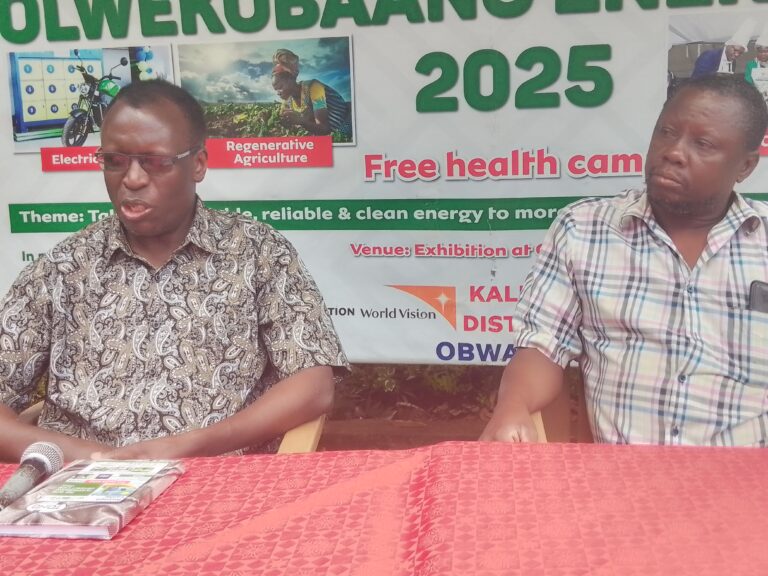
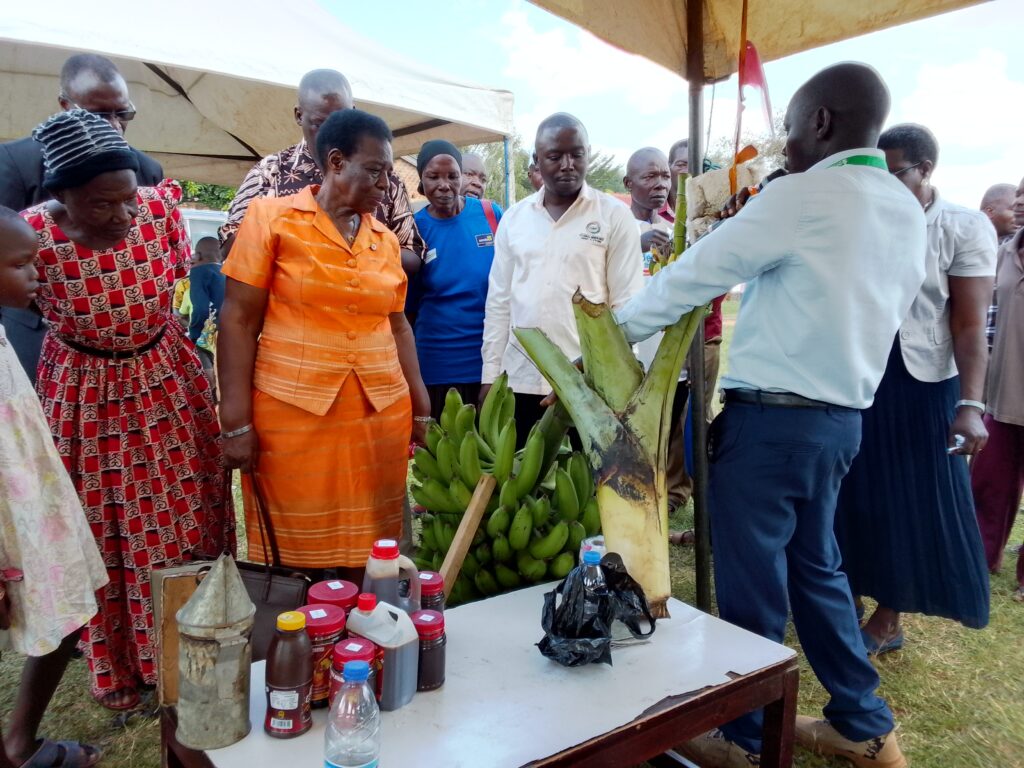
The build-up to the 10th Olwekobaano Energy Expo 2025 gained momentum today as Busoga Yaiffe President Dr. Charles Mbalyohere and Eric Kihuluka, the Deputy Katukiro of Obwa Zibondo bwa Bulamogi, rallied communities to embrace clean energy solutions, health services, and knowledge-sharing opportunities during this year’s milestone edition.

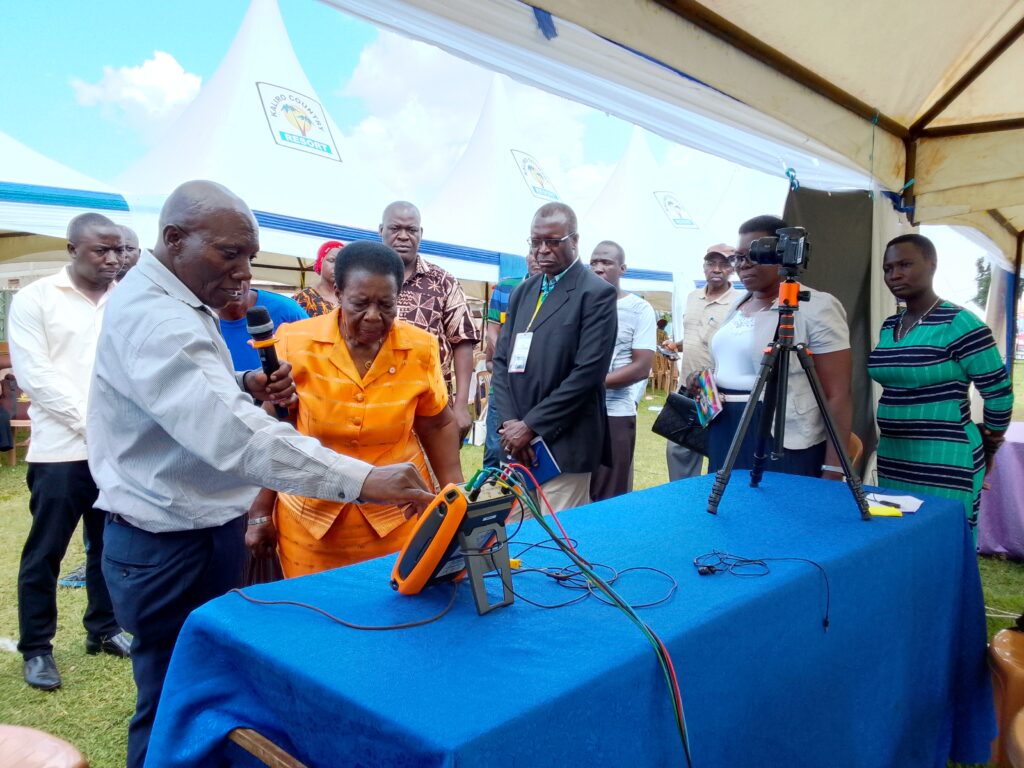
Addressing journalists at Kaliro Resort Hotel, the leaders highlighted the expo’s expanded focus on solar technologies, community health, and strategic partnerships, calling on residents from Kaliro and neighbouring districts to attend the four-day event scheduled for 12th–15th December at the Green Belt and Kaliro Country Resort.

This year’s theme is “Taking affordable, reliable & clean energy to more people and places using strategic partnerships,” The expo  also marks a decade of advancing renewable energy solutions, innovation, and the Busoga Yaiffe HEAT Strategy — Health, Education, Agriculture and Trade.

Solar and Clean Energy Technologies Take Centre Stage

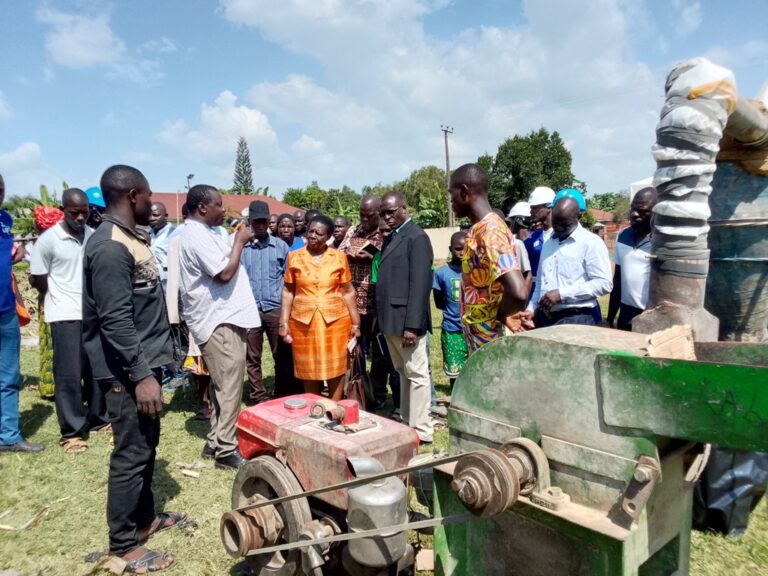
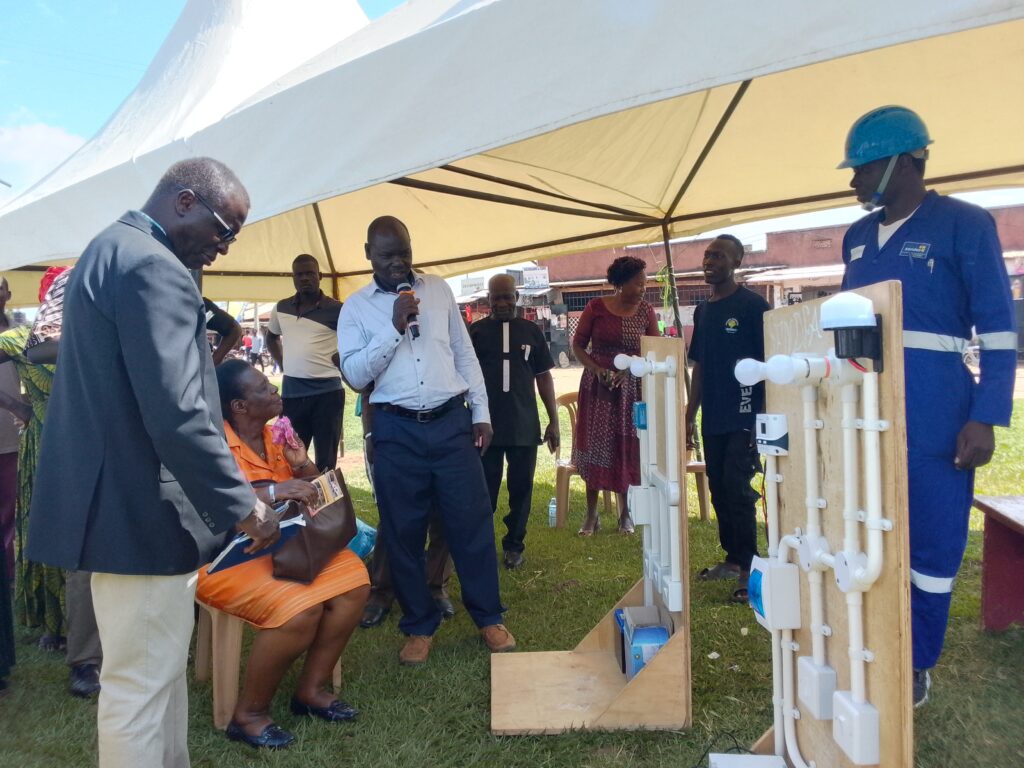
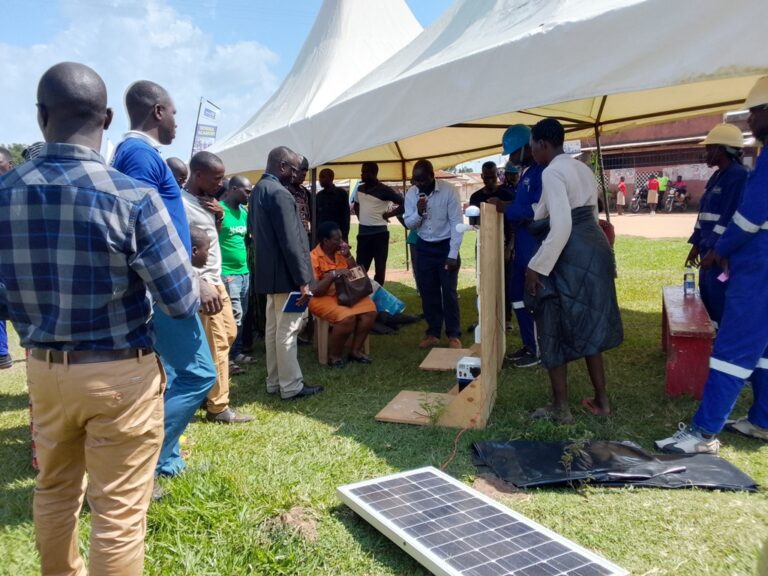
Dr. Mbalyohere said this year’s event will feature some of the latest solar and renewable technologies, with exhibitors displaying solutions tailored for households, businesses, and farmers.

“People coming to the expo will be able to see and buy some of the latest solar and other renewable technologies that will be exhibited, including solar irrigation systems that are good for farmers,” he said. “When you have an irrigation system, you are able to farm throughout the year without waiting for the rains.”

He emphasized that access to modern, affordable energy is central to transforming livelihoods in Busoga, especially as climate change continues to disrupt traditional farming patterns.

Free Health Camp to Serve Communities

Beyond energy innovations, Busoga Yaiffe has lined up a comprehensive health camp to offer free services throughout the expo period.

“Health officers are going to be available throughout the time we are here. Doctors will carry out tests and offer medication when possible — free of charge,” Dr. Mbalyohere announced.

The medical team will include dentists, opticians, general physicians and cancer screening specialists, with a special focus on prostate cancer awareness for men.

Conference on Strategic Partnerships

A two-day conference will run from Friday to Saturday, bringing together experts, policymakers, innovators and development partners to discuss the expo’s theme: “Taking affordable, reliable and clean energy to more people and places using strategic partnerships.”

Dr. Mbalyohere noted that the sessions will deepen conversations on long-term solutions to energy poverty and community empowerment.

Bulamogi Chiefdom Reaffirms Support

Speaking at the briefing, Deputy Katukiro Eric Kihuluka said the Bulamogi Chiefdom remains firmly committed to the expo’s mission and the empowerment of local communities.

“We want to see every member of the chiefdom with money in their pocket,” he said. “To achieve this, the information people need is found at events like Olwekobaano. Knowledge is fire — you get it from a neighbour.”

He encouraged residents of Kaliro and neighbouring districts to attend the event, saying the expo has become a trusted platform for exposure, skills development and practical learning.

A Decade of Impact

As the Olwekobaano Energy Expo marks ten years, organisers say the event has evolved into a regional model for promoting clean energy, innovation and grassroots development. Thousands are expected to attend this year’s edition, including students, farmers, business owners, innovators, civil society organisations and government agencies.

The expo is organised by Busoga Yaiffe, a community-based development initiative promoting sustainable solutions across the HEAT sectors.

Looking Ahead

With mounting interest and a growing appreciation for renewable energy, the 2025 edition is expected to set new benchmarks in clean technology adoption, community health outreach and knowledge-sharing.

Kaliro officials say the district is ready to host and build on the expo’s legacy as one of the region’s biggest annual development events.

LIFE ENDING: Tragic accident on Iganga-Bugiri highway claims 10 lives, leaves 3 injured

0

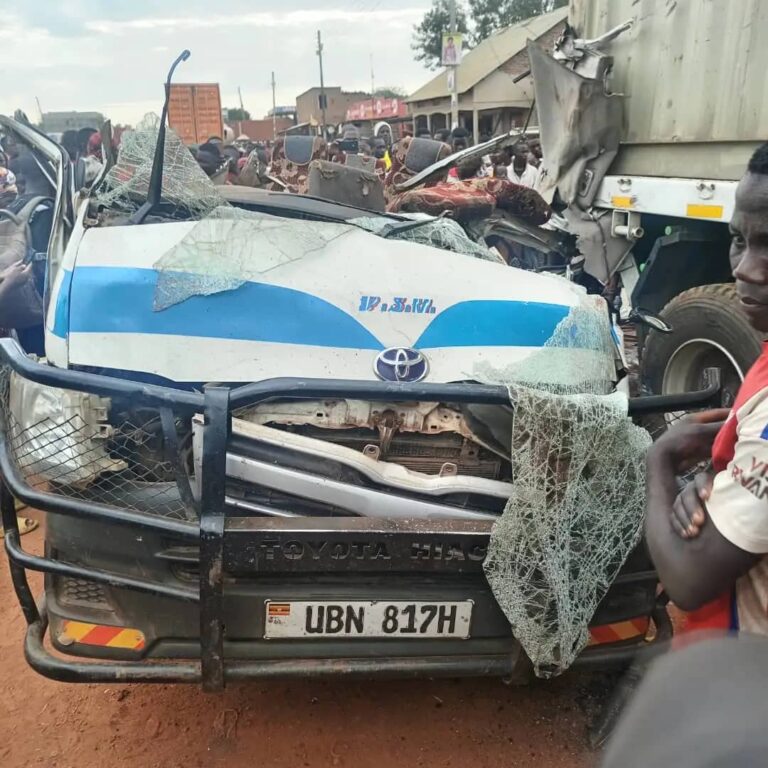
A devastating accident occurred on the Iganga-Bugiri Highway this morning, resulting in the loss of at least 10 lives and leaving three others injured. The accident involved a taxi, registration number UBN 817H, which was traveling from Busia to Iganga when it lost control and crashed into a stationary trailer, registration number UA 647BA, at Busowa in Bugiri District.

According to eyewitnesses, the accident occurred at around 7 am in Busowa Town Council. The taxi, a Toyota Hiace, was attempting to overtake another vehicle when it collided with the stationary trailer. Preliminary investigations by the Directorate of Traffic and Road Safety suggest that the taxi driver was forced to react abruptly when another vehicle approached from the opposite direction, causing him to lose control of the vehicle.

SP Michael Kananura, the spokesperson for the Directorate of Traffic and Road Safety, explained that the driver’s attempt to avoid a head-on collision ultimately led to the tragic accident. “In an effort to avoid a head-on collision, the driver swerved to the left, lost control, and rammed into a stationary trailer,” he said.

The accident claimed the life of the taxi driver, along with at least nine other passengers. Three other individuals were injured in the crash and are currently receiving medical attention. The identities of the victims have not been released pending notification of their families.

The Directorate of Traffic and Road Safety has launched an investigation into the accident to determine the full circumstances surrounding the crash. SP Kananura noted that the investigation is ongoing and that more information will be released as it becomes available.

The accident serves as a stark reminder of the importance of road safety and the need for caution when driving, particularly when overtaking other vehicles. The Iganga-Bugiri Highway has been the scene of several accidents in recent months, highlighting the need for increased vigilance and adherence to traffic regulations to prevent such tragedies from occurring in the future.

UNITY AND SANITY: Kamuli LCV NRM contestants unite behind flag bearer

0

In a surprising turn of events, contestants in the Kamuli LCV race have put aside their rivalry and rallied behind the NRM flag bearer, Kaloli Dhizaala. This move is seen as a significant step towards unity and sanity in the district’s leadership.

Dhizaala, who has contested for the same seat three times, expressed his gratitude and humility at the development, stating that it is a “Christmas gift to the people of Kamuli.” He assured the public that he will adopt the best-valued manifestos from his fellow contestants and work together with them to serve the people of Kamuli.

The former contestants, including Sarah Auma, Thomas Ikanga, Emmanuel Songola, and David Kamaali, stated that they are rallying behind Dhizaala not only because he is the party flag bearer but also because they trust his capacity to carry out their manifestos and work together with them despite the competition.

“We have the same ideology, interests, and purpose, and we win together in the interest of the party,” said Sarah Auma, a former LCV Vice Chairperson. “We unconditionally rally behind you and hand you our manifestos, support, and loyalty.”

Daudi Kamaali, who has worked closely with Dhizaala, praised his integrity, principles, and passion to serve the people and bridge the gaps created by camps. “We have the same principles to restore dignity, integrity, and public confidence and trust in leadership,” Kamaali said.

Thomas Ikanga, a former Public Accountant, clarified that they have decided to rally behind Dhizaala because he embodies unity and is a pace-setter. “He is open for consultation, allows us to harness our resources and potentials to serve at appropriate capacities, best for Kamuli to rise and shine again,” Ikanga said.

Tito Ikanga, addressing the district sub-county chairmen, councilors, and opinion leaders, cautioned them against civil servants and political brokers who have plunged the district into chaos. “We complain of health workers extorting money from patients, but forget it is because they bought the jobs expensively,” Ikanga said. “The clique of civil servants who have colluded with MPs, contractors, and brokers to plunge our district down are all out fronting candidates loyal to them against public will.”

Charles Magaya, the Nabwigulu sub-county NRM Chairperson, urged Kamuli voters to put aside political camps and bridge the gaps to overhaul the rot that cripples service delivery. “Everybody is aware Kaloli is Kadaga’s candidate, but he has reached out to all camps, including some of us labeled Team Anita Mulamu,” Magaya said. “Like our Mzee Museveni, he also calls in even opposition voters, all because in the end, when elected, he will serve Kamuli people, not only NRM.”

Meanwhile, Robert Kalulu Owogutwe and Mubarak Ndhegwe, both from Buzaaya county, are still contesting for the district seat as independents. Kalulu is backed by a string of civil servants and power brokers, while Ndhegwe has a significant Muslim following in his Buzaaya county.

The development is seen as a significant boost to Dhizaala’s campaign, and it remains to be seen how the independent candidates will respond to the unity among the NRM contestants. As the election season heats up, the people of Kamuli will be watching closely to see how the candidates will work together to bring about positive change in the district.

CLIMATE ACTION: How Olwekobaano Energy Expo has positioned Kaliro as a model district for renewable energy solutions

0

From December 12‑15, the Green Belt and Kaliro Country Resort will host the 10th Olwekobaano Energy Expo and Conference, a four‑day showcase that has become the catalyst for transforming tKaliro district into Eastern Uganda’s “clean‑energy hub.”

The theme—“Taking affordable, reliable & clean energy to more people and places using strategic partnerships”—captures a decade‑long journey in which solar panels, biogas, electric mobility and regenerative agriculture have moved from luxury concepts to everyday necessities for households, farms, schools and businesses across the district.

A Decade of Momentum

When the inaugural expo arrived in Kaliro, most residents recalled seeing solar lanterns and bio‑energy kits only on photographs. Today, the district’s health centres illuminate maternity wards with solar power, farmers irrigate year‑round using photovoltaic pumps, and schools run on clean‑energy micro‑grids.

“The expo turned perception into practice,” says Dr. Charles Mbalyohere, President of Busoga Yaiffe and chief organizer of the Olwekobaano Energy Expo. “Kaliro has become a learning centre where policymakers, innovators and rural households converge to explore what clean energy can achieve. Our consistency, community engagement and openness to innovation have made the district the ideal home for this event.”

Local Government Backs the Vision

Kaliro’s leadership has long championed the expo’s objectives. Assistant Resident District Commissioner Kiduma Rogers praised the event’s impact on the local economy, agriculture and environmental stewardship.

“The expo is reshaping mind‑sets and equipping our communities with the skills needed for productive land use. I encourage every attendee to apply what they learn so we can boost household incomes and strengthen our region,” Kiduma said during a recent interview with Busoga Times.

Grassroots Stories of Change

For many residents, the expo has rewritten personal narratives.

“Before the expo, Kaliro was rarely mentioned in conversations about technology or innovation. Now we lead in solar home systems, improved cookstoves and irrigation solutions,” says Sam Jumbwike, a businessman who has watched the district’s reputation grow.

Nawaikoke farmer John Wako attributes a tripling of his vegetable income to a solar‑powered irrigation pump he purchased at the 2024 expo. “I can grow tomatoes and leafy greens all year, even during the dry season. The market has expanded and so has my family’s wellbeing,” Wako explained.

In the town of Buyinda, mother of three, Grace Namukose, credits a solar lighting kit from the expo with giving her children a safe, well‑lit space to study after dark, while eliminating hazardous kerosene fumes.

Health Services Light Up with Solar

A hallmark of each edition is a free health camp, and the 2025 event is set to serve at least 1,500 patients. Kaliro District Health Educator Julius Kiduka attributes improved health‑service delivery to the expo’s solar initiatives.

“Our maternity wards now run on reliable solar power, refrigeration for vaccines is uninterrupted, and laboratory equipment operates without diesel generators. These upgrades began with contacts made at the Olwekobaano expos,” he said.

Kiduka adds that the upcoming health camp will provide diagnostics, maternal care and health education under one roof, urging residents from Kaliro and neighboring districts to attend in large numbers.

Environmental Gains Take Root

The district’s Natural Resources Officer, Paul Diogo, highlighted measurable ecological benefits.

“Adoption of improved cookstoves and biogas digesters has reduced pressure on our forests. Solar irrigation replaces diesel pumps, cutting emissions and fuel costs. Clean energy is now seen not just as technology but as a pathway to environmental protection,” Diogo stated.

Business and Innovation Thrive

Local entrepreneurs report a reshaped commercial landscape. “Our shop used to stock only basic radios and phones. Now we sell solar lanterns, smart chargers, water‑pumps and energy‑efficient appliances—a market created by the expo,” says Kaliro Town trader Michael Waiswa.

A nearby restaurant has switched to solar lighting, security cameras and refrigeration, resulting in lower operating costs and higher customer satisfaction.

Young innovators also find Kaliro an ideal testbed. “The community here is eager to try new technologies. We use the expo to pilot solar‑powered irrigation prototypes, and the feedback is honest and invaluable,” says Peter Mukose, who showcases her water‑purification system each year.

Partnerships Fuel the Future

Each edition of the expo draws NGOs, solar firms, universities and government agencies into collaborative agreements. “We’ve forged new partnerships with NGOs, solar manufacturers, research institutions and the Ministry of Energy. These collaborations have spurred investment, skills training and community awareness,” Mbalyohere notes.

Youth groups trained in solar installation now run their own service cooperatives, extending clean‑energy solutions to remote villages. “We were inspired by past expos, and now we’re the ones providing solar setups across the district,” says Solar Youth Initiative coordinator David Okwera.

Looking Ahead

As the countdown to the 10th Olwekobaano Energy Expo ticks down, organizers anticipate over 200 exhibitors, several workshop sessions and a roster of regional policymakers poised to witness Kaliro’s transformation firsthand.

“Kaliro is proof that when communities are empowered, informed and connected to opportunity, they become leaders in their own transformation,” Dr. Mbalyohere affirmed.

The expo’s final day will culminate in a public forum where district officials, expo partners and beneficiaries will chart a roadmap for scaling renewable‑energy adoption beyond Kaliro’s borders.

NOT GOING DOWN WITHOUT A FIGHT: National Unity Platform vows to rag Electoral Commission to court over Walukagga disqualification

0

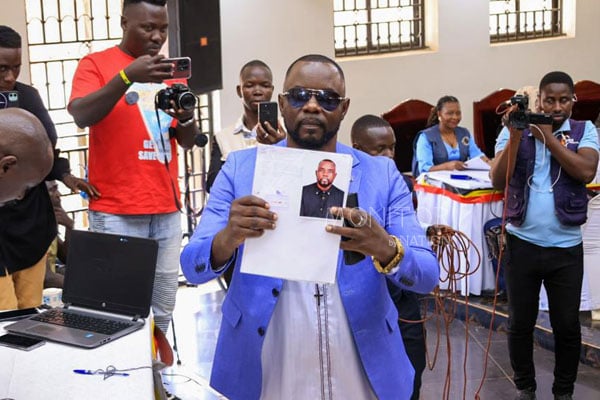
The National Unity Platform (NUP) has announced plans to challenge the Electoral Commission (EC) in the High Court following the disqualification of its Busiro East parliamentary candidate, singer-turned-politician Mathias Walukagga.

Walukagga was removed from the 2026 race after the EC ruled that he did not meet the required academic qualifications, a decision that has sparked controversy within the opposition party and among supporters in Busiro East.

NUP Secretary General David Lewis Rubongoya condemned the disqualification, accusing the Commission of deliberately targeting opposition candidates.

“Our legal team is handling the matter. This is not just about Walukagga; it’s part of a wider pattern targeting NUP candidates,” Rubongoya said.

He further raised concerns about the conduct of security forces, alleging that police and UPDF personnel have harassed NUP supporters during campaign activities.

“We are witnessing our supporters being arrested, and in some cases, beaten during campaign events. This is clearly aimed at weakening our movement,” he added.

The decision has also triggered reactions from voters in Busiro East. Maria Goretti Namusisi, a Makerere University student and NUP supporter, expressed disappointment with the process.

“If it were allowed to lend someone academic papers just to qualify, I would do it. We don’t want Ssegona back. He speaks for people’s issues but never brings them solutions,” she said, referring to incumbent MP Medard Lubega Ssegona, who is reportedly running as an independent after falling out with his former party.

Walukagga’s disqualification is expected to reshape Busiro East’s political landscape, with uncertainty now surrounding who will carry the NUP flag in the upcoming elections.

NUP’s legal appeal is expected to be filed in the coming days. The case is likely to test not only the EC’s application of academic qualification standards but also the broader fairness of the 2026 pre-election environment.

SHARING IS CARING: Buyende youth and young mothers receive sh105 million boost to combat poverty, social vices

0

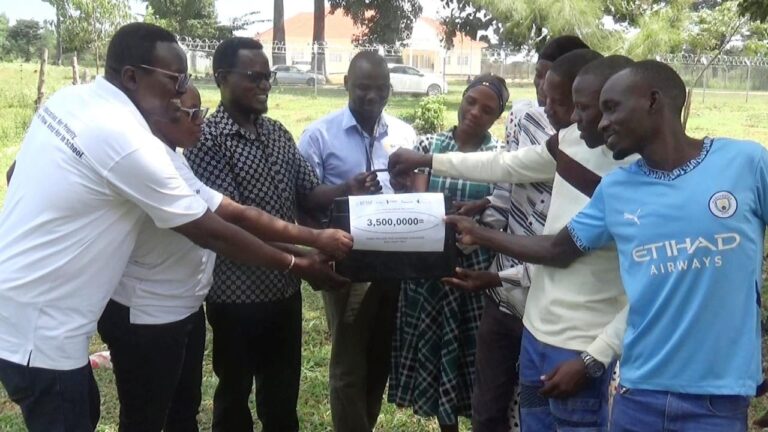
Over 30 youth groups and networks of young mothers in Buyende District have received a Sh105 million financial boost from Right to Play Uganda, in a bid to strengthen their savings and credit associations and foster economic empowerment.

The handover ceremony, held yesterday at Buyende District headquarters, marked a significant milestone in efforts to combat rising social vices and promote sustainable livelihoods among vulnerable youth and adolescent mothers.

The funding, facilitated under the SHARE Project and supported by Global Affairs Canada, is designed to promote a saving culture, improve financial literacy, and redirect youth energy toward productive ventures. Brenda Aber, SHARE Project Manager, handed over the funds and urged recipients to use the money wisely to transform their lives and communities.

“We are happy to contribute to youth economic empowerment in response to their request during community mentorship activities,” Aber said. “This support should boost your livelihoods and enable you to access sexual and reproductive health services and information—critical tools for building a brighter future.”

Buyende District has long struggled with high rates of child marriage, defilement, and school dropouts—challenges that have plagued the region for years. However, district leaders say targeted interventions by development partners are beginning to turn the tide.

Michael Kanaku, the Buyende District Chairperson (LCV), acknowledged the district’s grim statistics but expressed optimism, citing ongoing community dialogues and youth-focused programs. “Unfortunately, Buyende tops the list in defilement, child marriage, and school dropouts. But we are slowly coming out of these vices through community talks, outreach programs, and partnerships with organizations like Right to Play, SHARE, and Plan International,” Kanaku said.

He emphasized that empowering youth economically gives them hope and alternatives to crime and despair. “When youth groups are supported, it brings mindset change and life-changing opportunities. This not only reduces social vices but also complements government poverty alleviation programs,” Kanaku added.

Titus Tumusiime, Country Director of Right to Play Uganda, stressed the importance of equipping young people with financial literacy, business skills, and life-saving knowledge.

“When youth and young mothers are supported to meet their basic needs, re-enroll in school, and access correct health information, they gain the confidence to make positive life decisions,” Tumusiime said. “We want them to stop being manipulated and instead invest their youthful energy in productive ventures.”

The intervention is already yielding results. Brenda Kitimbo, leader of the Mirembe Youth Group—a collective of child mothers and out-of-school adolescent girls—shared how the program has completely transformed lives.

“We were once subjects of public ridicule and exploitation,” Kitimbo revealed. “But with counselling, business training, and financial support, many young mothers have regained hope. Most are now back in school, supporting their children, and making informed choices.”

Another success story emerged from Bugaya Sub-county, where Dison Muzaaya, a village champion in Ngole Community, recounted the journey of a youth group formed after fishermen were evicted from Lake Kyoga.

“At first, many youth turned to crime—snatching bags, smoking weed, gambling,” Muzaaya said. “But one day, a few of us attended a workshop to get free food… and ended up starting a savings group with just Sh2,000 each week.”

Three years later, the group has accumulated Sh10 million in savings. With an additional Sh3.5 million from Right to Play, they plan to venture into modern goat and local poultry farming. “This is our way out of poverty,” Muzaaya declared.

While celebrating the progress, Kitimbo raised concerns about limited access to government empowerment programs. “We appreciate government initiatives like Emyooga, Youth Livelihood Enterprise Funds, and the Parish Development Model (PDM), but the requirements are too stringent for groups like ours,” she said. “Many young mothers and out-of-school girls are being excluded. We urge authorities to adapt these programs to be more inclusive.”

The LCV echoed this call, urging youth to leverage existing national programs to diversify income and become self-reliant. “Tap into Emyooga, YLEF, and PDM,” Kanaku advised. “Stay productively engaged, create jobs, and contribute to national development instead of remaining idle and hopeless.”

As Buyende continues its journey from despair to resilience, stakeholders agree that sustained investment in youth and young mothers is key to breaking cycles of poverty, violence, and exclusion. With renewed hope, skills, and capital, the next generation is stepping forward—not as victims, but as changemakers.

COMMON AMBITION: How 10th Olwekobaano Energy Expo and Conference strategic partnerships are driving Busoga’s energy transition

0

As Busoga prepares to host the 10th Olwekobaano Energy Expo 2025, scheduled for 12th–15th December at the Green Belt in Kaliro and the Kaliro Country Resort, one theme stands out clearly—strategic partnerships are powering the region’s shift toward clean, reliable, and community-centred energy solutions.

From solar innovators to educational institutions, development agencies, and district authorities, the network behind the expo reflects a united drive to transform Busoga’s energy landscape.

Dr. Charles Mbalyohere, President of Busoga Yaiffe, the organisers of the expo, said the collaboration among local and international partners is the foundation of the event’s success and the region’s long-term resilience.

“Energy transformation cannot be achieved by one actor alone. What we see at the Olwekobaano Expo is a community of partners—each contributing expertise, technology, and resources. Together, we are accelerating Busoga’s move toward clean and affordable energy for every household,” Dr. Mbalyohere explained.

The 10th Olwekobaano Energy Expo 2025 has attracted partners like the Kaliro District Local Government, World Vision, Centenary Bank, the Office of the Senior Presidential Advisor on Busoga/Poverty Alleviation, Kaliro Country Resort, Makerere University, Obwazibondo Bwa Bulamogi, the Uganda Solar Energy Association, Open University, and SENDEA, among others.

Energy Industry Leaders Amplify Impact

Partners such as the Uganda Solar Energy Association (USEA) continue to play a critical role in pushing renewable solutions deeper into rural communities. A USEA official underscored the importance of the expo as a platform for meaningful engagement.

“The Olwekobaano Expo allows us to interact directly with end-users and build awareness about safe, quality, and affordable solar technologies. Strategic partnerships like these are essential to scaling up renewable energy access across the country,” the official noted.

SENDEA, a network supporting energy enterprises across Africa, emphasized that collaboration is the engine of innovation.

“By working with Busoga Yaiffe and other partners, we amplify the reach of clean energy entrepreneurs and make technologies more accessible to rural communities. This expo is a practical example of partnership in action,” a SENDEA representative said.

Education Institutions Strengthening Skills and Energy Literacy

The National Teachers College (NTC) Kaliro, one of the expo’s strategic partners, highlighted the importance of integrating energy education into local institutions.

“As a training institution, we see the need to equip young people with skills in renewable energy, climate resilience, and innovation. Our partnership with the expo bridges academic learning with real-world solutions,” an NTC Kaliro official said.

The Open University, which promotes global learning and research, echoed this value. “We support the Olwekobaano Expo because it strengthens knowledge exchange between local communities and global actors. Energy transition depends on learning, innovation, and shared commitment,” a representative from The Open University remarked.

World Vision, a long-standing community development partner, expressed optimism about the role of strategic alliances in improving welfare.

“Access to clean energy improves education, health, and household income. Our collaboration with the expo helps ensure that the most vulnerable communities benefit from technologies that change lives,” a World Vision official said.

District Leadership Welcomes the Power of Partnerships

Kiduma Rogers, the Assistant Resident District Commissioner (RDC) of Kaliro District, the host district for this year’s expo, applauded the strength of the partnerships driving the event.

“Kaliro is honored to host an expo that brings together such a diverse team of partners. These collaborations are the reason Busoga is steadily advancing in clean energy adoption. This is the future we want for our people,” the ARDC said.

“Busoga Yaiffe and the Olwekobaano Expo & Conference continue to advance good farming practices and drive development across Busoga. This expo is transforming mindsets and equipping our communities with the skills needed for proper and productive land use. I encourage everyone attending to put into practice what they see and learn so we can improve our household incomes and strengthen our region.” Kiduma said. 

Exhibitors Showcase Innovation Born of Collaboration

Exhibitors, ranging from solar irrigation providers to clean cooking innovators and electric mobility startups, are benefiting directly from the collaborative environment created by the expo.

A solar irrigation exhibitor noted that working alongside partners like USEA and SENDEA helps them reach farmers who need their technologies the most. The expo opens doors that would otherwise be unreachable, he said.

A clean cooking exhibitor added, “Partnerships make it possible for small innovators like us to scale. At the expo, we meet communities, financiers, and policymakers all in one place. That is priceless.”

A Region United for a Clean Energy Future

With each edition, the Olwekobaano Energy Expo demonstrates that Busoga’s energy transition is not driven by isolated efforts but by a powerful ecosystem of strategic partnerships.

From grassroots innovators to global institutions, every partner contributes a vital piece to the region’s clean energy puzzle.

As Dr. Mbalyohere summarised: “Partnerships are the fuel of progress. When we join hands, Busoga moves forward—stronger, cleaner, and more empowered.”

The 2025 Expo is set to showcase not just technologies but the collaborative spirit shaping a sustainable future for the region.

MASTULA NAMATOVU: Kamuli Municipality NRM flag bearer prioritises talent development

0

By Ali lukomo

The Kamuli Municipality political contest is gaining momentum, with National Resistance Movement (NRM) flag bearer Mastula Namatovu placing talent development at the centre of her campaign message.

Her commitment was on full display during the recent “Kim Nana For You” concert held at Country Club, headlined by rising Busoga artist Muyobo Dauda, popularly known as Kim Nana. The event, which attracted large numbers of youth, was fully financed by Hon. Matsuula and her campaign team as a demonstration of their dedication to nurturing young talent through her initiative, Zharafa Music.

Speaking at the concert, Mastula, also known by her slogan Ekidhuuma Ekito, said that although she is actively campaigning, she believes talent development is a key pathway to empowering young people and building a productive community.

She highlighted ongoing activities such as the Mozey Christmas Cup, a sports event organised by her team, as examples of platforms where young people are being supported to showcase and grow their abilities.

Kim Nana, one of Busoga’s fast-rising artists with the national hit song “Osina”, credited Zharafa Music for helping open new opportunities for him and other musicians from Busoga North. The agency aims to elevate more young artists into Uganda’s entertainment industry.

Mastula pledged continued support for all forms of talent, saying she will prioritise youth initiatives that add value to society. She also encouraged young people to form SACCOs to enable her office and other stakeholders to support them more effectively through organised groups.

Electoral Commission condemns violence at Robert Kyagulanyi’s rally in Gulu; calls for investigations and restraint

0

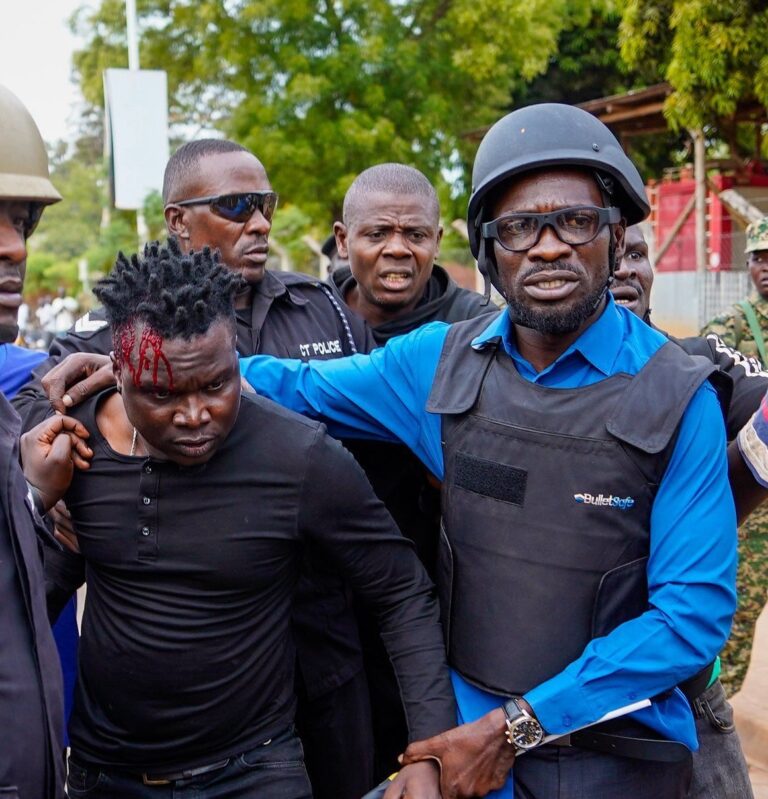
The Electoral Commission has strongly condemned the violent clashes that erupted on Saturday during presidential candidate Robert Kyagulanyi Ssentamu’s campaign rally in Gulu.

In a statement issued on Sunday, Commission Chairperson Justice Simon Byabakama described the scenes as “unfortunate and uncalled for,” noting that the incident occurred barely days after a joint meeting between agents of all presidential candidates and the Uganda Police Force aimed at promoting peaceful campaigns.

According to the Commission, all stakeholders at the earlier meeting had committed to following the law and ensuring a peaceful campaign environment across the country. The violence in Gulu, therefore, stands in direct contradiction to those commitments.

Justice Byabakama emphasized that every duly nominated presidential candidate is legally permitted to campaign in any part of Uganda, provided they comply with the established laws and guidelines. He urged all parties involved in the electoral process to uphold peace, restraint, and respect for democratic principles.

“If there is any disagreement on the campaign trail, the Commission appeals for dialogue, not violence and confrontation,” he said.

The Electoral Commission has called on the Uganda Police Force to investigate the circumstances that led to the confrontation and to ensure that those responsible face the full force of the law. The Commission also urged law enforcement agencies to apply proportionate and humane methods when enforcing electoral guidelines.

The incident in Gulu adds to growing concerns about tensions ahead of the upcoming elections. The Commission reiterated its commitment to delivering a free, fair, and credible electoral process and urged the public to reject violence in all its forms.

DEMOCRACY: Africa’s poor quality of elections continues – the case of Uganda

0

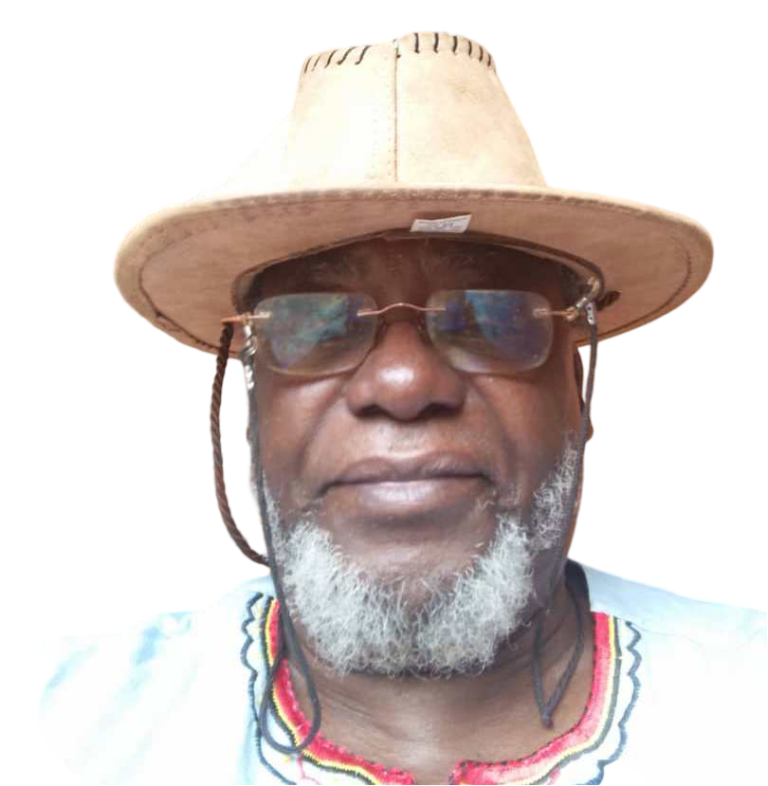
By Oweyegha-Afunaduula

As a public intellectual of more than 30 years who was also exposed to so many Nile challenges, problems and issues as the first Ugandan, and first East African, to lead the regional non-governmental organisation for 12 countries in the Nile Basin called Nile Basin Discourse, there is nothing of public interest that I cannot address with an independent and critical mind.

If I don’t, there aren’t many public intellectuals that can because the space for public intellectuals in Uganda has been invaded by nincompoops and ignoramuses of the status quo; most public intellectuals have been forced to withdraw, and their space is now burdened by fear and silence.

I have persistently and consistently tried to keep public intellectualism alive and kicking from my retirement home at Nawaka in Luuka, but it has not been easy because of a combination of ill-health, poverty and lack of necessary facilities.

However, when you are a public intellectual in retirement, you are not easily noticed by those who would be willing to support your work of clarifying and articulating issues for the public. You go it alone. It is best if you are fearless, courageous and ready to sacrifice a bit of your quality time to educate the public and its leaders.

In this article, I want to address the issue of the quality of elections in Africa with particular reference to Uganda. I have chosen Uganda because since President Tibuhaburwa Museveni offered himself for electoral elections after dallying with the idea of a one-party state for 10 years since capturing the instruments of power through the barrel of the gun in 1986, the quality of elections in the country has been plummeting.

This has been largely because of the choice of the regime in power to use the army and police to disadvantage the Opposition in the name of peace and security. Perhaps the emergence of Kyagulanyi Ssentamu, alias Bobi Wine, as a new political force in a country where the incumbent president has been able to create his own opposition at public expense has overstretched the regime in power, causing it to apply high-handed military and police methods to contain him. Unfortunately, this has instead thrown into question the seriousness, meaningfulness and effectiveness of the democratisation process in Uganda.

First, what is meant by “quality” and the phrase “quality of elections”? ‘Quality’ means many things in one: standard, grade, class, calibre or value. So when applied to elections, it may mean the standard, grade, class, calibre or value of the elections. If the standard, grade, class, calibre or value of the elections is high, then this quality is high.

This implies that we can actually measure the quality of the elections. We can do so by targeting particular stages of the electoral process and the factor affecting the quality of the elections.

When the colonial rulers of Africa started to leave the continent, they seem to have resolved together that power should be sought through multiparty elections. However, in most African countries, both multipartism and the electoral processes have been abused by incumbent politicians who want to overstay in power until death makes them part with the topmost public offices.

In Uganda, the British colonial rulers conducted the first multi-party elections in March 1961, which brought the Democratic Party’s Benedicto Kiwanuka into power as the first Chief Minister of Uganda. However, he was not really given the instruments of power until they were about to conduct another general election in April 1962.

Those elections brought Uganda People’s Congress’s Apollo Milton Obote into power, but he had to strike a political alliance with the Kabaka Yekka party to secure a majority over the Democratic Party to qualify as the first Prime Minister of Uganda.

He had to wait until 1962 to get the instruments of power from the British Colonial government, although the Queen of England, Elizabeth, continued to be the Head of State until 9th October 1963, when Sir Edward Muteesa II of the Kingdom of Buganda became the first President of Uganda and Sir William Wilberforce Kadhumbula Gabula Nadiope, of the Territory of Busoga, became the first Vice-President of Uganda.

Uganda did not hold elections until 1980, after the overthrow of Idi Amin, the Life President of Uganda. Those elections, organised by the Uganda National Liberation Front (UNLF), returned Apollo Milton Obote as President of Uganda but were, among others, dismissed as rigged by the current President of Uganda, Tibuhaburwa Museveni.

Eventually President Tibuhaburwa Museveni captured the instruments of power in 1986 after a five-year guerilla war in the Luwero Triangle of Uganda. He ruled without interference from political parties until 1986 after claiming that there was a gentleman’s agreement between the political parties and him not to interfere with his NRM/A for 4 years, after which he would organise multiparty elections.

He never did. However, he has been consistent in organising what appears to be multiparty elections every five years since 1996, not to usher in change in leadership and governance but to ensure power retention and legitimacy for his one-man rule, particularly towards the outside world.

The next elections are slated for January 25, 2026.  No one expects him to lose the presidential elections and hand over to his greatest challenger of all time, Kyagulanyi Ssentamu, alias Bobi Wine.

In 2024, virtually all the incumbent rulers in Africa reclaimed their posts through low-quality elections. Ugandans are preparing themselves for their 2026 presidential, parliamentary and council elections, but most of the factors that influenced the quality of elections last year in most countries are already exerting their influence, along with others specific to Uganda, on the electoral process.

We can mention many factors that potentially or actually interact to consistently lower the quality of the electoral process and promise to influence the quality of the coming elections of Uganda on 15 January 2026 negatively.

* Presidential Partisanship and Incumbency

*Presidentialism

* Greed and selfishness for power

* Corruption

* Pro-status quo stance of the Uganda Electoral Commission

* Fear and Silence

* Intellectual death on university campuses and in society

* Participation of refugees.

* Political manipulation of the Opposition through buying their consciences

* Buying consciences of religious leaders

* Lack of respect for the law

* Poor planning of electoral activities

* Harassment, torture, and imprisonment of Opposition members

* The threat of the UPDF Act and the Military Court towards civilian voters and candidates

* Impartial judiciary

* Poor or lack of electoral and civic education

* Overfinancing of the Electoral Process

* Suspect professionalism of those managing elections

* Biometric voting weaknesses capitalised upon to favour some candidates

* Inadequate equipment and materials

* Suspect tallying and publishing of the results.

* Slow and poor management of electoral disputes

* Overmilitarisation of peace and security concerns

* Lack of public debates during the electoral process

*Interference in the electoral process by Resident District Commissioners

* Inclusion of 16- and 16-year-old children in the NRM membership record and in its crowds.

* Manipulation of the voters register

* Attitude of entitlement of the Luwero Triangle combatants

* Manipulation of the national budget to avail money for political buying

* Apartheid-like treatment of candidates by the National Electoral Commission

* Personalisation of the electoral process through RDCs and security organs

*  Using polls to lie about the popularity of the ruling party as a strategy of rigging before the elections

I have no time and space to explicate each of these factors, or the relationship between them, in influencing the quality of elections in Uganda. However, it is true that voters’ confidence and trust of the electoral process and its managers continue to plummet meteorically.

This is dangerous since the old and the elderly are gradually leaving the sociopolitical stage to the young people with very mixed attitudes on how to preserve a culture of democracy. Many take the words of President Tibuhaburwa Museveni in 1996, in Seeta Mukono, that a mere piece of paper cannot remove him from power, and that he is like a cotter pin of a bicycle, which goes in by knocking and comes out by knocking, to mean that he is irremovable and indispensable.

They have not developed the proper political attitudes that are necessary for building a democratic culture towards the 22nd century. They see the old and elderly in politics as greedy, selfish and dishonest people using elections to hoodwink the citizens and the world that they are committed to democracy and democratic principles when, in fact, they are the number one enemy of meaningful democratisation of Uganda.

Continentally, falling confidence in the electoral process has become universal. The Institute for Security Studies, in its article “Five Worrying Signs of Africa’s Poor Election Quality” of 7th May 2024, stated that the number of citizens lacking confidence in the national electoral commissions rose from 41% to 55% between 2011/13 and 2021/2023.

Maram Mahdi (2024) said that when leaders exploit loopholes in the electoral process to extend their tenures, they undermine the bedrock of democracy and the rule of law. In the past they have undertaken constitutional manipulations to ensure their hold onto power is uninterrupted.

In Uganda, assurances to Ugandans by the combatants of Luwero that the Uganda Constitution would stand the test of time were soon replaced by alterations of certain articles to ensure that President Tibuhaburwa Museveni rules like a modern-day monarch and without threat of removal by the voters.

The article which provided for two terms and another which limited a president to 75 years were all removed by the Parliament of Uganda, which acts like the legislative arm of the ruling party – NRM. Besides, the incumbent does not step aside from the presidential post but continues to do everything a president does, including appointments, while he also campaigns for re-election.

He can use his power as Commander-in-Chief to harass and decelerate the progress of his challengers, while for him he continues unmolested by the security organs. In the end the result of the elections is those he desires to stick to power. It does not matter whether or not his regime has honoured its promises to the people. No one should challenge his power through the ballot, which he said is a mere piece of paper. This way he consistently and persistently frustrates the citizens who have for decades yearned and craved for change.

In conclusion, Uganda’s elections are not about democracy or people’s hope for change but about President Tibuhaburwa Museveni’s long-term thinking, belief and conviction that no one else should rule Uganda while he lives. To him power is a supreme gain that must be protected at all costs. This is one reason why Uganda’s elections can never be expected to make any gains in quality.

They are about President Tibuhaburwa Museveni’s gains in sovereignty for him and a small group with exogenous roots at the expense of Uganda’ sovereignty. Thus Uganda’s poor quality of elections will persist so long as President Tibuhaburwa Museveni continues to be central to them.

They are and will continue to be what they are – poor – to meet the desires of the President at the expense of Ugandans. After January 15, 2026, he will pursue his gains in power more vigorously and do unimaginable things to firm his patronage chain and those other relationships that have helped him to exclude others from power and resources for the benefit of a few. These are theories that need to be tested by research.

For God and My Country.

Prof. Oweyegha-Afunaduula

Center for Critical Thinking and Alternative Analysis