Thursday, May 21, 2026
Home Blog Page 14

CYCLING: MTN Busoga masaza cycling championship returns

0

The MTN Busoga Masaza Cycling Championship 2025 is set to return with renewed energy and a powerful social message, using sport as a platform to inspire men to take an active role in ending teenage pregnancies. Riding under the theme “Men are the pillars in stopping teenage pregnancies,” the championship’s preliminary races will kick off on Saturday, 20th, in Bunha Chiefdom.

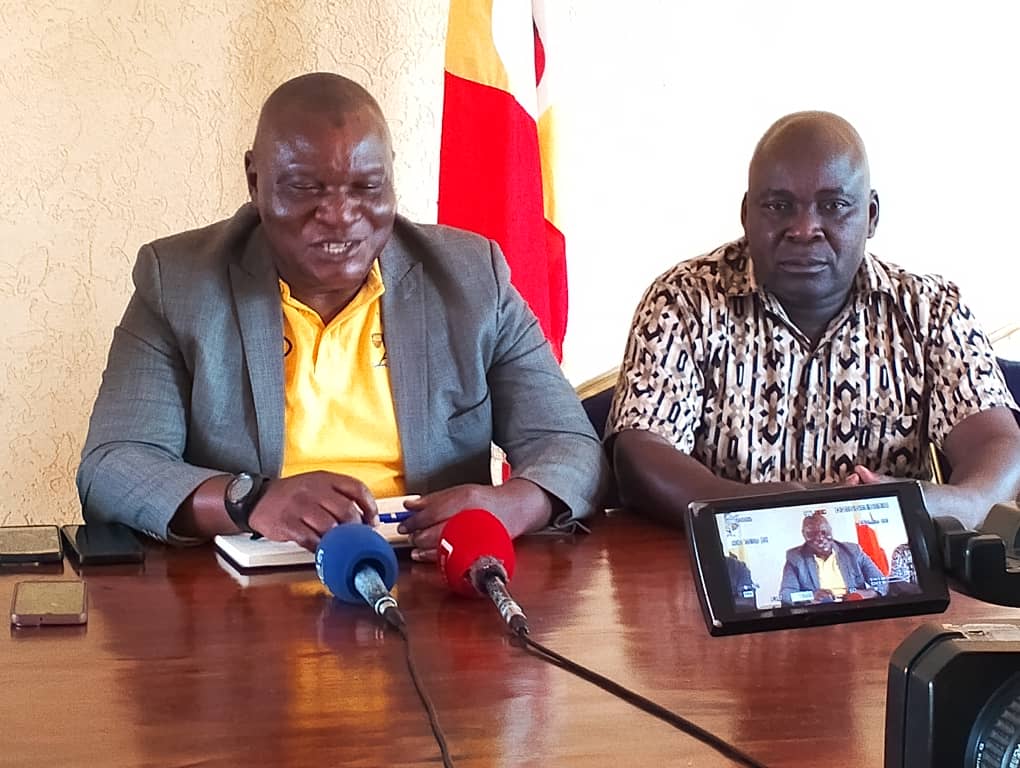
Speaking to the media at the Kyabazinga Headquarters in Bugembe, Jinja City, the Busoga Kingdom Minister for Sports, Owek. Amin Bossa Nkono, said the championship goes beyond competition and trophies.

  • “This championship is not only about cycling, but about shaping responsible men who can positively influence society. We want men to stand as pillars in protecting our girls and guiding communities against teenage pregnancies,” Owek. Nkono said.
Minister of sports in Busoga kingdom Owek Amin Bbosa Nkono (Right) and his deputy Owek Daniel Musoota (Left) speaking to media on thursday morning at Kyaabazinga headquarters Bugembe in Jinja City.

The competition will feature two categories — Tippa Bike (Maanhi ga Kifuba) and Mountain Bike — attracting cyclists from across Busoga’s 11 chiefdoms. From each chiefdom, the top three riders in every category will qualify for the grand finals scheduled for January 3, 2026.

At the preliminary stage, winners in each category will walk away with cash prizes of Shs100,000, Shs70,000 and Shs50,000 for the top three finishers. The stakes will be higher at the finals, where the overall winner will ride away with a motorcycle, followed by cash rewards of Shs2 million, Shs1 million, Shs500,000 and Shs300,000. In addition, all cyclists who complete the final race will receive Shs50,000.

First held in 2022 and again in 2024, the championship has continued to grow in stature. The 2024 edition saw John Odoto and Tiff Luganda successfully defend their titles in the Mountain Bike and Tippa Bike categories, respectively, cementing their status as the reigning champions.

As anticipation builds for the 2025 edition, organizers say the championship is not only about speed and endurance, but also about championing responsible masculinity and community action, proving that cycling can be a powerful vehicle for social change.

AFCON: Two UPL captains dropped from cranes final squad

0

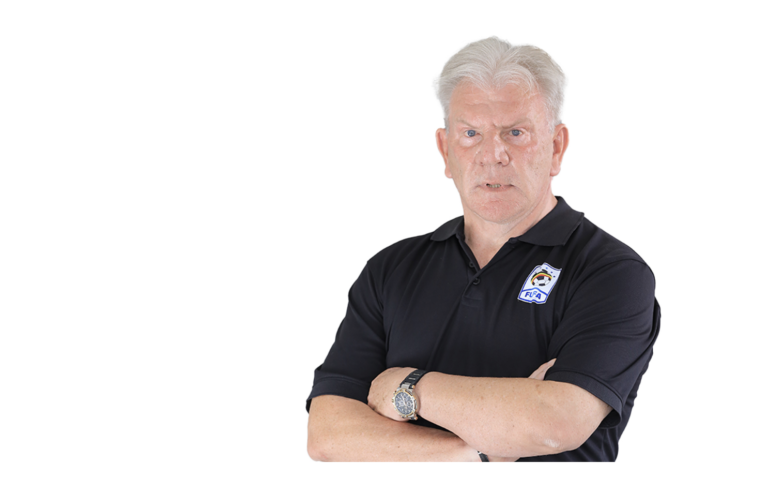
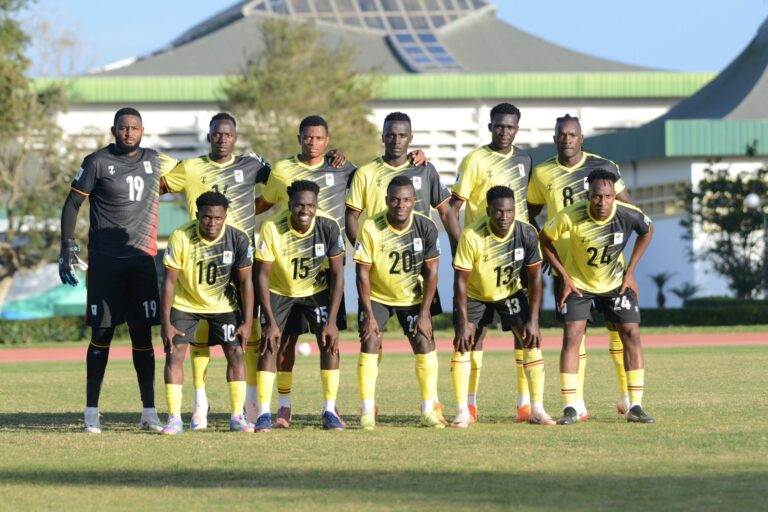
Uganda Cranes head coach Paul Joseph Put has dropped two local club captains after naming his final 28-man squad for the 2025 Africa Cup of Nations, dealing a major blow to KCCA FC skipper Charles Lukwago and SC Villa captain David Owori.

The duo are the most notable omissions from the squad for the continental showpiece, despite being influential leaders at club level in the Uganda Premier League. Coach Put, however, retained six locally-based players as he blended experience with form ahead of the tournament.

League top scorer Allan Okello of Vipers SC, who netted 19 goals last season, has been named and is set to make his AFCON debut. He is joined by Ivan Ahimbisibwe, last season’s second top scorer with URA FC, who has scored five league goals so far this season with KCCA FC.

SC Villa’s Reagan Mpande, who impressed at the 2024 CHAN tournament hosted in East Africa, also earned a place in the squad. Vipers SC defensive duo Hilary Mukundane and Rogers Torach, who partnered during the CHAN campaign, are included, alongside KCCA FC winger Shafik Nana Kwikiriza.

Uganda has been drawn in Group C alongside Nigeria, Tunisia and Tanzania. The Cranes will kick off their AFCON campaign against Tunisia on December 23.

UGANDA CRANES FINAL AFCON 2025 SQUAD

Goalkeepers:
Alionzi Nafian Legason, Denis Onyango, Magoola Salim

Defenders:
Rogers Torach, Timothy Awany, Kenneth Semakula, Toby Sibbick, Elio Capradossi, Jordan Obita, Isaac Muleme, Aziz Kayondo, Hilary Mukundane

Midfielders:
Bobosi Byaruhanga, Khalid Aucho, Travis Mutyaba, Baba Al Hassan, Ronald Ssekiganda, Allan Okello

Forwards:
Rogers Mato, Uchechukwu Ikpeazu, Steven Mukwala, Denis Omedi, Reagan Mpande, Jude Ssemugabi, James Bogere, Shafik Nana Kwikiriza, Lorenzen Melvyn, Ivan Ahimbisibwe

The Cranes now turn focus to Group C, where stern tests against Africa’s heavyweights await as Uganda targets a strong AFCON outing despite the headline-grabbing omissions.

COUNTDOWN TO GLORY: Africa’s football festival returns as AFCON Morocco 2025 nears

0

In exactly six days, the highly anticipated TotalEnergies CAF Africa Cup of Nations Morocco 2025 will kick off in Rabat, marking the start of a four-week thrilling journey to the title.

The tournament’s opening match will feature hosts Morocco taking on Comoros in a Group A clash at the Prince Moulay Abdellah Stadium, with a sold-out crowd in attendance.

The match is scheduled to kick off at 20h00 local time (19h00 GMT/ 21h00 Cairo) on the opening day of the tournament, which promises to be an exciting spectacle. This year’s edition marks the first time Morocco has hosted the TotalEnergies CAF AFCON in 37 years, and the country is pulling out all the stops to ensure a world-class experience for players, officials, and fans alike.

According to CAF General Secretary Véron Mosengo-Omba, Morocco has provided top-notch infrastructure, not only for African footballers but also for supporters from across the continent and beyond.

“In terms of preparation, we are ready. We launched the Diaspora Tour, taking the TotalEnergies CAF AFCON trophy to African communities abroad, and the response has been overwhelming. The diaspora has become our biggest driver of ticket sales, and we’re excited to welcome fans from all over the world,” Mosengo-Omba said.

This year’s tournament is expected to surpass the historic success of the 2023 edition in Côte d’Ivoire, which drew over 1.5 billion global TV viewers and 2.4 billion digital streams.

The 35th edition of Africa’s premier competition promises to bring together the continent’s best teams, world-class footballers, and millions of passionate supporters in a spectacle that will showcase the best of African football.

Morocco is putting the finishing touches on preparations across six host cities – Rabat, Casablanca, Fes, Tangier, Marrakech, and Agadir – all of which will stage matches in nine state-of-the-art stadiums.

The Kingdom has already demonstrated its organisational excellence by successfully hosting the recent TotalEnergies CAF Women’s Africa Cup of Nations 2024 and the TotalEnergies CAF U-17 Africa Cup of Nations 2025.

Fans attending the tournament can expect world-class hospitality, modern infrastructure, and electric atmospheres as Africa’s finest players compete for the chance to lift the trophy at the final on 18 January 2026.

The tournament serves as a major milestone in the remarkable journey of a competition first played in 1957, showcasing African talent, unity, and passion.

With just six days to go, excitement is building up, and football fans from across the continent and beyond are eagerly anticipating the kick-off of the TotalEnergies CAF Africa Cup of Nations Morocco 2025.

Will Morocco, the host nation, emerge victorious, or will another team claim the coveted title? The world will be watching as the greatest event in African football unfolds.

KIZZA BESIGYE: The wrinkles of struggle – a legacy of resistance in Uganda’s turbulent politics

0

By Oweyegha-Afunaduula

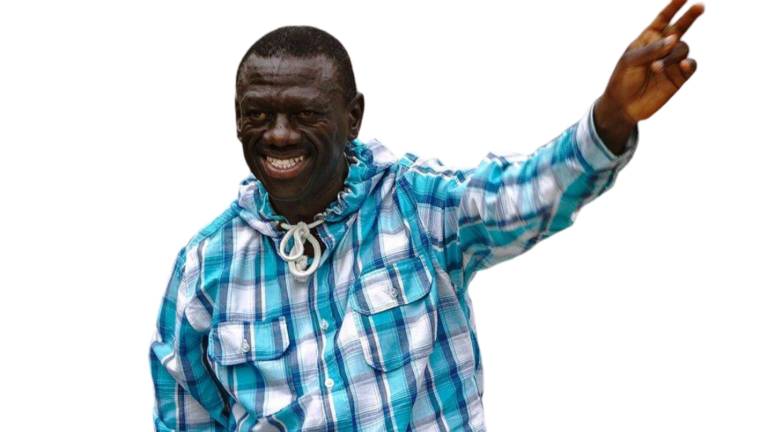
In Uganda’s complex political landscape, Dr Kiiza Besigye stands as a figure of relentless defiance, his life etched with the “wrinkles of struggle” against a government that has increasingly tightened its grip on power. From medical doctor to opposition leader, Besigye’s journey reflects not just personal courage but the deeper systemic challenges that have shaped Uganda’s pursuit of democracy.

In this article I want to write about Dr Kizza Besigye’s life of selfless struggle by borrowing the phrase “Wrinkles of Struggle”. Wrinkles are signs of wisdom from the many, many years of life struggle. Each line on the face hides a struggle, a sacrifice, a love carried to the end. They are not lines of weakness but a silent commitment to a family, cause or nation. They represent worthwhile ups and downs. Persistence is the heat that smoothes out the wrinkles of our struggles.

The Early Struggles: A Man of Principle

Besigye’s path was once intertwined with Yoweri Tibuhaburwa Museveni’s, joining the National Resistance Army (NRA) in the 1980s ostensibly to fight against dictatorship. But disillusionment soon followed. By the early 2000s, Besigye had emerged as a vocal critic of the NRM regime, ultimately forming the Forum for Democratic Change (FDC) and running for president multiple times. Each election became a battleground, marked by arrests, alleged torture, and a state machinery determined to silence him.

The Wrinkles of Repression

(i) State-Sponsored Challenges

Besigye’s story is punctuated by brutality – his 2001 arrest, the 2006 “treason” charges, and years of house arrest. The Public Order Management Act has been wielded to restrict his rallies, while torture allegations drew international scrutiny but little change. A year ago he was kidnapped from a Nairobi hotel by Ugandan security forces, ostensibly for possession of arms and planning to overthrow President Museveni’s government.

Since then, his life’s trajectory has been characterised by a ritualistic travail initially between Luziira Maximum Prison and the Military Court, and then until now between Luziira and the civilian court, which seems to be in a hurry to declare whether or not Kizza Besigye is guilty of the treasonous charges clamped on him by the state.

However, the man is unyielding. The body may be giving in, but his spirit has refused to let him. He is not in a hurry to betray his principles. He is as committed to his struggle for the freedom and justice of Ugandans and democracy in the country as when he was in the bushes of Luwero and since his missive of 1999, which set the stage for opposition or resistance to Tibuhaburwa Museveni’s determined hold onto power and excesses.

(ii) Political Isolation

A media blackout, harassment, imprisonment and a constant shadow of surveillance underscore the cost of Kizza Besigye’s unbroken dissent. He remains focused on his struggle for democracy, freedom and justice beyond the gun legacy of the Luwero Triangle.

Resilience and Mobilisation

Kizza Besigye’s struggle has rippled outward. He helped galvanise the opposition, inspiring a new wave of activists like Kyagulanyi Ssentamu, alias Bobi Wine, whose People Power movement blended music and protest. Digital campaigns now amplify Bobi Wine’s message of a new Uganda, united with One People and free from domination and exploitation by a few greedy and selfish people, as younger Ugandans question a future overshadowed by fear and silence.

Kizza Besigye’s battles have taught us that speaking out is a duty, responsibility and obligation even when it’s dangerous,” says a young activist. In practice, Kizza Besigye is an extremely courageous, combative democracy, freedom and justice crusader.

Legacy and Reflections

Besigye’s fight exposes Uganda’s democratic faultlines – a regime allergic to accountability. His persistence sparks hope but also raises questions: Can the Opposition sustain its momentum? Will the youth translate anger into lasting change?

The wrinkles of struggle are etched, but the fight for Uganda’s democracy remains unwritten. Will it heal or deepen?

The Global Echoes

Internationally, Besigye’s plight drew attention from rights groups like Human Rights Watch, though donor responses often walled themselves behind “partnership” rhetoric. Solidarity campaigns flared, but tangible shifts in Uganda’s governance stayed elusive.

Solutions and a Clarion Call

Ugandans must amplify their voices, pushing for inclusive politics and accountability. The struggle isn’t just Besigye’s. It is everyone’s. Break the fear; join the rewrite.

For God and My Country.

Prof. Oweyegha-Afunaduula is a conservation biologist and member of the Center for Critical Thinking and Alternative Analysis.


GUN LEGACY: How political violence became a tool of governance in Uganda

0

By Oweyegha-Afunaduula

In Uganda, the sound of gunfire has echoed through decades, shaping a political landscape where violence is not merely a reaction but a calculated tool of governance for continuous invasion, conquest, and occupation well into the future, largely by people with exogenous roots. The National Resistance Movement/Army (NRM/NRA)’s bush war (1981-1986), framed as a liberation struggle, laid the groundwork for a governance model that relies on the control and suppression of the indigenous communities in Uganda.

From the Luwero Triangle’s brutal campaigns to today’s tear-gas-filled streets, state violence persists, raising a critical question: Has Uganda’s liberation narrative become a legacy of coercion? At the same time, the rulers of Uganda from the bushes of Luwero imposed decades of expenditure of public money celebrating something they knew was not a liberation but an invasion, conquest and occupation of a country that was yearning for meaning and effective liberation from the consequences of 70 years of British colonial rule. Instead, what has emerged is a new apartheid-like black colonialism.

 Just like what happened in South Africa between 1948 and the early 1990s, the majority indigenous Ugandans are being segregated against ethnically, economically, ecologically, culturally, environmentally, socially and politically by a small supremacist ethnically well-knit group with strong roots in Rwanda and the Rwandese Tutsi-rich Mulenge area of present-day Democratic Republic of Congo (DRC).

The group inserted itself in the Uganda Constitution 1995, which they dominated and directed, as the artificial indigenous Banyarwanda, and at the same time struggled hard to cast themselves as a traditional cultural group integral to the Banyankole indigenous group. Unfortunately, just as the group sustained violence in the Luwero Triangle from 1981 to 1986, which resulted in the death of nearly 500 mainly Baganda and Baruli people, the group continues to be central to the sustenance of violence and death even as they continue to convince every Ugandan that they ushered in peace and security from the bushes of Luwero and that they are the ones that can ensure that the country is secure and peaceful. They are not lying because Uganda continues to suffer insecurity, unpeace and violence because of the centrality of state violence in breeding and sustaining insecurity, unpeace and violence as and when it serves their interests.

Indeed, the President of Uganda has always reminded us that today it is interests, not identities, that matter in Uganda. This explains why political violence persists. This article examines how political violence, rooted in the NRM/NRA’s militarised past, has evolved into a systemic mechanism for maintaining power from 1996 to 2026. 

Historical Roots of Violence: The NRM/NRA Legacy (1981-1986) 

The NRM/NRA’s guerrilla war against Apollo Milton Obote’s regime, and later Tito Okello’s regime, was marked by intense violence in the Luwero Triangle, with massacres of civilians, forced displacements, and a pervasive climate of fear. While the NRM/NRA seized power in 1986 with promises of democracy, its militarised approach seeped into governance.

Yoweri Tibuhaburwa Museveni’s consolidation of power included establishing militarised Local Defence Units (LDUs), embedding military structures into civilian life under the guise of demystifying the gun. This period normalised the use of force against perceived enemies, setting a precedent for future regimes. In other words, the emergents from the bush were showing the seeds of violence on a continuous basis. Violence became institutionalised. This is traceable in:

(i) The Luwero Triangle massacres, where thousands of civilians were killed amid counterinsurgency operations.

(ii) Targeting of Baganda populations, fuelling ethnic tensions and a narrative of “enemy territories” (Buganda vs the North).

(iii) Post-1986 purges of perceived opponents, embedding a culture of suspicion and hatred

  (iv) Organised criminal gangs, sometimes denied then later accepted as linked to the State. A good example is the Kalangala Action Plan. 

Post-1996 Escalations: Patterns of State Violence 

Since 1996, Uganda’s elections have been marred by escalating violence. The state has deployed a mix of physical brutality and legal restrictions to suppress opposition. Elections-related violence has become predominant. Sometimes just before elections, some gangs armed with pangas become most active and then quiescent after the elections. Or else both the UPDF and police become central to the electoral process and reign violence as and when they choose. There is a well-documented sequence of state-inspired violence:

(i) 2001 Elections: Kizza Besigye’s arrest and alleged torture, sparking protests; 

(ii) 2006 Elections: Police raids on opposition rallies, Besigye’s violent rearrest;

(iii) 2016 Elections: Military deployment in Kasese, killing over 100 during a local protest.

(iv) 2021 Elections: Bobi Wine’s house arrest and live-bullet shootings at People Power rallies. Also, well over 80 people were killed and hundreds maimed by security forces during Bobi Wine’s maiden rally in the district.

(v) Violently targeting opposition dissent throughout the country.

(vi) Bobi Wine’s arrests (2018-2021), charged with treason, sparking nationwide protests.

(vii) Crackdowns on journalists: closures of media houses, arrests of reporters covering protests.

(viii) The 2020 A-Level Student Protests: mass arrests and alleged torture of students protesting grading issues.

(ix) Violence parked legal mechanisms

   *Public Order Management Act (2013): Restricts gatherings, used to ban opposition rallies.

 *Anti-Terrorism Laws: Broadly applied to silence critics, labelling dissent as “terrorism”.

     *UPDF Act 2025: This is seen as instrumentalisation of the perversion of justice in Uganda for the benefit of the rulers.

Violence Mechanisms and the Impact 

Political violence in Uganda serves multiple intertwined purposes:

(i) Intimidation and Fear: Silences critics, deters participation in opposition politics, and manipulates voter turnout;

(ii) Narrative Control: The government frames violence as “security measures”, while the opposition portrays it as state repression. This clash fuels polarisation in the country;

(iii) Human Costs: Casualties, displacements, trauma. e.g., the Kasese killings (2016) left deep scars, while social media shutdowns during elections amplify isolation;

(iv) Financial Costs: the National Budget is overstretched to support the State House and security security measures, denying essential sectors such as education and health adequate funds to ensure the quality of the population;

Good examples are:

(i) 2009 Buganda Riots: Over 100 killed when security forces denied the Kabaka of Buganda his right to visit Kayunga, escalating tensions with the kingdom.

(ii) 2020 Social Media Ban: * Blocked platforms during elections, culling information flow.

Challenges and Reflections 

The normalisation of violence erodes trust in institutions, inviting international scrutiny while emboldening repression. Yet, resilience persists. Resistance, which is constitutional, and digital activism: Bobi Wine’s music (e.g., Situka), online campaigns, and youth-led protests continue to challenge the status quo and to cast violence as a paper tiger that cannot forever restrict people’s determination to win freedom, democracy, and justice for themselves without resorting to violence. However, many challenges remain.

(i). Many Ugandans are still ignorant of the fact that their country was not liberated but invaded, conquered and occupied;

(ii) Many Ugandans are ignorant of the fact that the continuing bantustanisation of their country into numerous districts, subcounties and constituencies is not because the rulers love them but to make it difficult for them to unite on a common cause such as freedom, justice and their resources;

(iii) Many Ugandans still don’t know who their rulers are and continue to fight against each other as they allow people with exogenous roots to dictate terms and determine the future of their country;

(iv) Many Ugandans are still mesmerised by the gun and endorse the overmilitarisation of their country, which they interpret as strength, security and peace; and

(v). It remains a huge task to transform the collective mindset of Ugandans in favour of their country. Many have fled the country, although economic pressures cannot be excluded from the explanation of their departure. 

Some questions remain to be asked:

(i) Does violence stabilise regimes or sow deeper discontent?

(ii) Can Uganda break the cycle of violence without confronting its militarised past?

   (iii) Is there international complicity? Many human rights crusaders agree that the silence of Uganda’s donors amid human rights abuses complicates the demand of Ugandans for accountability. 

Conclusion 

Uganda’s political violence is not an aberration – it is a tool inherited from the NRA’s guerrilla playbook, refined over decades to maintain power. As the country approaches 2026, the choice is stark: will the gun’s legacy fuel further repression, or will Ugandans demand a shift toward dialogue and accountability? Confronting this history is the first step toward reclaiming a meaningful politics of peace and security.

Otherwise Uganda will continue with a peace and security narrative conceived by and sustained by NRA combatants and within their interests of power, glory and regional supremacy at the expense of Uganda and its people, resources, development, transformation and progress, which are more talked about than realisable in the medium- and long-term.

Uganda will continue in a state of stagnation if the sense of entitlement implanted in the politics of the country continues to dictate everything: who rules the country, who gets educated, which communities get a share of the national cake, and what is emphasised in the national budget, why and how. For now it is peace and security as narrowly perceived by the military rulers of Uganda: military security at the expense of other types of security, including environmental security, social security, intellectual security, ecological security, sociopolitical security, mental security, psychological security, water security, health security, future security, et cetera.

The survival of Uganda in the 21st century and beyond needs total delinking from NRM violence-impregnated politics and governance. Short of this there is Uganda as conceived by the colonialists but disintegrated to serve the wider long-term interests of the latter-day invaders, conquerors and occupiers, currently benefiting from violent politics and the bleeding of the country as they did in the Luwero Triangle and have done over the last 40 or so years.

If the country has been massively bantustanised, what will ultimately happen is its total disappearance, like what did happen to the Soviet Union and Yugoslavia in our lifetime. Only Ugandans can prevent this if they resolve to capture their country back sooner rather than later. The precondition is to reject continued militarisation of politics and the use of political violence as a governance tool towards 2050.

For God and My Country.

Prof. Oweyegha-Afunaduula is a conservation biologist and member of the Center for Critical Thinking and Alternative Analysis.
SACRED OATH TAKEN: Rev. Canon Prof. Grace Lubaale consecrated as fourth Bishop of Busoga Diocese

0

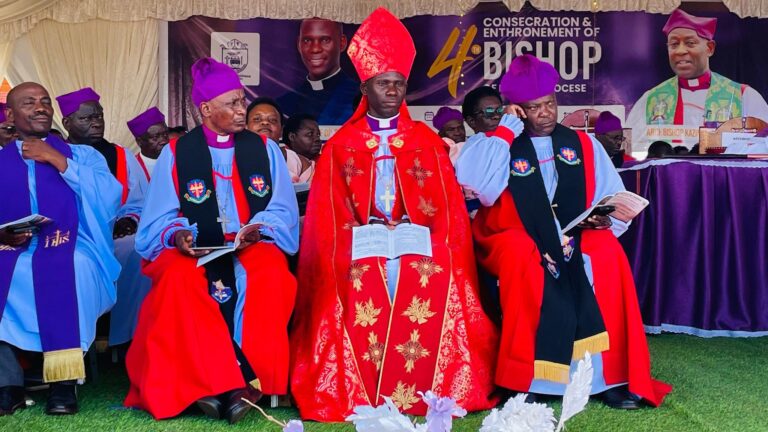
Rev. Canon Prof. Grace Lubaale was today solemnly consecrated as the fourth Bishop of the Busoga Diocese, succeeding Rt. Rev. Paul Moses Samson Naimanhye, who retired after nine years of dedicated service to the Church of Uganda.

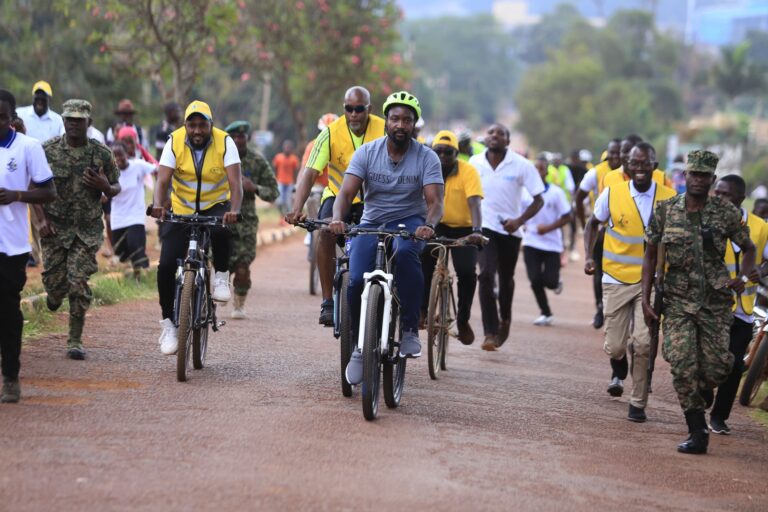
The vibrant ceremony unfolded at Bugembe Playgrounds in Jinja City, drawing thousands of faithful congregants and clergy to witness the historic occasion.

The consecration was led by Uganda’s Archbishop, Most Rev. Dr. Stephen Samuel Kaziimba, who emphasized the new bishop’s spiritual responsibility. “Following the example of Christ and His apostles, I present Dr. Lubaale to you. We trust that the Holy Spirit has called him to lead faithfully,” he declared, urging Lubaale to guide the diocese with unwavering faith and dedication.

In his oath, Bishop Lubaale vowed to uphold the Church’s teachings and combat doctrines deemed contrary to biblical principles, explicitly naming “homosexuality, lesbianism, secularism, materialism, consumerism, and liberalism.” He also pledged compassion for the marginalized: “I commit to showing mercy and compassion for the poor, the needy, strangers, and all who are destitute or helpless, serving faithfully in the spirit of Christ.”

Vice President Jessica Alupo represented President Yoweri Museveni at the ceremony as chief guest. Bishop Lubaale’s election in October occurred at the House of Bishops in Lweza Training and Conference Centre, where his qualifications and vision for the diocese were affirmed.

Born on October 9, 1978, in Kamuli District, Lubaale’s spiritual journey began in 1994. A distinguished academic, he holds a Ph.D. in Development Studies, two master’s degrees (Theology and Development Studies), and a Bachelor of Arts in Education.

Ordained as a deacon in 2008 and priest in 2009 under the Diocese of Kampala, he later served as Canon of Education and Training at All Saints’ Cathedral in Kampala, a role he assumed in November 2024.

Known for his focus on education, discipleship, and community transformation, Lubaale’s pastoral ministry is deeply intertwined with holistic development. He is married to Clare Louise Atuheirwe and is the father of four children.

As Busoga Diocese embraces a new leader, Bishop Lubaale inherits the legacy of expanding Christ’s ministry in the region. His academic acumen, combined with his pastoral zeal, positions him to address contemporary challenges while upholding the Church’s traditional values.

The consecration marked not only a milestone for the Busoga Diocese but also a renewed call to faith, service, and resilience in the Church of Uganda’s mission.

]

EBIKADHO: Sugar companies cut cane prices to Shs115,000 per tonne

0

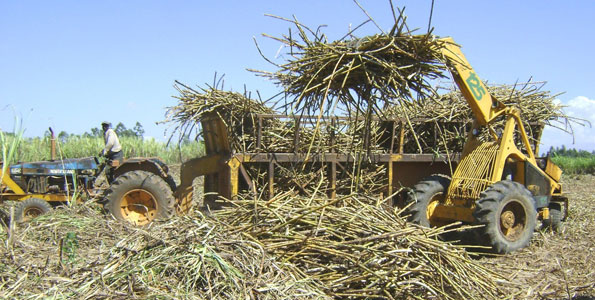
Farmers supplying sugarcane to Kamuli Sugar Limited and Mayuge Sugar Industries Limited will now receive Shs115,000 per tonne following price adjustments announced by the two companies on Wednesday, December 11, 2025.

In a notice addressed to farmers, Kamuli Sugar Limited said it had reduced the price of sugarcane from Shs120,000 to Shs115,000 per tonne with immediate effect. The company did not provide reasons for the reduction.

On the same day, Mayuge Sugar Industries Limited also announced that it would purchase sugarcane at Shs115,000 per tonne starting December 12, 2025. The company further informed farmers that deliveries would only be accepted upon presentation of valid harvesting permits at the factory gate.

The announcements come at a time when farmers are preparing for peak harvesting, with many expressing concern over price reductions amid rising production and transport costs.

Sugarcane farming is a major source of livelihood in Busoga sub-region, and pricing decisions by millers directly affect thousands of households that depend on the crop for income.

In November last year, the Leader of the Opposition, Joel Ssenyonyi demanded that government intervenes and regulates sugarcane prices.

“The economy is liberalised and the forces of demand and supply are at play but it does not stop government from regulating the pricing to ensure that people are not ripped off and that farmers get a fair income from their toil,” Ssenyonyi said.

Ssenyonyi wasmpresenting a statement to Parliament on Thursday, 28 November 2024 following an oversight visit he undertook with other lawmakers to Busoga region.

He added that the sugarcane pricing which is calculated based on one by-product (sugar) is unfair and should be reviewed to include at least five by-products including bagasse, molasses and ethanol among others.

Ssenyonyi also condemned the decision by millers to charge farmers 18 per cent Value Added Tax (VAT) on the sugarcane saying that according to the law, the tax is only charged on finished products.

CHANCE FOR NUP: Electoral Commission Sets Fresh Nomination Dates for Kagulu Sub County Chairperson

0

The Electoral Commission has announced fresh nomination dates for the Kagulu Subcounty Chairperson race in Buyende District following the death of one of the candidates.

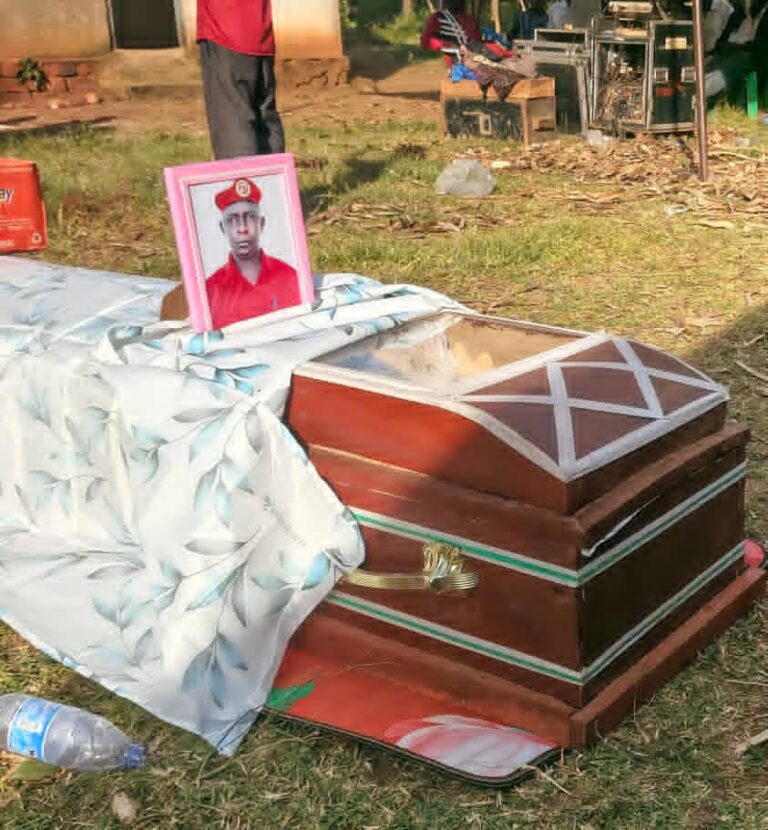
According to a notice issued by the Office of the Returning Officer on December 12, 2025, the fresh nominations were necessitated by the death of Bigabwenkya Moses, a candidate representing the National Unity Platform (NUP).

The Commission cited Section 44 of the Parliamentary Elections Act, Cap 177, which provides that where a candidate dies after nominations but before polling day, the Commission must fix new nomination dates to allow interested candidates reasonable time to be nominated.

Bigabwenkya Moses campaigning

The Returning Officer for Buyende District, Eliau George William, said the Commission has approved Thursday, December 18, and Friday, December 19, 2025, as the fresh nomination dates.

Nominations will take place at the Office of the Returning Officer in Buyende District between 9:00 a.m. and 5:00 p.m. on both days .

The notice further clarifies that candidates who were previously validly nominated will not be required to undergo the nomination process again. Nomination papers are available for collection at the Returning Officer’s office.

The Electoral Commission has called upon the Kagulu Subcounty community and interested candidates to take note of the revised timetable as the electoral process continues.

BOBI WINE EFFECT: Kyagulanyi and political music in the new liberation of Uganda

0

By Oweyegha-Afunaduula

In Uganda, music has long been a powerful tool for resistance and liberation, echoing the beats of change from South Africa to Mozambique. Now, as a “new liberation” gains whispers in the land, opposition leader Kyagulanyi Ssentamu (Bobi Wine) is using political songs to rally Ugandans toward a different narrative. The National Resistance Movement/National Resistance Army (NRM/NRA) rebellion, often sold as a liberation for Uganda, has left many questioning its promises, fuelling a belief that the country’s journey remains unfinished. 

Historical Context: Music in African Liberations

Music fuelled struggles in South Africa (anti-apartheid anthems like Nkosi Sikelel’ iAfrika), Zimbabwe (Chimurenga songs), Angola, and Mozambique, amplifying unity and defiance. In Uganda’s bush war in the Luwero Triangle (1981-1986), songs mobilised the largely Baganda rank-and-file, though the rebellion’s regional ambitions – extending influence into Rwanda and Eastern Congo – raise questions about whose liberation it truly served. 

Kyagulanyi’s Political Music: A New Liberation? 

It is very useful to look at Bobi Wine’s journey from ghetto stories in Ghetto to anthems like Situka (“Rise Up”).  His music critiques governance and inequality and champions youth empowerment, morphing into a rallying cry for People Power/NUP. As he sings, “Situka means rise up, not just for myself, but for every Ugandan.” This way Bobi Wine is focused on meaningful and effective liberation of Uganda in its entirety: its identities, belonging, independence, nationality, sovereignty, citizenship, cultures and all the captured civic spaces. 

Themes 

Bobi Wine’s political quest for the new liberation of Uganda and its people can be cast in three themes:

1. Resistance against oppression, combined army-police brutality.

2. Calls for accountability, social justice.

3. A “new Uganda”: united, inclusive, equitable, reclaiming sovereignty.

It is most likely that most Ugandan politicians – those in power and in opposition – have allocated time to critically think and reason about Bobi Wine’s new station in Uganda’s body politic. They are looking at him in very simplistic and dismissive ways. Many of them focus on his past in the spirit of No Change and fail to see that he has moved miles ahead and that his messages speak to both the old and new generations of Ugandans. I have heard the more critically aware academics and intellectuals that abhor their current situation of fear and silence admitting that Bobi Wine might be the one they have been waiting for to liberate their academia and themselves from capture and estrangement.

Impact

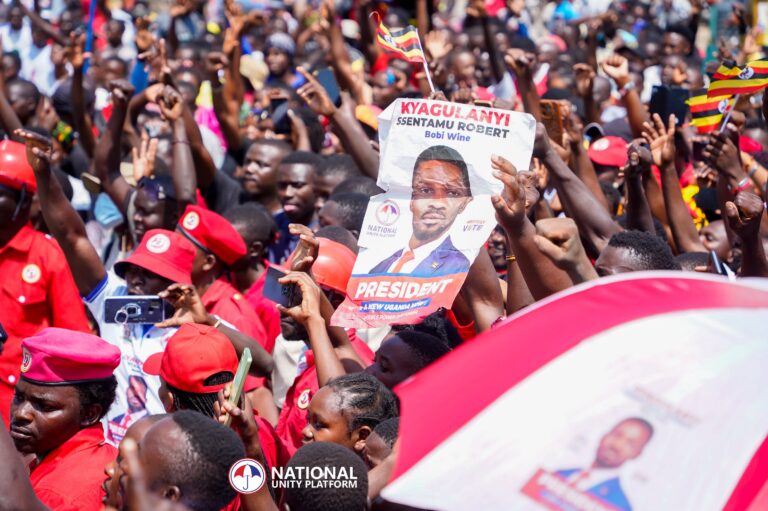
What all this means is that Bobi Wine’s music and his own person have impacted the Ugandan society and people quite profoundly in less than a decade. It will never be the same. Not even the brutality of the army and police and the let-down of Ugandans by the orthodox politicians will decelerate the wind of change that Bobi Wine and his music have ushered in, especially among the young people. It is not true that the crowds that have recently thronged Bobi Wine’s rallies in all parts of the country are just anxious to see a former music icon, as many orthodox politicians are wrongly emphasising to the diverse electorate. It seems the people want the new narrative Bobi Wine is putting across. They are tired of hearing the same old narrative from the 1980s in a century of new information and new communication.  Of course, just like President Tibuhaburwa Museveni said, he is the master of violence; Bobi Wine has cast himself as the beneficiary of the digital age.

Therefore, I can unequivocally state that Bobi Wine’s impact is five in one:

1. He has energised youth, filled stadiums, and fuelled protests.

2. He has bridged generational gaps, making change feel tangible and people less fearful and less silent.

3. He and his supporters face censorship and arrests, but he has shown courage and leadership in adversity as he continues to spread his influence and liberation messages through digital spaces, thereby being visible globally.

4. The “New Liberation” Narrative (NLN) appeals to the young generations of Ugandans and is embraced by some older Ugandans who were not convinced by the Old Liberation Narrative (OLN).

5. There is growing discontent with corruption, unemployment, occupation and restricted freedoms. This is fuelling a belief that Uganda’s liberation is incomplete. Bobi Wine continues to tap into this frustration, using music to amplify a call for systemic change, much like Fela Kuti did in Nigeria – blending protest with art.

Therefore, if anyone thought art and music were useless and should be devalued in schools and universities, it is a good lesson we learn from Bobi Wine that they are effective tools for liberation. 

Challenges and Reflections 

Many obstacles remain to be confronted by Bobi Wine’s New Liberation Movement: these include state crackdowns and censorship. However, Bobi Wine is balancing hope with caution, adapting his activism to survive and spread his message of new liberation. So far so good for his New Liberation Narrative. It now remains for Ugandans to use the ballot paper to show that the message of New Liberation has sunk in their minds, even if President Tibuhaburwa Museveni said a mere piece of paper cannot remove him from power and that he is like a cotter pin of a bicycle, which goes in by knocking and comes out by knocking. 

Questions 

Whatever political achievements Bobi Wine has recorded using digital space, music and art, two questions will remain begging for answers:

1. How does music translate to tangible change?

2. Can music unite Uganda’s diverse voices beyond urban hubs?

Well, we have to wait for critical analysts who have been following Bobi Wine’s presidential campaign trail to tell us what they critically think 5 years later the impact of Bobi Wine is since he plunged himself into the messy politics of Uganda.

Ultimately, however, it is what the voters vote (New Liberation or Old Liberation?) and what the managers of the coming 2026 General Elections decide to tell the world came out of those elections that will determine whether Uganda will remain with the old liberation narrative from the 20th century or embrace the new liberation narrative. 

Conclusion 

Bobi Wine’s music is a rallying cry for a Uganda seeking renewal, challenging the status quo and inspiring hope. As the country listens to the beat of Situka, the question remains: will the rhythm of change outlast the silence?

For God and My Country.

Prof. oweyegha-Afunaduula

Center for Critical Thinking and Alternative Analysis

REVIEW: Scores and misses of the MTN Busoga masaza cup 2025

0

The 8th edition of the MTN Busoga Masaza Cup climaxed on Saturday, 6th December 2025, at Kyabazinga Stadium, Bugembe, where Kigulu edged Luuka 1–0 to lift their third Masaza Cup title in history.

As the dust settles on another competitive season of Busoga’s flagship football tournament, the 2025 edition registered notable positives while also exposing areas that still require urgent attention.

THE SCORES

Improved Player Discipline

Player discipline stood out as one of the tournament’s biggest successes. Across 44 matches, only two red cards were recorded — a remarkable improvement that reflected better player conduct and officiating. This progress played a key role in maintaining the tournament’s competitive integrity.

Respect for Fixtures

With the exception of Budiope, who failed to turn up for their final group match against Bugweri, teams largely respected the fixture calendar.
Out of 44 scheduled matches, 43 were played, a positive indicator of team commitment and improved tournament coordination.

Strong Fan Support

Fans turned up in large numbers, especially during the group stages, rallying behind their teams across different chiefdoms and playgrounds.
Even midweek fixtures attracted impressive crowds, underlining the deep-rooted passion and unity football continues to inspire across the Busoga region.

Improved Player Security

Player security showed signs of improvement, with inner perimeter fencing introduced at several venues. Although mostly temporary and breached in a few isolated cases, this move marked a step forward in protecting players and match officials.

Increased Prize Money

The tournament registered growth financially, with the winner’s prize money increasing from UGX 12 million in 2024 to UGX 13 million in 2025. This increase reflects steady progress since the tournament’s inception in 2016 and remains a strong motivation for participating teams.

Return of Individual Awards

The 2025 edition reinstated key individual awards, including Top Scorer, Most Valuable Player, Best Goalkeeper, and Best Coach. While some awards were still missing, the return of these honours added value and recognition to individual excellence.

THE MISSES

Fixture Disorganisation

The Technical Organising Committee (TOC) continued to struggle with fixture consistency, often adjusting match dates at short notice. Poor communication — sometimes just one or two days before matches — affected player focus and fan turnout. Notably, matches played without abrupt adjustments attracted significantly larger crowds.

Low Turnout for the Final

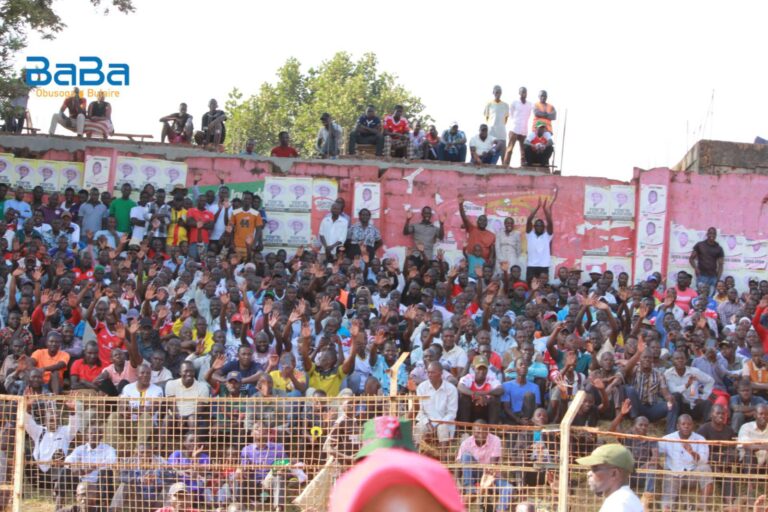
Despite free entry, Kyabazinga Stadium did not reach full capacity for the final. Attendance was noticeably lower compared to group-stage matches at venues such as Kisiki College, Mafubira Primary School, Namayingo C/U Primary School, Busalaam Primary School, Wembley Stadium Mayuge, and Irundu C.O.U Primary School.
Possible reasons included political tensions, fixture uncertainty, and limited media promotion.

Limited Media Coverage

Media attention remained low, largely due to insufficient access to timely information such as results, fixtures, standings, and statistics. Establishing a dedicated tournament media committee could significantly improve visibility and coverage.

Overuse of Neutral Venues

While neutral grounds promote fairness, repeatedly hosting knockout matches in Jinja and Butembe limited regional engagement. Rotating knockout fixtures across different chiefdoms could boost attendance and local excitement.

Absence of Pre- and Post-Match Press Conferences

The lack of structured pre-match and post-match press conferences deprived the tournament of momentum and media engagement. Such platforms would not only enhance visibility but also attract sponsors through guaranteed media exposure.

Poor Statistics Management

Inconsistent statistical records led to disputes, particularly around top scorers. A centralized statistics management system aligned with team departments is urgently needed.

Questionable Award Selection

Some award decisions raised debate. For instance, coaches who achieved historic milestones but fell short of the title were overlooked, raising concerns about over-rewarding trophy success at the expense of effort, growth, and context.

Poor Time Management

Approximately 80% of matches failed to kick off at the scheduled time, highlighting weak enforcement of tournament regulations.

Fan Indiscipline

While player discipline improved, fan indiscipline remained a major concern. Incidents involving stone-throwing and attacks on referees, players, and officials were reported in Bunhole Bunhanhuba, Busiki, and other venues. Such behavior threatens the tournament’s safety and image.

Lack of a Permanent Tournament Office

The absence of a permanent Masaza Cup office affected coordination, communication, and petition handling. Teams and fans struggled to access officials, leading to frustration and loss of confidence in tournament administration.

Limited Final-Day Entertainment

While football is the main attraction, the final lacked structured entertainment. Featuring regional and national musicians during opening or final ceremonies could enhance spectacle, boost attendance, and attract sponsors.

THE WAY FORWARD

If organisational gaps are addressed — particularly in fixtures, media engagement, fan discipline, and administration — the MTN Busoga Masaza Cup has the potential to grow into one of Uganda’s most attractive regional football competitions.