Thursday, May 21, 2026
Home Blog Page 13

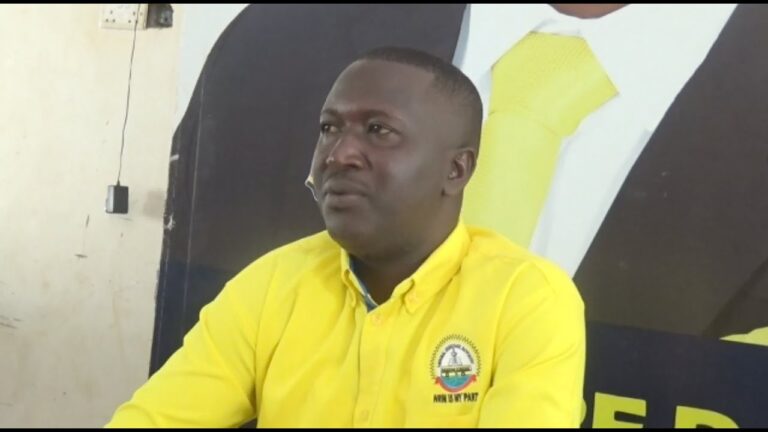
MAGOGO’S HAPPINESS: Electoral Commission annuls nomination of Mulilire Daniel for Budiope East MP seat

0

The Electoral Commission has annulled the nomination of Mulilire Daniel as a candidate for the directly elected Member of Parliament for Budiope East Constituency in Buyende District. Delight

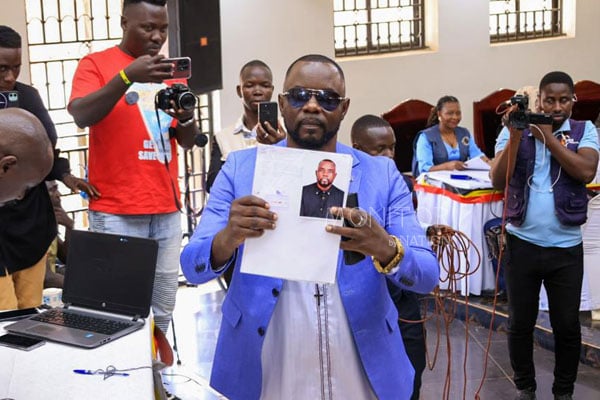
The decision follows a complaint lodged under Article 61(1)(f) and Section 15 of the Electoral Commission Act, Cap 176, which challenged the legality of Mulilire’s nomination. The Commission reviewed submissions from both the complainant, represented by M/s Alaka and Company Advocates, and the respondent, Mulilire Daniel, along with his legal team.

During the hearing, the Commission observed that Mulilire, who was previously a police officer with the Uganda Police Force, had not provided proof of resignation from government service at the time of his nomination.

This is a requirement under Section 4(4) (a) of the Parliamentary Elections Act, Cap. 177. As a result, the Commission ruled that his nomination papers were invalid under Section 30(e) of the same Act.

Justice Brabakama Mugenyi Simon, Chairperson of the Electoral Commission, stated that the nomination was therefore annulled under case MIN. COMP 058/2025. The decision also quashed the Returning Officer’s earlier approval of Mulilire’s candidacy.

Copies of the ruling have been sent to the Returning Officer for Buyende Electoral District and to Mulilire Daniel, who is represented by M/s Byamukama & Co. Advocates and M/s Ochieng Associated Advocates and Consultants.

The annulment comes as political parties and independent candidates prepare for the upcoming parliamentary elections, emphasising the importance of adhering to legal requirements during the nomination process.

Mulilire was seeking to unseat Eng. Moses Magogo, the incumbent Member of Parliament for Budiope East. With Mulilire now out of the race, Magogo, also the National Resistance Movement flag bearer, will have to deal with former ally Stephen Bangalana, an independent. Others remaining in the race are Peere Rabinson, of the People’s Front for Freedom (PFF), and Resty Nsiro, an independent.

NEW HOME FOR FOOTBALL: Museveni commissions Hoima City Stadium, hails AFCON 2027 as catalyst for Uganda’s sports and infrastructure boom

0

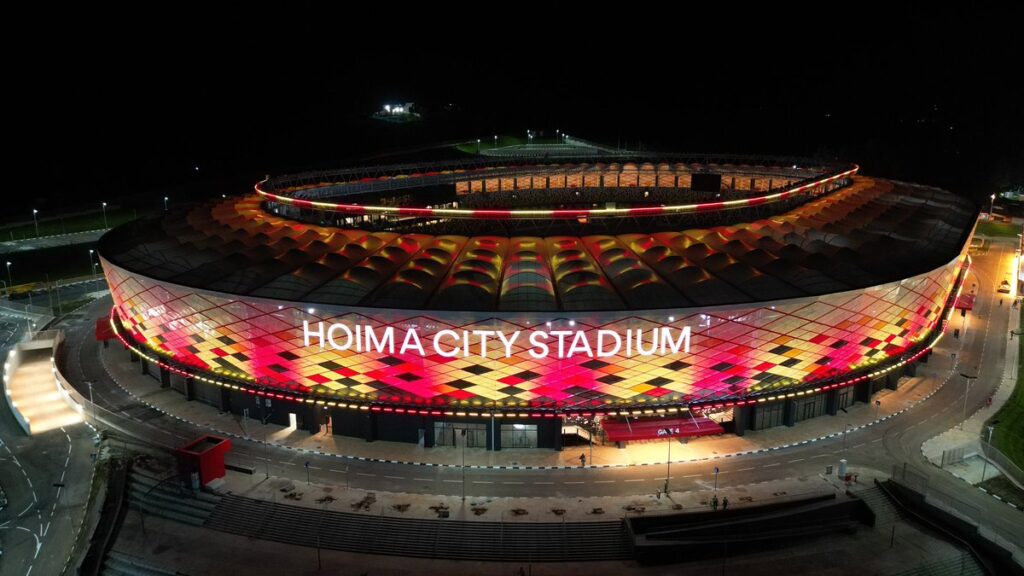
President Yoweri Kaguta Museveni wednesday commissioned the Hoima City Stadium, marking a major milestone in Uganda’s preparations to co-host the 2027 Africa Cup of Nations (AFCON) alongside Kenya and Tanzania.

The commissioning ceremony, held in Hoima City, Bunyoro sub-region, was attended by thousands of residents, sports fans, government officials, and dignitaries from across the country and abroad.

The President was accompanied by the First Lady and Minister of Education and Sports, Maama Janet Kataaha Museveni, who oversaw the project’s implementation.

Constructed by Turkish firm Summa International Construction Company Inc, the Hoima City Stadium is a $129 million (approximately Shs463 billion) multi-sports complex that was completed in a record 12 months, four months ahead of schedule.

The Government of Uganda signed the construction contract with Summa in June 2024 as part of preparations for AFCON 2027, which Uganda will co-host under the “Pamoja Bid” with Kenya and Tanzania.

Addressing the gathering, President Museveni praised Summa for what he described as exceptional workmanship and efficiency, noting that the project stood as evidence of what Uganda can achieve with proper planning, discipline, and prioritisation.

“have seen the stadium, and I have also seen some of the roads they have constructed. They are very good workers, and we are going to do more with them,” President Museveni said.

“It is now my pleasure to officially commission the Hoima City Stadium,” he added, drawing loud cheers from the crowd.

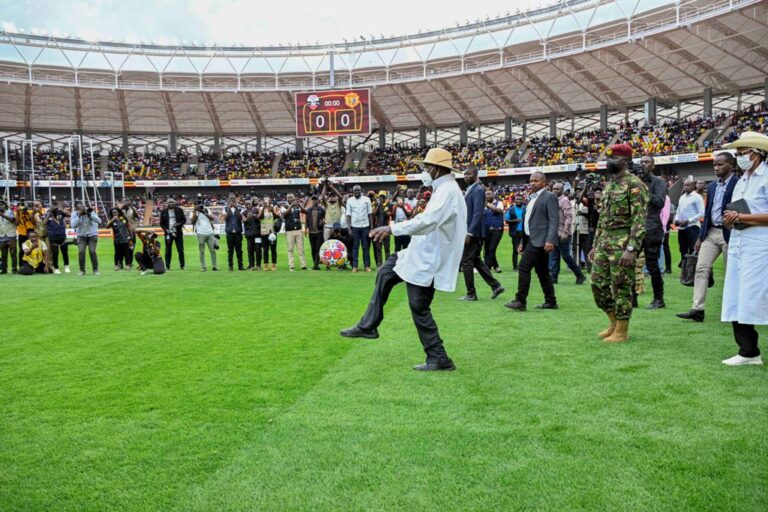
To symbolically launch the stadium, the President stepped onto the pitch and juggled a football three times at the centre circle, amid ululations and applause from thousands of football fans who had packed the stands.

Built on a 34-acre piece of land on the outskirts of Hoima City, the stadium complex comprises a 20,000-seater outdoor stadium designed to host football, rugby, and athletics, as well as a 2,000-seater indoor arena for indoor sports such as basketball, netball, volleyball, and other disciplines.

President Museveni commended the family of the late Dr. Rujumba, who donated 10 acres of land towards the project.

President Museveni also clarified public concerns regarding the financing of the stadium, stressing that the project was fully funded by the Government of Uganda, following a strategic decision to avoid high-interest pre-financing arrangements.

“Initially, the Summa company was supposed to pre-finance the project, but we found that their money came with a lot of interest. So, we said no — let us fund the project ourselves,” the President explained.

The facility meets international and FIFA-compliant standards, making it suitable for hosting continental and international competitions beyond AFCON 2027.

In addition to the main stadium, the complex includes training areas, athlete facilities, administrative blocks, media zones, parking areas, and modern security and safety installations.

FUFA DRUM: Busoga look to complete double over Kigezi

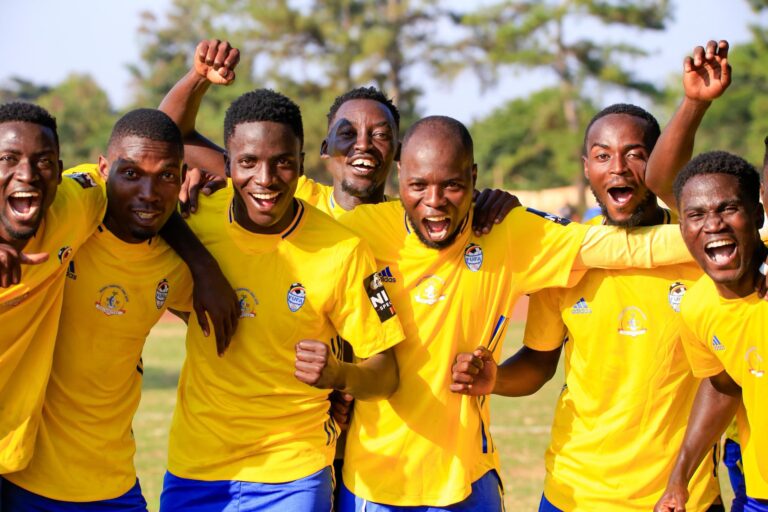
Busoga Province will be aiming to complete a season double over Kigezi Province when the two sides clash this Sunday, 28 December 2025, in a decisive FUFA Drum Group C encounter at Kabale Municipal Stadium.


Kick-off is set for 4:00pm, with Busoga, Kigezi and Bunyoro Province all tied on three points after two matches. Busoga currently top the group by a narrow goal difference advantage, making Sunday’s fixture vital in shaping the final group standings.


The Eastern Uganda side travel to Kabale carrying confidence from a 2–0 victory over Kigezi in the first leg played on 31 August 2025 at St John Vocational Technical Institute in Kamuli. Goals from Isaac Wagoina and Laban Tibita sealed that win, and Busoga will be hoping for a repeat performance away from home.


However, history poses a challenge. Busoga are yet to record a victory in Western Uganda, having managed two draws and suffered two defeats on previous visits. Despite this, head coach Ayiekho Charles Lukula believes his side is ready to turn the page.

“We respect Kigezi and the history in Western Uganda, but this is a new moment for our team. The players summoned will deliver,” Ayiekho said.

Kigezi, meanwhile, will be relying on home advantage and recent form after edging Bunyoro Province 3–2 in their previous group fixture on Saturday, 20 December 2025. The hosts will be eager to avenge their Kamuli defeat and tighten their grip on Group C.


Busoga Province Squad
Goalkeepers:
Mathias Muwanga (Police FC), Bukyo Ivan (Busoga United), Mugaya Ali (Kataka)
Defenders:
Bakali Magumda (BUL FC), Raymond Mangoli (SC Villa), Derrick Basoga (Maroons), James Mubezi (KCCA), Ismail Kawawulo (Unattached), Innocent Kitimbo (Maroons), Umaru Mukobe (JMC), Ivan Waako (Mbale Heroes), Swabir Mpasa (BUL FC)
Midfielders:
Daniel Shabena (NEC), Jerome Kirya (BUL FC), Pascal Ngobi (BUL FC), Ibrahim Mugulusi (BUL FC), Laban Tibita (URA), Elvis Ngondwe (SC Villa), Reagan Kalyowa (BUL FC), Yunus Sibira (Kitara), Akrim Senyondo (Busoga United), George Dhafa (Unattached), Richard Okello (BUL FC)
Strikers:
Isaac Wagoina (BUL FC), Lawrence Tezikya (Police FC), Franco Mugomba (Busoga United), Dickson Matama (BUL FC)
Technical Team
Daniel Gulere (CEO), Faisal Muhammed (Team Manager), Ayiekho Charles Lukula (Head Coach), Simeon Masaba (Assistant Coach), Eric Ndifuna (Assistant Coach), Ayub Balyejusa (Fitness Coach), Kenneth Magada (Goalkeeping Coach), Joseph Kato (Kits Man), Jacob Yateesa (Media Officer)


A positive result in Kabale would place Busoga in a commanding position ahead of their final group match, a home tie against Bunyoro Province scheduled for 4 January 2026 at St John Vocational Technical Institute.

ARSE KISSING: Sycophancy and how it undermines democratisation in Uganda

0

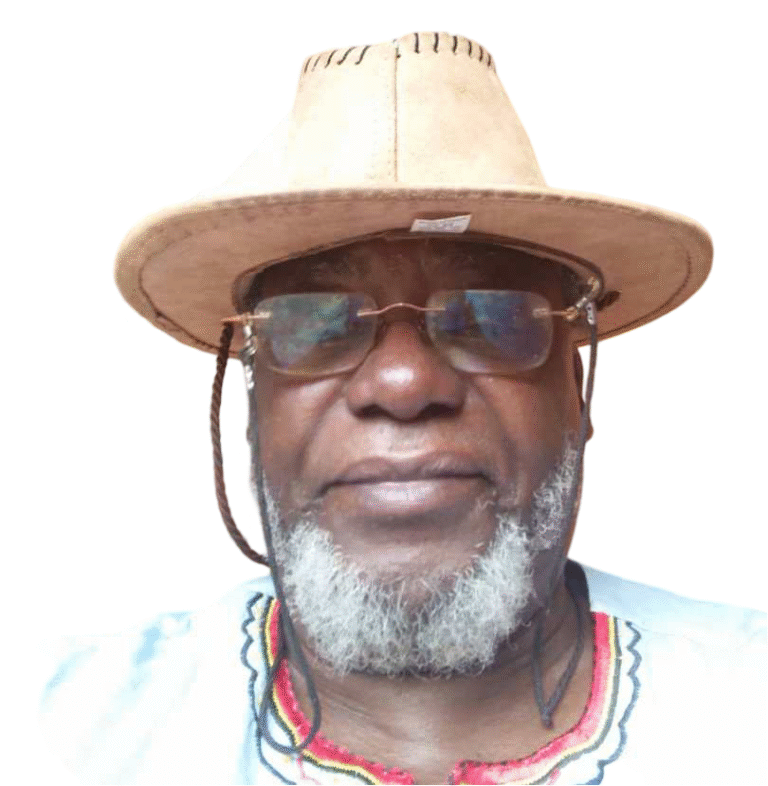
By Oweyegha-Afunaduula

Because of rising poverty and the corruption of the minds of both the leaders and the led in Uganda, from the bottom to the top of society, sycophancy has become integral to the Ugandan way of life..

Sycophancy is the excessive flattery of those in power. It undermines democratisation by stifling dissent, entrenching authoritarianism, and distorting decision-making. The flattered enjoy it and are not happy if there is no one to flatter them. The flatterers are not happy if there is no one to flatter because, by flattering, they gain favors and money, and many become extremely rich by developing the art and science of flattering. An ingredient of the mind of a flatterer is suspended critical thinking and critical reasoning. He or she can even lick the feet of the flattered, show deceptive loyalty, and hide his or her true colors of greed and selfishness.

Many Ugandans have been able to build mansions, acquire materials and wealth, pay fees for their children in the best schools, and seek health attention in the best hospitals in the world by perfecting the art and science of flattering.. The aim is to convince their victims that they are loyal and can defend them and their choices in case there are others contradicting them.

One common characteristic of flatterers is that they are very good at lying. They  position themselves as angels before the eyes of their victims – the flattered. Normally, they have no ideas because they carry thick heads that cannot think or reason critically.

Usually, when their victims fall out of the glory of God or the love of the people, the flatterers flee as quickly as they can, and as soon as possible. They waste no time in capturing other victims. They are, therefore, consumers that rarely contribute to production, development, transformation and progress of the country. However, they are good at chorusing what their victim prefers to put across to the people without changing anything so that they do not lose the favours that they get from him or her.

Flatterers are time waters and a burden to the country. They may be educated or not educated. They may come from rich or powerful families or from poor or powerless families. They do not care whether the people are losing or suffering so long as their flattery brings them dividends.

One thing is true. In Uganda’s political landscape, sycophancy can be a pragmatic choice for survival or advancement. However, this perpetuates a system where loyalty trumps merit and accountability.  Some people think it is part of Uganda’s Big Man Culture or Bigmanity. Bigmanity is a response to a situation where governor’s avoid forma structures or institution and they become the beginning and end of everything. Typically big men yield a great deal of social power in the absence of formal structures or where institutions are weakened in pursuit of loyalty rather than merit or competency (e g., Oweyegha-Afunaduula, 2023). Therefore, they value being circled by or in control of a patronal chain or network of sycophant. Merit and accountability are roadblocks to their pursuit of power, glory, money, wealth and domination of people.

My interest in this article is to reveal to my readers how exactly flatterers (sycophants) are and have been undermining the democratisation process in Uganda. 63 years after the country obtained its political independence from Great Britain on 9th October 1962 Uganda is not anywhere near achieving the status of “democratic country”. Therefore, democracy has been and continues to be more talked about than realised. It is a myth rather than a reality in Uganda, whatever the rulers and their sycophants want their victims – the people – and the world to believe. Virtually every civic Space and sphere of human endeavour in the country has been captured by the military. The military has also captured the three arms of government – Executive, Legislature and Judiciary, with the rulers happy with just giving them veneers of civility to secure international approval so that their primary aim of sticking to power as long as possible is not interfered with. It is deceptive democratisation or subversion of democracy-building. It is, therefore, de-democratisation – democratisation in the reverse!

Democratisation is “the structural government transition from an authoritarian government to a more democratic political regime, including substantive political changes ,moving in a democratic direction.

In Uganda all District Resident Commissioners (RDCs) and Resident City Commissioners (RCCs) and their deputies are institutionalised sycophants attached directly to the Office of President. By nature of their offices they are more inclined to the President although they are civil servants maintained by the taxpayers. Almost by design they work to disable opposition to the President. They gave been seen working with personalised security organs to restrict the political activities, movements and actions of Opposition political actors. In other words, they are essential elements in the de-democeatisation of Uganda in the interest of perennial power retention by the President of Uganda.

Sycophancy undermines democratisation in multiple ways:

(i) Stifling dissent:

Sycophancy creates a culture where questioning government actions is seen as “unpatriotic” or risky. For instance, Members of Parliament (MPs)  who toe the party line often get rewarded, while dissenters face backlash. We have seen this happen in the Parliament of Uganda with both the Speaker and Deputy Speaker who are members of the National Resistance Movement  (NRM) Caucus participating in the backlash.  For example,  in the case of the rebel NRM MPs – Muhammed Nsereko, Barnabas Tinkansimiire, Wilfred Nuwagaba,  John Babtiste Nambeshe and Theodore Sekikubo and Okot Ogong, they were backlashed by the President and the Speaker, who was then Rebecca Kadaga. They acquired the label “rebel MPs” when they refused to act sycophantically in Parliament, unlike the other NRM MPs who preferred groupthink or bandwagon approach changing the constitutional provision, which power wanted, to expunge presidential age limit from the Uganda Constitution 1995.  Sekikubo characterised the expungement treasonable and deception to hoodwink boba fide MPs that amending the Constitution is a national cause (Parliament Watch, 2021).

The question arise: If the dissent of MPs can be stifled for a bad or unpopular cause, why can it not happen in the general population in general and in the case of Opposition?

(ii) Entrenching Authoritarianism

Sycophants amplify leaders’ tendencies to centralise power, citing “strong leadership” or “stability”. President Tibuhaburwa Museveni’s long rule exemplifies this, with constitutional amendments removing term limits and age restrictions so that he rules like a life President just like Idi Amin did. We see the NRM becoming more and more personalised and members unable to challenge the choices of its Chairman and sole presidential candidate since 1996. The personalisation of NRM is transfered by its leader to the national stage where as President, Tibuhaburwa Museveni personalises power (see Oweyegha-Afunaduula, 2025).

Under such political reality, nothing works without the hand and head of the President (Oweyegha-Afunaduula, 2025). As in most African countries, authoritarianism engender dysfunction, which the rulers adopt as a governance tool (e.g Oweyegha-Afunaduula, 2025). Indeed in Uganda democracy has become an illusion with Uganda’s authoritarian resurgence (Faila Binti Kankwala and Mwanza Ade, 2025).

It is a sad reality when Sycophancy is embedded in the structure and function of an Electoral Commission as is the case in Uganda. The electoral process ei be driven both authoritatively and sycophantically. It is this truism that was behind my recent decision to write the article titled “The Emergence of Electoral Athoritarianism in Uganda: 1996 to Present (Oweyegha-Afunaduula, 2025). Indeed we have been recently treated to electoral authoritarianism in Uganda when the President of Uganda desired and unconstitutionally enforced the use of biometric voting and the Electoral Commission sycophantically adopted it without recourse to the Constitution of Uganda 2025, Which does not provide for biometric voting. We were also treated to military intervention when the Chief of Defense Forces, Muhoozi Kainerugaba, and other Generals ordered Ugandans to go home after voting in the 2026 elections in contravene of the Uganda Constitution, which provides that voters should stay 20 metres away after voting.

(iii) Distorting Decision-Making

Decisions prioritise pleasing the top over public interest. Example includeprojects aligned with President Tibuhaburwa Museveni’s interests of power and power retention (e.g., infrastructure even in the Democratic Republic of Congo’s Eastern region, and poverty intensification and extensification through schemes such as Operation Wealth Creation, Myooga and Parish Development Model. Even the recent decisions of the Chairman of the Uganda Electoral Comnission reflect decisions made outside the Commission. The authoritaria decision to deploy heavily on Bobi+Wine’s Campaign trail prior to the 2926 elections rendered the Electoral Commission a paper tiger as it was no longer in charge of the security of the presidential candidate, and actually did nothing to restore public trust that the electoral process was not under military control.

(iv) Impact on Institutions

Institutions like the judiciary and Parliament have been weakened by sycophantic officials who prioritise loyalty over independence. This is also true of the Electoral Commission chaired by Justice Byabakama, which is no longer capable of sustaining public trust that it will be fully in charge of the 2026 elections. The Chairman continues to act sycophantically and be a factor in the institutional and military capture of both the Electoral Commission and the electoral process. All his recent decision do not spur public trust. Few believe he is working in the public interest of democracy

(v) Effects on Opposition and Civil Society

 The ruling party’s sycophantic culture contrasts with opposition struggles to be heard, reinforcing power imbalance in the country. We have seen this during the current politicking and electioneering towards the 2025 elections. The NRM leadership has allowed its Chairman to personalise and militarise it. Just like it was linked to the National Resistance Army  (NRM )it has built strong ties with the Uganda Peoples Defense Forces (UPDF). The  10 UPDF Members of Parliament  manifest as if they NRM  representatives. Virtually all UPDF officers campaign for NRM’s Supremo, Tibuhaburwa Museveni, and NRM candidates. The Chief of Defense Forces has deployed heavily on Bobi Wine’s Campaign trail, displaying that the army is favour of the incumbent. The choice UPDF leadership to ally itself with NRM and is determined to ensure no alternative leadership emerges in the 21st Century. This way, it is continuing to militarise politics and to weaken civil society. Already so many civil society organisations have been banned in Uganda. Besides, authoritarianism has ensured there is no adequate civil education for the voting population. Fear and silence are the rule rather than the exception ub Uganda.

Way Forward for Uganda

It is because of sycophancy that hereditary politics has taken root in the country, anti-people laws have been enacted by Parliament, anti-people judicial processes have become common, freedom, democracy and justice are more talked about than officially pursued by the government, and public money is wasted on the loyalists at the expense of the public interest. To strengthen Uganda’s democracy, addressing sycophancy requires promoting accountability, institutional reforms, and a cultural shift towards critical engagement of Ugandans In the leadership, governance and development of the country. So far so bad. It is as if the long-term choice of the governors of Uganda is apartheid-like leadership and governance  of Uganda, in which the Indigenous Ugandans and their communities are subject to people with exogenous roots.  However, all this ei not be possible unless presidentialism is detonated (e.g., Oweyegha-Afunaduula, 2022). When all power is constitutionally placed in one person – the President – which the Uganda Constitution, 1995 does,  authoritarianism and sycophancy are good ves fellows. That is why President Tibuhaburwa Museveni can tell Ugandans, “If you want to test my powers, do it you will see”.  So it is either revisiting the Constitutional powers of the President to redistribute them accordingly or innovate a new pro-people Constitution, which does not encourage authoritarianism and Sycophancy if Ugandans want demicracy in their country.

Sycophancy’s grip on Uganda’s politics threatens democratisation. Breaking this cycle demands awareness, checks on power, spaces for critical voices and de-militarisation civic spaces. Bigmanity is internally violent. Ugandans must resolve to combat sycophancy and bigmanity. Otherwise the country will never enjoy freedom, justice and democracy.


SHARPENED FOCUS: Confident Uganda Cranes set for tough AFCON 2025 opener against Tunisia

0

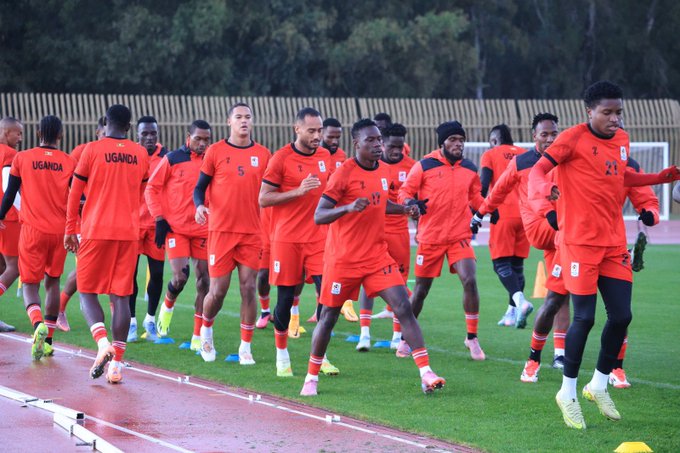
When the floodlights come on in Morocco on Tuesday night, Uganda will once again step onto Africa’s grandest football stage with a familiar blend of hope, belief and quiet determination.

The Uganda Cranes open their TotalEnergies Africa Cup of Nations Morocco 2025 campaign against Tunisia in Group C, a fixture that immediately tests their resolve against one of the continent’s most consistent football nations. It is a demanding start, but one the Cranes embrace as part of their long-awaited return to the AFCON finals.

For head coach Paul Put, the moment represents more than just an opening match. It is a chance for Uganda to reintroduce itself to the African and global football audience.

“It is a big and a good opportunity,” Put says. “You are going to play not only for the African continent, but also for the whole world who watch this tournament. We have the motivation, and we are going to do our level best to give a good performance.”

A Team Built on Balance and Belief

Uganda’s journey to Morocco has been marked by deliberate preparation and careful squad building. The Cranes were the first team to set up camp in Morocco, beginning training on December 8 — an early start that signalled intent, even as foreign-based players arrived later due to competition regulations.

Rather than disrupting preparations, the extended camp strengthened cohesion and sharpened focus.

“Unfortunately, we were not complete at the beginning, but we have been preparing from the 8th,” Put explains. “The players are really ready to play this tournament. Everybody is ready.”

The squad itself reflects a philosophy Put has steadily refined since taking charge — a balance of seasoned internationals, rising young talents and locally-based players who understand the pride of wearing the national shirt.

Midfielder Khalid Aucho, preparing for his third AFCON finals, captains the side and embodies that blend of experience and leadership. Around him is a group expected to share responsibility, regardless of who starts.

“The players who start must be focused and motivated,” Put says, “and the players on the bench must be ready to make a difference.”

Overcoming Setbacks, Sharpening Focus

Uganda’s final build-up was briefly clouded by minor injury concerns following friendly matches, but the Cranes arrive at the tournament fully fit. Put confirmed that Mato, Jude and Jordan have all recovered and are available for selection, offering depth and flexibility ahead of the opener.

It is a timely boost as the Cranes prepare for a physically and tactically demanding contest.

Respect Without Fear

Tunisia arrive in Morocco carrying a long unbeaten run and the weight of history as one of Africa’s most successful football nations. Their pedigree is unquestioned, but Uganda are refusing to be overawed.

Put insists that statistics and past records have no place in the dressing room.

“We are facing Tunisia, who did not lose for many games. It is a big team with very good players,” he says. “But also, we have a good team.”

That quiet confidence defines Uganda’s approach — respectful, but unafraid.

Setting the Tone

With Nigeria also lying in wait in Group C, the opening match against Tunisia carries added significance. A positive result would not only boost morale but send a clear message that Uganda’s return to AFCON is about more than participation.

As Morocco hosts Africa’s finest and millions watch across the continent and beyond, the Uganda Cranes step forward under the lights with a simple aim: to compete, to believe, and to announce themselves once again on Africa’s biggest football stage.

THE LAW AND POLITICS: Uganda Law Society executive order endorsing opposition candidates sparks legal and political debate

0

The Uganda Law Society (ULS) has been thrust into controversy following an executive order issued by its self-exiled President, Isaac Ssemakadde, announcing the Society’s departure from political neutrality and endorsing opposition candidates ahead of the 2026 general elections.

In Executive Order RNB No. 6 of 2025, Ssemakadde publicly endorsed National Unity Platform (NUP) presidential candidate Robert Kyagulanyi Ssentamu, People’s Front for Freedom (PFF) Kampala Lord Mayoral candidate Erias Lukwago, and Dr Ekwaro Ebuku for Member of Parliament, Oyam South Constituency.

The move has drawn sharp criticism from within the legal fraternity, with lawyer Tonny Tumukunde describing the order as illegal, personal, and damaging to the credibility of the country’s largest professional legal body.

“ULS Must Remain Nonpartisan”

In an interview, Tumukunde argued that the ULS is, by law, a nonpartisan institution and must maintain political neutrality in executing its mandate under the Uganda Law Society Act.

“The Uganda Law Society serves all Ugandans regardless of political affiliation, especially at a time when the country is politically tense,” Tumukunde said. “The president’s impugned orders are not laws.”

He cited a High Court decision by Justice Musa Ssekana in Hashim Mugisha Hashim v. ULS & Isaac Ssemakadde, which held that executive orders issued by the ULS president do not carry the force of law.

“These are mere pieces of paper that the wind is blowing into the corridors of courts,” Tumukunde remarked.

Accusations of Personal Agenda

Tumukunde attributed the endorsements to what he called Ssemakadde’s personal political interests rather than a collective decision of the Society.

“This is about ego. Isaac Ssemakadde is a known opposition fanatic,” he said, recalling past instances where the ULS president hosted Kyagulanyi and Lukwago. “He has no respect for the rule of law. If he did, he would know that ULS should not be dragged into political bias.”

He further accused Ssemakadde of disregarding advice from colleagues and acting unilaterally.

Dissent Within the Society

Asked about the fate of ULS members who disagree with the executive order, Tumukunde warned of possible reprisals but said many members have learned to ignore the leadership style of the current president.

“He wants to be a demigod over every member,” he said. “But people now understand his ways. They are simply waiting for his illegal tenure to lapse.”

Ssemakadde’s term as ULS president is expected to end in about two months.

Claims of Regime Change Ambitions

The executive order also suggested that ULS would mobilise resources to challenge the ruling National Resistance Movement (NRM) government, a claim Tumukunde dismissed as unrealistic and unrepresentative of the Society’s membership.

“Don’t think all members are in agreement with this decision,” he said. “Many lawyers still appreciate the NRM’s leadership amidst the country’s challenges.”

He further alleged that Ssemakadde’s actions were influenced by personal interests linked to his self-exile and alleged asylum ambitions.

“Let him serve the white man’s pie by himself, not throw it into the hands of the innocent many,” Tumukunde said.

Waiting Out the Term

On whether there are efforts to safeguard the Society’s integrity and public image, Tumukunde said dissenting members are opting for restraint rather than confrontation.

“The sober few are looking on in disbelief,” he said. “The tenure is just two months to end. Let him sail.”

The ULS leadership has not yet issued an official response to the criticism, but the executive order has intensified debate about governance, legality, and political neutrality within one of Uganda’s most influential professional bodies.

BLISTERING: Kigulu, Bukooli, Luuka and Bulamogi Produce Finalists for MTN Busoga Cycling Championship 2025

0

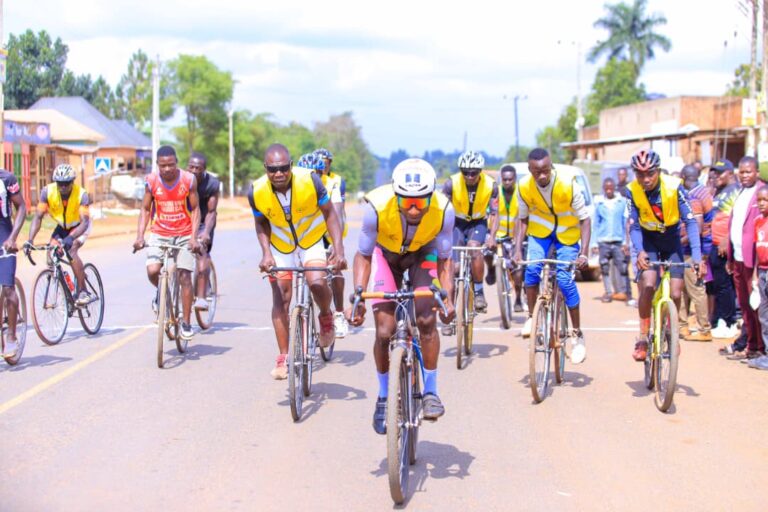
The MTN Busoga Cycling Championship 2025 has taken a thrilling course as qualifiers from Bukooli, Kigulu, Luuka and Bulamogi successfully produced finalists ahead of the grand finale of the third edition of the prestigious regional race.


In Bukooli, competition was intense on Sunday, December 21. In the Mountain Sports Bike category, Malinzi Sam, Ogutu Ronald and Bogere Atanansi sealed qualification spots after strong performances. The Tippa category once again belonged to Luganda Tiffu, who maintained his dominance by winning again now eyeing his third triumph for a third consecutive time since the championship’s first edition in 2022, alongside Ngodobe Brian Koowa and Friday James.


Kigulu also delivered exciting races on the same day. Kazimingi Lukumani topped the Mountain Sports Bike category, followed by Odoto John, who remarkably qualified for the finals for a third straight time. Odoto is a former champion from the 2022 inaugural edition and successfully defended his title in the previous edition. Muwanguzi Silver completed the list of qualifiers. In the Tippa category, Magumba Ashiraf, Teyebaka Kenneth and Majidu Kyawa earned their places in the grand finale.


Action shifted to Luuka on Monday, December 22, where Magemeso Mensulamu, Kiwanuka Musilim and Muwereza Lawrence emerged as qualifiers in the Mountain Sports Bike category. The Tippa category saw Musitwa Andrew lead the field, followed by Nassan Junior and Kawoma Micheal.


On the same day, Bulamogi concluded the qualifier round with Dakasi Akim, Younger Sadam and Isabirye Latifu qualifying in the Mountain Sports Bike category. In the Tippa category, Naika Robert, Nabikamba Daniel and Mukisa Amos booked their tickets to the finals.

Action of the preliminary races continues on Tuesday 23rd in Butembe and Bugabula and on Wednesday 23rd this month in Bukono, Busiki and Bigweri.

LANDMARK RULING: High Court upholds Electoral Commission decision to disqualify Walukaga from Busiro East MP race

0

The High Court in Kampala has upheld a decision by the Electoral Commission (EC) to disqualify Busiro East parliamentary aspirant Walukaga Mathias from the 2026 general elections, ruling that he lacked the minimum academic qualifications required at the time of nomination.

In a judgment delivered on 21 December 2025, Justice Simon Peter M. Kinobe dismissed Walukaga’s appeal against the Electoral Commission’s decision that cancelled his nomination over an expired Mature Age/Aptitude Test certificate .

Walukaga had been nominated on 23 October 2025 to contest for the Busiro East Constituency seat but was later challenged by a registered voter, Lubowa John Kilimiro, who petitioned the Electoral Commission alleging that the candidate did not possess the requisite academic qualifications.

The dispute centered on a Mature Age/Aptitude Test certificate issued to Walukaga by the Islamic University in Uganda (IUIU) on 12 June 2023, which expired on 12 June 2025.

Although the National Council for Higher Education (NCHE) issued a certificate of equivalence equating the qualification to Advanced Level standard on 11 June 2025, the court found that the underlying certificate had expired by the time of nomination.

Walukaga argued that his certificate remained valid because he had enrolled for further studies at St. Lawrence University in August 2023 and relied on a letter from IUIU stating that the certificate only expires if not used for further studies.

However, the court rejected this argument, holding that Legal Notice No. 12 of 2015 clearly limits the validity of a Mature Age certificate to two years from the date of award, with no provision for extension.

“The petitioner’s only qualification had expired by the date of nomination, rendering both the certificate and the NCHE equivalence invalid,” Justice Kinobe ruled, adding that an administrative letter could not override express statutory provisions .

The court also dismissed Walukaga’s claim that the Electoral Commission lacked jurisdiction to invalidate his nomination, affirming that under Article 61(1)(f) of the Constitution and Section 15 of the Electoral Commission Act, the Commission has authority to hear and determine election-related complaints arising before polling.

Justice Kinobe emphasized that nomination disputes must be resolved before elections to safeguard electoral integrity and avoid costly post-election litigation.

In the final orders, the court dismissed the appeal and declined to award costs to either party, citing the matter’s public importance and its novelty in Uganda’s electoral jurisprudence.

Walukaga’s disqualification therefore remains in force, clearing the way for the Busiro East parliamentary race to proceed without his candidature.-

PEDALS OFF: Bunha, Bunhole Fire First in MTN Busoga Masaza Cycling Championship

0

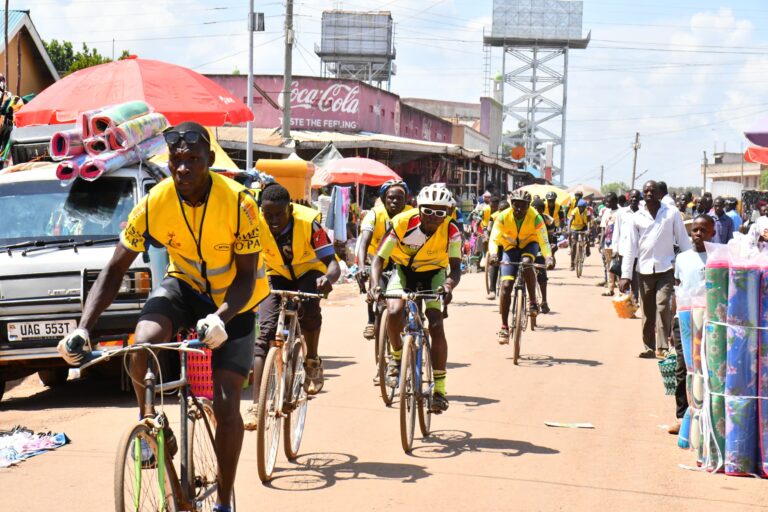
The third edition of the MTN Busoga Cycling Championship officially kicked off today with competitive races held in the chiefdoms of Bunhole and Bunha, as cyclists battled for qualification slots to the grand finals scheduled for next month.

In line with the championship format, riders competed over routes not exceeding 50 kilometers, with only the top three cyclists in each category from every chiefdom or county earning a place in the finals.

Bunha Chiefdom Results

Competition in Bunha was intense, especially in the Mountain Sports Bike category, where Farmer Shafick, Yanga Salaka, and Ochwe Zevilin secured qualification to the finals. Mukuve Brain and Waiswa Brian narrowly missed out, as only three slots were available.

Farmer Shafick continues to show consistency in the championship. In the previous edition, he finished as the second runner-up in the Tipa category finals while cycling for Butembe, behind Bukooli’s Tifu Luganda, who successfully defended his crown for a second consecutive time.

In the Tipa category, Kigyenyi Hussein, Kakaire Meni, and Basalilwa Japhari qualified for the finals, while Mapengo Malik and Maganda ivan failed to make the cut.

Kakaire Meni, who competed for Bunha last season in the Mountain Sports Bike category, reached the finals and finished fifth overall, earning UGX 300,000. This season, he has switched to the Tipa category but remains under Bunha Chiefdom.

Bunhole–Bunhanhumba Chiefdom Results

In Bunhole–Bunhanhumba, cycling fans lined the roads as action unfolded in both categories. Lukakamwa Nelson, Kakaire Tegike, and Masaba Ben booked their places in the Mountain Sports Bike finals. Abdallah Aziz and Mugoya Steven were eliminated at the qualification stage.

The Tipa category saw Illaka Yoweri, Waiswa Ivan, and Wandalo Ronald qualify for the finals, while Watasa Hamidu and Mawaba Denis missed out.

What’s Next

The MTN Busoga Cycling Championship continues tomorrow, Sunday 21st, with races scheduled to take place in Kigulu and Bukooli, where more cyclists will battle for the remaining final slots.

MULINDWA: NRM Sports gains are worth protecting

0

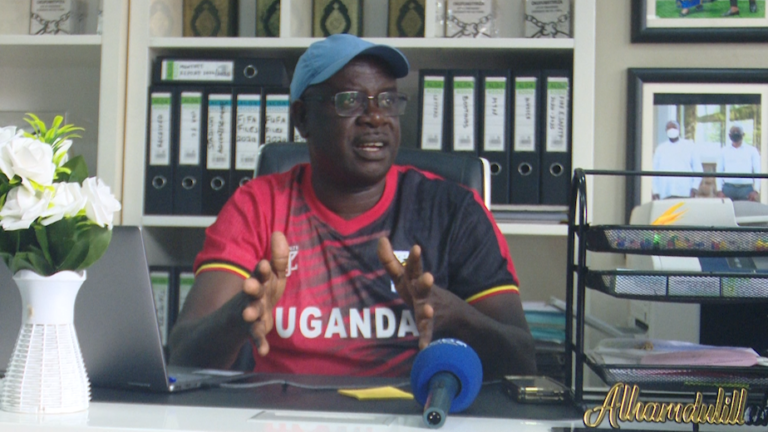
FUFA Executive Committee Member and NRM Sports Spokesperson Rogers Mulindwa has rallied sports stakeholders to support the ruling government in the January 15, 2026 elections, saying the gains made in Uganda’s sports sector are tangible and worth protecting.

In a one-on-one interview with Busoga Times at his office at Hamz Stadium, Nakivubo—where he also serves as Stadium Chairman—Mulindwa said Uganda’s sports transformation is directly linked to sustained government investment under President Yoweri Kaguta Museveni.

Musa Kikuuno: Hon. Mulindwa, as Uganda heads to the January 15, 2026 elections, many sports men and women want to know whether there are real gains in sports worth protecting under the NRM government. What do you say?

Rogers Mulindwa:
When President Museveni came to power in 1986, Uganda had only one stadium Nakivubo which was even in a poor state. But in 1990, President Museveni in partnership with the Chinese government constructed Mandela national stadium Namboole and today, we have facilities like Hoima Stadium, Akii-Bua Stadium, Hamz Stadium Nakivubo, FUFA stadium Kadiba and the Teryet Olympic Stadium in Kapchorwa. These developments are a result of deliberate government investment. At FUFA, we could not afford the quality coaches we have today without government support. The sports budget has grown from about Shs4 billion in 2013 to nearly Shs40 billion, with Shs17 billion coming directly from government. These are gains worth protecting.

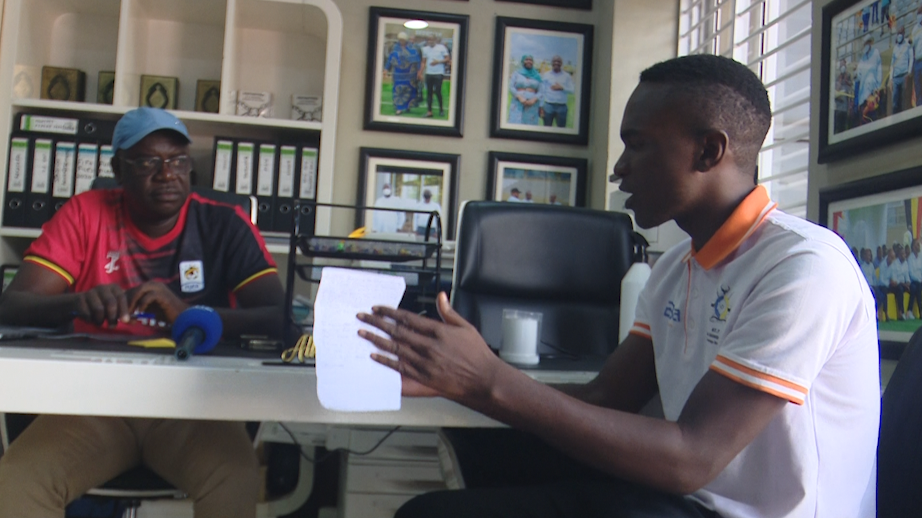
BusogaTimes Sports Journalist Musa Kikuuno (in white) interviewing FUFA EXCOM Member, chairperson HAMZ Nakivubo stadium and NRM spokes person Rodgers Mulindwa (in Red) on Friday 19th December 2025

Musa Kikuuno: Some viewers feel Busoga Region has been left out. What gains should the region look at?

Rogers Mulindwa:
Busoga is not left out. Government plans include upgrading 15 stadiums nationwide, and Kyabazinga Stadium in Bugembe is among them. The proposal is to develop 1,000 to 5,000-seater stadiums with floodlights and quality playing surfaces. Masaka Recreation Ground has already received Shs9 billion, and others, including Kyabazinga Stadium, are lined up.

Musa Kikuuno: If protest votes turn violent, could that affect Uganda’s AFCON 2028 hosting ambitions?

Rogers Mulindwa:
Yes, violence would affect preparations, but Ugandans are wise. We expect peaceful elections in 2026, President Museveni to win again, and Uganda to successfully host AFCON 2028. That will be a proud moment for the country.

Musa Kikuuno: Among the eight presidential candidates, who do you believe has the strongest sports vision?

Rogers Mulindwa:
President Museveni stands out. His commitment to sports is clear. For instance, during the CHAN tournament in Uganda, some leading opposition figures never appeared at Namboole. That shows limited interest. Others are young and lack deep understanding of African sports structures. For sports stakeholders, our choice is clear.

Hoima city Stadium set to be officially opened on 24th December 2025 (Source: Google)

Musa Kikuuno: You’ve focused a lot on football. How about other sports?

Rogers Mulindwa:
Other sports are also progressing well. Netball recently won the Celtic Cup and narrowly lost to South Africa in the Africa Netball Championships. Our athletes continue to win medals internationally, and some are now on government payroll as a reward for their performance. That shows commitment across sports.

Musa Kikuuno: Beyond stadiums, is Uganda ready to host AFCON in terms of health, transport and accommodation?

Rogers Mulindwa:
Yes. Our health systems are functional, road infrastructure has improved, and CAF-standard hotels are available across the country. Government has invested heavily to ensure Uganda is ready.

Musa Kikuuno: Finally, is President Yoweri Kaguta Museveni your preferred candidate in 2026?

Rogers Mulindwa:
One hundred percent yes. He has consistently supported sports development. Anyone who values sports should vote NRM on January 15, 2026.

Musa Kikuuno: Your closing message?

Rogers Mulindwa:
Choose peace. Peace is what allows sports and the nation to grow.