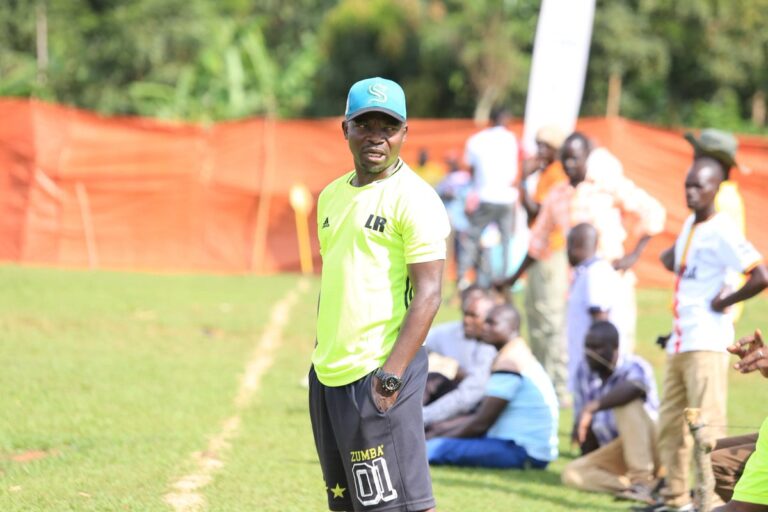
Bukooli Namayingo head coach Siraji Bogere has once again proven his tactical brilliance, guiding his side to the semifinals of the 2025 MTN Busoga Masaza Cup after edging Bugweri 4–2 on penalties at Kyabazinga Stadium, Bugembe.
Bogere, who has already won the prestigious tournament twice as a manager in 2016 and 2022, is now chasing a third championship title, and he believes this could be his year of glory once again.
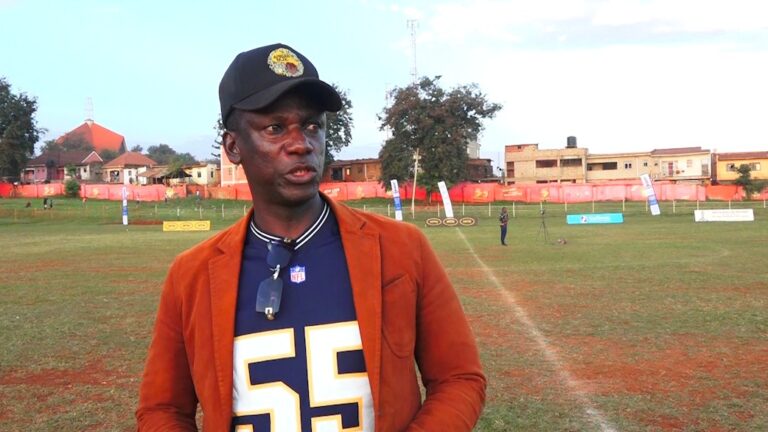
“We don’t fear Kigulu. I’m confident we shall eliminate them and reach the finals. My target is to win the trophy this edition,” Bogere said with confidence. “When I saw the game heading to penalties, I told my players to place their kicks on the right side of the goalkeeper and instructed my keeper to focus on his right — that worked for us. But I can’t forget to thank God because Bugweri was a strong team.”
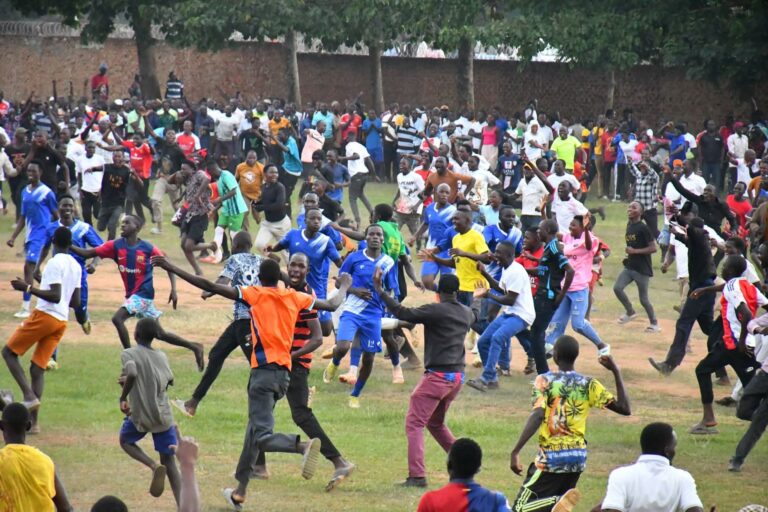
The quarterfinal encounter ended goalless in normal time before Bukooli Namayingo held their nerve in the shootout, scoring four of their five kicks while Bugweri missed two.
Ondusu Peter, who netted the decisive penalty to send Bukooli Namayingo through, said composure and confidence were key in their win.
“It was a tough game, both teams were strong. But I trusted my decision, stayed calm, and scored. We thank God we’re in the semis. I believe this is our year to win,” he noted.
Bukooli Namayingo now set up a semifinal showdown with Kigulu, who earlier defeated Bukono 2–1. Interestingly, both teams were in the same Nhendha group earlier in the tournament, each winning at home.
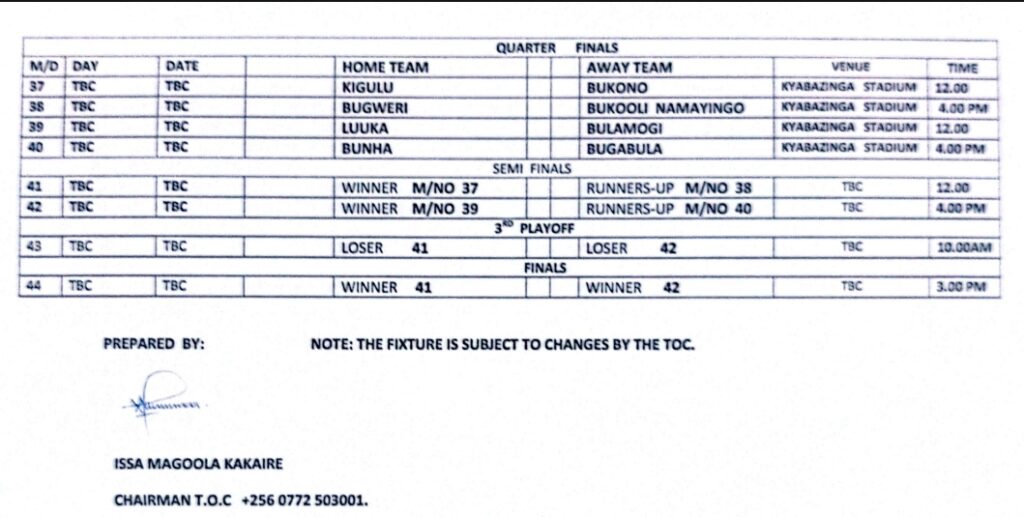
The Busoga Masaza Cup 2025 quarterfinal action continues his Sunday 12th October at Kyabazinga Stadium Bugembe, with Luuka facing Bulamogi at 12:00pm and Bunha taking on Bugabula at 4:00pm.
Speaker of Parliament Anita Among has appealed to teachers under the Uganda National Teachers’ Union (UNATU) to call off their ongoing strike, assuring them that Parliament will push for the inclusion of salary enhancements for humanities teachers in the 2026/27 national budget.
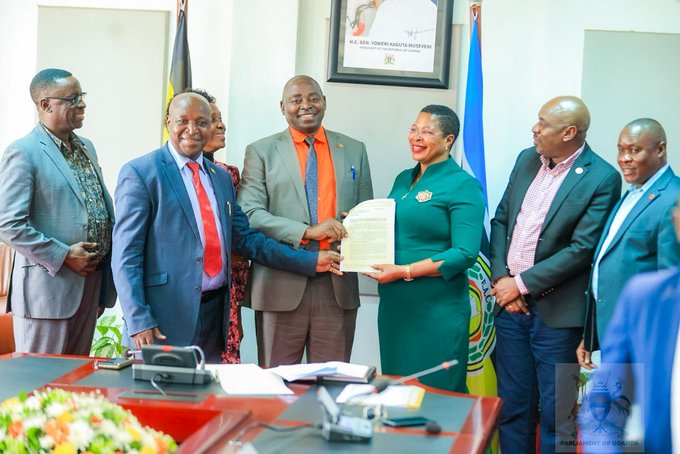
The Speaker made the remarks on Thursday after receiving a petition from UNATU leadership at Parliament, in which the union demanded that government address the salary disparities between teachers of humanities and sciences across the country.
“As Parliament of Uganda, I want to promise you that we are going to do whatever it takes to ensure that these issues are resolved, and all these things are revolving around money,” Among said. “I am happy that you have brought this petition before we go into the budgeting time.”
Among emphasized that President Yoweri Museveni is fully aware of the discussions and pledged that Parliament will work closely with the Executive to ensure the long-standing pay gap is addressed.
“I want to request you, please go back and do the work as we handle this issue. Now that you have come to Parliament, there is no way Parliament will let you down,” she said. “The commitment I’m giving you is on behalf of President Yoweri Kaguta Museveni because there is no way we can commit ourselves here without the President knowing. Whatever we do here, we work together with the Executive.”
The Speaker urged teachers not to paralyze learning, assuring them that their concerns would be handled expeditiously. “Let’s not paralyze the country. Let’s go back and work and this issue will be resolved. It is in our best interest that you are happy, your welfare is good, because you mean a lot to this country,” Among said.
To expedite the matter, Among directed Parliament’s Committees on Public Service and Education to hold a joint sitting to scrutinize salary disparities between science and humanities teachers. She also instructed that the petition be forwarded to the Ministry of Public Service for immediate consideration.
“We are going to refer this petition to the Committee of Education and Sports together with the Committee of Public Service for a joint review so that they advise Parliament,” she stated. “In the meantime, we are also going to write to the Minister of Public Service and attach these petitions and ask him to act on them.”
UNATU General Secretary Filbert Baguma Bates reiterated that the union’s demand is rooted in the principle of equity, not excess. “Our demand is not an excessive claim, but a measure to restore fairness and parity within the profession,” Baguma said. “It is the minimum requirement to align all teachers with their rightful place in the salary scales and uphold equity in remuneration.”
He warned that continued disparities could lead to more industrial actions, noting that “when teachers thrive, Uganda’s learners and the nation’s future thrive with them.”
UNATU’s petition follows years of contention over the government’s decision to enhance salaries for science teachers while leaving those in humanities and arts at previous pay levels.
The organizing committee of the Busoga Masaza Cup 2025 has officially confirmed the dates and venue for this year’s quarterfinal stage.
All matches will be hosted at the Kyabazinga Stadium Bugembe in Jinja City, starting Saturday, 11th October and concluding Sunday, 12th October 2025.
Saturday’s opening fixtures will see Kigulu face Bukono at 12:00pm, followed by Bugweri clashing with Bukooli Namayingo at 4:00pm.
Action continues on Sunday, 12th October, as Luuka battles Bulamogi in the early kickoff at 12:00pm, before Bunha takes on Bugabula in the late encounter at 4:00pm.
Fans will be charged an entry fee of 3,000/= (Ordinary) and 10,000/= (VIP) to witness the much-anticipated knockout clashes that will determine this year’s semifinalists.
The much-anticipated quarter finals of the 8th edition of the Busoga Masaza Cup have been postponed to a later date, according to the tournament’s organizing committee (TOC). The matches, initially slated for Saturday, October 4, and Sunday, October 5, will now be played on new dates yet to be confirmed.
Despite the delay, the TOC has confirmed that all quarter final fixtures will be staged at Kyabazinga Stadium Bugembe in Jinja City.
The official fixtures remain intact, promising thrilling encounters once rescheduled:
Kigulu vs Bukono at 12pm
Bugweri vs Bukooli Namayingo at 3pm
Luuka vs Bulamogi at 12pm
Bunha vs Bugabula at 3pm
Tournament spokesperson David Mwesigwa, in a brief message shared via WhatsApp, confirmed: “All matches will be played at Kyabazinga Stadium Bugembe but dates to be communicated.”
Part of the fixtures shared by the tournament spokes person on 1st October 2025
The postponement has left fans and participating teams on edge as they wait for the revised schedule that will determine which four chiefdoms I march into the semifinals. While the reason behind the delay remains unclear, insiders suggest the TOC will issue an official explanation in the coming days.
The quarter finals are expected to draw massive crowds once action kicks off at Bugembe, as Busoga’s teams battle for supremacy and a place in the last four.
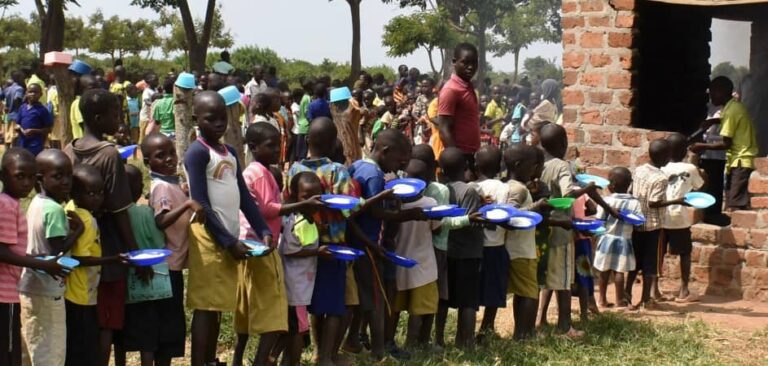
As government battles industrial teachers’ action and prepares to launch a national School feeding program to improve learning and reduce drop outs, International Development Institute (IDI) Uganda has delivered food for over 13,000 pupils in its 16 supported Primary Schools attracting learners back to schools.
The supplies under IDI Uganda School Feeding Program by Agroways Uganda include 57,950 kgs of Posho, 27,000 kgs of beans and 660 liters of cooking oil
Christine Okalang the Regional manager underscored the importance of mid-day meals to learners not only as a means of attracting learners to school but a basic right.
“We are here to fight both spiritual and physical hunger through our child focused community transformation focusing on building the capacity of parents to manage their children’s education, health, nutrition and livelihood wrapped up in spiritual growth,” Okalang revealed.
Okalang added that IDI Uganda’s generosity, expertise and support leaves a lasting and impactful legacy of providing a conducive learning environment and enhancing quality education
Kamuli District Education Officer Joseph Waibi revealed that schools are struggling with parents to feed the children coupled with poor harvest and the few schools under IDI Uganda are lucky.
The DEO added that IDI Uganda has worked on retooling teachers, school management and PTA, sanitation and menstrual hygiene management and above all introduced school feeding gardening projects for pupils to grow food and vegetables to supplement and sustain the feeding program in a participatory manner.
“Food provision has contributed to retention and as Education department, we are grateful to IDI Uganda for its extra contribution towards capacity building of teachers in the district, infrastructure development and community engagement to embrace and support education using their responsive, liberal and engaging model,” Waibi hailed.
Stella Lubuga the headteacher Bukusu Primary School and IDI Uganda supported schools Academic coordinator reported that the lunch supply spurred sudden return of pupils to schools in the second week and it has become the habit that the children wait for food supply to report back from holidays.
“Food and mid-day meals plays a pivotal role in curbing school absenteeism, boosting retention and we are sure we are teaching children who are not hungry and angry and we are working with parents for the sustainability and indebted to IDI Uganda for this sacrifice,” Lubuga commended.
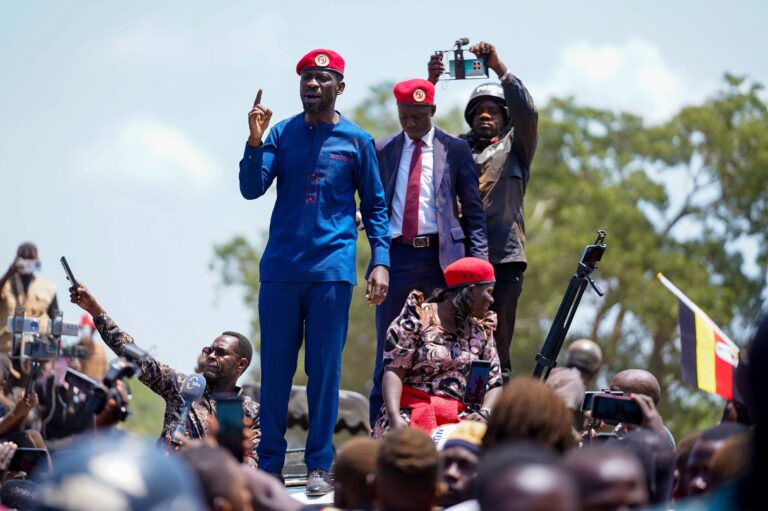
The National Unity Platform (NUP) and its leader, Robert Kyagulanyi Ssentamu, popularly known as Bobi Wine, completed a highly contested mobilization tour of Kamuli and Buyende districts, claiming victory despite facing extensive police blockades and road closures designed to thwart their movement.
NUP officials asserted that authorities’ attempts to force them off major thoroughfares and onto remote, dusty alternative roads inadvertently played into their strategy, allowing them to connect directly with their core rural base.
The Kamuli and Buyende tour on 30th September, 2025, was characterized by standoffs and forced detours, particularly frustrating NUP’s attempts to reach planned destinations such as Bukungu landing site.
Blockades and ‘Eating Dust’
According to statements released by the party leadership, police deployments aggressively blocked main roads, compelling the NUP convoy to navigate challenging, unpaved routes.
David Lewis Rubongoya, the NUP Secretary General, detailed the logistical struggles faced by the team, emphasizing the poor state of the alternative roads and the deliberate attempts to extend their travel time.
“Today has been a day of eating so much dust because of the terrible roads. It’s been a day of enduring long distances because the main roads were blocked,” Rubongoya stated on social media, confirming that the convoy was prevented from reaching Bukungu Island.
However, the party quickly framed the harassment as a strategic miscalculation by the state.
Rural Audience is the ‘Actual Target’
The NUP leadership argued that the security forces, by pushing them away from urban centers, were essentially delivering them straight to the constituents they most needed to reach.
A statement from the NUP central leadership highlighted this counter-narrative of resilience and strategic advantage.
“They did all they could to block us from passing through the main streets of town centers and forced us to use alternative rural dusty routes. Little did they know that the rural audience is our actual target,” the statement read, suggesting that state interference merely enhanced their access to grassroots voters.
Bobi Wine confirmed that despite the intense operational challenges, including the inability to reach Bukungu, they successfully addressed massive crowds in Buyende Town Council and across Kamuli District.
“Despite a police blockade which prevented us from reaching our planned destination… and the deliberate blocking of main roads, we still addressed our people in Buyende Town Council and Kamuli District,” Bobi Wine posted, echoing the defiance of his party.
Assertion of People Power
For the NUP, the highly publicized tour served as a testament to the enduring loyalty of their supporters, even when faced with intimidation and logistical hurdles. Both Bobi Wine and Rubongoya stressed that the massive turnout overwhelmed the attempts at suppression.
Rubongoya concluded his address to the supporters by thanking the crowds for their steadfast appearance: “but it was also a day of people showing up in very large numbers to assert their power. Thank you Kamuli and Buyende.”
Bobi Wine summarized the day’s events as proof that their movement’s popularity transcends state repression. “People Power is stronger than the people in power!” he declared. The repeated confrontation between the NUP mobilization efforts and state security forces remains a defining feature of Uganda’s political landscape as the country prepares for future electoral cycles.
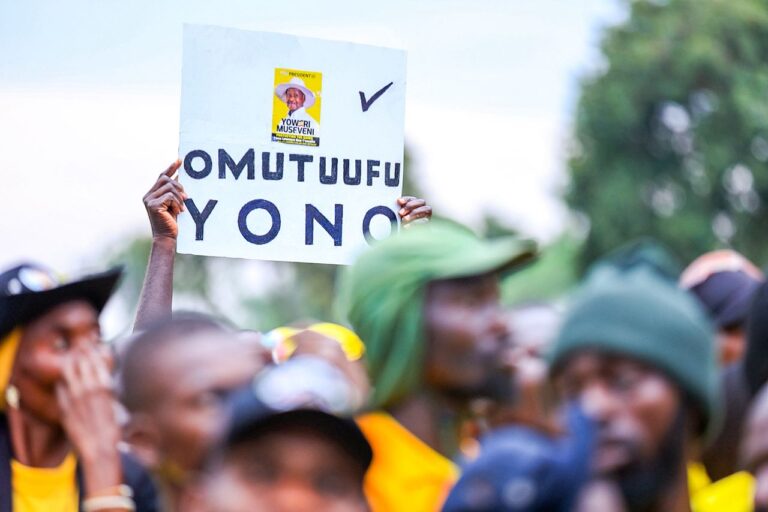
President Yoweri Museveni on Wednesday returned to the symbolic grounds of Bukalasa Agricultural College—once a rebel training camp—kicking off his 2026 re-election campaign with a blunt message to the people who birthed his presidency: “I have protected the revolution for 40 years; give me five more and every Luweero household will be in the money economy.”
Tens of thousands of yellow-clad supporters, many old enough to have carried guns in the 1981-86 bush war, cheered as Museveni listed what he called “receipts” for their sacrifice: peace, 50 000 factories, an economy set to be turbo-charged by first oil next year, and a welfare chain that now reaches every parish.
But the President admitted the job is unfinished. “When we started, only 9 % of Ugandans were in the money economy. Today 67 % are inside; 33 % remain outside. This kisanja, we are going in to get everybody,” he declared to thunderous applause.
Cash on the ground
To make the pledge real, Museveni announced a dramatic cash increase for poverty programmes: urban parishes will receive Shs 300 million each; rural ones Shs 100 million plus an extra Shs 15 million for leaders—money channelled through the ruling National Resistance Movement (NRM) structures he controls.
He paired the offer with a warning: “Some people steal this money. I want you to expose them and we shall arrest them.”
Land, drugs and school fees
On land—an emotive issue in Buganda—Museveni reassured bibanja holders that they can now pay nominal ground rent (busulu) directly to sub-county offices, bypassing landlords. Government, he said, will “eventually pay off the landlords” so peasants own their plots outright.
He also promised to end theft of medicines in public health centres, blaming local politicians and administrators. “The drugs are traceable. Elect good LC5s and MPs to monitor the stores; from the centre I will act,” he said.
And in a move aimed at restless parents, Museveni vowed to recruit 50 000 additional teachers and crack down on government schools charging illegal fees. “Free education must be exactly that—free,” he said, revealing that pupils at his Presidential Skilling Hubs graduate into employment “within six months at zero cost.”
Symbolic launch ground
Choosing Luweero—nicknamed the “Luweero Triangle” for the fierce fighting that happened here—was no accident. The district delivered the bulk of Museveni’s bush-war fighters and has voted overwhelmingly for him since 1996. Many in Wednesday’s crowd wore T-shirts emblazoned with the 2026 campaign theme: “Protecting the Gains, Making a Qualitative Leap into High Middle-Income Status.”
First Lady Janet Museveni, also Minister of Education, stood beside the President, while NRM First National Vice-Chairman Al-Hajji Moses Kigongo handed the party flag to Luweero parliamentary candidates, cementing the district’s place at the centre of Museveni’s sixth-term bid.
Opposition unimpressed
Speaking by phone, National Unity Platform (NUP) spokesperson Joel Ssenyonyi dismissed the promises as “recycled pledges we have heard since 1996.”
“Luweero remains one of the poorest regions; poverty levels are above the national average. If after four decades the President is still campaigning on ending poverty, it is an admission of failure,” Ssenyonyi said.
Longest campaign yet
With 14 months to the February 2026 vote, Museveni becomes the first major candidate to open formal campaigns. The Electoral Commission says the official campaign window is only three months, but the President’s early start signals what is expected to be the longest—and most resource-intensive—race of his 38-year tenure.
For the people of Luweero, the President’s message was simple: “You fought for the revolution; now let the revolution fight poverty for you.” Whether they still believe the war will end at the ballot box, only the votes—cast in little over a year—will tell.
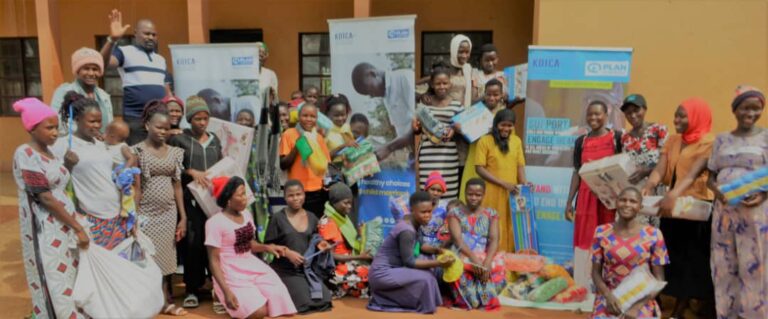
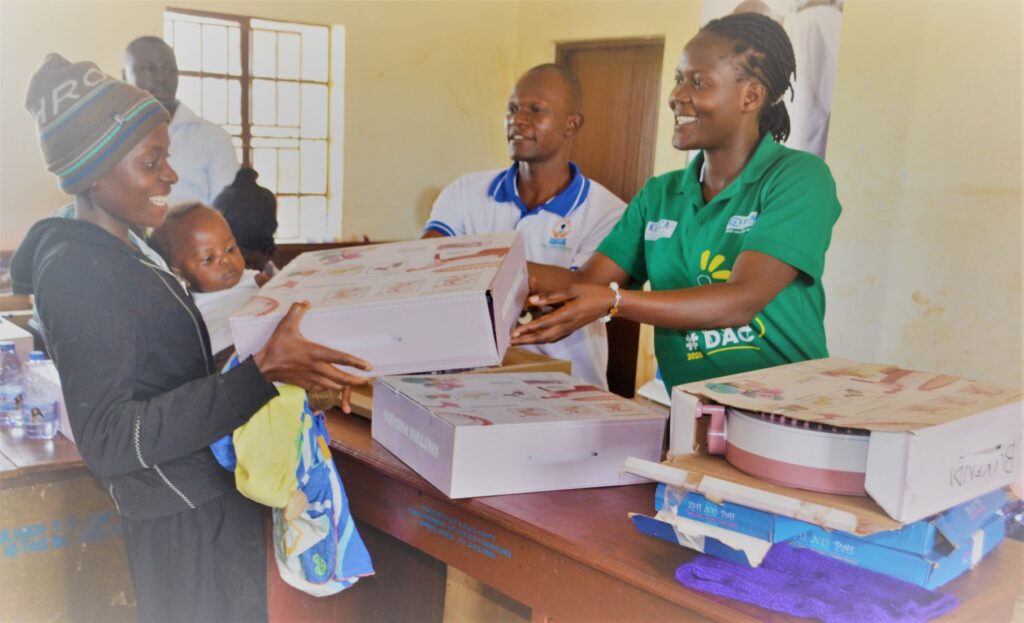
The Korea International Cooperation Agency (KOICA) has injected over UGX 68.2 million into empowering teenage mothers and young women in Luuka district, providing vocational skilling tools as part of a broader call to address alarming rates of teenage pregnancy and early marriages.
One hundred young mothers from Bukanga, Bulongo, Bukooma, and Bugaya sub-counties are set to benefit from knitting and sewing tools and kits, aimed at equipping them with practical skills for self-reliance.
The handover, held recently at Bulongo sub-county, underscores a critical intervention in a region grappling with a significant social and economic burden.
Health records in Luuka district paint a grim picture, indicating that 2,383 teenage mothers attended Ante Natal Clinics (ANC), with a concerning 29 of them aged between just 12 and 15 years. These statistics highlight the urgency of addressing the root causes and consequences of early pregnancies.
Isaac Waboda, the Bulongo Sub-County Community Development Officer, expressed grave concern over the situation. “We have a time bomb of teenage mothers, unplanned pregnancies, and babies with a bleak future,” Waboda stated during the handover.
He noted that most of these teenage mothers are primary school dropouts who remain single mothers, requiring extensive counselling, guidance, and support.
Waboda emphasized that support from development partners like KOICA is vital. “When development partners come to the rescue like KOICA is doing, it gets a long way to securing the future of these innocent children and boosts the self-esteem of the teenage mothers, waking them up to responsibility and productivity.”
He further regretted the prevalent blaming and stigmatization directed at these girls and their parents, advocating for a more “solution-driven approach” that empowers young people and their communities.
“There is a need for more engagement of community structures including parents and leaders to address social norm change. Teenage pregnancies are ‘normalized’ in societies, it requires the involvement and participation of all relevant stakeholders to tackle it,” he rallied.
Vincent Njeho, a Program Officer for the KOICA Project, urged the beneficiaries to seize this opportunity to advance, earn, and progress, while importantly, living responsibly to avoid a repeat of past challenges.
“KOICA is helping you recover, restore hope, build solid confidence, and make you productive enough to support your children and better yourselves,” Njeho encouraged the young mothers.
Njeho lamented the social acceptance of child marriage and teenage pregnancies in the Busoga region, stressing that current interventions are insufficient in addressing the Sexual Reproductive Health Rights (SRHR) needs of sexually active young people.
He highlighted the critical need for open conversations about contraceptives and access to them to prevent unplanned pregnancies.
On behalf of the beneficiaries, Sanyu Rahma Nampiina delivered a heartfelt appeal for continued action and support for young women and girls.
She called for efforts to ensure their meaningful engagement in public life, to end unintended teenage pregnancies, and to empower adolescents to make healthier choices that ultimately prevent child marriages.
Nampiina expressed profound gratitude to KOICA and Plan International for their timely intervention, which she credited with pulling the young mothers “out of stigma, neglect, and ridicule.”
“To now improved health, social acceptance, a better productive state that many of them are comfortable getting back to school and proudly looking after their children,” she revealed.
“KOICA is our parent; it understood our pain and became part of our struggle to regain both our identities, dignities, and esteem. With the practical skills imparted to us, we are now in a position to support ourselves and children, let alone live a happier life,” Nampiina concluded, highlighting the transformative impact of the initiative.
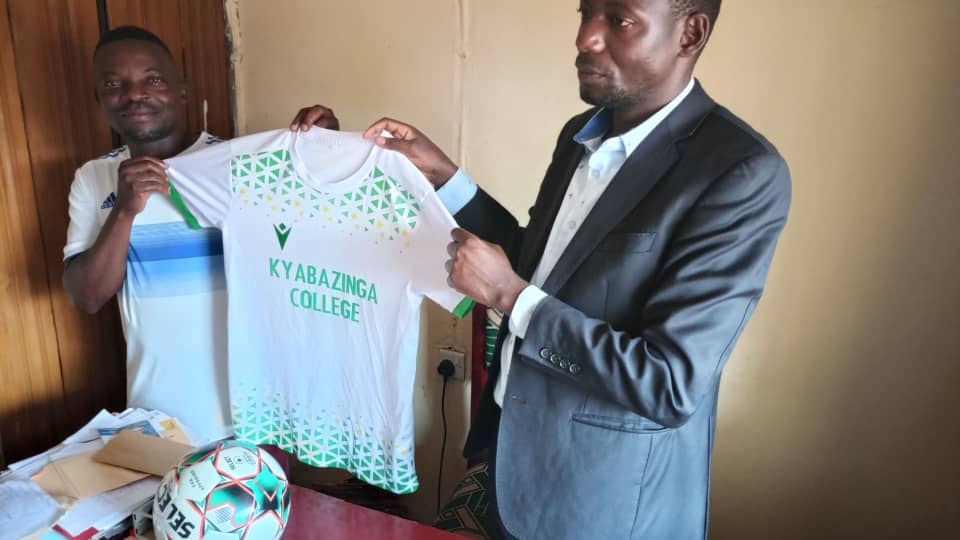
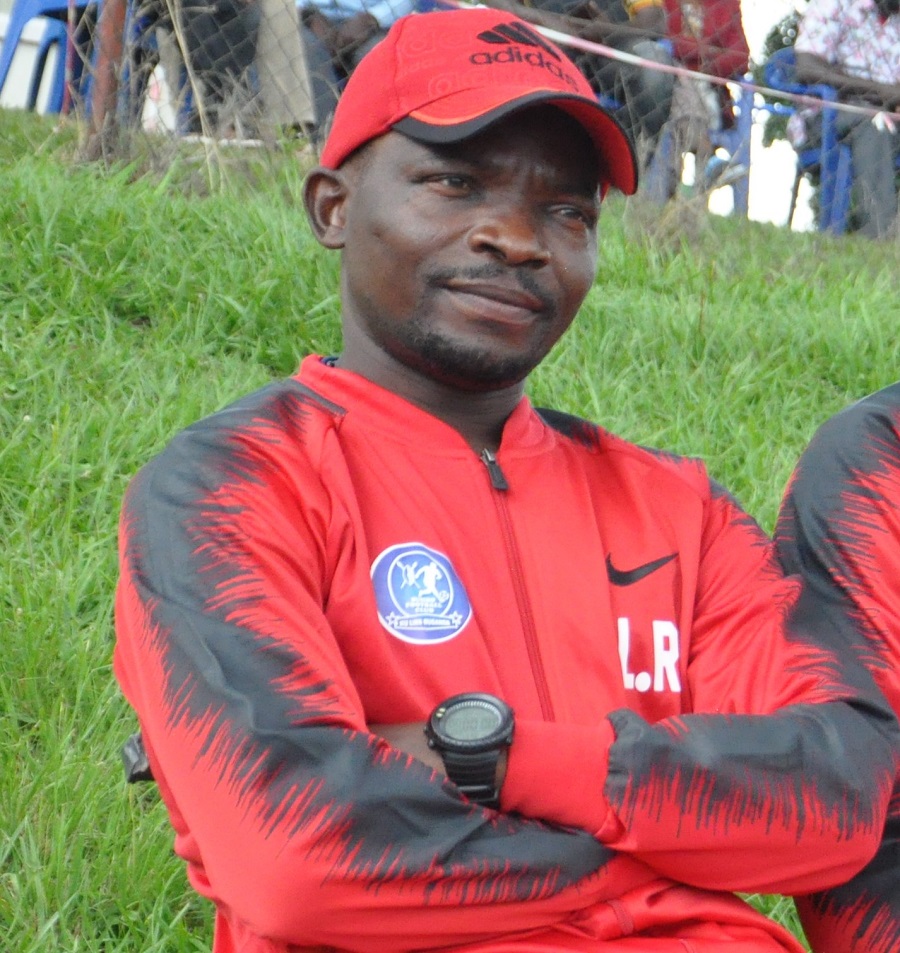
Kyabazinga College FC has officially appointed Ronald Lukungu as their new head coach on a three-year contract, with his tenure set to begin on October 1. Lukungu, who is also guiding Bugabula FC in the ongoing Busoga Masaza Cup, replaces Kirabo Joel, who now steps into the assistant coaching role.
The unveiling ceremony, held at Kyabazinga College Kamuli on Tuesday, was attended by top football stakeholders, including Kamuli District Football Association chairman, Katamba Noah.
Coach Lukungu Ronald being unveiled by the Club President Wanume Hussein
Club president, Wanume Hussein, expressed optimism about the new era under Lukungu’s leadership.
“Today i am so happy that we have signed a coach of purpose and we have much hope in him. Our target is clear, this season we compete in the province League, next season we aim for regionals, and eventually the big league. We also want Kyabazinga college FC to provide a base for Bugabula FC, giving players a clear pathway beyond the masaza cup, our target is clear—this season we compete in the Province League, next season we aim for regionals, and eventually the Big League. We also want Kyabazinga College FC to provide a base for Bugabula FC, giving players a clear pathway beyond the Masaza Cup,” he said.
Hussein emphasized that the club’s focus goes beyond results, aiming to nurture football talent in Kamuli, Busoga, and Uganda at large.
Lukungu arrives with solid experience, having guided Bugabula FC in the Busoga Masaza Cup for three straight editions, consistently reaching at least the semifinals. This season, Bugabula has won three of their four games and will face Bunha in the quarterfinals on October 4 at Kyabazinga Stadium, Bugembe. In addition, in 2021, Lukungu coached Busiro in the prestigious Buganda Masaza Cup, a role that boosted his reputation as a tactician capable of handling both school and chiefdom teams.
Ronald Lukungu at Busiro FC in 2021. (Photo by Kawowo sports)
Katamba Noah welcomed the appointment, praising the school’s commitment to football development.
“Kyabazinga College has steadily grown from the fifth division and recently impressed in the zonal mini league. Their decision to sign Lukungu adds momentum ahead of the Province League. We wish him and the club success,” Katamba said.
In his first remarks as head coach, Lukungu described the move as a significant step in his career.
“I am delighted to join this project. I won’t make big promises, but I assure the management, players, and fans that I will work tirelessly for good performances. With cooperation, we can build something strong here,” Lukungu noted.
With province games kicking off in two weeks, Kyabazinga College FC hopes Lukungu’s leadership will set them on a steady path toward their ambitious three-year vision.
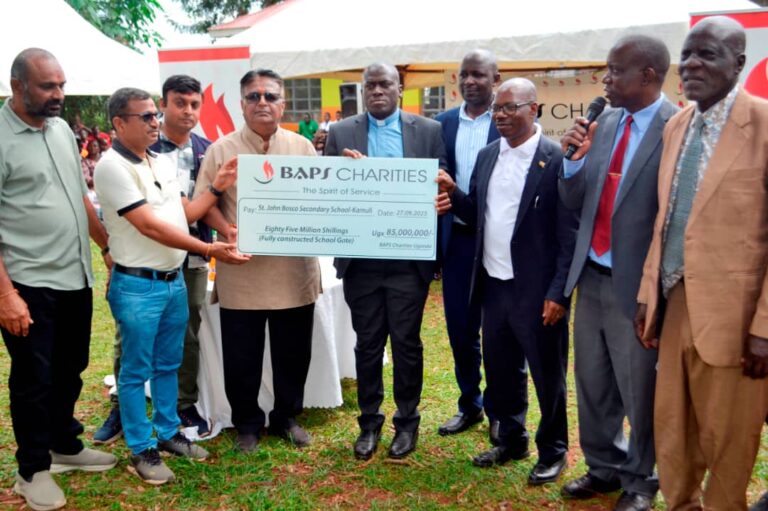
In a powerful display of community dedication and partnership, St John Bosco Secondary School in Kamuli officially unveiled a magnificent new school gate this morning, a facility valued at 85 million Ugandan Shillings.
The project, a collaborative effort between the school’s Old Students Association and BAPS Charities Uganda Indian Association, was hailed as a symbol of protecting educational gains and securing the future of the students.
Ghanshyam Patel, the Chairman of BAPS Charities, led the handover ceremony, stressing that the commitment to education and security transcends political boundaries and serves as a guiding norm for communities.
“Today, in the Spirit of Service, we are here at St John Bosco SS Kamuli to hand over the school gate and to ensure a better protective environment for all students now and in future,” Patel announced. “Together with your partnership and participation we aim to bring even more hope, dignity and opportunity to the people we serve.”
Patel further urged schools to focus on cultivating portable and practical skills, alongside strong morals and values, ensuring students are equipped to “serve their communities with humanity, respect and dignity.”
The donation is part of BAPS Charities’ broader focus on strengthening education and health initiatives in local communities through a combination of material support and volunteer commitment to achieve lasting change.
Ajay Singh, who supervised the construction, noted that BAPS Charities is a volunteer-driven nonprofit dedicated to selfless giving, operating across nine countries and working to uplift communities through health awareness, education, and humanitarian relief.
Landmark of Homecoming and Future Security
The St John Bosco SS Old Students Association viewed the gate as a symbolic gesture of appreciation and continuity.
James Malinzi, Chairman of the Old Students Projects, described the gate’s completion as a “landmark homecoming” meant to inspire current students and concretize the strong foundation the school built in them.
“This landmark monument not only protects our gains as Old Students of this glorious school but also lays a strong symbolism of a secure gate to the future of students,” Malinzi stated, immediately outlining future goals.
He emphasized the continued need to secure the institution with a perimeter wall and a modern staff room where teachers can “ably sit to prepare, watch over and impart skills and knowledge to the students.”
Dignity and Commitment
Headteacher, Peter Deo Mulamba, commended the generous input from the Old Students and the BAPS Charities, noting that the gate significantly enhances the security of the learners and the dignity of the institution.
“It is a great moment celebrating the generosity, love, gratitude and commitment of our Old Students which leaves an indelible mark of appreciation and give back to your mother institution,” Mulamba said, adding that the new structure makes the school “a home of peace and justice in line with the School motto: Success, Obedience and hardwork.”
The headteacher encouraged the alumni to continue actively contributing to the development of the school.
Call for Equal Opportunity
Adding a social dimension to the ceremony, Kamuli Municipality MP candidate and Vice Chairperson of the Women’s Council, Mastula Namatovu, challenged alumni and community leaders to prioritize the young generation.
Mastula specifically called for increased protection of the girl child, advocating for equal opportunities and an enabling environment that allows girls to enroll, stay, and complete school successfully.
“Let us ensure the girls are given every opportunity to secure their future, guarded against inhibiting factors and be given equal chances in all spaces,” Mastula said, concluding her address by making a personal contribution toward the welfare of the candidates.
Websites store cookies to enhance functionality and personalise your experience. You can manage your preferences, but blocking some cookies may impact site performance and services.
Essential cookies enable basic functions and are necessary for the proper function of the website.
Name
Description
Duration
Cookie Preferences
This cookie is used to store the user's cookie consent preferences.