Friday, May 22, 2026
Home Blog Page 31

Soaring Online Loan Ad Costs Highlight Urgent Need for Financial Literacy, Prompting SBA Outreach to Small Businesses

0

WASHINGTON, D.C. – April 9, 2025 – A stark contrast has emerged between the escalating costs of online searches for urgent financial solutions and the U.S. Small Business Administration’s (SBA) concurrent push for financial literacy among small businesses. New data reveals exorbitant prices for keywords related to loans and debt relief, signaling a widespread, immediate demand for financial assistance across various sectors.

The alarming figures come from recent data on Cost-Per-Click (CPC) rates for online advertisements, which have seen a sharp increase. Terms reflecting acute financial needs command premium prices, with “irs tax debt relief program” topping the list at an astonishing $320.00 per click. Other expensive terms underscore complex financial situations:

IRS Tax Debt Relief Program: $320.00
VA Loan Multi Family: $190.00
Tax Credit for College Students: $135.00
VA Loan After Chapter 7: $130.00
How to Get Preapproved for a VA Home Loan: $125.00
Structured Settlement Loan: $105.00
National Guard VA Home Loan: $95.00
Cost to Refinance Home Loan: $95.00

Additional high CPC terms related to VA home loans, FHA loan maximums, and the impact of refinancing on credit scores ranged between $85 and $90. The prevalence of VA loan-related searches, in particular, points to a strong market for services catering to veterans and military families navigating unique financial circumstances or recovering from past challenges.

This significant demand for reactive financial intervention coincides with the SBA’s observance of Financial Literacy Month in April. The agency is actively encouraging American entrepreneurs to proactively enhance their financial acumen through readily available, often free, resources.

“Financial Literacy Month is a perfect time to brush up on the basics of keeping business finances in order,” states the SBA. The agency emphasizes that fundamental principles such as budgeting, saving, borrowing, investing, and bookkeeping are critical pillars for sustainable business success.

To support entrepreneurs in strengthening their financial knowledge, the SBA highlights several valuable resources:

Small Business Development Centers (SBDC): Partnering with nearly 1,000 SBDCs nationwide, the SBA offers personalized advice and technical assistance, including crucial guidance on accessing capital and managing finances.
SCORE Business Mentors: As the largest network of volunteer business mentors in the nation, SCORE provides free, tailored one-on-one advice on financing and other vital topics for entrepreneurs.
SBA Business Guide: A comprehensive, free guide crafted by the SBA to assist businesses at every stage, covering essential topics such such as balance sheets, cost-benefit analyses, and various accounting methods.
MySBA Learning: This free, self-paced online learning platform empowers small business owners to master financial topics through structured “Journeys” and “Excursions.” An example is “Journey 4: Your Business Financial Strategy,” which develops skills in utilizing financial data and projections.
Local Financial Literacy Events: The SBA encourages engaging with local district offices and resource partners to sign up for events that delve into basic financial terms, cash flow management, and more.

The substantial disparity between the high cost of seeking immediate, often crisis-driven, financial aid online and the proactive, no-cost educational support offered by the SBA underscores a vital message: robust financial literacy can mitigate the need for such costly interventions. By leveraging these accessible tools, small business owners can cultivate stronger financial health, potentially reducing reliance on expensive external solutions and fostering long-term stability and growth.

FROM STABILIZING TO SUSTAINABILITY: Tracing Uganda’s NRM development journey under Museveni

0

By Waiswa Michael Baluye

Since assuming leadership in 1996, President Yoweri Kaguta Museveni’s National Resistance Movement (NRM) government has systematically unrolled a series of ambitious development manifestos, charting a comprehensive course for Uganda’s transformation.

Spanning over three decades, from its foundational promises in 1996 to its strategic outlook for 2031, these programs represent an evolving blueprint aimed at steering the nation from post-conflict recovery to widespread prosperity.

The NRM’s development journey officially commenced in 1996, with its inaugural manifesto focusing on the formidable task of stabilizing a nation grappling with the legacies of past regimes.

The initial priority was to restore public confidence in governance and lay the groundwork for a secure and unified Uganda. This period saw critical efforts to address immediate challenges, setting the stage for subsequent growth.

Following this foundational phase, the government embarked on a program centered on consolidating the achievements made during its nascent years. This included a vigorous drive to strengthen national institutions, enhance vital infrastructure across the country, and further entrench the peace and unity that had begun to take root.

A subsequent strategic initiative introduced a long-term vision encapsulated by a diversified approach to achieve “Prosperity for All.” This ambitious program underscored inclusive economic growth, particularly focusing on rural transformation, and expanding opportunities for all citizens, irrespective of their geographical location or socio-economic status. It marked a significant shift towards broad-based development.

The ensuing five-year period saw a pivotal shift towards enhancing service delivery and creating robust employment opportunities, with a special emphasis on empowering Uganda’s burgeoning youth population.

This involved comprehensive reforms across education, health, and public administration, complemented by robust promotion of entrepreneurship and vocational training to equip the workforce.

Further cementing its vision, the government committed to modernizing Uganda through continued inclusive development and job creation, ensuring that every citizen could genuinely benefit from national progress.

Key focus areas during this phase included accelerating industrialization, advancing Information and Communication Technology (ICT) development, boosting agricultural value addition, and implementing critical social protection measures.

Crucially, underpinning all these efforts was a resolute program for strengthening national security. By ensuring peace and stability across the nation, the NRM aimed to create a conducive environment for sustainable development, attracting both domestic and foreign investment confidence. This security foundation was deemed paramount for any lasting socio-economic advancement.

Looking ahead, the NRM government’s strategic theme for the upcoming 2026–2031 period is squarely focused on protecting and building upon all the significant gains achieved over the previous decades.

This forward-looking agenda prioritizes safeguarding the hard-won peace, enhancing sustained economic growth, promoting good governance, and ensuring that all Ugandans can comprehensively enjoy the dividends of stability and development.

The continuity and adaptive nature of the NRM’s manifestos underscore a long-term commitment to national development. As Uganda looks towards 2031, the government’s enduring promise remains rooted in building on past successes, ensuring a secure, prosperous, and inclusive future for all its citizens.

Mr. Waiswa Michael Baluye is the coordinator ONC in Buyende district

CONFIRMED: Uganda to face Senegal in CHAN quarter finals

Group D results:

Sudan 0-0 Senegal

Nigeria 2-0 Congo

The Uganda Cranes will face defending champions Senegal in a highly anticipated quarterfinal clash of the African Nations Championship (CHAN) 2024 this Saturday, August 23rd, at the Mandela National Stadium, Namboole. Kickoff is set for 5:00 PM.

Uganda heads into the knockout stages with confidence, having already defeated Senegal twice in recent competitive encounters. Just weeks ago, during the CECAFA pre-CHAN Tournament in Tanzania, the Cranes edged Senegal 2-1, with goals from Arnold Odongo and Patrick Jonah Kakande — both of whom remain key figures in the current squad.

History also favours the Cranes. At CHAN 2022 in Algeria, Uganda stunned the eventual champions with a narrow 1-0 victory courtesy of Vipers captain Milton Karisa, who, though sidelined this year due to injury, remains remembered for his decisive strike.

Several familiar faces will once again take to the pitch against the Lions of Teranga. Goalkeeper Joel Mutakubwa, midfielder Karim Watambala, and defender Hillary Mukundane — although suspended for this encounter after accumulating two yellow cards — were all part of the memorable 2022 triumph.

Senegal, however, will be determined to prove why they are reigning champions, having advanced from Group D with 5 points, finishing second to Sudan on goal difference.

Meanwhile, the full quarterfinal lineup promises mouthwatering encounters across the region:

Friday, 22nd August

Tanzania vs Morocco – Benjamin Mkapa Stadium, Dar es Salaam (17:00)

Kenya vs Madagascar – Moi International Stadium, Mombasa (20:00)

Saturday, 23rd August

Uganda vs Senegal – Mandela National Stadium, Kampala (17:00)

Sudan vs Algeria – Amaan Stadium, Zanzibar (20:00)

Should Uganda overcome Senegal, they will face the winner between Kenya and Madagascar in the semifinals.With history, momentum, and home support on their side, the Cranes are aiming to write another glorious chapter and edge closer to a first-ever CHAN title.

CANDIDATES VERIFICATION: How to verify if your child has been registered by the school for this year’s UNEB examinations

0

It is a common occurrence to hear that school administrators didn’t register learners to sit the Uganda National Examinations Board (UNEB) despite parents meeting and providing all the financial obligations and requirements.

This unfortunate illegal act by schools has killed or stalled the future of many learners who are either forced to drop out of school or repeat a class. This illegality by uncouth school administrators heap a financial burden on parents who have to foot the bills necessary for a learner in a candidate class.

To avert this, the Uganda National Examinations Board has announced a mandatory period for the display of 2025 candidates’ registers, urging parents, candidates, and school authorities to thoroughly verify registration details. This critical exercise is set to run from August 10th to October 10th, 2025.

According to a press statement issued by UNEB, the registers must be displayed at all examination centres (schools) where candidates are registered, as well as at district headquarters. The primary objective of this initiative is to ensure the accuracy of candidates’ biodata and the registration status of the learners.

The examination body said this prevents the unfortunate scenarios where students discover they are unregistered at the start of examination periods. UNEB emphasized that it is the collective responsibility of Heads of Centres, candidates, and parents to meticulously review the registers for accuracy.

The review, UNEB said, should capture the Index/Personal Number of the learner, Spelling and Order of Names of the candidate including the sequence of the candidate’s full name, the Date of Birth of the learner in the order of Day, Month, Year, the learners Gender, the Photograph, the Subjects and Papers being studied by the learner.  

The Uganda National Examinations Board has advised parents whose children have been studying in schools without UNEB centre status to establish where their learners were registered and confirm their official registration.

“Should a student, with proof of registration fee payment, be found unregistered, parents must immediately contact the school. If no resolution is found at the school level, they are urged to report directly to UNEB for remedial action,” UNEB said in a statement.

SMS Verification Option

Unlike in the past, when parents couldn’t verify if their children had been registered and relied on information provided by the school, now, they can do it through their phone – like they do when checking the results of their children when UNEB releases them.

“For added convenience, UNEB has introduced an SMS option to ascertain registration status. Users can type Reg. [space] Full Index No. and send it to 6600 using their mobile telephone handsets. This requires knowing the candidate’s full index number,” UNEB explained.

Dan Odongo, the Executive Director of UNEB, commended candidates, parents, Heads of Centres, teachers, and District/City/Municipal Inspectors of Schools for their successful participation in the registration process. He reiterated the importance of using the display period to ensure data accuracy, stating, “Let us now use the registers to ensure that the data submitted is accurate.”

DONE: Penalty magic sends Cranes into CHAN quarter finals

South Africa 3-3 Uganda Cranes

Algeria 0-0 Niger

Under the dazzling floodlights of Mandela National Stadium, Uganda Cranes scripted history on Monday night, coming from behind to secure a dramatic 3-3 draw with South Africa and, for the first time ever, booked their place in the quarterfinals of the African Nations Championship (CHAN).

In what will be remembered as one of Uganda’s most thrilling football nights, the Cranes showed resilience, character, and belief—hallmarks of champions in the making.

Jude Semugabi opened the scoring for Uganda in the 31st minute, giving the hosts an early lead and sending the home fans into raptures. However, the second half saw a resurgent South Africa who netted three goals in quick succession through Ramahlwe Mphahlele (52′), Thabiso Kutumela (58′), and Ndabayithethwa Ndlondlo (83′), stunning the Ugandan crowd into silence.

But the Cranes refused to bow out. Allan Okello converted a penalty in the 88th minute to give Uganda hope, and in the dying moments of the game—deep into stoppage time (90+6′)—Rogers Torach stepped up to bury another penalty, completing a sensational comeback and sealing the crucial point Uganda needed to top Group C.

The result meant Uganda finished first in the group with 7 points, while Algeria and South Africa both ended with 6. However, Algeria advanced on goal difference (+3) over South Africa (+1), following a goalless draw against Niger in the other group match.

Final Group C Standings:

  1. Uganda – 7 pts
  2. Algeria – 6 pts
  3. South Africa – 6 pts
  4. Guinea – 4 pts
  5. Niger – 2 pts

Uganda will now face the second-placed team in Group D on Saturday, August 23rd, at the same venue—Mandela National Stadium—while Algeria will take on the Group D leaders in Zanzibar at Amaan Stadium.

This is a landmark moment for the Cranes, who had previously failed to make it past the group stage in all six of their past CHAN appearances. In their seventh attempt, they’ve finally broken the curse—reaching the knockout stage in the eighth edition of the tournament.

The stakes are high as the CHAN2024 champion will walk away with a grand prize of $3.5 million. With the spirit shown in Kampala, Uganda’s journey may just be getting started

TICAD CUP: Rwamwanja Girls ready for Jinja

0

Results:

She Global Queens FC 2-0 Western Giants Girls Academy FC

Western Giants Academy FC 0-4 Bwizi ss She Falcons FC

Bwizi ss she falcons FC 0(2)-0(1) She Global Queens FC

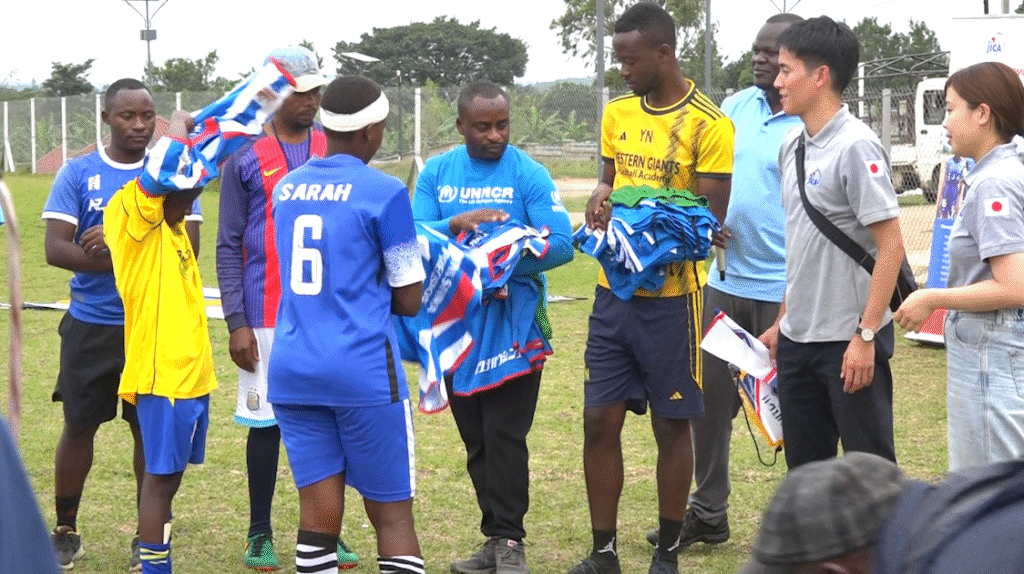
The best talent from Rwamwanja Refugee Settlement has been selected to represent the community in the upcoming TICAD Cup 2025, a refugee girls’ football tournament organised by the Japan International Cooperation Agency (JICA) in partnership with UNHCR Uganda and Solitilo Bright Stars FC.

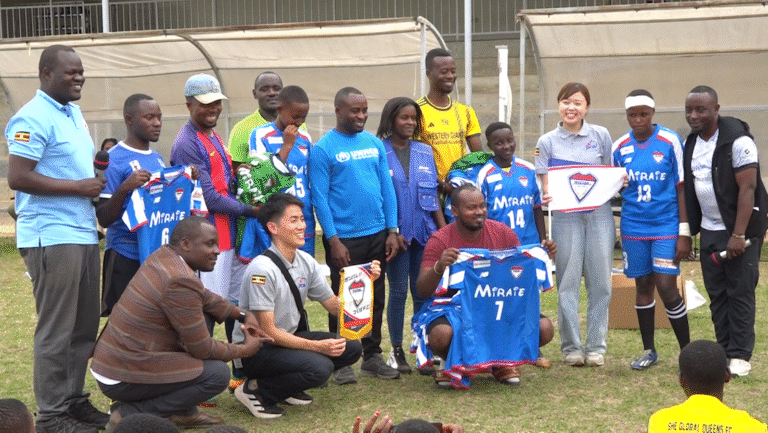
The selection event, held at Rwamwanja Stadium, featured three teams – Western Giants Women FC, She Global Queens Women FC, and Bwizi SS She Falcons Women FC. After spirited competition, the top 15 players were chosen to carry Rwamwanja’s flag at the prestigious tournament scheduled for September in Jinja.

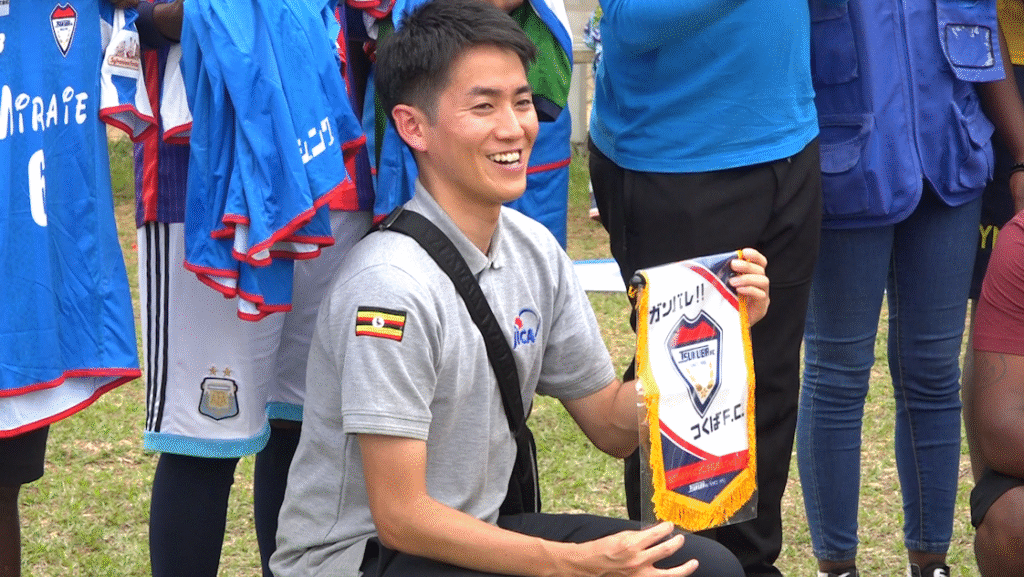
Gracing the occasion, Mr. Jun Kunihiro, JICA Uganda’s representative, applauded the Office of the Prime Minister, UNHCR, Solitilo Bright Stars, and implementing partners for their role in making the event a success.

JICA Representative Mr. Jun Kunihiro during the event earlier on saturday

“The purpose of this football event is to enhance peaceful coexistence, social cohesion, and the empowerment of women. Since 2022, JICA has been committed to supporting refugees and host communities through sports. We are excited to see these talented girls showcase their skills in Jinja,” Mr. Jun said, before handing over a new set of jerseys and gift packages to all players.

The selection event follows earlier initiatives, including a March 2024 International Women’s Day football tournament, which JICA and partners organised in Rwamwanja to promote inclusion and gender empowerment.

Bwizi SS She falcons FC Captain Nwasime Sarah picks teams jersey from JICA officials

Captain Nwasime Sarah of Bwizi SS She Falcons expressed gratitude for the platform JICA has provided:

“This opportunity makes us famous and helps us expose our talents. JICA has supported us with bursaries, schooling, and basic needs. Now we are ready to represent Rwamwanja well in Jinja.”

Some of the players of She Global Queens FC celebrate after winning a game on saturday

Coach Mutebi Ivan praised his side’s progress:

“It has always been a dream to play against big teams. Football was once just leisure here, but with JICA’s support it has become a tool for empowerment. We believe Rwamwanja will shine at this year’s TCAD Cup.”

The TCAD Cup, now in its fourth edition, has grown into a flagship platform for refugee girls’ football since its launch in 2022. Jinja City Queens, winners of both the first and third editions, are the defending champions. Last year, Rwamwanja finished fifth out of six participating teams.

This initiative is part of Japan’s pledge at the 2nd Global Refugee Forum 2023, committing to give 10,000 refugees and host community members opportunities through sports.

With their strongest team yet, Rwamwanja’s girls will head to Jinja in September, eager to compete, learn, and inspire.

DO OR DIE: Uganda, Algeria, South Africa in final group C battle for last eight

0

Group C results

Guinea 1-1 Algeria

South Africa 0-0 Niger

Group C of the African Nations Championship (CHAN) has been whittled down to a three-way qualification race, with Uganda, Algeria, and South Africa all still in contention for the two available quarterfinal slots. Guinea and Niger have already bowed out after disappointing campaigns.

Guinea’s 1–1 draw with Algeria in their final group match took them to just four points — not enough to progress. Niger, meanwhile, held South Africa to a goalless draw but remain bottom on one point, with no mathematical chance of advancing despite having one match left.

This leaves Uganda on top with six points, Algeria on five, and South Africa also on five but behind on goal difference. The qualification picture will be decided on Monday, August 18, in a double-header that promises high drama.

At the Nyayo International Stadium in Kenya, Niger will play Algeria in a fixture that is a formality for the West Africans but potentially decisive for the North Africans. Later that night, attention will shift to the Mandela National Stadium in Namboole, where Uganda and South Africa clash in what could be the game of the tournament so far.

Qualification Scenarios:

Uganda need just a draw — or a win — to secure a historic first-ever CHAN quarterfinal appearance since their debut in 2011 in Sudan.

South Africa must beat Uganda or draw and hope Niger stun Algeria.

Algeria will go through with a win against Niger. A draw could also be enough if Uganda avoid defeat against South Africa.

Uganda’s campaign so far has been their most promising in CHAN history, with two wins already on the board. The Cranes now stand on the brink of history, aiming to join the likes of Tanzania and Mauritania — teams who have already confirmed their last-eight places.

Seven of the 19 participating teams have already been eliminated: Zambia, Nigeria, Central African Republic, Burkina Faso, Niger, Guinea, and Angola.

MAJOR LEAP IN WATER ACCESS: Kamuli water supply and sanitation system handed over as phase 2 of strategic towns’ project is approved

0

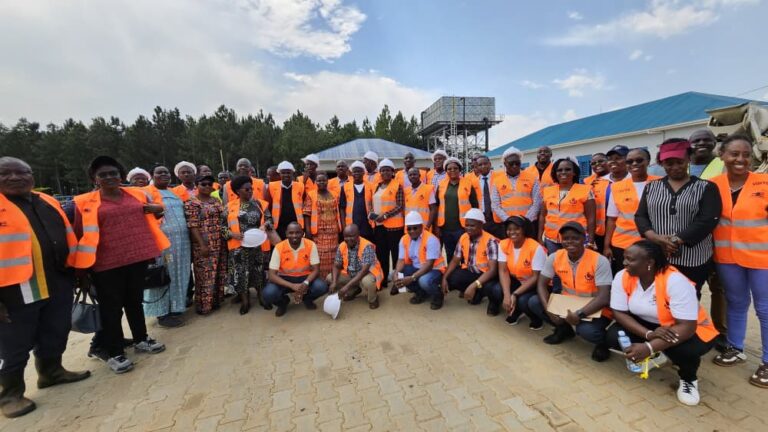
In a significant boost for public health and development, the Ministry of Water and Environment (MWE) has officially handed over the newly completed Kamuli Water Supply and Sanitation System to the National Water and Sewerage Corporation (NWSC). This milestone coincided with the Parliamentary Committee on National Economy giving a crucial green light to secure a government loan for Phase Two of the Strategic Towns Water Supply Project.

The dual announcement, made during the Committee’s assessment tour and the handover ceremony at the water plant in Mbulamuti, Kamuli, marks a pivotal stride towards achieving Sustainable Development Goal Six (SDG 6), which focuses on providing clean water and sanitation for all. The event saw the convergence of the Parliamentary Committee, local political leaders, and jubilant community members.

The Parliamentary Committee on National Economy lauded the Ministry of Water and Environment for its unwavering commitment to implementing government programs that directly improve citizens’ standards of living.

Kamuli Project Delivers 80% Service Increase

The completed Kamuli Water Supply and Sanitation System is expected to increase water and sanitation services in the area by an impressive 80%. The new infrastructure boasts a modern water treatment plant, efficient pump houses, sedimentation tanks, and numerous public stand-posts designed to enhance accessibility. M/S Vidas Engineering Services Company Ltd., the project contractor, will remain responsible for addressing any defects during the specified liability period.

Green Light for Phase 2: A Strategic Investment

John Bosco Ikojo, Member of Parliament for Bukedea and Chairperson of the Committee on National Economy, explained the rigorous process behind the approval for Phase 2. He clarified that the Ministry of Finance had presented a loan request in April to finance Phase Two of the Strategic Towns Water Supply System, building on the successes of the first phase.

“In April, Ministry of Finance presented a loan request towards implementation of a project to finance Phase II of strategic towns water supply system in line with the first Project implemented in Phase 1 to improve water supply system,” Ikojo explained.

Citing Article 159 of the constitution, which grants the committee powers to process donor-funded loans, Hon. Ikojo affirmed their thorough assessment of the completed first phase. He noted that while Phase 2 funding is currently proposed from Standard Chartered Bank as a commercial loan, the committee intends to scrutinize its terms.

“Yes, Standard Chartered Bank is offering a commercial loan which we may need a lot of money to pay off, and looking at our national debt service strategy, we may need to get a more concessional loan to finance social services,” Ikojo stated, emphasizing the need for financially sustainable solutions while balancing the critical demand for water for “sustainability of development, domestic and industrial production.”

Addressing Power Challenges and Local Content Demands

Despite the significant progress, challenges remain. Eng. Dr. Felix Twinomucunguzi, Assistant Commissioner for Urban Water and Sewerage Department, raised concerns about intermittent power supply due to load shedding, which hinders consistent water pumping.

He highlighted the dilemma of employing heavy generators as an alternative, stating it would inevitably push tariffs higher for consumers. Dr. Twinomucunguzi appealed for intervention and discussions with UEDCL to provide a dedicated power line not subjected to routine load shedding, ensuring continuous water supply. He also urged more customers to connect to the system, noting that despite a five-times capacity for 2,000 customers, only 700 have currently connected.

Adding a local perspective, Henry Maurice Kibalya, Member of Parliament for Bugabula South, advocated strongly for local content in the next phase. “We are happy and appreciate the project, but observe that Phase 1 did not cater for local content. So our demand is that in Phase 2, we want the community to own and feel the project; let the money remain in the local economy and the project make impact with tangible corporate social responsibility, not merely latrines,” he urged. He also prioritized the inclusion of a standby generator in Phase 2. Earlier, community representative Ruth Namusisi voiced a request for at least a latrine for Bugondha Primary School, the nearest to the water plant.

Community Praises Affordability and Health Benefits

The positive impact on the community was enthusiastically reported by Kamuli Deputy RDC Adonia Mafumo, who witnessed the handover. He delivered a community report appreciating the improved water services, which have dramatically cut the cost of water from UGX 500 to UGX 100 per jerrycan. This substantial reduction has directly led to a decrease in the burden of waterborne diseases.

“From our community dialogues and field visits, the public has commended the improved water supply system, which has seen a great reduction, hence affordability of safe and clean water, saving UGX 400 a jerrycan, which translates to reduction in the water-cleaned disease burden,” the RDC called, urging communities and leaders to “not only appreciate, support but also embrace government interventions.”

The handover and the subsequent approval for Phase Two signal a strong governmental commitment to expanding access to clean and safe water across strategic towns, setting a promising trajectory for improved public health and socio-economic development.

NRM’S ENDURING JOURNEY: A hypothesis on its evolution and future

0

By Waiswa Michael Baluye

Uganda’s political landscape has been profoundly shaped by the National Resistance Movement (NRM). From its origins as a liberation movement to its current role as a dominant political force, the NRM’s trajectory offers a compelling case study in political evolution. This article explores a hypothesis on the NRM’s journey, examining its genesis, objectives, historical phases, internal democratic processes, and charting a potential path forward.

The Genesis of a Movement

The National Resistance Movement, as it stands today, is not merely a political party but the culmination of protracted struggles by the Ugandan people against cycles of injustice, exploitation, and debilitating sectarian divisions. Its roots delve deep into the intellectual ferment of the 1960s student movements and the political experiences of former parties like the Uganda People’s Congress (UPC), Democratic Party (DP), and Kabaka Yekka (KY). This was a period characterized by pervasive ethnic and religious sectarianism, and the systemic marginalization of women, youth, and persons with disabilities.

Under the visionary leadership of Yoweri Kaguta Museveni, the NRM, then primarily known as the National Resistance Army (NRA), launched and successfully waged a five-year protracted people’s war from 1981 to 1986. This armed struggle was a direct, revolutionary response to the pervasive political instability and profound governance failures that plagued Uganda throughout the 1970s and early 1980s.

Following the triumphant capture of Kampala in January 1986, the NRA seamlessly transitioned into the NRM, consolidating power and instituting a new political order. This new order was fundamentally aimed at restoring stability, fostering democracy, and rebuilding national unity. The NRM distinguished itself by positioning itself as a unifier, a restorer of peace, and a steadfast proponent of democratic principles, evolving into the dominant political organization it is today. Its unique blend of clear political, military, and organizational principles, all geared towards national unity and socio-economic transformation, set it apart.

Core Mandate: The NRM’s Enduring Objectives

Central to understanding the NRM’s evolution and continued relevance are its broad objectives, which aim at the holistic transformation of Uganda. These include:

•             Mobilizing Ugandans to support a peaceful, united, democratic, industrialized, and prosperous nation.

•             Consolidating democracy and constitutional governance.

•             Maintaining peace, security, and the protection of persons and property.

•             Promoting national unity, patriotism, and pan-Africanism.

•             Fostering socio-economic transformation through modernization and ensuring equal opportunities for all citizens.

•             Upholding the crucial principles of transparency, accountability, integrity, consensus building, and merit in governance.

A Journey Through Time: Yesterday, Today, and Tomorrow

The NRM’s trajectory can be understood in three distinct yet interconnected phases:

Yesterday (1986 Onwards): The NRM emerged as a formidable liberation movement, dedicating itself to ending sectarianism and marginalization. Post-1986, it consolidated its hard-won victory and spearheaded the establishment of a “movement” political system. This system was founded on the principles of decentralization and participatory democracy, laying the groundwork for Uganda’s recovery and initiating a profound socio-economic transformation.

Today (Current Era): In the present day, the NRM has successfully steered Uganda through decades of relative stability, implementing significant economic reforms and orchestrating impressive infrastructural development. Its current manifesto is a blueprint for accelerating socio-economic transformation, with a strong focus on wealth creation, job creation, enhancing education, strengthening national security, and pursuing comprehensive governance reforms. The party remains the principal guarantor of Uganda’s ambitious Vision 2040, which aims to elevate the nation to a middle-income country status.

Tomorrow (Future Trajectory): Looking ahead, the NRM prioritizes further modernization of the economy, focusing on fully monetizing an economy largely based on subsistence, emphasizing value addition in agriculture, and driving industrial development.

Crucially, it aims to expand and deepen democratic governance across all levels of society. The party recognizes the imperative to continually adapt and strengthen its internal democracy and inclusivity to ensure it remains relevant and responsive to the evolving needs and aspirations of all Ugandans.

Upholding Internal Democracy: The Electoral Process

Integral to the NRM’s structure and its claim to democratic principles is its robust system of internal elections. These elections are conducted at various levels, from the village and parish to the district and city structures, ensuring broad-based participation. The party’s voting method often emphasizes transparency, commonly utilizing public lining up behind candidates rather than secret ballots, to reinforce accountability.

There are clear procedures for candidate nomination, meticulous voter verification, and active agent participation to ensure credible outcomes. The NRM continually works to tighten its election processes, aiming to promote free and fair primaries and, in so doing, strengthen democratic governance within the party itself.

Charting the Future: The Way Forward for the Party

For the NRM to continue its legacy and effectively steer Uganda towards its stated aspirations, several strategic imperatives emerge:

Strengthen Internal Democracy: This is paramount. It involves enhancing transparency and inclusivity in electoral processes to grow legitimacy and participation. A key suggestion is to ensure strict adherence to the party’s electoral registers, making internal voting exclusive to bona fide party members at specific voting locations.

    Furthermore, I suggested that the National Executive Committee (NEC), under the guidance of the National Chairperson (President Museveni), directly elect members of the Central Executive Committee (CEC), rather than having the CEC elected by the potentially unwieldy National Conference. This would streamline decision-making and enhance coherence.

    Enhance Socio-Economic Transformation: Deepening the implementation of policies that directly focus on wealth creation, job creation, improving education and health outcomes, and accelerating infrastructural development is critical for broad-based prosperity.

    Promote Unity and Patriotism: The party must continue fostering national cohesion and pan-African ideals to unite Uganda’s diverse communities, mitigating any divisive forces.

    Respond to Emerging Challenges: Proactively addressing pressing issues such as youth unemployment, corruption, the continuous need for governance reforms, and adapting to global economic changes will be crucial for maintaining public trust and national progress.

    Sustain Vision 2040: A continued focus on technological innovation, industrialization, and the sustainable use of natural resources is essential for realizing Uganda’s long-term development goals.

    Engage Youth and Marginalized Groups: Empowering previously marginalized groups politically and economically is not just a matter of social justice but also vital for ensuring broad-based development and inclusive participation in the nation’s future.

    In conclusion, the NRM’s journey from a liberation movement to a dominant political force is a testament to its adaptive capacity and a consistent focus on national unity and socio-economic transformation.

    As the NRM looks to “Tomorrow,” its ability to navigate emerging complexities, uphold its founding principles, and continue to adapt its internal mechanisms and policy approaches will undoubtedly determine its enduring relevance and significantly shape Uganda’s future trajectory.

    Mr. Waiswa Michael Baluye is the coordinator ONC in Buyende district

    AGENDA SETTING: “Go mad about our economy, or we shall not develop” – Ambassador Mubiru urges Buyende community at Musevenomics launch

    0

    His Excellency James Mubiru, Uganda’s Ambassador to Germany, delivered a stirring call to action in Buyende, challenging residents to adopt an almost obsessive focus on economic development if the nation is to truly progress.

    Speaking at the Buyende Town Council Hall during the launch of ‘Musevenomics in Greater Busoga,’ an initiative by the Uganda Development Forum (UDF), Ambassador Mubiru declared, “Unless we go mad about our economy, we shall not develop.”

    Ambassador Mubiru’s potent message underscored the urgent need for a radical shift in mindset towards economic engagement. He elaborated that this “madness” translates into a fierce dedication, resilience, and an unwavering commitment to personal and national economic prosperity.

    He implored the community to be resilient and to aim higher, emphasizing that achieving their aspirations requires consistent effort and strategic investment.

    A key recommendation from the Ambassador was the critical role of vocational training; he urged parents to enroll their children in vocational schools and institutions. This, he explained, would ensure the availability of adequate skilled manpower in the near future, enabling them to secure employment and generate vital income for their households.

    Echoing the call for proactive engagement, Edward Katende, Chairman of the Uganda Development Forum (UDF), outlined the government’s steadfast commitment to fostering community development. He highlighted the various programs and initiatives through which the government seeks to empower citizens economically.

    A significant aspect of this strategy, Katende revealed, is the establishment of a Parish Planning Committee (PPC). This committee, designed to foster bottom-up development, will bring together local leaders and district officials to meticulously plan from the village level upwards, ultimately integrating into national development strategies. This localized approach aims to ensure that development interventions are relevant and impactful to the specific needs of each community.

    The launch of Musevenomics in Greater Busoga signifies a collaborative effort towards accelerating economic growth and empowering local communities. The initiative garnered crucial support from several key government bodies, including the Uganda Development Forum itself, the Ministry of Finance, and the Uganda Bureau of Statistics (UBOS).

    This multi-sectoral involvement underscores the comprehensive approach being adopted to drive sustainable development.

    The gathering in Buyende served as a powerful reminder that genuine development hinges on collective dedication and strategic planning.

    The Musevenomics initiative, coupled with the proposed Parish Planning Committees, aims to cultivate a resilient, skilled, and economically empowered citizenry, paving the way for sustainable growth across Uganda.