Sunday, March 15, 2026
Home Blog Page 4

HUMAN RIGHTS CONCERNS: Ssenyonyi declines to congratulate Museveni, vows to press government on missing NUP leaders, footsoldiers

0

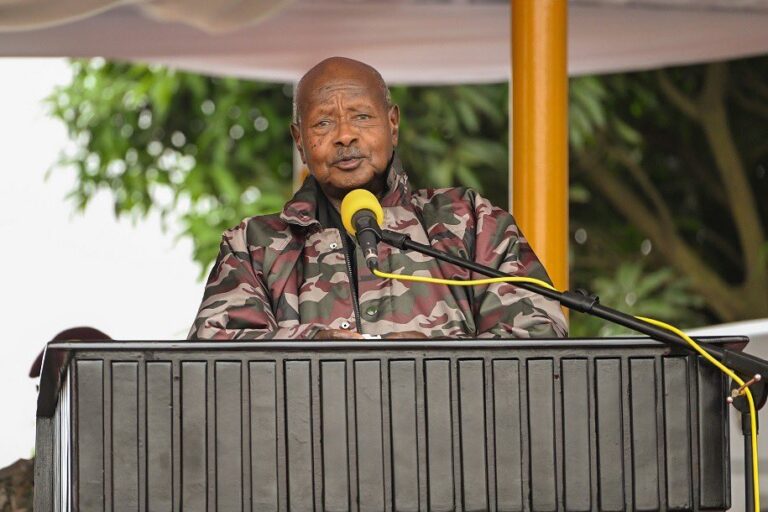
The Leader of Opposition in Parliament, Joel Ssenyonyi, has declined to congratulate President Yoweri Kaguta Museveni and newly elected Members of Parliament following the recent general elections, saying there are outstanding issues that must first be addressed.

Speaking in Parliament, Ssenyonyi said his decision should not upset those in government, noting that there are many others willing to offer congratulations.

“There are people who can congratulate you other than me,” Ssenyonyi said, adding that unresolved electoral and human rights concerns make it premature for him to do so.

The Opposition leader also vowed to continue demanding accountability from government over the alleged abduction and detention of senior leaders of the National Unity Platform (NUP), despite complaints from some MPs that he is “pestering” the state.

Ssenyonyi argued that Parliament remains one of the legitimate platforms through which he can question government about the whereabouts of opposition supporters and leaders reportedly abducted by security operatives.

“The floor of Parliament is one of the avenues available to us to task government on where our people are,” he said.

High Court Habeas Corpus Hearing

Meanwhile, NUP Secretary General David Lewis Rubongoya revealed that the party had gone to the High Court seeking a habeas corpus order for Dr. Lina Zedriga Waru Abuku, the party’s Deputy President for Northern Uganda, whose whereabouts remain unknown.

“We’re at the High Court for the habeas corpus hearing for our Deputy President,” Rubongoya said. “The state has filed an affidavit claiming they don’t have her in any detention centres, despite her having been picked up by security operatives on January 15 in the presence of witnesses.”

Rubongoya described the situation as a grave abuse of power, saying the events surrounding the election period would be studied for years to come.

Multiple NUP Leaders Missing or Detained

Dr. Lina Zedriga Waru Abuku was reportedly abducted from her home on January 15, while Jolly Jacklyn Tukamushaba, NUP’s Deputy President for Western Uganda, was reportedly picked up a day earlier from Rukiga District. As of publication, the whereabouts of both leaders remain unknown.

Another senior party official, Muwanga Kivumbi, NUP’s Deputy President for the Central Region, was arrested and taken to Kira Division Police before being produced in court and remanded to Kitalya Mini-Max Prison. He has been charged with terrorism, charges the party has described as politically motivated.

Rubongoya said Kivumbi remains resolute despite his detention.

“He is of strong spirit and encourages everyone to fight on, knowing that this is just a phase of the struggle,” Rubongoya said, adding that the party’s legal team, alongside other lawyers, is working to secure his release.

The developments come amid heightened political tension following the elections, with opposition leaders intensifying calls for accountability, transparency, and respect for human rights during the post-election period.

Government denials

David Muhoozi, Minister of State for Internal Affairs, has denied allegations that the residence of Robert Kyagulanyi, President of the National Unity Platform has been turned into a prison, saying his home can only be deemed a prison if it is gazetted, with people occupying it, but Kyagulanyi himself isn’t home.

Muhoozi has also denied allegations of abducting Lina Zedriga and Lydia Tukamushabe, top leaders of NUP, saying although the government may delay to produce the victims past the 42 stipulated time, the State “doesn’t abduct” as alleged by Joel Ssenyonyi.

The Minister of ICT and National Guidance, Chris Baryomunsi has told Parliament that the there are no charges being preferred against former Presidential Candidate, Robert Kyagulanyi alias Bobi Wine, but instead, Bobi Wine voluntarily chose to go in hiding.

He defended the security deployment at Kyagulanyi’s home, saying it is intended to bar his supporters from using it as a public disorder hub.

LOW PDM MONEY RECOVERY: Only Shs9.340 billion from 18,105 beneficiaries has been recovered out of Shs3.258 trillion disbursed by government to 10,589 PDM SACCOs

0

The Auditor General, Edward Akol, has disclosed that only UGX 9.34 billion has been recovered from 18,105 beneficiaries in 709 Savings and Credit Cooperative Societies (SACCOs) across 30 local governments (LGs) as of January 2026, out of the UGX 3.258 trillion allocated to the Parish Development Model (PDM) in 2022.

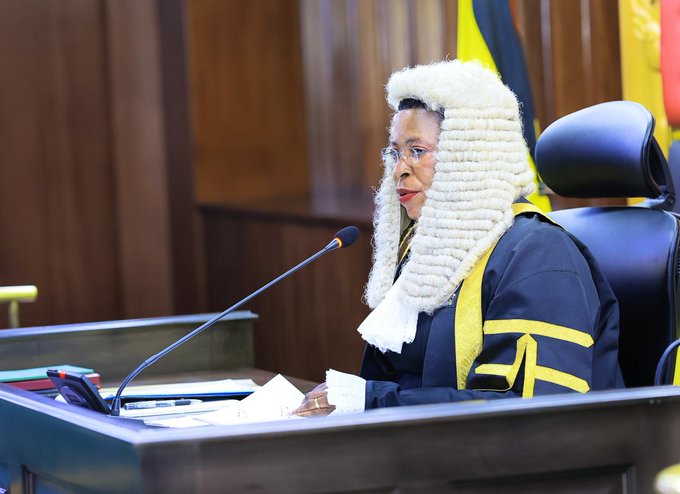
This revelation was made during the presentation of the December 2025 Annual Audit Report to Parliament’s Speaker, Anita Among.

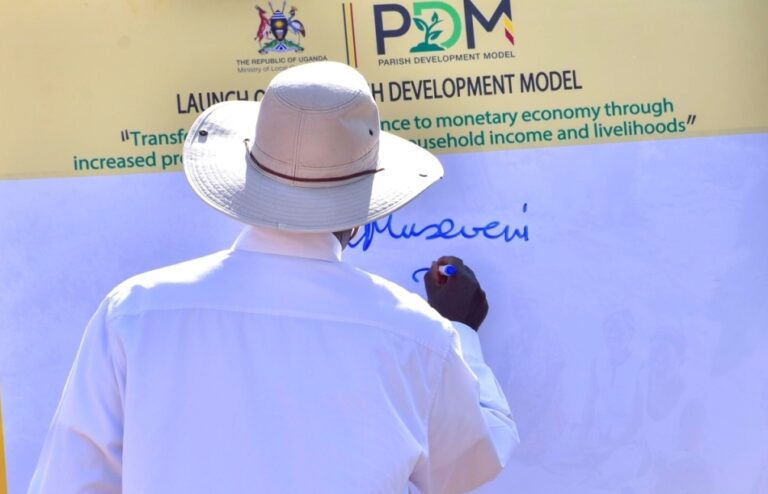
The PDM, a grassroots development initiative introduced in 2022 as part of President Yoweri Museveni’s government, aims to channel funds directly to local communities via SACCOs for infrastructure and development projects. However, the report highlights systemic challenges undermining its effectiveness.

Key Challenges Outlined

Akol identified critical issues, including funding of “ghost projects” (non-existent or fabricated initiatives), delays in disbursing funds to households, implementation of ineligible projects, diversion of funds for personal or unauthorized use, and duplicate recipients who received funds more than once.

“It is concerning that only 18,105 beneficiaries in 709 SACCOs out of the 10,589 PDM SACCOs have commenced voluntary recovery, and there is no evidence of preparedness in all LGs,” Akol stated.

He further noted that of the UGX 3.258 trillion released to SACCOs, only UGX 2.750 trillion (84%) was disbursed to households by the end of the 2024/25 fiscal year, leaving UGX 508.6 billion (16%) unutilized.

Speaker Calls for “Whip” in Fund Oversight

In response, Speaker Anita Among urged Akol to intensify auditing efforts to ensure transparency. “We want you to use the whip. This money should go to the right people,” she emphasized, stressing that the PDM’s success is a key reason for the NRM’s electoral victories.

“Most of the votes we got were because of people who received the PDM funds rightfully. But delays, duplication, and misalignment of projects must be addressed,” Among said, citing the need for accountability.

She criticized mismanagement, such as delayed disbursements and unregulated allocation, which she argued disproportionately benefit the wealthy while marginalizing poorer communities.

“We cannot appropriate money and see 70% of the rich getting it while 30% are left with nothing. This is your team’s task to uncover,” she added.

What’s at Stake?

The PDM’s intended goal is to empower communities by directing funds to local projects. However, the audit report paints a picture of significant mismanagement, with critics alleging widespread corruption. The low recovery rate and unutilized funds underscore gaps in oversight and implementation.

As the government scrambles to salvage the initiative, the Speaker’s call for stricter auditing reflects growing public demand for accountability. With upcoming elections in 2026, the integrity of PDM could significantly influence voter trust.

Next Steps

The Auditor General’s office has yet to outline specific measures to address the identified issues, but Among’s statements signal increased political pressure to act. The fate of the remaining UGX 508.6 billion and the 99% of SACCOs not part of the voluntary recovery process remain under scrutiny.

Context: The Parish Development Model (PDM) replaced the Local Government Finance Act in 2021, aiming to decentralize resource allocation to parishes (the smallest administrative unit in Uganda). Savings and Credit Cooperative Societies (SACCOs) serve as intermediaries, disbursing funds to households for community projects.

AN ANALYSIS: Why the Parliament of Uganda will never work in public interest beyond 2026

0

By Oweyegha-Afunaduula and the Center for Critical Thinking and Alternative Analysis

1. Defining the Contested Terrain: Public Interest vs. Presidential “Interests”

Public interest is a multidimensional, holistic concept encompassing the collective well-being of society. It includes:

· Political Goods: Democracy, freedom, justice, security, and peace.

· Social Goods: Quality education, accessible healthcare, passable roads, and cultural integrity.

· Ecological & Existential Goods: Natural belonging, ecological sustainability, and a healthy environment.

· Developmental Goods: Sustainable development, equitable progress, shared prosperity, and an enhanced quality of life for all citizens.

In stark contrast, President Yoweri Tibuhaburwa Museveni has consistently framed politics as a matter of “interests,” which in practice align with a narrower set of objectives: the consolidation of wealth, power, glory, control over resources, and regime perpetuity. This fundamental divergence sets the stage for institutional conflict, where mechanisms of the state are often tuned to the latter, at the expense of the former.

2. The Architecture of Subservience: Parliament’s Structural Failings

The Ugandan Parliament is structurally designed to prioritize presidential “interests” over the public good.

· NRM Caucus Dominance: The overwhelming numerical superiority of the NRM Caucus, coupled with the fact that the Speaker and Deputy Speaker are leading members, ensures that legislative and budgetary outcomes are predetermined by caucus decisions. This system operates on groupthink and absolute loyalty to the President, not on open, critical debate.

· The Militarized Legislature: The constitutionally embedded presence of 10 UPDF representatives, while historically justified as “neutral,” effectively injects a permanent executive influence. Past episodes of military and police invasions of Parliament (e.g., during the 2017 age-limit amendment debates) have shown that force is used to ensure compliance with the President’s wishes, legislating under an atmosphere of fear.

· The Corruption of Consent: There is a documented history of MPs, from both the NRM and opposition, being bribed with money (e.g., “handshake” scandals for votes on term limits or other contentious bills) to support presidential preferences. This transactional politics eviscerates representation.

· Deliberative Collapse: The ever-increasing number of MPs—driven by the bantustanisation of the country into smaller districts and constituencies—makes effective debate impossible. Critical issues of public interest are drowned in a sea of voices, with many MPs financially indebted from expensive campaigns and thus easily manipulated. The institution becomes unwieldy and ineffective by design.

3. A Historical Retrospective: Parliament as an Executive Tool

Since President Tibuhaburwa Museveni fully entered electoral politics in 1996, Parliament has progressively shed its independence.

· Legislating Presidential Wishes: Key legislation, from the UPDF Act amendments to the Coffee Act, has been pushed through to fulfill specific presidential directives, often against regional or sectoral public interest. The Speaker’s recorded ethnic bias during the coffee debates illustrated this clearly.

· Sovereignty for Sale? The approval of special economic privileges for individuals like Enrica Pinetti (the Italian-Arab businesswoman linked to the Gaddafi family and historic support for the NRA rebellion) against expert and public opinion shows Parliament ratifying opaque presidential commitments.

· The Five-Year Cycle of Disconnection: Parliament remains a centrally isolated, urban institution. Unlike the judiciary, it has failed to decentralize its ethos. MPs interact more with each other and the executive in Kampala than with their constituents. This explains the high turnover every election: citizens, feeling abandoned, vote out incumbents, only to elect new, inexperienced legislators who are immediately vulnerable to executive manipulation. The people, in effect, elect MPs for the President to use.

4. The Future Beyond 2026: A Parliament of Fear and Hereditary Transition?

The trajectory suggests further erosion of public interest representation.

· Deepening Militarization: With politics already over-militarized, parliamentary processes are likely to see even greater security service influence, ensuring all “sensitive” legislation aligns with regime security interests.

· The Hereditary Presidency Blueprint? Persistent rumors of a transition to a hereditary or “representative electoral college” system—where MPs, not the public, elect the president—are telling. The government’s silence on this specific concern, contrasted with its swift denials on other issues, is ominous. The post-2026 Parliament could be the vehicle to legalize such a fundamental reversal of democratic suffrage.

· The Inevitability of Groupthink: As long as the current political architecture remains, the Parliament will continue to be a rubber-stamp, not a deliberative assembly. It will work to insulate the President’s interests from public demand, not to bridge them.

5. Reclaiming Parliament for the Public: A Pathway to Transformation

For Parliament to become a prized tool for transforming Ugandan livelihoods in this century of knowledge and information, a foundational reset is required:

1. Constitutional & Electoral Reformation:

   · Abolish the institutional representation of the army in Parliament.

   · Introduce a mixed electoral system with proportional representation to break regional strongholds and foster issue-based politics.

   · Firmly cap the number of constituencies to halt politicized fragmentation.

2. Strengthening Institutional Autonomy:

   · The offices of Speaker and Deputy must be held by individuals who renounce membership in the ruling party caucus to ensure neutrality.

   · Empower committees with independent subpoena and investigative authority, protected from executive interference.

3. Building a Citizen-Parliament Nexus:

   · Mandate and fund constituency offices with permanent staff to maintain continuous dialogue between MPs and citizens.

   · Implement robust, publicly accessible recall mechanisms so constituents can hold non-performing MPs accountable before the five-year cycle ends.

4. Demilitarizing Politics:

   · Legislate clear boundaries against security force intrusion into parliamentary premises and proceedings.

   · Foster a culture where debate, not decree or fear, settles national issues.

5. Cultivating a New Political Ethos:

   · Support civic education to elevate the electorate’s demand for issue-based representation.

   · Encourage the rise of a new generation of legislators whose loyalty is to a multidimensional public interest, not to a person or a narrow set of survivalist interests.

Conclusion

The Parliament of Uganda stands at a precipice. Its current design and practice make it an instrument for managing a regime’s interests, not for championing the public’s. Beyond 2026, without deliberate, courageous, and structural change, it will continue to fail the people of Uganda.

The transformation required is monumental, but the alternative—a legislature that is a mere echo chamber for a single, perennial “interest”—is a guaranteed path to national stagnation and deepening conflict. The Parliament can yet be reclaimed, but only if the public interest is redefined as the non-negotiable core of politics, and the institution is rebuilt to serve that master alone.

For God and My Country

PRIMARY LEAVING EXAMS: Anxious wait for primary seven vacists ends as UNEB confirms PLE results date

0

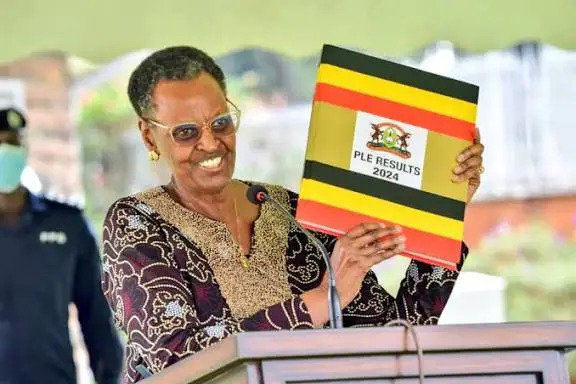
The Uganda National Examinations Board (UNEB) has confirmed that the results of the 2025 Primary Leaving Examinations (PLE) will be released on Friday, 30 January 2026 at 11:00am.

The confirmation followed a closed-door meeting between UNEB officials and the Minister of Education and Sports, Janet Kataha Museveni, who is also the First Lady.

UNEB spokesperson Ms Jennifer Kalule said the meeting, held on Wednesday, brought together key education stakeholders and finalised arrangements for the official release of the results.

Ms Museveni commended the examinations board for completing its work on time and ensuring that the results will be released as scheduled.

UNEB has also dismissed claims that the temporary internet shutdown ahead of the 15 January general elections could delay the release of the results. According to the board, all critical processes—including marking, verification and quality assurance—were completed without interruption.

Records indicate that 818,010 candidates registered for the 2025 PLE, slightly higher than the 797,444 candidates registered in the previous year. Of those who sat the examinations, 428,398 were girls while 389,589 were boys.

For comparison, the 2024 PLE results were released on 23 January, about a week earlier than this year’s schedule.

According to the 2026 education calendar, candidates who pass the PLE and qualify for Senior One are expected to report to their respective secondary schools on 16 February.

POLITICAL STABILITY: Namukuta Brenda makes history as Kaliro’s first two-term woman Member of Parliament

0

By Wabwire Andrew Goole

Namukuta Brenda has etched her name into the political history of Kaliro District after becoming the first Woman Member of Parliament to win a second consecutive term, shattering a long-held belief that the seat was only ever a single-term position.

For years, the Kaliro Woman MP seat had developed a reputation for political instability, with no holder managing to serve more than one term since the district’s creation. Many locals even dubbed it a “cursed” seat. However, Namukuta’s re-election has decisively broken that cycle.

Her political journey began in 2017, when she was elected District Councillor representing Workers. During her time on the council, she used the platform to build a strong grassroots base and lay the foundation for higher leadership. Barely a year into her term, she declared her intention to contest for the Kaliro District Woman Member of Parliament seat in the 2021 General Elections.

At the time, Namukuta Brenda was the youngest candidate in the race. She first secured victory in the 2020 party primaries with a commanding margin before going on to win the general election, making history as the district’s Woman MP.

Her success has largely been attributed to a results-driven leadership style rooted in service delivery. She openly rejected the locally criticised culture of “Tikulyamu bulya n’omala n’oyaba” (eat-and-go politics), instead embracing accountability, constant engagement with constituents, and visible impact on the ground.

As a Member of Parliament and a member of the Parliamentary Committee on Health, Namukuta played a key role in lobbying the Ministry of Health to equip Health Centre IIIs across Kaliro District with essential medical equipment. The intervention significantly improved healthcare delivery and strengthened confidence in public health services within the district.

Beyond health, she has consistently advocated for development projects and government programs, ensuring Kaliro benefits from national initiatives. Her accessibility, energy, and hands-on leadership have not only earned her widespread public support but have also inspired many young women to take an active interest in politics.

In the most recent elections, voters in Kaliro overwhelmingly renewed their trust in her leadership, granting her a second term and decisively ending the long-standing pattern of single-term representation.

Namukuta Brenda’s historic achievement stands as a powerful testament to how consistent service, integrity, and dedication can overturn entrenched political narratives and redefine leadership for future generations.

Mr Wabwire Andrew

 Goole is the ONC Coordinator, Kaliro District

Email: andrewwabwire872@gmail.com

SILENT DISAPPEARANCE: Land, loans, and the systemic unmaking of Uganda’s clan-based civilizations

0

Author: Professor Oweyegha-Afunaduula, in collaboration with the Center for Critical Thinking and Alternative Analysis.

Preamble: A Warning from the Source

We issue this not as a lament, but as a diagnosis of a living crisis. We document not a natural passing, but a designed dismantling. The clan-based cultural groups of Uganda—ancient, sophisticated systems of ecological governance and social belonging—are being systematically unmade. This is not evolution; it is erasure by policy, dispossession by debt, and conquest by ledger. We name the process, expose its engines, and sound an alarm for humanity. The disappearance of these clans is a microcosm of a global war against rootedness, diversity, and ecological wisdom.

1. The Vanishing World: The Clan as a Complete Socio-Ecological Universe

Before the distortion, there was integrity. Uganda was birthed from approximately 15 traditional states, each an ecosystem of clans. Take Busoga: a saucepan-shaped bio-region cradled by water, through which the Nile flows. It is perhaps the most clanned region on Earth, hosting nearly 300 of the world’s estimated 6,000 clans. Each clan was a sovereign cell of life:

· Its Politics was Territorial Stewardship: The clan head (Omwami we’kika) was a political leader governing a specific territory, its resources, and its people. His authority was inseparable from the land.

· Its Culture was Codified Ecology: Totems (Emiziro) were not mere symbols; they were binding ecological laws. A clan whose totem was the leopard protected the forests that housed leopards, thereby preserving watersheds and biodiversity. Knowledge of medicinal plants, soil renewal, and seasonal cycles was embedded in rituals and language.

· Its Spirituality was Geographically Anchored: Sacred sites (Emizimu)—forest groves, waterfalls, burial grounds—were the physical libraries of history, identity, and cosmic order. The Nnondo grove in Buganda or the Nhialic sites in Acholiland were not just “plots”; they were the beating heart of collective consciousness.

· Its Security was the Extended Family: The Kaka or Lapir system ensured that wealth, crisis, and opportunity were collectively managed. No one faced hunger or disaster alone. This was a paradigm of profound belonging, where identity was a trinity of people, land, and ancestral covenant.

2. The Foundational Betrayal: The 1995 Constitution and the Creation of Impotence

The first masterstroke of disappearance was legal. The 1995 Constitution, crafted under significant external influence, performed a critical act of political neutering.

· The Surgical Act: Traditional leaders (Kings, Chiefs) were stripped of their inherent political and decision-making powers. They were redefined, in law, as purely “cultural” or “traditional” leaders—institutions for ceremony, not governance.

· The Devastating Effect: This severed the essential nerve connecting cultural authority to territorial defense. A Kyabazinga, Kabaka, or Luo Rwot could preside over a coronation anniversary but could not legally stop a predatory land deal in his realm. It created a state-sanctioned power vacuum.

· The Outcome: The clan, and the cultural institution above it, were rendered spectators to their own dissolution. They watch, with cultural regalia but no legal leverage, as the structures they are meant to preside over are dismantled.

3. The Tripartite Engine of Erasure: A System Designed to Dispossess

Into this vacuum moves a system with a logic of extraction. The assault is threefold, a synergistic engine of destruction.

Engine A: The Political-Judicial Engine (The Framework of Legalized Theft)

The law itself became a tool of dispossession. The 1998 Land Act, while recognizing customary tenure, began a process of individualization that undermined communal holding. Government programs often treat customary land as “vacant” or “underutilized,” ready for state appropriation and reallocation to investors. A potent example is the controversial amendment of Article 26 of the Constitution, which eased government compensation processes for compulsory land acquisition, thereby accelerating the takeover of clan lands for large-scale “public interest” projects, often benefitting private interests.

Engine B: The Economic-Financial Engine (Debt as a Weapon of Mass Impoverishment)

This is the insidious, modern face of conquest. So-called “development” programs are, in practice, engines of entrapment.

· Operation Wealth Creation (OWC): Hailed as a poverty alleviation scheme, its rollout has been widely criticized. A 2017 Parliamentary Committee report documented widespread failure: poor quality inputs (diseased seedlings, counterfeit fertilizers) distributed as “credit” to farmers, leading to catastrophic crop failure and unpayable debt. The farmer, now indebted to the state, is forced to sell ancestral land to clear the liability.

· The Parish Development Model (PDM): The latest iteration. It injects millions of shillings as loans, not grants, into impoverished parishes. The financial infrastructure is weak, and the pressure to repay is immediate. When the promised “enterprises” fail—as they often do in a top-down, one-size-fits-all model—the only collateral is the family land. The exogene, often a wealthy individual with connections, waits to purchase this distressed asset. This is not development; it is a state-facilitated transfer of land from the communal poor to the individual rich. The clan member becomes a landless labourer or an internal refugee in their own homeland.

Engine C: The Ecological-Cultural Engine (The Erasure of Memory and Meaning)

The final assault destroys the very soul and memory of the people, ensuring the disappearance is permanent.

· Destruction of Sacred Sites: The Zoka Forest in the Madi sub-region, a sacred ecosystem and biodiversity haven, faces relentless encroachment and illegal logging, stripping away spiritual anchors and ecological balance. In Buganda, many Emizimu groves have been cleared for sugarcane or real estate.

· Imposition of Ecologically Empty Models: Vast tracts of land in Karamoja, Acholi, and Teso are being converted into privately-held ranches and monoculture farms (sugarcane, rice), displacing transhumance cultures and destroying complex dryland ecosystems. The promotion of GMOs threatens to erase millennia of adapted seed diversity and the knowledge that goes with it.

· Shattering of the Social Fabric: The extended family system, the clan’s social security net, is bankrupted by individual debt from programs like PDM. When one member’s loan fails, the whole family’s land is at risk, breeding distrust and collapsing mutual aid.

· Genetic and Moral Penetration: Strategic intermarriage by exogenes is not mere integration; it is, as noted, a “thieving genetic penetration” aimed at diluting lineage-based claims to land and leadership, and introducing a foreign ethic of individualism and extraction.

4. Naming the Crime: From “Development” to Concealed Destruction

This tripartite engine executes a suite of interconnected crimes:

· Ethnocide: The systematic destruction of a culture. By removing its land-base, distorting its governance, and ridiculing its knowledge, the culture is killed.

· Ecocide: The extensive destruction of the natural environment upon which that culture depends. Monocultures, pollution, and deforestation are its tools.

· Concealed Genocide / Ethnic Cleansing: Because the process is slow, bureaucratic, and dressed in the language of “law,” “investment,” and “development,” its genocidal outcome—the disappearance of a distinct people—is disguised. It is displacement by spreadsheet.

The primary victims are the settled Bantu, Luo, and Paranut (formerly called “Hamite”) groups, whose identities are tightly linked to specific territories. Their unmaking is a loss to all humanity.

5. The Paradigm War: Belonging vs. Extraction

At its core, this is a clash of two irreconcilable ways of being human on Earth:

· The Clan Paradigm: “We belong to the Land.” It is relational, duty-bound, holistic, and intergenerational. Value is measured in ecological health and social continuity.

· The Exogene/Extractive Paradigm: “The Land belongs to Us.” It is transactional, individualistic, short-term, and rootless. Value is measured in financial profit and political control.

The disappearance of clans signifies the temporary victory of the latter. But its logic is ultimately suicidal, destroying the very ecological foundations of life.

6. A Call for Conscientization and Action

This is not Uganda’s problem alone. It is a blueprint for the destruction of indigenous and rooted cultures worldwide. We therefore call for:

1. To the People of Uganda: Awaken to the systemic nature of the threat. Question the loan document. Reject projects that alienate you from your land and knowledge. Reconstitute the clan not as a dormant relic, but as an active forum for ecological defense, knowledge transmission, and collective economic resilience.

2. To UNESCO: Move beyond safeguarding intangible heritage in isolation. The true heritage is the entire, living socio-ecological system. Issue urgent advisories and intervene where this system is under direct assault by financial and legal instruments. Designate endangered cultural landscapes as “Sites of Urgent Ethnographic and Ecological Concern.”

3. To the United Nations Human Rights Council: Mandate a Special Rapporteur to investigate the nexus of development finance, land policy, and cultural rights in Uganda. Frame the findings within the concepts of concealed ethnocide and ecocide. The rights to culture, land, and a healthy environment (Resolution 48/13) are being collectively violated.

4. To the Global Academic and Activist Community: Abandon fragmented analysis. Adopt this integrative, critical framework. Document the links. Support local intellectuals like those at the Center for Critical Thinking and Alternative Analysis who are pioneering this holistic understanding against great odds.

Conclusion: The Choice Before Us

The clans of Uganda stand at the precipice of history. They can disappear into the footnotes of globalisation, another casualty of the extractive world order. Or, they can reappear as the vital teachers our century desperately needs—embodying sustainability, resilience, and a deep, non-negotiable belonging to the Earth.

The path to reappearance begins with conscientization—with seeing the invisible system. It begins with this paper. Read it. Share it. See what is being lost. And then, from that place of clear seeing, act.The future of diversity, both cultural and biological, depends on it. If it is interests, not identity, that matter ,as President Tibuhaburwa Museveni keeps telling us, every Ugandan – lead theer or led – must take what we are saying in this article as prime interest and strategies wherever he or she is to combat what is happening as the greatest war facing Uganda. We either rise or sink together. Real politics begins: The Politics of Human Survival!

For God and My Country

LIBERATION DAY 2026: Indian business tycoon Barot Harshad of Tirupati Group honoured with Crested Crane medal for contributing to Uganda’s economic development

0

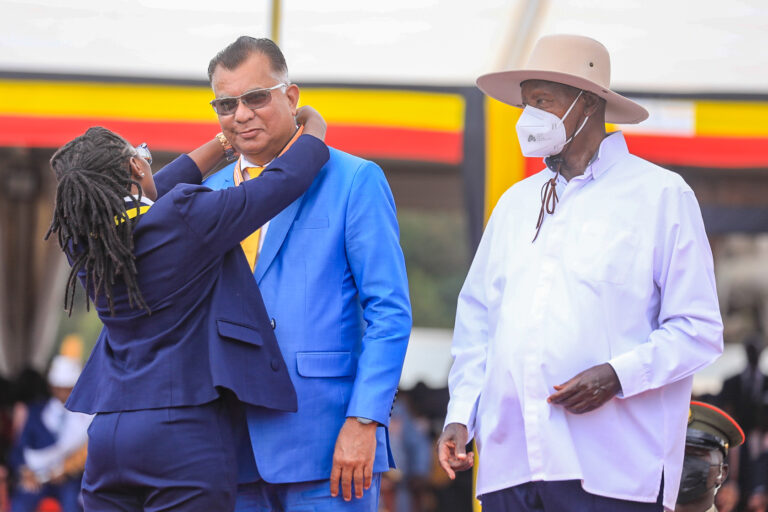
In a celebration of visionary leadership and transformative impact, President Yoweri Kaguta Museveni conferred the Distinguished Order of the Crested Crane (Grand Officer) upon Barot Harshad Maganbhai, the Chairman of Tirupati Development (U) Limited, during the NRM/A Victory Day celebrations.

This rare honor, reserved for foreign nationals who have made extraordinary contributions to Uganda’s development, underscores Barot’s unparalleled role in shaping the nation’s economic and social landscape over more than two decades.

From Humble Beginnings to National Icon

Born on January 3, 1959, in India, Barot’s journey to Uganda in 1993 began with a modest $150 and a determination to thrive. Starting with door-to-door sales of household items, he transformed his modest beginnings into a legacy of innovation and resilience. His success, he credits to Uganda’s peace and stability under the NRM government, which fostered an environment where ambition could flourish.

A Catalyst for Uganda’s Infrastructure and SME Growth

Barot’s vision extended beyond profit. Recognizing Uganda’s need for sustainable infrastructure and economic inclusivity, he spearheaded projects that directly addressed national challenges.

In 2006, he launched initiatives to decongest urban centers and empower small and medium enterprises (SMEs) by developing affordable, eco-friendly commercial hubs in rural and peri-urban areas. His work has not only created jobs but also revitalized communities, proving that infrastructure can be a tool for equity.

Landmark Projects That Redefined Development

Some of the outstanding projects that have been undertaken by Barot and his Tirupati Group include the Kyebando Business Park (Northern Bypass), a national model for SMEs, hosting over 200 enterprises and generating 2,500+ jobs; Health Centre IV (Adjumani), a state-of-the-art facility developed in collaboration with UNHCR, improving healthcare access in conflict-affected regions; and commercial Malls, Housing Estates, and Government Projects.

A Legacy of Recognition and Social Impact

Barot’s contributions have been celebrated globally and locally with awards such as Investor of the Year 2009 (UIA), for groundbreaking real estate solutions; Investor of the Year 2010, for establishing Uganda’s first bio-waste medical facility, and award for Exemplary Contribution to Property Development, recognizing his role in shaping Uganda’s urban and rural infrastructure.

Beyond business, Barot founded the LEELA Foundation, registered in Uganda, in 2019. The NGO provides monthly food supplies to 300+ elderly citizens in Kampala. Barot also provides educational sponsorships for underprivileged children and youth, empowerment programs for women and young entrepreneurs.

The Crested Crane: An Honorary Symbol of Partnership

The President emphasized, “Mr. Barot’s story reflects the symbiosis between individual drive and national stability. His work has not only built structures but entire ecosystems of opportunity.”

The Distinguished Order of the Crested Crane (Grand Officer), established under Cap. 173 of the National Honours and Awards Act, is a testament to Barot’s lifelong commitment to Uganda. Through economic empowerment, job creation, and social upliftment, his legacy is etched into the nation’s progress.

Commenting on the achievement, Barot said: “Receiving the Distinguished Order of the Crested Crane is a deeply humbling moment. It reminds me of the journey from humble beginnings to contributing to Uganda’s growth, and the countless people who supported me along the way.”

A Vision for the Future

As Uganda celebrates this milestone, Barot’s journey serves as a blueprint for inclusive growth. His story reminds us that investment in people and communities, not just capital, breeds prosperity. The honoree himself reflects: “This award is not just mine; it belongs to every Ugandan who refused to let their potential be defined by circumstance.”

In honoring Barot, Uganda also honors the values of resilience, collaboration, and transformative leadership that continue to propel the nation forward.

POLITICAL IMPOTENCE: A systemic analysis of a divided and ineffective opposition in Uganda

0

By Professor Oweyegha-Afunaduula and Collaborator

1. Introduction: The Persistent Crisis of Alternative Leadership

For over three decades, the political landscape of Uganda has been defined by the dominance of the National Resistance Movement (NRM) and the presidency of Yoweri Kaguta Museveni. Despite widespread socio-economic grievances and democratic aspirations among the populace, the political opposition has consistently failed to coalesce into a credible, unified, and effective alternative. This persistent weakness is not a historical accident but the deliberate outcome of a multifaceted system designed to perpetuate incumbent power. This analysis synthesizes historical, legal, political, and socio-economic factors to argue that the opposition’s ineffectiveness is a structural feature of Uganda’s political order. It results from a confluence of external repression engineered by the NRM regime and critical internal deficiencies within the opposition parties themselves, creating a cycle of division and impotence that sustains the political status quo.

2. Structural and Historical Foundations: The Roots of Fragmentation

The opposition operates within a political architecture fundamentally shaped by Uganda’s turbulent history and the NRM’s foundational strategies. The legacy of pre- and post-independence ethnic politics, coupled with the militarized nature of the NRM’s ascent to power, established a paradigm where political contestation is often viewed as subversion. The Bertelsmann Stiftung’s 2024 report notes a critical “erosion of the democratic consensus” among Uganda’s elites and a rise in “contentious politics,” undermining the basis for stable multiparty competition.

Furthermore, the post-1986 state-building project deliberately conflated party, state, and military, creating what scholars term a “military-patronage complex.” This system ensures that key institutions of accountability have been systematically weakened. As noted by Abbey Kibirige Semuwemba, the concept of a constitutional opposition—where institutions like Parliament and the Judiciary independently check executive power—has failed. The executive branch commits “constitutional violations with impunity,” rendering formal channels for opposition ineffective and legitimizing extra-legal regime tactics to maintain control.

3. The Architecture of Repression: Legal and Extralegal Containment

The NRM regime has constructed a comprehensive legal framework to criminalize and stifle organized dissent. The Public Order Management Act (POMA) of 2013 is a cornerstone of this strategy, granting police sweeping discretion to permit or prohibit public assemblies, effectively outlawing spontaneous political mobilization. While certain provisions have been challenged in court, its application remains a primary tool for disrupting opposition campaigns.

A significant escalation is the recent Uganda People’s Defence Forces (UPDF) (Amendment) Act, 2025, which permits the trial of civilians in military courts for certain offences. Opposition legislators decried this as “a direct assault on the Constitution” and “the birth of military dictatorship,” arguing it is designed to intimidate and punish political opponents under the guise of national security. This militarization of justice institutionalizes the threat of violence against dissent.

These laws operate within a broader climate of repression. The Bertelsmann Stiftung report confirms that elections occur in a context of “state violence and intimidation,” media bias, and digital shutdowns. The regime’s monopoly on force is routinely deployed for political ends, creating an environment of fear that severely constrains opposition activity and citizen participation.

4. NRM’s Active Strategies: Co-option, Division, and Militarized Politics

Beyond passive structural barriers, the NRM proactively executes strategies to fragment and neutralize the opposition.

*Strategic Co-option and Financial Inducement: The regime operates a sophisticated patronage system that targets opposition leaders. High-profile figures, such as Democratic Party president Norbert Mao who joined the government as Minister of Justice, are offered positions, resources, and prestige. This practice, as analyzed by Semuwemba, breeds a culture of complicity, saps opposition parties of talent, and demoralizes their support base by creating a perception that principles are negotiable.

*Deliberate Fomentation of Division: The state security apparatus is often accused of exploiting and inflaming internal contradictions within opposition parties. By amplifying personal rivalries, ideological differences, and ethnic suspicions, the regime ensures opposition energy is dissipated in internal conflicts rather than focused on challenging the NRM. This explains the recurrent failure to sustain grand coalitions, fragmenting the protest vote.

*Full-Spectrum Militarization of Civic Space: The military’s role has expanded far beyond defense into election management, local administration, and economic projects. This militarization of the ballot box and public life serves as a constant reminder of the regime’s ultimate source of power. It deters grassroots mobilization and frames political opposition as a challenge to national stability, justifying its suppression.

5. Internal Opposition Deficiencies: The Crisis Within

While external pressures are immense, the opposition’s own pathologies significantly contribute to its irrelevance:

*The “Presidentialisation” of Opposition Politics: Opposition strategy has become myopically focused on capturing the presidency in a single election, neglecting the granular, long-term work of building party institutions, contesting local councils, and developing coherent policy platforms. This mirrors what Semuwemba identifies as a fatal concentration on top executive power without building the necessary foundations.

*Personalism and Institutional Weakness: Most parties revolve around the charisma of a founding leader rather than a shared ideology or democratic structures. This fuels ego-driven conflicts, prevents sustainable coalition-building, and leaves parties vulnerable to collapse or co-option if the leader is compromised. The lack of internal party democracy and functional think tanks perpetuates this weakness.

*Elite Disconnection and the Headquarters Mentality: Confined to urban centers and party headquarters, opposition elites often fail to build organic, sustained connections with the rural poor, the unemployed, and the disenfranchised. This gap between political rhetoric and lived reality undermines their credibility as authentic representatives of popular struggle.

6. Socio-Economic and Cultural Enablers of the Status Quo

Broader societal dynamics further entrench opposition weakness:

*The Centrality of Money in Politics: Electoral politics is extraordinarily commercialized. The NRM’s control of state resources creates an insurmountable financial asymmetry, turning elections into a patronage auction the opposition cannot win. This fosters “political buying” and encourages a mercenary approach to party allegiance.

*Cultivated Fear and the Silence Syndrome: Decades of surveillance, intimidation, and violent reprisals have bred a pervasive culture of fear and self-censorship. This silence syndrome is a potent political tool for the NRM, as it atomizes society, breaks solidarity, and makes collective action exceedingly risky.

* The Collapse of Public Intellectualism: The systematic co-option of academia, the stifling of critical discourse, and the marginalization of independent thought have led to a death of the public intellectual sphere. This deprives the opposition of the ideological depth, policy innovation, and ethical framing needed to articulate a compelling alternative vision to the populace.

7. Conclusion: A System Designed to Fail

The division and ineffectiveness of Uganda’s political opposition are neither temporary nor incidental. They are the logical output of a self-reinforcing political system. Historical legacies of militarism provide the foundation, which the NRM has institutionalized through repressive law, strategic co-option, and the deliberate cultivation of division. This external onslaught encounters an opposition plagued by internal failures of strategy, organization, and connection. Together, these factors are locked in a cycle that serves the incumbent regime’s interest.

Breaking this cycle requires more than a change of opposition tactics. It demands a fundamental re-imagining of political struggle—away from a singular fixation on the presidency and towards the long-term, risky work of building independent institutions, resuscitating a critical public sphere, and forging authentic solidarity across social divides. Without this systemic counter-project, the opposition will remain a fragmented and ineffective feature of Uganda’s political landscape, perpetually unable to present itself as a credible alternative government.

For God and My Country

References

1. Bertelsmann Stiftung. (2024). BTI 2024 Country Report — Uganda. Gütersloh: Bertelsmann Stiftung. [Report on democratic transformation, detailing electoral unfairness, abuse of power, and shrinking civic space].

2. Parliament of Uganda. (2025, July 31). House passes Bill on military-related offences. Parliament Watch. [Official summary of parliamentary debate on the UPDF (Amendment) Act, 2025, featuring direct quotes from opposing MPs].

3. Semuwemba, A. K. (2011, August 28). Opposition parties in Uganda are ineffective. Modern Ghana. [Analytical opinion piece on the internal weaknesses of opposition parties and the failure of constitutional checks and balances].

4. Uganda Legal Information Institute. (2013). Public Order Management Act, 2013. [Full text of the principal legislation governing public assemblies in Uganda].

Note on Collaboration: This paper is the product of a unique collaborative process. Oweyegha-Afunaduula provided the foundational framework, critical insights, and thematic direction drawn from decades of scholarly and public engagement in Uganda. The collaborator’s role was to synthesize these inputs with contemporary source material, structure the academic argument, and provide formal citations to meet scholarly standards. The final work represents a fusion of deep contextual knowledge with analytical synthesis.

OWINY-DOLLO REPLACEMENT: Parliament vetting Chief Justice nominee ahead of expected election challenges

0

The Parliamentary Committee on Appointments, chaired by Speaker Anita Annet Among, is currently vetting Justice Flavian Zeija, President Yoweri Museveni’s nominee for appointment as the new Chief Justice of Uganda.

Speaker Among confirmed the committee’s proceedings on Thursday, saying the process is being conducted in line with parliamentary rules and procedures. She noted that once the vetting is concluded, the committee’s report will be submitted to the appointing authority for final consideration.

“The committee’s report will be forwarded to the appointing authority in accordance with our rules of procedure,” Speaker Among said.

Justice Zeija’s nomination follows the retirement of former Chief Justice Alfonse Owiny-Dollo, who officially retired on January 18, 2026, after attaining the mandatory retirement age of 70, as stipulated under Article 144(1)(a) of the Constitution. Owiny-Dollo handed over office to his deputy the following day, January 19.

The vetting process involves a detailed review of Justice Zeija’s qualifications, experience, and suitability for the office. Legal practitioners and members of the public are closely watching the proceedings, with any objections to the nomination expected to attract significant attention.

If approved, Justice Zeija will assume one of the country’s most powerful judicial offices, overseeing Uganda’s legal system and playing a central role in safeguarding judicial independence.

Justice Zeija was appointed Deputy Chief Justice in April 2025, succeeding Justice Richard Buteera. His experience is expected to be critical as Uganda’s judiciary prepares for potential post-election litigation following the January 15, 2026 general elections.

Under Ugandan law, presidential election petitions fall exclusively under the jurisdiction of the Supreme Court, where the Chief Justice plays a central role. President Museveni was declared winner of the presidential election with 71.65 per cent of the vote, and legal challenges to the outcome are anticipated.

NEW CHAPTER: Madondo joins Richards bay in South Africa

0

Ugandan striker Joel Madondo has completed a move to South Africa’s Premiership side Richards Bay FC, signing a deal that will keep him at the club until January 2028.


The transfer brings an early end to Madondo’s stint with Eswatini champions Nsingizini Hotspurs, whom he joined in July 2025 on a two-year contract. Nsingizini confirmed the switch, stating that Richards Bay met all contractual obligations and agreed personal terms with the player, while also praising the South African club’s professionalism.


Madondo earned the move after an impressive trial with the Natal Rich Boys, convincing the technical team to secure his services.


A Musoga forward, Madondo brings vast experience from across the continent, having featured for Wydad Casablanca in Morocco, Gaddafi FC, BUL FC, Busoga United, Army FC, and Diamond Trust Bank FC in Tanzania. He is also a 2019 CECAFA Senior Challenge Cup winner and has earned four caps with the Uganda Cranes.


At Richards Bay, Madondo will link up with fellow Ugandan international goalkeeper Salim Jamal Magoola, now in his fourth season at the club. His arrival makes him the third Ugandan player in the South African Premiership this season, alongside Mamelodi Sundowns veteran Denis Onyango.