Tuesday, March 17, 2026
Home Blog Page 41

PARTY POLITICS: Frustration grips Buyende as NRM elections registration faces obstacles

0

Aspirants for various positions in the upcoming National Resistance Movement (NRM) district elections in Buyende are facing significant hurdles as they attempt to register their candidacies. Allegations of deliberate obstruction by the office of the Resident District Commissioner (RDC) have surfaced, fueling suspicion and discontent amongst party members.

The registration process, which commenced on Monday, May 19, 2025, has been marred by controversy. Contrary to established protocol, the registration exercise was reportedly moved from the official NRM office administrator to the RDC’s office. This shift has raised eyebrows and sparked accusations of political maneuvering intended to disadvantage certain candidates.

Compounding the issue, the NRM office administrator’s office remained closed for much of Monday and Tuesday, leaving aspiring candidates stranded and without clear guidance. Affected members claim they were unable to reach the new administrator, Robert Baliruno, further deepening their suspicion of foul play.

The RDC’s office has been repeatedly accused by several NRM members of favoring Milly Babalanda, the Minister for the Presidency who is also vying for the Budiope West parliamentary seat, and Moses Magogo, the current MP for Budiope West. This history of alleged bias has amplified concerns about the neutrality of the registration process being conducted under the RDC’s supervision.

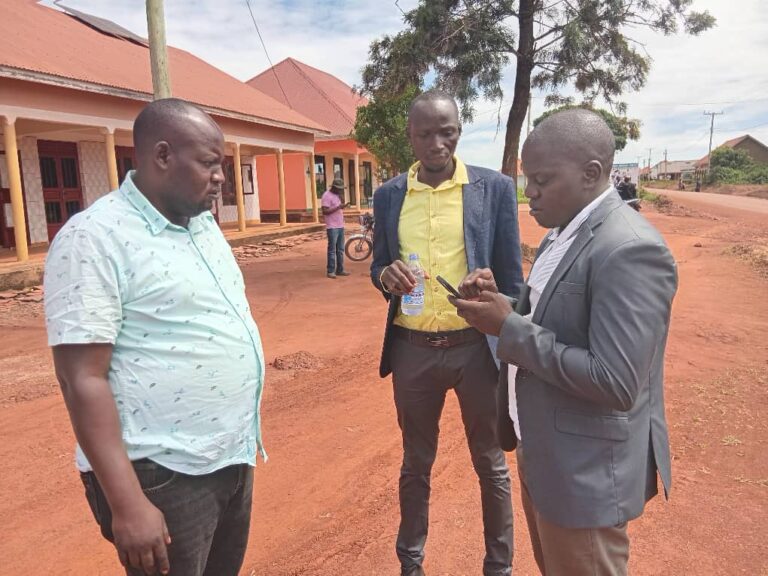
Mukama Tanasi, a candidate for the NRM Chairperson position in Buyende district, voiced his frustration to Busoga Times on Tuesday. “Candidates eyeing leadership in Buyende district are stuck. The registrar has abandoned them at his office at Buyende district headquarters,” he stated.

Mukama believes this disruption is a calculated move to frustrate candidates perceived as political opponents. “This party has an office, why are we carrying out party activities at the office of the RDC?” he questioned, highlighting the unusual and concerning nature of the situation.

Kitimbo Andrew, an aspirant for the NRM district vice chairperson position, expressed similar worries, fearing that the district’s political landscape is being manipulated. “The process is being hijacked,” he lamented.

Attempts to reach the RDC, Maj (Rtd) Betty Akello, and her deputy, Mathias Naikoli, for clarification were unsuccessful. Their mobile phones were unreachable, and they were unreachable via WhatsApp.

However, NRM Secretary General Richard Todwong addressed the issue during an appearance on NBS Television. He justified the involvement of RDCs by highlighting their role as heads of district security councils. He stated that the RDCs were tasked with maintaining security during the elections, a responsibility supported by the Ministry of the Presidency.

“RDCs are the chairpersons of the district security councils. We wrote to the Ministry of Presidency to support us in maintaining security during these elections, and this is why RDCs were involved,” Todwong explained.

While the NRM leadership emphasizes the security rationale for the RDC’s involvement, the concerns raised by aspiring candidates in Buyende paint a picture of a process riddled with suspicion and potential for manipulation.

The allegations of bias and the lack of transparency in the registration process threaten the integrity of the upcoming NRM district elections and could potentially lead to further unrest and division within the party in Buyende.

It remains to be seen whether the NRM leadership will address these concerns and ensure a fair and transparent electoral process.

SHAM PROCESS: Opposition MPs walk out of parliament over UPDF Amendment Bill

0

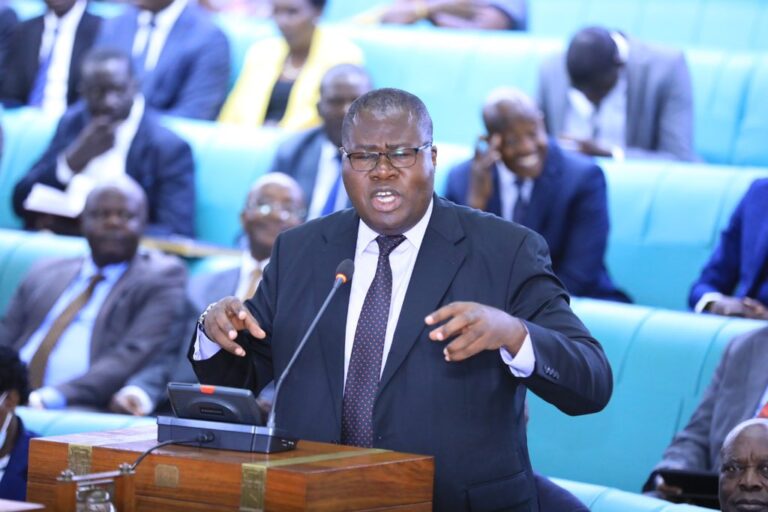
A heated debate has erupted in the Ugandan Parliament over the Uganda Peoples’ Defence Forces (UPDF) Amendment Bill, 2025, culminating in a dramatic walkout by opposition Members of Parliament on Tuesday, May 20th, 2025.

The MPs, led by Leader of Opposition Joel Ssenyonyi, abandoned the 34th Sitting of the 3rd Meeting of the 4th Session of the 11th Parliament, arguing that the bill lacks inclusiveness and is being rushed through without proper scrutiny.

The core of the opposition’s contention lies in the perceived lack of sufficient time allocated for public submissions and engagement with the bill. Ssenyonyi lambasted the Committees on Legal and Parliamentary Affairs, and Defence and Internal Affairs, accusing them of hastily processing the bill.

“My colleagues and I are hard pressed to participate in this process. We shall leave you here to participate in it. Process your Bill pretending that you are engaging the input of Ugandans and yet not,” he stated, branding the process a “sham.”

Ssenyonyi emphasized the importance of public consultation in the law-making process. “When you bring a bill here, you should give it time for people to have their input,” he argued.

In response, MP Stephen Bakka Mugabi, who chairs the Committee on Legal and Parliamentary Affairs, defended the process, citing the Rules of Procedure which permit the processing of bills within 45 days. However, Ssenyonyi countered that while expedited processing is permissible, it is inappropriate when there are interested parties wishing to contribute.

The contentious UPDF Amendment Bill raises concerns about the trial of civilians by military courts. Wilson Kajwengye, Chairperson of the Defence and Internal Affairs Committee, presented a report stating that the committee concluded that such trials should only occur in exceptional circumstances, ensuring a fair trial.

However, opposition MPs remain skeptical. Denis Sekabira, the Member of Parliament for Katikamu North, expressed concern over the impartiality of military courts, arguing that appointed judges within the military lack the necessary independence due to the hierarchical structure of the army.

“A court must be impartial, but in the army, you operate under orders, you cannot have the independence required to dispense justice,” Sekabira asserted. He further argued that the bill undermines the doctrine of separation of powers, alleging that the Executive is using Parliament to grant the army unwarranted authority.

Despite the mass exodus of opposition MPs, some members, including Hon. Abdu Katuntu (Independent MP), Jimmy Lwanga (NUP), and Jonathan Odur (UPC), remained in the chamber.

Safety Concerns Voiced

The already tense atmosphere was further exacerbated by safety concerns raised by Ibrahim Ssemujju Nganda, the MP for Kiira Municipality. He expressed fear of potential intimidation, alleging the presence of individuals resembling members of the Special Forces Command (SFC) in the Parliament premises.

He requested assurance from the Speaker that MPs would not be subjected to violence, recalling a previous incident where military personnel allegedly raided Parliament during the consideration of the Coffee Bill.

“This morning, I came here after mobilizing the people of Kira to witness the proceedings. However, I found the entire Parliament barricaded by armed police officers,” he stated highlighting the perceived intimidation.

Political Parties Bill Passed Despite Opposition

Amidst the controversy surrounding the UPDF Amendment Bill, Parliament proceeded to pass the Political Parties and Organisations (Amendment) Bill, 2025, sponsored by Nakut Faith Loru Chuna. Earlier, MP Jona Odur presented a Minority Report deeming the bill unconstitutional and urging MPs to reject it. MP Jimmy Akena also criticized the bill, calling it “diabolical” and lacking stakeholder consultation. Despite these objections, the bill was passed.

The walkout by opposition MPs underscores the growing tensions surrounding the UPDF Amendment Bill and highlights concerns regarding the transparency and inclusiveness of the legislative process in Uganda.

The debate is likely to continue, raising questions about the balance between national security interests and fundamental civil liberties. The passing of the Political Parties and Organisations (Amendment) Bill amidst the controversy further fuels concerns about the direction of Ugandan politics.

UGANDA CRANES: Aucho dropped, Shafik  Kwikiriza returns as coach. Put names 28-man Cranes squad for friendlies.

0

By Musa Kikuuno – Busoga Times

Uganda Cranes head coach Paul Joseph Put has named a 28-man squad for the upcoming international friendlies against Cameroon and The Gambia, but the headlines are dominated by the surprise omission of captain Khalid Aucho.

Aucho, who plies his trade at Simba SC in Tanzania, will miss the two high-profile matches scheduled for early June in Morocco, raising eyebrows ahead of the crucial World Cup qualifying campaign.

The Cranes will face Cameroon on Friday, 6th June, at 10 PM and then take on The Gambia on Monday, 9th June, at 6 PM, with both games offering valuable preparation for the team’s competitive commitments.

Notable Inclusions and Omissions

The squad includes 16 foreign-based players and 12 from the Uganda Premier League, signalling a blend of experience and emerging talent.

Among the fresh highlights is the return of Shafik Nana Kwikiriza, the KCCA FC forward who earns another national team call-up after his recent top form in the domestic league.

Also earning a first-time nod is Jordan Obita, a 31-year-old left-back playing for Hibernian FC in the Scottish Premiership, while Nicholas Wadada makes a long-awaited return after years of national team absence. Wadada’s recent performances with Vipers SC, helping them win the 2024/25 Uganda Premier League title, have clearly impressed coach Put.

However, notable absentees alongside Aucho include Aziz Kayondo and Halid Lwaliwa, both regulars in previous squads.

Full Squad Breakdown

Goalkeepers:

Isima Watenga, Nafian Alionzi, Joel Mutakubwa, Hannington Sebwalunyo

Defenders:

Elvis Bwomono, Nicholas Wadada, Elio Capradossi, Arnold Odong, Toby Sibbick, Hilary Mukundane, Jordan Obita, Isaac Muleme

Midfielders:

Bobosi Byaruhanga, Kenneth Semakula, Allan Oyirwoth, Enock Ssebagala, Abdu Karim Watambala, Allan Okello, Travis Mutyaba

Forwards:

Dennis Omedi, Hakim Kiwanuka, Shafik Nana Kwikiriza, Rogers Mato, Steven Mukwala, Usama Arafat, John Paul Dembe, Patrick Jonah Kakande, Ivan Ahimbisibwe

The local-based players are expected to travel to Morocco on Monday 2nd June, where they’ll link up with the foreign-based contingent for final preparations.

With major qualifiers looming, these friendlies will offer Coach Put a vital opportunity to assess squad depth and shape the team’s strategy. While the omission of senior figures like Aucho may surprise fans, the inclusion of promising talents like Kwikiriza shows a clear sign of transition and trust in youth.

POLITICS AND NATURE: Corruption is sabotaging environmental democracy in Uganda

0

By Oweyegha-Afunaduula

In the world in general and Uganda in particular democracy is reduced to elections or, for that matter, political democracy. However, democracy has many dimensions, namely: political,spiritual, economic, cultural, ecological and environmental, to name but a few of them.Thus, we can speak of political democracy, economic democracy, spiritual democracy, cultural democracy, ecological democracy and environmental democracy. Let me say a little about each of these types of democracy before I address the topic“Environmental corruption is sabotaging environmental democracy in Uganda”..

Political Democracy

Political democracy is a system of government where citizens have a say in their political leaders through various methods, including voting, elections, and other forms of political participation. It emphasizes the principles of equal representation, fairness, and the protection of individual freedoms. At its core, political democracy is about “rule by the people,” meaning citizens have the power to influence government decisions. Political democracy, specifically, is achieved when certain political conditions are met. These conditions usually involve the adoption of a constitution and laws that give the people supreme power. In a political democracy, the people are the ultimate source of political power. However, in countries like Uganda, where military control of the actions and movements of the people is a critical issue in governance, rule of the people is just a dream.

Cultural Democracy

Simply stated, “Cultural Democracy” is the notion that everybody’s heritage and cultural expression is worthwhile and deserving of an equitable share of whatever resources are available (Botkin, 2010). Broadly speaking, cultural democracy emphasises active public engagement in all aspects of culture, from its definition and creation to its experience and access. It’s about shifting the understanding of culture to be more inclusive, participatory, and democratic, moving beyond a narrow view of culture as a product of elite institutions. Cultural Democracy requires a paradigm shift towards a process of continuous and intense community engagement, using culture as a catalyst for addressing social issues: art of the people, made by the people, and presented for the people (Botkin, 2010).

Spiritual Democracy

Spiritual democracy, as outlined by Rajaji and Gandhiji, emphasises personal and communal equality, aligns with Whitman’s vision of universal brotherhood, and upholds diverse spiritual expressions, transcending traditional political frameworks and structures. It is a concept believed by 19th century Indian intellectual, C. Rajagopalachari (popularly known as Rajaji) who was a prolific writer on wide-ranging and diverse topics, including world peace, disarmament, free enterprise, moral and ethical values in public life, religion, etcand 20th century father of Gandhian philosophy – Mahatma Gandhi (Gandhiji)-that emphasises freedom and equality at a personal and community level, transcending mere political structures. Remember that Gandhi’s philosophy encompassed a wide range of ideas including nonviolent resistance, truth, and self-reliance, which he applied to social and political life. 

Ecological Democracy

Ecological democracy combines principles of democracy and ecological awareness, advocating for decision-making processes that prioritize both human well-being and the health of the planet. It emphasizes the interconnectedness of all life and recognizes the intrinsic value of nature, advocating for a system where all affected parties, including humans and the environment, have a voice in decision-making.

Environmental Democracy

Environmental democracy refers to the idea that public participation is crucial for making sound and equitable decisions regarding land, natural resources, and the environment. It’s based on the principle that citizens have the right to access environmental information, participate in decision-making, and seek redress for environmental harm. Environmental democracy has three pillars: transparency, participation and justice. WFD supports a democratic response to global environmental crises by working with parliaments, political parties and civil society.

Environmental democracy implies democratic environmental decision-making whereby public participation is emphasised.  There is no environmental democracy if the public is excluded from environmental decision making.

The public needs to have a voice in environmental decision-making. This is the foundation of “environmental democracy”, a concept that united open government approaches following the Chernobyl Disaster in 1986 and the 1992 Rio Summit for the Earth. In response, governments strengthened right to information laws, created pollutant registers and implemented environmental impact assessments (EIA) and other public oversight processes. 

Leopold-type matrices have been the most commonly used EIA methods in the EIA industry. However, EIA Networks have also been used. The first EIA network was developed by Sorensen in 1971 to aid planners reconcile conflicting land uses and make necessary decisions. Unfortunately, EIAs are very expensive. The cost of an EIA method depends on the number of impacts, which have been assessed.  It is important to stress that the decision of the cost of the method is not made by the method itself but by those involved in identifying the impacts for the EIA.

It was expected that EIA would promote and support meaningful and effective participation of the public in environmental decision-making. Unfortunately, EIA deception (or sustainability deception or environmental deception) is at the centre of environmental decision-making (Oweyegha-Afunaduula, 2025) to ensure that governments get the projects they want to be implemented, ostensibly for development, without meaningful and effective public scrutiny, and to enrich firms involved in the planning and implementation of those projects. Frequently governments have connived with the firms and the funding agencies, principally the World Bank, to reduce the influence of public participation in project design and implementation. The EIA has been severally corrupted along many dimensions of development by governments and the corporate world. It was the distortion or corruption of the EIA moved Oweyegha-Afunaduula, Musumba and Muramuzi (2020) to write their article “The Threat of Environmental Corruption Via Huge Dam Projects, and Oweyegha-Afunaduula (2023) to write his articles “Uganda in a State of Corporate Environmental Corruption and Decision-Making.” (Oweyegha-Afunaduula, 2023), “Environmental Sabotage on the Rise as Accountability of Power Declines” (Oweyegha-Afunaduula, 2025) and “Environmental Impact Assessment as Sustainability deception: Bujagali Dam in Perspective” (Oweyegha-Afunaduula, 2025)Oweyegha-Afunaduula (2024) wrote that “Environmental deception combined with political deception is a dangerous combination. It is enemy number one to development, transformation and progress. If we are faced with increasingly debilitating climate change, it is this deadly combination that is responsible. No amount of talking locally, nationally, regionally and globally will do unless we resolve to confront the deadly combination”.

According to the Centre for International Environmental Law (CIEL), environmental democracy is based on the idea that land and natural resource decisions adequately and equitably address citizens’ interests. Rather than setting a standard for what determines a good outcome, environmental democracy sets a standard for how decisions should be made. It adds that at its core, environmental democracy involves three mutually reinforcing rights that, while independently important, operate best in combination: the ability for people to freely access information on environmental quality and problems, to participate meaningfully in decision-making, and to seek enforcement of environmental laws or compensation for damages.

Environmental democracy is not a peripheral concern – the ability of our precious democratic institutions and values both to respond to and to survive our environmental crises should be one of the central questions of our time (Lee, 2023). It is also a complex and a rich topic, and when allied with the role of law, could be approached in many different ways. In her paper, Lee (2023) has explored the environmental and democratic potential of procedural (specifically participatory) rights in law. She has focused on two regional conventions: the UNECE Aarhus Convention on Access to Information, Public Participation in Decision-making and Access to Justice in Environmental Matters; and the UNCEPAL Escazú Regional Agreement on Access to Information, Public Participation and Justice in Environmental Matters in Latin America and the Caribbean. These two Agreements provide an opportunity to explore the ways in which law speaks, or might speak, to the features that characterise environmental democracy.

In their article “Enhancing Environmental Democracy in Kenya”,Kariuki Muigua and Paul N.Musyim (2018) observed that environmental democracy may be a recent coinage but what it belies are concepts that have been in use all along. The term reflects increasing recognition that environmental issues must be addressed by all, or at-least a majority of those affected by their outcome, not just by the minority comprising the governments and leading private-sector actors.  It captures the principle of equal rights for all including the public, community groups, advocates, industrial leaders, workers, governments, academics and other professionals to be involved in environmental governance. It connotes the right of all whose daily lives are affected by the quality of the environment to participate in environmental decision-making as freely as they do in other public interest matters such as education, health care, finance and government. Access to environmental information and justice for all those who choose to participate in such decision-making is integral to the concept of environmental democracy. In a word, wrote Kariuki Muigua and Paul N. Musyim, thechallenges facing the entrenchment of environmental democracy in Kenya today can, and should, be turned into opportunities for a better tomorrow in which all Kenyans enjoy a clean and healthy environment within an atmosphere that allows the realisation of the cherished dream of sustainable development. Environmental democracy is attainable. Indeed, it is an imperative for Kenya if the goal of sustainable development is to see the light of day. This also goes for Uganda and other underdeveloped countries.

Foundations of Environmental Democracy

The foundations of Environmental Democracy were firmly established in Principle 10 of the Rio Declaration, which emerged from the United Nations Conference on Environment and Development (UNCED) in 1992, also known as the Earth Summit: “Environmental issues are best handled with the participation of all concerned citizens, at the relevant level. At the national level, each individual shall have appropriate access to information concerning the environment that is held by public authorities, including information on hazardous materials and activities in their communities, and the opportunity to participate in decision-making processes. States shall facilitate and encourage public awareness and participation by making information widely available. Effective access to judicial and administrative proceedings, including redress and remedy, shall be provided.”

While the concept of Environmental Democracy has existed for over two decades, there have been remarkably few efforts to operationalise it from a democracy support perspective via targeted programming (WFD, 2020).

Status of Environmental Democracy in Uganda

In this article I want to focus on the status of environmental democracy in Uganda.Uganda has established some important legal mechanisms to support environmental democracy.She has also designed environmental policies to effect conservation-oriented policies. However, Twesigye Morrison Rwakakamba (2009) sought to establish whether the environmental policies were effective at all levels of society. Tumushabe, Bainomugisha and Makumbi (2002) addressed consolidation of environmental democracy in Uganda through access to justice, information and participation.By addressing these areas for improvement, it could do more to promote transparency, public participation, and access to justice. However, since then, justice has increasingly been militarised, information restricted and the public marginalised from effective participation in environmental conservation and management, with government preference of militarised politics and militarised management and conservation of natural resources (e.g., Oweyegha-Afunaduula, 2025).

Way back in 2006 Oweyegha-Afunaduula (2006) wrote thus: “Development, a prized thing in Uganda, is a broad concept with multiple dimensions, though the tendency has been to pursue it in economic terms. The social, ecological, moral, ethical and environmental dimensions have attracted little attention. Development should mean qualitative improvement in human rights, democracy and freedom of choice. When one says he or she is experiencing development, that person should be saying that today more than yesterday and tomorrow more than today, one is enjoying maximum progress in all the dimensions of human welfare”. However, due to presidentialism and environmental corruption of the Office of President, in concert with international financial institutions (IFIs), these ideals have been consistently and persistently violated, thereby sabotaging environmental democracy and environmental development in Uganda.

Ganda (2020) found that corruption worsens the environmental sustainability situation.Many of the anti-corruption policies proposed for the environmental and resource management (ERM) sectors draw on the principal-agent theory. The political science literature on corruption found that theory to have limited application when corruption is systemic and the principal is corruption. Tacconi and Williams (2020) suggest that the analysis of corruption and anti-corruption in countries with systemic corruption should draw to a greater extent on collective action theory to identify more effective policies.

Environmental corruption in Uganda in the 21st century has President Tibuhaburwa Museveni at it s centre. Therefore, if environmental corruption is sabotaging environmental democracy, which it is, then we can extricate President Tibuhaburwa Museveni from it. The President has all infrastructural development in his hands even if he has privatised and liberalised the Uganda economy. There is no private investor in Uganda -foreign and local – of sizeable magnitude who never started and ended with the President before investing in Uganda. Most corporate investors owe their low environmental restrictionsto their business in all the dimensions of the environment to President Museveni. They have, as desired by the President, got tax holidays for 10 years, freedom to take all their money out of the country, c heap labour, start up capital using public money, and “free” land by presidential design.  This is of course unfair to most local investors, but some local investors in the good books of the President have accessed public money for their start up capital, don’t pay taxes or are forgiven paying taxes. Or else they have easily got declared bankrupt.

The direct intervention of the President in the business cycle has not only led to much haemorrhage of taxpayer’s money, but has sabotaged environmental democracy, with the greatest losers being the masses of the indigenes of Uganda. The indigenes have lost their ancestral lands and natural resources with no hope of benefiting in any way. The beneficiaries are the Indians, Chinese, Banyarwanda  (a constitutionally created indigenous group) and other foreigners, including the new categorise of refugees all of whom have no regard for the environment of Uganda.

In terms of dam building environmental democracy has been eroded through the environmental corruption of the government of Uganda, dam construction firms,dam construction consulting firms, dam construction funding international financial institutions (IFIs). These are all intricately intertwined in the corporate-government circle of environmental corruption committed to building the global money economy and characterised by government-corporate circle of secrecy at the centre of which is is “business confidentiality”.

The motive of profit for those who make the political development decisions, those who fund the projects and those who provide the consulting services is the driving force of environmental corruption and the factor behind so much erosion of environmental democracy in Uganda. It is the one responsible for rendering environmental impact assessment (EIA) of development projects in Uganda almost useless and only performed to environmentally legitimise the projects. This explains why the failed dam project of Isimba hydropower dam has embarrassed the government of Uganda and cost the tax payer highly because of the corruption of its cost and because it has been reported to be cracking. Otherwise Isimba hydropower damhas an installed capacity of 183 megawatts (MW). It generates 1,039 gigawatt-hours (GWh) annually. This makes it one of the key contributors to Uganda’s total electricity production. However, most of Busoga where it is located is still in darkness – enjoying no environmental democracy in terms of electricity distribution.

For God and My Country

Prof Oweyegha-Afunaduula is a member of Centre for Critical Thinking and Alternative Analysis

KOLOBE ANTONY INTERVIEW: The youthful NUP contender for Budiope West promises to be an honest MP of integrity, connected to the people he represents

0

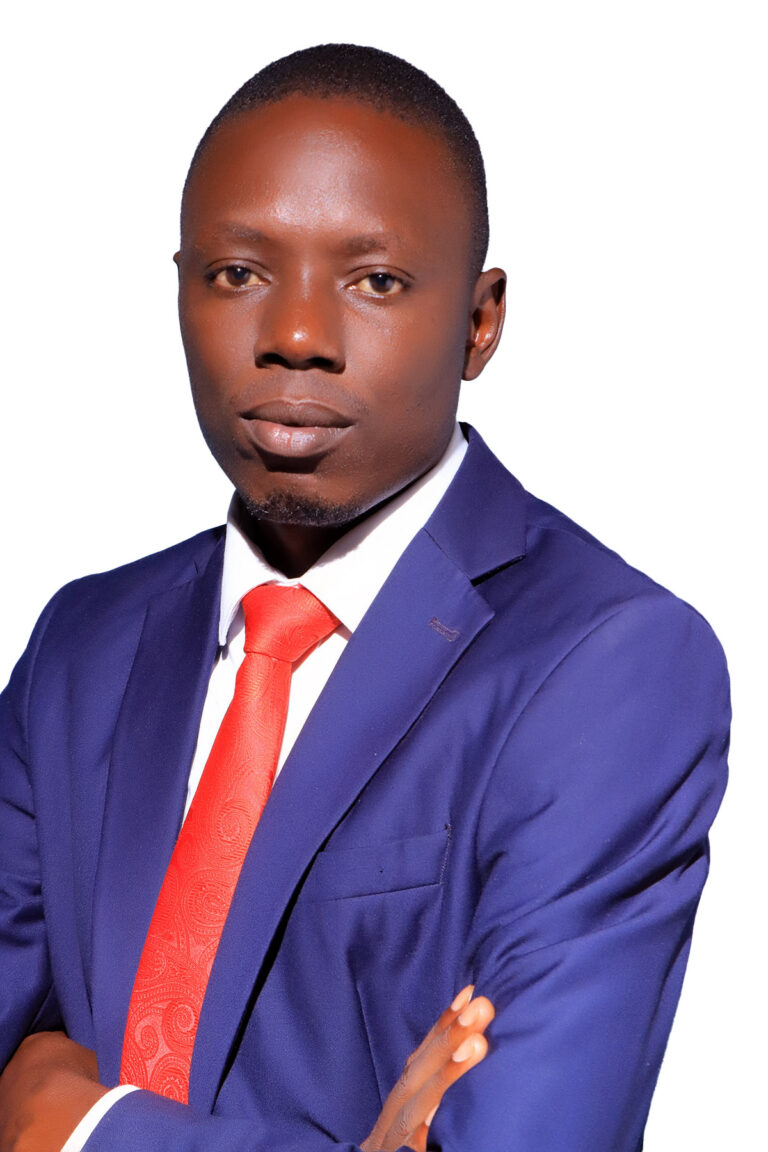
Kolobe Antony is setting his sights on representing the people of Budiope West in Buyende district, and he’s doing so with the backing of the National Unity Platform (NUP). In an exclusive interview with Busoga Times, Kolobe shares his motivations, vision, and specific aspirations for the constituency as he embarks on his journey to become the next Member of Parliament. This conversation delves into his platform, his connection with the community, and what he believes he can bring to the table in service of Budiope West.

Who is Anthony Kolobe, the individual who wants to represent the good people of Budiope West in Buyende District in the 12th Parliament of Uganda?

Kolobe Antony, son of Samali Nguna and Peter Naika, hails from Ntaala village in Buyende District, specifically Ntaala parish within Buyanja Sub County and the Budiope West constituency, located in the Busoga region. He is a married father of five and holds a bachelor’s degree in education, working as a trained teacher. Beyond the classroom, he is a director of schools, a farmer, a businessman, and a volunteer with international organizations.

What sparked your desire to serve in this capacity as an MP?

I’m running for Parliament to be a strong voice for Buyende and Busoga, fighting for the improved services our community urgently needs. We’ve suffered from inadequate service delivery and persistent poverty, largely due to ineffective representation. I believe our biggest hurdle is the lack of leaders capable of articulating our issues and advocating for solutions in Parliament.

Just imagine: the day President Yoweri Museveni visited Bukungu, all the leaders did not table any problem affecting the district to him apart from praising him. Our MPs cannot stand firm and present our problems on the floor of parliament. As an elite and intelligent young man, I decided to contest. I am hopeful that I can change the rhythm.

Our leaders do not demand any share of the national cake. Just imagine in the budget of 2025/2026, Budiope West and Buyende at large are not mentioned anywhere. We have the poorest roads, like the Bukungu-Kamuli road, which is in poor condition. The promise to tarmac it has been on for long, but nothing is done.

Our leaders are so comfortable. We lack health centres. The greater Kidera has only two health units; that is, Kidera Health 4 and Bukungu. Buyanja sub-county lacks even a health centre. We lack seed schools. The greater Kidera has only one secondary school – Kidera SS. We are entitled to a seed school in each sub-county. All the feeder roads are impassable. All this sparked me to contest as a member of parliament.

How do your values and vision align with the National Unity Platform (NUP) ideology?

The National Unity Platform advocates for good service delivery, which I do. It advocates for peace and security, which I do. It advocates for the freedom of every Ugandan, which I do. It advocates for democracy, which I do. It advocates for transparency and accountability, which I do. It advocates for development, which I extremely do. I advocate for a corruption-free country, which my party does. It advocates for human rights, which it does. It advocates for employment opportunities, which all youth do. So my vision complies with the party’s ideologies.

How would you handle a situation where the interests of your party conflict with the interests of your constituents?

The interests of the National Unity Platform are highly embraced by my constituents. As we all know, my constituency is the most affected and least privileged. My constituency has achieved very little from this government for the last 39 years this government has been in power.

For the last 39 years, the Bukungu-Kamuli road has never been considered. For the last 39 years, our people have not been able to access the lake to fish. For the last 39 years, people have not even been allowed to catch mukene. In fact, people look at the lake as an in-law. Our sub-counties lack headquarters; some, like Kidera sub-county, lack where to put headquarters. Most sub-counties, like Buyanja, Kidera and Bukungu Town Council, lack seed schools.

Can you describe your previous experience in leadership and community service and how this experience has prepared you for the role of MP?

My leadership experience spans various levels, including successfully directing and managing schools, as I previously mentioned. Furthermore, I serve as a national coordinator for an international organization, a role I consider to be a significant leadership position. I believe this cumulative experience has sufficiently prepared and empowered me to effectively serve my community.

What do you perceive as the biggest challenges facing Budiope West?

Our community faces significant challenges, primarily stemming from inadequate public services and widespread unemployment. We struggle with poor infrastructure, including dilapidated roads, under-equipped and understaffed health centres with limited access to medicine, and schools lacking basic resources. Historically, fishing provided livelihoods for many, including those with only a primary school education.

However, government restrictions, specifically the military presence around our lakes, have decimated the fishing industry and left many without employment. This displacement, without adequate planning or alternative opportunities provided by the government, has severely impacted our community. These are the core issues hindering our progress.

What promises have been made to the people of Budiope West by previous leaders that have not been fulfilled? How would you address these unmet needs?

A lot of promises have been made, and they are being made even up to now. They promised to build hospitals, schools, health centres, piped water, electricity, good roads, prosperity and unity. But all these have not been achieved for the last 39 years. You can see a politician who cannot even run a nursery school promising to build schools, a person who is unemployed promising jobs, and a person who cannot start a clinic promising to build hospitals. I want to change this narrative.

What are your proposals for supporting farmers in Budiope West, improving agricultural productivity, and ensuring food security?

Our farmers need serious sensitization on how to do farming using modern farming methods. This can be achieved by starting farmers’ associations and cooperatives. The cooperatives can bring farmers together and share ideas on how to use modern farming methods.

The cooperatives can provide seeds and loans to its member farmers. Co-operatives can buy the harvests at a very good price. The leaders of the cooperatives can look for better markets for the harvests and organise workshops and seminars for the farmers.

In due course, the farmers shall develop skills and hence improve on the harvest and food security. Through cooperatives, farmers can also do cash crop growing like coffee and cotton.

If elected, what specific bills or motions would you prioritize in Parliament to benefit Budiope West?

As a Member of Parliament, the first bill I would propose aims to reinstate presidential term limits. The extended period of rule has fostered corruption within the leadership. Uganda’s fundamental challenge lies in the concept of a lifetime presidency. By implementing presidential term limits and facilitating a change in leadership, Uganda, including Budiope West, could benefit from new leadership and a more prosperous future.

How will you ensure transparency and accountability in your work as an MP?

As a key part of my parliamentary oversight duties, I commit to actively engaging with local government. This includes regular attendance at council meetings and careful scrutiny of their budgets to ensure government funding is used effectively and appropriately within our constituency. I will also be closely monitoring the civil service recruitment process at the district level to prevent corruption within the district service commission and protect our constituents from bribery.

Furthermore, I will resolutely oppose corruption within Parliament itself, specifically the practice of offering financial inducements to influence legislative decisions. Just as I have resisted attempts to bribe me from running for office, I will remain steadfast in my commitment to integrity and transparency in all my parliamentary actions.

What is your commitment to serving the people of Budiope West if elected?

I pledge to serve my constituents diligently and impartially, representing their interests in Parliament with honesty and integrity. I am committed to closely monitoring government programmes and remaining connected to the community to ensure their needs are heard and addressed effectively.

Kyabazinga graduates with master’s degree from Yale University in the US

0

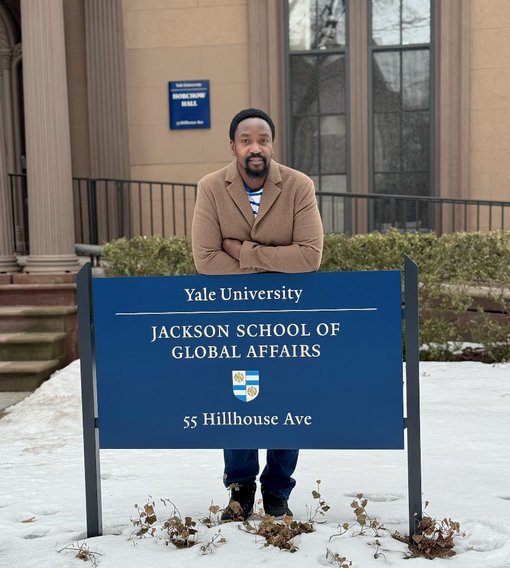
The Kyabazinga of Busoga, His Majesty William Gabula Nadiope IV, is celebrating a significant milestone today, graduating from Yale University with a Master of Advanced Studies in Global Affairs. This achievement marks another impressive academic accomplishment for the King, who is known for his commitment to education and development within his kingdom and beyond.

The Kyabazinga, a revered figure in Busoga Kingdom and Uganda at large, completed the rigorous program at Yale’s Jackson School of Global Affairs, focusing on critical issues facing the world today. His studies are expected to further enhance his ability to address challenges and opportunities within the Busoga region and on a global scale.

This latest degree follows the Kyabazinga’s earlier academic success: an MBA from Coventry University in the United Kingdom. He has consistently demonstrated a passion for knowledge and its application to practical solutions.

“This is a momentous occasion for the Kingdom of Busoga,” said Bairukireki Yafesi, the chairperson Busoga Kingdom Youth Council, adding, “His Majesty’s dedication to his studies reflects his unwavering commitment to empowering our people and fostering sustainable development. We are incredibly proud of his accomplishment.”

The Kyabazinga is expected to return to Uganda soon, where his newly acquired knowledge and expertise will be instrumental in driving initiatives focused on economic growth, education, healthcare, and social progress within Busoga. His dedication to academic excellence serves as an inspiration to the youth of Busoga and exemplifies his leadership in the region.

The graduation ceremony was attended by dignitaries from various countries, faculty members from Yale, and members of the Kyabazinga’s delegation. The event served as a celebration of academic achievement and a testament to the Kyabazinga’s dedication to global engagement.

UBOS HOUSEHOLD SURVEY: Busoga continues to grapple with high poverty despite national progress

0

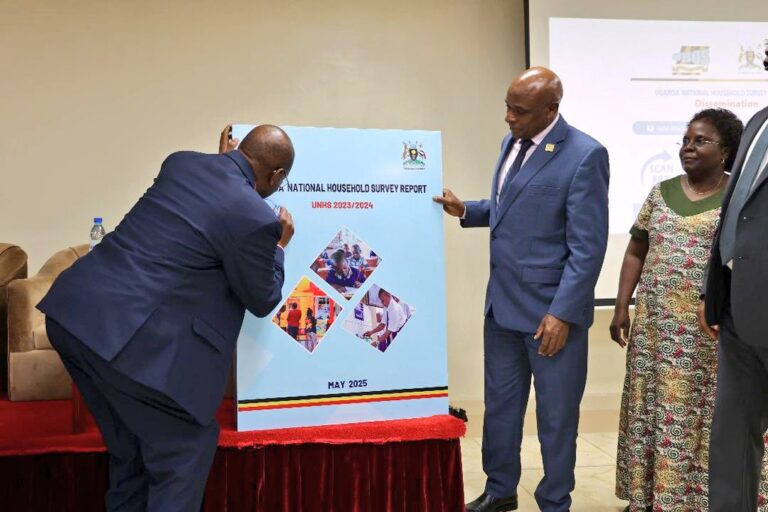
The Uganda Bureau of Statistics (UBOS) recently unveiled the comprehensive findings of the Uganda National Household Survey (UNHS) 2023/24, offering a detailed snapshot of the nation’s socio-economic landscape.

Launched on May 15th, 2025, at a national event in Kampala, the survey, the eighth in its series, paints a picture of both progress and persistent challenges, particularly concerning regional disparities in poverty.

While the national poverty rate demonstrates positive trends, the report highlights the Busoga sub-region in Eastern Uganda as an area of significant concern.

Busoga: A Poverty Hotspot

The UNHS 2023/24 reveals that Busoga bears a substantial burden of poverty, ranking as the second-highest contributor to Uganda’s total poor population.

An estimated 840,700 people in the region live below the absolute poverty line, representing 18.9% of Busoga’s population and accounting for 12.0% of the nation’s total poverty share.

While this represents a slight improvement compared to previous surveys, Busoga’s poverty rate lags significantly behind regions like Buganda (7.5%) and Ankole (3.2%).

Only Karamoja, with a staggering poverty rate of 74.2%, faces a direr situation. In Karamoja, approximately 937,500 people are living in poverty, a number nearly five times the national average and a worrying increase from 65% in the previous survey.

A Regional Comparative Glance

The UNHS 2023/24 provides a detailed regional breakdown of poverty rates, highlighting areas requiring focused intervention:

  • Bukedi: 29.9% poverty rate (718,400 poor persons)
  • Teso: 29.8%
  • West Nile: 21.2%
  • Acholi: 20.5%
  • Lango: 18.8%

In stark contrast, Kampala stands out as the region with the lowest poverty rate, with only 1.1% of its population living below the poverty line. It is followed by Ankole (3.2%) and Buganda South (6.0%).

Understanding the Poverty Gap in Busoga

The survey not only highlights the prevalence of poverty in Busoga but also its depth. The poverty gap, an indicator of the resources needed to lift the poor above the poverty line, stands at 4.3% in Busoga, exceeding the national average of 4.2%. This suggests that poverty in Busoga is not just widespread, but also deeply entrenched.

Speaking at the launch, UBOS Executive Director Dr. Chris Mukiza stressed the urgent need for targeted interventions in regions like Busoga.

While government programs like the Parish Development Model (PDM) and Emyooga are designed to boost household incomes, implementation delays and reported mismanagement have hampered progress.

Child Poverty in Busoga

The UNHS 2023/24 reveals a concerning trend of child poverty in Busoga. With 21.5% of children in the region living in poverty, Busoga faces one of the highest child poverty rates in the country, surpassed only by Karamoja and Bukedi. This alarming statistic underscores the need for specific interventions to protect and support vulnerable children in the region.

Progress Amidst Disparities

Nationally, Uganda’s poverty rate has shown a positive decline, standing at 16.1% in 2023/24, a drop from 20.3% in 2019/20 and 21.4% in 2016/17. This indicates a steady improvement in overall poverty reduction, despite the persistent regional disparities.

The report also indicates a decrease in income inequality, with the national Gini coefficient dropping from 0.413 in 2019/20 to 0.382 in 2023/24, suggesting a better income distribution nationwide. Interestingly, Busoga also experienced an improvement in its Gini coefficient, decreasing from 0.353 to 0.328, signifying a narrowing income gap within the region.

Targeted Interventions are Key

During the launch, State Minister for Planning, Amos Lugoloobi, emphasized the need to focus efforts on regions with alarmingly high poverty rates, acknowledging that while national poverty reduction is a positive indicator of effective anti-poverty programs, much work remains to be done.

The UNHS 2023/24 provides invaluable data to guide policymakers, development partners, and civil society organizations in designing targeted programs that address the specific needs of vulnerable communities, particularly in regions like Busoga.

With agriculture remaining the primary source of employment in rural areas and significant disparities in access to education and healthcare, the report highlights the crucial need for sustained investment in these critical sectors to ensure equitable and inclusive growth for all Ugandans.

A Call for Inclusive Growth

The findings of the UNHS 2023/24 underscore the critical need for targeted poverty reduction strategies, especially in regions like Busoga, which continue to struggle with significant poverty burdens.

As Uganda strives to achieve its national development goals, addressing these disparities will be paramount for achieving inclusive growth and equitable socio-economic transformation across the nation.

QUEENS OF FOOTBALL: Kampala Queens seal third league title to become first team to win new trophy

0

By Musa Kikuuno | Busoga Times

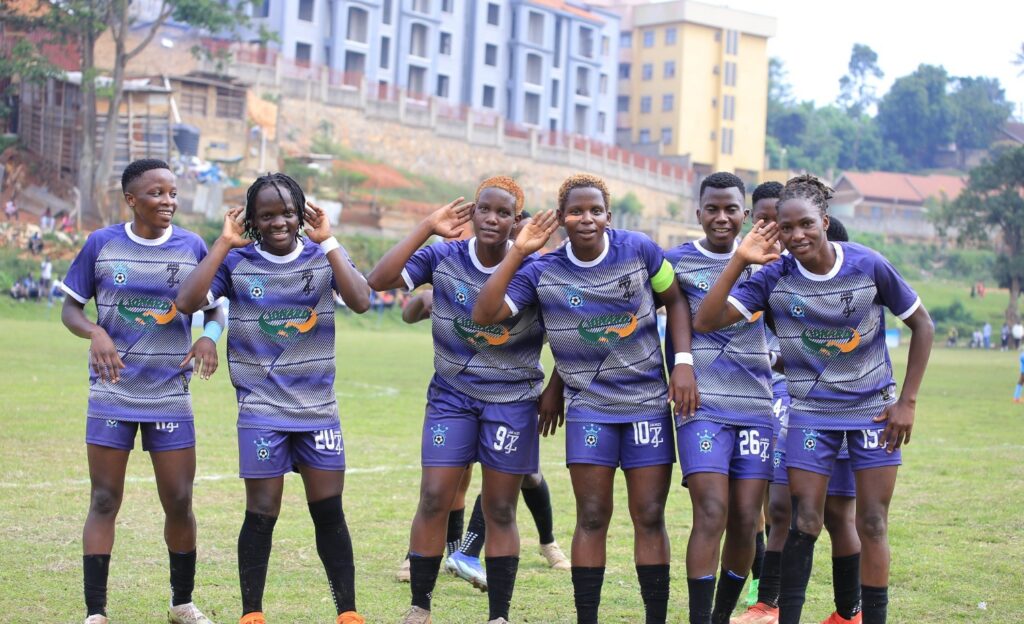
Kampala Queens have etched their name in Ugandan football history once again, becoming the first team to lift the newly introduced FUFA Women Super League trophy and sealing their third league title with two games to spare, despite a 2-1 loss to Kawempe Muslim on Saturday, May 17th, at MTN Omondi Stadium.

With 46 points at the top of the table and a superior head-to-head record over second-placed Kawempe Muslim (40 points), Kampala Queens are mathematically uncatchable, confirming their championship status for the 2024–2025 season.

The defeat marks the first loss for Ethiopian coach Asefa Firew Hailegebreal, who took charge of the Queens in November, but it does little to dim the club’s historic achievement.

A New Trophy for a New Era

The new league trophy, which symbolizes the evolving face of women’s football in Uganda, is a 455mm gold-coated masterpiece. Featuring a figurine of a woman in an athletic pose, it embodies strength, elegance, determination, and excellence — qualities reflected by Kampala Queens throughout their campaign.

The FUFA Women Super League replaced the Elite Women Football League, which ran from 2014 to 2019 and was structured around regional play-offs. Past champions included:

2014–15: Kawempe Muslim

2015–16: Kawempe Muslim

2016–17: Kawempe Muslim

2017–18: Kawempe Muslim

2018–19: UCU Lady Cardinals

Kampala Queens have now lifted the league title in 2022, 2023, and 2025, adding to their growing legacy.

Road Ahead

With fixtures still remaining against Tooro Queens (away) and She Maroons FC (home), Kampala Queens have a chance to end the season on an even higher note, possibly extending their lead further.

As defending champions Kawempe Muslim settle for second place this season, Kampala Queens have clearly cemented their status as the reigning giants of women’s football in Uganda — The Queens of Soccer, indeed.

WASTEFULNESS: The use and misuse of classified budget in Uganda

0

By Oweyegha-Afunaduula

A “classified budget” refers to a portion of a government or organization’s budget that is kept confidential, often for security or national interest reasons. It’s a way of designating specific expenditures that are not subject to public scrutiny or oversight.

Not all countries of the world have classified budgets. However, many do use budget classifications to organize and track government spending. While some countries may have a more detailed system, like the United States with its various budget classifications, others may use simpler approaches, according to GSDRC. t’s difficult to definitively name specific countries that have no classified spending. However, some countries are more transparent about their budgets than others, and certain types of spending are often not publicly disclosed in any country.

While the Kenyan national budget isn’t officially classified in the way a government secret might be, there are areas where information is not readily public, and it can be challenging to get a complete, detailed breakdown of spending. This isn’t due to a lack of a functional classification system, but rather a need for more transparency and more specific, detailed information.On the other hand, Tanzania has a classified budget. However, while the general budget framework is public, certain aspects may be kept confidential for security or other reasons. 

Apparently, the Uganda Government is transparent about how much money goes to the Classified budget but is not so transparent about how it is spent, which makes it a very secretive budget. It is the President of Uganda who seems to be its manager and who uses it as he pleases.

As Khisa (2025) put it, no other individual in Uganda presides over a bigger cache of cash, literally, than the President. This could be because the President of Uganda has never completely given up the post of Minister of Finance although Kasaija manifests as the Minister of Finance.

All the classified budget of Government goes to the Chief occupant of State House, who happens to be President Tibuhaburwa Museveni. He has accumulated a huge staff force, to serve mainly his political interests and which he pays hugely.

Therefore, Classified Budget is where financial indiscipline is exhibited most in all budget classifications of the Uganda National Budget. Even supplementary budgets routinely allocate money to the Classified Budget.

As early as 2020 Mubangizi (2020) recorded the steep rise in classified budgets in Uganda. In Financial Year 2016/17, total classified expenditure accounted for only UGX 441 billion but has now risen to UGX 2.5 trillion representing an extraordinary increment of 488% over a period of 4 years. However, according to Hon Ssemujju-Nganda, the Parliament of Uganda allocated to the Classified budget a total of 16 trillion Shillings from 2021 to the Present.

Corruption and wanton siphoning of government funds that would have been channeled to providing social services and widening social safety nets that can in turn propel economic growth and development, now characterise money flow in Uganda with the President as the fulcrum.

Indeed, supplementary budgets have become nothing but avenues for siphoning of money and wanton corruption. This is the reason education, health and the transport system are decaying, and provision of electricity to the majority of Ugandans and numerous economic entities has become a nightmare as government, particularly President Tibuhaburwa Museveni, preaches the religion of patriotism. Meanwhile government is strategising to tax even the sellers of vegetables in the rurl areas, to get money that mat more likely end up as supplementary budgets, wth the classified budget managed by the President getting the lion’s share.

When Covid-19 pandemic struck the world, government’s response became an early cash bonanza. The President tightly controlled the flow of cash bonanzas in form of supplementary budgets. The Ugandan government’s Covid-19 budget of March 2020 is presented here to demonstrate the problem.

The Covid-19 pandemic has resulted in government expenditure far exceeding budgeted sums. In Uganda, supplementary budgets have become larger and more frequent. The additional funds cannot always be justified, with multiple agencies seeking a share and evidence of doubling up across sectors. The supplementary budgets may also evidence the improper allocation and apparent misuse of public resources. In Uganda, security seems to have been prioritised over health, for example. The Ugandan government’s Covid-19 budget of March 2020 is presented here to demonstrate the problem

Article 156 of the Uganda Constitution 1995 and Section 25 of the Public Finance Management Act allow supplementary budget estimates to be put before Parliament. Here it is determined whether or not a need has arisen for expenditure not previously budgeted for or for expenditure that exceeds the budgeted sums. Supplementary expenditure must be ‘unabsorbable, unavoidable, and unforeseeable.”

In March 2020 alone, the Government of Uganda presented four supplementary budgets before Parliament. Their frequency and size have not gone unnoticed. Members of Parliament (MPs) have noted that the situation undermines the planning and budgeting process. There have also been allegations that sectors seeking supplementary budgets, do so to avoid the extensive scrutiny that the annual budget receives.

On 31 March 2020, the government sought a further 284 billion Ugandan shillings (UGX) to cater for the government’s response to the Covid-19 pandemic. This was broken down as detailed in Table 1. It is not surprising that security sought almost as much as Health (Table 1). Security falls under Classified Budget, while health, like education and agriculture which are social areas, do not and are not valued as greatly by the President of Uganda, whose development philosophy is that social development should come last after infrastructural development.

Table 1 (Source:CMI U4 Anti-Corruption Resource Centre, 2020).

Uganda’s supplementary budget has been on a steady increase over the years, peaking from 4 per cent of the approved budget in the 2008/09 financial year, to 7.2 per cent in 2009/10 before reaching 27.7 per cent in 2010/11 (Daily Monitor, 2012).

Daily Monitor of 15 October 2012 cites Godber Tumushabe, a policy analyst and Executive Director, Advocates Coalition for Development and Environment (ACODE) saying that supplementary budgets are meant to cater for emergencies, but the tendency has been that they have been exceeding what is allowed by law, indicating that Uganda’s budget discipline has broken down. He is supported by Turyafuna (2025) by law supplementary budgets should be used sparingly for emergencies like natural disasters, urgent national security matters or unexpected economic shocks. However, they have become tools of indiscipline.

Besides, while making the National Budget, MPs may solicit fro bribes to approve different institutional budgets.  For example, it was alleged that on May 13, 2024, at Hotel Africana in Kampala, three MPs (Mutembuli, Akamba and Namujju) solicited an undue advantage of 20% of the anticipated budget increment for the Uganda Human Rights Commission (UHRC) from Ms. Mariam Wangadya, the commission’s chairperson (The Black Examiner, 2024).

In March 2025 the Parliament of Uganda passed a UGX 4.255 trillion supplementary budget. Earlier in January, 2025 Parliament approved UGX1.050 trillion supplementary budget a huge part of which was classified budget.  However, Turyafuna (2025) wondered why the supplementary budgets were not factored in the National budget. He submitted that these budgetary practices undermine parliamentary oversight, transparency and prudent financial planning, and conceal corruption while saddling taxpayers with unsustainable debt.

Turyafuna (2025) also submitted, in what is highly protected article in Parliament Watch, that classified expenditure has become a conduit for unaccountable spending. He noted that State House Classified budget has supersonically risen to astronomical levels and presents a gaping accountability vacuum. He decried the choice of government to expand classified expenditure instead of allocating adequate funding to social development and services.Indeed, the quality of education, health and agriculture is plummeting because inadequate funding as Classified expenditure takes too much money in form of supplementary budgets and classified budget.

It is clear that in the minds of our governors it is their interests that come first, not those of Ugandans. The interests may include political and business interests.

This article,as its title shows, has been written to show the use and misuse of the classified budget of Uganda amounting to gross abuse of which both Parliament and the Executive are jointly are liable.They have both abandoned serving the public interest and the chorus of patriotism is nothing but concealment of the truth of wastage of public funds. The article follows closely President Tibuhaburwa Museveni’s action to gift Members of Parliament with 100m shillings cash bonanza (Busein Samilu, 2025).

The President defendedhis action as “patriotic purpose”, adding that the money was used to promote activities that help to defeat enemy schemes in Uganda.However, many Ugandans perceived it as political bribery of Members of Parliament. The President said the money was channeled through classified funding and added that such money is a strategic tool for national security and unity (Odongo, 2025). However, the cash bonanza, like in the past, has instead made the political security of the Members of Parliament insecure asit disconnected them from the struggling Ugandans.

Voters are now arguing that instead of the Members of Parliament serving the public interest they are accepting money inducements to serve the interests of the President. One school of thought has reasoned that the President wanted to spoil the Members of Parliament  in the public space so that the majority are not voted back in Parliament; that he wanted new ones he can manipulate using money towards achieving his political ends in Uganda.

The President payout has also revived the enduring questions about classified expenditure, patronage and accountability in Parliament (Odongo, 2025) as well as political bribery by the President. In 2021 each of the current Members of Parliament received Shs 200m in what was officially labelled as a car grant. This was not unlike the vehicle’sgovernment buys for the religious as soon as they assume leadership of their religions. One school of thought has argued that most religious leaders are silent about the problems, issues, oppression and injustices reigned on the people because of the vehicles donated to them by the President.

The majority of the Members of Parliament were new in 2021 as almost 90% of the previous Parliament were voted out during the January 2021 Parliamentary elections for having removed the Presidential term limits or Presidential age limits, thereby allowing the President to rule like President -for-life. However, the presidential money bonanza to Members of Parliament tends to lower the esteem of Parliament in the face of the Executive and the Public while enhancing Executive influence over it. I have seized the opportunity to review, analyse and critique the whole subject of supplementary budgets from which the classified budget has benefited hugely over the years at the expense of social development.

In conclusion, there is need for the Uganda government to reduce budget indiscipline by incorporating the practice of supplementary budgeting into the national budget since it is benefiting the President far more than it is benefitting Ugandans and burdening the taxpayers through financial wastage and financial haemorrhage.

There is also need to recover the independence of the Parliament of Uganda from the President of Uganda, probably by de-caucusing it since caucusing is causing more harm than good as the President uses the NRM Caucus to get all the supplementary budget to swell the classified budget to achieve his political and economic ends at the expense of Ugandans; and to rethink the value of Classified Budget.

Currently, and over time, the Classified budget has been abused by the President of Uganda in pursuit of his personalist political and economic interests of power and domination of the political space of Uganda. I will not be far-fetched to state that both the Executive and the Parliament of Uganda are partners in the de-democratisation of Uganda with reference to the joint way they behave towards public funds. They have de-democratised and militarised budgeting at the expense of Uganda and Ugandans, thereby erasing meaningful and effective social development for all.

For God and My Country.

Oweyegha-Afunaduula is a member of Center for Critical Thinking and Alternative Analysis

STATE OF NATURE: Essential skills needed sustain jeopardised future of Uganda’s environment

0

By Oweyegha-Afunaduula

When we talk about environmental future of a country, we are trying to envision the state of nature and our human relationship with it in the future. We are interested in our human relationships with nature in all the dimensions of the environment: ecological-biological, sociocultural, socioeconomic and temporal.

However, since President Tibuhaburwa Museveni declared his philosophy of development emphasising infrastructure development at the expense of environmental development and nature, and extricating Ugandans from the environment and nature, environmental decay and collapse are rising supersonically, best seen in country-wide environmental poverty, climate change, food shortages and a snake-like hunger wave.

Interestingly, Omagor Markson(2022), citing Mafabi’s article“Government is ready for environmental restoration”, emphasising that the government will share strategies for the restoration of the environment and natural resources”. Mafabi was referring to President Tibuhaburwa Museveni’s statement that the dependence on rainfall and the degraded ecosystem poses jeopardy to Uganda’s economy in the face of climate challenges.

According to Mafabi, the President said “Government will come up with a plan to fully restore our environment here. Once we are done, you will see the environment (Mafabi, 2022). The President made the announcement during the closing ceremony of the National Scouts Camp that started on August 12th at the scouts’ home in Kaazi, Wakiso District. However, todate the President has not shown that he is ready to recant his development philosophy, which is responsible for most of the recent environmental degradation in Uganda.

Museveni in Environmental Decay and Collapse

Apparently, the President himself, by virtue of his decisions and actions, is at the centre of environmental decay and collapse. He has allowed people belonging to the nomadic pastoral energy system (the nomads of Rwandese extraction) to grab land everywhere in Uganda, destroying our time-tested agroecological systems, on which our food security has depended for centuries.

He has allowed soldiers to illegally log tress in our natural forests, including the only rain forest we have – Mabira Rain Forest. It was him personally who engineered the destruction of Mabira Rain Forest by giving 7100 hectares of Mabira ecotone land to Mehta’s Sugar factory. It was his who decreed that sugarcane be grown in the Bugoma Forest Corridor in Bunyoro, thereby destroying the migratory routes of wildlife.

It was him who decreed that 10,000 ha of natural forest be felled on Bugala Island in Kalangala District in favour of the false tree (oil palm) to produce palm oil at a time when the world is yearning for a fat-free diet. It was him who decreed that Bujagali Falls on River Nile be orated in favour of hydropower, reasoning thaw if the Uganda’s did not have money to buy the electricity he would sell it to neighbouring countries.

It was him who oversaw the springing up of numerous plastics factories in Uganda. Last but not least, it was him who decreed that industrial parks are established in swampy areas, thereby triggering the phenomenon of manmade floods for which there is no solution currently.

Therefore, it is difficult these days to explain environmental decay and collapse without evoking President Tibuhaburwa Museveni. His policies, which he initiates himself and then retrospectively legitimises as government policies by giving them legal force, are likely to be remembered as the real force behind environmental decay and collapse in Uganda towards and in the 21st century.

Wastage of Environmental Professionalism  

In my retirement, I frequently reflect on why I became the third professional conservation biologist in Uganda, and why I spent years training conservationists and environmentalists at Makerere University, Uganda. Because of the presidentialism of President Tibuhaburwa Museveni, whereby he is in everything small and big, these are unable to apply their professionalism to the conservation and management of Uganda’s environment. They only do the bidding of the President.

Nevertheless, the university education system continues to academicise the environment and environmental conservation and management just to produce papered graduates. As if this is not bad enough, President Tibuhaburwa Museveni controls the National Budget making, in such a way that military security, State House take far more money than health, social development, environment, environmental health, environmental security and environmental development.

Yet, everything else fails if the environmental foundations are weak or jeopardised. The political perception of environment as just something for exploitation to satisfy human greed and needs must change if we are to make any headway in the 21st century and beyond.

Uganda has lost 41.6% of its forest cover in the last 100 years (1921-2021). In 1900, Uganda’s forest cover stood at 54% and by 2017, it stood at a miserable 12.4%. There is consistent pressure on land for cultivation and settlement and increasing demand for wood fuel. While efforts have been made to restore the forest cover, the population has not been adequately involved in this restoration process.

It is against this background that we address climate change and deforestation as global problems that require a global response. 94% of Ugandans rely on unsustainably sourced fuel wood, with gas being prohibitively expensive, the vast majority of Ugandans rely on charcoal or firewood that has been harvested from national forests or the private lands of impoverished farmers. There has been a 180% charcoal price increase in the past six years (Tukwatanite, 2023). 

Academicisation of the Environment  

When one academicises something, one makes it unreal. Therefore, when one academicizes the environment one turns it into an academic concern, which does not necessarily benefit the environment in terms of effective conservation and management. In fact, it introduces academic elitism in what was a social and cultural enterprise. Elitism is a vice not, a virtue or value. This can explain why many men and women with academic knowledge have failed to conserve and manage the environment effectively when they have been assigned the responsibility to do so. They are not men and women of reality but unreality, yet the environment is real (Oweyegha-Afunaduula, 2023).

Unreal environments, resulting from the academicisation of thinking and action (conserving and managing), end up being artificial environments, not greatly different from urban environments or plantations whose problems and solutions continue to be academicised. As such they are outward-looking, with wandering minds that are more comfortable externally than internally. They need mind liberation”. I may add that so disoriented, they are unlikely to be curious enough about nature to conserve and manage it for posterity as our ancestors did. They are likely to work in the interests of environmentally destructive forces (Oweyegha-Afunaduula, 2023).

Extractives -A Threat to Uganda’s Environmental Future

There is nothing which is destroying the environment of Uganda and poses to be the most environment-jeopardising factor well in the future as the extractives sector. The foundation in Uganda’s extractive sector is Karamoja and Busoga, which are also reputed to be the poorest regions in Uganda – financially -but are very rich mineral-wise, Unfortunately, their minerals are being clandestinely mined by people of extraneous origin (Chinese, Indians, Rwandese or former refugees connected to power) and exported without any beneft to the two regions.

Uganda’s extractives sector is rapidly transforming from small-scale and artisanal mining to large-scale industry in rural areas of the country. Extractives include oil, gas, and the accelerated licensing of mining operations as vast deposits of gold, uranium, copper, and rare earth minerals have been discovered, particularly in Busoga.

Such operations are accompanied by mega ‘infrastructure’ investments – roads, pipelines, power lines, and dam projects – which serve the industry and displace local communities, but not so in Karamoja and Busoga. Women bear the brunt of this. Extractivism is defined as the large-scale extraction of raw materials such as oil, minerals, or industrial agricultural and monocultural products intended not for local consumption but for export, which entails many countries’ integration into and dependency upon the capitalist world market (NAWAD, 2021).

Land Grabbing – A Threat to Uganda’s Environmental Future

In Uganda, the land rush has displaced communities to make space for intensive monocrops, oil exploration, and infrastructure projects. Government purchases land, often providing landowners with no choice and limited compensation, and then leases it to investors, including foreign companies. The economic ideology espoused by governments throughout Africa and beyond is that increased foreign direct investment will create a more developed and prosperous economy with jobs, wealth, improved social services for all, and better living conditions (NAWAD, 2021).

Due to land grabbing, native forests and local biodiversity are being lost, people are being evicted from their homes and forced to give up their lands, along with all the other problems linked to the large-scale use of pesticides and chemical fertilizers. Some individual cases are reported in the booklet ‘Let’s expose Land Grabbing’ published by Slow Food and available for free download on the Slow Food Foundation for Biodiversity website. Slow Food projects in Uganda aim to empower local small-scale food producers and aid them in their fight against land grabbing (farmlandgrabbing.org, 2017).

I have already mentioned elsewhere in this article that land grabbing is erasing our time-tested food security-imparting agroecological systems Mourice Muhoozi (2023) wrote that agroecology can help to restore Uganda’s lost green cover. However, what is going on in the country in the area of land grabbing, sometimes as if government allows it, and mostly by government agents, does not give much hope for agroecology. Therefore, the erosion of our 7 or 8 agroecological systems is likely to worsen with the passage of time.

In one short sentence Uganda’s environmental future is jeopardised.

What Is the Way Forward?

The environmental future of Uganda is and should be squarely in the hands of the youth. Our country’s population is more than 80% youthful. Unfortunately, thousands of our youth are being ferried out to the Middle East to work as external slaves. Environmentally speaking they re being taken out of their environment to a foreign environment where they are no more than environmental pollutants. When they come back, they will find a completely different environment where they will also be environmental pollutants.

This is environmental sabotage because Uganda needs its youth to ensure that Uganda has a secure environmental future of which they are a part and can work in to create a secure, productive country. The Basoga of Ugnda say “Emiti Emito N’ekibira” (Young trees make the forest). If we are to ensure a sustainable future for Uganda and its people, we must depend on our youth to who the future belongs. There is, therefore, need to focus on the youth when building a sustainable environmental future. Mahdi Kolahi (2023) has given 10 essential skills that the youth should be equipped with and which they must master in building sustainable futures. These are:

1          Environmental literacy is the understanding of the natural world, ecosystems, environmental issues, and human-environment interconnections. It enables individuals to analyze, evaluate, and take responsible actions to protect and sustain the environment, contributing to a more sustainable and environmentally conscious society.

2          Critical thinking and problem-solving skills involve analyzing information, evaluating evidence, and making reasoned decisions. It includes logical reasoning, objective evaluation, and the ability to identify and solve complex problems. These skills are essential for navigating the complexities of the modern world and addressing issues effectively.

3          Collaboration and communication skills involve effectively sharing ideas and information in teams. Collaboration requires pooling resources, active listening, empathy, and constructive contribution. Effective communication involves conveying ideas clearly, actively listening, and fostering open dialogue. These skills are crucial for achieving shared objectives in diverse and dynamic environments.

4          Leadership and advocacy skills empower individuals to drive positive change and influence others toward a common vision or cause. Effective leadership and advocacy require strong communication, strategic thinking, empathy, and the ability to navigate complex systems. These skills play a crucial role in promoting sustainability, addressing environmental challenges, and creating a more just and equitable world.

5          Innovation and creativity drive progress and spur new ideas and solutions. Both are crucial in finding sustainable solutions to complex environmental issues and fostering a more resilient and inclusive future.

6          Cultural competence and inclusivity involve understanding, respecting, and effectively engaging with diverse cultures and communities. Embracing these skills fosters cross-cultural understanding, collaboration, and social equity, leading to more sustainable and harmonious interactions between human societies and the environment.

7          Resilience and adaptability are crucial qualities for individuals and communities to thrive in a rapidly changing world. Cultivating these qualities helps individuals and communities respond to changing environmental conditions, promote sustainable practices, and build a more resilient future.

8          Systems thinking involves understanding the interconnectedness of different parts of a complex system and is crucial for addressing complex problems. Developing systems thinking skills involves analyzing complex systems and identifying feedback loops, enabling young people to contribute to a more sustainable and just future.

9          Data analysis involves examining and interpreting data to gain insights and make informed decisions. Data analysis skills are essential for making evidence-based decisions in various fields. Developing these skills helps young people make informed decisions and contribute to a more data-driven and evidence-based world.

10        Being action-oriented involves taking initiative and being proactive in addressing challenges and opportunities. This skill is crucial for personal and professional success and contributes to a more sustainable and just future. Developing these skills helps young people become effective problem solvers and agents of change.

For God and My Country

Oweyegha-Afunaduula is a member of Center for Critical Thinking and Alternative Analysis