Tuesday, March 17, 2026
Home Blog Page 45

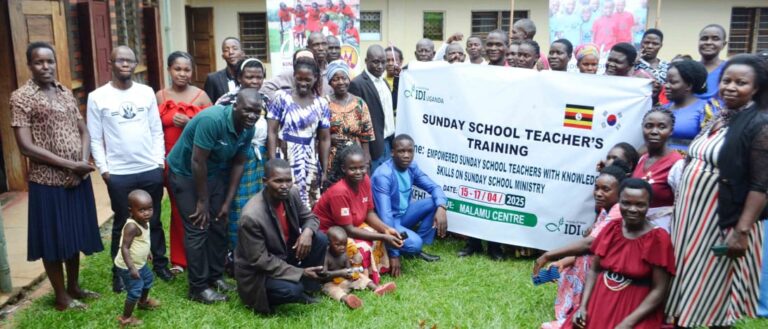
SPIRITUAL VALUES: Sunday school teachers in Kamuli retooled

0

With parents running away from their parenting roles, leaving children to technology and peers, there is a need to revive Sunday Schools in churches to minister spiritual and physical relations and ensure the children grow up with the right moral and spiritual values, norms and practices.

Communities, schools and parents have been urged to develop and bridge the communication gap, talk, not reprimand, and give commands which scare children away from them, but look for good attributes to build on from them.

The call was made by the regional manager International Development Institute (IDI) Uganda, Christine Okalang, while closing the training of Sunday School teachers at Malamu Centre Kamuli recently. 

Quoting Proverbs 22:6, on training up children on the way they should go and not depart from it, Okalang urged the teachers to make Sunday Schools attractive, vibrant and relevant to the children in order to nurture them into the morally and spiritually upright citizens.  

“Let us revive Sunday Schools to draw children to the Lord because parents have abandoned them. Go prepare children, nurture them to live prayerful lives, for the spirit of God leads and lifts them over,” she called.  

Richard Muwanguzi, the lead trainer from Kingdom Glory Faith Ministries Mbale, said the call to ignite the children’s passion, deepen their knowledge and understanding of God and inspire them into the Kingdom is now.

“Satan attacks through drugs, sex, and violence, making us spiritually blind, sick, hungry, abused, and enslaved, and it is our duty to empower, reveal, and lead the children to Christ , make them believe and be saved to enter the Kingdom of God,” he called. 

Kamuli District Education Officer, Joseph Waibi, commended IDI Uganda for retooling the Sunday school teachers and requested them to incorporate the nursery school teachers too in order to build up an all-round child. He underscored the role of spiritual growth in enforcing discipline, honesty and hard work in the children.

“IDI Uganda has and is doing good work in our schools, not only limited to physical hunger but now tackling spiritual hunger too, and its child-focused community transformation model is bringing sanity, harmony, parenting revival and, above all, leading to increased school enrolment, retention and completion,” the DEO pointed out.

Waibi, however, called for school religious hour talks in schools once a week to boost discipline, counselling and guidance.

AUDIO NARRATIONS: Man in love commits suicide at inlaws’ homes in Iringa, Buyende District

0

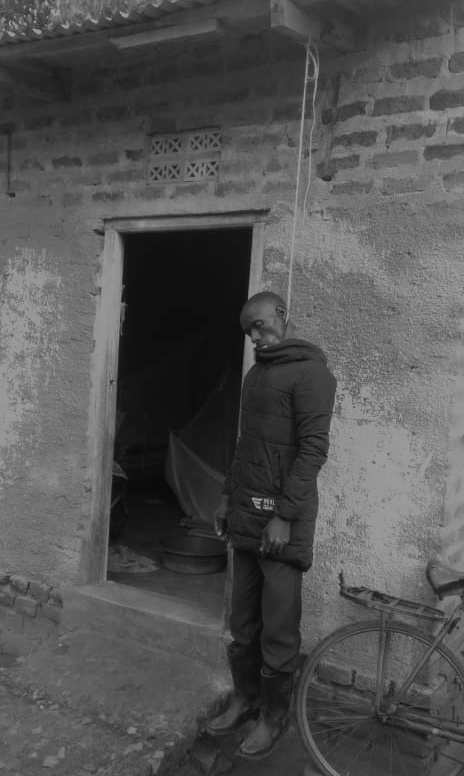
The menacing news spread; reverberating in Iringa, a rural town in Buyende district. A whispered horror, chilling the bone-dry air. He’d loved her, a love so fierce it consumed him, leaving only ashes. But her family, the stone-faced guardians of their ancestral land, had rejected him. Their disapproval, a cold, hard wall, had driven him to the edge. They found him hanging by rope dead, at the doorstep of their home. Iringa held its breath, Mwase Kisige, son of the late Adonia Kisige, the resident of Nawakiki B, in the parish of Marima, Iringa, had committed suicide by hanging himself.  

A case of domestic violence that has gone on for so long. A case of love untamed. A case of miscommunication. A case of woundsunhealed.  

BUDIOPE EAST: Parliament’s Clerk frees Dhamuzungu to contest against Magogo

0

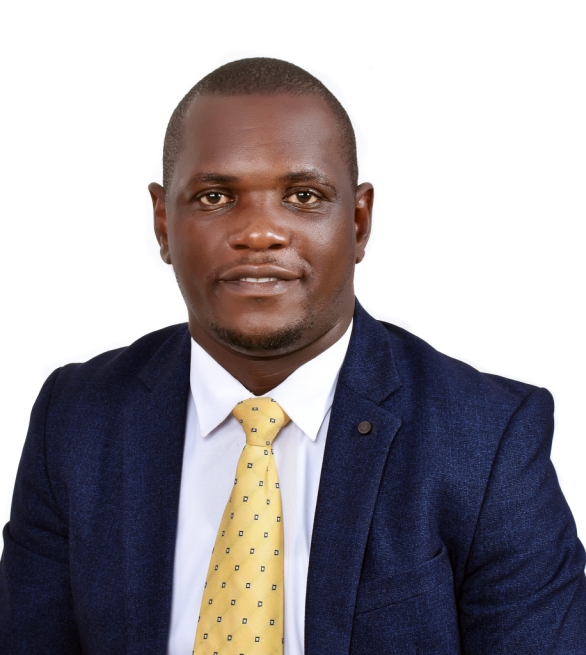
The Clerk to Parliament, Adolf Mwesige Kasaija, has written to Dhamuzungu Geoffrey accepting his resignation from the post of Senior Programs Officer, Department of Corporate Planning and Strategy, Parliament of Uganda.

“Reference is made to your letter dated 22nd April 2025, giving notice of your intention to resign from the Parliamentary Service with effect from 25th May 2025,” Mwesige wrote in the letter, penned on 23rd April 2025.

Adding: “The purpose of this letter is to inform you that your resignation has been duly accepted in accordance with Regulation 11.7 of the Parliamentary Commission Human Resource Police Manual and Section A-O of the Uganda Public Services Standing Orders 2021.”

“Your resignation will take effect on 25th May 2025 as requested in your letter,” Mwesige concluded the letter and copied in Director, Human Resource, Direct, Finance and Chief Operations Officer, Parliamentary Pension Scheme.

In the resignation letter, Dhamuzungu indicated that he was quitting to take on active politics and participate in the 2026 general elections. He intends to vie for the post of Member of Parliament for Budiope East, a seat currently occupied by Eng. Moses Magogo. It should be remembered that Dhamuzungu represented the same constituency between 2016 and 2021 before Magogo snatched it from him.  

The Dhamuzungu declaration renews the rivalry he enjoys with Magogo in the constituency. The two NRM stalwarts are expected to face off all the way to the January general elections day, no matter what comes out of the party primaries scheduled before the end of the year.

WORLD PRESS FREEDOM DAY: Journalists are not just messengers, they are defenders of democracy

0

By Pious Nsajja

As the world marks World Press Freedom Day, under the theme “Reporting in the Brave New World – The Impact of Artificial Intelligence on Press Freedom and the Media”, we should not forget that journalism is not merely about reporting facts, it is about safeguarding democracy, amplifying marginalized voices, and holding power to account. Journalists are not just messengers, they are frontline defenders of human rights and democratic values.

In an era where Artificial Intelligence (AI) is reshaping the media landscape, the challenges faced by journalists are evolving, yet their commitment to truth and accountability remains unwavering. ​While AI has improved content generation, audience targeting, and media efficiency, it has also quietly intensified the risks faced by journalists particularly those working in politically sensitive and human rights-related spaces.In Uganda, where press freedom is already under strain, protecting journalists is not just about safeguarding individuals but preserving the very foundation of a democratic society.

The year 2024 was highlighted as the deadliest for journalists in over three decades globally. According to the Committee to Protect Journalists (CPJ) Report of 2024,124 journalists and media workers were killed globally, with nearly 70% of these deaths attributed to the Israeli military during the Gaza conflict.Their report also indicated that103 deaths were directly related to their (journalists’) work, the highest number since CPJ began documenting journalist deaths in 1992. UNESCO reported that at least 68 journalists were killed in 2024, with over 60% of these killings occurring in conflict zones. Additionally, Reporters Without Borders also reported that 54 journalists were killed, with 31still losing their lives in conflict zones. These figures underscore the escalating risks journalists face worldwide, especially during conflicts and election periods.

Uganda has not been immune to these challenges. During the Kawempe North parliamentarybyelection in March 2025, at least 18 journalists were violently attacked by security forces while covering the event. These assaults which targeted journalists from various media houses not only endanger the lives of journalists but also undermine the democratic process by obstructing the free flow of information and silencing critical voices. Despite constitutional guarantees under Article 29(1)(a) of the 1995 Ugandan Constitution, which ensures freedom of speech and expression, including freedom of the press, press freedom in Uganda is hampered by various laws and practices. The Press and Journalists Act (2000), while intended to regulate the media, has also been criticized for provisions that can be used to suppress journalistic freedom.

Uganda’s third National Development Plan (NDP III) emphasizes the importance of good governance and the rule of law, which are intrinsically linked to press freedom. A free and independent media is essential for transparency, accountability, and citizen participation which are key pillars of sustainable development.However, the realization of these goals requires concerted efforts to protect journalists and uphold press freedom.

Internationally, Uganda is a signatory to various treaties that uphold media freedom, including the Universal Declaration of Human Rights and the African Charter on Human and Peoples’ Rights. These commitments obligate the state to protect journalists and ensure an environment where they can operate without fear of violence or censorship.

Journalists play a critical role in exposing injustices, giving voice to the voiceless, and fostering informed public discourse. Their work often places them at odds with powerful interests, making them targets for harassment, intimidation, and violence. Recognizing journalists as human rights defenders is not just symbolic; it is a necessary step toward ensuring their protection and the preservation of democratic spaces.

As Uganda approaches the 2026 general elections, safeguarding journalists is more critical than ever. The pattern of violence and intimidation witnessed in previous elections must not be repeated. Authorities must commit to protecting journalists, ensuring they can operate freely and safely. Let us all be reminded that journalists are not just messengers, they are defenders of democracy. Their work is vital to the health of our society, and it is our collective responsibility to protect and support them.

Happy World Press Freedom Day

Mr. Pious Nsajja, Communications Officer, National Coalition of Human Rights Defenders Uganda

MILITARY MIGHT: SFC soldiers cordon off NUP headquarters ahead of planned Eddie Mutwe solidarity gathering

0

The President of the National Unity Platform, Robert Kyagulanyi Ssentamu, alias Bobi Wine, today, Friday 2nd May, 2025, tweeted on X that ‘SFC soldiers have just raided and cordoned off our headquarters’ and called on ‘Ugandans at home and abroad’ to ‘rise up and protest against Museveni and his brutal son.”

The National Unity Platform had today scheduled a solidarity gathering protesting the continued detention of Eddie Mutwe, the personal bodyguard of Bobi Wine, who was on 27 April 2025, abducted by government security forces from Kiwango village in Mukono district. NUP rallied its supporters to be at the gathering at 2pm, saying, ‘Eddie Mutwe is all of us. His pain is our pain!’

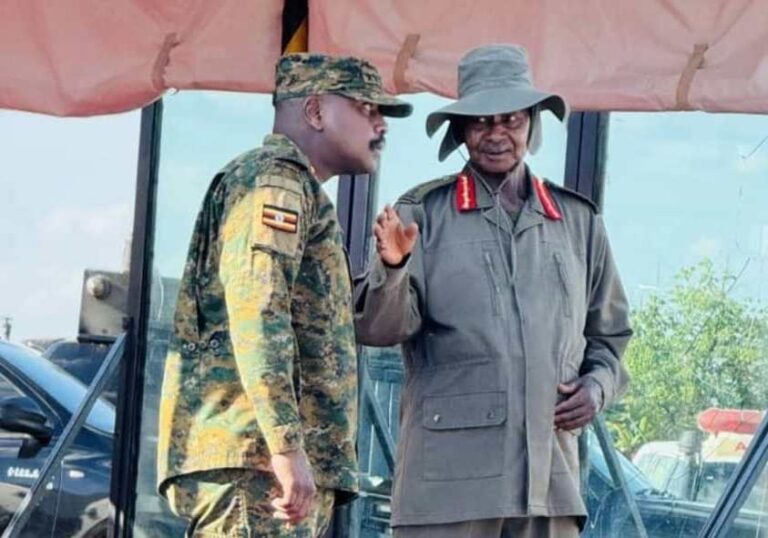
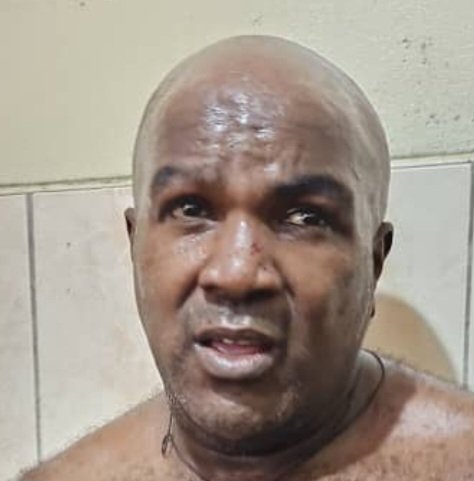
Yesterday, 1st May 2025, Gen Muhoozi Kainerugaba, the Chief of Defence Forces (CDF) of UPDF, and President Yoweri Museveni’s son posted on his official X account a picture of a clean-shaven Eddie Mutwe with the caption ‘learning Runyankore’.

Eddie Mutwe lost his hair and signature beard

The CDF, in a series of posts on X, said that if Bobi Wine abused any member of his family, he would be imperilling Eddie Mutwe, who he was using as a punching bag for his practice ahead of a boxing match between himself and Bobi Wine.

Friday morning, the CDF posted: “I will only release Eddie to Mzee, when he gives me the order. He would have learnt the history of NRA/UPDF by then. And will understand that NRM is a party that represents the whole country. It can never be defeated.”

Quoting an X post from Bobi Wine announcing the solidarity gathering, the CDF said: “You are next Kabobi! Remember Arua? How you were crying for Barbie to save you? This time I will have your balls…”

Later, he posted: I have only ONE warning to NUP’s so called ‘Foot Soldiers’. If I can arrest your so called ‘Commander’ like an Nsenene, imagine what I will do to you. You either disband or you will face lethal consequencies.

LABOUR DAY: Museveni signals possible labour reforms, urges job creation through wealth generation

0

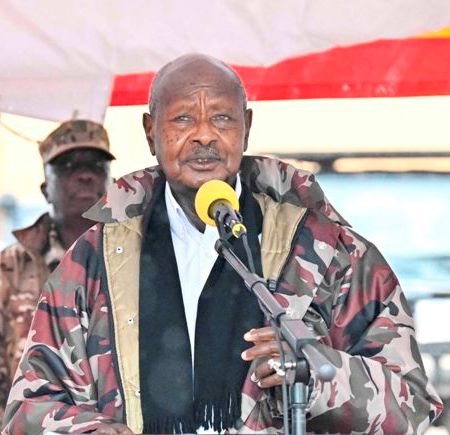
President Yoweri Museveni said the government is preparing to engage more deeply on key issues, including the establishment of a minimum wage, the phasing out of casual labour, and stricter regulation of employment agencies, among other possible significant reforms in Uganda’s labour sector.

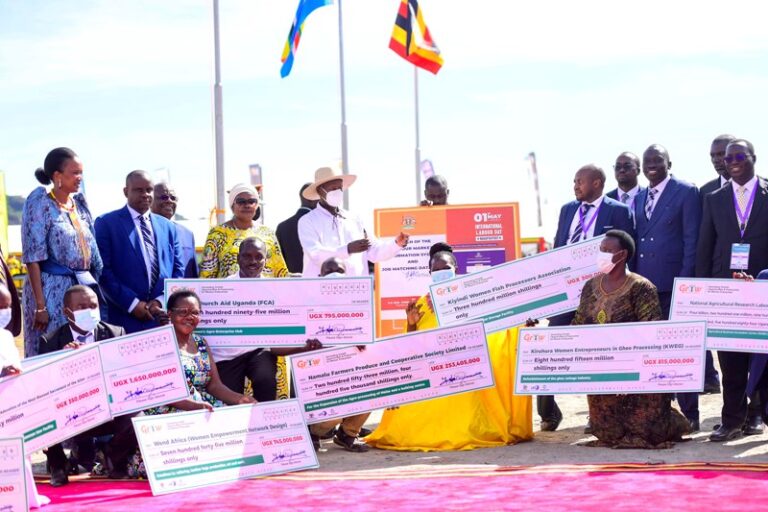
The President made the remarks during this year’s International Labour Day (ILD) celebrations at Nakaale Grounds, Nakapiripirit District. The event ran under the theme: “Consolidating on the Gains of the Parish Development Model (PDM) for Increased Productivity and Inclusive Job Creation”.

The President informed workers that the Cabinet would revisit these matters in June this year to explore realistic and sector-based solutions.

“I had a discussion with workers yesterday at State House, Entebbe. We talked about the minimum wage, the tripartite arrangement, and the issue of casual labour,” he said.

“We shall discuss more in June in the Cabinet. We are also going to look into employment agencies that exploit workers by standing between them and employers.”

The President highlighted that the process would be consultative and rational. “We must handle things the way they are. The approach we discussed, dealing with issues sector by sector is more realistic,” he added.

Museveni also criticized the current use of foreign labour in sectors where Ugandans are qualified. “Why should foreign companies bring their own workers when Ugandans can do the jobs?” he asked, pledging that the government would scrutinize institutions that have historically prioritized foreign over local labour.

On job creation, the President assured Ugandans that the National Resistance Movement (NRM) government will continue fighting unemployment by creating more jobs.

“As we stand today, according to figures from UBOS, there are 1.4 million workers in the factories, in agriculture, there are 3.6 million, in services there are 5 million and in ICT, there are 46,000. Now the jobs in the public service are 480,000. Therefore, the jobs in the private sector are very many compared to the public sector. And we are just beginning,” he said.

The President underscored that true job creation stems from building wealth rather than focusing narrowly on employment.

He cited examples of small-scale entrepreneurs empowered through the Parish Development Model (PDM), saying the program was already creating sustainable livelihoods.

“In Fort Portal, a man called Nyakana started making animal feeds on 1.2 acres. He now employs 15 people. Another, here in Nakapiripirit, used PDM money to grow green grams, sold them, and bought pigs. Now he has 35 pigs and is self-employed,” President Museveni narrated.

He emphasized that jobs cannot exist without wealth, whether created by the government or the private sector. “Wealth comes first. Jobs come from wealth,” he said.

“That is why we are investing in low-cost electricity, better transport like railways, affordable credit through UDB and PDM, and cheaper internet, all to support wealth creators,” he said.

He called on Ugandans, especially workers, to embrace patriotism and Pan-Africanism. “Factories and jobs mean nothing without a market. That’s why you must love Uganda, love Africa. Our internal market isn’t enough. We need East Africa and beyond,” President Museveni said.

The Minister of Gender, Labour and Social Development, Betty Amongi noted that the labour force remains the backbone of Uganda’s economy.  

“We are assessing the challenges we continue to face, opportunities that lie ahead and recommitting ourselves to ensuring that we enforce employment practices that enhance productive employment.”

Amongi also reiterated that Uganda’s labour force is predominantly composed of a young population constituting 73 percent who are under the age of 30,according to the Uganda Bureau of Statistics 2024 Census.  

The Minister of State for Labour, Employment and Industrial relations, Anyakun Esther requested the President for his continued support in the implementation of the 3rd Decent Work Country Program. “The program is key in improving working conditions and also influencing labour productivity,” she said.

John Oketcho, the Chairman General of the Central Organization of Free Trade Unions (COFTU), on behalf of the workers, thanked President Museveni for his tirelessness and unending support rendered to workers and all Ugandans at large.

The Chairperson of Uganda Federation of Employers, Fred Bamwesigye commended the NRM government under the visionary leadership of President Museveni for developing and stabilizing the economy of Uganda.  

At the same event, 61 persons were awarded with medals for their exceptional service towards the development of Uganda.

The President also launched the Third Decent Work Country Program 2025/26-2029/30, a strategic framework aimed at promoting employment, protecting workers’ rights, and fostering social dialogue in Uganda.

He also commissioned the Labour Market Information System and a new Digital Job Matching system.  

PEACE AND LOVE: How violent policies, laws are generating and sustaining violence in Uganda

0

By Oweyegha-Afunaduula

Ordinarily when we conceive, talk or write about violence in Uganda and the Great Lakes region, we immediately evoke political, military and police violence, all of whichare forms of physical violence. Even when we talk or write about genocide, ecocide or ethnocide, we frequently evoke the physical forms of violence, which invariably include torture and sexual abuse.  All my earlier writing on violence were on physical violence. However, we should know and convince others to know that the worst forms of violence are not physical – those that violate our human rights by attacking our minds in in their diverse dimensions.

Unfortunately, these different types of violence, which may be contributing far more to genocide, ecocide and ethnocide than the physical forms of violence, are almost ignored in peace and security budgets of nations. When they are given attention ot is to use them as tools of torture used to conquer, dominate and submerge the citizens into fear in concealed torture chambers.

In Uganda, their use has become integral to security arrangement intended for use as tools to exclude young politicians from meaningful and effective participation in the sociopolitical sphere of human endeavour. These political tools, are rendering many people too sick mentally, psychologically and emotionally and to survive in a sea of fear. This might explain why medical authorities say 14 million of our nearly 46 million humans are mentally sick and psychologically and mentally insecure. If one is mentally sick one is also psychologically and emotionally sick. Our 14 million mentally, psychologically and emotionally cannot relate well with other Ugandans. Therefore, they are unable to meaningfully contribute to the development, transformation and progress of the country. They do not only form an aberration of our population, which is mainly a youthful population, but are also a big burden on those who wake up to work and produce.

Thrown into hopelessness and haplessness, mentally, psychologically and emotionally unbalanced or sick people take to drugs, which worsens their situation further, and leads them into committing physical violence against their own parents, brothers, sisters, acquaintances, etc. A violent population cannot produce. This increasingly non-productive nature of the youthful population partly combines with the greed and selfishness of our political and military leaders to make our debt burden spiral upwards.

In Further Readingat the end of this article, I have given you some readings so that you may expand your knowledge and appreciation of the different forms of non-physical violence in the total equation of violence, which is often presented as physical violence. There are many forms of non-physical violence.

We can mention environmental violence (in the socioeconomic, sociocultural dimension and temporal dimensions of the environment; ecological violence, (in the ecological dimension of the environment; moral violence, cultural violence, ethical violence, intellectual violence, academic violence, economic violence, mental violence, psychological violence, emotional violence, mental violence and biological violence in the total environment. All these types of violence are occurring concurrently and may be separately or collectively used in political violence, military violence and police violence. We can refer to all the violence of whatever type as sociopolitical violence since they all occur in the sociopolitical dimension of the environment.

On the whole, violence depends not only on long-standing background conditions but on time-patterns that determine when and if it breaks out, how long it lasts and how severe it is (Different scales of violence have different time-dynamics, ranging from micro- to meso- to macro- time-dynamics (Randall Collins ,2022). 

The Italian Institute for International Studies (2024), has written that “In the age of mature Putinism, direct violence and control over society, accompanied by ideological postulates that form a new morality based on so-called “traditional values”, are a crucial instrument for managing society. Apparently, this is also true of Uganda. Using the educational system and cultural institutions to indoctrinate the population – above all young people – is in fact a form of violence, only intellectual and spiritual rather than physical”.  

It is true that most totalitarian regimes will employ all the non-physical forms of violence, simultaneously with physical violence to dominate control and create fear among the citizens. This is the basis of the intelligence systems: sowing the seeds of fear. Sometimes they even employ sexual violence as a tool of torture, violating women and girls sexually before members of their families.

There cannot be one cause but a multiplicity of causes of sociopolitical violence. The causes are not mutually exclusive and are, therefore, interconnected. Between 1957 and now there has been a lot of sociopolitical violence related to leadership and governance in Uganda in particular and the Great Lakes region in general (Oweyegha-Afunaduula, 2023). Most of the violence has been in form of armed conflict, but some has been in form of mental torture, land grabbing, denials of all types, stealing of mineral wealth of others, exclusion from education, health, food sufficiency, clash of civilizations, greed, selfishness, and exclusion from opportunities such as employment, participation in governance and leadership by a few self-interested individuals (Oweyegha-Afunaduula, 2023). Karamoja and Busoga promise to join the Democratic Republic of Congo (DRC) because of their mineral wealth. Just as I was preparing to write this article this morning, I head on a local fm Radio station, Busoga One FM that robbers in gold-rich Namayingo stole, from one gold mine, a chemical used in the mining of gold, and valued at 200 million Shillings.  We don’t know yet if the robbers were disgruntled Basoga who see their gold being taken away by mafias in government or those of Indian, Chines and Rwandese extraction.

I want to add violence generated and sustained by violent policies and violent laws. Uganda is very rich in discriminatory laws and discriminatory policies, many against the indigenous groups of Uganda and favourable to foreigners and to a constitutionally created indigenous group of Uganda, who gained from the making of the Uganda Constitution 1995.  

Another aspect of the Uganda Constitution 1995 is the depoliticisation, dis-empowerment of the traditional political-cultural-spiritual institutions and their reduction to so-called cultural institution with no power to make decisions and policies in favour of their people. Unlike before when traditional leaders were politically and had power over their resources, the power over people and resources was strategically invested in the Institution of President by the Uganda Constitution 1995. The President more or less owns the country, the people and natural resources and decides what the people get or do not get, who accesses the resources and benefits from them. So far it is foreigners benefiting from th resources of Karamoja and Busoga, which are then cast by government as the poorest regions of Uganda.

Violent policies” generally refers to government actions that either directly result in or enable violence, either through the use of force by state actors or by creating conditions where violence is more likely to occur. This can include things like policies that authorize excessive use of force by law enforcement, policies that lead to disproportionate sentencing or incarceration rates (especially in marginalised communities), or policies that neglect or suppress the root causes of violence. 

Violent policies tend to be discriminatory. A discriminatory policy is the merging of communal group identity with the state apparatus. It is argued, for example, that as the Indian government enacts policies beneficial or discriminatory to particular identity groups within the country, other groups feel threatened. Groups who feel disadvantaged by the policy may begin to fear for their own security, belonging, identity and political interests motivating them to rebel. When focusing on Indian policy and ethnopolitical violence during the period 1945 to 2000, it was found that although there are many cases of seemingly spontaneous episodes of violence, when identity-based policies do occur, they are often followed by violence and/or protest (Olson Lounsbery and Pearson, 2003).

This is also becoming a reality in Uganda where policies are being made to prepare Uganda for violence, not tranquility. Many policies that originate directly from the President, such as the one displacing traditional fisherfolk from the lake using the military, which has instead enriched the soldiers, is causing a lot of indignation and anger among the local population. The people see it as designed to destroy their socio-economic well-being and cultural attachment to the lake for the beneft of foreigners, including Rwandese, Indians and Chinese. This factor played a big role in the presidential elections of 2021 when the affected people voted against the President. However, the President does not see it that way, His explanation of his poor showing is that the Opposition connived with the Electoral Commission, which he single-handedly composes, to steal his votes. Initially he claimed the Opposition stole 1,000,000 votes. Recently he raised the figure to 2,700,000 as the votes the Opposition connived with the Electoral Commission to steal. Of course, one day researchers will be attracted to investigate the morality, ethics and psychology of the presidential claims. They will let us know if the presidential claims are or are not calculated ethical, moral and psychological forms of violence against Ugandans.

Violence initiated by policy-making can be categorised as “structural violence,” where policies unintentionally or intentionally create conditions that lead to harm or violence. This can manifest in various ways, including through policies that marginalise specific groups, perpetuate inequalities, or have unintended consequences that lead to conflict or violence. 

“Violent laws” generally refer to criminal laws that address acts involving the use, attempted use, or threatened use of physical force against another person or their property. These laws often encompass a range of offenses, from assault and battery to more serious crimes like murder and kidnapping. May laws have been passed to control the thinking, movements and actions of Ugandans by creating fear in them so that they do not choose demonstrations and violence to express their indignation. Such laws include the Political Parties and Other Organisations Act 2005 (which guides and limits political parties in their political activities); Anti-sectarian Law (which Eric Kashambuzi said was made to protect the sectarianism instead, the Antiterrorism Act 2002 (under which the President has overseen the emergence of violent paramilitary groups such as JATT and SFC; the latter has been legalisedby Parliament in the UPDF Act 2025, which seeks to have civilians tried in military Courts). All these are oppressive internally violent laws capable of generating and sustaining anger and violence by the State and by aggrieved people. They inhibit cultivation of the social political conditions necessary for transformation of society towards social justice (e.g., Edwards, 2015).

Goodfellow (2014) explores the interplay between violent protest and the making of laws in Uganda. H advances two main arguments. First, since multipartyism was restored in 2005, the Ugandan government has repeatedly drafted intentionally contentious new laws in part to provoke, divide and politically manipulate opposition. Implementing these laws has often not appeared to be a priority; rather, drafting, debating and (sometimes) passing them represent tactical ‘legal manoeuvres’ geared towards political gain. Second, I argue that these manoeuvres can be linked to another trend since 2005: the rise in urban-based protests and riots, which have often become violent and resulted in aggressive crackdowns by the state. In bringing these trends together, this article argues that the use of legislative processes as part of a strategic repertoire to destabilize political opposition has exacerbated unrest, especially among urban dwellers. Moreover, in response to rising protest the government has engaged in further legal manoeuvring. The analysis suggests that the semi-authoritarian nature of the regime in power, where the symbolic importance of the legislature and relatively free media contend with fundamentally authoritarian tendencies at the centre, is propagating this cycle of legal manoeuvres and violence.

Emma Blomdahl (2016) submitted that inclusion could play a role in a law’s success. However, inclusion is not enough, other factors such as allocating enough money in the budget together with educating both the public and the officials that are enforcing the law, are also of great importance for a law’s success. Yet, this study also shows that a greater inclusion could affect these factors in a positive way, however inclusion alone is most likely not sufficient for creating a successful law.

We need quickly usher ourselves into a new era of law-making and policy-making that enables us to transit from laws and policies for oppression and exploitation to building a violence-poor and social justice-rich Uganda.

For God and My Country.

Prof Oweyegha-Afunaduula is a member of Center for Critical Thinking and Alternative Analysis

EDUCATION POLICY REVIEW: Museveni competence-based and practical learning for all

0

President Yoweri Museveni Wednesday met and held discussions with the Education Policy Review Commission led by Col. (Rtd) Nuwe Amanya Mushega at State House, Entebbe.

The meeting focused on proposed reforms aimed at transforming Uganda’s education system into a competence-based and socially responsive model.

Museveni welcomed the insights, affirming the need for a life-oriented education system. He reiterated that emphasis on science should not stand in isolation but be part of a broader societal development agenda.

“By age 16, every Ugandan child should be useful. They should be skilled and have values that enable them to contribute to society. Whether they pursue music, academics, or agriculture, we must ensure they are not abandoned by the system,” the President stated.

The Commission, tasked with evaluating the effectiveness of Uganda’s education framework, presented a comprehensive briefing, outlining key challenges and strategic recommendations for overhaul. Central to their proposal was the urgent call for a national education philosophy,a guiding framework that would underpin curriculum design and implementation across all levels.

The Commission advocated for a fully integrated competence-based curriculum from early childhood to university, ensuring learners not only gain academic knowledge but also practical skills and national values.

“Your Excellency, our current curriculum is fragmented. It is competence-based only in lower secondary, but knowledge-based in primary and upper secondary. University education remains largely theoretical,” Dr.Joseph Muvawala, Vice chairperson of the commission remarked.

A major concern raised was the inconsistency and inadequacy in school feeding programs, especially in government schools.

“Many children simply drink water or go without food during lunch, yet some schools still collect money. Those who pay, eat; those who don’t, eat air,” Hon.John Mwoono Nasasira said.

Currently, the education sector accounts for only 2.4% of Uganda’s GDP. The Commission proposed increasing this to 7% of GDP to support the full implementation of curriculum and infrastructure reforms, as well as address disparities such as the contentious salary gap between science and arts teachers, which is creating administrative and morale issues in schools.

In addition, other proposed changes include:

  • Extending universal basic education with both academic and vocational training up to age 16, ensuring all children leave school with practical skills.
  • Strengthening regulation and enforcement of education standards across both public and private institutions.
  • Establishing a National Competence Profile to guide student development in civic values, discipline, environmental care, teamwork, and patriotism.

The meeting marked a significant step towards consensus on comprehensive education reform, with the President affirming government commitment to reviewing and implementing recommendations that promote equity, and relevance.

DECAY AND COLLAPSE: The rise and rise of environmental corruption in Uganda

0

By Oweyegha-Afunaduula

The word corruption in this article is used to mean changing something from its original naturally or publicly accepted form so that it is spoiled or damaged in some way or dysfunctional.

Many people think that corruption is only financial or economic. When governments say they are fighting corruption they focus on financial or economic corruption. But corruption is far more that financial or economic. The partial list below shows the extent to which corruption affects human society. It affects all aspects of human life and human endeavours.

  • Political corruption
  • Spiritual corruption
  • Moral corruption
  • Ethical corruption
  • Cultural corruption
  • Social corruption
  • Scientific Corruption
  • Policy corruption
  • Legislative corruption
  • Executive corruption
  • Judicial corruption
  • Budget corruption
  • Energy corruption
  • Food chain corruption
  • Seed corruption
  • Reproductive corruption
  • Cyber corruption
  • Biological corruption
  • Health corruption
  • Police corruption
  • Military corruption
  • Agricultural corruption
  • Fisheries corruption
  • Information flow corruption
  • Resource base corruption
  • Ecological corruption
  • Corporate corruption
  • Environmental corruption

Therefore, if we target only economic and financial corruption alone, with our strategies to combat corruption, it is a drop in the ocean. All corruption is one with numerous intricately intertwined dimensions and needs to be combated holistically to make any meaningful progress infighting.

In Uganda, the government has established many institutions to combat corruption. One such institution is the Inspector-General of Government (IGG) whose focus is on financial and economic corruption in government institutions. All other types of corruption are ignored. This explains why little progress has been made so far in the fight against corruption in Uganda.

In this article I want to concentrate on environmental corruption. But first, let me emphasise that the environment is everything but organised in four dimensions:  ecological-biological, socio-economic, socio-cultural and temporal.  The dimensions are not mutually exclusive but mutually inclusive and dynamically interact. Each dimension constitutes 25% or one-quarter of the environment and the dimensions penetrate each other. Of al the dimensions of the environment only the ecological-biological dimension is physical.

Environmental corruption has been on the rise in all the dimensions of the environment since time immemorial.  In fact, all the other types of corruption can be assigned to the different dimensions of the environment and are thus integral to one or the other of the dimensions of the environment except the temporal dimension, which tends to penetrate the other dimensions of the environment, and whose abuse can be initiatedby different types of corruption.

For the purposes of this article, I define environmental corruption as “the corruption of the environment in all its different dimensions: ecological-biological, socio-economic, socio-cultural and temporal”.

Corruption of the ecological-biological dimension of the environment of Uganda

The ecological-biological dimension of the environment is the physical dimension of the environment. It consists of everything physical including animals, plants and animals, bacteria, viruses, rocks, minerals, soils, lakes, rivers, swamps, etc. Since Man, Homo sapiens, is an animal, he belongs to this dimension. Since I defined corruption as “changing something from its original naturally or publicly accepted form so that it is spoiled or damaged in some way or dysfunctional”, Man, Homo sapiens, has been corrupting thr ecological-biological dimension in diverse ways and means, including: urbanisation, construction of dams, introducing foreign trees such as Eucalyptus and Cypress and genetically modified organisms (GMOs); foreign animals such as grade cattle, grade pigs and grade chicken; plastics in form of plastic cars, plastic buses, plastic cups, plastic plates, plastic mobile phones; and nylon and synthetic clothing; and is currently strategising to introduce a

nuclear plant in Buyende, to generate nuclear energy, and by so doing pollute the environment with nuclear particles. In the environmental corruption of the ecological-biological we can include all types of corruption that are physical such as resource base corruption, military corruption, agricultural corruption, fisheries corruption, police corruption, biological corruption, seed corruption, reproductive corruption, food chain corruption and ecological corruption. In Uganda ecological corruption is seen, for example, in land grabbing especially by people of exogenous origin who are destroying our time- tested agroecological systems of food and energy production.

Corruption of the socio-cultural dimension of the Environment of Uganda

The socio-cultural dimension of the environment is the dimension that includes al the social and cultural perspectives of humanity, including its linkages and interactions with the physical and non-physical aspects of the environment. In this dimension is our genetics, culture, our linguistics, our sociality, our diverse social ways of living, our natural indigenous groups, our ethnicity, our linkages to the land, our education system, our health system, our extended family system, our ethicality, our morality, our spirituality, our mentality, our sacredness, our indigeneity et cetera. When the socio-cultural dimension of the environment is corrupted, all these can be and have been corrupted.  The Uganda Constitution 1995 engineered an artificial indigenous group called Banyarwanda and many indigenous groups such as Hehe and Nubi hither to known to be indigenous elsewhere.  Cultural pollution has led to the erosion of our languages, thereby compromising conservation, which cannot be meaningfully and effectively done in foreign languages.

Political corruption, cultural corruption, spiritual corruption, Cyber corruption, moral corruption, social corruption,health corruption, academic Corruption, intellectual corruption, Mental corruption, scientific corruption, policy corruption, legislative corruption, executive corruption and judicial corruption belongs to the socio-cultural dimension of the environment.

Corruption of the socio-economic dimension of the environment of Uganda

The socio-economic dimension of the environment consists of all the social and economic aspects of the environment that together operate to transform the lives and circumstances of humanity. It includes social amenities and/or social installations. It also includes economic amenities and/or economic installations and the ways in which thses are interlinked. It includes cooperative unions, cooperative societies, banks and corporates.  Corruption in this dimension can disorient the dimension in favour of certain interests. For example, today, the socioeconomic dimension has been re-oriented over the years to favour Indians, Chinese and blacks of exogenous origin, and to a certain extent refugees at the expense of the indigenes. Many hotels and industries in Uganda now belong to such people. If there are benefits accruing from such economic installation, it is a small group of people, frequently ethnically related that can celebrate. Corporate corruption belongs to this dimension.

Corruption of the Temporal Dimension of the environment of Uganda

This type of corruption is most exhibited when wrong time scales are attached to project or programme processes, or even if right time scales are attached to them, they are deliberately violated. This is done so that the managers and implementers of the projects and programmes can benefit financially. We have seen this happen with government projects such as construction of roads and hospitals and programmes such as Myooga and Parish development model. It is not uncommon, also uncommon to see many projects and programmes are denied money so that by the time the start again they are far more expensive than originally budgeted. The beneficiaries are the managers and their supervisors in government.

Conclusion

Environmental corruption is real but is not just economic and financial. To effectively combat corruption, we need to use an environmental approach so that all types of corruption can be assigned and analysed meaningfully and effectively from and within four different environmental dimensions. Unless we do this, we shall continue to be environmentally-illiterate and focus on only financial and economic corruption. If we remain environmentally illiterate about the sources of corruption, we shall continue to be central to corruption and provide wrong solutions to the scourge of corruption. Corruption is the greatest threat to civilisation in Uganda. While the governors are concentrating on primitive accumulation of wealth through corruption, the capacity of our environment to support life and our civilisation will continue to be eroded. When is eroded there is increasing threat to peace and security, but we won’t relate this to environmental decay and collapse. Then we shall do what we have habitually done: respond with guns and tear gas at great expense to the taxpayers.

For God and My Country.

Further Reading

Asiimwe, George (2018). Corruption is killing our environment -Kabaka.  CHIMPREPORTS, May 4 2018https://chimpreports.com/corruption-killing-our-environment-kabaka/ Visited on 24 April 2025 at 17:11 pm EAT

Linda Njoroge (2023). Oweyegha-Afunaduula: Why Effective Conservation requires Aligning environmentality with governmentality. Ultimate News, June 27 2023,https://ultimatenews.co.ug/2023/06/oweyegha-afunaduula-why-effective-conservation-requires-aligning-environmentality-with-governmentality/ Visited on 24 April 2025 at 16:25 pm EAT.

Muhairwe Ramson (2024). Corruption fuelling rampant environmental destruction, warns Transparency International. Nile Post, October 11 2024 https://nilepost.co.ug/crime/220987/corruption-fueling-rampant-environmental-destruction-warns-transparency-international Visited on 24 April 2025 at 16:50 pm EAT.

Mwenda, Andrew (2019). Is corruption the cause of our poverty? MUWADO,https://muwado.com/is-corruption-the-cause-of-our-poverty/?v=2a0617accf8b Visited on 24 April 2025 at 17:16 pm EAT.

Mwenda, Andrew (2020). Impunity and corruption at Bank of Uganda. MUWADO, July 10 2020https://muwado.com/impunity-and-corruption-at-bank-of-uganda/?v=2a0617accf8b Visited on 24 April 2025 at 17:43 pm EAT.

Ngobi, Emmanuel (2024). Climate Change Report Indicates that corruption, politics aggravate environmental degradation. Nexus Media, October 11 2024 https://nexusmedia.ug/climate-change-report-indicates-that-corruption-politics-aggravate-environmental-degradation/ Visited on 24 April 2025 at 16:56 pm EAT.

Oweyegha-Afunaduula (2022). The Political engineering of corruption in Uganda.https://www.watchdoguganda.com/op-ed/20220302/131201/oweyegha-afunaduula-the-political-engineering-of-corruption-in-uganda.html Visited on 24 April 2025 at 16:37 pm EAT.

Oweyegha-Afunaduula (2022). 21st Century Uganda Needs Enabling Laws, Not Repressive or Repressive Laws. Watchdog, 2022https://www.watchdoguganda.com/op-ed/20221016/144344/oweyegha-afunaduula-21st-century-uganda-needs-enabling-laws-not-repressive-or-oppressive-laws.html Visited on 24 April 2025 at 16:34 pm EAT.

Oweyegha-Afunaduula (2023). The Engineering and institutionalisation of corruption by the Office of the Prime Minister. MUWADO, July 29 2023 https://muwado.com/the-engineering-and-institutionalization-of-corruption-by-the-office-of-the-prime-minister-of-uganda/?v=2a0617accf8b Visited on 24 April 2025 at 17:38 pm EAT.

Oweyegha-Afunaduula (2023). Why the NRm Government can never conserve and manage Uganda’s environment meaningfully and effectively. The Kampala Report, July 16 2023 https://www.thekampalareport.com/sports/2023071629074/why-the-nrm-government-can-never-conserve-or-manage-ugandas-environment-meaningfully-and-effectively.html Visited on 24 April 2025 at 16:45 pm EAT.

Oweyegha-Afunaduula (2024).   Why the environment continues to decay and collapse despite enormous knowledge, awareness and concern. March 25 2024 https://muwado.com/why-the-environment-continues-to-decay-and-collapse-despite-enormous-knowledge-awareness-and-concern/?v=2a0617accf8b Visited on 24 April 2025 at 16:29 pm EAT.

Oweyegha-Afunaduula (2025). How the Parish Development Model is destroying Uganda’s environment. MUWADO, March 6 2025 https://muwado.com/how-the-parish-development-model-is-destroyng-ugandas-environment/?v=2a0617accf8b Visited on 24 April 2025 at 16:40 pm EAT.

Oweyegha-Afunaduula and Charles Kawagga (2023). The Engineering and Institutionalisation of corruption by the OPM.  Uganda Radio Network, 31 July 2023 https://ugandaradionetwork.com/s/the-engineering-and-institutionalisation-of-corruption-by-the-opm/ Visited on 24 April 2025 at 17:06 pm EAT.

Oweyegha-Afunaduula (2023). Promoting Corruption through money bonanzas via the office of President of Uganda.  MUWADO, August 6 2023 https://muwado.com/promoting-corruption-through-money-bonanzas-via-the-office-of-president-of-uganda/?v=2a0617accf8b Visited on 24 April 2025 at 17:54 pm EAT.

MTN-FUFA Awards: Football to reward its best players, coaches, refs and fans

0

The Federation of Uganda Football Associations (FUFA) and MTN Uganda launched the MTN-FUFA Awards 2024 at a colourful ceremony held on Friday at the Kampala Serena Hotel, with the theme ‘Celebrating Football Heroes, Inspiring Future Stars.’

Now in their 7th edition, the MTN-FUFA Awards have evolved into the pinnacle of football recognition in Uganda, an annual celebration of excellence that pays tribute to the players, coaches, referees, clubs, fans and contributors whose efforts continue to uplift the beautiful game across the country.

FUFA Awards Committee Chairman, Rogers Byamukama said the Awards’ have been symbolic over the years. “The FUFA Awards are not just a celebration; they are a national reflection of our football journey and the stars who inspire the next generation,” he said.

The FUFA CEO, Edgar Watson, echoed the same energy, emphasizing the expanded focus of this year’s edition, saying “This year’s Awards shine a spotlight on growth, diversity, and excellence both on and off the pitch. We are excited to see the football family come together once again to honour our best.”

With strategic backing from long-time partners MTN Uganda, the Awards are set to reach new heights, incorporating a broader spectrum of categories and giving fans, players and stakeholders even more to celebrate.

Returning and new categories for 2024-2025 include:

  1. Male Player of the Year
  2. Female Player of the Year
  3. Male Best XI
  4. Female Best XI
  5. Male Coach of the Year
  6. Women Football Coach of the Year
  7. FUFA Goal of the Year
  8. Upcoming Talent Award
  9. Beach Soccer Player of the Year
  10. Futsal Player of the Year
  11. FUFA Member Associations’ Award
  12. Fans of the Year (FUFA Competitions)
  13. FUFA Presidential Award
  14. Fans’ Foreign-based Player of the Year
  15. Best Squad of a Particular Year
  16. MTN Media Personality of the Year

John Paul Okwi, MTN Sponsorships and Events Manager said football is the game of many colours, many tribes and this aligns with what MTN believes in—Together We Are Unstoppable. “It is a very unique sport and there is no way MTN cannot be part of it. The MTN-FUFA Awards will be one of the awards that will be marked on the calendar,” Okwi noted.

Anguzu Rogers, Commercial Manager at Crown Beverages said they are delighted to be part of the awards and look forward to continue supporting the game of football through their Nivana brand.