Saturday, May 23, 2026
Home Blog Page 46

UGANDA’S MILITARY GRIP ON THE EAC: Democracy and rule of law under threat across East Africa

0

By Bakinyumyadouglas  

East Africa stands at a critical juncture. The region, once buoyed by optimism for democratic reforms and integration under the East African Community (EAC), is now increasingly marked by authoritarian resurgence, militarized governance, and the suppression of dissent.

At the center of this troubling shift is Uganda, whose military-influenced policies appear to be casting a long shadow over the region’s political trajectory—most recently evidenced by events unfolding in Tanzania.

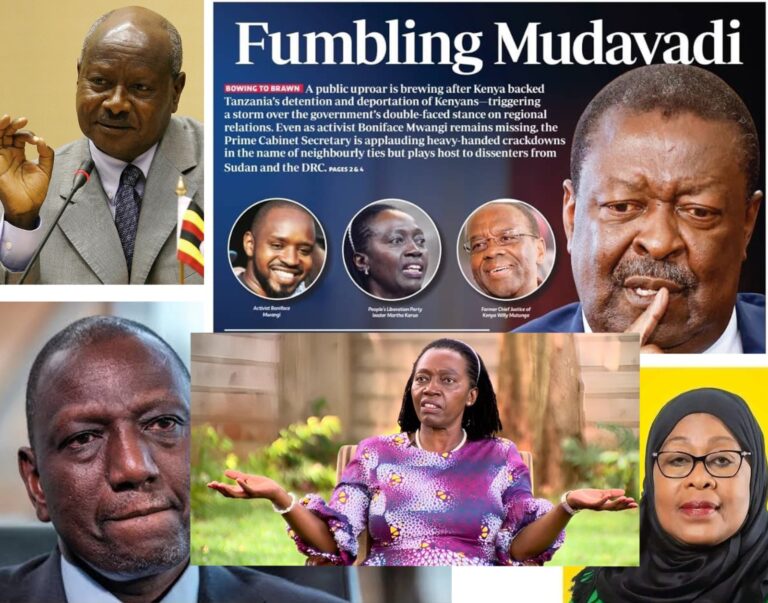
The deportation of Kenya’s former Justice Minister and respected human rights advocate Martha Karua from Tanzania sends a chilling message to all who believe in regional solidarity, the rule of law, and civic accountability.

Karua, who had traveled to Dar es Salaam to observe the court trial of Tanzanian opposition leader TunduLissu, was not only denied entry but subjected to hours of unjust interrogation alongside lawyer Gloria Kimani and activist Lynn Ngugi.

Their expulsion, reportedly without official explanation, exemplifies a growing intolerance of legal oversight, public scrutiny, and international observation in politically sensitive cases across East Africa.

What’s alarming is not just the act of deportation itself, but the broader regional implications it underscores. East Africa is witnessing an alarming shift as Uganda’s militarized governance tightens its grip on the East African Community (EAC).

Under President YoweriMuseveni, Uganda has been accused of undermining democratic norms through coercion, arbitrary arrests, and a military-first approach to governance. Now, this repressive playbook is spilling over into neighboring nations like Tanzania, eroding the democratic foundations of the region and threatening the rule of law across the EAC.

Bakinyumya Douglas

The case of TunduLissu—charged with treason, a charge that in Tanzania can carry the death penalty—should have been an opportunity for the East African legal fraternity and civil society to reaffirm the principles of justice, transparency, and the right to a fair trial.

Instead, the Tanzanian government responded with silence, restriction, and intimidation. The decision to deport Karua, who has also represented Uganda’s veteran opposition figure Dr. KizzaBesigye, underscores a growing fear among East African regimes: that solidarity among pro-democracy actors poses a real threat to authoritarian control.

Equally disturbing is the detention of Kenya’s former Chief Justice, Willy Mutunga, upon arrival in Tanzania. Mutunga, known for his unwavering stance on constitutionalism and judicial independence, was reportedly held without cause. That prominent jurists and rights activists are being treated as security threats simply for observing legal proceedings is a stain on the conscience of the EAC.

Even more disappointing, according to Kenya’s bold daily, The Standard Newspaper, is that the Kenyan government reportedly supported the detaining and deportation of Senior Counsel Martha Karua. This betrayal by a nation often regarded as a beacon of regional democracy raises troubling questions about where Kenya truly stands on human rights and constitutionalism. Rather than standing in solidarity with one of its most esteemed legal minds, the state aligned itself—wittingly or not—with authoritarian actions that undermine regional unity and the rule of law.

The silence or vague responses from East African governments on such blatant violations speak volumes. If the East African Community is to remain a meaningful platform for integration, economic cooperation, and collective progress, it must stand on a foundation of shared democratic values. Allowing one nation’s repressive strategies to quietly influence others threatens the very fabric of regional unity.

Uganda’s growing influence in regional politics—through military diplomacy, intelligence networks, and the export of political ideology—raises urgent questions. Are we witnessing the gradual militarization of the EAC’s political culture? And if so, what becomes of the institutions designed to safeguard justice, freedom, and governance?

The actions taken against Karua and her colleagues are not isolated incidents; they are part of a larger pattern of closing civic spaces, criminalizing dissent, and undermining judicial processes in East Africa. These actions betray a fear of accountability and a deliberate strategy to silence the voices that call for democracy and reform.

It is imperative that civil society, regional media, and democratic governments speak out with urgency. The East African Court of Justice must assert its authority and independence. Member states must reaffirm their commitment to basic human rights and the principles enshrined in the Treaty for the Establishment of the East African Community. And the African Union must not remain silent as democratic backsliding becomes normalized in a region that once held so much promise.

East Africa deserves better. The people deserve governments that respect freedoms, embrace transparency, and welcome scrutiny—not regimes that thrive in secrecy and suppress opposition.

The treatment of Martha Karua, Gloria Kimani, Lynn Ngugi, and Willy Mutunga is a wake-up call. If this tide of intimidation is not confronted now, we may find ourselves navigating a region where fear replaces freedom, and silence replaces justice.

Mr Bakinyumya Douglas is a Political TV Producer and TV Host – @BDouglasPaapa

THE RACE TO CEC: Anita Among dines with Kadaga’s councilors at husband’s home in Budiope

0

The political landscape in Uganda is witnessing a burgeoning power struggle as Speaker of Parliament Anita Annet Among increasingly encroaches on the perceived territory of former Speaker, Rebecca Alitwala Kadaga.

The rivalry centers around the coveted position of National Resistance Movement (NRM) Vice Chairperson – Female, a key seat on the party’s Central Executive Committee (CEC).

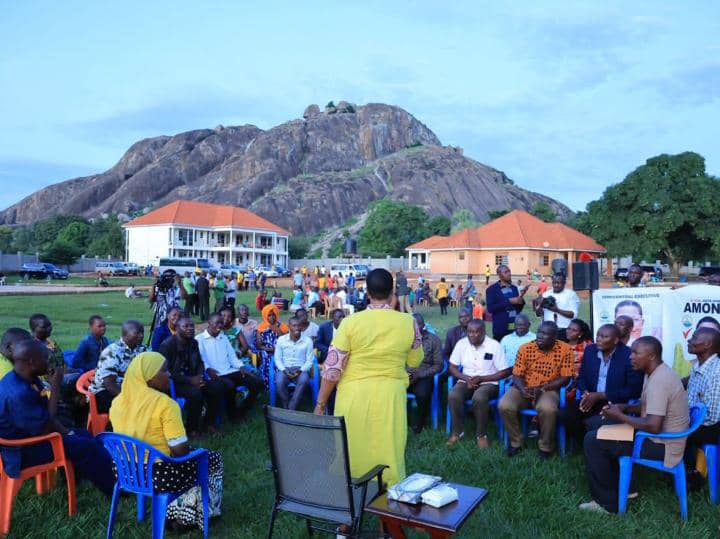
The latest maneuver in this escalating competition saw Speaker Among host district councilors from Kamuli, the very home district represented by Kadaga, who also serves as the First Deputy Prime Minister and Minister for East African Community Affairs.

This bold move, documented by Among on her X (formerly Twitter) account, has been interpreted as a direct challenge to Kadaga’s influence within her stronghold.

“I had the pleasure of hosting the district councillors from Kamuli at my home in Buyende,” Among announced, highlighting the gathering.

She further elaborated, stating, “I listened to their brilliant ideas on how we can collectively champion the transformation of our district and strengthen the solid foundation of our community.”

Importantly, the post also revealed the underlying political motivation, with Among expressing gratitude for their “support for our party leader, H.E. Gen @KagutaMuseveni, and their backing of my candidacy for the position of Second National Vice Chairperson of the party.”

This meeting in Buyende, while presented as a collaborative effort for district development, carries significant political weight.

It represents a clear attempt by Among, who is married to Moses Magogo, the MP for Budiope East, to cultivate support within Kadaga’s traditional domain.

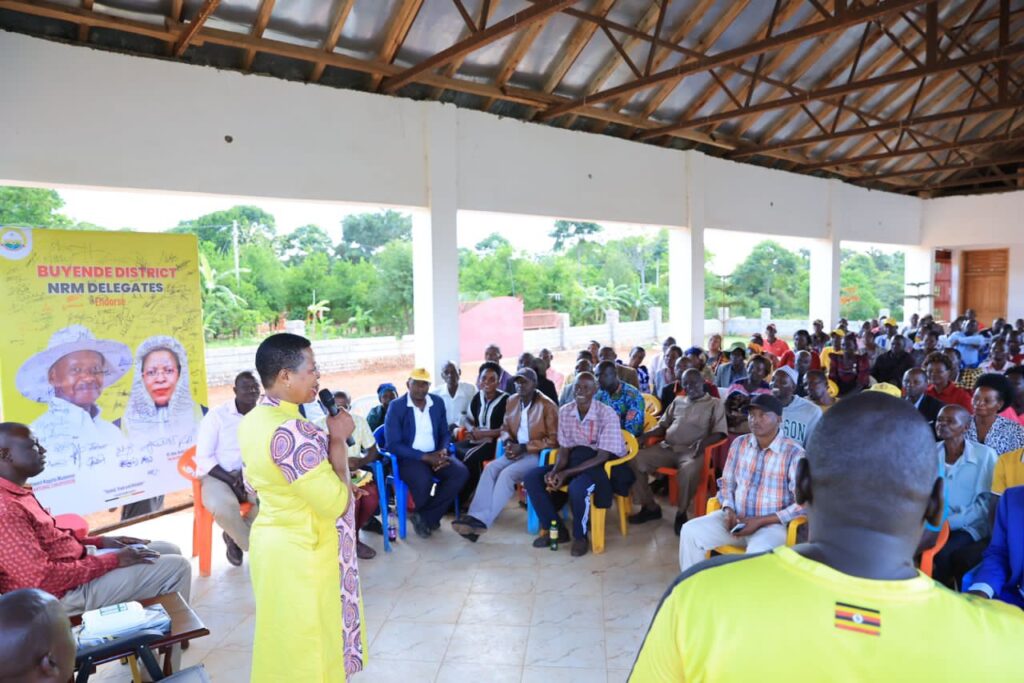
Prior to this event, Among had already begun consolidating her base by engaging with NRM delegates from the constituencies of Budiope East and West.

These interactions focused on strategies to strengthen the party and enhance its effectiveness.

This proactive engagement underscores Among’s ambition and her commitment to building a robust support network ahead of the upcoming NRM elections.

The implications of this contest extend beyond the personal ambitions of the two powerful women.

The NRM Vice Chairperson – Female position is a critical leadership role within the ruling party, influencing policy decisions and shaping the political agenda.

The outcome of this race will likely have a significant impact on the power dynamics within the NRM and, potentially, the future direction of the country.

Several questions remain unanswered:How will Kadaga respond to Among’s challenges within her district?

  • Will she double down on her efforts to solidify her base in Kamuli, or will she adopt a different strategy to counteract Among’s growing influence?
  • What impact will this rivalry have on the unity of the NRM party? The competition could create divisions within the party ranks, potentially weakening its overall strength.
  • Will President Museveni intervene to mediate between the two women? His involvement could significantly alter the course of the competition

As the race intensifies, the political temperature in Uganda is sure to rise. The coming months will be crucial in determining who will emerge victorious in this high-stakes battle for power within the NRM.

his contest is not just about the NRM Vice Chairperson – Female position; it’s about influence, leadership, and the future of Ugandan politics.

MARGHERITA: Is this the most symbolic trophy in Ugandan football?

0

By Musa Kikuuno | Busoga Times

The Federation of Uganda Football Associations (FUFA) has lifted the curtain on what could be the most iconic and symbolically rich trophy in the history of Ugandan football — the FUFA Uganda Premier League Trophy, fondly named “Margherita”.

Crafted from fine silver and standing 511 millimetres tall, the trophy is more than just silverware — it’s a tribute to Uganda’s natural beauty, resilience, and the heights of sporting achievement.

Its height directly mirrors Margherita Peak, Uganda’s highest point at 5.11 kilometres, located in the Rwenzori Mountains. This peak is the ultimate metaphor for the journey of every club in the league: the relentless climb to the summit of national football.

The trophy’s design features a vertically stretched football form, with hexagonal and half-pentagonal panels, paying homage to the classic ball. The body is mounted on a semi-spherical base with dimpled patterns, and supported by two structured tiers.

The upper tier proudly bears the engravings ‘FUFA’ and ‘Uganda Premier League’, while the lower glossy black tier provides elegance and stability. A crescent-shaped arc spans across the top—symbolizing new beginnings and the cyclical nature of competition.

FUFA describes the Margherita Trophy as “a story cast in silver,” and its symbolic depth reflects more than just football. It represents the ambition of clubs, the dreams of fans, and the enduring beauty of Ugandan identity.

The timing of its unveiling is especially significant. Vipers SC are poised to become the first club to lift the new trophy on Saturday, 24th May 2025, at St Mary’s Stadium in Kitende, following their triumph in the 2024/25 Uganda Premier League season.

For players, fans, and the league itself, the Margherita Trophy marks a new era — where success is not just measured in wins, but in legacy, meaning, and national pride.

MUSA KIKUUNO ANALYSIS: Can Busoga United survive relegation?

0

By Musa Kikuuno – Busoga Times

Busoga United’s hopes of surviving relegation from the 2024/25 FUFA Big League are hanging by a thread, with only four matches left to play. Sitting 14th on the 15-team table with just 23 points from 24 games, the Kingsmen find themselves entrenched in the dreaded bottom four — the automatic relegation zone.

Their recent form paints a grim picture: seven consecutive defeats in the league, the latest being a heartbreaking 3-2 loss to Ntugasaze in Mityana. Busoga had taken a commanding 2-0 lead, only to collapse under pressure and concede three goals, leaving them empty-handed yet again.

Despite the odds, there’s still a faint pulse of hope — a mathematical and tactical path to survival, albeit a steep one.

The Road Ahead: Four Must-Win Games

Busoga United vs Gaddafi FC – May 25

A do-or-die derby at the Kyabazinga Stadium. Gaddafi FC, third on the table with 40 points, is chasing promotion and won’t be an easy opponent. In the first round, Gaddafi demolished Busoga 3-0 in Entebbe. Now, it’s revenge or relegation for Busoga. A loss here could effectively end their survival hopes.

Busoga United vs Arua Hill – June 8

Arua Hill, currently 10th with 25 points, is just one place above the drop zone. Busoga edged them 2-1 in the first leg. A win here could create a direct switch in positions — provided other results go their way. However, Arua Hill also views this match as vital to their own survival.

Busoga United vs Booma FC – June 15

This fixture could be a dead rubber or a last-chance battle for survival. Booma FC, rooted to the bottom with 19 points, are also staring at relegation. Busoga won the reverse leg 2-1 and will be hoping to repeat the feat. If Busoga fails to collect maximum points from Gaddafi and Arua Hill, this game may come too late to matter.

Blacks Power vs Busoga United – June 22

The final fixture pits Busoga against second-placed Blacks Power (42 points), who are in the thick of the promotion race. Although Busoga beat them 1-0 in the first round, the away game will be a tough test. It could be a dramatic end to the season — one team chasing glory, the other fighting for survival.

Mathematics of Survival

With 12 points left to fight for, Busoga United will need nothing short of a perfect run — four wins out of four — to finish on 35 points. That tally could be enough to secure survival, but only if other results from teams like Arua Hill, Kigezi Homeboyz, MYDA, Onduparaka, and Booma go their way.

Any defeat in the remaining games would seal Busoga United’s relegation.

What Went Wrong?

Several factors have contributed to Busoga’s downfall this season. The exodus of key players during the January transfer window has left gaping holes in the squad.

Isaac Doka Mweru , once the heartbeat of the team, joined Mendiola FC 1991 in the Philippines, where he now plays alongside fellow Ugandan Allan Kigundu (formerly of Onduparaka).

Mongoli Raymond moved to SC Villa.

Anthony Mayanja switched to local rivals BUL FC.

This loss of experienced talent has been difficult to replace, with young players struggling under pressure.

Verdict: Can Busoga United Survive?

The answer is both yes and no.

Yes — if they secure 100% wins in their remaining matches and other teams in the relegation dogfight stumble.

No — if they drop even a single game, as the margin for error is nonexistent.

Realistically, Busoga United has a 65% chance of survival, according to current projections. The fixtures are cruel — two promotion hopefuls and two relegation rivals — all with everything to play for.

But as the saying goes in football, it’s not over until it’s over. The final four games are not just matches — they are finals for Busoga United.

NOET NANGOBI: An aspiring leader determined to make a difference for the people of Kamuli

0

In the heart of Kamuli district, a rising voice is making waves. Noet Nangobi, a dynamic and passionate advocate for her community, has set her sights on becoming the next Member of Parliament. This interview delves into Noet’s vision for Kamuli, exploring her motivations, her plans to address the district’s most pressing challenges, and her experiences navigating the often-complex world of Ugandan politics as a young, ambitious woman.

What motivated you to run for Member of Parliament for Kamuli at this time? What unique perspectives do you believe you bring to the table as a young, female candidate?

Thank you for the question. What motivated me to run for Member of Parliament for Kamuli at this time is a deep love for my community and a strong desire to see real, lasting change. I have seen the challenges our people face—limited access to quality healthcare, unemployment among the youth, poor road networks, and insufficient support for women and farmers. I could not sit back any longer. I believe now is the time for bold, fresh leadership that listens, understands, and acts.

Kamuli faces many challenges. What are the top three issues you believe need urgent attention, and how do you plan to address them?

Kamuli indeed faces several pressing challenges, but the three that need urgent attention are unemployment among the youth, poor infrastructure, and inadequate healthcare.

First, youth unemployment is a crisis. Many young people have completed school but are sitting at home with no jobs or capital to start something of their own. I plan to push for government-backed youth empowerment programmes, including vocational training, entrepreneurship hubs, and access to soft loans for startups. Our young people are talented—they just need the opportunity.

Second, our roads and transport networks are in poor condition, making it hard for farmers to access markets, for patients to reach health centres, and for students to get to school. I will work closely with local leaders and national ministries to ensure that Kamuli gets its fair share of infrastructure development—especially in rural areas that have long been ignored.

Third, healthcare in Kamuli is still far below standard. We lack enough health workers, essential drugs, and well-equipped facilities. I will advocate for increased health funding, regular drug supply, and improved working conditions for health workers. Our people deserve to be treated with dignity when they fall sick.

I am committed to listening to the people and pushing for real solutions—not just promises. Kamuli deserves better, and I am ready to fight for it.

Many people are disillusioned with politics. How do you plan to build trust with the electorate and demonstrate that you are a different kind of leader?

I understand why many people are disillusioned with politics—because they’ve been promised so much and delivered so little. That’s why I’m not here to make empty promises. I’m here to do things differently.

First, I plan to build trust by being present. I will not disappear after elections. I will stay engaged with the community through regular meetings, open forums, and feedback channels. Leadership must be seen and felt—not just during campaigns, but every day.

Second, I believe in transparency and accountability. I will involve the people of Kamuli in decision-making, and I will report back to the community about how resources are used and what progress is being made. Our people deserve to know what’s happening with their taxes and their future.

Lastly, I will lead by example. I will serve with integrity, humility, and respect for every person, regardless of their background or status. I am not standing as a candidate to gain power—I am standing to serve.

The time for politics of empty words is over. Kamuli needs action, unity, and leadership that listens. That’s the kind of leader I promise to be.

What specific experiences in your life – personal, professional, or otherwise – have prepared you for the responsibilities of being a Member of Parliament?

Throughout my life, both personal and professional experiences have equipped me with the skills and perspective needed to serve as a Member of Parliament for Kamuli.

First, growing up in Kamuli has given me a deep understanding of the struggles our people face daily. I’ve seen firsthand the challenges in education, healthcare, and employment. This personal experience has driven my passion for bringing change to our district.

Professionally, I have worked with community-based organisations and local leaders on projects aimed at empowering youth and women. In these roles, I gained hands-on experience in planning, budgeting, and implementing projects that directly impact the lives of ordinary people. I’ve seen how important it is to listen to the community and work with them to address their needs.

Additionally, my involvement in advocacy for social justice has strengthened my commitment to fairness and accountability. I’ve spent time speaking out on issues like gender equality, youth employment, and access to education, which I believe are all critical areas that need attention in Kamuli.

Finally, I am a dedicated problem-solver, someone who is not afraid of challenges and who is determined to find practical solutions. My life experiences, both the successes and the setbacks, have taught me resilience, patience, and the importance of collaboration. These qualities are essential in serving as a Member of Parliament.

If elected, how will you ensure that the voices of all residents of Kamuli, including marginalised groups, are heard and represented in Parliament? What does the term “representation” mean to you?

If elected, I will make it my priority to ensure that the voices of every resident of Kamuli—especially those from marginalised groups—are heard and represented in Parliament. Representation, to me, means being a true voice of the people, not just a voice for those who are loudest or most powerful.

I will actively engage with all communities in Kamuli, from rural villages to urban centres. I will hold regular consultations and forums where everyone, regardless of gender, age, or social status, can share their concerns and ideas. No one’s voice will be ignored. I am committed to listening to farmers, women, youth, people with disabilities, and others who often feel left out of the political process.

Additionally, I will advocate for policies that directly address the needs of marginalised groups. For example, I will push for better access to healthcare for women and children, youth empowerment programmes to fight unemployment, and inclusive education policies that cater to the needs of all students, including those with disabilities.

Representation is not just about being present; it’s about being active in fighting for equal opportunities for all. I believe that when people feel heard and their concerns are addressed, true progress is made. If elected, I will be a champion for all the people of Kamuli, ensuring that no one is left behind.

Access to quality education and healthcare is crucial. What are your proposed solutions to improve these services in Kamuli?

To improve education in Kamuli, I will advocate for more schools, better teacher training, and increased funding for educational materials. For healthcare, I will push for better-equipped health centres, more medical staff, and a reliable supply of essential medicines to ensure that every resident has access to quality services.

How do you plan to attract investment and create employment opportunities for the youth in Kamuli, given the high rates of unemployment?

To attract investment and create employment for the youth in Kamuli, I will work to improve infrastructure, support small businesses with access to funding, and promote vocational training and skills development programmes. I will also seek partnerships with private companies to establish industries that provide sustainable jobs for our young people.

What is your stance on key national policies, such as land ownership, environmental protection, and social welfare programs, and how do you believe they impact Kamuli?

I believe in fair land ownership policies that empower locals and ensure equitable distribution. I support environmental protection laws that conserve our natural resources, which are vital for agriculture. Additionally, I advocate for robust social welfare programmes that provide support for the vulnerable, ensuring that everyone in Kamuli has access to basic needs like healthcare, education, and housing.

What are your plans to advocate for the rights and empowerment of women and girls in Kamuli? What specific programmes or policies will you champion?

I will advocate for women’s and girls’ rights by pushing for equal access to education, healthcare, and economic opportunities. I will champion policies that ensure women have property rights, access to loans, and representation in leadership. I will also support programmes that fight gender-based violence and promote women’s health and empowerment.

How do you plan to work with other women leaders, both within Kamuli and nationally, to advance the interests of women?

I plan to collaborate with other women leaders in Kamuli and nationally by creating networks for sharing ideas, supporting women-focused policies, and advocating for legislative reforms that promote gender equality. Together, we will push for women’s representation in decision-making bodies and ensure that women’s voices are heard at all levels of government.

What are your thoughts on the current representation of women in Ugandan politics, and what steps do you believe need to be taken to achieve greater gender equality?

While Uganda has made strides in women’s political representation, with women holding 33.9% of parliamentary seats as of February 2024, there is still much work to be done, especially at the local government level. To achieve greater gender equality, we must implement policies that promote women’s participation in decision-making processes, ensure equal access to education and economic opportunities, and address cultural and societal barriers that hinder women’s advancement. By actively supporting these initiatives, we can create a more inclusive and equitable political landscape for all.

How do you plan to address issues such as gender-based violence, access to reproductive health services, and economic empowerment for women in Kamuli?

I will work to address gender-based violence by advocating for stronger laws, awareness programmes, and support services for survivors. For reproductive health, I will push for better access to family planning, maternal health care, and education. To empower women economically, I will promote women’s access to affordable loans, vocational training, and market opportunities to help them thrive financially.

How do you plan to differentiate yourself from other candidates in the race, particularly those with more established political backgrounds?

I will differentiate myself by being a fresh, energetic voice focused on action, not politics as usual. Unlike established politicians, I bring a people-first approach, grounded in honesty, community engagement, and a strong commitment to serve, not just to sit in office.

What message do you want to leave with the people of Kamuli as they go to the polls?

 My message to the people of Kamuli is simple: This is our time. Let’s choose fresh leadership that listens, acts, and puts the people first. Together, we can build a better, brighter future for everyone.


Parliament passes controversial UPDF Amendment Bill allowing civilian trials in military courts

0

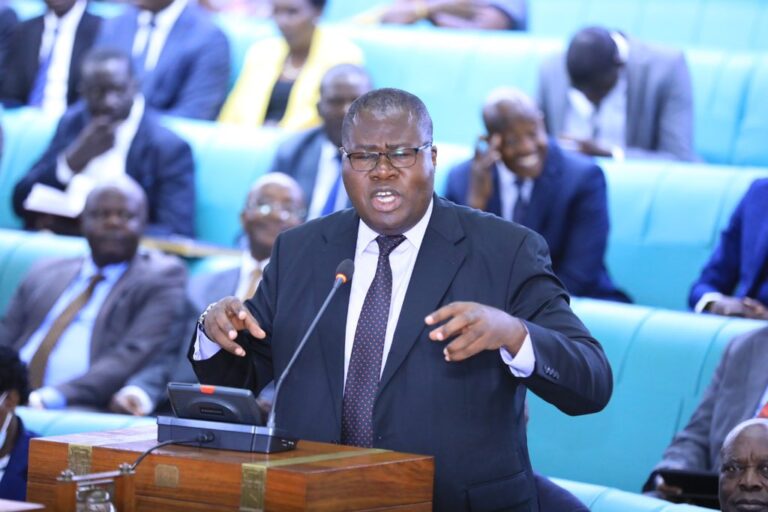
The Uganda Peoples’ Defence Forces (Amendment) Bill, 2025, has been passed into law by the Ugandan Parliament on Tuesday 2025, igniting fierce debate and leading to a dramatic walkout by opposition Members of Parliament.

The bill, which allows for the trial of civilians in military courts under “exceptional circumstances,” has drawn sharp criticism for what opponents claim is a violation of constitutional rights and a lack of public participation.

The controversial legislation was passed despite a minority report vehemently opposing its enactment. The most contentious aspect of the bill reverses an earlier Supreme Court ruling that deemed the trial of civilians in military courts illegal.

While presenting the report from the Defence and Internal Affairs Committee of Parliament, Chairperson Wilson Kajwengye(MP) stated that the committee acknowledged the sensitivity of the issue.

“The Committee examined this matter and concludes that the trial of civilians by military courts should occur only in exceptional circumstances, ensuring that a fair trial is guaranteed,” he said.

Moses Okot Junior, presenting the Minority Report, argued that granting the General Court Martial (GCM) powers to try capital offences would be unconstitutional.

He emphasized that the GCM should be subordinate to the High Court and that military courts martial cannot be impartial and independent, thereby making them unconstitutional and violating principles of fair hearing and natural justice. H

e further urged MPs to reject the bill, citing a lack of adequate public participation and consultation.

During the heated debates preceding the vote, opposition MPs, led by Leader of Opposition Joel Ssenyonyi, staged a walkout from the 34th Sitting of the 3rd Meeting of the 4th Session of the 11th Parliament.

Ssenyonyi condemned the Committees on Legal and Parliamentary Affairs, and Defence and Internal Affairs, for what he described as a rushed process lacking inclusiveness. He accused the committees of hastily processing the bill without allowing sufficient time for public submissions and engagement.

“My colleagues and I are hard pressed to participate in this process. We shall leave you here to participate in it. Process your Bill pretending that you are engaging the input of Ugandans and yet not,” Ssenyonyi stated, labeling the process a “sham.”

Despite the opposition’s protests, Speaker Anita Among insisted that all sides be heard, allowing for the presentation of both the committee report and the minority report.

MP Fadhil Chemaswet defended the bill, arguing that military courts martial are critical in enforcing discipline within the military.

The passing of the UPDF Amendment Bill, 2025, is likely to fuel further debate and potentially legal challenges.

Civil society organizations and human rights advocates are expected to voice their concerns over the potential for abuse and the erosion of civilian justice in Uganda.

The focus will now shift to how the new law is implemented and whether the promised “exceptional circumstances” are clearly defined and adhered to, ensuring that the rights of civilians are protected.

PARTY POLITICS: Frustration grips Buyende as NRM elections registration faces obstacles

0

Aspirants for various positions in the upcoming National Resistance Movement (NRM) district elections in Buyende are facing significant hurdles as they attempt to register their candidacies. Allegations of deliberate obstruction by the office of the Resident District Commissioner (RDC) have surfaced, fueling suspicion and discontent amongst party members.

The registration process, which commenced on Monday, May 19, 2025, has been marred by controversy. Contrary to established protocol, the registration exercise was reportedly moved from the official NRM office administrator to the RDC’s office. This shift has raised eyebrows and sparked accusations of political maneuvering intended to disadvantage certain candidates.

Compounding the issue, the NRM office administrator’s office remained closed for much of Monday and Tuesday, leaving aspiring candidates stranded and without clear guidance. Affected members claim they were unable to reach the new administrator, Robert Baliruno, further deepening their suspicion of foul play.

The RDC’s office has been repeatedly accused by several NRM members of favoring Milly Babalanda, the Minister for the Presidency who is also vying for the Budiope West parliamentary seat, and Moses Magogo, the current MP for Budiope West. This history of alleged bias has amplified concerns about the neutrality of the registration process being conducted under the RDC’s supervision.

Mukama Tanasi, a candidate for the NRM Chairperson position in Buyende district, voiced his frustration to Busoga Times on Tuesday. “Candidates eyeing leadership in Buyende district are stuck. The registrar has abandoned them at his office at Buyende district headquarters,” he stated.

Mukama believes this disruption is a calculated move to frustrate candidates perceived as political opponents. “This party has an office, why are we carrying out party activities at the office of the RDC?” he questioned, highlighting the unusual and concerning nature of the situation.

Kitimbo Andrew, an aspirant for the NRM district vice chairperson position, expressed similar worries, fearing that the district’s political landscape is being manipulated. “The process is being hijacked,” he lamented.

Attempts to reach the RDC, Maj (Rtd) Betty Akello, and her deputy, Mathias Naikoli, for clarification were unsuccessful. Their mobile phones were unreachable, and they were unreachable via WhatsApp.

However, NRM Secretary General Richard Todwong addressed the issue during an appearance on NBS Television. He justified the involvement of RDCs by highlighting their role as heads of district security councils. He stated that the RDCs were tasked with maintaining security during the elections, a responsibility supported by the Ministry of the Presidency.

“RDCs are the chairpersons of the district security councils. We wrote to the Ministry of Presidency to support us in maintaining security during these elections, and this is why RDCs were involved,” Todwong explained.

While the NRM leadership emphasizes the security rationale for the RDC’s involvement, the concerns raised by aspiring candidates in Buyende paint a picture of a process riddled with suspicion and potential for manipulation.

The allegations of bias and the lack of transparency in the registration process threaten the integrity of the upcoming NRM district elections and could potentially lead to further unrest and division within the party in Buyende.

It remains to be seen whether the NRM leadership will address these concerns and ensure a fair and transparent electoral process.

SHAM PROCESS: Opposition MPs walk out of parliament over UPDF Amendment Bill

0

A heated debate has erupted in the Ugandan Parliament over the Uganda Peoples’ Defence Forces (UPDF) Amendment Bill, 2025, culminating in a dramatic walkout by opposition Members of Parliament on Tuesday, May 20th, 2025.

The MPs, led by Leader of Opposition Joel Ssenyonyi, abandoned the 34th Sitting of the 3rd Meeting of the 4th Session of the 11th Parliament, arguing that the bill lacks inclusiveness and is being rushed through without proper scrutiny.

The core of the opposition’s contention lies in the perceived lack of sufficient time allocated for public submissions and engagement with the bill. Ssenyonyi lambasted the Committees on Legal and Parliamentary Affairs, and Defence and Internal Affairs, accusing them of hastily processing the bill.

“My colleagues and I are hard pressed to participate in this process. We shall leave you here to participate in it. Process your Bill pretending that you are engaging the input of Ugandans and yet not,” he stated, branding the process a “sham.”

Ssenyonyi emphasized the importance of public consultation in the law-making process. “When you bring a bill here, you should give it time for people to have their input,” he argued.

In response, MP Stephen Bakka Mugabi, who chairs the Committee on Legal and Parliamentary Affairs, defended the process, citing the Rules of Procedure which permit the processing of bills within 45 days. However, Ssenyonyi countered that while expedited processing is permissible, it is inappropriate when there are interested parties wishing to contribute.

The contentious UPDF Amendment Bill raises concerns about the trial of civilians by military courts. Wilson Kajwengye, Chairperson of the Defence and Internal Affairs Committee, presented a report stating that the committee concluded that such trials should only occur in exceptional circumstances, ensuring a fair trial.

However, opposition MPs remain skeptical. Denis Sekabira, the Member of Parliament for Katikamu North, expressed concern over the impartiality of military courts, arguing that appointed judges within the military lack the necessary independence due to the hierarchical structure of the army.

“A court must be impartial, but in the army, you operate under orders, you cannot have the independence required to dispense justice,” Sekabira asserted. He further argued that the bill undermines the doctrine of separation of powers, alleging that the Executive is using Parliament to grant the army unwarranted authority.

Despite the mass exodus of opposition MPs, some members, including Hon. Abdu Katuntu (Independent MP), Jimmy Lwanga (NUP), and Jonathan Odur (UPC), remained in the chamber.

Safety Concerns Voiced

The already tense atmosphere was further exacerbated by safety concerns raised by Ibrahim Ssemujju Nganda, the MP for Kiira Municipality. He expressed fear of potential intimidation, alleging the presence of individuals resembling members of the Special Forces Command (SFC) in the Parliament premises.

He requested assurance from the Speaker that MPs would not be subjected to violence, recalling a previous incident where military personnel allegedly raided Parliament during the consideration of the Coffee Bill.

“This morning, I came here after mobilizing the people of Kira to witness the proceedings. However, I found the entire Parliament barricaded by armed police officers,” he stated highlighting the perceived intimidation.

Political Parties Bill Passed Despite Opposition

Amidst the controversy surrounding the UPDF Amendment Bill, Parliament proceeded to pass the Political Parties and Organisations (Amendment) Bill, 2025, sponsored by Nakut Faith Loru Chuna. Earlier, MP Jona Odur presented a Minority Report deeming the bill unconstitutional and urging MPs to reject it. MP Jimmy Akena also criticized the bill, calling it “diabolical” and lacking stakeholder consultation. Despite these objections, the bill was passed.

The walkout by opposition MPs underscores the growing tensions surrounding the UPDF Amendment Bill and highlights concerns regarding the transparency and inclusiveness of the legislative process in Uganda.

The debate is likely to continue, raising questions about the balance between national security interests and fundamental civil liberties. The passing of the Political Parties and Organisations (Amendment) Bill amidst the controversy further fuels concerns about the direction of Ugandan politics.

UGANDA CRANES: Aucho dropped, Shafik  Kwikiriza returns as coach. Put names 28-man Cranes squad for friendlies.

0

By Musa Kikuuno – Busoga Times

Uganda Cranes head coach Paul Joseph Put has named a 28-man squad for the upcoming international friendlies against Cameroon and The Gambia, but the headlines are dominated by the surprise omission of captain Khalid Aucho.

Aucho, who plies his trade at Simba SC in Tanzania, will miss the two high-profile matches scheduled for early June in Morocco, raising eyebrows ahead of the crucial World Cup qualifying campaign.

The Cranes will face Cameroon on Friday, 6th June, at 10 PM and then take on The Gambia on Monday, 9th June, at 6 PM, with both games offering valuable preparation for the team’s competitive commitments.

Notable Inclusions and Omissions

The squad includes 16 foreign-based players and 12 from the Uganda Premier League, signalling a blend of experience and emerging talent.

Among the fresh highlights is the return of Shafik Nana Kwikiriza, the KCCA FC forward who earns another national team call-up after his recent top form in the domestic league.

Also earning a first-time nod is Jordan Obita, a 31-year-old left-back playing for Hibernian FC in the Scottish Premiership, while Nicholas Wadada makes a long-awaited return after years of national team absence. Wadada’s recent performances with Vipers SC, helping them win the 2024/25 Uganda Premier League title, have clearly impressed coach Put.

However, notable absentees alongside Aucho include Aziz Kayondo and Halid Lwaliwa, both regulars in previous squads.

Full Squad Breakdown

Goalkeepers:

Isima Watenga, Nafian Alionzi, Joel Mutakubwa, Hannington Sebwalunyo

Defenders:

Elvis Bwomono, Nicholas Wadada, Elio Capradossi, Arnold Odong, Toby Sibbick, Hilary Mukundane, Jordan Obita, Isaac Muleme

Midfielders:

Bobosi Byaruhanga, Kenneth Semakula, Allan Oyirwoth, Enock Ssebagala, Abdu Karim Watambala, Allan Okello, Travis Mutyaba

Forwards:

Dennis Omedi, Hakim Kiwanuka, Shafik Nana Kwikiriza, Rogers Mato, Steven Mukwala, Usama Arafat, John Paul Dembe, Patrick Jonah Kakande, Ivan Ahimbisibwe

The local-based players are expected to travel to Morocco on Monday 2nd June, where they’ll link up with the foreign-based contingent for final preparations.

With major qualifiers looming, these friendlies will offer Coach Put a vital opportunity to assess squad depth and shape the team’s strategy. While the omission of senior figures like Aucho may surprise fans, the inclusion of promising talents like Kwikiriza shows a clear sign of transition and trust in youth.

POLITICS AND NATURE: Corruption is sabotaging environmental democracy in Uganda

0

By Oweyegha-Afunaduula

In the world in general and Uganda in particular democracy is reduced to elections or, for that matter, political democracy. However, democracy has many dimensions, namely: political,spiritual, economic, cultural, ecological and environmental, to name but a few of them.Thus, we can speak of political democracy, economic democracy, spiritual democracy, cultural democracy, ecological democracy and environmental democracy. Let me say a little about each of these types of democracy before I address the topic“Environmental corruption is sabotaging environmental democracy in Uganda”..

Political Democracy

Political democracy is a system of government where citizens have a say in their political leaders through various methods, including voting, elections, and other forms of political participation. It emphasizes the principles of equal representation, fairness, and the protection of individual freedoms. At its core, political democracy is about “rule by the people,” meaning citizens have the power to influence government decisions. Political democracy, specifically, is achieved when certain political conditions are met. These conditions usually involve the adoption of a constitution and laws that give the people supreme power. In a political democracy, the people are the ultimate source of political power. However, in countries like Uganda, where military control of the actions and movements of the people is a critical issue in governance, rule of the people is just a dream.

Cultural Democracy

Simply stated, “Cultural Democracy” is the notion that everybody’s heritage and cultural expression is worthwhile and deserving of an equitable share of whatever resources are available (Botkin, 2010). Broadly speaking, cultural democracy emphasises active public engagement in all aspects of culture, from its definition and creation to its experience and access. It’s about shifting the understanding of culture to be more inclusive, participatory, and democratic, moving beyond a narrow view of culture as a product of elite institutions. Cultural Democracy requires a paradigm shift towards a process of continuous and intense community engagement, using culture as a catalyst for addressing social issues: art of the people, made by the people, and presented for the people (Botkin, 2010).

Spiritual Democracy

Spiritual democracy, as outlined by Rajaji and Gandhiji, emphasises personal and communal equality, aligns with Whitman’s vision of universal brotherhood, and upholds diverse spiritual expressions, transcending traditional political frameworks and structures. It is a concept believed by 19th century Indian intellectual, C. Rajagopalachari (popularly known as Rajaji) who was a prolific writer on wide-ranging and diverse topics, including world peace, disarmament, free enterprise, moral and ethical values in public life, religion, etcand 20th century father of Gandhian philosophy – Mahatma Gandhi (Gandhiji)-that emphasises freedom and equality at a personal and community level, transcending mere political structures. Remember that Gandhi’s philosophy encompassed a wide range of ideas including nonviolent resistance, truth, and self-reliance, which he applied to social and political life. 

Ecological Democracy

Ecological democracy combines principles of democracy and ecological awareness, advocating for decision-making processes that prioritize both human well-being and the health of the planet. It emphasizes the interconnectedness of all life and recognizes the intrinsic value of nature, advocating for a system where all affected parties, including humans and the environment, have a voice in decision-making.

Environmental Democracy

Environmental democracy refers to the idea that public participation is crucial for making sound and equitable decisions regarding land, natural resources, and the environment. It’s based on the principle that citizens have the right to access environmental information, participate in decision-making, and seek redress for environmental harm. Environmental democracy has three pillars: transparency, participation and justice. WFD supports a democratic response to global environmental crises by working with parliaments, political parties and civil society.

Environmental democracy implies democratic environmental decision-making whereby public participation is emphasised.  There is no environmental democracy if the public is excluded from environmental decision making.

The public needs to have a voice in environmental decision-making. This is the foundation of “environmental democracy”, a concept that united open government approaches following the Chernobyl Disaster in 1986 and the 1992 Rio Summit for the Earth. In response, governments strengthened right to information laws, created pollutant registers and implemented environmental impact assessments (EIA) and other public oversight processes. 

Leopold-type matrices have been the most commonly used EIA methods in the EIA industry. However, EIA Networks have also been used. The first EIA network was developed by Sorensen in 1971 to aid planners reconcile conflicting land uses and make necessary decisions. Unfortunately, EIAs are very expensive. The cost of an EIA method depends on the number of impacts, which have been assessed.  It is important to stress that the decision of the cost of the method is not made by the method itself but by those involved in identifying the impacts for the EIA.

It was expected that EIA would promote and support meaningful and effective participation of the public in environmental decision-making. Unfortunately, EIA deception (or sustainability deception or environmental deception) is at the centre of environmental decision-making (Oweyegha-Afunaduula, 2025) to ensure that governments get the projects they want to be implemented, ostensibly for development, without meaningful and effective public scrutiny, and to enrich firms involved in the planning and implementation of those projects. Frequently governments have connived with the firms and the funding agencies, principally the World Bank, to reduce the influence of public participation in project design and implementation. The EIA has been severally corrupted along many dimensions of development by governments and the corporate world. It was the distortion or corruption of the EIA moved Oweyegha-Afunaduula, Musumba and Muramuzi (2020) to write their article “The Threat of Environmental Corruption Via Huge Dam Projects, and Oweyegha-Afunaduula (2023) to write his articles “Uganda in a State of Corporate Environmental Corruption and Decision-Making.” (Oweyegha-Afunaduula, 2023), “Environmental Sabotage on the Rise as Accountability of Power Declines” (Oweyegha-Afunaduula, 2025) and “Environmental Impact Assessment as Sustainability deception: Bujagali Dam in Perspective” (Oweyegha-Afunaduula, 2025)Oweyegha-Afunaduula (2024) wrote that “Environmental deception combined with political deception is a dangerous combination. It is enemy number one to development, transformation and progress. If we are faced with increasingly debilitating climate change, it is this deadly combination that is responsible. No amount of talking locally, nationally, regionally and globally will do unless we resolve to confront the deadly combination”.

According to the Centre for International Environmental Law (CIEL), environmental democracy is based on the idea that land and natural resource decisions adequately and equitably address citizens’ interests. Rather than setting a standard for what determines a good outcome, environmental democracy sets a standard for how decisions should be made. It adds that at its core, environmental democracy involves three mutually reinforcing rights that, while independently important, operate best in combination: the ability for people to freely access information on environmental quality and problems, to participate meaningfully in decision-making, and to seek enforcement of environmental laws or compensation for damages.

Environmental democracy is not a peripheral concern – the ability of our precious democratic institutions and values both to respond to and to survive our environmental crises should be one of the central questions of our time (Lee, 2023). It is also a complex and a rich topic, and when allied with the role of law, could be approached in many different ways. In her paper, Lee (2023) has explored the environmental and democratic potential of procedural (specifically participatory) rights in law. She has focused on two regional conventions: the UNECE Aarhus Convention on Access to Information, Public Participation in Decision-making and Access to Justice in Environmental Matters; and the UNCEPAL Escazú Regional Agreement on Access to Information, Public Participation and Justice in Environmental Matters in Latin America and the Caribbean. These two Agreements provide an opportunity to explore the ways in which law speaks, or might speak, to the features that characterise environmental democracy.

In their article “Enhancing Environmental Democracy in Kenya”,Kariuki Muigua and Paul N.Musyim (2018) observed that environmental democracy may be a recent coinage but what it belies are concepts that have been in use all along. The term reflects increasing recognition that environmental issues must be addressed by all, or at-least a majority of those affected by their outcome, not just by the minority comprising the governments and leading private-sector actors.  It captures the principle of equal rights for all including the public, community groups, advocates, industrial leaders, workers, governments, academics and other professionals to be involved in environmental governance. It connotes the right of all whose daily lives are affected by the quality of the environment to participate in environmental decision-making as freely as they do in other public interest matters such as education, health care, finance and government. Access to environmental information and justice for all those who choose to participate in such decision-making is integral to the concept of environmental democracy. In a word, wrote Kariuki Muigua and Paul N. Musyim, thechallenges facing the entrenchment of environmental democracy in Kenya today can, and should, be turned into opportunities for a better tomorrow in which all Kenyans enjoy a clean and healthy environment within an atmosphere that allows the realisation of the cherished dream of sustainable development. Environmental democracy is attainable. Indeed, it is an imperative for Kenya if the goal of sustainable development is to see the light of day. This also goes for Uganda and other underdeveloped countries.

Foundations of Environmental Democracy

The foundations of Environmental Democracy were firmly established in Principle 10 of the Rio Declaration, which emerged from the United Nations Conference on Environment and Development (UNCED) in 1992, also known as the Earth Summit: “Environmental issues are best handled with the participation of all concerned citizens, at the relevant level. At the national level, each individual shall have appropriate access to information concerning the environment that is held by public authorities, including information on hazardous materials and activities in their communities, and the opportunity to participate in decision-making processes. States shall facilitate and encourage public awareness and participation by making information widely available. Effective access to judicial and administrative proceedings, including redress and remedy, shall be provided.”

While the concept of Environmental Democracy has existed for over two decades, there have been remarkably few efforts to operationalise it from a democracy support perspective via targeted programming (WFD, 2020).

Status of Environmental Democracy in Uganda

In this article I want to focus on the status of environmental democracy in Uganda.Uganda has established some important legal mechanisms to support environmental democracy.She has also designed environmental policies to effect conservation-oriented policies. However, Twesigye Morrison Rwakakamba (2009) sought to establish whether the environmental policies were effective at all levels of society. Tumushabe, Bainomugisha and Makumbi (2002) addressed consolidation of environmental democracy in Uganda through access to justice, information and participation.By addressing these areas for improvement, it could do more to promote transparency, public participation, and access to justice. However, since then, justice has increasingly been militarised, information restricted and the public marginalised from effective participation in environmental conservation and management, with government preference of militarised politics and militarised management and conservation of natural resources (e.g., Oweyegha-Afunaduula, 2025).

Way back in 2006 Oweyegha-Afunaduula (2006) wrote thus: “Development, a prized thing in Uganda, is a broad concept with multiple dimensions, though the tendency has been to pursue it in economic terms. The social, ecological, moral, ethical and environmental dimensions have attracted little attention. Development should mean qualitative improvement in human rights, democracy and freedom of choice. When one says he or she is experiencing development, that person should be saying that today more than yesterday and tomorrow more than today, one is enjoying maximum progress in all the dimensions of human welfare”. However, due to presidentialism and environmental corruption of the Office of President, in concert with international financial institutions (IFIs), these ideals have been consistently and persistently violated, thereby sabotaging environmental democracy and environmental development in Uganda.

Ganda (2020) found that corruption worsens the environmental sustainability situation.Many of the anti-corruption policies proposed for the environmental and resource management (ERM) sectors draw on the principal-agent theory. The political science literature on corruption found that theory to have limited application when corruption is systemic and the principal is corruption. Tacconi and Williams (2020) suggest that the analysis of corruption and anti-corruption in countries with systemic corruption should draw to a greater extent on collective action theory to identify more effective policies.

Environmental corruption in Uganda in the 21st century has President Tibuhaburwa Museveni at it s centre. Therefore, if environmental corruption is sabotaging environmental democracy, which it is, then we can extricate President Tibuhaburwa Museveni from it. The President has all infrastructural development in his hands even if he has privatised and liberalised the Uganda economy. There is no private investor in Uganda -foreign and local – of sizeable magnitude who never started and ended with the President before investing in Uganda. Most corporate investors owe their low environmental restrictionsto their business in all the dimensions of the environment to President Museveni. They have, as desired by the President, got tax holidays for 10 years, freedom to take all their money out of the country, c heap labour, start up capital using public money, and “free” land by presidential design.  This is of course unfair to most local investors, but some local investors in the good books of the President have accessed public money for their start up capital, don’t pay taxes or are forgiven paying taxes. Or else they have easily got declared bankrupt.

The direct intervention of the President in the business cycle has not only led to much haemorrhage of taxpayer’s money, but has sabotaged environmental democracy, with the greatest losers being the masses of the indigenes of Uganda. The indigenes have lost their ancestral lands and natural resources with no hope of benefiting in any way. The beneficiaries are the Indians, Chinese, Banyarwanda  (a constitutionally created indigenous group) and other foreigners, including the new categorise of refugees all of whom have no regard for the environment of Uganda.

In terms of dam building environmental democracy has been eroded through the environmental corruption of the government of Uganda, dam construction firms,dam construction consulting firms, dam construction funding international financial institutions (IFIs). These are all intricately intertwined in the corporate-government circle of environmental corruption committed to building the global money economy and characterised by government-corporate circle of secrecy at the centre of which is is “business confidentiality”.

The motive of profit for those who make the political development decisions, those who fund the projects and those who provide the consulting services is the driving force of environmental corruption and the factor behind so much erosion of environmental democracy in Uganda. It is the one responsible for rendering environmental impact assessment (EIA) of development projects in Uganda almost useless and only performed to environmentally legitimise the projects. This explains why the failed dam project of Isimba hydropower dam has embarrassed the government of Uganda and cost the tax payer highly because of the corruption of its cost and because it has been reported to be cracking. Otherwise Isimba hydropower damhas an installed capacity of 183 megawatts (MW). It generates 1,039 gigawatt-hours (GWh) annually. This makes it one of the key contributors to Uganda’s total electricity production. However, most of Busoga where it is located is still in darkness – enjoying no environmental democracy in terms of electricity distribution.

For God and My Country

Prof Oweyegha-Afunaduula is a member of Centre for Critical Thinking and Alternative Analysis