Tuesday, March 17, 2026
Home Blog Page 48

NEW BLOOD: Journalist wants to kick Mike Mukula out of NRM’s fat slot

0

By Tuuke Joseph Allan

The National Resistance Movement (NRM) is working around the clock to elect a new leadership that will drive them through the 2026 general elections. While the old guards are reluctant to retire, the youth are becoming more aggressive to take up leadership positions in the party.

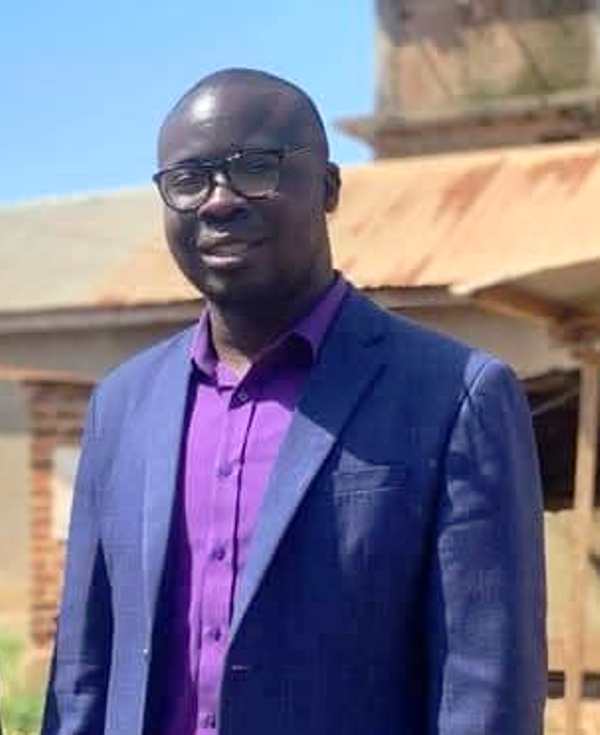
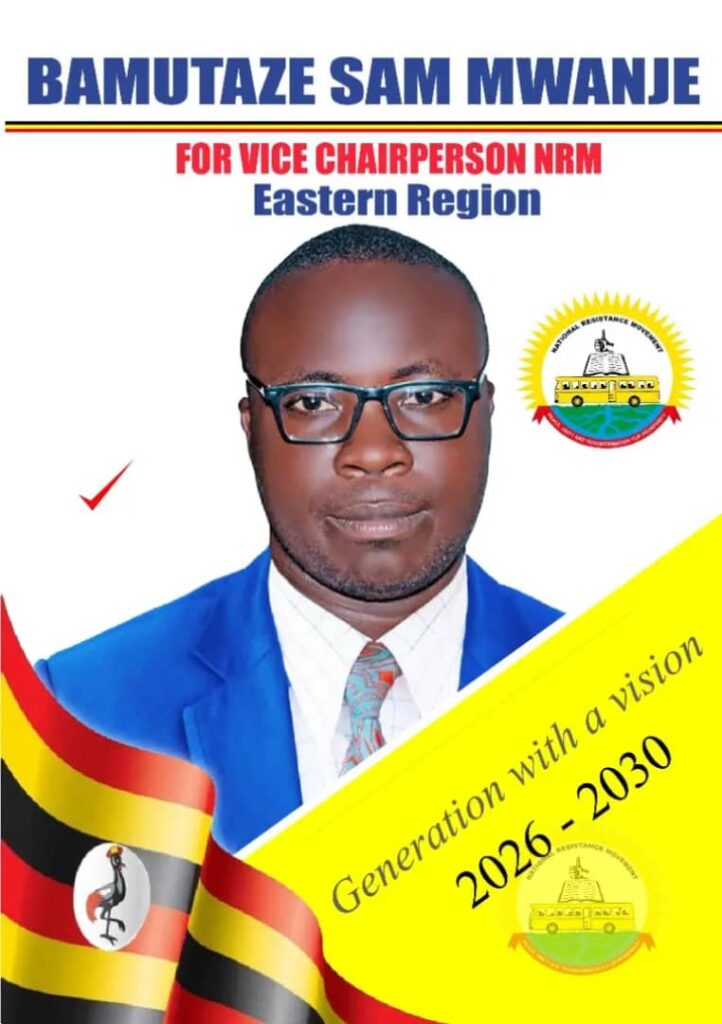
One such youth vying to get a seat at the table of men in the NRM is Sam Bamutaze Mwanje, a journalist based in Mayuge district. Mwanje, boasting of a 12-year journalism experience, has vowed to unseat Capt. Mike Mukula as the NRM vice chairperson (male) in the Eastern Region.

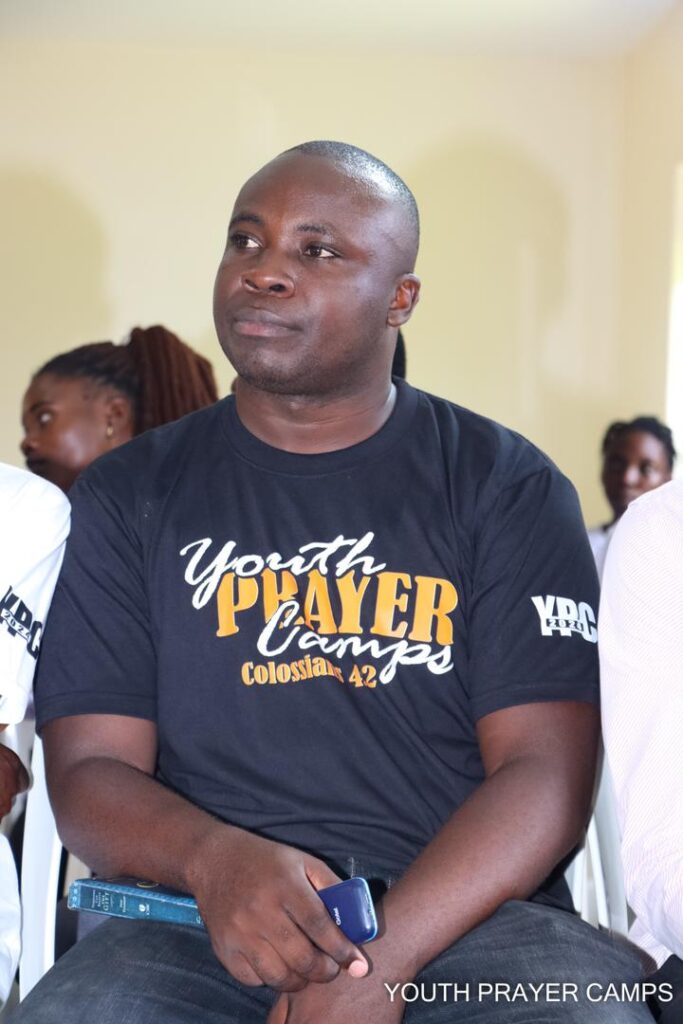
Mwanje, a servant of God at God with Us Healing Ministries International in Mayuge, believes that it is time for the young generation to take over the party that has ruled Uganda since 1986. He is threatening Mukula’s hold onto the position he has held for 15 years.

Mwanje respectfully commended Mukula for the service he has rendered to the party; however, he has asked him to step down. “It is our generation as we are youth. We have to take over and continue leading our party,” he said, adding, “We respect him for his work towards the development of our party but let him step down and give us advice as we take over.”

About Mwanje

Mwanje, who is also a coffee and cocoa farmer, was born in Busuulu Village, Bugeywa Parish, in Butansi subcounty, Kamuli district. He is an established NRM cadre, having received extensive leadership training at the National Leaders Institute (NALI) Kyankwanzi.

He is the president of the Eastern Gospel Journalist Association. He is a talk show host and news anchor. He is also the Minister for Information and ICT in Bunole Bunanumba Chiefdom. He is the Chief Executive Officer of Sow A Smile Foundation Uganda.  

INFRASTRUCTURE LINK: Kadaga commissions Saka Bridge connecting Kaliro to Pallisa  

0

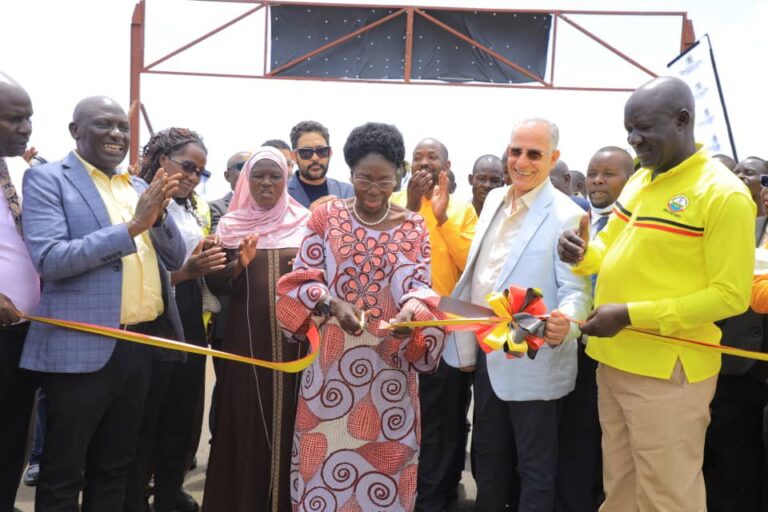
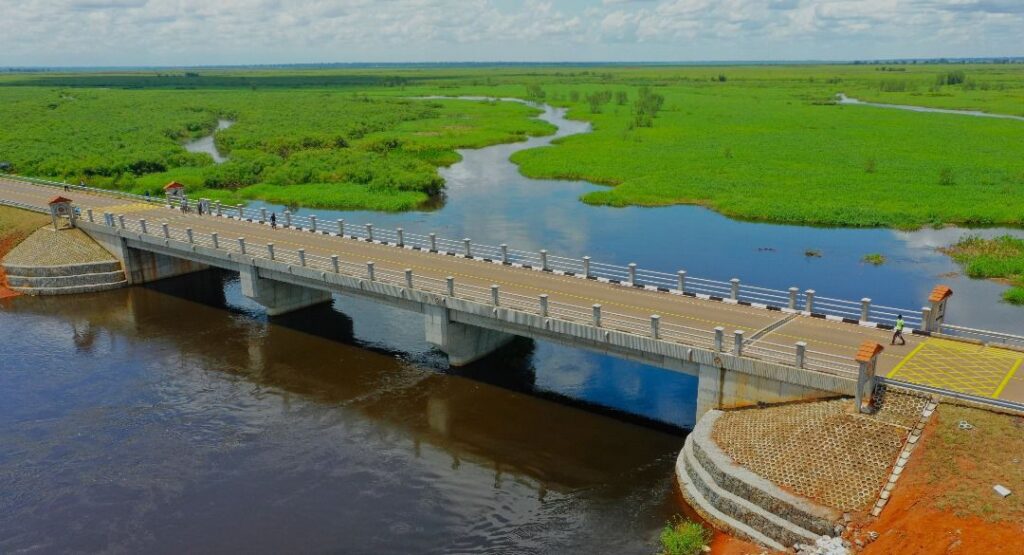
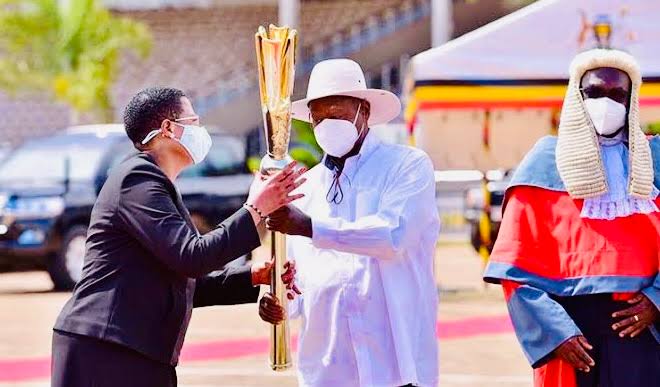
Residents in the districts of Kaliro and Pallisa can now interconnect seamlessly after the commissioning of Saka Bridge by the First Deputy Prime Minister and Minister for East African Community Affairs, Rt. Hon. Rebecca Kadaga, who represented President Yoweri Museveni.

The bridge, a vital infrastructure in the region, will catalyze economic growth by boosting trade, enhance connectivity, and improve safety for local communities. The Saaka has a projected lifespan of 120 years.

Kadaga commended Arab Contractors, the company contracted to build the bridge at Saka swamp, for the quality of work done and completing it eleven months before schedule. I look forward to working with you on other projects around the country, Kadaga stated.

“You people of Pallisa, the roads are meant to enable you work and generate wealth which would translate into development of the Country,” Kadaga told the congregation at the commissioning.

Under the National Roads Development and maintenance programme (NRDMP) selected town roads (7.5km) in Pallisa and (12.2km) in Kumi were upgraded from gravel to bituminous standard.

The project was funded by the Ugandan government at UGX 76.5 billion under the National Roads Development and Maintenance Programme.

The project features a 60m bridge (3 spans), 6 box culverts, 4 pipe culverts, and paved approach roads. The works began in July 2022 and concluded in February 2024 under the supervision of the Ministry of Works and Transport.

The bridge crosses the Saaka Swamp, a 3.5-kilometre wetland located at the border between Kaliro and Pallisa Districts. With approach roads of 0.5 kilometres on either side, the crossing connects Namwiwa Sub-County in Kaliro District to Kasodo Sub-County in Pallisa District.

It is situated approximately 28 kilometres from Kaliro Town and 10 kilometres from Pallisa Town. The swamp is traversed by River Mpologoma, which drains from the Mount Elgon region and feeds into Lake Kyoga.

“Saaka Bridge offers an opportunity to guarantee safety of residents within Kaliro and those of Pallisa,” said State Minister for Works, Musa Ecweru, during the commissioning. “In the past, residents of these areas faced several unfortunate fatalities, especially during the rainy season as the available mode of transport was use of canoes.”

MORE THAN THAT: Workers of Uganda are not only those targeted by Parish Development Model

0


By Oweyegha-Afunaduula

“You will have to work hard all your life to make it produce enough food for you…….You will have to work hard and sweat to make the soil produce anything….” Genesis, 3:17-19)
President Apollo Milton Obote made Poverty, Ignorance and Disease the triplets that his two-time regime (1962-71, 1981-85) had to focus time, energy and money to combat and conquer.

Accordingly, he emphasised education, health and household incomes the primary concerns of government. Foe this matter he believed and was convinced that all development was human development or social development. In his time ecological development and environmental development were not adequately known and factored in the development equation.

President Tibuhaburwa Museveni, however, did not only demystify the gun but also education, health and house hold incomes for all. His philosophy of development was “Infrastructure first and social development last. However, when it came to social development, he made conquering poverty the hallmark of his 40-year regime occupation and domination of Uganda. As the perennial Minister of Finance, the President disoriented the national budget to financially support his numerous, often defective schemes, to combat poverty.

The schemes included Bonna Bagaggawale, Operation Wealth Creation, Myooga and Parish Development Model. Unfortunately, while it was sold that the schemes were to make the poor rich, they ended up being tools for illusionary richness in the case of the poor. The schemes benefitted the already rich, who through corruption accessed those enormous amounts of money invested into the schemes to enrich themselves.

It, was, therefore, deceptive socio-economic development of the poor. As a result, the more time, energy and money were focused on those schemes, the more development time and energy were lost and the more poverty (in is diverse forms and/or dimensions it proliferated. It was as if the schemes were intended to sow seeds of poverty rather than conquer poverty.

Except Operation Wealth Creation, which emphasised giving the beneficiaries materials, plants and animals, the schemes involved giving money bonanzas to a few select individuals, often in a partisan way. It was difficult to make who ever got the money bonanza (s) to work had and produce to conquer poverty. So much public money, which would have been used to combat poverty in a more informed, less politicised way and improve the quality of education and health of our people was instead lost in the schemes. However, the more money was lost, the more The Parliament of Uganda invested in the developmentally fruitless schemes.


There was no day President did not talk about poverty the more time, energy and money were invested conquering the vice. In fact, it would not be far-fetched to state that the absolute majority of Ugandans are far more impoverished than ever before the schemes were initiated at the bottom of society. Many times, during his focus on poverty, the President decried the poverty that reigned in the country. He more or less was telling Ugandans that the schemes were not working although they consumed billions of Shillings.
Let me focus on one of the schemes: the Parish Development Model (PDM). I have written about it before, especially in connection with its capacity to destroy the total environment. Now I want to write about it in connection with its capacity to impoverish rather than improve the income levels of the absolute majority of Ugandan families.


PDM was initiated in 2022 almost in the middle of Myooga, which performed and continues to perform disastrously after consuming billions of shillings. It is a Uganda government strategy aimed at improving incomes and welfare of households by bringing services closer to the people. With the parish as the lowest administrative and operational hub for planning, budgeting, reporting and service delivery.


PDM primarily targets subsistence households and vulnerable grouped, ostensibly to include them in the money economy. However, it initially targeted 30 people but now targets only 100 people parish. The falsehood is that once these people start experiencing development and prosperity, these two will trickle down and proliferate throughout the parish communities and then be felt throughout Uganda.


The introduction of the PDM in Uganda raises the question of whether state-led local development initiatives, when undertaken in partnership with the private sector and civil society are feasible in a resource constrained country (Kayizzi, 2024). Katusiime (2025) submits that by prioritizing key commodities, promoting financial inclusion and providing affordable loans through SACCOs, the PDM has already demonstrated its potential to uplift vulnerable households and communities. However, Kayizzi (2024) identifies four specific challenges of PDM: (i) maintaining policy and institutional coherence; (ii) establishing credible partnerships for local development between the government, the private sector and civil society; (iii) mobilizing human and financial resources, including at the local level, to sustain program implementation; and (iv) fostering self-determination at the local administrative levels and preventing local-level system capture.


Kayizzi (2024) and Katusiime (2025) agree that the success of PDM programme hinges on addressing the critical challenges, including human and financial constraints and the inefficiencies in resource allocation. Katusiime (2025) stresses that tailoring solutions to meet the unique needs of different regions of the country and improving oversight mechanisms will be essential for achieving the PDM’s full potential. So far so bad. The majority of Ugandans, however, are outside the precincts of PDM and have yet to feel its usefulness in transforming their livelihoods. The absolute majority not targeted by PDM are likely to continue swimming in ever deepening poverty which paying taxes to support the programme. In fact, the poverty situation today is worse among them than ever before. Yet as of January 2025, the Uganda government has allocated a total of Shs 2.3 trillion for the Parish Development Model (PDM), with a plan to increase funding to Shs 200 million per parish.


Effectively the Government of Uganda is segregating the labour force at household level, seeking to enhance the incomes of 100 people in every household in a parish at the expense of the rest of households. All Ugandans of different households, except those ever waiting to steal taxpayers’ money without working, are labouring, as instructed by God in the Bible Book of Genesis 3:17-19, to make ends meet with little or no helping hand from the government, now focussing on PDM, Myooga, and Operation Wealth Creation at a very high cost to the tax payers.


It is against this background that we are celebrating the Labour Day, May 1 2025 in Uganda. Nationally, the Labour Day will be celebrated at Nakapiripit. I have learn’t that the theme will be the Parish Development Model. If what I have claimed, that PDM is segregating the labouring Ugandans, is correct, and Labour Day is for all labouring Ugandans and beyond, then Parish Development Model is a misnomer for the Labour Day 1 May 2025.


It should be remembered that in my article (Oweyegha-Afunaduula, 2025) titled “How the Parish Development Model is Destroying Uganda’s Environment”, I stated that PDM operates mainly in the socio-economic dimension of the environment and predates on the ecological-biological dimension of the environment, which is the theatre in which all projects are imposed, often at the exclusion of environmental guidance since the focus is just on increasing the incomes of the PDM beneficiaries. It also ignores the sociocultural and temporal dimensions of the environment.

Therefore, it is destroying the total environment in all its dimensions and reducing its productivity for majority of labouring Ugandans. It is being environmentally unconscious and environmentally ignorant if we put PDM at the centre of celebrating Labour Day 1 May 2025. We can say that the environmental costs of PDM are very high for the labouring Ugandans, especially in the rural areas. This means that the dire consequences on the productivity of the environment should also be very serious. These include climate change. But who cares where the focus is to invest money to make more money, even if it is public money lost in a non-performing programme! In the case of corruption, whereby the country is said to lose as much as 10 trillion shillings annually, it does not matter because the money lost is government money (read public money)!
No! Workers of Uganda are not only those targeted by Parish Development Model (PDM)! The absolute majority of the workers of Uganda are outside PDM! PDM segregated Uganda’s workers!


For God and My Country


Further Reading


Guloba, M. 2022. “Uganda’s new ‘parish’ model tries development from the grassroots,” The Conversation, March 8.
Muhamadi Matovu (2022). Parish Development Model to target only 39% of Ugandans. Nile Post,
Musinguzi Patrick, Donald Kayuza and Peter Byabenda (2023). Merits and Challenges of Parish Development Model (PDM): Strategies for Improvement. Researchgate, August 2023, https://www.researchgate.net/publication/372951292_MERITS_AND_CHALLENGES_OF_THE_PARISH_DEVELOPMENT_MODEL_PDM_STRATEGIES_FOR_IMPROVEMENT Visited on 10 August April 2025 at 10:25 am EAT.
Oweyegha-Afunaduula (2025). How the Parish Development Model is Destroying Uganda’s Environment. MUWADO, March 6 2025. https://muwado.com/how-the-parish-development-model-is-destroyng-ugandas-environment/?v=2a0617accf8b Visited on 11:20 am EAT.
Steve Kayizzi-Mugerwa (2024). Uganda’s Parish Development Model in Practice: Rationale, Impact and Relevance for Bottom-Up Economic Development in Africa. Southern African Journal of Policy and Development, Volume 7 (2) May 2024. https://scholarship.law.cornell.edu/cgi/viewcontent.cgi?article=1101&context=sajpd Visited on 10 April 2025 at 10:11 am EAT.
Zacc Katusiime (2025). Uganda’s Parish Development Model: Uganda’s Solution to Poverty. The Borgen Project, Blog https://borgenproject.org/the-parish-development-model/ Visited on 10 April 2025 at 10:31 am EAT.

The centrality of money in Uganda’s politics: Poor quality leadership explained

0

By Oweyegha-Afunaduula

Former Vice-President of Uganda, Dr Specioza Kazibwe, said two things that still ring in my head. One was that Ugandans who do not embrace globalisation will be left behind. The other was that the poor will never rule Uganda.

Globalisation does not require the citizens to embrace it. It is beyond their understanding, although the fact is that the Uganda government was the first government in Africa to embrace globalisation. Uganda as a country has been harmed by globalisation far more than she has gained from it.

With respect to the statement that the poor will never rule Uganda, the former Vice-President seems to have correctly predicted what is happening today.

Those who seek to lead put money first and use money – often inappropriately resourced public money or unethical, immoral money – to buy their way to leadership.

Besides poor people, who may be the ones the country needs, are eliminated from accessing leadership positions at the level of nomination. A person seeking to be a Member of Parliament must pay 3 million Shillings on nomination day. A person seeking to be President of Uganda must pay 20 million Shillings  on nomination day.

Therefore, in Uganda we do not only have school dropouts or university dropouts. We also have political dropouts.

However, President Tibuhaburwa Museveni, who long ago in Busia said people should come to him because he has all the money, does not feel any financial stress at nomination, during elections, and after elections because all the time he is giving money to individuals and groups of individuals, such as ghetto children, to consolidate his power.

Of course, the money that he gives out is not personal money because he has repeatedly said he gets only 3.8 million Shillings every month as salary. If you want to ask how he gets his money, maybe refer to his cows in Rwakitura and Kisozi or the Parliament of Uganda, which ensures that he is a major factor in the national budget and in every supplementary budget, either as state house or classified expenditure.

During political campaigns, it is no longer a time for people to hear what ideas political candidates have. But it is time to expect to be given money. In the rural areas, politicians do not come to attend burials and “cry” with the bereaved but to show that he or she has money to give out. So, the mourners – the potential voters – do not compare the politicians on the basis of the ideas they have but on how much money they give out.

It is easy to link the declining quality in the people that end up as leaders in Uganda to the money they have and how much they give out. It no longer matters how long one interfaced with a blackboard. Apparently, even the President of Uganda does not emphasize it in the councils and in the Parliament.

We have people in Parliament who are not well exposed in terms of education and ideas and who are not friendly with readings. However, they are well endowed with money. They do not really meaningfully participate in parliamentary proceedings but only wait for the next round of political campaigns either to dance before their constituents or dish out money to them or both.

Therefore, what former Vice-President Specioza Wandira Kazibwe predicted has come to pass in the 21st century. Politics has become both an industry and the most lucrative employer, but the employees are more poor quality and financially empowered. When they are elected, the first thing they emphasize is filling their pockets with money.

They do not add value to the quality of legislation – something they leave to only a handful of Members of Parliament. The Cabinet is full of them too. Of the 83 Cabinet Members, only a handful of them are heard of. The rest are just consuming public money.

As I have always said, behind every problem is the problem of leadership. Although President Tibuhaburwa Museveni once said, “The problem of Africa is leaders who overstay in power,” in Uganda the problem of the country is leaders “who are leaders” because of money, not brains with ideas.

For God and My Country.

FROM 1986 TO 2006: How Uganda became a lucrative market for domestic and external slaves

0

By Oweyegha-Afunaduula

There is an emerging school of thought that holds that, despite repetitive talk of development, transformation, and progress” of Uganda during the 40-year rule of the country by President Tibuhaburwa Museveni and his National Resistance Movement (NRM), Uganda has become both a renewed labour reserve and a lucrative market for domestic and external slaves.

The school of thought is convinced that the conversion of Uganda into a renewed labour reserve and lucrative market for domestic and external slaves has been the political goal of President Tibuhaburwa Museveni and his NRM.

According to the school of thought, the President has been able to conceal the political goal of building Uganda as a labour reserve and a market for slaves in modern times, by preoccupying the people with politics, not production. “It is politics before elections and after elections in a cyclic manner”, says one proponent of the school.

If we are to agree with the school of though, then we have to apply the word “Kugumaaza”, introduced in politics of Uganda by President Tibuhaburwa Museveni some years back to mean “diversionary” to ideas such as Operation Wealth Creation, Parish Development Model and Myooga, which are cast as tools for eliminating poverty.

It is obvious that just as ideas have been pursued and implemented at very high cost to the tax payers, poverty has been proliferating even far more widely than ever before since the President and his NRM grabbed power in the country.

Simultaneously, Uganda has become more of a new labour reserve and a source of domestic and external slaves. This is a confirmation that rather developing and transforming Uganda in terms of people’s development, the governors have been de-developing and underdeveloping the country.De-development and underdevelopment are at the core of what is these days known as MUSEVENOMICS. Those promoting and practising MUSEVENOMICS know exactly what it is all about, but are exploiting the collective ignorance of Ugandans, which they are not even committed to reduce.

Let me expound on the two negative processes undermining the development, transformation and progress of Uganda in the 21st Century.

De-development

De-development” refers to a process that undermines or weakens an economy’s ability to grow and expand, potentially leading to a reduction in the stock of capital available to a group, and increases in poverty. It can damage data gathering and knowledge production abilities, let alone wreck the environment. Warring is an element in de-development.

According to Sara Roy (2016)de-development is a process shaped by a vision of denial and renunciation. The deliberate uprooting and displacement of the indigenous population, the ‘de-skilling’ and underuse of the…..labor force, the segmentation and fragmentation of the economic sector in the periphery, the usurpation of land and water, the proletarianization of the workforce and the increasing insignificance of the ‘proletariat,’ the alienation of the…. labor force, or the intentional denial of access to the means of production as a form of collective punishment. These phenomena are not simply the distortion of economic development, but the deliberate denigration of productive life to a lower level.It is precisely what you need to create slaves -domestic and external. If they are domestic, they may even be lecturers, professors or bureaucrat, whose pay is not commensurate with the qualifications, expertise and experience, while that of the mediocre is astronomical.

Ugandahas experienced 40 years of de-development and suppressed human potential and the right to development. Schemes such as Operation Wealth Creation, Parish Development Model and Myooga, which ultimately are tools of de-development are being cast as tools of development at the periphery, Fortunate for the rulers, most citizens are unable to perceive what is going on.

Underdevelopment

Underdevelopment, in the context of international development, refers to a state where certain countries or regions exhibit lower levels of development compared to others, often characterized by economic disparities, unequal trade relations, and hindered progress. If we go by this definition or description, Uganda is indeed an underdeveloped country. It is characterised by diminishing political participation, including people withdrawing from voting people they want to lead them. According to Adelman and Morris (1967), “the most important instruments for increasing political participation in underdeveloped countries are those that involve fundamental changes in socio-economic and political structure as well as a basic reorientation of development strategies.

Unfortunately, in Uganda, the economy is in the hands of foreigners and functionaries of the ruling party, whom the leadership seems to be protecting against the people. This explains the exclusion of the absolute majority of Ugandans from meaningful and effective political participation and the use of violence to contain them.

Underdevelopment goes hand in hand with dependence (Furtado, 2020). The more a country is underdeveloped the more it will be dependent in a diversity of human life and human endeavours. It cannot claim to be developing. Uganda for the last 40 years has been in this condition. Assembling cars and buses is an attempt to conceal this fact.

The sowing of seeds of de-development and underdevelopment started long before the NRM/A captured the instruments of power on 25th April 1986. It was a multi-process strategy. I will list them without further analysis.

The Luwero bush war (1981-1986), which is erroneously called liberation war, was only one of the elements in the multi-process strategies. The other elements, among others, were the following.

  1. Destruction of Cooperative Societies and Unions
  2. Destruction of industries in Jinja
  3. Barter trade Scandal, 1986-1987
  4. Foreign Exchange scandal, 1987-1988
  5. Economic Structural Adjustment
  6. Retrenchment
  7. Sale of Public enterprises at peanut prices
  8. Universal Primary Education
  9. Universal Secondary Education
  10. Discriminatory policies
  11. Discriminatory education system
  12. Impoverishmentproject
  13. Destruction of community responsibility for children
  14. Proliferation of production of Vagabonds
  15. Conversion of Politics into a lucrative employer and employment
  16. Engineering and institutionalisation of corruption
  17. Scandals involving trillions of shillings, diverting money from social development to individual enrichment.
  18. Use of violence as an electoral tool and tool of public management.
  19. Raising nincompoops over and above educated, expert and skilled Citizens
  20. Raising war above social development
  21. Resistance of Minimum Wage.
  22. Allowing too many refugees in the country and not limiting their access to jobs, citizenship, nationality and sovereignty of Uganda
  23. Using ethnicity as a political tool through political ethnisation and ethnic politicisation
  24. Military capture of civic spaces
  25. Executive capture of Parliament and the Judiciary, thereby denying Ugandans effective representation of their challenges, problems and issues and meaningful justice respectively
  26. Liberalisation and Privatisation benefiting foreigners.
  27. Putting a halt to meaningful and effective change of leadership and governance
  28. Apartheid-like education system
  29. Closing of Technical schools and teacher training colleges.
  30. Land grabbing by foreigners and people with unethical and immoral money.
  31. Removal of price controls

The combined effect of all these and other elements of the multi-process strategy of sowing de-development and underdevelopment is many in one: despondency, loss of interest in the country and work, drug addiction, suicides, killings, robberies, further impoverishment, and readiness (or compulsion) to offer oneself as a domestic slave or external slave. Meanwhile politicians use money, often ill-gotten to manipulate the poor and needy to enhance their political resources and fortunes.

For God and My Country

Further Reading

Adelman, I. and Morris, C.T. (1967) Society, Politics and Economic Development: A Quantitative Approach. John Hopkin, Baltimore.

Berberoglu, B. (1978). The Meaning of Underdevelopment: a Critique of Mainstream Theories of Development and Underdevelopment. International Studies17(1), 51-73. https://doi.org/10.1177/002088177801700103 (Original work published 1978)

Duffy, David (2002). Underdevelopment and Less Developed Countries.https://www.tcd.ie/Economics/assets/pdf/SER/2002/Underdevelopment%20and%20Less%20Developed%20Countries%20By%20David%20Duffy.pdf Visited on 8 April 2025 at 14:58 pm EAT

Furtado, C. (2020). Underdevelopment and Dependence: The Fundamental Connections. Review of Political Economy33(1), 7–15. https://doi.org/10.1080/09538259.2020.1827549https://www.tandfonline.com/doi/full/10.1080/09538259.2020.1827549 Visited on 8 April 2025 at 15:00 pm EAT.

Jo Kaybryn (2021). De-development: can it be managed. Linkedin, February 7 2021.https://www.linkedin.com/pulse/de-development-can-managed-jo-kaybryn/ Visited on 8 April 2025 at 12:45 pm EAT.

Roy, S. (1999). De-development Revisited: Palestinian Economy and Society Since Oslo. Journal of Palestine Studies28(3), 64–82. https://doi.org/10.2307/2538308.

Robin MILLARD (2023). Gaza Has Gone Through 16 Years Of ‘De-development’: UN. BARRON’S, October, 25 2023.https://www.barrons.com/news/gaza-has-experienced-16-years-of-de-development-un-5e93cca8 Visited on 8 April 2025 at 13:08 pm EAT

Roy, S. (2016). The Gaza Strip: The Political Economy of De-development (Expanded Third Edition), Institute for Palestine Studies. 2016.https://www.palestine-studies.org/en/node/1649448 Visited on 8 April, 2025 at 12:59 pm EAT.


GRAND PLAN: Uganda towards political equity and political justice in the 21st century

0

By Oweyegha-Afunaduu

The plan to reduce the number of constituencies and Ministers should not be as the plan that raised the number of Ministers from less than 12 in 1962 to the present 82 and the number of Members of Parliament from about 80 in 1962 to the current 529.

I have learned that the plan is to reduce the number of MPs to 260 and the number of Ministers to 21 after so much financial haemorrhage of the country politically.

Well-known journalist, Andrew Mwenda, once wrote that whatever President Tibuhaburwa Museveni thinks, conceives or does has political intent.

And since everything in Uganda is presidentially initiated or determined, we need to ask: Why reduce Ministers and MPs now? Is it new wisdom borne out of 40 uninterrupted one-man, rule of Uganda by the President or is the new phenomenon of Trump that will no longer waste money on what he called shithole countries or is it 2026?

If reducing the number of MPs is to be done it should be done equitably and justly without the political consideration of power retention.

Currently there are far more districts, counties, constituencies and Ministers from the Western Region than from any other region of Uganda.

It should not be to reduce number of constituencies excessively in the areas considered to be strongholds of the Opposition. That would be rigging elections, leadership and governance of Uganda in favour of NRM and our incumbent President.

The formula of reducing Ministers and MPs must be convincing and well-documented so that future generations will know how we did things whenever we acquired new superior wisdoms. Possibly The Parliament of Uganda will come out with the formula after legislating it into existence.

The key words should be Political Equity and Political Justice.

For God and My Countr

BUYENDE DISTRICT: NGOs raise red flag on early marriages, teenage pregnancies

0

The Uganda Police Force Annual Crime 2024 report indicated that Buyende district is number one when it comes to cases of defilement and number two in common assault. It also ranks highly when it comes to child neglect.

The Police Crime records indicate that Buyende topped defilement crime with 210 girls defiled, came second in common assault with 680 and 133 children suffered from neglect.

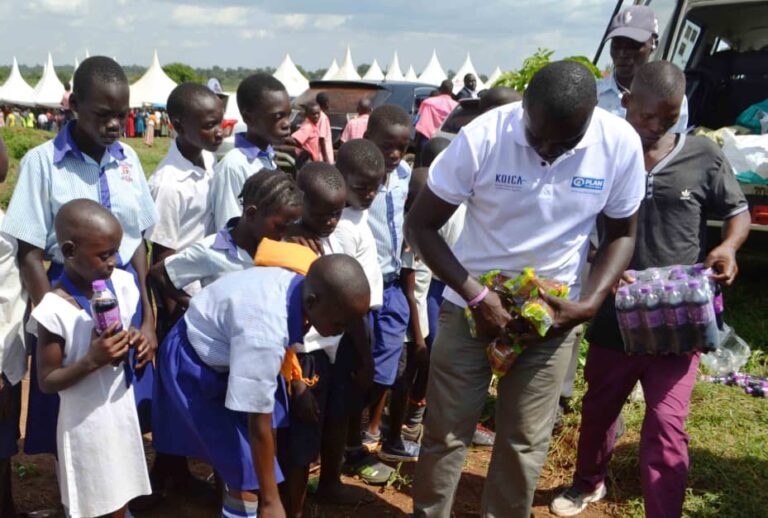
To mitigate these challenges, Plan International and its partners, Korea International Cooperation Agency (KOICA), SHARE with her consortium, FAWE, Right to Play, Water Aid and FHI, Caritas Jinja, Mama Africa, Community of practice and Girls Advocacy Clubs in Buyende have raised a red flag and called for action on ending teenage pregnancies and child marriages vices.

Presenting the call to action during the Buyende District Women’s Day celebrations held at Kirimbi Primary School, Saida Naigaga, the Plan International KOICA Adolescent Champion urged leaders and all stakeholders to stand with the girl child against these vices which are not only a violation of their rights but also morally wrong.

“It is time to take bold and collective action to protect the rights and potentials of girls. Teenage pregnancy and early marriage rob young girls off their potential, future and dignity. Our call to action is that together as one, let us stand up against these vices, be the change, protect and empower the girls,” she called.

Decrying the effect of teenage pregnancy and early marriage, the callers to action pointed out that teenage regnacy limits educational opportunities, exposes young girls to health risks while early marriages lead to early school drop outs, economic dependence, stunted empowerment lading to a generational cycle of poverty.

Miria Kagoda Kafuko, the FAWE Uganda Girls Empowerment Movement chairperson from Premiere College Gwase, challenged government to come out clear on provision of sanitary pads to girls to help them stay in school comfortably.

She also voiced to include wash and changing rooms in the institutions building plans in addition to supporting girls education and access to reproductive health services so that the girls make informed choices, decisions.

“It is very ironical that government provides free condoms to men and finds it not important and relevant to provide girls too with free sanitary pads when even the Minister of education, the Speaker of Parliament, the Prime ministers are women who should know the big need for pads to women and girls,” Kafuko said.

East Africa Legislative Assembly MP, Veronica Babirye Kadogo, pointed out that addressing these vices in the district requires a multifaceted approach that tackles the root causes, provides support to affected individuals and engages the community in creating lasting change.

Kadogo challenged political, cultural and religious leaders to lead, condone and aggressively fight these vices in their fora, programs, manifestos and sermons.

Kadogo, a former Woman MP Buyende district, and an International Girls Advocacy crusader, pledged to take the girls plight and NGOs call to action to various stakeholders and levels and have communities working to end harmful social norms that inhibit girls’ development and attainment of their full potentials.

“The call to action to end teenage pregnancies and early marriages should in reality shock all of us to rise up, swing into action so as to create an environment where every girl stays and completes school, pursues her dreams and lives a life free from the scare of early marriages, defilement etc,” Kadogo called.

Kadogo added that there is need for policy, budgetary and social streamlining to provide quality adolescent friendly, gender responsive and inclusive sexual reproductive health services, parenting up scaling and revival to value and appreciate the girl child challenges.

In response Buyende district council chairperson, Michael Kanaku, rallied the media as a fourth estate and watchdog advocate to set the agenda, create awareness and demand accountability.

He called for strengthening of the referral pathways, quick response to crime reports and hunt down of parents who thrive in early marriage and defilement business only reporting to Police when negotiations fail.

JUSTICE: Two remanded for damaging Milly Babalanda’s ambulance

0

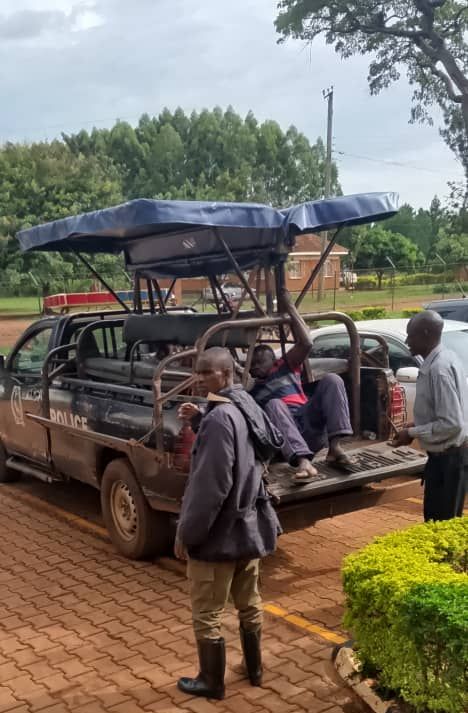
The grade one magistrate court in Buyende district has remanded two men for allegedly damaging an ambulance which was donated to Kidera Health Centre in Buyende by the Minister for Presidency Milly Babalanda.

The young men, Sande Denis Salongo and Mpaulo Awali, have been remanded to Buyende government prison by His Worship Kauka Paul on Monday 7th April, 2025 for malicious damage.

The two were arrested on Thursday 3rd April 2025. They have been under police custody at Buyende Central Police since.

Court remanded the two after they failed to secure bail. They return to court tomorrow, 8th April 2025 for bail application.

Residents in Buyende believe the arrests are politically motivated. Many are pointing a finger at Milly Babalanda for influencing the arrest.

Noor Namatovu, a resident in Buyende said the actions of the minister are a total turn off.

Former Member of Parliament for Budiope West, Robert Musoke, castigated ‘political leaders who think they can force voters to love them.’

“How can we trust such people with a big office if this is how they are treating people in the area,” Musoke wondered.

The minister, born in Kamuli district, has expressed interest to contest for the post of MP for Budiope West in Buyende district. The post is currently being occupied by Kyoto Ibrahim.

She has, however, encountered riotous resistance from some members of the constituency especially the youths.

When her team delivered the ambulance, it is alleged that Sande and Awali led a group of youths to trap the motor with nails that deflated it’s tyres. Police moved in swiftly and arrested the two.

ENVIRONMENT GUARDIANS: One Student, One Tree campaign launched in Buyende district

0

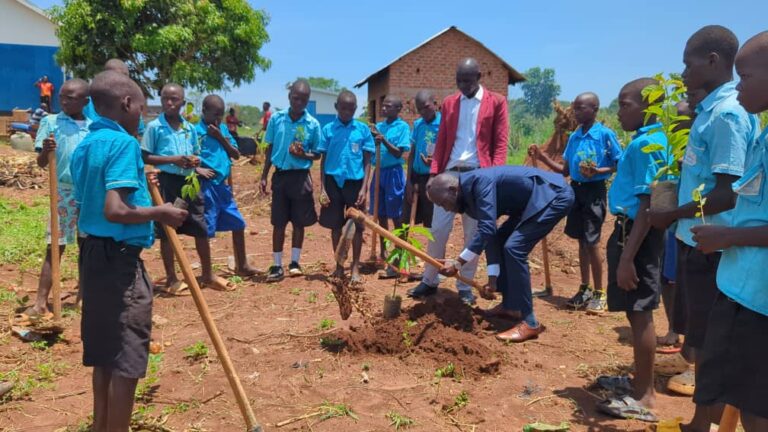
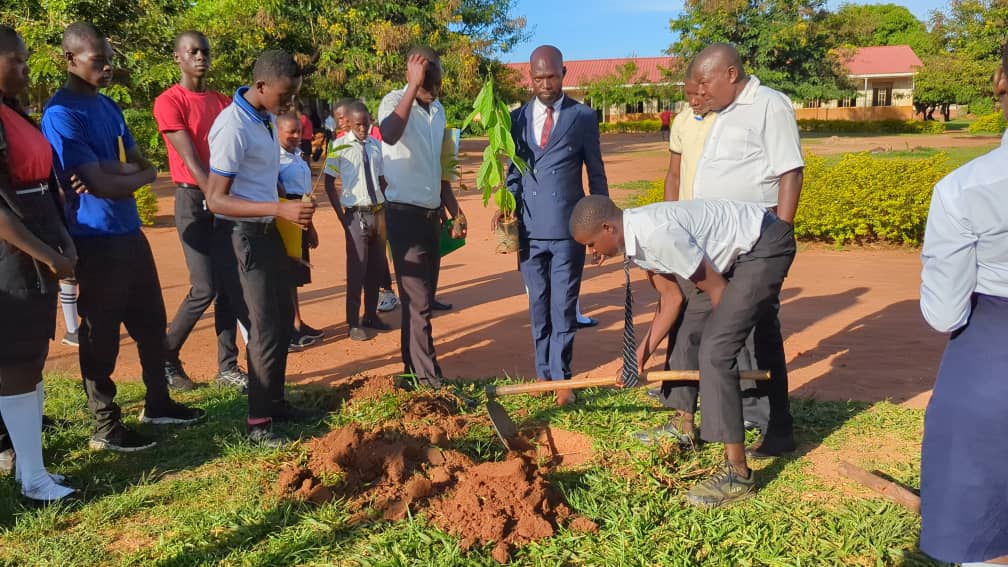
A campaign targeting students in schools across Buyende district has been launched as a deliberate effort to conserve the environment and mitigate climate change, which is a global challenge.

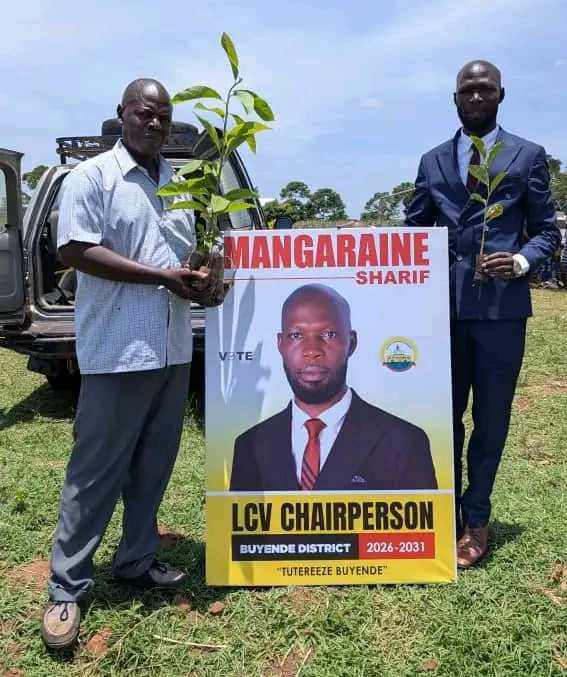
The campaign spearheaded by Mangaraine Sharif, one of the aspirants for the Buyende District LC5 chairperson seat, was launched at Kidera Secondary School on Friday.

“Our generation has witnessed an era of our fathers cutting down trees for charcoal as an economic activity for them to earn a living,” Mangaraine told Busoga Times.

“This practice has been done for decades without thinking about the increasing dangers and threats to the environment, like drought,” he added.

“The threat to the environment explains our urgency to initiate to emphasise the need for environmental protection that has never been greater,” he explained.

He revealed that they are launching the project “in schools because we must intentionally teach and model the practice to children, fostering an understanding and appreciation for it through various methods.”

Mangaraine explained that the tree planting exercise will be a big part of his 2026-2031 manifesto under the theme Tutereze Buyende.

“It’s the reason why we are working with the young people to change the world for a positive change under our new project, one student, one tree. Our mission is to inform, educate, enable and create a platform for urgent environmental action,” he elaborated.

Once a well-endowed district with natural forests, swamps, and streams, Buyende has lost its vegetation due to human activities, especially charcoal burning.

Charcoal burning is a leading economic activity in the district. Trees, including fruit trees, have been cut down to make charcoal and firewood, leading to the depletion of forests.

“Now, accessing firewood is a problem which is being faced in the communities. Remember these people cannot afford biogas or electricity to prepare a simple meal,” Mangaraine said.

BIG QUESTION: Is Uganda’s National Resistance Movement a mafia organisation?

0

By Oweyegha-Afunaduula

When some members of the National Resistance Movement (NRM) registered it as National Resistance Movement Organisation (NRMO) prior to the 2006 Presidential and Parliamentary elections, which cast it as a legal political party among the legal political parties, the owners of the Movement ignored NRMO and preferred to proceed as NRM from then on.

Even the Uganda Electoral Commission more or less moved along, because in every election it has organised since then, it has registered NRM, not NRMO, candidates for the elections, knowing fully well that the legal party is NRMO, not NRM.

NRM was an illegal rebel group as NRM/A that waged a five-year bush war in Uganda against the regimes of Apollo Milton Obote and Tito Okello. When it captured power on 25th January, 1986, it remained a bush war organisation with that name until 2006 when it registered as a political party -NRMO, to participate in parliamentary, presidential and council elections. However, its rejection of NRMO and sticking to its old name, NRM, cast it as a rebel group in government.

No one took the owners NRM to court for remaining a rebel group and participating in elections in Uganda and determine the future of Uganda while still a bush war organisation. Indeed, in every aspect of human life and endeavour NRM has continued to operate and resist anything that makes sense to Ugandans in favour of its own interests.  This way it is resisting Ugandans instead and imposing itself on them.

When I was researching for my article “Uganda: How the Mafia have rendered the National Resistance Movement Dysfunctional and Irrelevant” I asked a cross section of Ugandans in the country and in the diaspora: Is the National Resistance Movement a Mafia Organisation?”

In asking this question, I was guided by the following:

  1. National Resistance Movement seems to be owned by a few political families.
  2. Many people who have been engaged in dangerous deals that have ended up causing financial haemorrhage of the country are highly placed in the NRM
  3. The claims of two high-ranking members of the NRM government -Former Vice-President Prof. Gilbert Balibaseka Bukenya and current Prime Minister of Uganda, Robinah Nabbanja, that there are Mafias in the NRM government.
  4. There are Mafias in Africa, which have penetrated the economies of especially corrupt countries andmafia-style groups and networks exist in Africa, engaging in various criminal activities. 
  5. The choice by the leaders of NRM to reject the official party name of NRMO and retain the bush war name NRM.
  6. The continuing financial haemorrhage of Uganda by the NRM using its caucus in Parliament to divert trillions of shillings to consumptive ventures such as NRM/A Liberation Celebrations, et cetera.
  7. Impoverishing projects such as the Coffee Project and Lubowa Hospital Project.
  8. Inflating the national debt (domestic and foreign) to over 90 trillion over a period of nearly 40 years without evidence of commensurate development of the country.
  9. A Uganda Constitution 1995 that has allowed the capture of every civic space by the army and also the socio-economic process of the country in favour of foreigners.
  10. Tax holidays to foreign firms and sinking public money in them without
  11. Hereditary politics of political families that are also highly placed in the NRM and are involved in shadowy deals and businesses.
  12. A Uganda economy that does not deliver social goods and services to the indigenes of Uganda as much as it allows their exploitation by big political families and foreigners.
  13. Critical decisions on governance are decided by the NRM/NRA Parliamentary caucus, or the Central Executive Committee (CEC) outside the National Parliament,

So, when I asked to know whether the National Resistance Movement (NRM) was a Mafia organisation these are some of the answers I got:

  1. No. NRM is not a Mafia organisation.
  2. Yes, NRM is a Criminal Organisation.
  3. NRM is a mass Non-party organisation.
  4. NRM is a Cartel.
  5. NRM is a rebel organisation in power resisting Ugandans and their public interests.
  6. NRM is a militarist organisation serving the interests of settlers and/or refugees in Uganda.
  7. Most people involved in illegal activities such as money-laundering, human trafficking and human organ trade are NRM.
  8. Owners of loan-sharking and human trafficking firms are NRM.
  9. There have been many gangs in NRM claiming to be members of NRM and supported by power.
  10. The destruction of moral values by the NRM regime has allowed criminals to run the state.
  11. The judiciary, which is fully captured by the NRM/NRA cadre judges to the point where the judges can no longer be expected to dispense justice without fear or favor, ill-will or affection.
  12. The Ugandan State has become President Tibuhaburwa Museveni’s personal property. Facts, law and history are tweaked to sustain his ego and perpetuate falsehood. Uganda is a criminal state under the control of the NRM/NRA mafia.
  13. Uganda is an origin, transit and destination country for human trafficking, primarily for forced labour and sexual exploitation. Most adult victims are subjected to domestic servitude or forced labour in various sectors.
  14. Outside of Kampala, gangs known as ‘iron bar gangs’, periodically extort businesses, residents and visitors. Although cases are widespread, most of them are not linked to organized crime.
  15. Uganda has become a hub for arms trafficking across East, Central and West Africa, with one of the highest rates of gun violence in the region. 
  16. Uganda is a hub for counterfeit goods, and this is a huge burden on the country’s economic growth. Uganda’s borders with Kenya make it a hotspot for counterfeit goods trading
  17. Uganda is also a notable transit hub for wildlife trafficking, particularly for ivory, rhino horn and pangolin. Entebbe airport is a known hub for wildlife smuggling, due to high levels of corruption
  18. Uganda’s natural resource industry, particularly gold, has seen a significant rise in illegal activity in recent years. 
  19. The domestic cocaine market in Uganda is expanding, with powder and crack cocaine consumption on the rise.
  20. Uganda is recognized as a considerable cannabis exporter in the region, with cultivation occurring in several districts throughout the country.
  21. Key Ugandan government agencies lose billions of US dollars to corruption and financial crimes annually, as well as hundreds of millions lost in fraudulent procurement deals.
  22. High-level Ugandan officials have been implicated in organized crime, and the country’s presidential elections are allegedly influenced by vote-buying and security services suppressing opposition activities
  23. Criminal networks in Uganda operate across all criminal markets, thanks to rampant corruption and an abundance of resources
  24. The private sector is closely intertwined with politics, and corruption is central for its advancement.  When the IGG wanted to apply Life style Audit to catch the thieves  the President advised her not to, arguing she would discourage the corrupt from investing their loot, which he said was mainly government, money, in Uganda.
  25. The state, security and ruling party institutions have become so intertwined that the separation of powers is de-facto suspended. 
  26. Corruption is politically engineered and institutionalised in Uganda from top to bottom.

For God and My County

Further Reading

ANCIR (?). Mafia In Africa: How the Mafia Penetrates the African Economy. https://mafiainafrica.investigativecenters.org/ Visited on 4 April 2025 at 12:03 pm EAT.

BRIAN ADAMS KESIIME and Benson Tumusiime (2023).Notorious Kampala robbery suspect Sobi killed in Gomba land fight. The Monitor, November 18 2023https://www.monitor.co.ug/uganda/news/national/notorious-kampala-robbery-suspect-sobi-killed-in-gomba-land-fight-4468528 Visited on 05 April 2025 at 19:02 pm EAT

Grabianowsk, Ed and John Donovan (?). How the Mafia Works. HowStuffWorks, https://people.howstuffworks.com/mafia.htm Visited on 4 April 2025 at 11:44 am EAT.

Kungu Al-mahadi Adam (2025). BLOG: Gangs in Uganda: A Ticking Time Bomb. ChimpReports, January 4 2025, https://chimpreports.com/blog-gangs-in-uganda-a-ticking-time-bomb/ Visited on 04 April 2025 at 13:18 pm EAT.

Matogo, Phillip (2021). Let “the Mafia” Run Uganda. Daily Monitor, June 06 2025.https://www.monitor.co.ug/uganda/oped/commentary/let-the-mafia-run-uganda-3427628 Visited on 04 April 2025 at 12:37 pm EAT.

Obote Odora (2021).Uganda’s mafia family: How Gen. Museveni’s NRM transformed a weak state into a criminal enterprise. Sportlight East Africa,Mar 26, 2021.https://www.spotlighteastafrica.com/post/uganda-s-mafia-family-how-gen-museveni-s-nrm-transformed-a-weak-state-into-a-criminal-enterprise Visited on 05 April 2025 at 19: 08 pm EAT.

Onyango- Obbo, Charles (2023). This Mafia has ruled Uganda for 50 Years. Daily Monitor, January 5 2023, https://www.monitor.co.ug/uganda/oped/columnists/charles-onyango-obbo/this-mafia-has-ruled-uganda-for-50-years-4098396 Visited on 04 April 2025 at 13:08 pm EAT.

Oweyegha-Afunaduula (2022). The political engineering of corruption in Uganda. Watchdog, 2 March 2022.https://www.watchdoguganda.com/op-ed/20220302/131201/oweyegha-afunaduula-the-political-engineering-of-corruption-in-uganda.html Visited on 05 April 2025 at 19:59 pm EAT.

Oweyegha-Afunaduula and Charles Kawagga (2023). The Engineering and Institutionalisation of Corruption by the OPM.  Uganda Radio Network, 31sy July 2023, https://ugandaradionetwork.com/s/the-engineering-and-institutionalisation-of-corruption-by-the-opm/ Visited on 05 April 2025 at 20:03 pm EAT.

UGANDA RADIO NETWORK (2023).  Are there Mafias in Uganda? Uganda Radio Network, August 21 2023https://ugandaradionetwork.com/s/are-there-mafias-in-uganda/ Visited on 4th April 2025 at 12:19 pm EAT.