
Sunday, March 15, 2026
Home Blog Page 7

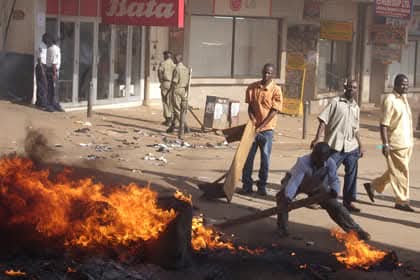
EXPLAINED: The difference between riot and protest – the case of Uganda

0

By Oweyegha-Afunaduula

I don’t usually argue with my children whose ages range from 35 to 54. We exchange ideas. I occasionally I continue reaching them and they continue learning in an andragogical way, in which we are all learners and teachers. However, the other day an exchange between one of my sons and myself turned into a healthy argument, but I don’t remember convincing each other on the difference between a riot and protest

My argument was that a protest is not the same as a riot. I was drawing from my experience at Makerere University in the late 1990s when, as Secretary General of the Makerere University Academic a staff Association (MUASA) I would organise sit down protests, together with my Chairman, Dr Moses  Mukiibi and other members of the MUASA Committee, which at one time included Mrs Mary Okurut who was Vice-Chairman before she was snatched away by President Tibuhaburwa Museveni to serve in his government as a Minister.

Our protests arose whenever the academic staff failed to reach agreement with the university administration, university Council on how to resolve our grievances. Those days talking and listening were balanced, but when listening resulted in no compromise academic staff had no choice but to protest by withdrawing their academic tools and engaging in sit-down protest, sometimes called sit-down strikes.

The Government would send in spies and security operatives, but they would never start violence, which is the case today. One time, in 1997, we sustained one of our protests for 28 days. However, government, in collusion with University administration and University Council, was able to undermine the protest by dividing MUASA into two -professors and non- professors, and taking two of the professors – Prof. Nsibambi  and Prof. Kidhu Makubuya – away to serve in his government. There was no physical state violence on the academic staff, although the unity and integrity of MUASA was violated and harmed.

It has never been the same since then. Academic staff are not as free and independent minded as they were then. They are filled with fear and silence is their tool of protection since every office has been captured by the State, there by distorting academic freedom. Intellectual discourse is almost absent in the academia. Protest as as a show of disillusionment, discontented and dissent is almost erased or if it takes place it is not effective. It is of course worse in private universities.

My son, said he did not see any difference between riots and protests. He said that ever since he came of age, he has seen that when people and institutions in Uganda stage protests they almost without contradiction develop into riots. People’s businesses are looted and some people are killed. Although I tried to explain to him that protests develop into riots when others that have nothing to do with them infiltrate the protests, and when government applies force to quell them, and also infiltrates then, he was not convinced. He even added that under those circumstances he cannot support protests. I imagined there are many elites who think like my son about protests. Besides, my son said, “Right now I have to work to make money. Whenever there are protests it means I don’t work and earn, and businesses will close”.

Even if I tried to explain that if intruders, including government security organs, did not infiltrate protests,they would be peaceful he was not convinced.

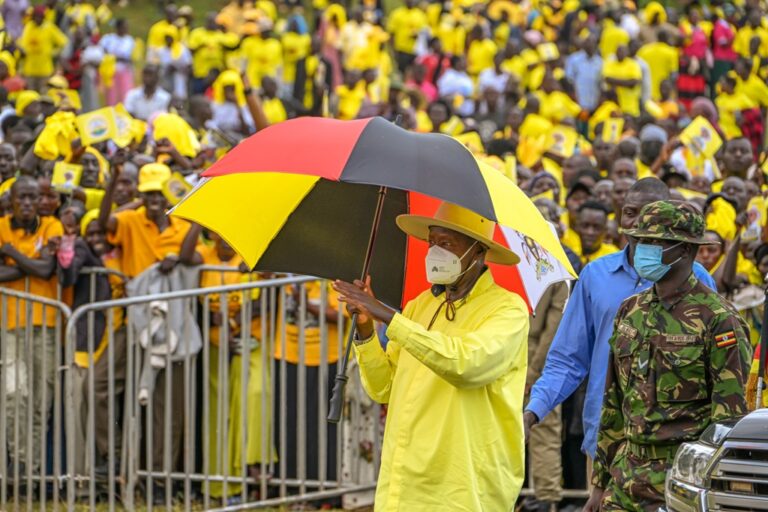
Yet government has made “protecting businesses” the cornerstone of quelling any kind of protest, despite the fact that the Uganda Constitution 1995 protects protests constitutionally. With this stance of the government, protests and riots are indistinguishable. However, when protest are by National Resistance Movement (NRM) or pro-NRM Institutions, they are extremely peaceful. The same is true if political rallies are staged by NRM people.

This implies that the governance of Uganda is apartheid-like as if the country was invaded, conquered and occupied. Ugandans are not allowed to dissent or display any discontent but are driven to subscribe to their situation as if it is normal; negotiated between the rulers and the people.

The truth is that most governments  are fearful of gatherings of any kind because their “captors” believe the gatherings can easily result in challenge, even change, of power. The citizens are collectively perceived as enemy number one of the State, especially in Africa, where governments frequently arm themselves to the teeth against the citizens. In Uganda, the citizens are simultaneously being denationalised and decitizenised!

But what really is the difference between a riot and a protest?

Therefore, in Uganda the rulers disagree with the Constitution and cast riot and protest as one and the same to control the thinking, movements and actions of the citizens so that there is no threat to power. However, in this article I take riot and protest as different phenomena.

Generally speaking a protest is usually organised public demonstration of disapproval of a law, policy, strategy, idea, actionor state of affairs that harms the public interest. If there was no herding of Ugandans, things like corruption, building roads in the Democratic Republic of Congo (DRC) or the UPDF Act 2025 would have evoked public demonstrations.

I agree with the definition of “riot” by the US government that “a riot is a disturbance of the peace by an assemblage of usually three of more people acting with a common purpose and in tumultuous manner to the terror of the public (see also Merriam’s Dictionary of Law).

As I have explained elsewhere in this article the boundary between riot and protest is erased  by the vested actions of the government and others in pursuit of their interests that have nothing to do with the intent and purpose of the protest. This explains why well-intentioned protests are violated a and they relapse into riots.

Otherwise a protest becomes a riot when those who organised it lose control, either to some errant overzealous  participants or to government security organs ordered from above to frustrate the demonstration,the same way the rallies of the Opposition are in the interest of power.

Once demonstrations (protests) are discouraged, a government goes in to claim that the citizens are happy with what it is doing. It draws the public and international community attention away from its failures, such as inability to provide social goods and services and to assure the people of minimum wage, humanising salaries, employment, humanising prices for crops, access to their natural resources, protection of their natural belonging and identity,  democracy, freedom, justice, equity, development, transformation and progress.

Let me end the article by giving examples of protests that were violently suppressed by the colonial government and the neocolonial NRM regime in Uganda in the fashion of a country invaded, conquered and occupied without the will of the people.

*Mabira Rainforest protest (2007): Protests against the government’s decision to give away 7100 hectares of the Mabira Rain Forest to SCOL, a sugar company,  turned violent, with police using tear gas and live bullets to disperse protesters.

* April 1949 Buganda Kingdom riots: Protests in Buganda Kingdom demanding democracy and resignation of the Katikkiro (prime minister) Kawalya’s government turned violent, resulting in loss of lives and property.

*July 2024 anti-corruption protests: Protests against alleged graft by elected leaders were met with police brutality, with over 104 people arrested and charged with public order offences.

*July 23, 2024 March to Parliament protest: Anti-corruption demonstrations were violently dispersed by police, with reports of arrests, intimidation, and sexual assault of protesters.

 *2020 protests*: Protests against the arrest of opposition leader, Bobi Wine, resulted in the deaths of at least 54 people in my district, Luuka District, and many more disappearances.

*Kabaka Riots (2009): Protests triggered by the government’s ban on the Buganda King, Ronald Muwenda Mutebi, from visiting Kayings, resulted in fatalities,  injuries and arrests.

 *Walk to Work protest (2011): Protests led by opposition leader Kizza Besigye against rising costs of living were met with police brutality.Kizza Besigye was brutally assaulted

*Togikwatako campaign (2017): Protests against the amendment of the Constitution were violently suppressed by police.

These protests highlight the ongoing struggles for democracy,, freedom, justice, human rights, and accountability in Uganda.

They have helped the government to generate a lot of fear and silence in the country, which are key of its governance and leadership. Indeed fear and silence have also characterised elections since 1996 when President Tibuhaburwa Museveni offered himself for elections. During the forth coming elections we have seen how Bobi Wine, a presidential candidate, has been treated to doses of state-inspired violence., confirming that however many times elections will be held the ballot paper cannot change government because the country is under siege – invaded, conquered and occupied.

For God and My Country.

RIDE FOR RICHES: 66 Riders eye new motorcycles up for grabs at MTN Busoga masaza cycling finale 2025

0

A total of 66 cyclists have qualified for the MTN Busoga Masaza Cycling Championship 2025 grand finale following competitive county-level qualifiers held across Busoga between December 20 and December 24, 2025. The qualifiers produced 33 riders in the Mountain Sports Bike category and 33 in the Tippa category.

The grand finale will be held on Saturday, January 3, 2026, featuring the Tippa and Mountain Sports Bike categories.

Mountain Sports Bike Category

The Mountain Sports Bike category attracted stiff competition across all counties. In Bunha County, Farmer Shafik, Yanga Salaka and Ochwe Zevilini secured qualification after finishing in the top three, underlining Bunha’s growing strength in cycling.

Other counties also delivered strong contenders. Bunhole–Bunanhumba County produced Lukakamwa Nelson, Kakaire Tegike and Masaba Ben, while Kigulu County was represented by Kazimingi Lukumani, Odoto John and Muwanguzi Silver.

From Bukooli County, Malinzi Sam, Ogutu Ronald and Bogere Atanansi advanced, as Luuka County sent Magemeso Mensulamu, Kiwanuka Musilim and Muwereza Lawrence. Bulamogi County qualifiers were Dakasi Akim, Younger Sadam and Isabirye Latifu.

Butembe County produced Lobo Micheal, Kapio Augustine and Wavamuno Muzamiru, while Bugabula County qualifiers were Bamutaze Wycliffe, Kimbugwe Mathias and Badigaye Dauda. The Mountain Sports Bike list was completed by Bukono County’s Waiswa Mulongo, Omunyelupa Isma and Munyangala Falasiko, Bugweri County’s Kasadha Hajji, Mutengu Rajawe and Mwesigwa Tonny, and Busiki County’s Bazale Bosco, Kabyanzo Kasima and Ruzira Atoni.

Reigning Mountain Sports Bike champion Odoto John (Kigulu) will be aiming to defend his crown at the grand finale.

Tippa Category

In the Tippa category, Bunha County qualifiers were Kigenyi Hussein, Kakaire Meni and Basalirwa Japhari, who finished in the top three to book their places at the grand finale.

From Bunhole–Bunanhumba County, Ilaaka Yoweri, Waiswa Ivan and Wandalo Ronald qualified, while Kigulu County was represented by Magumba Ashiraf, Teyebaka Kenneth and Majidu Kyawa.

Bukooli County sent through defending champion Luganda Tiffu, Ngodobe Brian Koowa and Friday James, as Luuka County was represented by Musitwa Andrew, Nassan Junior and Kawoma Micheal. Bulamogi County qualifiers included Naika Robert, Nabikamba Daniel and Mukisa Amos.

Butembe County produced Mugooda Dominic, Wanduuba Henry and Nsuube Jude, while Bugabula County qualifiers were Wakibi Alex, Mugura Yasin and Mulondo Ayubu. The Tippa category was completed by Bukono County’s Cosma Kibulaku, Wadambisya Wilson and Mugalya Malesi, Bugweri County’s Kasango Livingston, Tazindula Paul and Kiirya Derrick, and Busiki County’s Mutabuza Denesi, Egesa Ivan and Bedi Ligani.

Defending Tippa champion Luganda Tiffu (Bukooli) returns as one of the favourites.

Prizes and Race Details

Winners in each category will take home attractive prizes, with the overall winner riding away on a brand-new motorcycle. The second-placed rider will earn Shs 2 million, third place Shs 1 million, fourth Shs 500,000, and fifth Shs 300,000.

In addition, every rider who completes the race but finishes outside the top five positions will receive Shs 50,000, a move organisers say is intended to motivate participation and reward effort.

Details regarding the course and distance for the grand finale will be communicated in due course.

Held under the theme “Abasaadha N’empango Mukulwanisa Ekifuna Mabuunda Mubaghaala Abato,” the championship continues to promote unity, discipline and youth empowerment through sport as Busoga counts down to the January 3 showdown.

FIRST CONSIGNMENT: Presidential ballot papers arrive ahead of January 2026 elections

0

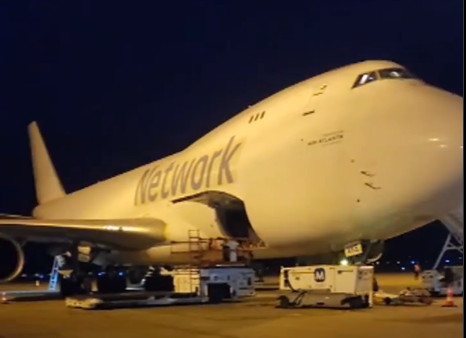
The Electoral Commission (EC) has announced the arrival of the first consignment of presidential ballot papers ahead of the upcoming elections scheduled for 15th January 2026. The announcement was made late Wednesday night via the Commission’s social media platforms.

The ballot papers arrived at Entebbe International Airport, according to the EC’s brief post on X (formerly Twitter). No further details about the consignment were provided.

Ugandans will go to the polls on 15th January 2026 to elect the President, directly-elected Members of Parliament, and District Woman Representatives.

The presidential race features incumbent Yoweri Tibuhaburwa Kaguta Museveni of the National Resistance Movement (NRM), Robert Kyagulanyi Ssentamu of the National Unity Platform (NUP), Mubarak Munyagwa Serunga of the Common Man’s Party (CMP), and Frank Burira Kavinga of the Revolutionary People’s Party (RPP). Other candidates include Robert Kasibante of the National Peasants’ Party, Elton Joseph Mabiriizi of the Conservative Party, James Nathan Nandala Mafabi of the Forum for Democratic Change (FDC), and Gregory Mugisha Mutu Oyera of the Alliance for National Transformation (ANT).

Recently, Justice Brabakama Mugenyi Simon, Chairperson of the Electoral Commission, reminded candidates, their agents, election observers, and the general public to strictly observe the respective voting dates and procedures.

The arrival of the ballot papers marks a key milestone in the preparations for what is expected to be a closely watched presidential and parliamentary election.

PARADOX OF POWER: 40 years of Museveni’s rule and Uganda’s governance challenges

0

By Oweyegh-Afunaduula

 This article is a Christmas gift to the present and future generations of Ugandans who curiously wonder, and will wonder, about the reasons why President Tibuhaburwa Museveni ruled Uganda for 40 years without interruption, unlike Apollo Milton Obote, who ruled Uganda twice but with the interruption of Idi Amin’s coup d’état and Tibuhaburwa Museveni’s guerrilla war in the bushes of Luwero.

If any living Ugandans are not ready to think, rethink, think critically, reason critically and consider an alternative analysis and narrative of Uganda’s governance under President Tibuhaburwa Museveni, then this article is not for this generation but future generations of Ugandans who will be asking, “How and why did we allow ourselves to be governed the way we were?”

I know some Ugandans believe the President has ruled for long because we are docile, while others believe he is popular and people give him votes. Some believe he is a strong leader who knows how to manage the armed forces. Some believe Uganda is better off with President Tibuhaburwa Museveni than with another person as president because they don’t see any difference between growth, which he cites as economic progress, and development, which he talks about in a cursory manner. Because many Ugandans can’t think beyond President Tibuhaburwa Museveni, this article is not for them. They will entertain any mention that alternatives exist or that an alternative to Uganda can have effective leadership and effective governance beyond President Tibuhaburwa Museveni. Many Ugandans stuck with President Tibuhaburwa Museveni see him as the best thing that happened to Uganda and cannot detect any faultlines in his leadership and governance. They take him as a faultless god whom they want to be the first and last ruler of Uganda.

President Tibuhaburwa Museveni recently told the people of Lwengo District that he was in the Democratic Party (DP) in 1960, the year I was in Primary 4 (and am nearly 77). In 1960 I was nearly 11 years old.  Assuming the president was 20 or 21 years old then, how old is he now? Whatever his true age, he has had a continuous presence on Uganda’s political landscape, waging a guerrilla war against Idi Amin in the 1970s. Participating in the formation of what was called the Uganda National Liberation Front (UNLF) government in 1979; seeking to be President of Uganda in the 1980 elections; waging a guerrilla war against Apollo Milton Obote (1981-1985) and the Tito Okello Military Junta (1985), ultimately capturing the instruments of power on 25 January 1986.

In 2026, President Tibuhaburwa Museveni will mark 40 years in power in Uganda, raising questions about the country’s governance trajectory. Despite progress in economic growth and stability, challenges persist. Uganda’s governance struggles stem from institutional weaknesses, limited accountability, and restricted civic space. Strengthening transparency, protecting rights, and fostering citizen engagement are key to breaking this cycle of good governance failure in Uganda. He has continuously ruled Uganda since then for 40 years, 30 years less than the period the British colonialists ruled the country. If the colonialists invaded, conquered and occupied Uganda, there is a growing school of thought which holds that President Tibuhaburwa Museveni’s ruling clique also invaded, conquered and occupied Uganda because most of its members had exogenous roots in Rwanda and Mulenge in the DRC.

The question persists: what is the explanation of President Tibuhaburwa Museveni’s long stay in power even when he said the problem of Africa is leaders who overstay in power?

President Museveni’s nearly 40-year rule in Uganda can be attributed to a combination of factors. It is crucial that every Ugandan understand the factors that have enabled President Tibuhaburwa Museveni’s long tenure if Uganda’s future generations are to ensure effective leadership, governance and institutional strength during their time when virtually all of us will have transited to the decomposer chain and be living only spiritually. For lack of time and space, let me list them with some explanatory notes:

*Deception and Deceptive Democracy: President Tibuhaburwa Museveni has been able to break the cycle of democracy through lies, deception and disinformation. When he says no one knows democracy more than him, he means deceptive democracy: holding regular elections while subverting democracy by using laws, policies and the military and police.

*Strategic Politics: Tibuhaburwa Museveni has effectively managed Uganda’s complex political landscape, leveraging the country’s post-conflict situation to consolidate power.

*Economic Reforms: He has implemented economic reforms, which have driven growth, not development, making Uganda one of Africa’s fastest-growing economies.

*Military Support: He has forged strong ties with the military, which has helped maintain stability and ensured loyalty. Besides, he has ensured that the strong linkage which existed between NRM and NRA in the bushes of Luwero is maintained between NRM and UPDF.

*Weak Opposition: He has created a sociopolitical spectrum with fragmented opposition unable to unite and struggle together to mount a credible challenge to his rule. Then he repeatedly tells Ugandans that the Opposition is useless and cannot perform when he is the reason why the Opposition is in a state of helplessness.

*International Support: Uganda’s strategic location and Tibuhaburwa Museveni’s diplomatic skills and deceptive stance have secured him international backing, to the chagrin of indigenous Ugandans in general and the Opposition in particular.

*Constitutional Amendments: Changes to term limits and age restrictions have allowed Museveni to extend his rule and act like a life president despite holding regular elections. The elections are just to impart legitimacy to his regime, not a vehicle for ensuring Ugandans of democracy, freedom and justice, which he promised them when he was reigning mayhem in the Luwero Triangle and in his book, Sowing The Mustard Seed: The Struggle for Freedom and Democracy”.

*Sycophancy and Patronage: He has sown a culture of sycophancy and patronage, which has created a network of loyalists and beneficiaries dependent on his rule and public money, denying Ugandans public services such as quality education, quality health and adequate energy. 

Why This Works:

These factors have combined to create a system where President Tibuhaburwa Museveni’s personalised leadership is deeply entrenched, making it challenging for alternative voices and/or leaders to emerge. If alternative leaders emerge, his now formidable propaganda machine and almost personalised security forces are unleashed on them to crash their resolve, spirit and mind and create the impression that the President is unchallengeable, indispensable and a strong leader, the only one who can manage the security of the country and people. 

Implications

For future generations, prioritising institutional strength, merit-based leadership, and accountability can help ensure effective governance and prevent the perpetuation of sycophancy and authoritarianism, which currently dominate President Tibuhaburwa Museveni’s leadership and governance. Strengthening institutions and promoting critical thinking can help mitigate the risks associated with long-term rule and ensure Uganda’s development, which has been sacrificed for growth so hyped by international capital. 

Leadership

As I have frequently stated, behind every problem is the problem of leadership. This means that many problems are either leadership-based or generated by leadership. In the case of leadership, the problems arise when the leaders think, believe and are convinced they are so indispensable that other leaders cannot displace them. They decide ways and means to ensure that they retain power at whatever cost, which may be public money, human life or both.

Leadership plays, or should play, a huge role in Uganda’s development. Effective leadership can drive progress, while poor leadership can hinder it. This is the case when leadership concentrates on acquiring weapons to control the movements and actions of the citizens instead of providing public services for or to the people.

In Uganda’s case, President Tibuhaburwa Museveni’s leadership has had both positive and negative impacts:

*Positive impacts: Economic growth, infrastructure development, and relative militarily mediated security, stability and peace. Unfortunately, these essentials can easily crumble if the leader who puts the military before the people finds himself unable to maintain the balance between the people’s craze for development, freedom, justice, equity, and democracy.

*Negative: Authoritarian tendencies, human rights concerns, intensifying and extensifying poverty, intellectual decay and collapse, land grabbing, environmental decay and collapse, conversion of indigenous Ugandans into third- or even fourth-rate citizens, internal and international slavery, and entrenched corruption have come to characterise President

For Uganda’s development, leadership needs to prioritise:

*Accountability: Ensuring leaders are responsible to the people, not to themselves and their families or ethnic groups.

*Meritocracy: Appointments must stress competent individuals based on merit, not loyalty nor relations (familial, kinship or ethnic).

*Institutional Strength: Leadership must prioritise building strong and resilient institutions that outlast leaders.

Let me now focus on why effective institutional leadership is important. Institutional leadership is a major issue in Uganda. The country’s institutions have in the last 40 years been weakened by leadership through three main avenues:

 *Patronage: Appointments based on loyalty rather than merit.

*Political Interference: Institutions have often been influenced by the ruling party or directly by the president, such as in their structure and function or leadership. In other cases, such as universities, the president has interfered in what is taught, showing his preference (natural science) against the social sciences and humanities.

*Lack of Autonomy: When the leadership interferes in institutions, they lack independence to make decisions suitable for them and their clientele. If it goes on for a long time, the institutions will not do anything until the exogenous leaders (the president and others) instruct them what to do. When this is the case, the institutions cannot be autonomous. They are governed from outside. The institutional leaders manifest as puppets, or worse still, sycophants who cannot decide without reference to higher orders outside their institutions. When this is the case, the result is multifold:

*Ineffective Governance: Institutions fail to deliver quality services.

*Corruption: Weak institutions enable corruption and misuse of resources for personal gain.

*Lack of Accountability: Institutions are unable to hold leaders accountable.

To strengthen institutional leadership, Uganda needs:

Autonomy: Grant institutions independence to operate freely.

Merit-Based Appointments: Ensure leaders are appointed based on competence.

Transparency: Increase transparency in institutional decision-making.

*Promoting Institutional Autonomy:

*Legal Frameworks: It is critical to enshrine autonomy in laws and the Constitution.

*Independent Oversight: It is critical to establish independent bodies to oversee institutions. However, such bodies will be useless if they are used to hoodwink the citizenry while filling them with loyalists and presidentialism hovering over them.

*Financial Independence: No institution will be effective if it has no control over its budgets. 

Impact of Patronage

*Undermines Meritocracy: Patronage prioritises loyalty over competence.

*Fosters Corruption: Patronage networks enable corruption and abuse of power to flourish.

*Weakens Institutions: Patronage erodes institutional credibility and effectiveness.

Addressing patronage requires:

*Merit-Based Appointments: Prioritise competence over connection.

*Transparency: Increase scrutiny of appointments and decision-making.

*Strengthen Accountability: Hold leaders accountable for patronage and corruption.

Uganda’s institutions need rethinking to promote autonomy and reduce patronage. As far as the government is concerned, three institutions must be rethought to make them accountable and least vulnerable to patronage to ensure public trust is sustained in leadership and governance: 

Executive

*Overconcentration of Power: The President wields excessive influence, often overshadowing other branches of government.

*Patronage: Appointments are often based on loyalty, undermining meritocracy. Accordingly, patronage is used as a political weapon.

*Lack of Accountability: The Executive often acts with impunity, disregarding checks and balances. 

Legislature

Dominance by Ruling Party: The NRM’s majority limits opposition voices and undermines meaningful and effective debates.

*Weak Oversight: Parliament often rubber-stamps executive decisions.

*Lack of Autonomy: Parliament’s independence is compromised by executive influence. 

Judiciary

*Political Interference: Judges are often pressured or influenced by the Executive, thereby undermining justice and promoting judicial decisions that the Executive desires or prefers.

*Corruption: Judicial corruption undermines public trust in the judiciary and the government as a whole.

*Limited Autonomy: The Judiciary’s independence is questionable.

What Needs to be Done:

*Strengthen Checks and Balances: Ensure institutions can hold each other accountable.

*Promote Autonomy: Grant institutions independence to operate freely.

*Merit-Based Appointments: Prioritise competence over loyalty.

The issues with the executive, legislature, and judiciary impact Uganda’s governance in major ways, including:

*Weak Accountability: Concentration of power and patronage lead to unchecked decisions and corruption.

*Poor Policy Decisions: Loyalty-driven appointments result in ineffective governance and policies that benefit a few.

*Eroded Public Trust: Corruption and impunity in institutions undermine citizens’ faith in government.

*Stifled Dissent: Limited opposition voices and judicial interference silence critics.

*Public Intellectuals disappear: Ideas from a nonpolitical channel into government stop coming in.

*Presidentialism: The President infiltrates and overrides every institution.

All this leads to:

*Ineffective Service Delivery: Institutions fail to address citizens’ needs.

*Increased Corruption: Weak oversight enables misuse of resources, especially by the President, Speaker and Chief Judge – the heads of the Executive, Parliament and Judiciary. This could be seen in rewarding loyalty.

*Political Instability Risks: Unchecked power and suppressed dissent can spark unrest in the short, medium and long term, making our pride in reigning stability momentary and stability unstable.

For Uganda, addressing these issues is key to improving governance and making the country move from growth narratives that have dominated to development narratives. Uganda’s future hinges on addressing the governance challenges to ensure inclusive development, democracy, freedom, justice and stability. Ultimately, that is what good governance means.

For God and My Country.

MAGOGO’S HAPPINESS: Electoral Commission annuls nomination of Mulilire Daniel for Budiope East MP seat

0

The Electoral Commission has annulled the nomination of Mulilire Daniel as a candidate for the directly elected Member of Parliament for Budiope East Constituency in Buyende District. Delight

The decision follows a complaint lodged under Article 61(1)(f) and Section 15 of the Electoral Commission Act, Cap 176, which challenged the legality of Mulilire’s nomination. The Commission reviewed submissions from both the complainant, represented by M/s Alaka and Company Advocates, and the respondent, Mulilire Daniel, along with his legal team.

During the hearing, the Commission observed that Mulilire, who was previously a police officer with the Uganda Police Force, had not provided proof of resignation from government service at the time of his nomination.

This is a requirement under Section 4(4) (a) of the Parliamentary Elections Act, Cap. 177. As a result, the Commission ruled that his nomination papers were invalid under Section 30(e) of the same Act.

Justice Brabakama Mugenyi Simon, Chairperson of the Electoral Commission, stated that the nomination was therefore annulled under case MIN. COMP 058/2025. The decision also quashed the Returning Officer’s earlier approval of Mulilire’s candidacy.

Copies of the ruling have been sent to the Returning Officer for Buyende Electoral District and to Mulilire Daniel, who is represented by M/s Byamukama & Co. Advocates and M/s Ochieng Associated Advocates and Consultants.

The annulment comes as political parties and independent candidates prepare for the upcoming parliamentary elections, emphasising the importance of adhering to legal requirements during the nomination process.

Mulilire was seeking to unseat Eng. Moses Magogo, the incumbent Member of Parliament for Budiope East. With Mulilire now out of the race, Magogo, also the National Resistance Movement flag bearer, will have to deal with former ally Stephen Bangalana, an independent. Others remaining in the race are Peere Rabinson, of the People’s Front for Freedom (PFF), and Resty Nsiro, an independent.

NEW HOME FOR FOOTBALL: Museveni commissions Hoima City Stadium, hails AFCON 2027 as catalyst for Uganda’s sports and infrastructure boom

0

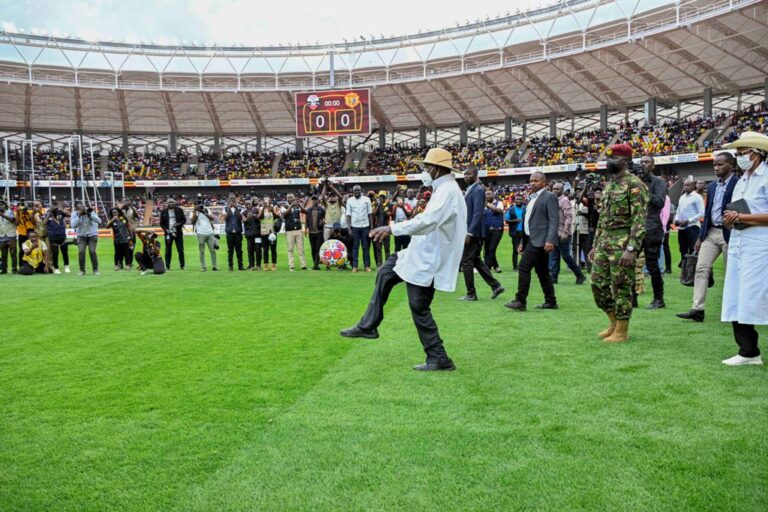
President Yoweri Kaguta Museveni wednesday commissioned the Hoima City Stadium, marking a major milestone in Uganda’s preparations to co-host the 2027 Africa Cup of Nations (AFCON) alongside Kenya and Tanzania.

The commissioning ceremony, held in Hoima City, Bunyoro sub-region, was attended by thousands of residents, sports fans, government officials, and dignitaries from across the country and abroad.

The President was accompanied by the First Lady and Minister of Education and Sports, Maama Janet Kataaha Museveni, who oversaw the project’s implementation.

Constructed by Turkish firm Summa International Construction Company Inc, the Hoima City Stadium is a $129 million (approximately Shs463 billion) multi-sports complex that was completed in a record 12 months, four months ahead of schedule.

The Government of Uganda signed the construction contract with Summa in June 2024 as part of preparations for AFCON 2027, which Uganda will co-host under the “Pamoja Bid” with Kenya and Tanzania.

Addressing the gathering, President Museveni praised Summa for what he described as exceptional workmanship and efficiency, noting that the project stood as evidence of what Uganda can achieve with proper planning, discipline, and prioritisation.

“have seen the stadium, and I have also seen some of the roads they have constructed. They are very good workers, and we are going to do more with them,” President Museveni said.

“It is now my pleasure to officially commission the Hoima City Stadium,” he added, drawing loud cheers from the crowd.

To symbolically launch the stadium, the President stepped onto the pitch and juggled a football three times at the centre circle, amid ululations and applause from thousands of football fans who had packed the stands.

Built on a 34-acre piece of land on the outskirts of Hoima City, the stadium complex comprises a 20,000-seater outdoor stadium designed to host football, rugby, and athletics, as well as a 2,000-seater indoor arena for indoor sports such as basketball, netball, volleyball, and other disciplines.

President Museveni commended the family of the late Dr. Rujumba, who donated 10 acres of land towards the project.

President Museveni also clarified public concerns regarding the financing of the stadium, stressing that the project was fully funded by the Government of Uganda, following a strategic decision to avoid high-interest pre-financing arrangements.

“Initially, the Summa company was supposed to pre-finance the project, but we found that their money came with a lot of interest. So, we said no — let us fund the project ourselves,” the President explained.

The facility meets international and FIFA-compliant standards, making it suitable for hosting continental and international competitions beyond AFCON 2027.

In addition to the main stadium, the complex includes training areas, athlete facilities, administrative blocks, media zones, parking areas, and modern security and safety installations.

FUFA DRUM: Busoga look to complete double over Kigezi

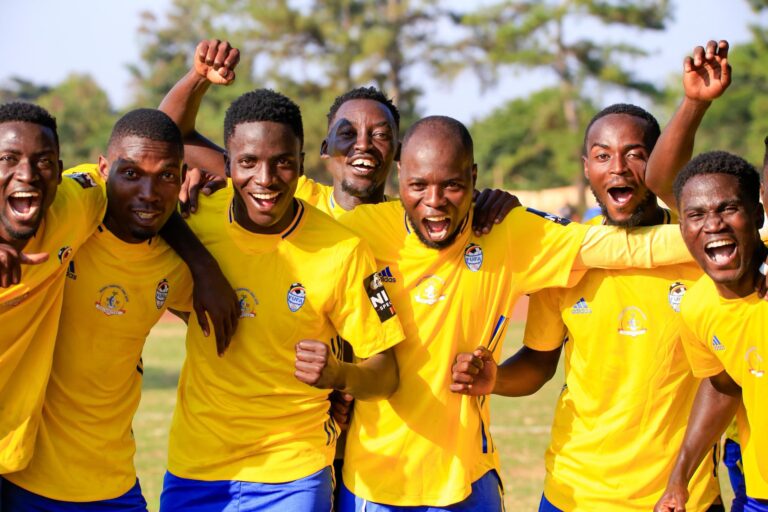
Busoga Province will be aiming to complete a season double over Kigezi Province when the two sides clash this Sunday, 28 December 2025, in a decisive FUFA Drum Group C encounter at Kabale Municipal Stadium.


Kick-off is set for 4:00pm, with Busoga, Kigezi and Bunyoro Province all tied on three points after two matches. Busoga currently top the group by a narrow goal difference advantage, making Sunday’s fixture vital in shaping the final group standings.


The Eastern Uganda side travel to Kabale carrying confidence from a 2–0 victory over Kigezi in the first leg played on 31 August 2025 at St John Vocational Technical Institute in Kamuli. Goals from Isaac Wagoina and Laban Tibita sealed that win, and Busoga will be hoping for a repeat performance away from home.


However, history poses a challenge. Busoga are yet to record a victory in Western Uganda, having managed two draws and suffered two defeats on previous visits. Despite this, head coach Ayiekho Charles Lukula believes his side is ready to turn the page.

“We respect Kigezi and the history in Western Uganda, but this is a new moment for our team. The players summoned will deliver,” Ayiekho said.

Kigezi, meanwhile, will be relying on home advantage and recent form after edging Bunyoro Province 3–2 in their previous group fixture on Saturday, 20 December 2025. The hosts will be eager to avenge their Kamuli defeat and tighten their grip on Group C.


Busoga Province Squad
Goalkeepers:
Mathias Muwanga (Police FC), Bukyo Ivan (Busoga United), Mugaya Ali (Kataka)
Defenders:
Bakali Magumda (BUL FC), Raymond Mangoli (SC Villa), Derrick Basoga (Maroons), James Mubezi (KCCA), Ismail Kawawulo (Unattached), Innocent Kitimbo (Maroons), Umaru Mukobe (JMC), Ivan Waako (Mbale Heroes), Swabir Mpasa (BUL FC)
Midfielders:
Daniel Shabena (NEC), Jerome Kirya (BUL FC), Pascal Ngobi (BUL FC), Ibrahim Mugulusi (BUL FC), Laban Tibita (URA), Elvis Ngondwe (SC Villa), Reagan Kalyowa (BUL FC), Yunus Sibira (Kitara), Akrim Senyondo (Busoga United), George Dhafa (Unattached), Richard Okello (BUL FC)
Strikers:
Isaac Wagoina (BUL FC), Lawrence Tezikya (Police FC), Franco Mugomba (Busoga United), Dickson Matama (BUL FC)
Technical Team
Daniel Gulere (CEO), Faisal Muhammed (Team Manager), Ayiekho Charles Lukula (Head Coach), Simeon Masaba (Assistant Coach), Eric Ndifuna (Assistant Coach), Ayub Balyejusa (Fitness Coach), Kenneth Magada (Goalkeeping Coach), Joseph Kato (Kits Man), Jacob Yateesa (Media Officer)


A positive result in Kabale would place Busoga in a commanding position ahead of their final group match, a home tie against Bunyoro Province scheduled for 4 January 2026 at St John Vocational Technical Institute.

ARSE KISSING: Sycophancy and how it undermines democratisation in Uganda

0

By Oweyegha-Afunaduula

Because of rising poverty and the corruption of the minds of both the leaders and the led in Uganda, from the bottom to the top of society, sycophancy has become integral to the Ugandan way of life..

Sycophancy is the excessive flattery of those in power. It undermines democratisation by stifling dissent, entrenching authoritarianism, and distorting decision-making. The flattered enjoy it and are not happy if there is no one to flatter them. The flatterers are not happy if there is no one to flatter because, by flattering, they gain favors and money, and many become extremely rich by developing the art and science of flattering. An ingredient of the mind of a flatterer is suspended critical thinking and critical reasoning. He or she can even lick the feet of the flattered, show deceptive loyalty, and hide his or her true colors of greed and selfishness.

Many Ugandans have been able to build mansions, acquire materials and wealth, pay fees for their children in the best schools, and seek health attention in the best hospitals in the world by perfecting the art and science of flattering.. The aim is to convince their victims that they are loyal and can defend them and their choices in case there are others contradicting them.

One common characteristic of flatterers is that they are very good at lying. They  position themselves as angels before the eyes of their victims – the flattered. Normally, they have no ideas because they carry thick heads that cannot think or reason critically.

Usually, when their victims fall out of the glory of God or the love of the people, the flatterers flee as quickly as they can, and as soon as possible. They waste no time in capturing other victims. They are, therefore, consumers that rarely contribute to production, development, transformation and progress of the country. However, they are good at chorusing what their victim prefers to put across to the people without changing anything so that they do not lose the favours that they get from him or her.

Flatterers are time waters and a burden to the country. They may be educated or not educated. They may come from rich or powerful families or from poor or powerless families. They do not care whether the people are losing or suffering so long as their flattery brings them dividends.

One thing is true. In Uganda’s political landscape, sycophancy can be a pragmatic choice for survival or advancement. However, this perpetuates a system where loyalty trumps merit and accountability.  Some people think it is part of Uganda’s Big Man Culture or Bigmanity. Bigmanity is a response to a situation where governor’s avoid forma structures or institution and they become the beginning and end of everything. Typically big men yield a great deal of social power in the absence of formal structures or where institutions are weakened in pursuit of loyalty rather than merit or competency (e g., Oweyegha-Afunaduula, 2023). Therefore, they value being circled by or in control of a patronal chain or network of sycophant. Merit and accountability are roadblocks to their pursuit of power, glory, money, wealth and domination of people.

My interest in this article is to reveal to my readers how exactly flatterers (sycophants) are and have been undermining the democratisation process in Uganda. 63 years after the country obtained its political independence from Great Britain on 9th October 1962 Uganda is not anywhere near achieving the status of “democratic country”. Therefore, democracy has been and continues to be more talked about than realised. It is a myth rather than a reality in Uganda, whatever the rulers and their sycophants want their victims – the people – and the world to believe. Virtually every civic Space and sphere of human endeavour in the country has been captured by the military. The military has also captured the three arms of government – Executive, Legislature and Judiciary, with the rulers happy with just giving them veneers of civility to secure international approval so that their primary aim of sticking to power as long as possible is not interfered with. It is deceptive democratisation or subversion of democracy-building. It is, therefore, de-democratisation – democratisation in the reverse!

Democratisation is “the structural government transition from an authoritarian government to a more democratic political regime, including substantive political changes ,moving in a democratic direction.

In Uganda all District Resident Commissioners (RDCs) and Resident City Commissioners (RCCs) and their deputies are institutionalised sycophants attached directly to the Office of President. By nature of their offices they are more inclined to the President although they are civil servants maintained by the taxpayers. Almost by design they work to disable opposition to the President. They gave been seen working with personalised security organs to restrict the political activities, movements and actions of Opposition political actors. In other words, they are essential elements in the de-democeatisation of Uganda in the interest of perennial power retention by the President of Uganda.

Sycophancy undermines democratisation in multiple ways:

(i) Stifling dissent:

Sycophancy creates a culture where questioning government actions is seen as “unpatriotic” or risky. For instance, Members of Parliament (MPs)  who toe the party line often get rewarded, while dissenters face backlash. We have seen this happen in the Parliament of Uganda with both the Speaker and Deputy Speaker who are members of the National Resistance Movement  (NRM) Caucus participating in the backlash.  For example,  in the case of the rebel NRM MPs – Muhammed Nsereko, Barnabas Tinkansimiire, Wilfred Nuwagaba,  John Babtiste Nambeshe and Theodore Sekikubo and Okot Ogong, they were backlashed by the President and the Speaker, who was then Rebecca Kadaga. They acquired the label “rebel MPs” when they refused to act sycophantically in Parliament, unlike the other NRM MPs who preferred groupthink or bandwagon approach changing the constitutional provision, which power wanted, to expunge presidential age limit from the Uganda Constitution 1995.  Sekikubo characterised the expungement treasonable and deception to hoodwink boba fide MPs that amending the Constitution is a national cause (Parliament Watch, 2021).

The question arise: If the dissent of MPs can be stifled for a bad or unpopular cause, why can it not happen in the general population in general and in the case of Opposition?

(ii) Entrenching Authoritarianism

Sycophants amplify leaders’ tendencies to centralise power, citing “strong leadership” or “stability”. President Tibuhaburwa Museveni’s long rule exemplifies this, with constitutional amendments removing term limits and age restrictions so that he rules like a life President just like Idi Amin did. We see the NRM becoming more and more personalised and members unable to challenge the choices of its Chairman and sole presidential candidate since 1996. The personalisation of NRM is transfered by its leader to the national stage where as President, Tibuhaburwa Museveni personalises power (see Oweyegha-Afunaduula, 2025).

Under such political reality, nothing works without the hand and head of the President (Oweyegha-Afunaduula, 2025). As in most African countries, authoritarianism engender dysfunction, which the rulers adopt as a governance tool (e.g Oweyegha-Afunaduula, 2025). Indeed in Uganda democracy has become an illusion with Uganda’s authoritarian resurgence (Faila Binti Kankwala and Mwanza Ade, 2025).

It is a sad reality when Sycophancy is embedded in the structure and function of an Electoral Commission as is the case in Uganda. The electoral process ei be driven both authoritatively and sycophantically. It is this truism that was behind my recent decision to write the article titled “The Emergence of Electoral Athoritarianism in Uganda: 1996 to Present (Oweyegha-Afunaduula, 2025). Indeed we have been recently treated to electoral authoritarianism in Uganda when the President of Uganda desired and unconstitutionally enforced the use of biometric voting and the Electoral Commission sycophantically adopted it without recourse to the Constitution of Uganda 2025, Which does not provide for biometric voting. We were also treated to military intervention when the Chief of Defense Forces, Muhoozi Kainerugaba, and other Generals ordered Ugandans to go home after voting in the 2026 elections in contravene of the Uganda Constitution, which provides that voters should stay 20 metres away after voting.

(iii) Distorting Decision-Making

Decisions prioritise pleasing the top over public interest. Example includeprojects aligned with President Tibuhaburwa Museveni’s interests of power and power retention (e.g., infrastructure even in the Democratic Republic of Congo’s Eastern region, and poverty intensification and extensification through schemes such as Operation Wealth Creation, Myooga and Parish Development Model. Even the recent decisions of the Chairman of the Uganda Electoral Comnission reflect decisions made outside the Commission. The authoritaria decision to deploy heavily on Bobi+Wine’s Campaign trail prior to the 2926 elections rendered the Electoral Commission a paper tiger as it was no longer in charge of the security of the presidential candidate, and actually did nothing to restore public trust that the electoral process was not under military control.

(iv) Impact on Institutions

Institutions like the judiciary and Parliament have been weakened by sycophantic officials who prioritise loyalty over independence. This is also true of the Electoral Commission chaired by Justice Byabakama, which is no longer capable of sustaining public trust that it will be fully in charge of the 2026 elections. The Chairman continues to act sycophantically and be a factor in the institutional and military capture of both the Electoral Commission and the electoral process. All his recent decision do not spur public trust. Few believe he is working in the public interest of democracy

(v) Effects on Opposition and Civil Society

 The ruling party’s sycophantic culture contrasts with opposition struggles to be heard, reinforcing power imbalance in the country. We have seen this during the current politicking and electioneering towards the 2025 elections. The NRM leadership has allowed its Chairman to personalise and militarise it. Just like it was linked to the National Resistance Army  (NRM )it has built strong ties with the Uganda Peoples Defense Forces (UPDF). The  10 UPDF Members of Parliament  manifest as if they NRM  representatives. Virtually all UPDF officers campaign for NRM’s Supremo, Tibuhaburwa Museveni, and NRM candidates. The Chief of Defense Forces has deployed heavily on Bobi Wine’s Campaign trail, displaying that the army is favour of the incumbent. The choice UPDF leadership to ally itself with NRM and is determined to ensure no alternative leadership emerges in the 21st Century. This way, it is continuing to militarise politics and to weaken civil society. Already so many civil society organisations have been banned in Uganda. Besides, authoritarianism has ensured there is no adequate civil education for the voting population. Fear and silence are the rule rather than the exception ub Uganda.

Way Forward for Uganda

It is because of sycophancy that hereditary politics has taken root in the country, anti-people laws have been enacted by Parliament, anti-people judicial processes have become common, freedom, democracy and justice are more talked about than officially pursued by the government, and public money is wasted on the loyalists at the expense of the public interest. To strengthen Uganda’s democracy, addressing sycophancy requires promoting accountability, institutional reforms, and a cultural shift towards critical engagement of Ugandans In the leadership, governance and development of the country. So far so bad. It is as if the long-term choice of the governors of Uganda is apartheid-like leadership and governance  of Uganda, in which the Indigenous Ugandans and their communities are subject to people with exogenous roots.  However, all this ei not be possible unless presidentialism is detonated (e.g., Oweyegha-Afunaduula, 2022). When all power is constitutionally placed in one person – the President – which the Uganda Constitution, 1995 does,  authoritarianism and sycophancy are good ves fellows. That is why President Tibuhaburwa Museveni can tell Ugandans, “If you want to test my powers, do it you will see”.  So it is either revisiting the Constitutional powers of the President to redistribute them accordingly or innovate a new pro-people Constitution, which does not encourage authoritarianism and Sycophancy if Ugandans want demicracy in their country.

Sycophancy’s grip on Uganda’s politics threatens democratisation. Breaking this cycle demands awareness, checks on power, spaces for critical voices and de-militarisation civic spaces. Bigmanity is internally violent. Ugandans must resolve to combat sycophancy and bigmanity. Otherwise the country will never enjoy freedom, justice and democracy.

SHARPENED FOCUS: Confident Uganda Cranes set for tough AFCON 2025 opener against Tunisia

0

When the floodlights come on in Morocco on Tuesday night, Uganda will once again step onto Africa’s grandest football stage with a familiar blend of hope, belief and quiet determination.

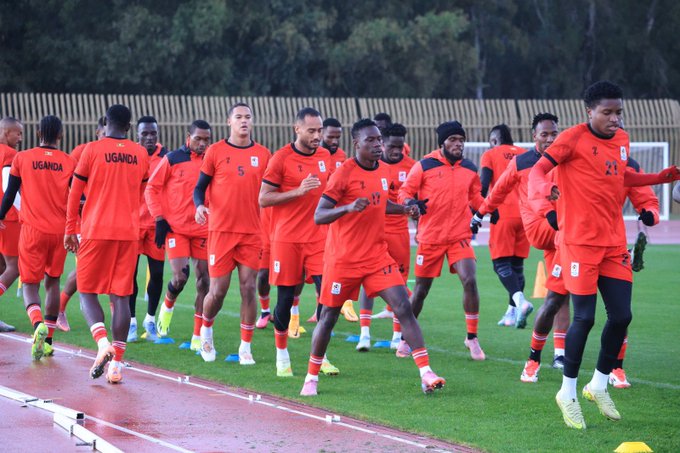
The Uganda Cranes open their TotalEnergies Africa Cup of Nations Morocco 2025 campaign against Tunisia in Group C, a fixture that immediately tests their resolve against one of the continent’s most consistent football nations. It is a demanding start, but one the Cranes embrace as part of their long-awaited return to the AFCON finals.

For head coach Paul Put, the moment represents more than just an opening match. It is a chance for Uganda to reintroduce itself to the African and global football audience.

“It is a big and a good opportunity,” Put says. “You are going to play not only for the African continent, but also for the whole world who watch this tournament. We have the motivation, and we are going to do our level best to give a good performance.”

A Team Built on Balance and Belief

Uganda’s journey to Morocco has been marked by deliberate preparation and careful squad building. The Cranes were the first team to set up camp in Morocco, beginning training on December 8 — an early start that signalled intent, even as foreign-based players arrived later due to competition regulations.

Rather than disrupting preparations, the extended camp strengthened cohesion and sharpened focus.

“Unfortunately, we were not complete at the beginning, but we have been preparing from the 8th,” Put explains. “The players are really ready to play this tournament. Everybody is ready.”

The squad itself reflects a philosophy Put has steadily refined since taking charge — a balance of seasoned internationals, rising young talents and locally-based players who understand the pride of wearing the national shirt.

Midfielder Khalid Aucho, preparing for his third AFCON finals, captains the side and embodies that blend of experience and leadership. Around him is a group expected to share responsibility, regardless of who starts.

“The players who start must be focused and motivated,” Put says, “and the players on the bench must be ready to make a difference.”

Overcoming Setbacks, Sharpening Focus

Uganda’s final build-up was briefly clouded by minor injury concerns following friendly matches, but the Cranes arrive at the tournament fully fit. Put confirmed that Mato, Jude and Jordan have all recovered and are available for selection, offering depth and flexibility ahead of the opener.

It is a timely boost as the Cranes prepare for a physically and tactically demanding contest.

Respect Without Fear

Tunisia arrive in Morocco carrying a long unbeaten run and the weight of history as one of Africa’s most successful football nations. Their pedigree is unquestioned, but Uganda are refusing to be overawed.

Put insists that statistics and past records have no place in the dressing room.

“We are facing Tunisia, who did not lose for many games. It is a big team with very good players,” he says. “But also, we have a good team.”

That quiet confidence defines Uganda’s approach — respectful, but unafraid.

Setting the Tone

With Nigeria also lying in wait in Group C, the opening match against Tunisia carries added significance. A positive result would not only boost morale but send a clear message that Uganda’s return to AFCON is about more than participation.

As Morocco hosts Africa’s finest and millions watch across the continent and beyond, the Uganda Cranes step forward under the lights with a simple aim: to compete, to believe, and to announce themselves once again on Africa’s biggest football stage.

THE LAW AND POLITICS: Uganda Law Society executive order endorsing opposition candidates sparks legal and political debate

0

The Uganda Law Society (ULS) has been thrust into controversy following an executive order issued by its self-exiled President, Isaac Ssemakadde, announcing the Society’s departure from political neutrality and endorsing opposition candidates ahead of the 2026 general elections.

In Executive Order RNB No. 6 of 2025, Ssemakadde publicly endorsed National Unity Platform (NUP) presidential candidate Robert Kyagulanyi Ssentamu, People’s Front for Freedom (PFF) Kampala Lord Mayoral candidate Erias Lukwago, and Dr Ekwaro Ebuku for Member of Parliament, Oyam South Constituency.

The move has drawn sharp criticism from within the legal fraternity, with lawyer Tonny Tumukunde describing the order as illegal, personal, and damaging to the credibility of the country’s largest professional legal body.

“ULS Must Remain Nonpartisan”

In an interview, Tumukunde argued that the ULS is, by law, a nonpartisan institution and must maintain political neutrality in executing its mandate under the Uganda Law Society Act.

“The Uganda Law Society serves all Ugandans regardless of political affiliation, especially at a time when the country is politically tense,” Tumukunde said. “The president’s impugned orders are not laws.”

He cited a High Court decision by Justice Musa Ssekana in Hashim Mugisha Hashim v. ULS & Isaac Ssemakadde, which held that executive orders issued by the ULS president do not carry the force of law.

“These are mere pieces of paper that the wind is blowing into the corridors of courts,” Tumukunde remarked.

Accusations of Personal Agenda

Tumukunde attributed the endorsements to what he called Ssemakadde’s personal political interests rather than a collective decision of the Society.

“This is about ego. Isaac Ssemakadde is a known opposition fanatic,” he said, recalling past instances where the ULS president hosted Kyagulanyi and Lukwago. “He has no respect for the rule of law. If he did, he would know that ULS should not be dragged into political bias.”

He further accused Ssemakadde of disregarding advice from colleagues and acting unilaterally.

Dissent Within the Society

Asked about the fate of ULS members who disagree with the executive order, Tumukunde warned of possible reprisals but said many members have learned to ignore the leadership style of the current president.

“He wants to be a demigod over every member,” he said. “But people now understand his ways. They are simply waiting for his illegal tenure to lapse.”

Ssemakadde’s term as ULS president is expected to end in about two months.

Claims of Regime Change Ambitions

The executive order also suggested that ULS would mobilise resources to challenge the ruling National Resistance Movement (NRM) government, a claim Tumukunde dismissed as unrealistic and unrepresentative of the Society’s membership.

“Don’t think all members are in agreement with this decision,” he said. “Many lawyers still appreciate the NRM’s leadership amidst the country’s challenges.”

He further alleged that Ssemakadde’s actions were influenced by personal interests linked to his self-exile and alleged asylum ambitions.

“Let him serve the white man’s pie by himself, not throw it into the hands of the innocent many,” Tumukunde said.

Waiting Out the Term

On whether there are efforts to safeguard the Society’s integrity and public image, Tumukunde said dissenting members are opting for restraint rather than confrontation.

“The sober few are looking on in disbelief,” he said. “The tenure is just two months to end. Let him sail.”

The ULS leadership has not yet issued an official response to the criticism, but the executive order has intensified debate about governance, legality, and political neutrality within one of Uganda’s most influential professional bodies.